



Benoxaprofen

Based on 1 Customer Validation
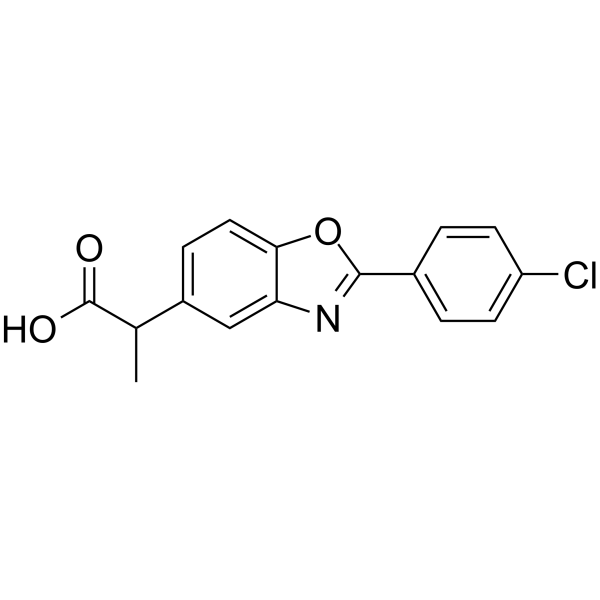
Benoxaprofen (LRCL 3794) is a nonsteroidal anti-inflammatory agent that blocks the biosynthesis of inflammatory mediators such as leukotrienes and prostaglandins by inhibiting 5-LOX, PGH2 synthase and cytochrome P-450. Benoxaprofen exhibits significant toxicity: it not only alters cellular redox status, uncouples oxidative phosphorylation and disrupts calcium ion homeostasis, but also causes liver injury through the formation of covalent adducts between its active metabolites and hepatic proteins. Benoxaprofen shows strong phototoxicity under ultraviolet irradiation, and induces erythrocyte lysis, mast cell degranulation and histamine release. Benoxaprofen is widely used in studies of urticaria and related phototoxic mechanisms.
商品は「研究用試薬」です。人や動物の医療用・臨床診断用・食品用の製品ではありません。
研究用途以外に使用した場合、当社は一切の責任を負いかねます。
- 純度 : 99.03%
- CAS 番号: 51234-28-7
- 分子式: C16H12ClNO3
- 分子量:301.72
-
保管条件:Powder -20°C, 3 years ; In solvent -80°C, 6 months , -20°C, 1 month

To place orders, for customer services and technical support, please contact: MedChemExpress USA
Tel: 609-228-6898 E-mail: [email protected] [email protected]


-
 生物活性
生物活性
-
化学情報
- プロトコル
- 純度とドキュメンテーション
- 参考文献
-
 Help & FAQs


-
HY-B0330
LevofloxacinDNA Gyrase/Topoisomerase Inhibitor -
HY-50935
TroglitazonePPARγ Agonist -
HY-A0062
TelithromycinKetolide Antibiotic -
HY-121383
Labetalolα1/β-adrenergic Receptors Antagonist -
HY-B0141
EstradiolHuman Endogenous Metabolite -
HY-17502
SimvastatinHMGCR Inhibitor -
HY-11103
Sitaxsentan sodiumEndothelin A Receptor Antagonist -
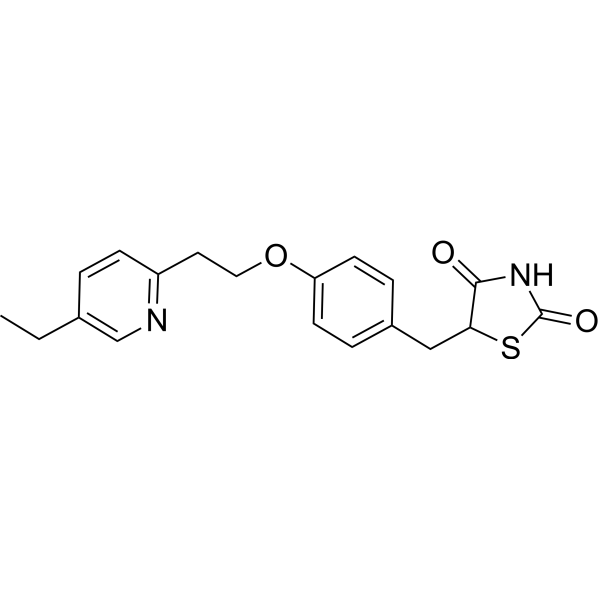
HY-13956
PioglitazonePPARγ Agonist -
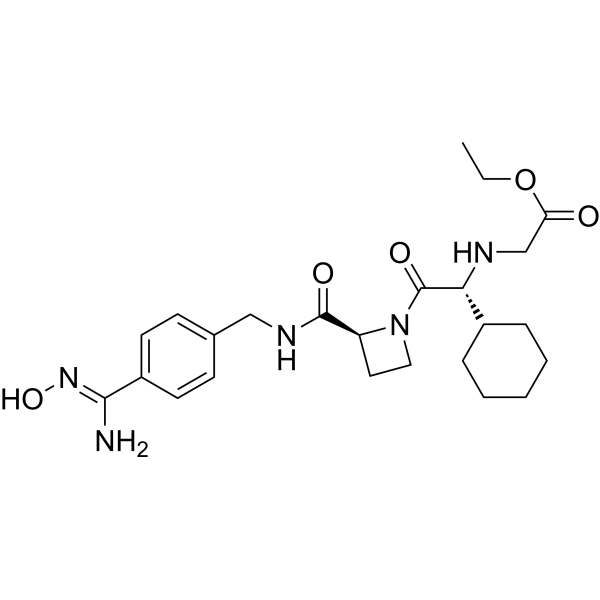
HY-10787
XimelagatranThrombin Inhibitor -
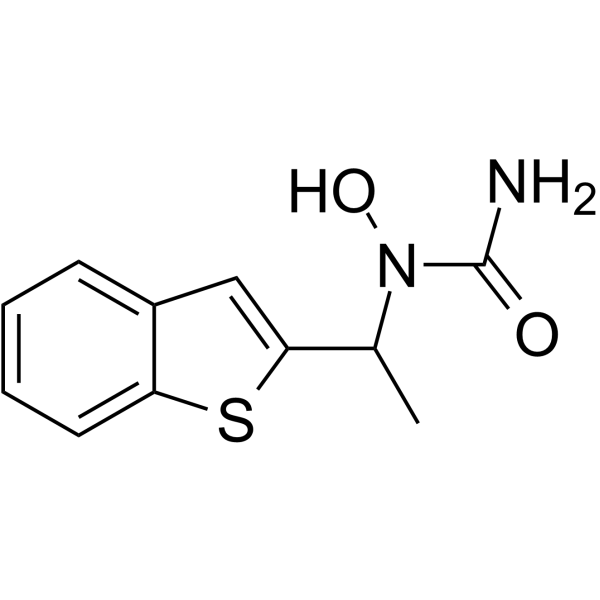
HY-14164
Zileuton5-Lipoxygenase Inhibitor -
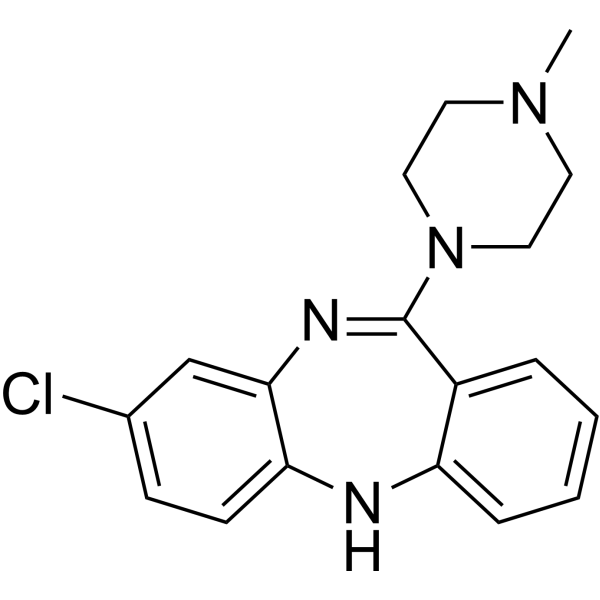
HY-14539
ClozapineAntipsychotic Agent -
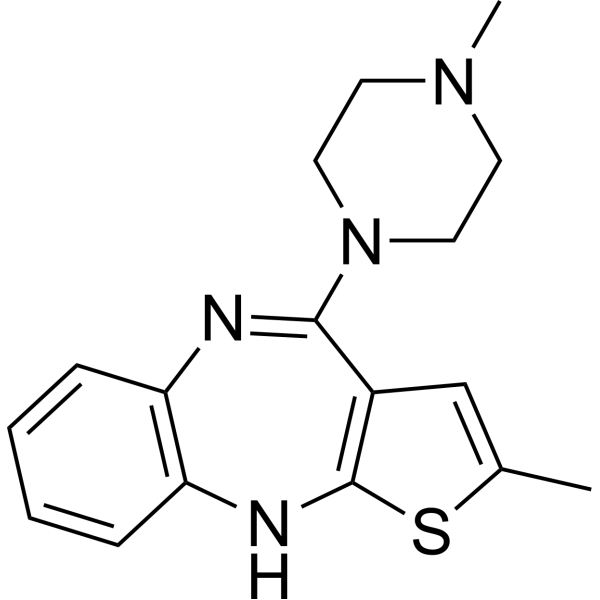
HY-14541
Olanzapine5-HT2/D1/D2 Antagonist


生物活性
製品説明
IC50 & Target
|
5-LOX |
Cellular Effect
|
Cell Line

|
Type | Value | Description | References |
|---|---|---|---|---|
| Sf21 | IC50 |
175 μM
Compound: Benoxaprofen
|
Inhibition of human BSEP expressed in plasma membrane vesicles of Sf21 cells assessed as inhibition of ATP-dependent [3H]taurocholate uptake
Inhibition of human BSEP expressed in plasma membrane vesicles of Sf21 cells assessed as inhibition of ATP-dependent [3H]taurocholate uptake
|
[PMID: 21965623] |
| Sf21 | IC50 |
99.1 μM
Compound: Benoxaprofen
|
Inhibition of Sprague-Dawley rat Bsep expressed in plasma membrane vesicles of Sf21 cells assessed as inhibition of ATP-dependent [3H]taurocholate uptake
Inhibition of Sprague-Dawley rat Bsep expressed in plasma membrane vesicles of Sf21 cells assessed as inhibition of ATP-dependent [3H]taurocholate uptake
|
[PMID: 21965623] |
体外実験
Benoxaprofen (0.25-2.5 mM; 10-15 min) binds to cytochrome P-450 in rat liver microsomes to form a type I spectral complex, and competitively inhibits aminopyrine demethylation with a Ki value of 0.38 mM[1].
Benoxaprofen (0.75-1.25 mM; 2-4 h) does not alter the increased L/P ratio or ALT release it induces in uninduced isolated rat hepatocytes[1].
Benoxaprofen inhibits the production of iSRS, i12-HETE and PGE2 stimulated by A-23187 in RBL-1 cells, with IC50 values of 0.4 μM, 0.45 μM, and 1.3 μM, respectively[2].
Benoxaprofen (50 μg/mL; 24 h) does not form detectable irreversible adducts with human serum albumin at pH 7.4 and 37 °C[3].
Benoxaprofen (8 μM; 10 min, irradiated) induces photolysis of human erythrocytes; hemolysis occurs faster and earlier under aerobic conditions compared with anaerobic conditions, whereas no hemolysis takes place in dark environments[4].
MedChemExpress (MCE) has not independently confirmed the accuracy of these methods. They are for reference only. Further protocols information, click here.
-
Cell Line:human erythrocytes
-
Concentration:8 μM
-
Incubation Time:10 min; irradiated
-
Result:Induced photohemolysis of human erythrocytes in a concentration-dependent manner, with faster and earlier onset of lysis under oxygenated conditions compared to anaerobic conditions; no lysis occurs in the dark.
体内実験
Benoxaprofen (20-200 mg/kg; i.p.; single dose) administered intraperitoneally to male Sprague-Dawley rats results in dose-proportional liver protein adduct formation and dose-dependent covalent modification of ~70 kDa and ~110 kDa hepatic proteins at 8 h post-administration[3].
Benoxaprofen (100 mg/kg; i.p.; single dose) administered intraperitoneally to male Sprague-Dawley rats results in time-dependent covalent modification of ~70 kDa and ~110 kDa hepatic proteins detectable from 4 to 24 h post-administration[3].
MedChemExpress (MCE) has not independently confirmed the accuracy of these methods. They are for reference only.
-
Animal Model:Sprague-Dawley rat (male, 200-300 g)[3]
-
Dosage:20 mg/kg
-
Administration:i.v.; single bolus dose
-
Result:Detectable plasma protein adducts at 1, 4, and 8 h post-administration.
Had liver protein adducts below the detection limit (~1 pmol/mg protein).
Achieved a systemic exposure (AUC0→8ₕ) of benoxaprofen glucuronide (BNX-G) of 1.98 ± 0.59 μg h/mL.
Reached a hepatobiliary exposure (Aₑ,ᵦᵢₗₑ,0→8ₕ) of BNX-G of 10.8 ± 1.4% of the dose.
-
Animal Model:Sprague-Dawley rat (male, 200-300 g)[3]
-
Dosage:20 mg/kg; 50 mg/kg; 100 mg/kg; 200 mg/kg
-
Administration:i.p.; single dose
-
Result:Exhibited dose-proportional liver protein adduct formation, with ~1.5 pmol/mg protein at 50 mg/kg, ~2.8 pmol/mg protein at 100 mg/kg, and ~6.5 pmol/mg protein at 200 mg/kg.
Showed dose-dependent covalent modification of two major liver proteins with molecular masses of ~70 kDa and ~110 kDa, with signal intensity more prominent in benoxaprofen-treated livers compared to controls.
-
Animal Model:Sprague-Dawley rat (male, 200-300 g)[3]
-
Dosage:100 mg/kg
-
Administration:i.p.; single dose
-
Result:Showed time-dependent covalent modification of ~70 kDa and ~110 kDa hepatic proteins, with signal intensity more prominent in benoxaprofen-treated livers compared to controls, and signals persisting through 24 h post-administration.


化学情報
-
CAS 番号 51234-28-7
-
性状 Solid
-
分子量 301.72
-
分子式 C16H12ClNO3
-
Color White to light yellow
-
SMILES
O=C(O)C(C)C1=CC=C(OC(C2=CC=C(Cl)C=C2)=N3)C3=C1
-
別名
LRCL 3794
-
輸送条件
Room temperature in continental US; may vary elsewhere.
-
保管条件
Powder -20°C 3 years In solvent -80°C 6 months -20°C 1 month

プロトコル
-
Kinase activity and phosphorylation assays
Kinase activity assays measure the ability of kinases to transfer phosphate groups from ATP to specific substrates, while phosphorylation assays detect the presence and levels of phosphorylated proteins. Common methods include radiolabeled ATP incorporation (e. g. ,), ADP release detection via bioluminescence (e. g. ,[3]), enzyme-linked immunosorbent assays (ELISA) for phospho-specific epitopes (e. g. ,[6]), and microtiter-based formats for high-throughput screening (e. g. ,[8]). The ADP-Glo assay quantifies kinase activity by measuring ADP produced during phosphorylation using a luciferase-based system. Radiometric assays involve autoradiography or scintillation counting after incorporation of 32P-labeled ATP into substrate proteins. ELISA-based approaches rely on phospho-specific antibodies to detect activated kinases in cell lysates or purified samples.
-
Western Blot
Western blotting (WB) is a commonly used experimental method in molecular biology, biochemistry, and immunogenetics for identifying and quantifying target proteins. It combines gel electrophoresis with immunoassay, enabling researchers to analyze protein expression, post-translational modifications, and molecular weight.
-
ROS/oxidative-stress fluorescent staining
ROS/oxidative-stress fluorescent staining uses cell-permeant fluorogenic probes that become fluorescent after oxidation inside cells or tissues; commonly used examples include DCFH-DA/DCFDA for broad cellular oxidant detection, DHE for superoxide-related signal detection, MitoSOX for mitochondrial superoxide-related signal detection, and CellROX probes for oxidative-stress-associated fluorescence readouts. The assay detects probe oxidation rather than a single ROS species unless the probe and analysis method have been chemically validated for that species. DCFH-DA enters cells, is deacetylated by intracellular esterases to DCFH, and produces fluorescent DCF after oxidation, so the readout is used as an operational measure of total cellular oxidative stress rather than a species-specific ROS measurement. DHE and MitoSOX can report superoxide-related oxidation, but red fluorescence alone can include non-specific ethidium-like oxidation products; HPLC or optimized spectral approaches are
-
Research Protocol for Inflammation-related Diseases
The NLRP3 inflammasome is a cytosolic innate immune signaling platform that integrates priming signals and danger-signal activation to promote caspase-1 activation, maturation of IL-1β and IL-18, and gasdermin D-mediated pyroptotic cell death. The core experimental logic is to determine whether inflammatory disease phenotypes are driven by increased NLRP3 expression, ASC-containing inflammasome assembly, caspase-1 cleavage, GSDMD cleavage, and extracellular release of IL-1β/IL-18 rather than by nonspecific cell injury alone. The pathway is strongly linked to inflammation-related disease phenotypes because monosodium urate crystals activate NALP3/NLRP3 inflammasome signaling in gout-like crystal inflammation, cholesterol crystals activate NLRP3 inflammasomes in atherogenesis models, and DSS-induced intestinal inflammation has been reported to involve NLRP3 inflammasome activity. However, experimental colitis studies also show context-dependent protective effects of NLRP3 inflammasome co
-
Protocol for Kinase activity and phosphorylation assays
Kinase activity assays measure transfer of phosphate from ATP to a protein or peptide substrate, generating phosphorylated substrate, ADP, or incorporated radiolabeled phosphate as the readout; phosphorylation assays measure site-specific phosphorylation in cells or tissues as a proxy for kinase-pathway activation, inhibition, or substrate regulation. Phosphorylation can be detected by phospho-specific Western blot, immunoprecipitation kinase assay, phospho-immunofluorescence, phospho-flow cytometry, luminescent ADP detection, radiolabeled ATP incorporation, or reporter-based pathway assays, and these readouts can be applied to cancer cells, primary neurons, mouse tumors, organoids, inflammatory macrophages, ferroptosis studies, and mitophagy studies when the kinase target is biologically relevant.


純度とドキュメンテーション
-
データシート (275 KB)
-
SDS (480 KB)
- English - EN (480 KB)
- Français - FR (480 KB)
- Deutsch - DE (480 KB)
- Norwegian - NO (480 KB)
- Español - ES (480 KB)
- Swedish - SV (480 KB)
- Italian - IT (480 KB)
- Korean - KR (480 KB)
- Portuguese - PT (480 KB)
-
取扱説明書 (2659 KB)
参考文献
[1]. Knights KM, et al. Benoxaprofen induced toxicity in isolated rat hepatocytes. Toxicology. 1986;40(3):327-339. [Content Brief]
[2]. Levine L, et al. Inhibition of the A-23187-stimulated leukotriene and prostaglandin biosynthesis of rat basophil leukemia (RBL-1) cells by nonsteroidal anti-inflammatory drugs, antioxidants, and calcium channel blockers. Biochem Pharmacol. 1983;32(20):3023-3026. [Content Brief]
[3]. Dong JQ, et al. Role of benoxaprofen and flunoxaprofen acyl glucuronides in covalent binding to rat plasma and liver proteins in vivo. Biochem Pharmacol. 2005;70(6):937-948. [Content Brief]

Calculators
濃度 (開始) × 体積 (開始) = 濃度 (終了) × 体積 (終了)


Benoxaprofen 関連分類
HY-13568 関連分類
 Powered by Bioz