



Sulfisoxazole
Based on 5 publication(s) in Google Scholar
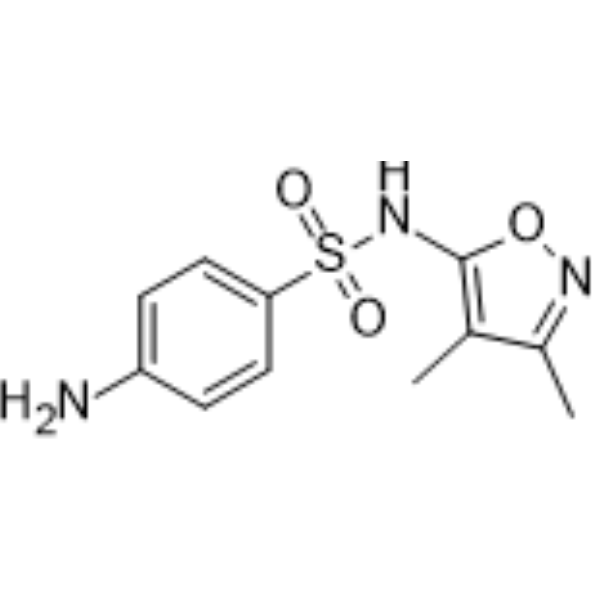
Sulfisoxazole (Sulfafurazole) is an orally active endothelin receptor antagonist with IC50 values of 0.60 μM and 22 μM against endothelin receptor A and endothelin receptor B, respectively. Sulfisoxazole is a sulfonamide antibacterial agent with an oxazole substituent. Sulfisoxazole inhibits breast cancer exosome release by targeting endothelin receptor A.
For research use only. We do not sell to patients.
- Purity : 99.89%
- CAS No.: 127-69-5
- Formula: C11H13N3O3S
- Molecular Weight:267.30
-
Storage:Powder -20°C, 3 years , 4°C, 2 years ; In solvent -80°C, 2 years , -20°C, 1 year

To place orders, for customer services and technical support, please contact: MedChemExpress USA
Tel: 609-228-6898 E-mail: [email protected] [email protected]


-
 Biological Activity
-
Chemical Information
-
Solvent & Solubility
- Protocols
- Purity & Documentation
- References
-
 Help & FAQs


-
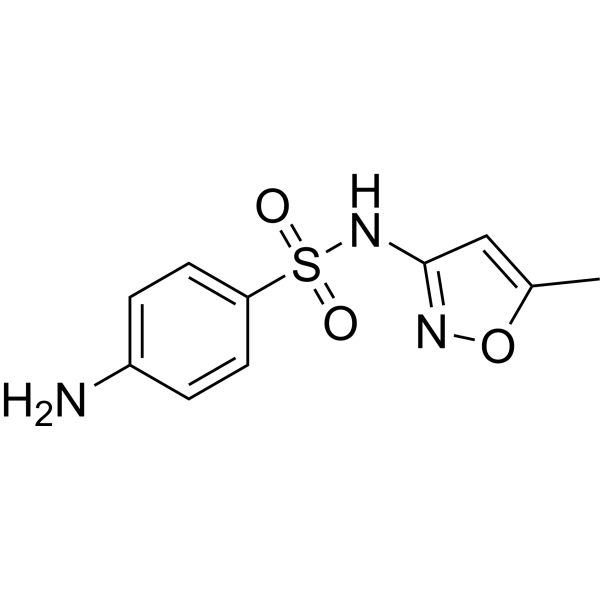
HY-B0322
SulfamethoxazoleSulfonamide Antibiotic -
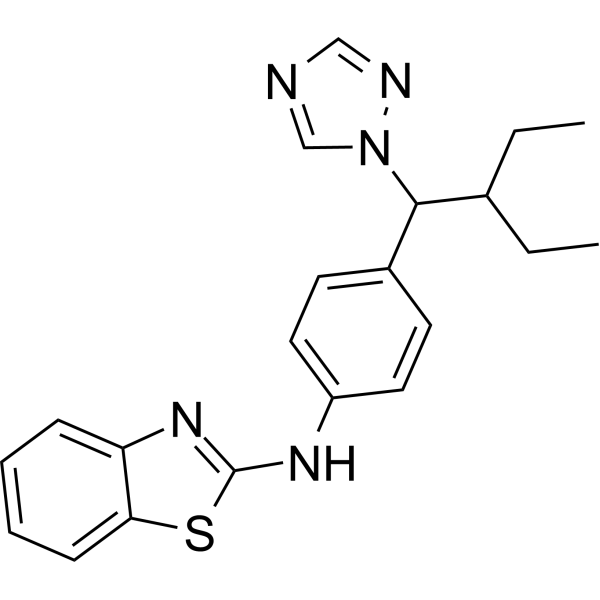
HY-14531
TalarozoleCYP26 Inhibitor/RAMBA -
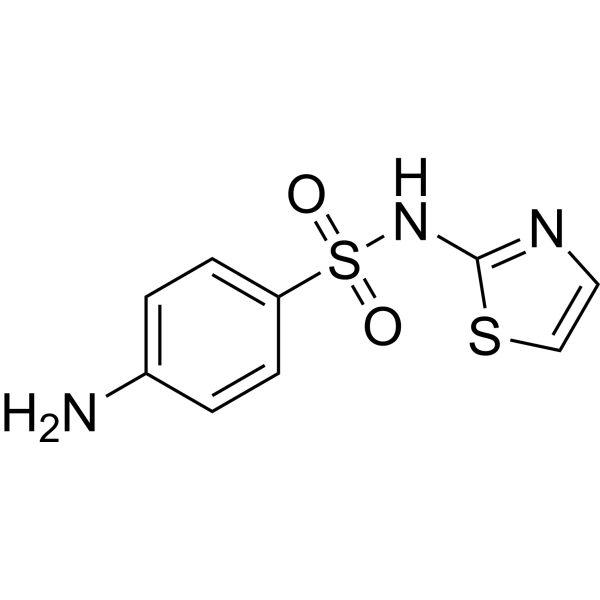
HY-B0507
SulfathiazoleAntibiotics -
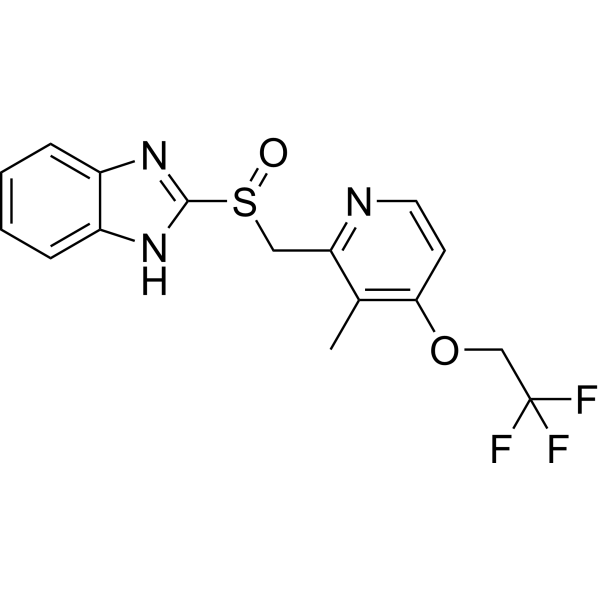
HY-13662
LansoprazoleProton Pump Inhibitor -

HY-B0323R
Sulfisoxazole (Standard)Endothelin Receptor Antagonist -

HY-B0323C
Sulfisoxazole 100 µg/mL in methanol -
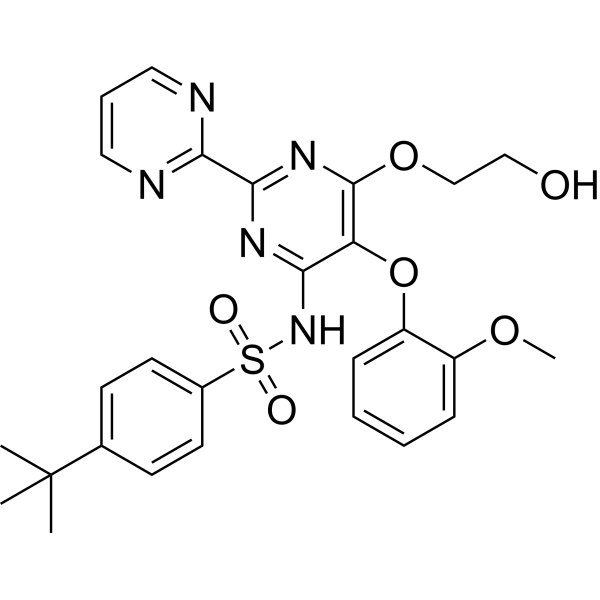
HY-A0013
BosentanET-1 Inhibtior -
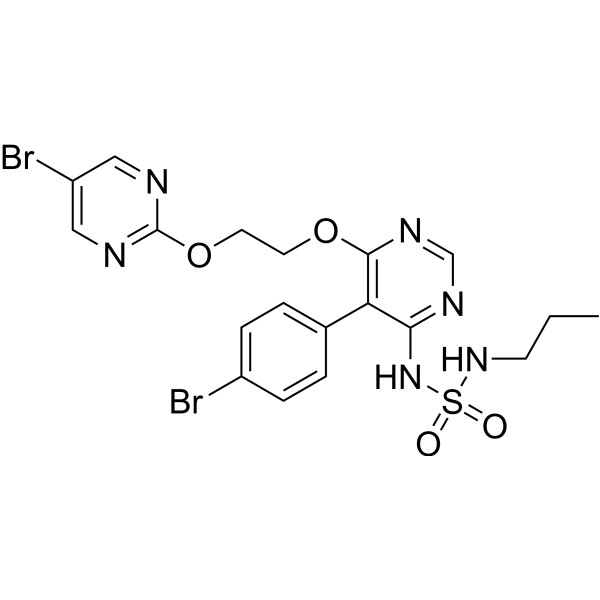
HY-14184
MacitentanETA/ETB Antagonist -
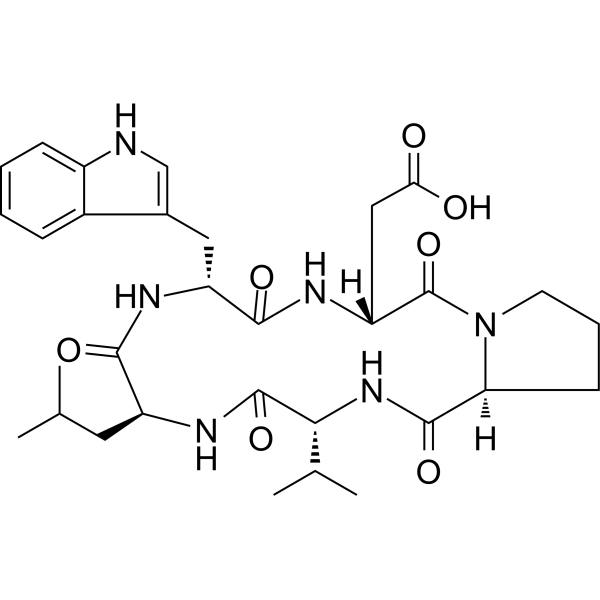
HY-12378
BQ-123ETA Receptor Antagonist -
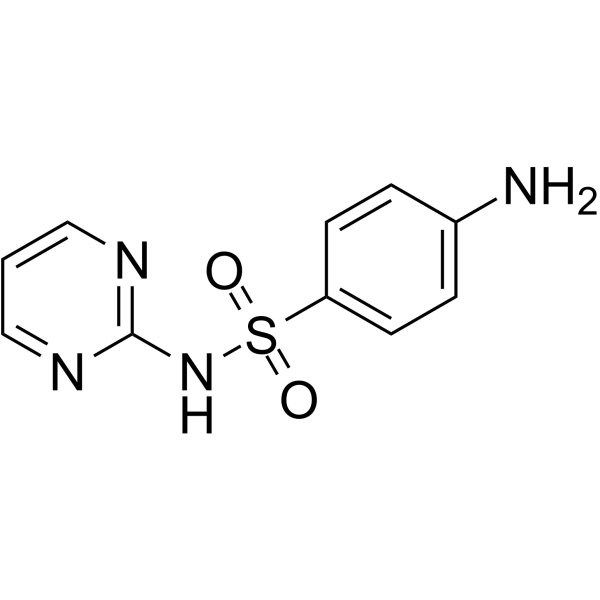
HY-B0273
SulfadiazineSulfonamide Antibiotic -
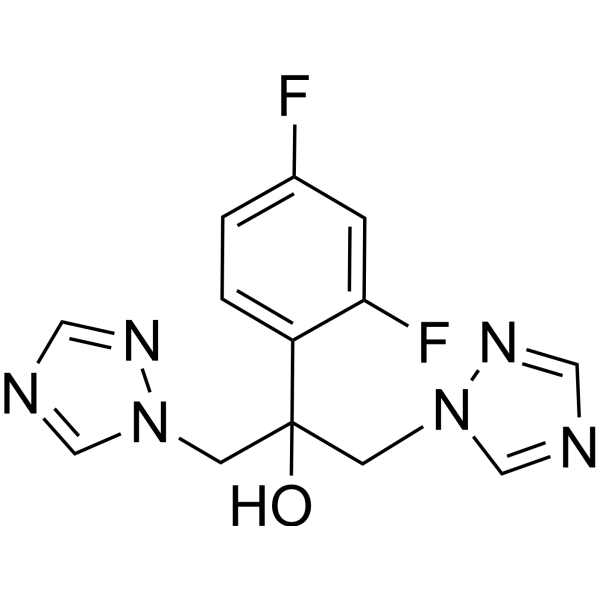
HY-B0101
FluconazoleAntifungal Agent -
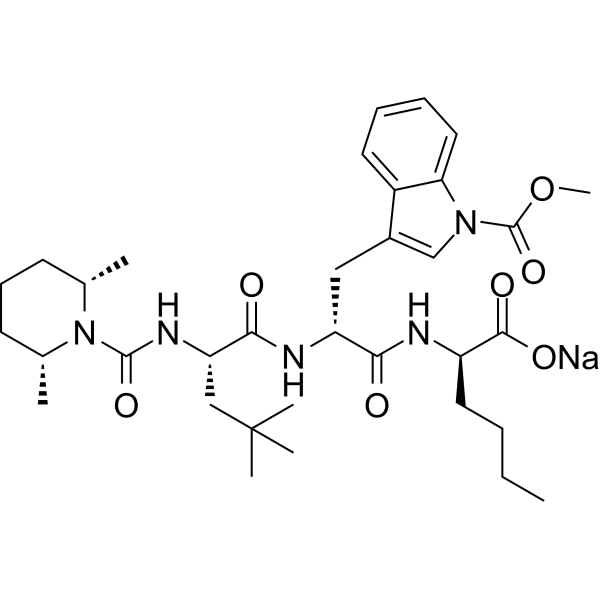
HY-15894
BQ-788 sodium saltETB Receptor Antagonist
Publications Citing Use of MedChemExpress (MCE) Sulfisoxazole
MoreAll Antibiotic Isoforms
More

Biological Activity
Description
IC50 & Target
|
ETA 0.60 μM (IC50) |
ETB 22 μM (IC50) |
Cellular Effect
|
Cell Line

|
Type | Value | Description | References |
|---|---|---|---|---|
| A10 | IC50 |
0.78 μM
Compound: 2
|
Ability to inhibit [125I]ET1 binding to vascular smooth muscle (vsm)- A10 cells
Ability to inhibit [125I]ET1 binding to vascular smooth muscle (vsm)- A10 cells
|
[PMID: 8308857] |
| A7R5 | IC50 |
9 μM
Compound: 5g
|
Displacement of [125 I] ET-1 from rat aortic smooth muscle A7r5 cells transfected with Endothelin A receptor
Displacement of [125 I] ET-1 from rat aortic smooth muscle A7r5 cells transfected with Endothelin A receptor
|
[PMID: 10969989] |
In Vitro
Sulfisoxazole (0-100 μM) inhibits the secretion of sEV in three representative human breast cell lines: MCF10A (normal), MCF7 (weakly invasive), and MDA-MB231 (highly invasive)[2].
Sulfisoxazole (200 μM, 48 h) together with αPD‐L1 recovers the activity of CD8+ cytotoxic T cells by inhibiting secretion of cancer cell (MDA-MB-231) exosomal PD‐L1[3].
Sulfisoxazole (100 μM, 72 h) inhibits the LPS induced elevation of nitric oxide and the reduction in GABA-containing neurones in a primary rat retinal culture[4].
MedChemExpress (MCE) has not independently confirmed the accuracy of these methods. They are for reference only. Further protocols information, click here.
-
Cell Line:MDA-MB-231 cell
-
Concentration:100 μM
-
Incubation Time:24 h
-
Result:Reduced the expression of Rab27a.
In Vivo
Sulfisoxazole (p.o., 200 mg/kg) together with αPD‐L1 (5 mg/kg, i.p.) reduces the tumor growth rate in CT26 tumor‐bearing mice, and boosts the antitumor effect of αPD‐1[3].
Sulfisoxazole (5 μL of 400 μM, injected into the vitreous humour of the ischemic eye) shows neuroprotection effect to the retina of rats with ischemia/reperfusion[4].
MedChemExpress (MCE) has not independently confirmed the accuracy of these methods. They are for reference only.


Chemical Information
-
CAS No. 127-69-5
-
Appearance Solid
-
Molecular Weight 267.30
-
Formula C11H13N3O3S
-
Color White to off-white
-
SMILES
O=S(C1=CC=C(N)C=C1)(NC2=C(C)C(C)=NO2)=O
-
Synonyms
Sulfafurazole
-
Shipping
Room temperature in continental US; may vary elsewhere.
-
Storage
Powder -20°C 3 years 4°C 2 years In solvent -80°C 2 years -20°C 1 year


Publications (5)
-
Journal Impact Factor
-
Most Recent
-
Adv Sci (Weinh)
Local Exosome Inhibition Potentiates Mild Photothermal Immunotherapy Against Breast Cancer. [Abstract]2025 Jan;12(2):e2406328. PMID: 39574346 -
ACS Environ Au
Machine Learning-Assisted Recognition of Environmental Sulfur-Containing Chemicals in Nontargeted Mass Spectrometry Analysis of Inadequate Mass Resolution. [Abstract]2025 Aug 5;5(6):573-582. PMID: 41277996 -
Anal Chem
Exposome-Scale Investigation of Cl-/Br-Containing Chemicals Using High-Resolution Mass Spectrometry, Multistage Machine Learning, and Cloud Computing. [Abstract]2025 Jun 3;97(21):11099-11109. PMID: 40401576 -
Biology (Basel)
Repurposing of Antibiotic Sulfisoxazole Inhibits Lipolysis in Pre-Clinical Model of Cancer-Associated Cachexia. [Abstract]2021 Jul 22;10(8):700. PMID: 34439933 -
Chemosphere
Sustainable production of Fe-doped MnO2 nanoparticles for accelerated tetracycline antibiotic detoxification. [Abstract]2023 Dec:344:140353. PMID: 37797898


Solvent & Solubility
In Vitro:
DMSO : ≥ 150 mg/mL (561.17 mM; Hygroscopic DMSO has a significant impact on the solubility of product, please use newly opened DMSO)
* "≥" means soluble, but saturation unknown.
Please refer to the solubility information to select the appropriate solvent. Once prepared, please aliquot and store the solution to prevent product inactivation from repeated freeze-thaw cycles.
Storage method and period of stock solution: -80°C, 2 years; -20°C, 1 year. When stored at -80°C, please use it within 2 years. When stored at -20°C, please use it within 1 year.
Please refer to the solubility information to select the appropriate solvent. Once prepared, please aliquot and store the solution to prevent product inactivation from repeated freeze-thaw cycles.
Storage method and period of stock solution: -80°C, 2 years; -20°C, 1 year. When stored at -80°C, please use it within 2 years. When stored at -20°C, please use it within 1 year.
Concentration (start) × Volume (start) = Concentration (final) × Volume (final)
In Vivo:
Select the appropriate dissolution method based on your experimental animal and administration route.
- For the following dissolution methods, please ensure to first prepare a clear stock solution using an In Vitro approach and then sequentially add co-solvents:
- To ensure reliable experimental results, the clarified stock solution can be appropriately stored based on storage conditions. As for the working solution for In Vivo experiments, it is recommended to prepare freshly and use it on the same day.
- The percentages shown for the solvents indicate their volumetric ratio in the final prepared solution. If precipitation or phase separation occurs during preparation, heat and/or sonication can be used to aid dissolution.
Add each solvent one by one: 10% DMSO 40% PEG300 5% Tween-80 45% Saline
Solubility: ≥ 2.5 mg/mL (9.35 mM); Clear solution
This protocol yields a clear solution of ≥ 2.5 mg/mL (saturation unknown).
Taking 1 mL working solution as an example, add 100 μL DMSO stock solution (25.0 mg/mL) to 400 μL PEG300, and mix evenly; then add 50 μL Tween-80 and mix evenly; then add 450 μL Saline to adjust the volume to 1 mL.
Preparation of Saline: Dissolve 0.9 g sodium chloride in ddH₂O and dilute to 100 mL to obtain a clear Saline solution.
Add each solvent one by one: 10% DMSO 90% (20% SBE-β-CD in Saline)
Solubility: ≥ 2.5 mg/mL (9.35 mM); Clear solution
This protocol yields a clear solution of ≥ 2.5 mg/mL (saturation unknown).
Taking 1 mL working solution as an example, add 100 μL DMSO stock solution (25.0 mg/mL) to 900 μL 20% SBE-β-CD in Saline, and mix evenly.
Preparation of 20% SBE-β-CD in Saline (4°C, storage for one week): 2 g SBE-β-CD powder is dissolved in 10 mL Saline, completely dissolve until clear.
In Vivo Dissolution Calculator
Please enter the basic information of animal experiments:
-
-
-
-
Recommended: Prepare an additional quantity of animals to account for potential losses during experiments.
Please enter your animal formula composition:
-
%DMSO +
Recommended: Keep the proportion of DMSO in working solution below 2% if your animal is weak.
-
%+
-
+%Tween-80 + +
-
%Saline +
The co-solvents required include: DMSO, . All of co-solvents are available by MedChemExpress (MCE). , Tween 80. All of co-solvents are available by MedChemExpress (MCE).
Working solution concentration: 0.22 mg/mL
Method for preparing stock solution: mg drug dissolved in μL DMSO. Stock solution concentration: mg/mL.
1. Take μL DMSO stock solution;
2. Add μL .
μL , mix evenly;
3. Then add μL Tween 80, mix evenly;
4. Then add μL
Please ensure that the stock solution in the first step is dissolved to a clear state, and add co-solvents in sequence. You can use ultrasonic heating (ultrasonic cleaner, recommended frequency 20-40 kHz), vortexing, etc. to assist dissolution.

Protocols
-
Research Protocol for Infectious Diseases
Infectious-disease experiments test how pathogens interact with host barriers, innate immune receptors, inflammatory signaling, pathogen replication, and tissue injury; pattern-recognition receptors such as TLRs, RIG-I-like receptors, NOD-like receptors, and inflammasomes detect microbial molecules and activate NF-κB, interferon, and cytokine responses. The central hypothesis is that infection severity reflects the balance between pathogen burden and host response: protective inflammation restricts pathogen growth, whereas excessive or mislocalized inflammation contributes to tissue damage and disease phenotype. Unresolved questions include which host pathways are protective versus pathogenic, why some infection models fail to translate to human disease, and which combined readouts best predict clinically relevant infection outcomes.
-
Breast Cancer Modeling
Breast cancer is a heterogeneous cancer, and it has been distinguished into four subtypes: luminal A, luminal B, HER2-positive and basal-like. Molecular mutations, epigenetic alterations, hormone exposure and immune microenvironment are related to the progression of breast cancer.


Purity & Documentation
-
Data Sheet (280 KB)
-
SDS (393 KB)
- English - EN (393 KB)
- Français - FR (393 KB)
- Deutsch - DE (393 KB)
- Norwegian - NO (393 KB)
- Español - ES (393 KB)
- Swedish - SV (393 KB)
- Italian - IT (393 KB)
- Korean - KR (393 KB)
- Portuguese - PT (393 KB)
-
Handling Instructions (2659 KB)
References
[1]. Chan, M.F., et al., Identification of a new class of ETA selective endothelin antagonists by pharmacophore directed screening. Biochem Biophys Res Commun, 1994. 201(1): p. 228-34. [Content Brief]
[2]. Im EJ, et al. Sulfisoxazole inhibits the secretion of small extracellular vesicles by targeting the endothelin receptor A. Nat Commun. 2019 Mar 27;10(1):1387. [Content Brief]
[3]. Shin JM, et al. Sulfisoxazole Elicits Robust Antitumour Immune Response Along with Immune Checkpoint Therapy by Inhibiting Exosomal PD-L1. Adv Sci (Weinh). 2022 Feb;9(5):e2103245. [Content Brief]
[4]. Syed H, et al. Sulfisoxazole, an endothelin receptor antagonist, protects retinal neurones from insults of ischemia/reperfusion or lipopolysaccharide. Neurochem Int. 2006 Jun;48(8):708-17. [Content Brief]


Complete Stock Solution Preparation Table
Please refer to the solubility information to select the appropriate solvent. Once prepared, please aliquot and store the solution to prevent product inactivation from repeated freeze-thaw cycles.
Storage method and period of stock solution: -80°C, 2 years; -20°C, 1 year. When stored at -80°C, please use it within 2 years. When stored at -20°C, please use it within 1 year.
| Optional Solvent | Concentration Solvent Mass | 1 mg | 5 mg | 10 mg | 25 mg |
|---|---|---|---|---|---|
| DMSO | 1 mM | 3.7411 mL | 18.7056 mL | 37.4112 mL | 93.5279 mL |
| 5 mM | 0.7482 mL | 3.7411 mL | 7.4822 mL | 18.7056 mL | |
| 10 mM | 0.3741 mL | 1.8706 mL | 3.7411 mL | 9.3528 mL | |
| 15 mM | 0.2494 mL | 1.2470 mL | 2.4941 mL | 6.2352 mL | |
| 20 mM | 0.1871 mL | 0.9353 mL | 1.8706 mL | 4.6764 mL | |
| 25 mM | 0.1496 mL | 0.7482 mL | 1.4964 mL | 3.7411 mL | |
| 30 mM | 0.1247 mL | 0.6235 mL | 1.2470 mL | 3.1176 mL | |
| 40 mM | 0.0935 mL | 0.4676 mL | 0.9353 mL | 2.3382 mL | |
| 50 mM | 0.0748 mL | 0.3741 mL | 0.7482 mL | 1.8706 mL | |
| 60 mM | 0.0624 mL | 0.3118 mL | 0.6235 mL | 1.5588 mL | |
| 80 mM | 0.0468 mL | 0.2338 mL | 0.4676 mL | 1.1691 mL | |
| 100 mM | 0.0374 mL | 0.1871 mL | 0.3741 mL | 0.9353 mL |


Sulfisoxazole Related Classifications
HY-B0323 Related Classifications
 Powered by Bioz