



Traumatic Acid
Based on 3 publication(s) in Google Scholar
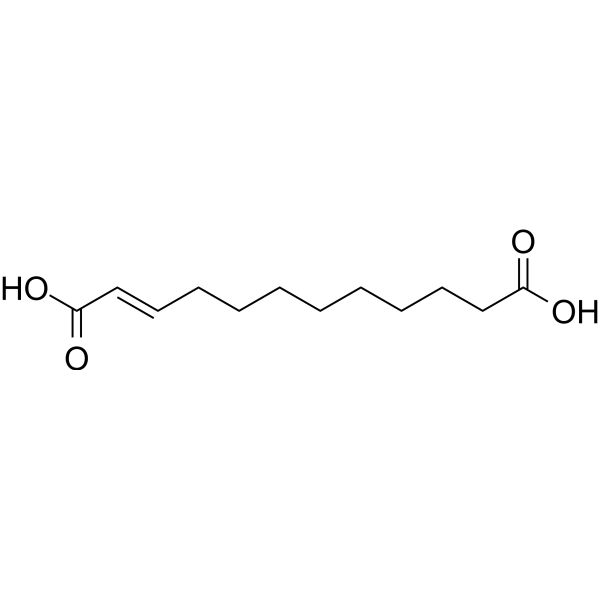
Traumatic Acid is a wound healing agent and a cytokinin (phytohormone). Traumatic Acid enhances the biosynthesis of collagen in cultured human skin fibroblasts. Traumatic Acid inhibits MCF-7 breast cancer cells viability and enhances apoptosis and oxidative stress. Traumatic Acid can be used in studies of cancer, circulatory disorders (including arterial hypertension), and skin diseases associated with oxidative stress and impaired collagen biosynthesis.
For research use only. We do not sell to patients.
- Purity : 99.34%
- CAS No.: 6402-36-4
- Formula: C12H20O4
- Molecular Weight:228.28
-
Storage:
4°C, sealed storage, away from moisture
* In solvent : -80°C, 2 years; -20°C, 1 year (sealed storage, away from moisture)

To place orders, for customer services and technical support, please contact: MedChemExpress USA
Tel: 609-228-6898 E-mail: [email protected] [email protected]


-
 Biological Activity
-
Chemical Information
-
Solvent & Solubility
- Protocols
- Purity & Documentation
- References
-
 Help & FAQs


-

HY-119358R
Traumatic Acid (Standard)Cytokinin -
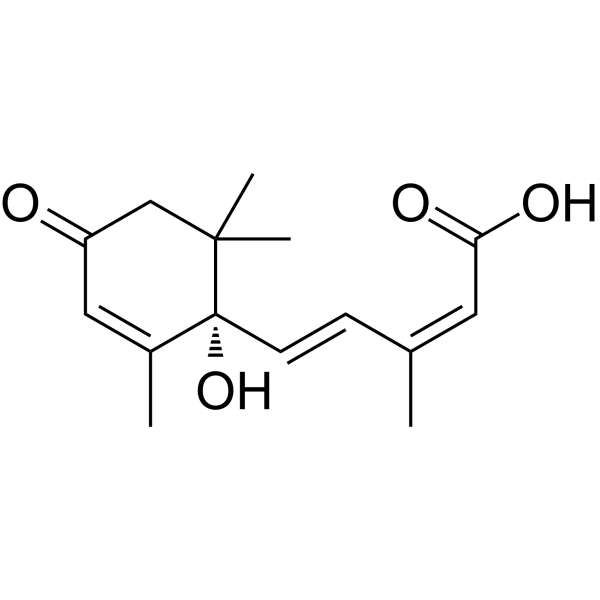
HY-100560
Abscisic acidPlant Hormone -
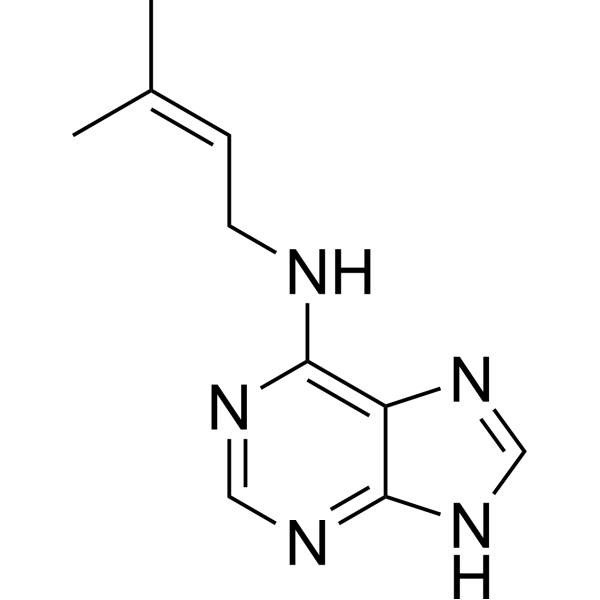
HY-112103
6-(γ,γ-Dimethylallylamino)purineNatural Product -
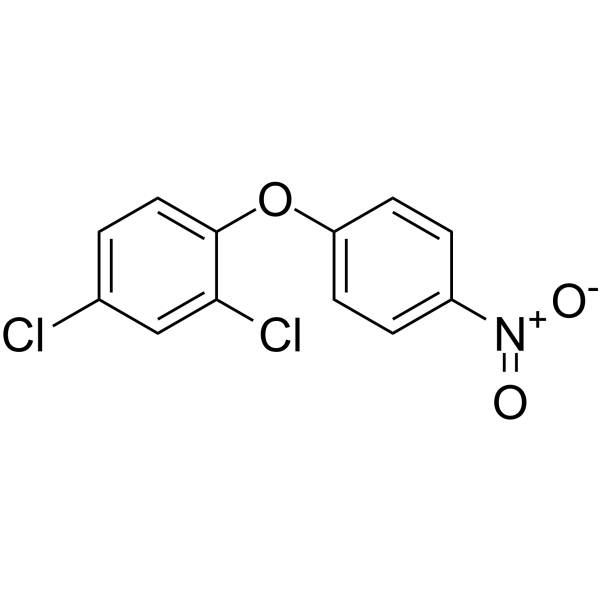
HY-B1877
NitrofenHerbicide Agent -
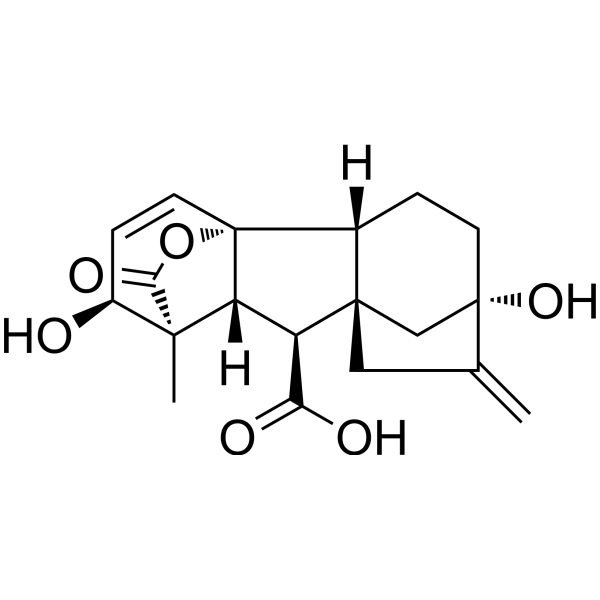
HY-N1964
Gibberellic acidGrowth Regulator -

HY-100560R
Abscisic acid (Standard)Plant Hormone -

HY-B1877R
Nitrofen (Standard)Herbicide Agent -

HY-112103R
6-(γ,γ-Dimethylallylamino)purine (Standard)Natural Product -

HY-N1964A
Gibberellic acid, suitable for plant cell cultureGrowth Regulator -
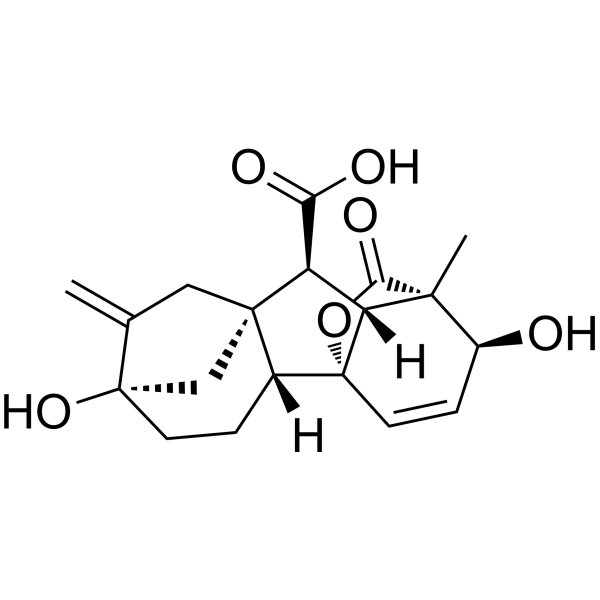
HY-N1964R
Gibberellic acid (Standard)Growth Regulator
Publications Citing Use of MedChemExpress (MCE) Traumatic Acid
More

Biological Activity
Description
IC50 & Target
IC50: collagen biosynthesis[1]
In Vitro
Traumatic Acid (0.1, 1 μM; 5 days) significantly increases cell number in fibroblasts[1].
Traumatic Acid (0.1, 1 μM; 5 days) increases content of GPX activity and reduced glutathione, as well as decreases membrane phospholipid peroxidation in fibroblasts[1].
Traumatic Acid (0.1, 1 μM; 5 days) enhances the production and secretion of medium collagen in medium of fibroblasts[1].
Traumatic Acid (100, 200, 400, 600 μM; 48 h) significantly decreases live cell number, especially after 48h treatment at 100μM and 200μM in MCF-7 cells[2].
Traumatic Acid (50-600 μM; 24, 48 h) causes dose-and time-dependent reduction in cell viability and induces apoptosis in MCF-7 cells[2].
Traumatic Acid (50-200 μM; 24, 48 h) results in an oxidative damage of protein in MCF-7 cells[2].
Traumatic Acid (100, 200 μM; 24, 48 h) efficiently enhances oxidative stress level in MCF-7 cells[2].
MedChemExpress (MCE) has not independently confirmed the accuracy of these methods. They are for reference only. Further protocols information, click here.
-
Cell Line:Fibroblasts
-
Concentration:0.1, 1 µM
-
Incubation Time:5 days
-
Result:Caused a significant increase in cell number, especially on day 1 at a concentration of 1 µM.
Increased cell number of 133 % and 118 % compared to the untreated control cells for concentrations of 1 and 0.1 µM, respectively.
-
Cell Line:Fibroblasts
-
Concentration:0.1, 1 µM
-
Incubation Time:5 days
-
Result:Increased total protein content of 183 % and 90% compared to the control at concentrations of 1 and 0.1 µM on day 1.
Increased collagen content of 72 % at 0.1 µM (on the day 3) and of 51 % at 1 µM (on the day 1) compared to the control.
Increased GPX activity by 111 % and 97 % at concentrations of 1 and 0.1 µM compared to the control.
Increased content of reduced glutathione of 86 % and 80% at 0.1 and 1 µM, respectively.
Decreased membrane phospholipid peroxidation.
-
Cell Line:MCF-7 cells
-
Concentration:100, 200, 400, 600 µM
-
Incubation Time:48 h
-
Result:Decreasd live cell number of about 76% at 100 µM concentration.
-
Cell Line:MCF-7 cells
-
Concentration:50-200 µM
-
Incubation Time:24, 48 h
-
Result:Increased thiol group content of 167% at 100µM and 24 h.
-
Cell Line:MCF-7 cells
-
Concentration:100, 200 µM
-
Incubation Time:24, 48 h
-
Result:Increased the amount of ROS.
-
Cell Line:MCF-7 cells
-
Concentration:50-600 µM
-
Incubation Time:24, 48 h
-
Result:Increased level of apoptosis in a time- and dose-dependent manner.


Chemical Information
-
CAS No. 6402-36-4
-
Appearance Solid
-
Molecular Weight 228.28
-
Formula C12H20O4
-
Color White to off-white
-
SMILES
O=C(O)/C=C/CCCCCCCCC(O)=O
-
Structure Classification
-
Initial Source
-
Shipping
Room temperature in continental US; may vary elsewhere.
-
Storage
4°C, sealed storage, away from moisture
* In solvent : -80°C, 2 years; -20°C, 1 year (sealed storage, away from moisture)


Publications (3)
-
Journal Impact Factor
-
Most Recent
-
Redox Biol
LOX-mediated ECM mechanical stress induces Piezo1 activation in hypoxic-ischemic brain damage and identification of novel inhibitor of LOX. [Abstract]2024 Oct:76:103346. PMID: 39260063 -
Toxicol Sci
Identification of a substrate of the renal tubular transporters for detecting drug-induced early acute kidney injury. [Abstract]2024 Oct 1;201(2):190-205. PMID: 39041788 -


Solvent & Solubility
In Vitro:
DMSO : 250 mg/mL (1095.15 mM; Need ultrasonic; Hygroscopic DMSO has a significant impact on the solubility of product, please use newly opened DMSO)
Please refer to the solubility information to select the appropriate solvent. Once prepared, please aliquot and store the solution to prevent product inactivation from repeated freeze-thaw cycles.
Storage method and period of stock solution: -80°C, 2 years; -20°C, 1 year (sealed storage, away from moisture). When stored at -80°C, please use it within 2 years. When stored at -20°C, please use it within 1 year.
Please refer to the solubility information to select the appropriate solvent. Once prepared, please aliquot and store the solution to prevent product inactivation from repeated freeze-thaw cycles.
Storage method and period of stock solution: -80°C, 2 years; -20°C, 1 year (sealed storage, away from moisture). When stored at -80°C, please use it within 2 years. When stored at -20°C, please use it within 1 year.
Concentration (start) × Volume (start) = Concentration (final) × Volume (final)
In Vivo:
Select the appropriate dissolution method based on your experimental animal and administration route.
- For the following dissolution methods, please ensure to first prepare a clear stock solution using an In Vitro approach and then sequentially add co-solvents:
- To ensure reliable experimental results, the clarified stock solution can be appropriately stored based on storage conditions. As for the working solution for In Vivo experiments, it is recommended to prepare freshly and use it on the same day.
- The percentages shown for the solvents indicate their volumetric ratio in the final prepared solution. If precipitation or phase separation occurs during preparation, heat and/or sonication can be used to aid dissolution.
Add each solvent one by one: 10% DMSO 40% PEG300 5% Tween-80 45% Saline
Solubility: ≥ 2.08 mg/mL (9.11 mM); Clear solution
This protocol yields a clear solution of ≥ 2.08 mg/mL (saturation unknown).
Taking 1 mL working solution as an example, add 100 μL DMSO stock solution (20.8 mg/mL) to 400 μL PEG300, and mix evenly; then add 50 μL Tween-80 and mix evenly; then add 450 μL Saline to adjust the volume to 1 mL.
Preparation of Saline: Dissolve 0.9 g sodium chloride in ddH₂O and dilute to 100 mL to obtain a clear Saline solution.
Add each solvent one by one: 10% DMSO 90% (20% SBE-β-CD in Saline)
Solubility: ≥ 2.08 mg/mL (9.11 mM); Clear solution
This protocol yields a clear solution of ≥ 2.08 mg/mL (saturation unknown).
Taking 1 mL working solution as an example, add 100 μL DMSO stock solution (20.8 mg/mL) to 900 μL 20% SBE-β-CD in Saline, and mix evenly.
Preparation of 20% SBE-β-CD in Saline (4°C, storage for one week): 2 g SBE-β-CD powder is dissolved in 10 mL Saline, completely dissolve until clear.
In Vivo Dissolution Calculator
Please enter the basic information of animal experiments:
-
-
-
-
Recommended: Prepare an additional quantity of animals to account for potential losses during experiments.
Please enter your animal formula composition:
-
%DMSO +
Recommended: Keep the proportion of DMSO in working solution below 2% if your animal is weak.
-
%+
-
+%Tween-80 + +
-
%Saline +
The co-solvents required include: DMSO, . All of co-solvents are available by MedChemExpress (MCE). , Tween 80. All of co-solvents are available by MedChemExpress (MCE).
Working solution concentration: 0.22 mg/mL
Method for preparing stock solution: mg drug dissolved in μL DMSO. Stock solution concentration: mg/mL. * In solvent : -80°C, 2 years; -20°C, 1 year (sealed storage, away from moisture)
1. Take μL DMSO stock solution;
2. Add μL .
μL , mix evenly;
3. Then add μL Tween 80, mix evenly;
4. Then add μL
Please ensure that the stock solution in the first step is dissolved to a clear state, and add co-solvents in sequence. You can use ultrasonic heating (ultrasonic cleaner, recommended frequency 20-40 kHz), vortexing, etc. to assist dissolution.

Protocols
-
Apoptosis
Apoptosis, also called programmed cell death, is generally characterized by distinct morphological characteristics.
-
TUNEL staining for apoptotic DNA fragmentation
TUNEL staining detects DNA strand breaks by using terminal deoxynucleotidyl transferase to add labeled nucleotides to exposed 3′-OH DNA termini, generating either microscopic staining in fixed cells or tissue sections, or fluorescence/cytometric signal in cell suspensions. TUNEL positivity reflects DNA fragmentation but should not be interpreted alone as definitive apoptosis, because TUNEL can also label necrotic, autolytic, mechanically damaged, or DNA-repair-associated DNA breaks.
-
Annexin V plus membrane-impermeant dye apoptosis staining
Annexin V-based apoptosis assays rely on the detection of phosphatidylserine (PS) externalization from the inner leaflet of the plasma membrane to the outer leaflet, an early biochemical hallmark of apoptosis. Fluorescently labeled Annexin V binds PS in a calcium-dependent manner, enabling identification of early apoptotic cells by flow cytometry or fluorescence microscopy. When combined with a membrane-impermeant DNA-binding dye (e. g. , propidium iodide), this approach allows discrimination between viable (Annexin V−/dye−), early apoptotic (Annexin V+/dye−), and late apoptotic or necrotic (Annexin V+/dye+) cell populations by assessing membrane integrity and PS exposure.
-
Cell migration
Cell migration is a method that plays an important role in wound healing, cell differentiation, embryonic development, etc.
-
ROS/oxidative-stress fluorescent staining
ROS/oxidative-stress fluorescent staining uses cell-permeant fluorogenic probes that become fluorescent after oxidation inside cells or tissues; commonly used examples include DCFH-DA/DCFDA for broad cellular oxidant detection, DHE for superoxide-related signal detection, MitoSOX for mitochondrial superoxide-related signal detection, and CellROX probes for oxidative-stress-associated fluorescence readouts. The assay detects probe oxidation rather than a single ROS species unless the probe and analysis method have been chemically validated for that species. DCFH-DA enters cells, is deacetylated by intracellular esterases to DCFH, and produces fluorescent DCF after oxidation, so the readout is used as an operational measure of total cellular oxidative stress rather than a species-specific ROS measurement. DHE and MitoSOX can report superoxide-related oxidation, but red fluorescence alone can include non-specific ethidium-like oxidation products; HPLC or optimized spectral approaches are
-
Apoptosis Solutions
Apoptosis is a regulated, generally non-lytic cell-death pathway that removes unwanted, damaged, infected, or abnormal cells through coordinated morphological changes, caspase activation, DNA fragmentation, and membrane remodeling. The intrinsic apoptosis pathway is controlled mainly by mitochondrial outer membrane permeabilization, BCL-2 family proteins, cytochrome c release, apoptosome formation, caspase-9 activation, and downstream executioner caspase-3/7 activation. The extrinsic apoptosis pathway is initiated by death receptors such as Fas, TNFR, and TRAIL receptors, which recruit adaptor proteins and activate caspase-8 before engaging executioner caspases or mitochondrial amplification through BID cleavage. Apoptosis is linked to many phenotypes, including cancer cell killing, tissue homeostasis, immune regulation, neurodegeneration, infection response, and treatment-induced cytotoxicity; unresolved questions include how apoptosis interacts with necroptosis, pyroptosis, ferroptos
-
Research Protocol for Cardiovascular Diseases
Cardiovascular disease can be modeled as maladaptive cardiac remodeling, where ischemic injury or pressure overload activates inflammatory signaling, fibroblast activation, extracellular-matrix deposition, cardiomyocyte hypertrophy, vascular remodeling, and progressive ventricular dysfunction. The TGF-β/SMAD axis is a central profibrotic pathway after myocardial injury and pressure overload, while innate immune and cytokine pathways regulate leukocyte recruitment, scar formation, and adverse remodeling. Key unresolved questions include which inflammatory signals are reparative versus harmful, when fibrosis is protective versus maladaptive, and whether pathway inhibition improves function without weakening necessary infarct healing or compensatory remodeling.
-
Cell-Exclusion Zone Migration Assay
The Cell-Exclusion Zone (CEZ) migration assay is an in vitro 2D cell migration method in which a defined cell-free area is created using removable physical barriers such as silicone stoppers, allowing cells to be seeded around the barrier and subsequently migrate into the cleared zone after barrier removal. This approach enables quantification of collective cell migration by monitoring repopulation of the initially cell-free region over time using microscopy-based imaging. Compared with scratch-based wound healing assays, barrier-based exclusion methods are designed to avoid mechanical damage to the extracellular matrix and reduce injury-induced effects on boundary cells, thereby improving interpretability of migration behavior in vitro. The assay readout is typically the progressive reduction in the cell-free area or the number of cells invading the exclusion zone, reflecting coordinated cell motility relevant to physiological processes such as wound healing, epithelial repair, and ca
-
Breast Cancer Modeling
Breast cancer is a heterogeneous cancer, and it has been distinguished into four subtypes: luminal A, luminal B, HER2-positive and basal-like. Molecular mutations, epigenetic alterations, hormone exposure and immune microenvironment are related to the progression of breast cancer.
-
Cell Viability Determination by MTT Colorimetric Assay
The following protocol uses the MTT colorimetric assay as a classic literature-established method for assessing cell viability/metabolic activity in cultured mammalian cells. MTT[3-(4,5-dimethylthiazol-2-yl)-2,5-diphenyltetrazolium bromide] is reduced by metabolically active cells to a colored formazan product; the amount of formazan is quantified spectrophotometrically and provides an indirect measure of metabolically active viable cells. Importantly, MTT reduction reflects cellular oxidoreductase/metabolic activity rather than an absolute direct count of living cells, so changes in cellular metabolism can alter the signal independently of cell number.


Purity & Documentation
-
Data Sheet (274 KB)
-
SDS (393 KB)
- English - EN (393 KB)
- Français - FR (393 KB)
- Deutsch - DE (393 KB)
- Norwegian - NO (393 KB)
- Español - ES (393 KB)
- Swedish - SV (393 KB)
- Italian - IT (393 KB)
- Korean - KR (393 KB)
- Portuguese - PT (393 KB)
-
Handling Instructions (2659 KB)
References
[1]. Jabłońska-Trypuć A, et al. Traumatic Acid Reduces Oxidative Stress and Enhances Collagen Biosynthesis in Cultured Human Skin Fibroblasts.Lipids. 2016 Sep;51(9):1021-35. [Content Brief]
[2]. Jabłońska-Trypuć A, et al. Traumatic acid toxicity mechanisms in human breast cancer MCF-7 cells. Regul Toxicol Pharmacol. 2019 Aug;106:137-146. [Content Brief]


Complete Stock Solution Preparation Table
Please refer to the solubility information to select the appropriate solvent. Once prepared, please aliquot and store the solution to prevent product inactivation from repeated freeze-thaw cycles.
Storage method and period of stock solution: -80°C, 2 years; -20°C, 1 year (sealed storage, away from moisture). When stored at -80°C, please use it within 2 years. When stored at -20°C, please use it within 1 year.
| Optional Solvent | Concentration Solvent Mass | 1 mg | 5 mg | 10 mg | 25 mg |
|---|---|---|---|---|---|
| DMSO | 1 mM | 4.3806 mL | 21.9029 mL | 43.8059 mL | 109.5146 mL |
| 5 mM | 0.8761 mL | 4.3806 mL | 8.7612 mL | 21.9029 mL | |
| 10 mM | 0.4381 mL | 2.1903 mL | 4.3806 mL | 10.9515 mL | |
| 15 mM | 0.2920 mL | 1.4602 mL | 2.9204 mL | 7.3010 mL | |
| 20 mM | 0.2190 mL | 1.0951 mL | 2.1903 mL | 5.4757 mL | |
| 25 mM | 0.1752 mL | 0.8761 mL | 1.7522 mL | 4.3806 mL | |
| 30 mM | 0.1460 mL | 0.7301 mL | 1.4602 mL | 3.6505 mL | |
| 40 mM | 0.1095 mL | 0.5476 mL | 1.0951 mL | 2.7379 mL | |
| 50 mM | 0.0876 mL | 0.4381 mL | 0.8761 mL | 2.1903 mL | |
| 60 mM | 0.0730 mL | 0.3650 mL | 0.7301 mL | 1.8252 mL | |
| 80 mM | 0.0548 mL | 0.2738 mL | 0.5476 mL | 1.3689 mL | |
| 100 mM | 0.0438 mL | 0.2190 mL | 0.4381 mL | 1.0951 mL |


Traumatic Acid Related Classifications
HY-119358 Related Classifications
 Powered by Bioz