



Chiglitazar
Based on 1 publication(s) in Google Scholar
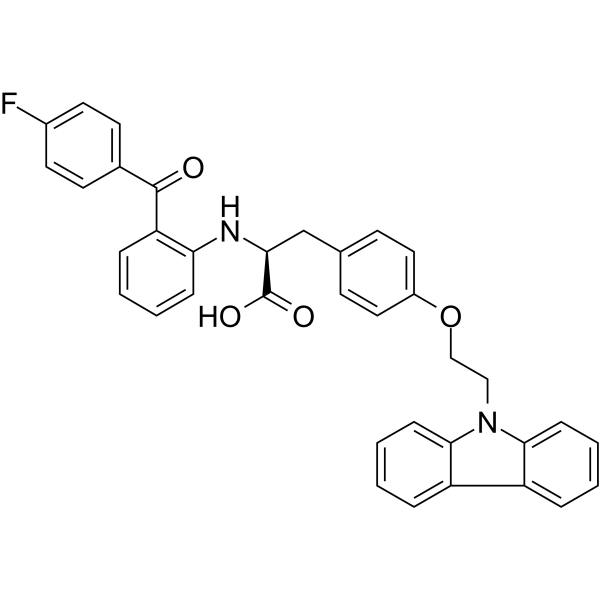
Chiglitazar (Carfloglitazar) is a PPARα/γ dual agonist, with EC50s of 1.2, 0.08, 1.7 μM for PPARα, PPARγ and PPARδ, respectively.
Nos produits utilisent uniquement pour la recherche. Nous ne vendons pas aux patients.
- Pureté : 99.70%
- CAS No.: 743438-45-1
- Formule: C36H29FN2O4
- Masse moléculaire:572.62
-
Stockage:
Please store the product under the recommended conditions in the Certificate of Analysis.

To place orders, for customer services and technical support, please contact: MedChemExpress USA
Tel: 609-228-6898 E-mail: [email protected] [email protected]


-
 Activité biologique
-
Chemical Information
-
Solvant et solubilité
- Pureté et documentation
- Références
-
 Help & FAQs


-
HY-17386
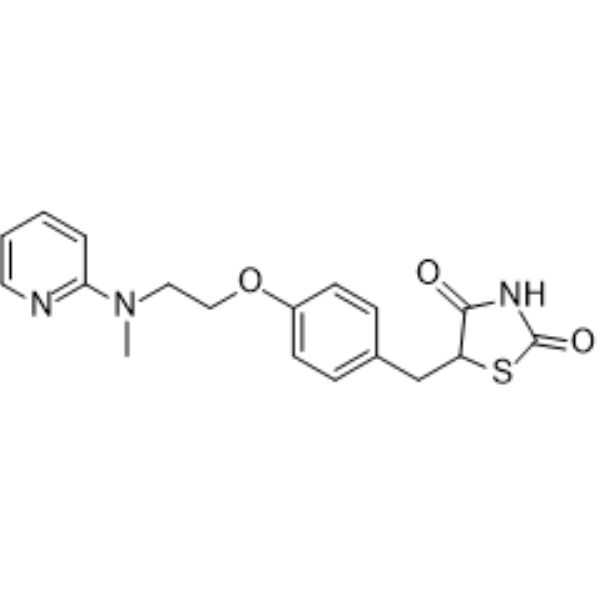
RosiglitazonePPARγ Agonist -
HY-13956
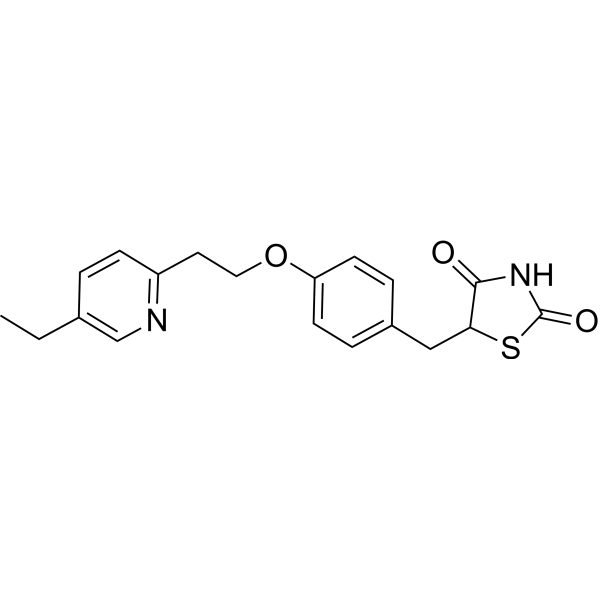
PioglitazonePPARγ Agonist -
HY-19937
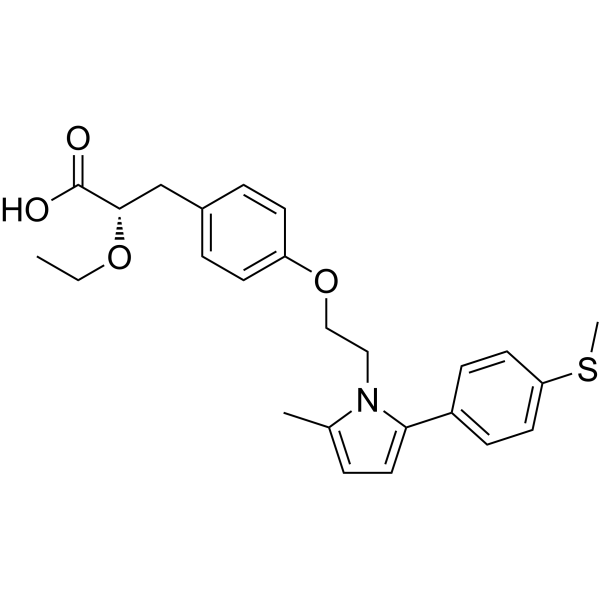
SaroglitazarPPAR Agonist -
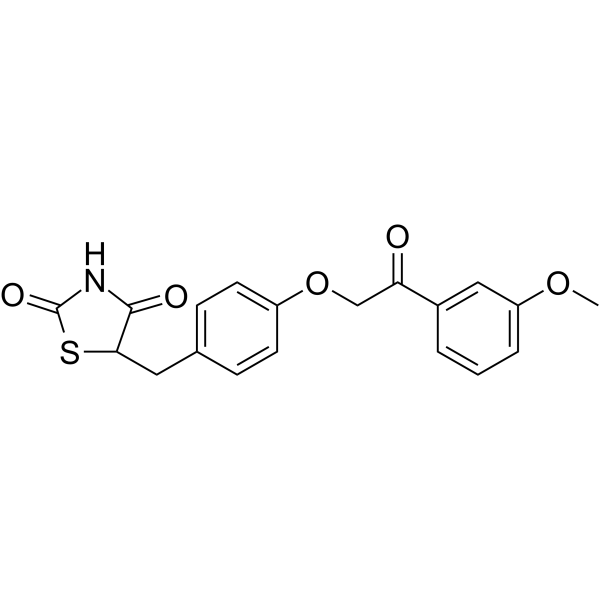
HY-108022
AzemiglitazoneMPC Inhibitor -
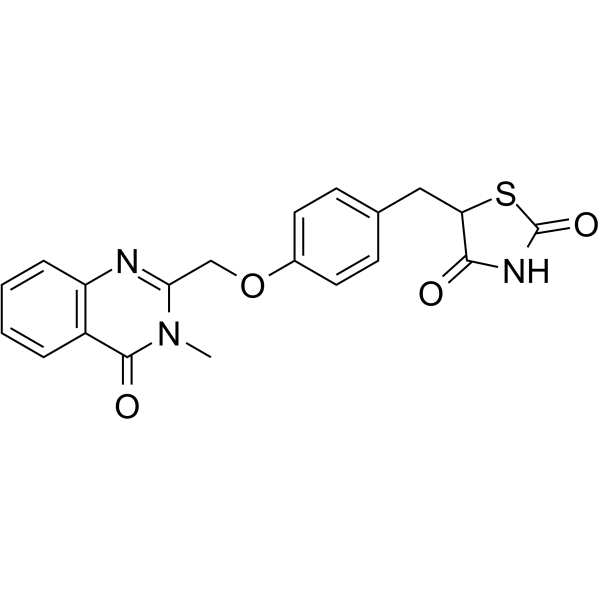
HY-16086
Balaglitazone -
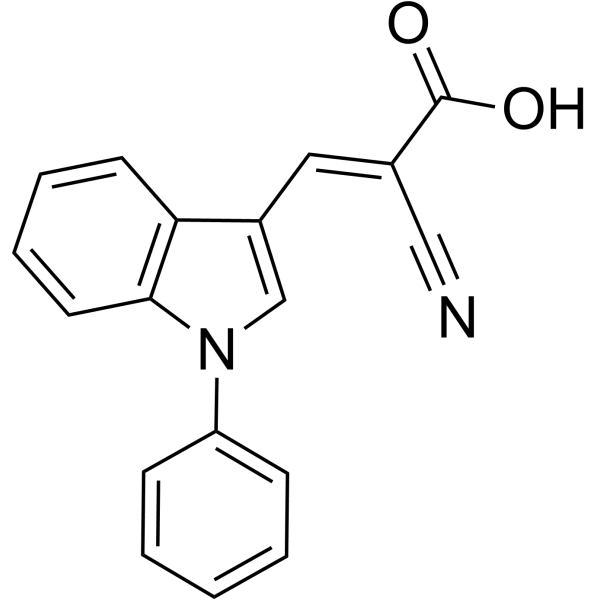
HY-15475
UK-5099Mitochondrial Pyruvate Carrier Inhibitor -
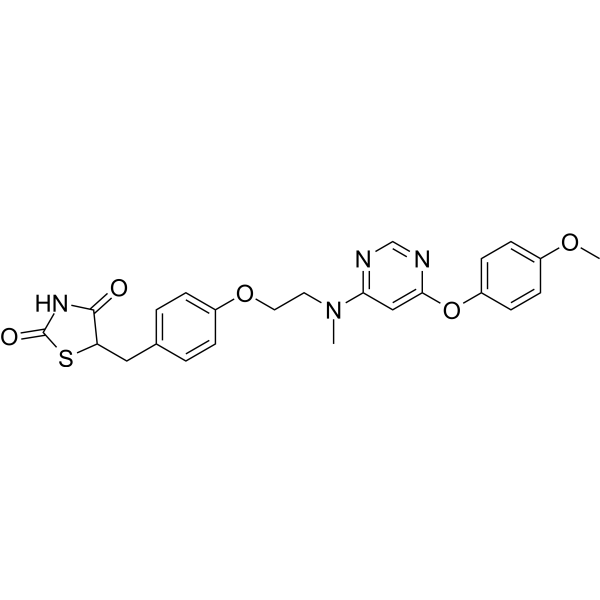
HY-14928
LobeglitazonePPAR Agonist -
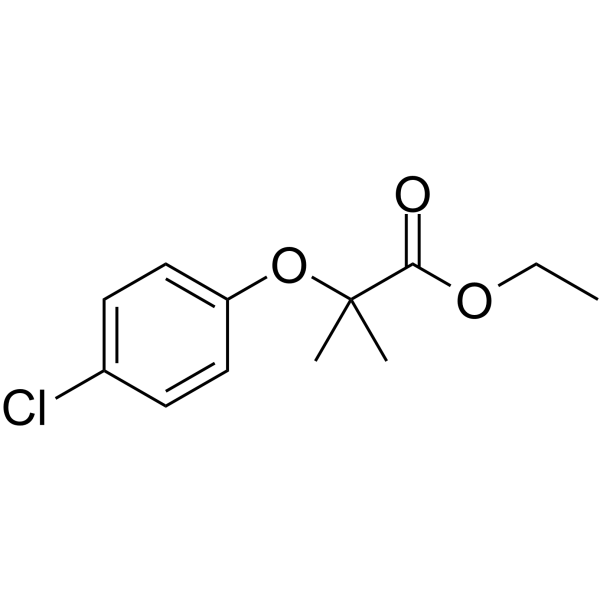
HY-B0287
ClofibratePPAR Agonist -
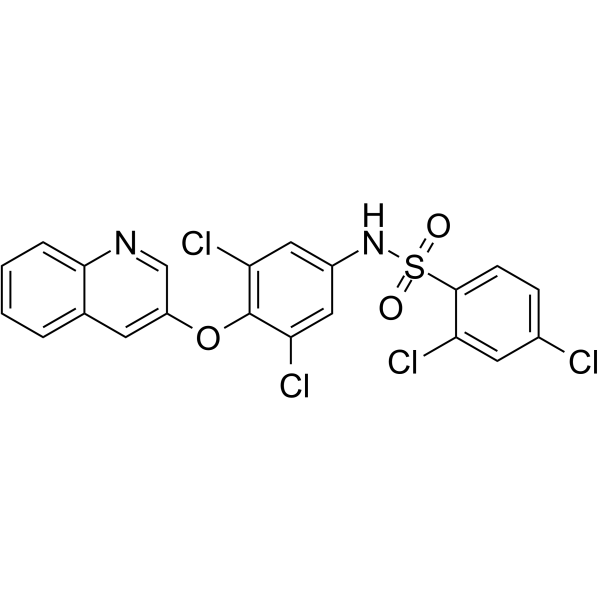
HY-117103
AMG131PPARγ Agonist -
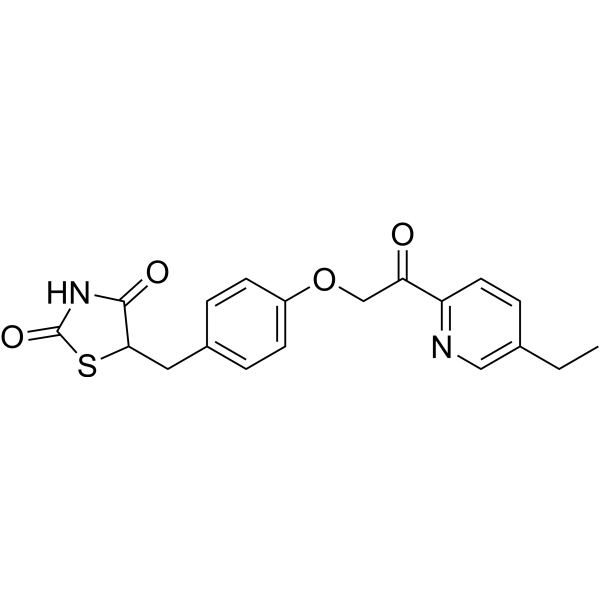
HY-100550
MSDC 0160Insulin Sensitizer -
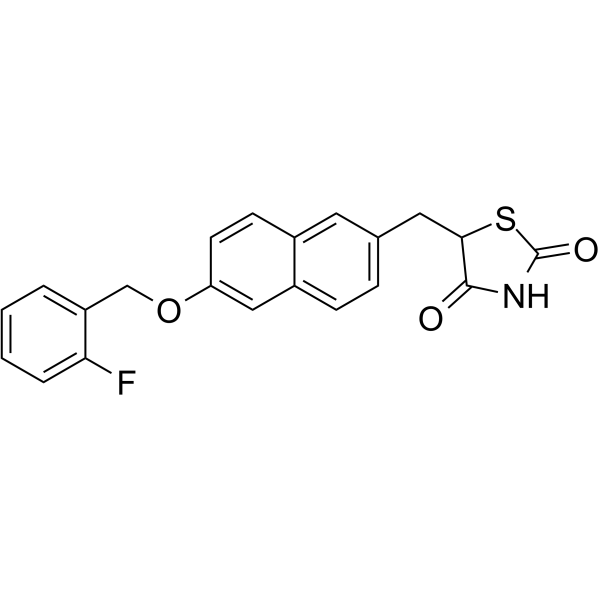
HY-100428
NetoglitazonePPARγ Ligand -
HY-12483
SR1664PPARγ Antagonist
Publications Citing Use of MedChemExpress (MCE) Chiglitazar
More

Activité biologique
Description
|
PPARα 1.8 μM (EC50) |
PPARγ 0.08 μM (EC50) |
PPARδ 1.7 μM (EC50) |
In Vitro
Comparative dose-response study of Chiglitazar is performed with rosiglitazone and pioglitazone for PPARγ, and WY14643 for PPARα. Chiglitazar shows significant activation of both the isoforms. Chiglitazar shows weaker PPARγ activating activity than rosiglitazone, but stronger than pioglitazone. In terms of PPARα activation, Chiglitazar shows more potent activity than rosiglitazone, pioglitazone, or WY14643 which is a selective PPARα agonist[1].
MedChemExpress (MCE) has not independently confirmed the accuracy of these methods. They are for reference only.
In Vivo
MedChemExpress (MCE) has not independently confirmed the accuracy of these methods. They are for reference only.
Essai clinique
| NCT Number | Sponsor | Condition | Start Date |
Phase

|
|---|---|---|---|---|
| NCT01329991 | 2011-05 | PHASE1 |


Chemical Information
-
CAS No. 743438-45-1
-
Appearance Solid
-
Masse moléculaire 572.62
-
Formule C36H29FN2O4
-
Color Light yellow to yellow
-
SMILES
O=C(C1=CC=C(F)C=C1)C(C=CC=C2)=C2N[C@H](C(O)=O)CC(C=C3)=CC=C3OCCN4C5=CC=CC=C5C6=CC=CC=C46
-
Synonyms
Carfloglitazar
-
Livraison
Room temperature in continental US; may vary elsewhere.
-
Stockage
Please store the product under the recommended conditions in the Certificate of Analysis.


Publications (1)
-
Journal Impact Factor
-
Most Recent
-
Diabetes Obes Metab
Dapagliflozin and chiglitazar combination enhanced myocardial energy metabolism in high-fat diet-fed mice. [Abstract]2025 Dec 17. PMID: 41403279


Solvant et solubilité
In Vitro:
DMSO : 100 mg/mL (174.64 mM; Need ultrasonic; Hygroscopic DMSO has a significant impact on the solubility of product, please use newly opened DMSO)
Concentration (start) × Volume (start) = Concentration (final) × Volume (final)
In Vivo:
Select the appropriate dissolution method based on your experimental animal and administration route.
- For the following dissolution methods, please ensure to first prepare a clear stock solution using an In Vitro approach and then sequentially add co-solvents:
- To ensure reliable experimental results, the clarified stock solution can be appropriately stored based on storage conditions. As for the working solution for In Vivo experiments, it is recommended to prepare freshly and use it on the same day.
- The percentages shown for the solvents indicate their volumetric ratio in the final prepared solution. If precipitation or phase separation occurs during preparation, heat and/or sonication can be used to aid dissolution.
Add each solvent one by one: 10% DMSO 40% PEG300 5% Tween-80 45% Saline
Solubility: ≥ 2.5 mg/mL (4.37 mM); Clear solution
This protocol yields a clear solution of ≥ 2.5 mg/mL (saturation unknown).
Taking 1 mL working solution as an example, add 100 μL DMSO stock solution (25.0 mg/mL) to 400 μL PEG300, and mix evenly; then add 50 μL Tween-80 and mix evenly; then add 450 μL Saline to adjust the volume to 1 mL.
Preparation of Saline: Dissolve 0.9 g sodium chloride in ddH₂O and dilute to 100 mL to obtain a clear Saline solution.
In Vivo Dissolution Calculator
Please enter the basic information of animal experiments:
-
-
-
-
Recommended: Prepare an additional quantity of animals to account for potential losses during experiments.
Please enter your animal formula composition:
-
%DMSO +
Recommended: Keep the proportion of DMSO in working solution below 2% if your animal is weak.
-
%+
-
+%Tween-80 + +
-
%Saline +
The co-solvents required include: DMSO, . All of co-solvents are available by MedChemExpress (MCE). , Tween 80. All of co-solvents are available by MedChemExpress (MCE).
Working solution concentration: 0.22 mg/mL
Method for preparing stock solution: mg drug dissolved in μL DMSO. Stock solution concentration: mg/mL.
1. Take μL DMSO stock solution;
2. Add μL .
μL , mix evenly;
3. Then add μL Tween 80, mix evenly;
4. Then add μL
Please ensure that the stock solution in the first step is dissolved to a clear state, and add co-solvents in sequence. You can use ultrasonic heating (ultrasonic cleaner, recommended frequency 20-40 kHz), vortexing, etc. to assist dissolution.


Pureté et documentation
-
Fiche technique (278 KB)
-
SDS (252 KB)
- English - EN (252 KB)
- Français - FR (252 KB)
- Deutsch - DE (252 KB)
- Norwegian - NO (252 KB)
- Español - ES (252 KB)
- Swedish - SV (252 KB)
- Italian - IT (252 KB)
- Korean - KR (252 KB)
- Portuguese - PT (252 KB)
-
Instruction de manipulation (2659 KB)
Références
[1]. Li PP, et al. The PPARalpha/gamma dual agonist chiglitazar improves insulin resistance and dyslipidemia in MSG obese rats. Br J Pharmacol. 2006 Jul;148(5):610-8. [Content Brief]
[2]. He BK, et al. In Vitro and In Vivo Characterizations of Chiglitazar, a Newly Identified PPAR Pan-Agonist. PPAR Res. 2012;2012:546548. [Content Brief]


Complete Stock Solution Preparation Table
| Optional Solvent | Concentration Solvent Mass | 1 mg | 5 mg | 10 mg | 25 mg |
|---|---|---|---|---|---|
| DMSO | 1 mM | 1.7464 mL | 8.7318 mL | 17.4636 mL | 43.6590 mL |
| 5 mM | 0.3493 mL | 1.7464 mL | 3.4927 mL | 8.7318 mL | |
| 10 mM | 0.1746 mL | 0.8732 mL | 1.7464 mL | 4.3659 mL | |
| 15 mM | 0.1164 mL | 0.5821 mL | 1.1642 mL | 2.9106 mL | |
| 20 mM | 0.0873 mL | 0.4366 mL | 0.8732 mL | 2.1829 mL | |
| 25 mM | 0.0699 mL | 0.3493 mL | 0.6985 mL | 1.7464 mL | |
| 30 mM | 0.0582 mL | 0.2911 mL | 0.5821 mL | 1.4553 mL | |
| 40 mM | 0.0437 mL | 0.2183 mL | 0.4366 mL | 1.0915 mL | |
| 50 mM | 0.0349 mL | 0.1746 mL | 0.3493 mL | 0.8732 mL | |
| 60 mM | 0.0291 mL | 0.1455 mL | 0.2911 mL | 0.7276 mL | |
| 80 mM | 0.0218 mL | 0.1091 mL | 0.2183 mL | 0.5457 mL | |
| 100 mM | 0.0175 mL | 0.0873 mL | 0.1746 mL | 0.4366 mL |


Chiglitazar Related Classifications
HY-106266 Related Classifications
 Powered by Bioz