



Fenoldopam
Based on 4 publication(s) in Google Scholar
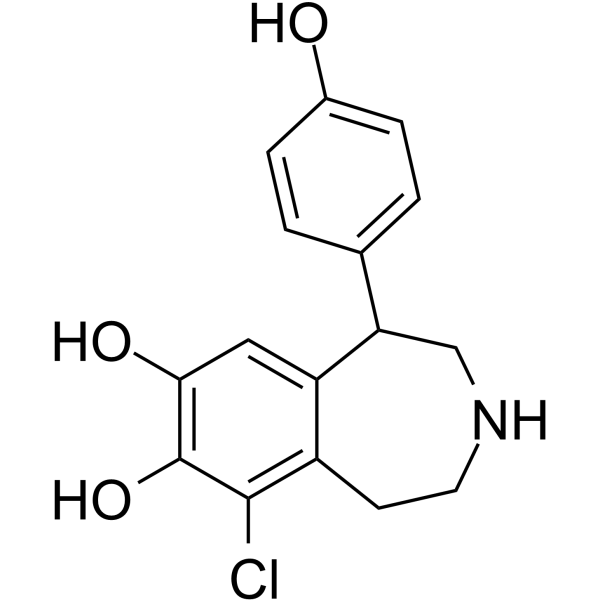
Fenoldopam (SKF-82526) is a selective dopamine D1 receptor agonist. Fenoldopam binds to rat D1B dopamine receptors (Kd = 11 nM) and human D1A receptors (Kd = 17 nM) in COS-7 cell membranes expressing the cloned receptors. Fenoldopam modulates dopamine receptor expression, induces vasorelaxation in vascular tissues, reverses glomerular hyperfiltration in rat models, increases intracellular cAMP levels, promotes DARPP-32 phosphorylation in small cell lung cancer (SCLC) cells, inhibits cytokine secretion, and downregulates T cell activation markers in activated human T cells. Fenoldopam can be used for research on hypertension, acute kidney injury, psoriasis, and small cell lung cancer.
The free form of the compound is prone to instability, it is advisable to consider the stable salt form (Fenoldopam mesylate) that retains the same biological activity.
Nos produits utilisent uniquement pour la recherche. Nous ne vendons pas aux patients.
- CAS No.: 67227-56-9
- Formule: C16H16ClNO3
- Masse moléculaire:305.76
-
Stockage:
Please store the product under the recommended conditions in the Certificate of Analysis.

To place orders, for customer services and technical support, please contact: MedChemExpress USA
Tel: 609-228-6898 E-mail: [email protected] [email protected]
Other In-stock Forms of Fenoldopam


-
 Activité biologique
-
Chemical Information
- Protocole
- Pureté et documentation
- Références
-
 Help & FAQs


-
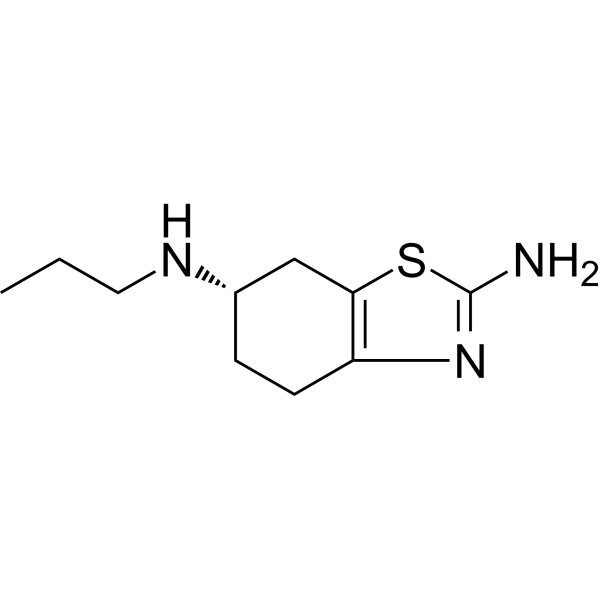
HY-B0410
PramipexoleDopamine Receptor Agonist -
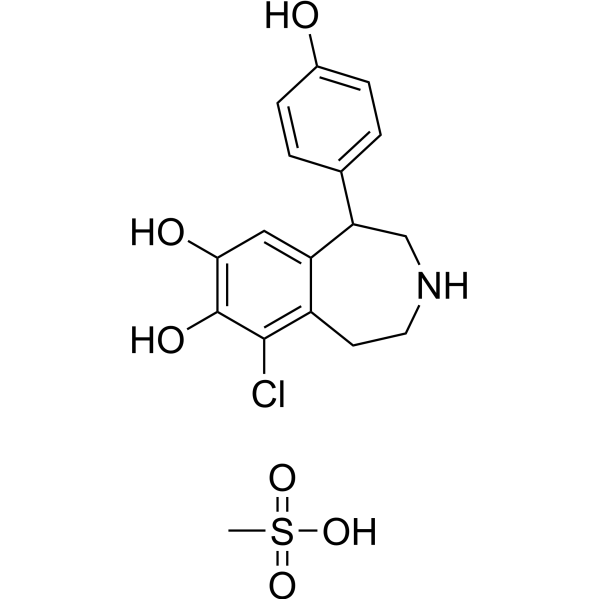
HY-B0735A
Fenoldopam mesylateDopamine DA Receptor Agonist -
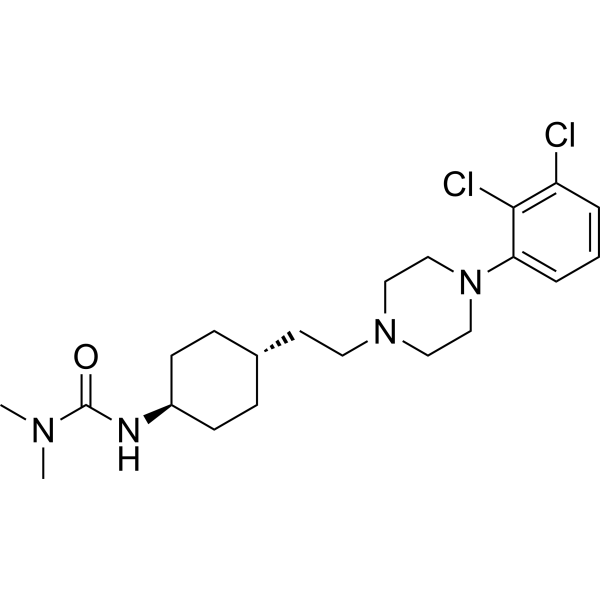
HY-14763
CariprazineD3/D2/5-HT Modulator -
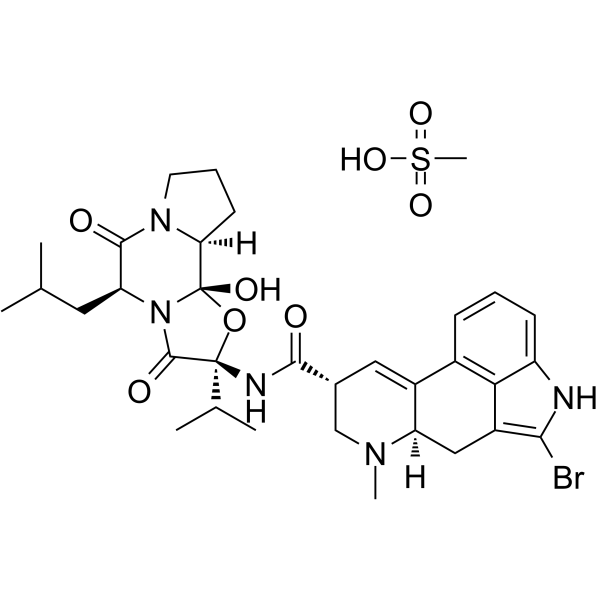
HY-12705A
Bromocriptine mesylate -
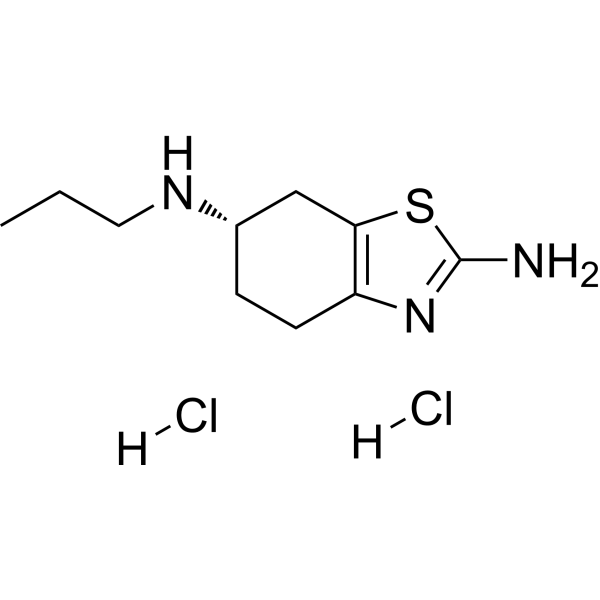
HY-17355
Pramipexole dihydrochlorideDopamine Receptor Agonist -
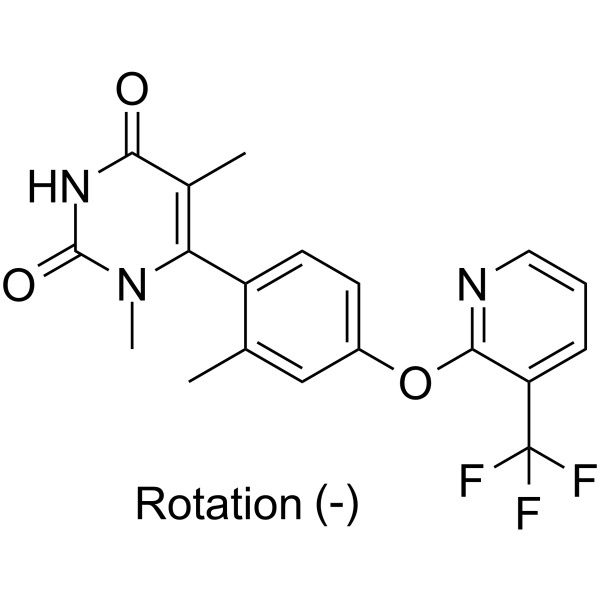
HY-119486
TavapadonDopamine D1/D5 Receptor Agonist -

HY-B0410R
Pramipexole (Standard)Dopamine Receptor Agonist -
HY-14538
HaloperidolDopamine Receptor Antagonist -
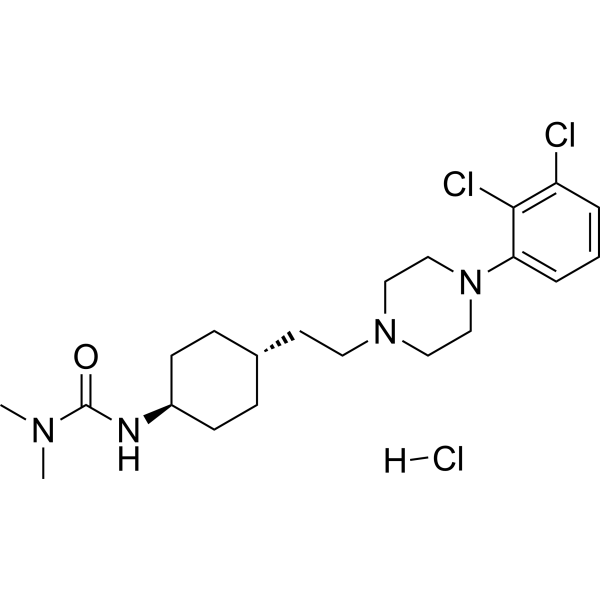
HY-14763A
Cariprazine hydrochlorideDopamine Receptor Modulator -
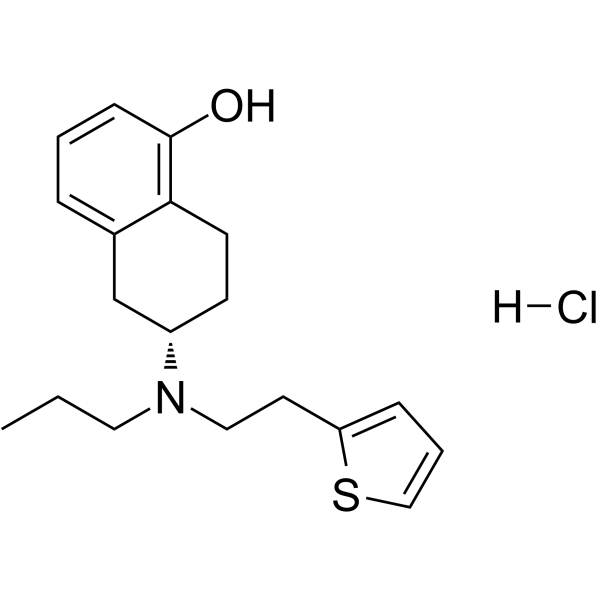
HY-A0007
Rotigotine HydrochlorideDopamine Receptor Agonist -
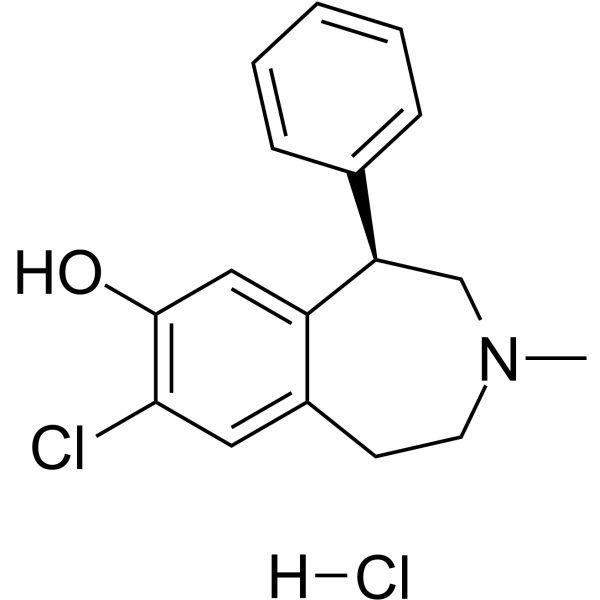
HY-19545A
SCH-23390 hydrochlorideDopamine D1 Receptor Antagonist -

HY-B0735AR
Fenoldopam mesylate (Standard)Reference Standard


Activité biologique
Description
IC50 & Target
[7]|
Human D1 Receptor 17 nM (Kd) |
Rat D1 Receptor 11 nM (Kd) |
Cellular Effect
|
Cell Line

|
Type | Value | Description | References |
|---|---|---|---|---|
| LLC-PK1 | EC50 |
55.5 nM
|
Stimulates cAMP accumulation.
Stimulates cAMP accumulation.
|
2973247 |
In Vitro
Fenoldopam (SKF-82526) (40 min) competes for specific 125I-Sch 23982 binding sites in rat renal cortical membranes with a Ki of 1,975 nM (Tris-HCl buffer) and 1,895 nM (Dulbecco's buffer)[1].
Fenoldopam (1 nM-6 μM; 72 h) does not inhibit the proliferation of CD3/CD28-stimulated Jurkat leukemic T cells, in contrast to its inhibitory effect on normal activated T cells[2].
Fenoldopam (1 μM; 5 h) co-treated Theophylline (HY-B0809) increases intracellular cAMP levels in CD3/CD28-stimulated Jurkat cells[2].
Fenoldopam (1 μM; 10-30 min) increases DARPP-32 phosphorylation in small cell lung cancer (SCLC) H-69 cells and primary SCLC cultures[3].
Fenoldopam (1 μM; 30 180 min) induces cAMP accumulation in SCLC cells and increases BrdU incorporation in SCLC H-69 cells as well as primary SCLC cultures (SCLC H-3)[3].
Fenoldopam (0.1 μM; 48 h) reduces the secretion of TNF-α, IFN-γ, IL-1β, IL-2, IL-4, IL-6, IL-8 and IL-10 by IL-2 activated PBMCs, and downregulates the expression of T cell activation markers CD69, CD28 and intracellular IL-2 in CD3+ T cells from psoriasis patients[4].
Fenoldopam (0.1 μM; 1 h) reduces the chemotactic migration of CD3/CD28-activated normal human T cells towards SDF-1/CXCL12 by 27-55%[4].
Fenoldopam (0.1 μM; 15 sec) induces depolarization of resting and activated normal human T cells[4].
Fenoldopam (10 pM-1 μM; 24 h) increases D1 and D3 receptor protein expression in a concentration- and time-dependent manner in rat aortic smooth muscle A10 cells[6].
Fenoldopam (0.1 μM; 24 h) increases D1/D3 receptor coimmunoprecipitation in A10 cells[6].
Fenoldopam (100 pM-1 mM) induces vasorelaxation in rat mesenteric arterial rings preconstricted with KCl (Emax = 83%, pED50 = 5.0)[6].
Fenoldopam binds to rat D1B dopamine receptors with a Kd of 11 nM and human D1A receptors with a Kd of 17 nM in COS-7 cell membranes expressing the cloned receptors[7].
Fenoldopam (1 nM-100 μM; cumulative) has minimal effect on mouse ductus arteriosus tone, and does not impair O2-or indomethacin-induced ductus constriction[8].
MedChemExpress (MCE) has not independently confirmed the accuracy of these methods. They are for reference only.
-
Cell Line:Jurkat leukemic T cells, normal activated T cells
-
Concentration:1, 5, 10, 50, 100, 200, 400, 600, 800 nM; 1, 2, 4, 6 μM
-
Incubation Time:72 h
-
Result:Did not inhibit proliferation of CD3/CD28-stimulated Jurkat cells at any concentration tested.
Inhibited proliferation of normal activated T cells with maximum inhibition at 1 μM.
-
Cell Line:SCLC H-69 cells, SCLC primary cultures
-
Concentration:1 μM
-
Incubation Time:10, 30 min
-
Result:Increased DARPP-32 phosphorylation.
-
Cell Line:SCLC H-69 cells, SCLC primary cultures (SCLC-H3)
-
Concentration:1 μM
-
Incubation Time:30, 90, 180 min
-
Result:Induced BrdU incorporation in both cell lines.
-
Cell Line:CD3/CD28-activated normal human T cells
-
Concentration:100 nM
-
Incubation Time:1 h pre-incubation + 4 h migration assay
-
Result:Reduced chemotactic migration towards SDF-1/CXCL12 by 27-55%.
-
Cell Line:A10 cells (rat aortic smooth muscle cells)
-
Concentration:10 pM-1 μM
-
Incubation Time:24 h (concentration-response); 2, 4, 8, 16, 24, 30 h (time-course)
-
Result:Increased D1 and D3 receptor protein expression in a concentration- and time-dependent manner.
In Vivo
Fenoldopam (1, 3, 10 μg/kg; i.v.; 40 min per dose) increases effective renal plasma flow (ERPF) in a dose-dependent manner in conscious rats, with no significant change in GFR, resulting in a decreased filtration fraction[5].
Fenoldopam (1 mg/kg; i.p.; once hourly for 4 doses) does not impair postnatal ductus arteriosus closure in newborn CD-1 mice[8].
MedChemExpress (MCE) has not independently confirmed the accuracy of these methods. They are for reference only.
-
Animal Model:Glycine-induced hyperfiltration study in conscious male SD rats (320-360 g)[5]
-
Dosage:1 μg/kg
-
Administration:i.v.; during glycine infusion
-
Result:Reversed glycine-induced glomerular hyperfiltration and reduced GFR from 1.30 to 1.17 mL/100 g/min.
-
Animal Model:Dose-response study in conscious male SD rats (320-360 g)[5]
-
Dosage:1, 3, 10 μg/kg
-
Administration:i.v.; 40 min per dose
-
Result:Increased effective renal plasma flow (ERPF) in a dose-dependent manner in conscious rats, with no significant change in GFR, resulting in a decreased filtration fraction.
-
Animal Model:Postnatal ductus arteriosus closure study in newborn CD-1 mice[8]
-
Dosage:1 mg/kg
-
Administration:i.p.; once hourly for 4 doses
-
Result:Did not impair postnatal ductus arteriosus closure.
- Kinase activity and phosphorylation assays
- RNA extraction experimental
- Western Blot
- Nephrotoxicity Study
- Imiquimod-Induced Psoriasiform Dermatitis
- Research Protocol for Cardiovascular Diseases
- Protocol for Kinase activity and phosphorylation assays
- Research Protocol for Inflammation-related Diseases
- Research Protocol for Cancer Immunology
Essai clinique
| NCT Number | Sponsor | Condition | Start Date |
Phase
|
|---|---|---|---|---|
| NCT01329991 | 2011-05 | PHASE1 |


Chemical Information
-
CAS No. 67227-56-9
-
Masse moléculaire 305.76
-
Formule C16H16ClNO3
-
SMILES
OC1=C(O)C=C2C(C3=CC=C(O)C=C3)CNCCC2=C1Cl
-
Synonyms
SKF 82526
-
Livraison
Room temperature in continental US; may vary elsewhere.
-
Stockage
Please store the product under the recommended conditions in the Certificate of Analysis.


Publications (4)
-
Journal Impact Factor
-
Most Recent
-
Cell
2021 Feb 18;184(4):943-956.e18. PMID: 33571432 -
SLAS Discov
2020 Sep;25(8):895-905. PMID: 32567455 -
Biochem Biophys Res Commun
2022 Jan 15:588:83-89. PMID: 34953210 -
Biomed Pharmacother
Dopamine receptor agonists ameliorate bleomycin-induced pulmonary fibrosis by repressing fibroblast differentiation and proliferation. [Abstract]2021 Jul:139:111500. PMID: 33901873


Pureté et documentation


Références
[1]. Felder RA, et al. Dopamine1 receptors in rat kidneys identified with 125I-Sch 23982. Am J Physiol. 1988 Nov;255(5 Pt 2):F970-6. [Content Brief]
[2]. Basu B, et al. D1 and D2 dopamine receptor-mediated inhibition of activated normal T cell proliferation is lost in jurkat T leukemic cells. J Biol Chem. 2010 Aug 27;285(35):27026-27032. [Content Brief]
[3]. Cherubini E, et al. Genetic and Functional Analysis of Polymorphisms in the Human Dopamine Receptor and Transporter Genes in Small Cell Lung Cancer. J Cell Physiol. 2016 Feb;231(2):345-56. [Content Brief]
[4]. Keren A, et al. Instantaneous depolarization of T cells via dopamine receptors, and inhibition of activated T cells of Psoriasis patients and inflamed human skin, by D1-like receptor agonist: Fenoldopam. Immunology. 2019 Nov;158(3):171-193. [Content Brief]
[5]. Gillies MA, et al. Fenoldopam to prevent acute kidney injury after major surgery-a systematic review and meta-analysis. Crit Care. 2015 Dec 25;19:449. [Content Brief]
[6]. Zeng C, et al. Dopamine D1 receptor augmentation of D3 receptor action in rat aortic or mesenteric vascular smooth muscles. Hypertension. 2004 Mar;43(3):673-9. [Content Brief]
[7]. Tiberi M, et al. Cloning, molecular characterization, and chromosomal assignment of a gene encoding a second D1 dopamine receptor subtype: differential expression pattern in rat brain compared with the D1A receptor. Proc Natl Acad Sci U S A. 1991 Sep 1;88(17):7491-5. [Content Brief]
[8]. Crockett SL, et al. Role of dopamine and selective dopamine receptor agonists on mouse ductus arteriosus tone and responsiveness. Pediatr Res. 2020 May;87(6):991-997. [Content Brief]

Calculators
Concentration (start) × Volume (start) = Concentration (final) × Volume (final)


Fenoldopam Related Classifications
HY-B0735 Related Classifications
 Powered by Bioz