



MZP-54
Based on 2 publication(s) in Google Scholar
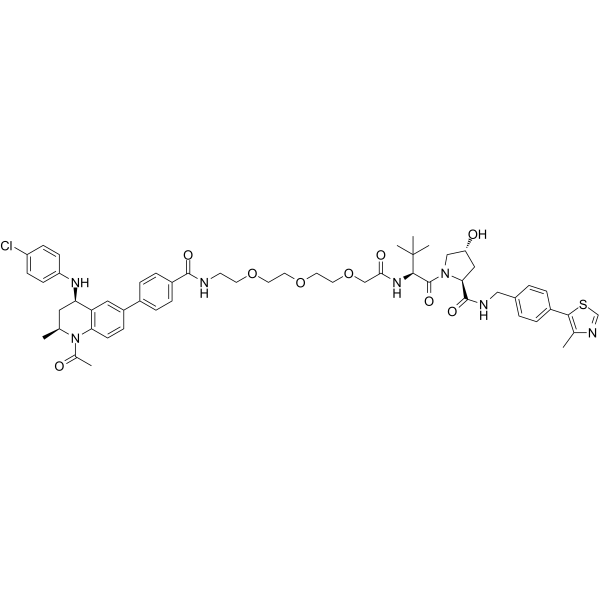
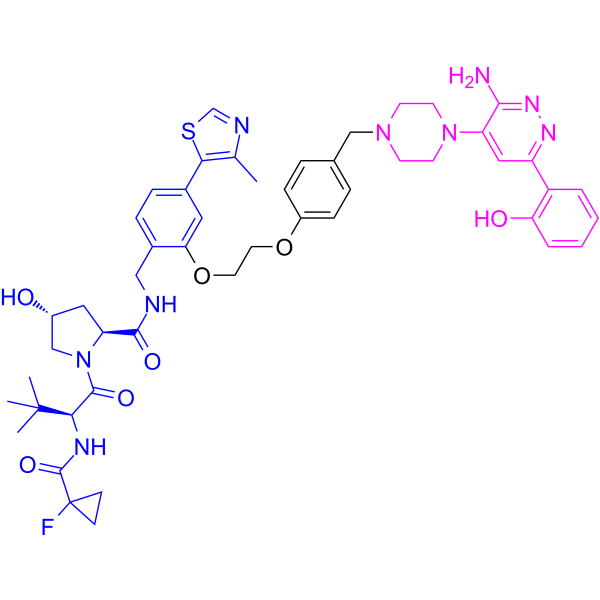
MZP-54 is a PROTAC degrader that selectively targets BRD3/BRD4, with a DC50 of < 0.05 μM in AML cells. MZP-54 recruits VHL to form a ternary complex, induces BRD3/BRD4 degradation via the ubiquitin-proteasome pathway, inhibits c-Myc expression, and exerts antiproliferative activity. MZP-54 can be used for the research of acute myeloid leukemia.
(Pink: Epigenetic Reader Domain ligand (HY-13960); Blue: VHL ligand (HY-125845); Black: linker (HY-42637)).
Nur für Forschungszwecke. Wir verkaufen nicht an Patienten.
- Reinheit : 98.03%
- CAS. Nr.: 2010159-47-2
- Formel: C55H66ClN7O9S
- Molecular Weight:1036.67
-
Speicherung:Powder -20°C, 3 years , 4°C, 2 years ; In solvent -80°C, 2 years , -20°C, 1 year

To place orders, for customer services and technical support, please contact: MedChemExpress USA
Tel: 609-228-6898 E-mail: [email protected] [email protected]


-
 Biologische Aktivität
-
Chemical Information
-
Lösungsmittel & Löslichkeit
- Protokoll
- Reinheit & Dokumentation
- Verweise
-
 Help & FAQs


-
HY-107425
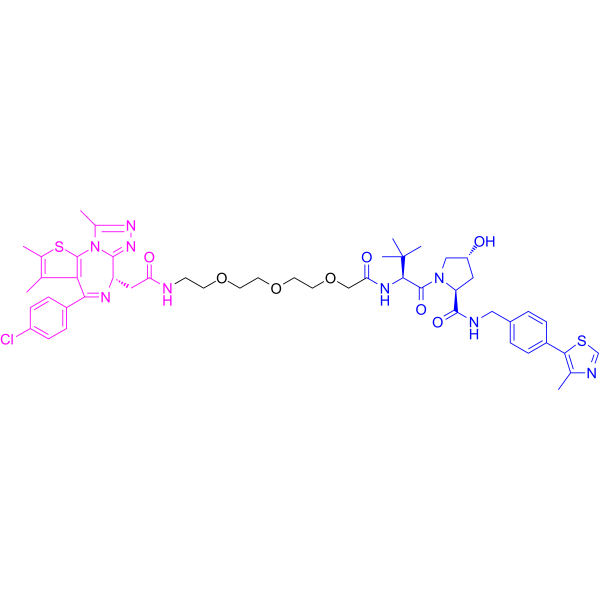
MZ 1PROTAC BRD4 Degrader -
HY-112377
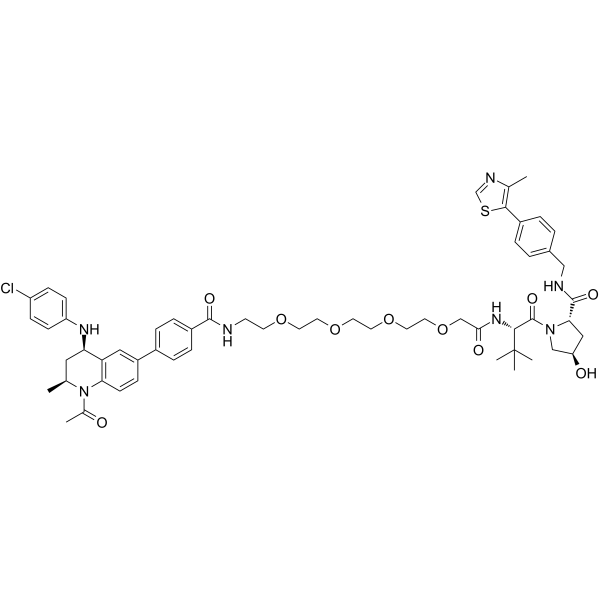
MZP-55PROTAC BET Degrader -
HY-100972
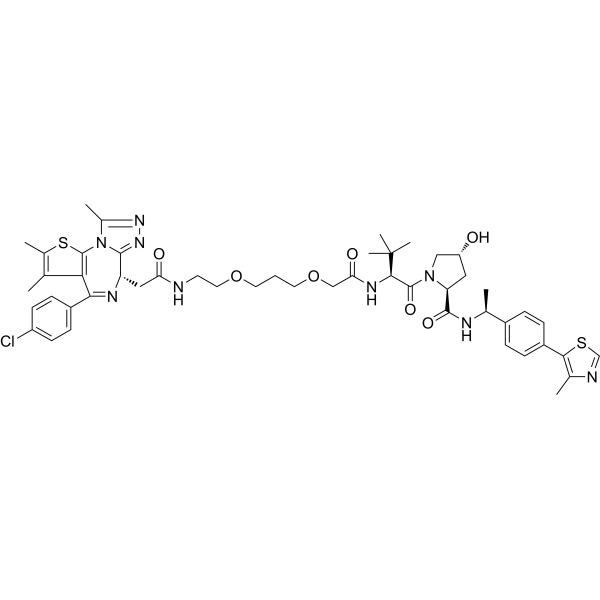
ARV-771BET PROTAC Degrader -
HY-122826
ZXH-3-26BRD4 PROTAC Degrader -
HY-101838
dBET1PROTAC BRD4 Degrader -
HY-111433
BRD4 degrader AT1BRD4 PROTAC Degrader -
HY-111519
dTRIM24PROTAC TRIM24 Degrader -
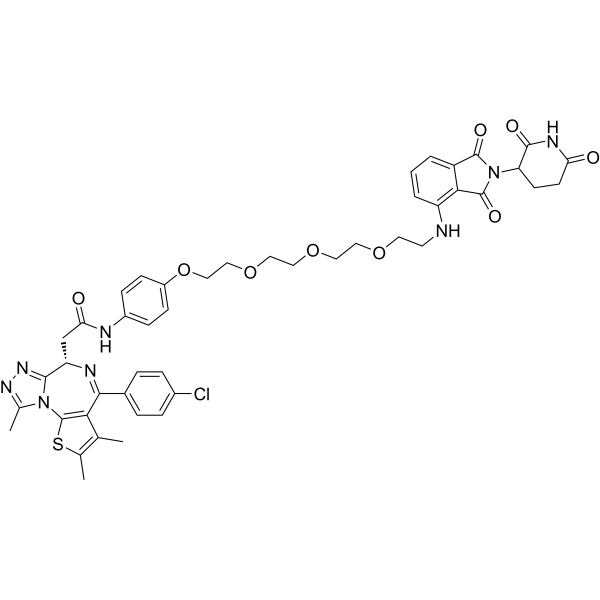
HY-16954
ARV-825PROTAC BRD2/BRD3/BRD4 Degrader -
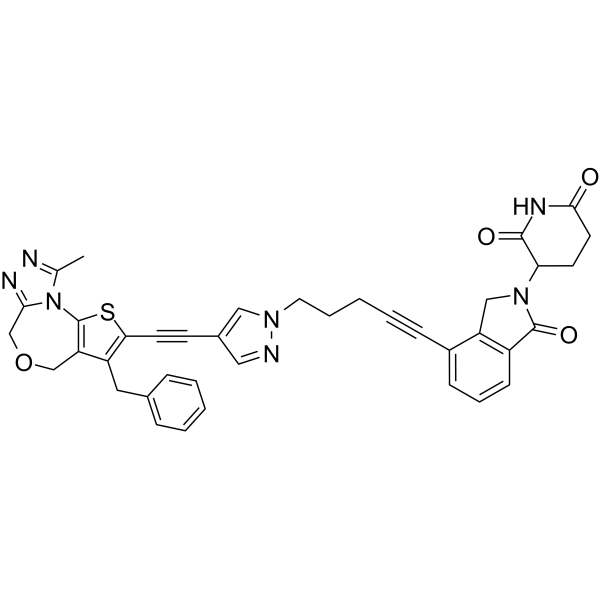
HY-112609
QCA570pan-BET-BRD PROTAC Degrader -
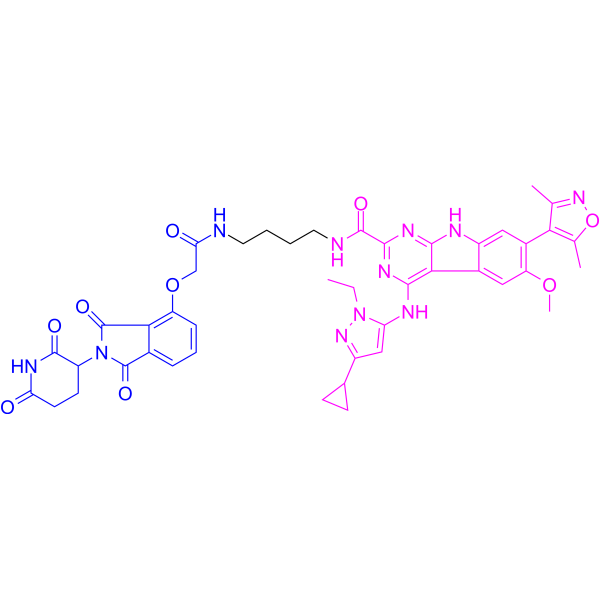
HY-103633
PROTAC BET Degrader-1BRD2/BRD3/BRD4 PROTAC Degrader -
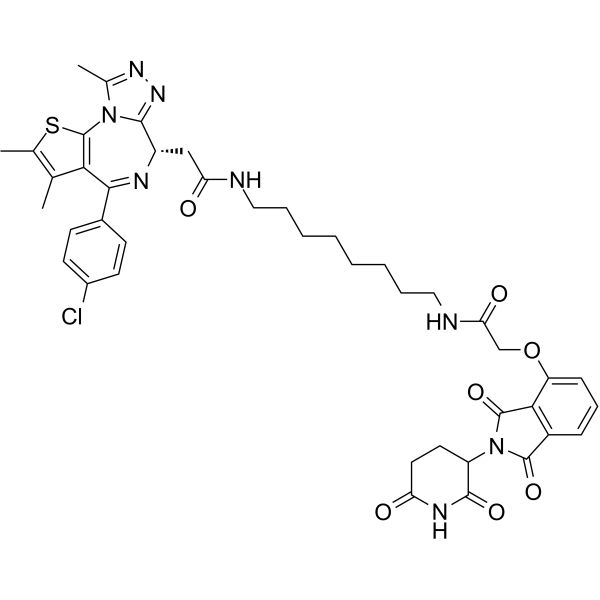
HY-112588
dBET6PROTAC BET Degrader -
HY-128359
ACBI1SMARCA2/SMARCA4/PBRM1 Degrader
Publications Citing Use of MedChemExpress (MCE) MZP-54
MoreAlle PROTACs Isoform-spezifische Produkte anzeigen
More

Biologische Aktivität
Beschreibung
|
BRD4 < 0.05 μM (DC50) |
BRD4 BD2 4 nM (Kd) |
BRD3 |
BRD2 |
In Vitro
MZP-54 induces selective degradation of BRD4 (long and short isoforms) and BRD3 without affecting BRD2, inhibits c-Myc expression, and exhibits antiproliferative activity in AML cell lines; however, due to low ternary complex cooperativity, its efficacy in degrading BRD4 and c-Myc in MV4-11 cells is weaker than that of MZ1[1].
MZP-54 (8 h) potently inhibits the proliferation of MV4;11 acute myeloid leukemia (AML) cells, with a pEC50 of 7.31[3].
MZP-54 (48 h) potently inhibits the proliferation of HL60 acute myeloid leukemia (AML) cells, with a pEC50 value of 6.57[3].
MZP-54 (50 nM; 4 h) induces 87% depletion of Brd4 and 73% depletion of cMyc in MV4;11 acute myeloid leukemia (AML) cells[3].
MZP-54 (50 nM; 4 h) induces 28% depletion of Brd4 and 50% depletion of cMyc in HL60 AML cells[3].
MedChemExpress (MCE) has not independently confirmed the accuracy of these methods. They are for reference only.
-
Cell Line:MV4;11 acute myeloid leukemia (AML) cells
-
Concentration:50 nM
-
Incubation Time:4 h
-
Result:Induced 87% depletion of Brd4 and 73% depletion of cMyc in MV4;11 cells relative to vehicle control.
-
Cell Line:HL60 acute myeloid leukemia (AML) cells
-
Concentration:50 nM
-
Incubation Time:4 h
-
Result:Induced 28% depletion of Brd4 and 50% depletion of cMyc in HL60 cells relative to vehicle control.


Chemical Information
-
CAS. Nr. 2010159-47-2
-
Appearance Solid
-
Molecular Weight 1036.67
-
Formel C55H66ClN7O9S
-
Color White to off-white
-
SMILES
O=C(NCCOCCOCCOCC(N[C@@H](C(C)(C)C)C(N1C[C@H](O)C[C@H]1C(NCC2=CC=C(C3=C(C)N=CS3)C=C2)=O)=O)=O)C(C=C4)=CC=C4C5=CC6=C(C=C5)N(C(C)=O)[C@@H](C)C[C@H]6NC7=CC=C(Cl)C=C7
-
Versand
Room temperature in continental US; may vary elsewhere.
-
Speicherung
Powder -20°C 3 years 4°C 2 years In solvent -80°C 2 years -20°C 1 year


Publications (2)
-
Journal Impact Factor
-
Most Recent
-
Nat Commun
Human iPSC-based Modeling of Pulmonary Fibrosis Reveals p300/CBP Inhibition Suppresses Alveolar Transitional Cell State. [Abstract]2026 Feb 12;17(1):1214. PMID: 41680175 -
Structure
PROTAC-mediated activation, rather than degradation, of a nuclear receptor reveals complex ligand-receptor interaction network. [Abstract]2024 Dec 5;32(12):2352-2363.e8. PMID: 39389062


Lösungsmittel & Löslichkeit
In Vitro:
Ethanol : 50 mg/mL (48.23 mM; Need ultrasonic)
Please refer to the solubility information to select the appropriate solvent. Once prepared, please aliquot and store the solution to prevent product inactivation from repeated freeze-thaw cycles.
Storage method and period of stock solution: -80°C, 2 years; -20°C, 1 year. When stored at -80°C, please use it within 2 years. When stored at -20°C, please use it within 1 year.
Please refer to the solubility information to select the appropriate solvent. Once prepared, please aliquot and store the solution to prevent product inactivation from repeated freeze-thaw cycles.
Storage method and period of stock solution: -80°C, 2 years; -20°C, 1 year. When stored at -80°C, please use it within 2 years. When stored at -20°C, please use it within 1 year.
Konzentration (Stammlösung) × Volumen (Stammlösung) = Konzentration (Ziellösung) × Volumen (Ziellösung)
In Vivo:
Select the appropriate dissolution method based on your experimental animal and administration route.
- For the following dissolution methods, please ensure to first prepare a clear stock solution using an In Vitro approach and then sequentially add co-solvents:
- To ensure reliable experimental results, the clarified stock solution can be appropriately stored based on storage conditions. As for the working solution for In Vivo experiments, it is recommended to prepare freshly and use it on the same day.
- The percentages shown for the solvents indicate their volumetric ratio in the final prepared solution. If precipitation or phase separation occurs during preparation, heat and/or sonication can be used to aid dissolution.
Add each solvent one by one: 10% EtOH 40% PEG300 5% Tween-80 45% Saline
Solubility: ≥ 2.5 mg/mL (2.41 mM); Clear solution
This protocol yields a clear solution of ≥ 2.5 mg/mL (saturation unknown).
Taking 1 mL working solution as an example, add 100 μL EtOH stock solution (25.0 mg/mL) to 400 μL PEG300, and mix evenly; then add 50 μL Tween-80 and mix evenly; then add 450 μL Saline to adjust the volume to 1 mL.
Preparation of Saline: Dissolve 0.9 g sodium chloride in ddH₂O and dilute to 100 mL to obtain a clear Saline solution.
Add each solvent one by one: 10% EtOH 90% (20% SBE-β-CD in Saline)
Solubility: ≥ 2.5 mg/mL (2.41 mM); Clear solution
This protocol yields a clear solution of ≥ 2.5 mg/mL (saturation unknown).
Taking 1 mL working solution as an example, add 100 μL EtOH stock solution (25.0 mg/mL) to 900 μL 20% SBE-β-CD in Saline, and mix evenly.
Preparation of 20% SBE-β-CD in Saline (4°C, storage for one week): 2 g SBE-β-CD powder is dissolved in 10 mL Saline, completely dissolve until clear.
Add each solvent one by one: 10% EtOH 90% Corn Oil
Solubility: ≥ 2.5 mg/mL (2.41 mM); Clear solution
This protocol yields a clear solution of ≥ 2.5 mg/mL (saturation unknown). If the continuous dosing period exceeds half a month, please choose this protocol carefully.
Taking 1 mL working solution as an example, add 100 μL EtOH stock solution (25.0 mg/mL) to 900 μL Corn oil, and mix evenly.
In Vivo Dissolution Calculator
Please enter the basic information of animal experiments:
-
-
-
-
Recommended: Prepare an additional quantity of animals to account for potential losses during experiments.
Working solution concentration: 0.22 mg/mL


Reinheit & Dokumentation
-
Data Sheet (280 KB)
-
SDS (393 KB)
- English - EN (393 KB)
- Français - FR (393 KB)
- Deutsch - DE (393 KB)
- Norwegian - NO (393 KB)
- Español - ES (393 KB)
- Swedish - SV (393 KB)
- Italian - IT (393 KB)
- Korean - KR (393 KB)
- Portuguese - PT (393 KB)
-
Handling Instructions (2659 KB)
Verweise
[1]. Kabir M, et al. Chemically induced degradation of epigenetic targets. Chemical Society reviews. 2023 Jul 03;52(13):4313-4342. [Content Brief]
[3]. Chan KH, et al. Impact of Target Warhead and Linkage Vector on Inducing Protein Degradation: Comparison of Bromodomain and Extra-Terminal (BET) Degraders Derived from Triazolodiazepine (JQ1) and Tetrahydroquinoline (I-BET726) BET Inhibitor Scaffolds. Journal of medicinal chemistry. 2018 Jan 25;61(2):504-513. [Content Brief]


Complete Stock Solution Preparation Table
Please refer to the solubility information to select the appropriate solvent. Once prepared, please aliquot and store the solution to prevent product inactivation from repeated freeze-thaw cycles.
Storage method and period of stock solution: -80°C, 2 years; -20°C, 1 year. When stored at -80°C, please use it within 2 years. When stored at -20°C, please use it within 1 year.
| Optional Solvent | Concentration Solvent Mass | 1 mg | 5 mg | 10 mg | 25 mg |
|---|---|---|---|---|---|
| Ethanol | 1 mM | 0.9646 mL | 4.8231 mL | 9.6463 mL | 24.1157 mL |
| 5 mM | 0.1929 mL | 0.9646 mL | 1.9293 mL | 4.8231 mL | |
| 10 mM | 0.0965 mL | 0.4823 mL | 0.9646 mL | 2.4116 mL | |
| 15 mM | 0.0643 mL | 0.3215 mL | 0.6431 mL | 1.6077 mL | |
| 20 mM | 0.0482 mL | 0.2412 mL | 0.4823 mL | 1.2058 mL | |
| 25 mM | 0.0386 mL | 0.1929 mL | 0.3859 mL | 0.9646 mL | |
| 30 mM | 0.0322 mL | 0.1608 mL | 0.3215 mL | 0.8039 mL | |
| 40 mM | 0.0241 mL | 0.1206 mL | 0.2412 mL | 0.6029 mL |


MZP-54 Related Classifications
HY-112376 Related Classifications
 Powered by Bioz