



MLN3126

Based on 1 Customer Validation
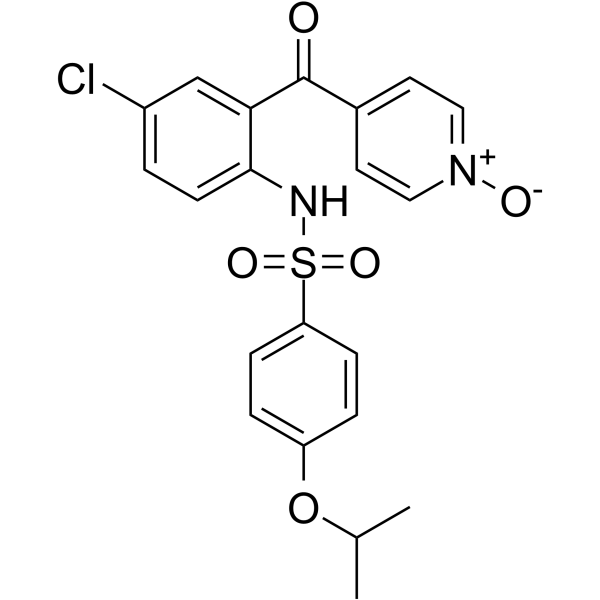
MLN3126 is an orally active and potent CCR9 antagonist. MLN3126 inhibits CCL25-induced calcium mobilization and chemotaxis of mouse primary thymocytes, wiht an IC50 value of 6.3 nM for calcium influx.
Nur für Forschungszwecke. Wir verkaufen nicht an Patienten.
- Reinheit : 98.02%
- CAS. Nr.: 628300-71-0
- Formel: C21H19ClN2O5S
- Molecular Weight:446.90
-
Speicherung:Powder -20°C, 3 years ; In solvent -80°C, 6 months , -20°C, 1 month

To place orders, for customer services and technical support, please contact: MedChemExpress USA
Tel: 609-228-6898 E-mail: [email protected] [email protected]


-
 Biologische Aktivität
-
Chemical Information
-
Lösungsmittel & Löslichkeit
- Protokoll
- Reinheit & Dokumentation
- Verweise
-
 Help & FAQs


-
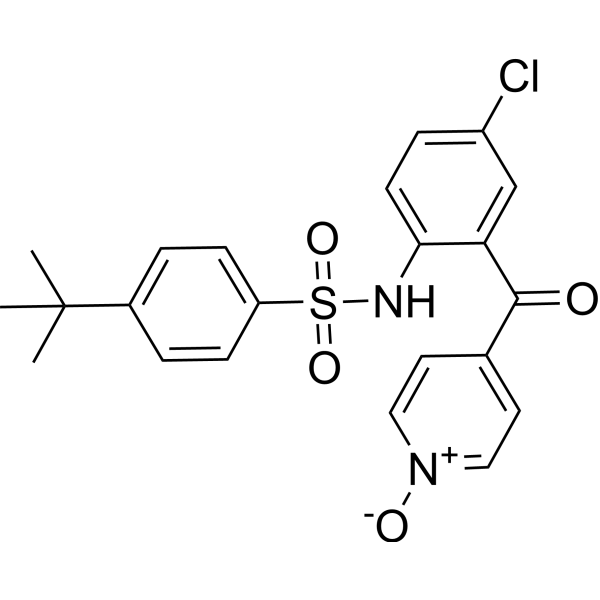
HY-15724
VercirnonCCR9 Antagonist -
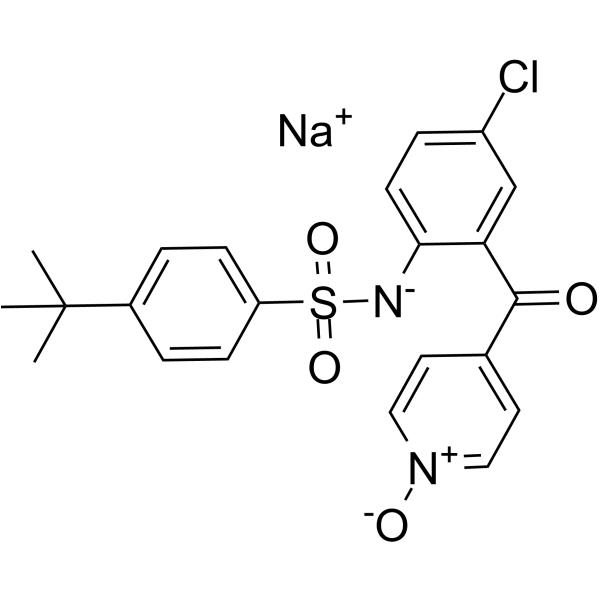
HY-15724A
Vercirnon sodiumCCR9 Antagonist -
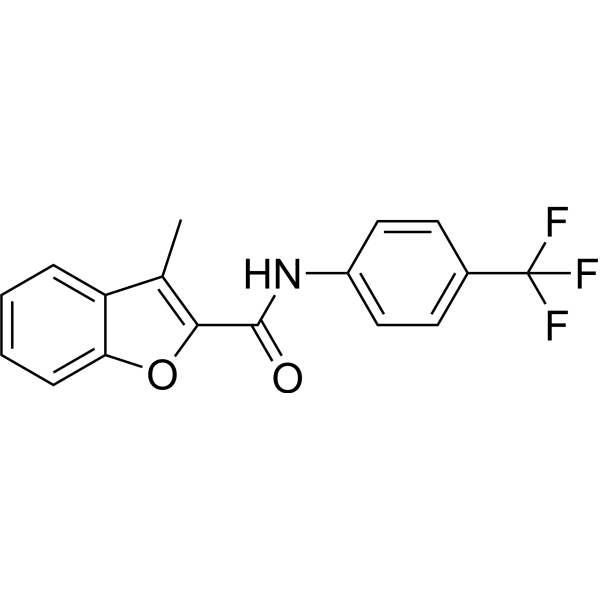
HY-151435
CCR6 antagonist 1CCR6 Antagonist -
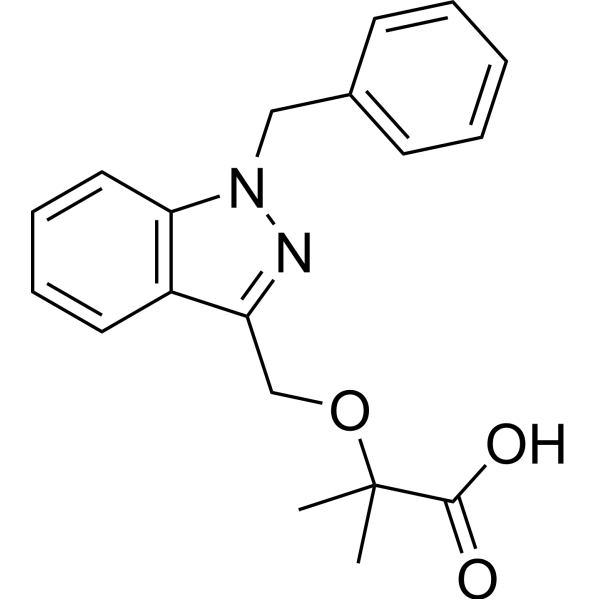
HY-B0498
BindaritMCP/CCL Inhibitor -
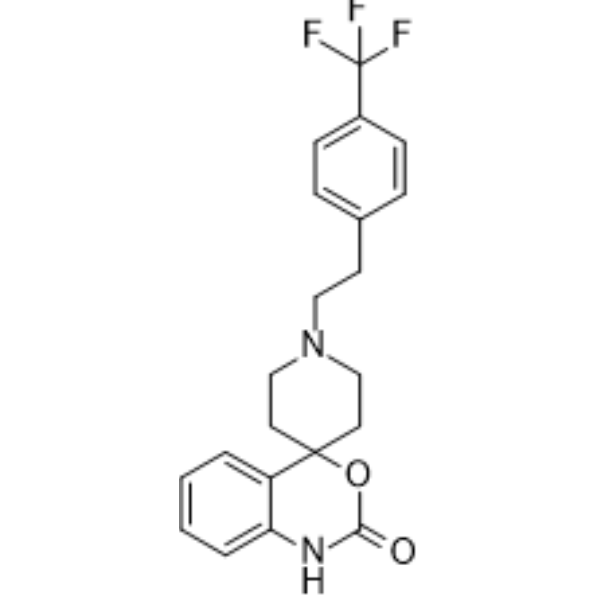
HY-18611A
AbaucinCCR Antagonist -
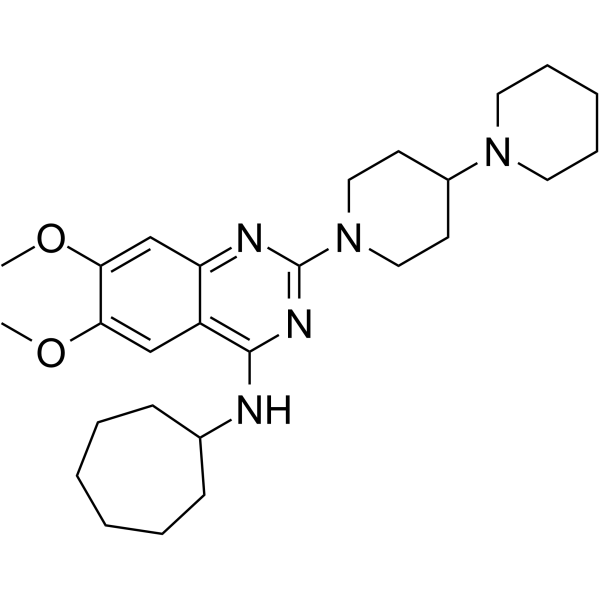
HY-103364
C-021CCR4 Antagonist -
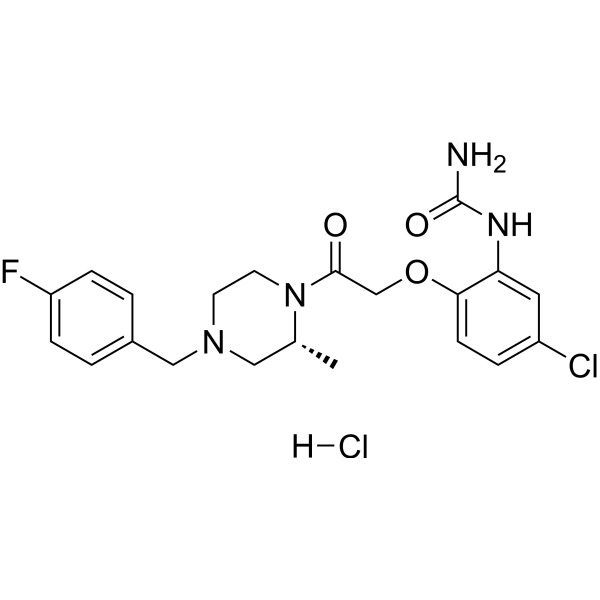
HY-12080A
BX471 hydrochlorideCCR Antagonist -
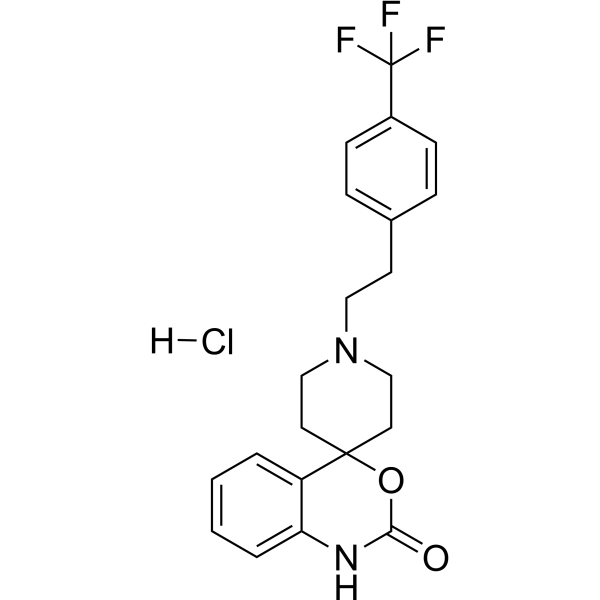
HY-18611
Abaucin hydrochlorideCCR2antagonist -
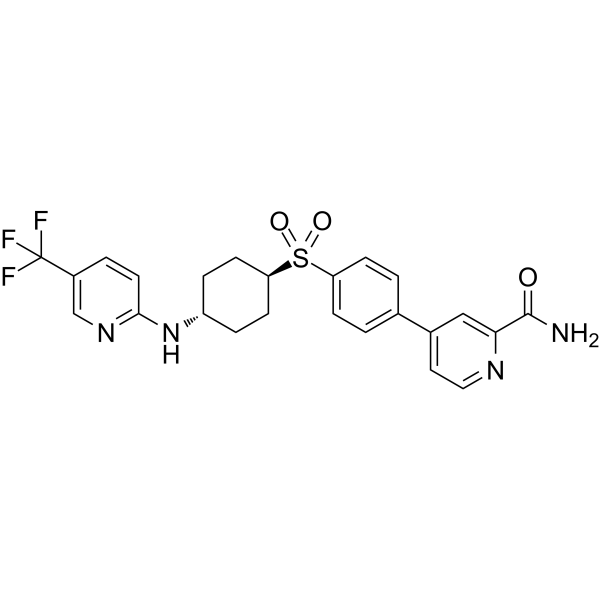
HY-112701
CCR6 inhibitor 1CCR Inhibitor -
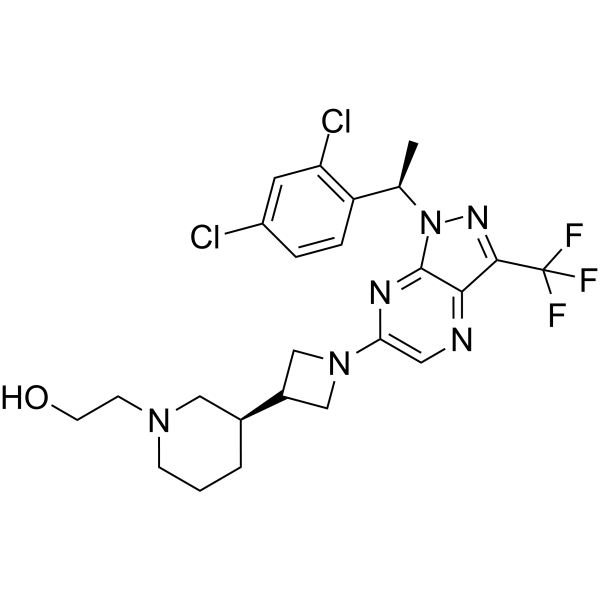
HY-148494
TivumecirnonCCR4 Antagonist -
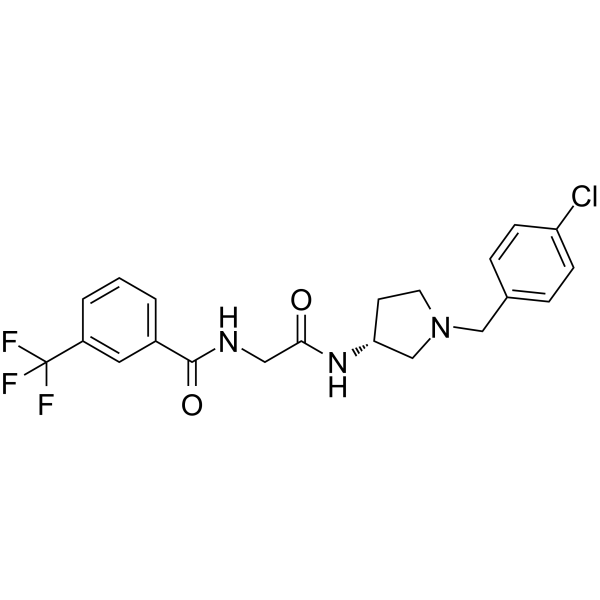
HY-108323
CCR2 antagonist 4CCR2b Antagonist -
HY-119217
AZ084CCR8 Allosteric Antagonist


Biologische Aktivität
Beschreibung
In Vitro
MLN3126 inhibits CCL25-induced calcium mobilization with an IC50 value of 6.3 nM in CCR9 expressing cells[1].
MLN3126 inhibits the binding of biotinylated CCL25 to CCR9 with an IC50 of 14.2 nM[1].
MedChemExpress (MCE) has not independently confirmed the accuracy of these methods. They are for reference only.
-
Cell Line:Mouse thymocytes
-
Concentration:0.01, 0.03, 0.1, 0.3, 1, 3 μM
-
Incubation Time:90 min
-
Result:Inhibited CCL25-induced chemotaxis of mouse thymocytes.
In Vivo
MLN3126 (0.05, 0.25 and 1% (w/w); p.o.) has the potential activity for alleviating inflammatory bowel disease (IBD)[1].
MedChemExpress (MCE) has not independently confirmed the accuracy of these methods. They are for reference only.
-
Animal Model:Activated T cell transferred colitis mouse model[1]
-
Dosage:0.05, 0.25 and 1% (w/w) (around 4 g/day)
-
Administration:Oral gavage; 21 days
-
Result:Blocked CCR9/CCL25 interaction by inhibiting migration of T cells to the colon and resulted in the amelioration of colitis.
Clinical Trial
| NCT Number | Sponsor | Condition | Start Date |
Phase

|
|---|---|---|---|---|
| NCT01329991 | 2011-05 | PHASE1 |


Chemical Information
-
CAS. Nr. 628300-71-0
-
Appearance Solid
-
Molecular Weight 446.90
-
Formel C21H19ClN2O5S
-
Color White to off-white
-
SMILES
O=S(C1=CC=C(OC(C)C)C=C1)(NC2=CC=C(Cl)C=C2C(C3=CC=[N+]([O-])C=C3)=O)=O
-
Versand
Room temperature in continental US; may vary elsewhere.
-
Speicherung
Powder -20°C 3 years In solvent -80°C 6 months -20°C 1 month


Lösungsmittel & Löslichkeit
In Vitro:
DMSO : 25 mg/mL (55.94 mM; ultrasonic and warming and heat to 60°C; Hygroscopic DMSO has a significant impact on the solubility of product, please use newly opened DMSO)
Please refer to the solubility information to select the appropriate solvent. Once prepared, please aliquot and store the solution to prevent product inactivation from repeated freeze-thaw cycles.
Storage method and period of stock solution: -80°C, 6 months; -20°C, 1 month. When stored at -80°C, please use it within 6 months. When stored at -20°C, please use it within 1 month.
Please refer to the solubility information to select the appropriate solvent. Once prepared, please aliquot and store the solution to prevent product inactivation from repeated freeze-thaw cycles.
Storage method and period of stock solution: -80°C, 6 months; -20°C, 1 month. When stored at -80°C, please use it within 6 months. When stored at -20°C, please use it within 1 month.
Konzentration (Stammlösung) × Volumen (Stammlösung) = Konzentration (Ziellösung) × Volumen (Ziellösung)


Reinheit & Dokumentation
-
Data Sheet (275 KB)
-
SDS (251 KB)
- English - EN (251 KB)
- Français - FR (251 KB)
- Deutsch - DE (251 KB)
- Norwegian - NO (251 KB)
- Español - ES (251 KB)
- Swedish - SV (251 KB)
- Italian - IT (251 KB)
- Korean - KR (251 KB)
- Portuguese - PT (251 KB)
-
Handling Instructions (2659 KB)
Verweise


Complete Stock Solution Preparation Table
Please refer to the solubility information to select the appropriate solvent. Once prepared, please aliquot and store the solution to prevent product inactivation from repeated freeze-thaw cycles.
Storage method and period of stock solution: -80°C, 6 months; -20°C, 1 month. When stored at -80°C, please use it within 6 months. When stored at -20°C, please use it within 1 month.
| Optional Solvent | Concentration Solvent Mass | 1 mg | 5 mg | 10 mg | 25 mg |
|---|---|---|---|---|---|
| DMSO | 1 mM | 2.2376 mL | 11.1882 mL | 22.3764 mL | 55.9409 mL |
| 5 mM | 0.4475 mL | 2.2376 mL | 4.4753 mL | 11.1882 mL | |
| 10 mM | 0.2238 mL | 1.1188 mL | 2.2376 mL | 5.5941 mL | |
| 15 mM | 0.1492 mL | 0.7459 mL | 1.4918 mL | 3.7294 mL | |
| 20 mM | 0.1119 mL | 0.5594 mL | 1.1188 mL | 2.7970 mL | |
| 25 mM | 0.0895 mL | 0.4475 mL | 0.8951 mL | 2.2376 mL | |
| 30 mM | 0.0746 mL | 0.3729 mL | 0.7459 mL | 1.8647 mL | |
| 40 mM | 0.0559 mL | 0.2797 mL | 0.5594 mL | 1.3985 mL | |
| 50 mM | 0.0448 mL | 0.2238 mL | 0.4475 mL | 1.1188 mL |


MLN3126 Related Classifications
HY-123763 Related Classifications
 Powered by Bioz