



Clindamycin phosphate
Based on 6 publication(s) in Google Scholar
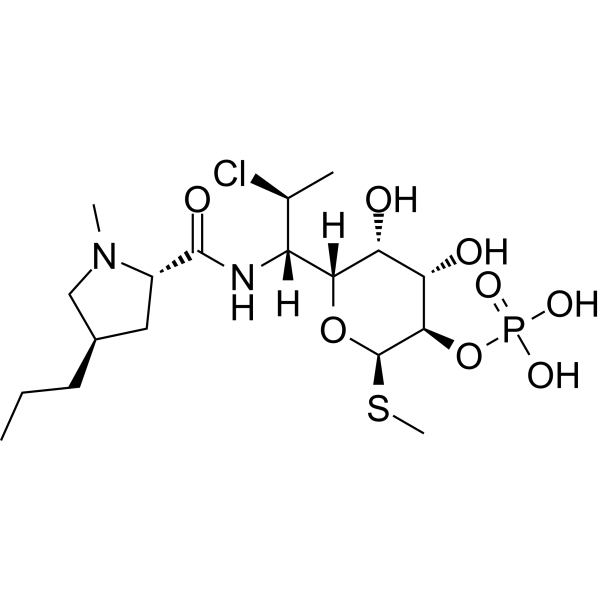
Clindamycin phosphate (Clindamycin 2-phosphate) is a broad-spectrum bacteriostatic lincosamide antibiotic. Clindamycin phosphate is the proagent of Clindamycin (HY-B1455) with no antimicrobial activity in vitro but can be rapidly converted in vivo to the active parent agent, Clindamycin, by phosphatase ester hydrolysis. Clindamycin phosphate can be used for researching acne and bacterial vaginosis. Clindamycin phosphate has no cytotoxicity. Combined with platelet rich fibrin (PRF), PRF-Clindamycin phosphate enhances antimicrobial properties.
For research use only. We do not sell to patients.
- Purity : 99.46%
- CAS No.: 24729-96-2
- Formula: C18H34ClN2O8PS
- Molecular Weight:504.96
-
Storage:Powder -20°C, 3 years , 4°C, 2 years ; In solvent -80°C, 2 years , -20°C, 1 year

To place orders, for customer services and technical support, please contact: MedChemExpress USA
Tel: 609-228-6898 E-mail: [email protected] [email protected]


-
 Biological Activity
-
Chemical Information
-
Solvent & Solubility
- Protocols
- Purity & Documentation
- References
-
 Help & FAQs


-
HY-B0408A
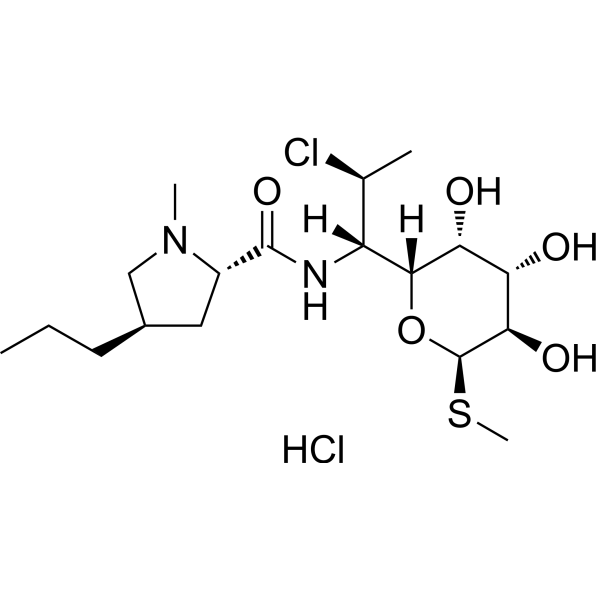
Clindamycin hydrochlorideBacterial Inhibitor -
HY-B0472
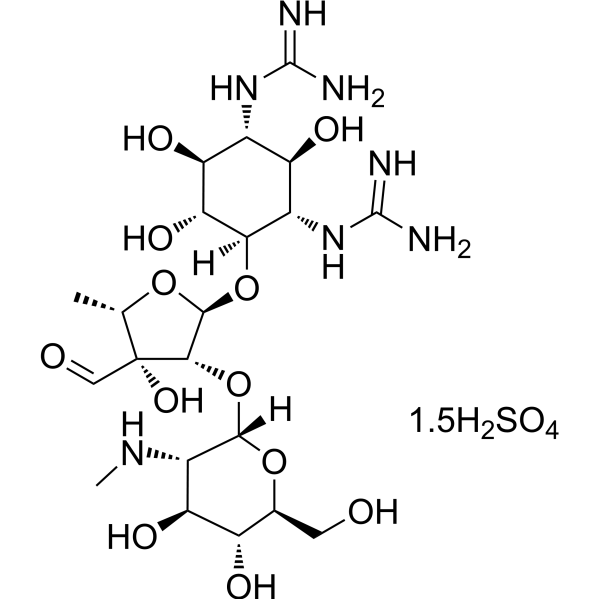
Streptomycin sulfateBacterial Inhibitor -
HY-B1064R
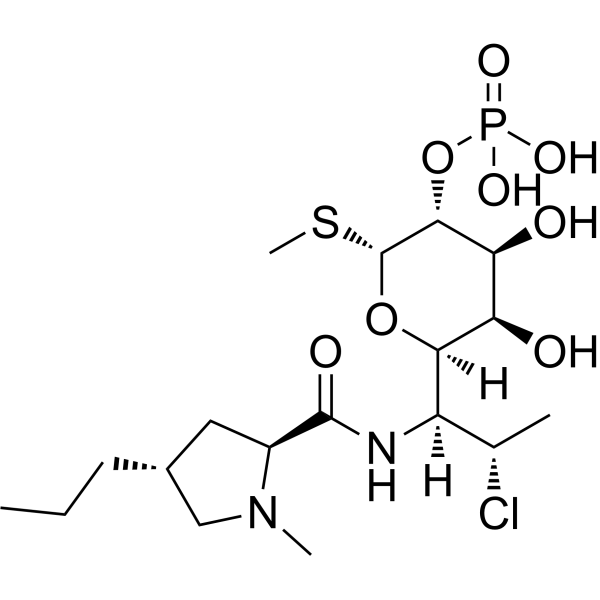
Clindamycin phosphate (Standard)Lincosamide Antibiotic -
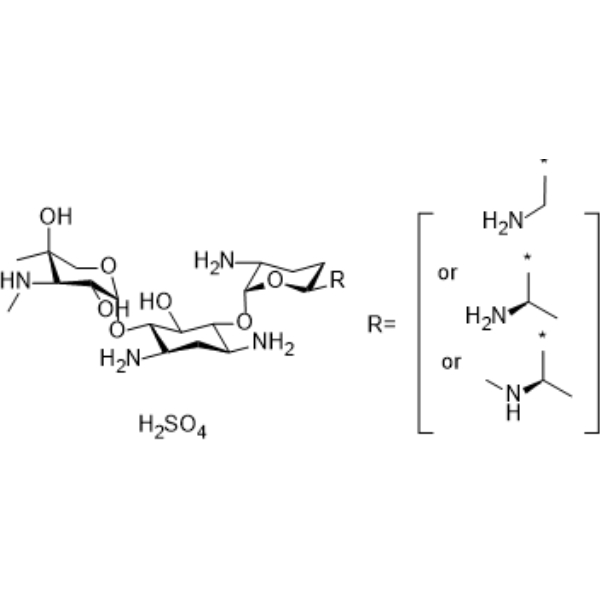
HY-A0276
Gentamicin sulfateAminoglycoside Antibiotic -
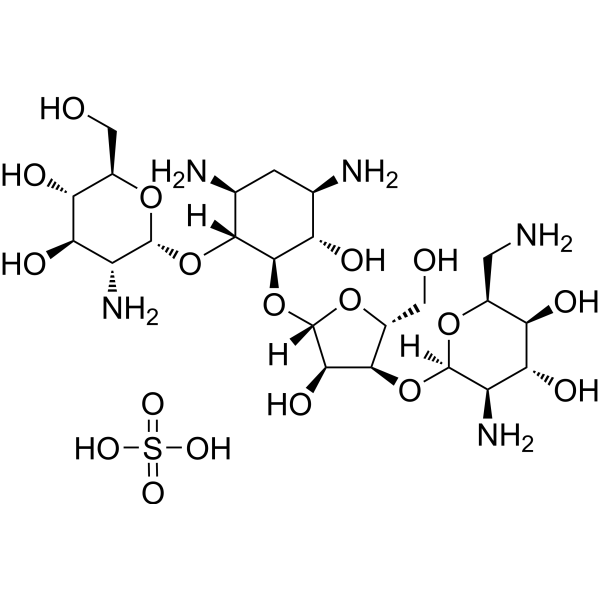
HY-B0956
Paromomycin sulfateAntibiotic -
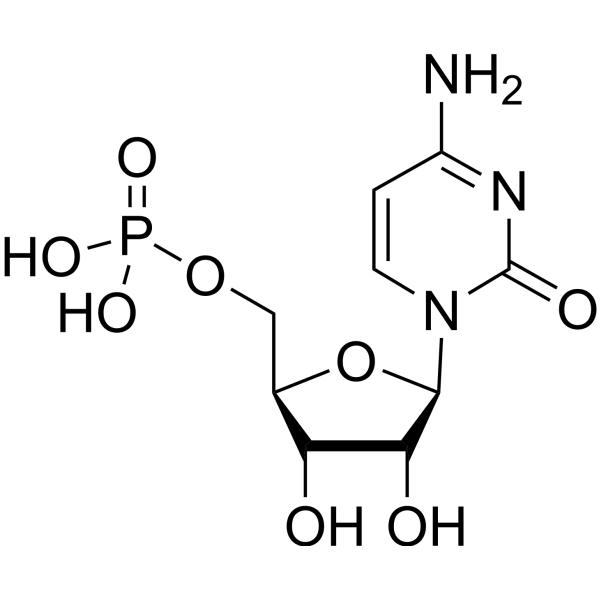
HY-W009162
Cytidine 5'-monophosphateEndogenous Metabolite -
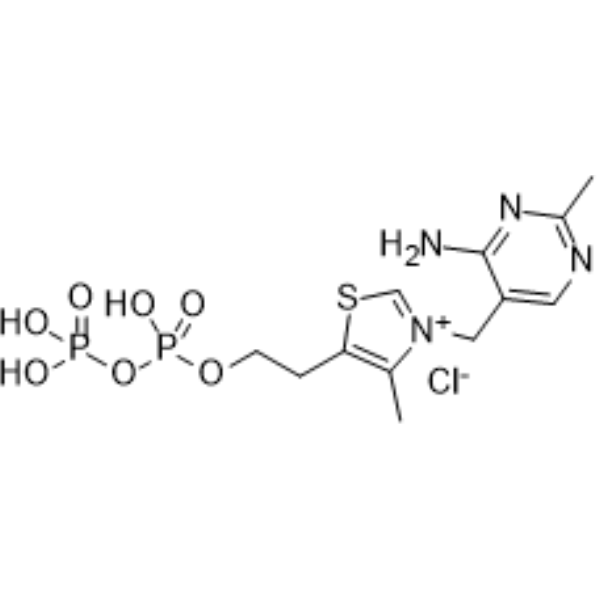
HY-113076
Thiamine pyrophosphateEndogenous Metabolite -

HY-Y1322
Triphenyl phosphateEndocrine Disruptor -
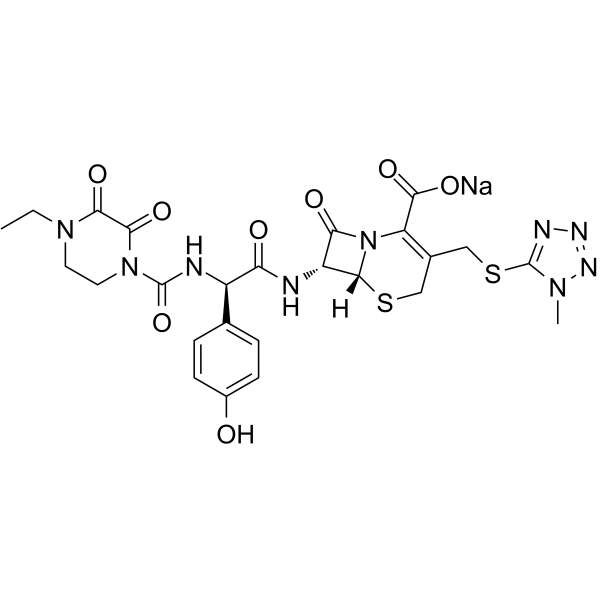
HY-B0210A
Cefoperazone sodium saltBacterial Inhibitor -

HY-W013205
Bis(4-nitrophenyl) phosphateEsterase Inhibitor -
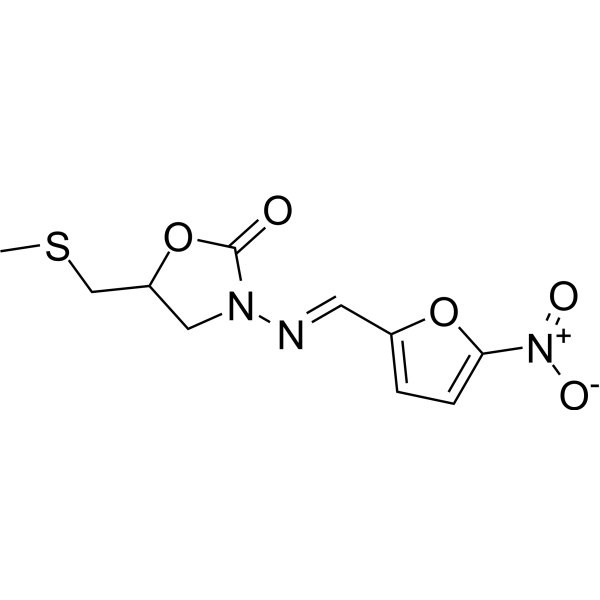
HY-A0059
NifuratelBroad-Spectrum Antibiotic -

HY-113076R
Thiamine pyrophosphate (Standard)Endogenous Metabolite
Publications Citing Use of MedChemExpress (MCE) Clindamycin phosphate
MoreAll Antibiotic Isoforms
MoreAll Parasite Isoforms
More

Biological Activity
Description
IC50 & Target
In Vitro
Clindamycin phosphate (10 mg/ml; 24,48 h) shows no significant cytotoxicity in 3T3 mouse fibroblasts[4].
Clindamycin phosphate has MIC values ranging from 125-250 μg/mL for the four Gram-positive bacteria (S. aureus; S. epidermidis; S. aureus; S. epidermidis) and 52.1-62.5 μg/mL for PRF _ CLP[4].
MedChemExpress (MCE) has not independently confirmed the accuracy of these methods. They are for reference only.
-
Cell Line:3T3 mouse fibroblasts
-
Concentration:10 mg/mL PRF_Clindamycin phosphat:0.01-1 mg/mL
-
Incubation Time:24, 48 h
-
Result:Showed no significant cytotoxicity. At 24 and 48 hours, both Clindamycin phosphat and PRF_Clindamycin phosphat samples maintained cell viability above 70%. PRF_Clindamycin phosphat did not show significant differences in cell viability between different dilutions .


Chemical Information
-
CAS No. 24729-96-2
-
Appearance Solid
-
Molecular Weight 504.96
-
Formula C18H34ClN2O8PS
-
Color White to off-white
-
SMILES
CCC[C@H]1CN(C)[C@H](C(N[C@@]([H])([C@@]2([H])O[C@H](SC)[C@H](OP(O)(O)=O)[C@@H](O)[C@H]2O)[C@@H](Cl)C)=O)C1
-
Synonyms
Clindamycin 2-phosphate; U-28508
-
Shipping
Room temperature in continental US; may vary elsewhere.
-
Storage
Powder -20°C 3 years 4°C 2 years In solvent -80°C 2 years -20°C 1 year


Publications (6)
-
Journal Impact Factor
-
Most Recent
-
EBioMedicine
A novel inhibitor of monooxygenase reversed the activity of tetracyclines against tet(X3)/tet(X4)-positive bacteria. [Abstract]2022 Apr;78:103943. PMID: 35306337 -
Tissue Cell
EZH1-DNMT1 axis inhibits the expression of TFPI2 to promote osteogenic differentiation of periosteum-derived stem cells and accelerate fracture repair. [Abstract]2025 Apr:93:102759. PMID: 39892329 -
-
bioRxiv
Exposure to Antibiotics Modifies the Immune Profiles of Bacterial Extracellular Vesicles from Common Vaginal Anaerobes. [Abstract]2026 May 22:2026.05.21.726874. PMID: 42239425 -
-


Solvent & Solubility
In Vitro:
H2O : 100 mg/mL (198.04 mM; Need ultrasonic)
Please refer to the solubility information to select the appropriate solvent. Once prepared, please aliquot and store the solution to prevent product inactivation from repeated freeze-thaw cycles.
Storage method and period of stock solution: -80°C, 2 years; -20°C, 1 year. When stored at -80°C, please use it within 2 years. When stored at -20°C, please use it within 1 year.
* Note: If you choose water as the stock solution, please dilute it to the working solution, then filter and sterilize it with a 0.22 μm filter before use.
Please refer to the solubility information to select the appropriate solvent. Once prepared, please aliquot and store the solution to prevent product inactivation from repeated freeze-thaw cycles.
Storage method and period of stock solution: -80°C, 2 years; -20°C, 1 year. When stored at -80°C, please use it within 2 years. When stored at -20°C, please use it within 1 year.
* Note: If you choose water as the stock solution, please dilute it to the working solution, then filter and sterilize it with a 0.22 μm filter before use.
Concentration (start) × Volume (start) = Concentration (final) × Volume (final)
In Vivo:
For the following dissolution methods, please prepare the working solution directly:
It is recommended to prepare fresh solutions and use them promptly within a short period of time.
The percentages shown for the solvents indicate their volumetric ratio in the final prepared solution. If precipitation or phase separation occurs during preparation, heat and/or sonication can be used to aid dissolution.
Add each solvent one by one: PBS
Solubility: 50 mg/mL (99.02 mM); Clear solution; Need ultrasonic


Purity & Documentation
-
Data Sheet (278 KB)
-
SDS (397 KB)
- English - EN (397 KB)
- Français - FR (397 KB)
- Deutsch - DE (397 KB)
- Norwegian - NO (397 KB)
- Español - ES (397 KB)
- Swedish - SV (397 KB)
- Italian - IT (397 KB)
- Korean - KR (397 KB)
- Portuguese - PT (397 KB)
-
Handling Instructions (2659 KB)
References
[1]. Li H, et al. Clindamycin hydrochloride and clindamycin phosphate: two drugs or one? A retrospective analysis of a spontaneous reporting system. Eur J Clin Pharmacol. 2017 Feb;73(2):251-253. [Content Brief]
[2]. Hayashi N, et al. Clindamycin phosphate 1.2%/benzoyl peroxide 3% fixed-dose combination gel versus topical combination therapy of adapalene 0.1% gel and clindamycin phosphate 1.2% gel in the treatment of acne vulgaris in Japanese patients: A multicenter, randomized, investigator-blind, parallel-group study. J Dermatol. 2018 Aug;45(8):951-962. [Content Brief]
[4]. Egle K, et al.Injectable Platelet-Rich Fibrin as a Drug Carrier Increases the Antibacterial Susceptibility of Antibiotic-Clindamycin Phosphate. Int J Mol Sci. 2022 Jul 3;23(13):7407 [Content Brief]


Complete Stock Solution Preparation Table
Please refer to the solubility information to select the appropriate solvent. Once prepared, please aliquot and store the solution to prevent product inactivation from repeated freeze-thaw cycles.
Storage method and period of stock solution: -80°C, 2 years; -20°C, 1 year. When stored at -80°C, please use it within 2 years. When stored at -20°C, please use it within 1 year.
| Optional Solvent | Concentration Solvent Mass | 1 mg | 5 mg | 10 mg | 25 mg |
|---|---|---|---|---|---|
| H2O | 1 mM | 1.9804 mL | 9.9018 mL | 19.8035 mL | 49.5089 mL |
| 5 mM | 0.3961 mL | 1.9804 mL | 3.9607 mL | 9.9018 mL | |
| 10 mM | 0.1980 mL | 0.9902 mL | 1.9804 mL | 4.9509 mL | |
| 15 mM | 0.1320 mL | 0.6601 mL | 1.3202 mL | 3.3006 mL | |
| 20 mM | 0.0990 mL | 0.4951 mL | 0.9902 mL | 2.4754 mL | |
| 25 mM | 0.0792 mL | 0.3961 mL | 0.7921 mL | 1.9804 mL | |
| 30 mM | 0.0660 mL | 0.3301 mL | 0.6601 mL | 1.6503 mL | |
| 40 mM | 0.0495 mL | 0.2475 mL | 0.4951 mL | 1.2377 mL | |
| 50 mM | 0.0396 mL | 0.1980 mL | 0.3961 mL | 0.9902 mL | |
| 60 mM | 0.0330 mL | 0.1650 mL | 0.3301 mL | 0.8251 mL | |
| 80 mM | 0.0248 mL | 0.1238 mL | 0.2475 mL | 0.6189 mL | |
| 100 mM | 0.0198 mL | 0.0990 mL | 0.1980 mL | 0.4951 mL |
* Note: If you choose water as the stock solution, please dilute it to the working solution, then filter and sterilize it with a 0.22 μm filter before use.


Clindamycin phosphate Related Classifications
HY-B1064 Related Classifications
 Powered by Bioz