



Calicheamicin
Based on 13 publication(s) in Google Scholar
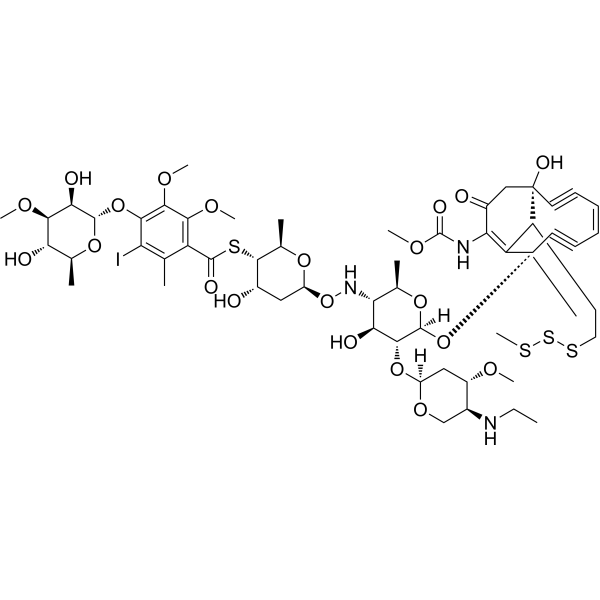
Calicheamicin, an antitumor antibiotic, is a cytotoxic agent that causes double-strand DNA breaks. Calicheamicin is a DNA synthesis inhibitor.
Nos produits utilisent uniquement pour la recherche. Nous ne vendons pas aux patients.
- Pureté : 98.06%
- CAS No.: 108212-75-5
- Formule: C55H74IN3O21S4
- Masse moléculaire:1368.35
-
Stockage:Powder -20°C, 3 years , 4°C, 2 years ; In solvent -80°C, 6 months , -20°C, 1 month

To place orders, for customer services and technical support, please contact: MedChemExpress USA
Tel: 609-228-6898 E-mail: [email protected] [email protected]


-
 Activité biologique
-
Chemical Information
-
Solvant et solubilité
- Protocole
- Pureté et documentation
- Références
-
 Help & FAQs


-
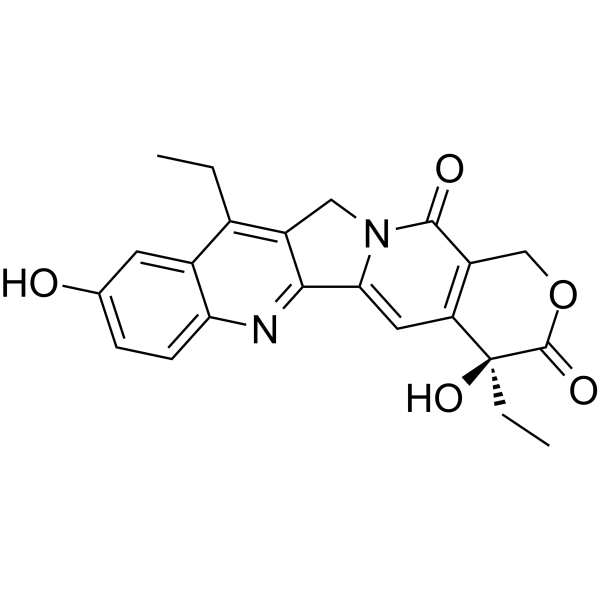
HY-13704
SN-38Topoisomerase I Inhibitor -
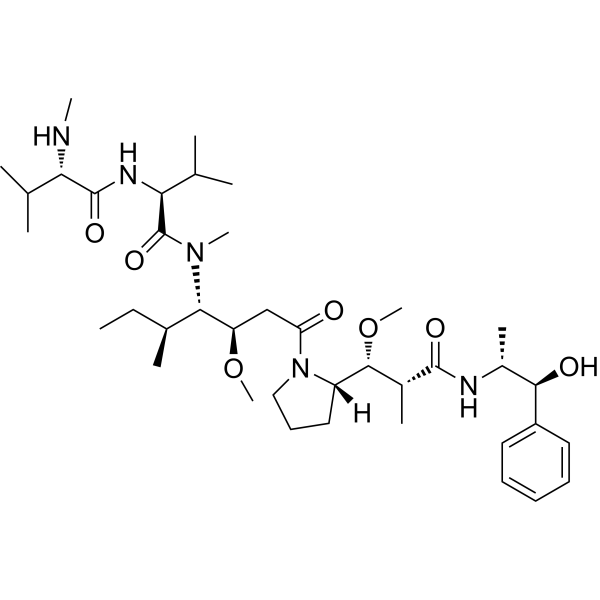
HY-15162
Monomethyl auristatin EAntimitotic Agent -
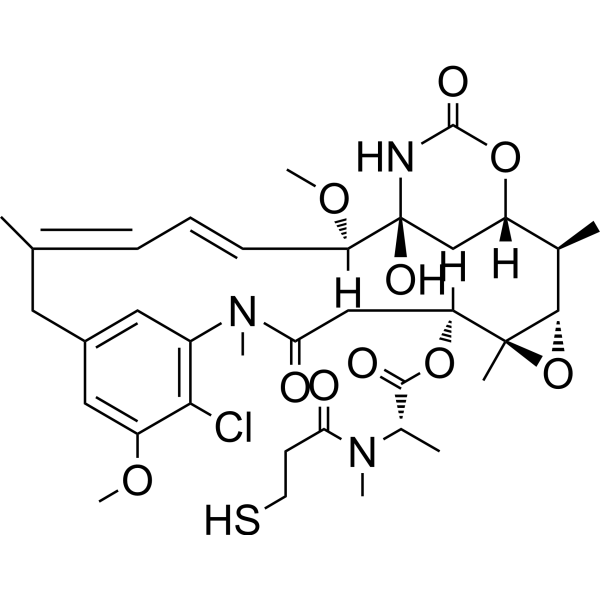
HY-19792
MertansineMicrotubule-Targeted Cytotoxin -
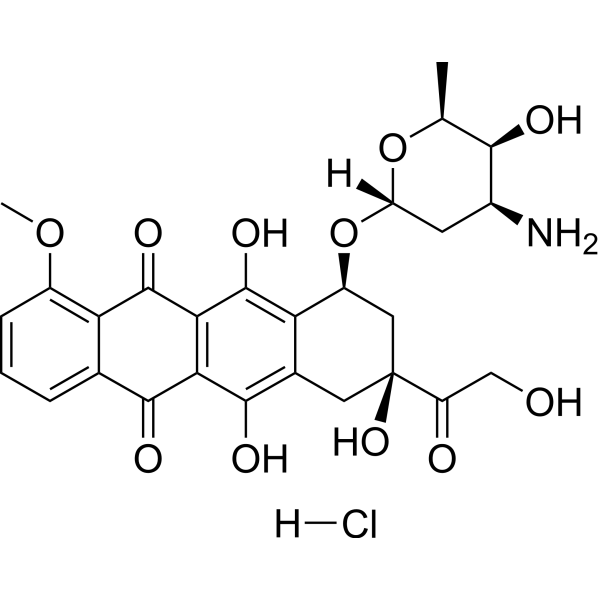
HY-15142
Doxorubicin hydrochlorideTopoisomerase Inhibitor -
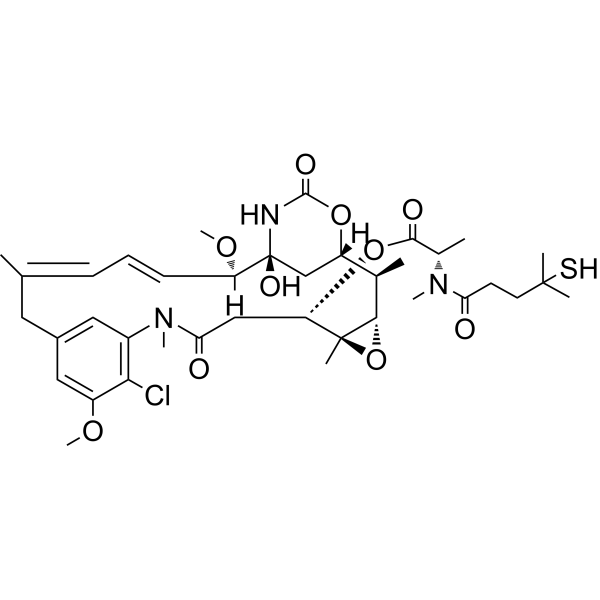
HY-12454
DM4Tubulin Inhibitor -
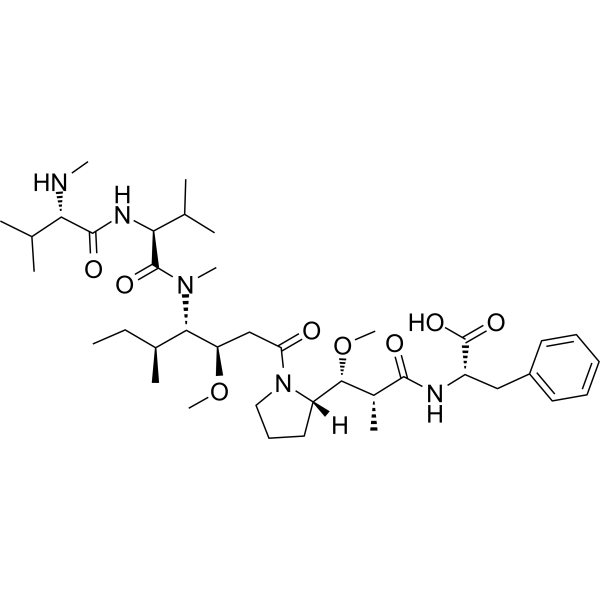
HY-15579
MMAFTubulin Inhibitor -
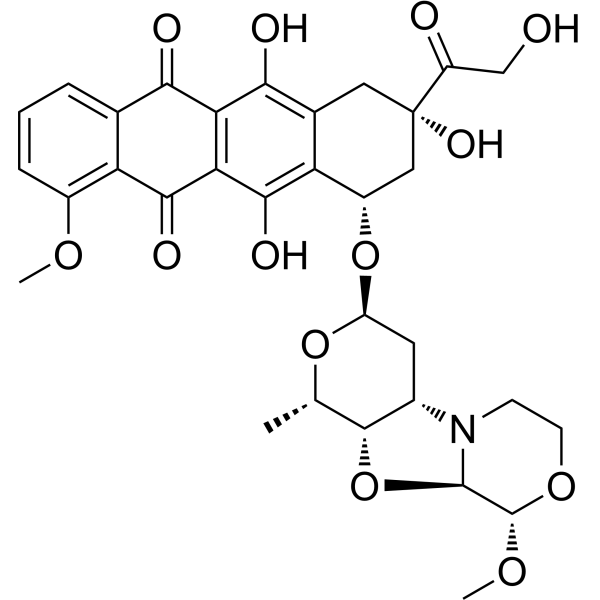
HY-16700
PNU-159682ADC Cytotoxin -
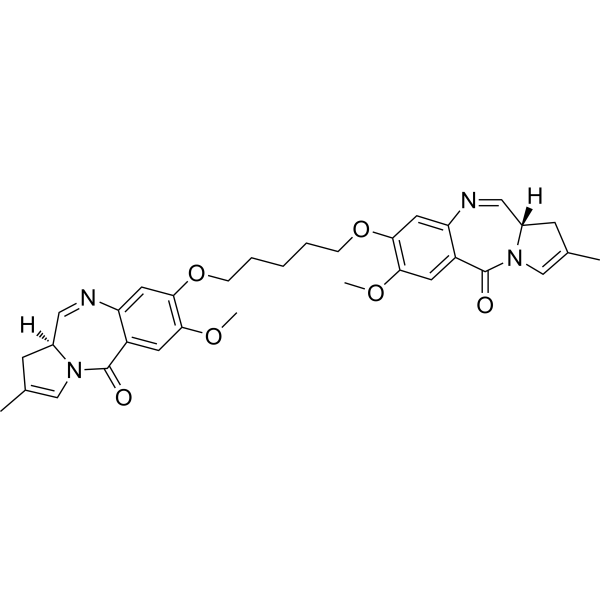
HY-101161
SG3199PBD Dimer -
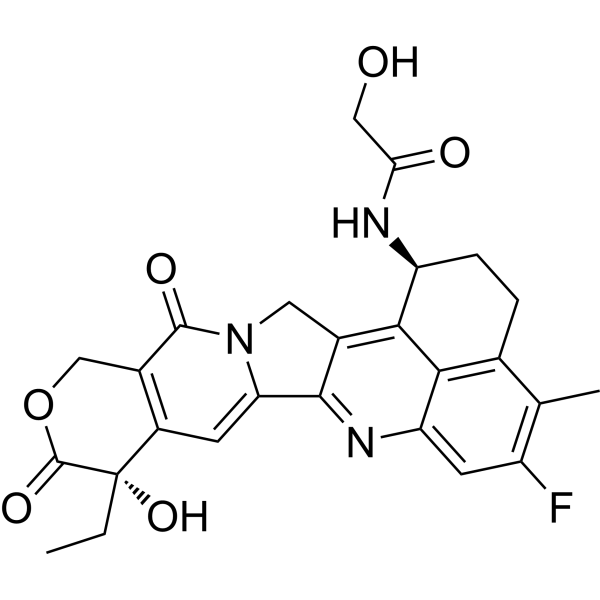
HY-13631D
DXdTopoisomerase I Inhibitor -
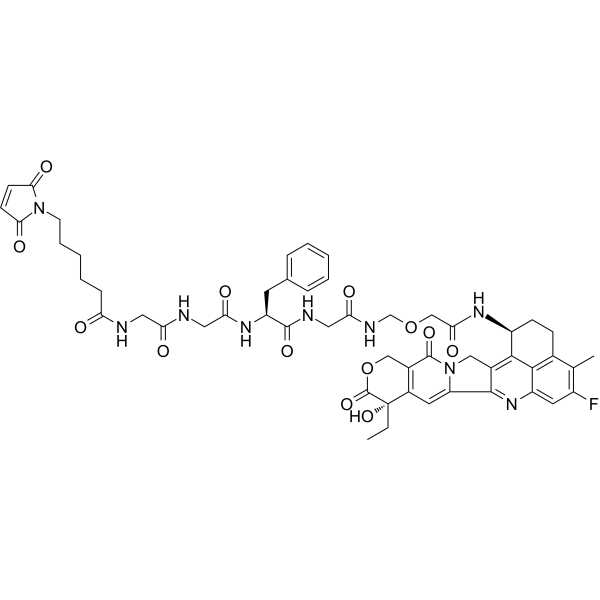
HY-13631E
DeruxtecanDrug-Linker Conjugates for ADC -
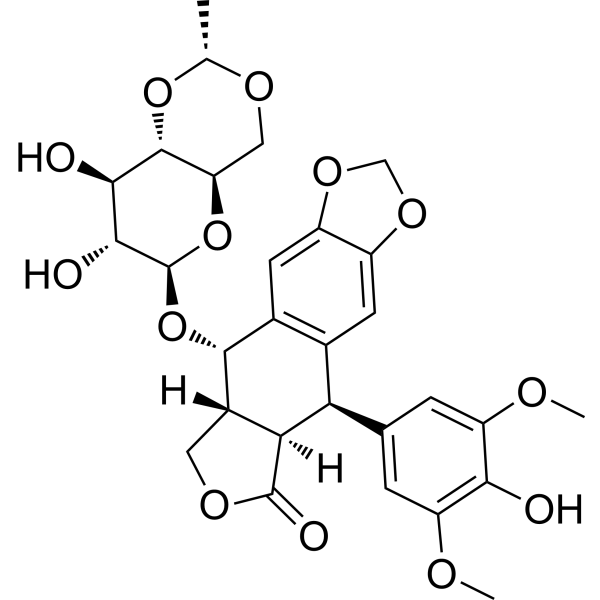
HY-13629
EtoposideTopoisomerase II Inhibitor -

HY-13704R
SN-38 (Standard)Topoisomerase I Inhibitor
Publications Citing Use of MedChemExpress (MCE) Calicheamicin
More- Nat Commun. 2026 Jun 15. [Abstract]
- J Transl Med. 2024 Nov 26;22(1):1062. [Abstract]
- PLoS Biol. 2020 Mar 23;18(3):e3000666. [Abstract]
- FASEB J. 2018 Jun 6:fj201800092R. [Abstract]
- J Biol Chem. 2022 Aug;298(8):102191. [Abstract]
- Biochem Biophys Res Commun. 2026 Jun 11:817:153752. [Abstract]
- Res Sq. 2026 Jan 11.
- bioRxiv. 2025 Oct 31:2025.10.31.685078. [Abstract]
- bioRxiv. 2025 Jun 17.
- Research Square Preprint. 2023 Dec 4.
- bioRxiv. 2023 Aug 29.
- Newcastle University. 2022.
- Research Square Preprint. 2022 May.
 Customer Validation & Images

-
Cell Proliferation/Viability Assay
-
WB
-
Cell Migration/Invasion Assay
-
RT-PCR
-
WB
Voir tous les produits spécifiques à Isoform ADC Payloads
MoreVoir tous les produits spécifiques à Isoform Antibiotic
More

Activité biologique
Description
IC50 & Target
|
Calicheamicins |
In Vitro
CMC-544, consisting of a humanized CD22 Ab linked to calicheamicin, is effective in pediatric primary B-cell precursor acute lymphoblastic leukemia (BCP-ALL) cells in vitro. CMC-544 induces cell death in various ALL cell lines in a dose- and time-dependent way, with IC50 values ranging from 0.15 to 4.9 ng/mL. CMC-544 (10 ng/mL) is effective and specific in primary BCP-ALL cells[2].
MedChemExpress (MCE) has not independently confirmed the accuracy of these methods. They are for reference only.
In Vivo
MedChemExpress (MCE) has not independently confirmed the accuracy of these methods. They are for reference only.


Chemical Information
-
CAS No. 108212-75-5
-
Appearance Solid
-
Masse moléculaire 1368.35
-
Formule C55H74IN3O21S4
-
Color White to yellow
-
SMILES
O[C@](CC1=O)(C#C/C=C\C#C2)/C(C([C@H]2O[C@@](O[C@H](C)[C@@H](NO[C@H](O[C@H](C)[C@H]3SC(C(C(C)=C(I)C(O[C@H](O[C@@H](C)[C@H](O)[C@H]4OC)[C@@H]4O)=C5OC)=C5OC)=O)C[C@@H]3O)[C@@H]6O)([H])[C@@H]6O[C@@](OC[C@@H]7NCC)([H])C[C@@H]7OC)=C1NC(OC)=O)=C/CSSSC
-
Synonyms
Calicheamicin γ1
-
Livraison
Room temperature in continental US; may vary elsewhere.
-
Stockage
Powder -20°C 3 years 4°C 2 years In solvent -80°C 6 months -20°C 1 month


Publications (13)
-
Journal Impact Factor
-
Most Recent
-
Nat Commun
Systematic discovery of UFM1 receptors reveals a regulatory module in DNA repair directing non-homologous end-joining. [Abstract]2026 Jun 15. PMID: 42297806 -
J Transl Med
Exploring the role of PARP1 inhibition in enhancing antibody-drug conjugate therapy for acute leukemias: insights from DNA damage response pathway interactions. [Abstract]2024 Nov 26;22(1):1062. PMID: 39587643
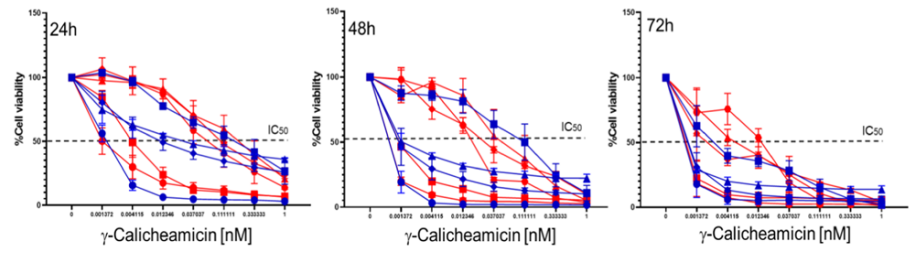
Calicheamicin purchased from MedChemExpress. Usage Cited in: J Transl Med. 2024 Nov 26;22(1):1062. [Abstract]
Reduction of the cell viability of ALL (blue) and AML (red) cell lines treated for 24, 48 and 72 h with increasing concentrations of Calicheamicin (γ-calicheamicin; 0.001-1 nM).
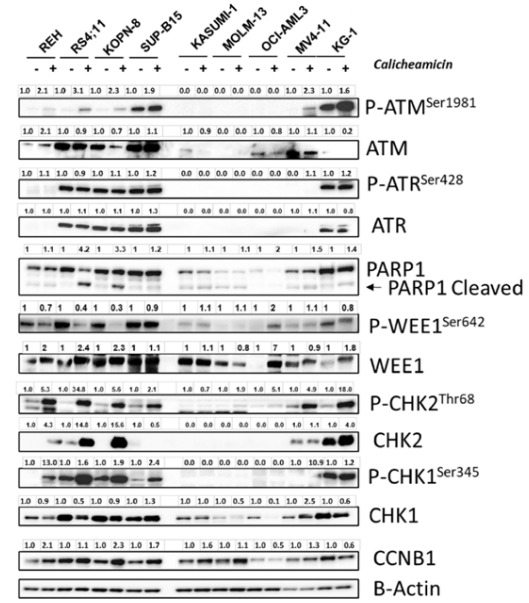
Calicheamicin purchased from MedChemExpress. Usage Cited in: J Transl Med. 2024 Nov 26;22(1):1062. [Abstract]
Immunoblotting analysis of ALL and AML cell lines treated with Calicheamicin (γ-calicheamicin; SUP-B15: 0.07 pM; REH: 2 pM; RS4;11: 0.0013 pM; KOPN-8: 0.2 pM; OCI-AML3: 5 pM; KG-1: 7.5 pM; MV4-11: 2 pM; MOLM-13: 0.3 pM; KASUMI-1:0.02 pM) for 18 h. β-actin was used for loading normalization.
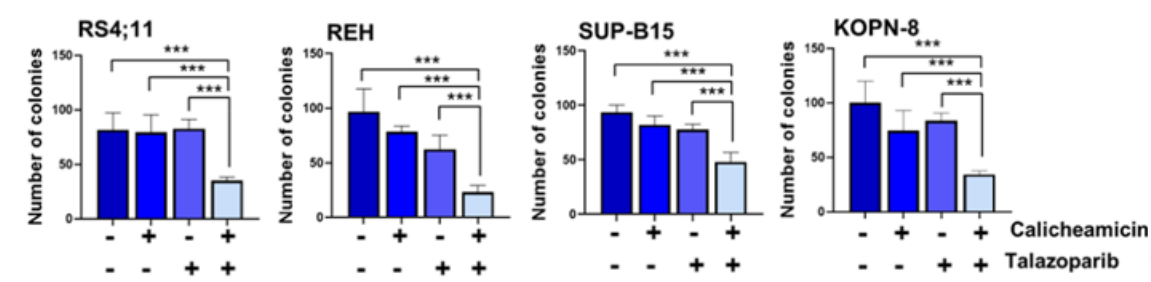
Calicheamicin purchased from MedChemExpress. Usage Cited in: J Transl Med. 2024 Nov 26;22(1):1062. [Abstract]
Clonogenic results of RS4;11, REH, SUP-B15 and KOPN-8 cells treated with sub-toxic concentrations of Calicheamicin (γ-calicheamicin; SUP-B15 = 0.07 pM; REH = 2 pM; RS4;11 = 0.0013 pM; KOPN-8 = 0.2 pM) and talazoparib (SUP-B15 = 0.00019 μM; REH = 0.055 μM; RS4;11 = 0.0016 μM; KOPN-8 = 0.0055 μM) for 10–14 days.
-
PLoS Biol
A long noncoding RNA sensitizes genotoxic treatment by attenuating ATM activation and homologous recombination repair in cancers. [Abstract]2020 Mar 23;18(3):e3000666. PMID: 32203529
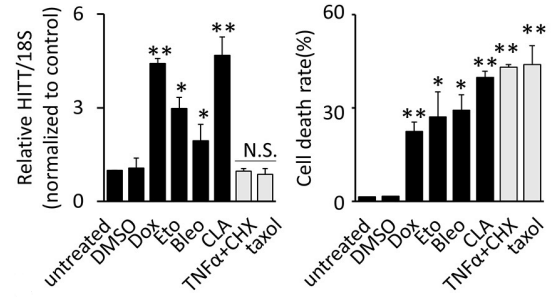
Calicheamicin purchased from MedChemExpress. Usage Cited in: PLoS Biol. 2020 Mar 23;18(3):e3000666. [Abstract]
Expression of HITT (left) and cell death rates (right) were determined by real-time RT-PCR and trypan blue exclusion assay, respectively, in HCT116 cells with the indicated treatments for 24 h: Dox (1 μg/ml), Eto (10 μM), Bleo (1 μg/ml), Calicheamicin (CLA; 10 nM), TNF-α (10 ng/ml) + CHX (10 μM), taxol (10 nM).
-
FASEB J
Poly(ADP-ribose) polymerase-1 promotes recruitment of meiotic recombination-11 to chromatin and DNA double-strand break repair in Ku70-deficient breast cancer cells. [Abstract]2018 Jun 6:fj201800092R. PMID: 29874127
Calicheamicin purchased from MedChemExpress. Usage Cited in: FASEB J. 2018 Jun 6:fj201800092R. [Abstract]
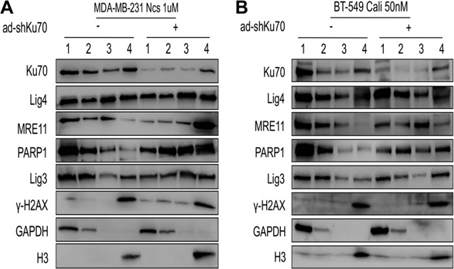
The distribution of PARP-1 is compared in the 4 fractions after Neocarzinostatin (NCS) or Calicheamicin (Cali) treatment in Ku70-deficient and Ku70-normal MDA-MB-231 and BT-549 cells.
-
J Biol Chem
Casein kinase 1δ/ε phosphorylates fused in sarcoma (FUS) and ameliorates FUS-mediated neurodegeneration. [Abstract]2022 Aug;298(8):102191. PMID: 35753345 -
Biochem Biophys Res Commun
Targeting BCL-2 and PI3K signaling pathways enhances cytotoxicity of gemtuzumab ozogamicin against acute myeloid leukemia cells. [Abstract]2026 Jun 11:817:153752. PMID: 41980559 -
-
bioRxiv
2025 Oct 31:2025.10.31.685078. PMID: 41278620 -
-
-
-
-


Solvant et solubilité
In Vitro:
DMSO : 25 mg/mL (18.27 mM; Need ultrasonic; Hygroscopic DMSO has a significant impact on the solubility of product, please use newly opened DMSO)
Please refer to the solubility information to select the appropriate solvent. Once prepared, please aliquot and store the solution to prevent product inactivation from repeated freeze-thaw cycles.
Storage method and period of stock solution: -80°C, 6 months; -20°C, 1 month. When stored at -80°C, please use it within 6 months. When stored at -20°C, please use it within 1 month.
Please refer to the solubility information to select the appropriate solvent. Once prepared, please aliquot and store the solution to prevent product inactivation from repeated freeze-thaw cycles.
Storage method and period of stock solution: -80°C, 6 months; -20°C, 1 month. When stored at -80°C, please use it within 6 months. When stored at -20°C, please use it within 1 month.
Concentration (start) × Volume (start) = Concentration (final) × Volume (final)
In Vivo:
Select the appropriate dissolution method based on your experimental animal and administration route.
- For the following dissolution methods, please ensure to first prepare a clear stock solution using an In Vitro approach and then sequentially add co-solvents:
- To ensure reliable experimental results, the clarified stock solution can be appropriately stored based on storage conditions. As for the working solution for In Vivo experiments, it is recommended to prepare freshly and use it on the same day.
- The percentages shown for the solvents indicate their volumetric ratio in the final prepared solution. If precipitation or phase separation occurs during preparation, heat and/or sonication can be used to aid dissolution.
Add each solvent one by one: 10% DMSO 40% PEG300 5% Tween-80 45% Saline
Solubility: ≥ 2.5 mg/mL (1.83 mM); Clear solution
This protocol yields a clear solution of ≥ 2.5 mg/mL (saturation unknown).
Taking 1 mL working solution as an example, add 100 μL DMSO stock solution (25.0 mg/mL) to 400 μL PEG300, and mix evenly; then add 50 μL Tween-80 and mix evenly; then add 450 μL Saline to adjust the volume to 1 mL.
Preparation of Saline: Dissolve 0.9 g sodium chloride in ddH₂O and dilute to 100 mL to obtain a clear Saline solution.
Add each solvent one by one: 10% DMSO 90% (20% SBE-β-CD in Saline)
Solubility: 2.5 mg/mL (1.83 mM); Suspended solution; Need ultrasonic
This protocol yields a suspended solution of 2.5 mg/mL. Suspended solution can be used for oral and intraperitoneal injection.
Taking 1 mL working solution as an example, add 100 μL DMSO stock solution (25.0 mg/mL) to 900 μL 20% SBE-β-CD in Saline, and mix evenly.
Preparation of 20% SBE-β-CD in Saline (4°C, storage for one week): 2 g SBE-β-CD powder is dissolved in 10 mL Saline, completely dissolve until clear.
In Vivo Dissolution Calculator
Please enter the basic information of animal experiments:
-
-
-
-
Recommended: Prepare an additional quantity of animals to account for potential losses during experiments.
Please enter your animal formula composition:
-
%DMSO +
Recommended: Keep the proportion of DMSO in working solution below 2% if your animal is weak.
-
%+
-
+%Tween-80 + +
-
%Saline +
The co-solvents required include: DMSO, . All of co-solvents are available by MedChemExpress (MCE). , Tween 80. All of co-solvents are available by MedChemExpress (MCE).
Working solution concentration: 0.22 mg/mL
Method for preparing stock solution: mg drug dissolved in μL DMSO. Stock solution concentration: mg/mL.
1. Take μL DMSO stock solution;
2. Add μL .
μL , mix evenly;
3. Then add μL Tween 80, mix evenly;
4. Then add μL
Please ensure that the stock solution in the first step is dissolved to a clear state, and add co-solvents in sequence. You can use ultrasonic heating (ultrasonic cleaner, recommended frequency 20-40 kHz), vortexing, etc. to assist dissolution.


Pureté et documentation
-
Fiche technique (283 KB)
-
SDS (644 KB)
- English - EN (644 KB)
- Français - FR (644 KB)
- Deutsch - DE (644 KB)
- Norwegian - NO (644 KB)
- Español - ES (644 KB)
- Swedish - SV (644 KB)
- Italian - IT (644 KB)
- Korean - KR (644 KB)
- Portuguese - PT (644 KB)
-
Instruction de manipulation (2659 KB)
Références
[1]. Damelin M, et al. Anti-EFNA4 Calicheamicin Conjugates Effectively Target Triple-Negative Breast and Ovarian Tumor-Initiating Cells to Result in Sustained Tumor Regressions. Clin Cancer Res. 2015 Sep 15;21(18):4165-73 [Content Brief]
[2]. de Vries JF, et al. The novel calicheamicin-conjugated CD22 antibody inotuzumab ozogamicin (CMC-544) effectively kills primary pediatric acute lymphoblastic leukemia cells. Leukemia. 2012 Feb;26(2):255-64 [Content Brief]
[3]. Takeshita A, et al. CMC-544 (inotuzumab ozogamicin), an anti-CD22 immuno-conjugate of calicheamicin, alters the levels of target molecules of malignant B-cells. Leukemia. 2009 Jul;23(7):1329-36. [Content Brief]


Complete Stock Solution Preparation Table
Please refer to the solubility information to select the appropriate solvent. Once prepared, please aliquot and store the solution to prevent product inactivation from repeated freeze-thaw cycles.
Storage method and period of stock solution: -80°C, 6 months; -20°C, 1 month. When stored at -80°C, please use it within 6 months. When stored at -20°C, please use it within 1 month.
| Optional Solvent | Concentration Solvent Mass | 1 mg | 5 mg | 10 mg | 25 mg |
|---|---|---|---|---|---|
| DMSO | 1 mM | 0.7308 mL | 3.6540 mL | 7.3081 mL | 18.2702 mL |
| 5 mM | 0.1462 mL | 0.7308 mL | 1.4616 mL | 3.6540 mL | |
| 10 mM | 0.0731 mL | 0.3654 mL | 0.7308 mL | 1.8270 mL | |
| 15 mM | 0.0487 mL | 0.2436 mL | 0.4872 mL | 1.2180 mL |


Calicheamicin Related Classifications
HY-19609 Related Classifications
 Powered by Bioz