



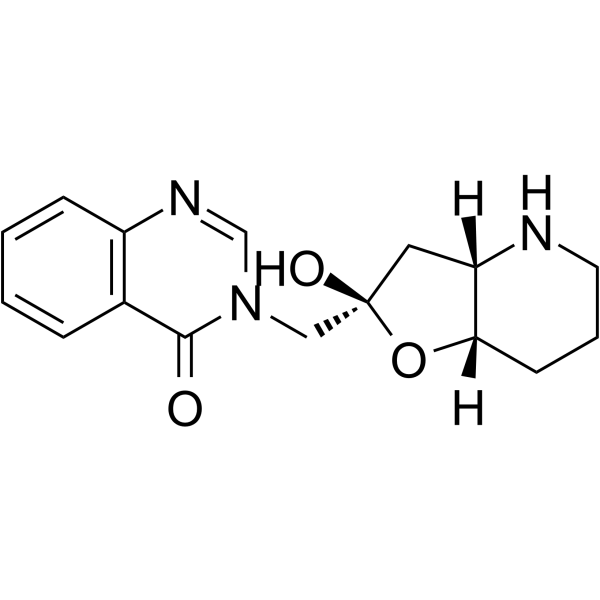
Febrifugine
Based on 1 publication(s) in Google Scholar
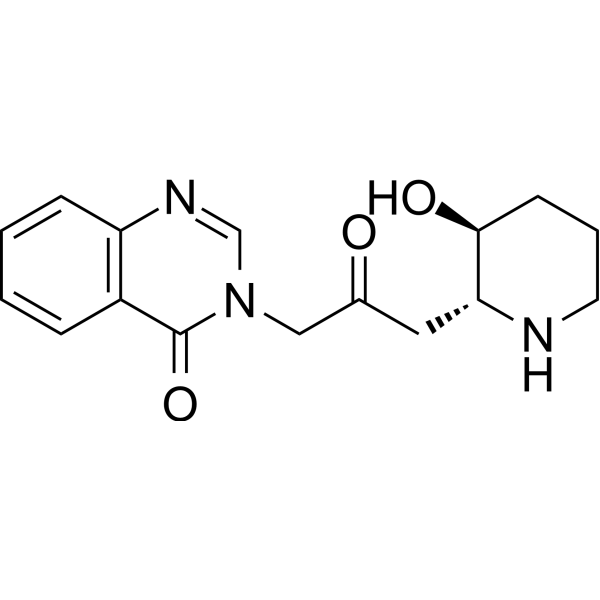
Febrifugine is a quinazolinone alkaloid that inhibits P. falciparum and has antimalarial activity. Febrifugine inhibits bladder cancer by inhibiting DNA synthesis, inducing apoptosis, and reducing steroids.
Nos produits utilisent uniquement pour la recherche. Nous ne vendons pas aux patients.
- Pureté : 99.98%
- CAS No.: 24159-07-7
- Formule: C16H19N3O3
- Masse moléculaire:301.34
-
Stockage:
-20°C, sealed storage, away from moisture and light
* In solvent : -80°C, 6 months; -20°C, 1 month (sealed storage, away from moisture and light)

To place orders, for customer services and technical support, please contact: MedChemExpress USA
Tel: 609-228-6898 E-mail: [email protected] [email protected]


-
 Activité biologique
-
Chemical Information
-
Solvant et solubilité
- Protocole
- Pureté et documentation
- Références
-
 Help & FAQs


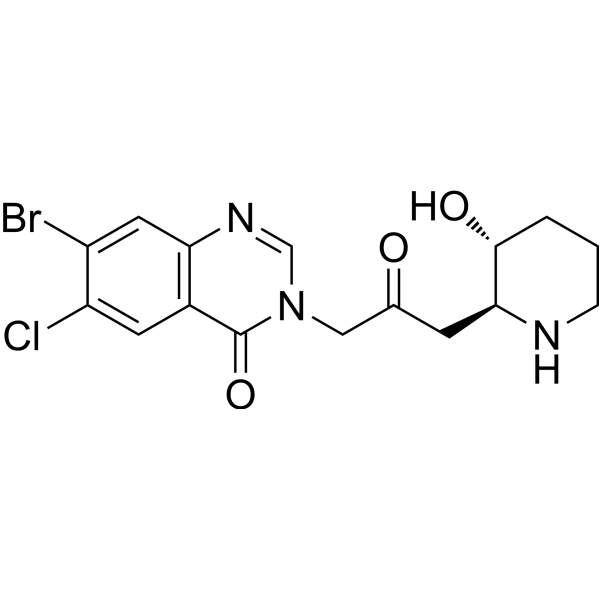
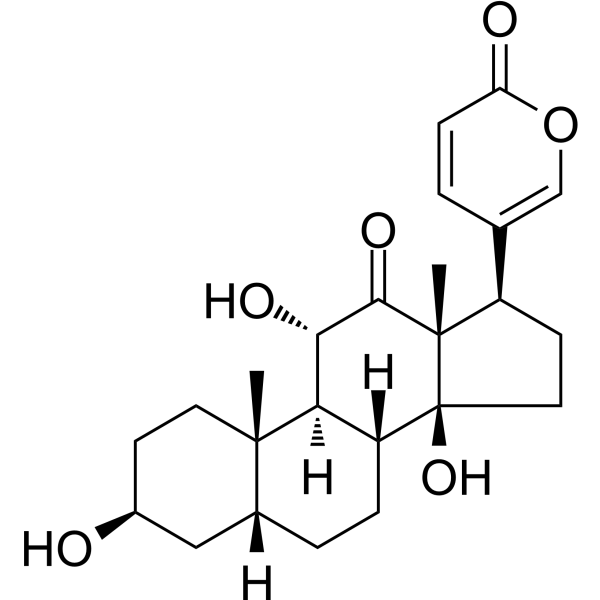
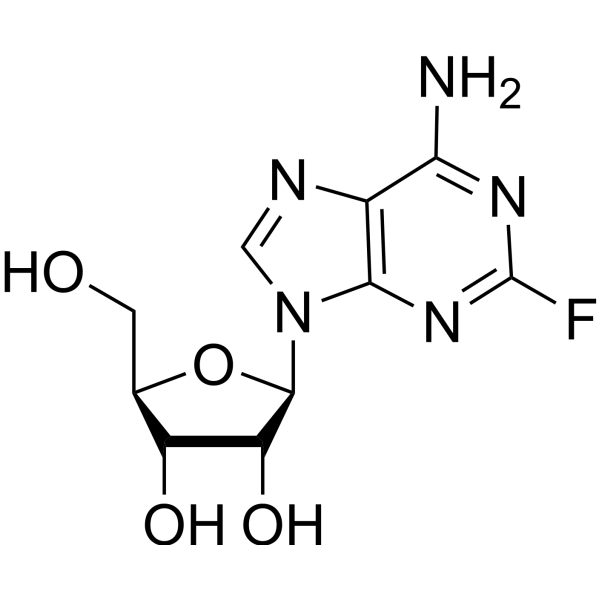

Publications Citing Use of MedChemExpress (MCE) Febrifugine
MoreVoir tous les produits spécifiques à Isoform Parasite
MoreVoir tous les produits spécifiques à Isoform DNA/RNA Synthesis
More

Activité biologique
Description
IC50 & Target
|
Plasmodium |
Cellular Effect
|
Cell Line

|
Type | Value | Description | References |
|---|---|---|---|---|
| AGS | IC50 |
0.17 μg/mL
Compound: 5
|
Cytotoxicity against human AGS cells assessed as reduction in cell viability incubated for 48 hrs by MTT assay
Cytotoxicity against human AGS cells assessed as reduction in cell viability incubated for 48 hrs by MTT assay
|
[PMID: 36375335] |
| SNU1 | IC50 |
0.05 μg/mL
Compound: 5
|
Cytotoxicity against human SNU1 cells assessed as inhibition of cell growth measured after 72 hrs by cell titer glo assay
Cytotoxicity against human SNU1 cells assessed as inhibition of cell growth measured after 72 hrs by cell titer glo assay
|
[PMID: 36375335] |
In Vitro
Febrifugine (7-70 nM; 90 minutes) increases eIF2α phosphorylation in a dose-dependent manner in asynchronous P. falciparum Dd2 cultures[1].
Febrifugine inhibits the asexual blood stage of the P. falciparum 3D7 parasite strain with an EC50 of 4.0 nM[1].
Febrifugine (0-0.225 μM; 48 h) effectively inhibits the proliferation growth of bladder cancer cells T24 and SW780 with IC50 of 0.02 μM and 0.018 μM, respectively[3].
Febrifugine (0.05-0.2 μM; 24 h) increases the number of cells in the G1 phase, and decreases the number in the G2 phase[3].
Febrifugine (0.05-0.15 μM) inhibits cell proliferation by suppressing DNA synthesis and induces cell death by reducing steroidogenesis and promoting apoptosis[3].
Febrifugine (0.025 μM) downregulates low density lipoprotein receptor-associated protein, lanosterol synthase, cholesterol biosynthesis second rate-limiting enzyme, 7-dehydrocholesterol reductase, flavin adenine dinucleotide dependent oxidoreductase and other factors to inhibit the production of intracellular steroids in bladder cancer T24 cells[3].
MedChemExpress (MCE) has not independently confirmed the accuracy of these methods. They are for reference only.
-
Cell Line:Asynchronous P. falciparum Dd2 cultures
-
Concentration:7 nM, 70 nM
-
Incubation Time:90 minutes
-
Result:Increased the eIF2α phosphorylation.
-
Cell Line:T24 and SW780 cells
-
Concentration:0.05 μM , 0.1 μM , 0.15 μM , 0.2 μM , 0.225 μM
-
Incubation Time:48 h
-
Result:Decreased the cell viability of bladder cancer cells.
-
Cell Line:T24 cells
-
Concentration:0.05 μM, 0.1 μM, 0.2 μM
-
Incubation Time:24 h
-
Result:Revealed alterations in G1 and G2 progression.
In Vivo
Febrifugine (0.1 mg/kg; once every 3 days; 10 doses) effectively inhibits bladder cancer xenograft proliferation in BALB/c nude mice[3].
MedChemExpress (MCE) has not independently confirmed the accuracy of these methods. They are for reference only.
-
Animal Model:Male ICR mice (6 weeks of age) infected with erythrocytic stage Plasmodium berghei NK65[2].
-
Dosage:1 mg/kg/day
-
Administration:p.o.; once a day for 3 consecutive days before parasite infection.
-
Result:Significantly reduced the mortality and the level of parasitemia.


Chemical Information
-
CAS No. 24159-07-7
-
Appearance Solid
-
Masse moléculaire 301.34
-
Formule C16H19N3O3
-
Color White to off-white
-
SMILES
O=C1N(CC(C[C@H]2NCCC[C@@H]2O)=O)C=NC3=C1C=CC=C3
-
Structure Classification
-
Initial Source
-
Livraison
Room temperature in continental US; may vary elsewhere.
-
Stockage
-20°C, sealed storage, away from moisture and light
* In solvent : -80°C, 6 months; -20°C, 1 month (sealed storage, away from moisture and light)


Publications (1)
-
Journal Impact Factor
-
Most Recent
-
J Virol
Febrifugine dihydrochloride restricts porcine epidemic diarrhea virus replication by modulating the IGF1R-driven PI3K/AKT-apoptosis axis. [Abstract]2026 May 19;100(5):e0011726. PMID: 41983768


Solvant et solubilité
In Vitro:
DMSO : 25 mg/mL (82.96 mM; Need ultrasonic; Hygroscopic DMSO has a significant impact on the solubility of product, please use newly opened DMSO)
Please refer to the solubility information to select the appropriate solvent. Once prepared, please aliquot and store the solution to prevent product inactivation from repeated freeze-thaw cycles.
Storage method and period of stock solution: -80°C, 6 months; -20°C, 1 month (sealed storage, away from moisture and light). When stored at -80°C, please use it within 6 months. When stored at -20°C, please use it within 1 month.
Please refer to the solubility information to select the appropriate solvent. Once prepared, please aliquot and store the solution to prevent product inactivation from repeated freeze-thaw cycles.
Storage method and period of stock solution: -80°C, 6 months; -20°C, 1 month (sealed storage, away from moisture and light). When stored at -80°C, please use it within 6 months. When stored at -20°C, please use it within 1 month.
Concentration (start) × Volume (start) = Concentration (final) × Volume (final)
In Vivo:
Select the appropriate dissolution method based on your experimental animal and administration route.
- For the following dissolution methods, please ensure to first prepare a clear stock solution using an In Vitro approach and then sequentially add co-solvents:
- To ensure reliable experimental results, the clarified stock solution can be appropriately stored based on storage conditions. As for the working solution for In Vivo experiments, it is recommended to prepare freshly and use it on the same day.
- The percentages shown for the solvents indicate their volumetric ratio in the final prepared solution. If precipitation or phase separation occurs during preparation, heat and/or sonication can be used to aid dissolution.
Add each solvent one by one: 10% DMSO 40% PEG300 5% Tween-80 45% Saline
Solubility: ≥ 2.5 mg/mL (8.30 mM); Clear solution
This protocol yields a clear solution of ≥ 2.5 mg/mL (saturation unknown).
Taking 1 mL working solution as an example, add 100 μL DMSO stock solution (25.0 mg/mL) to 400 μL PEG300, and mix evenly; then add 50 μL Tween-80 and mix evenly; then add 450 μL Saline to adjust the volume to 1 mL.
Preparation of Saline: Dissolve 0.9 g sodium chloride in ddH₂O and dilute to 100 mL to obtain a clear Saline solution.
Add each solvent one by one: 10% DMSO 90% (20% SBE-β-CD in Saline)
Solubility: ≥ 2.5 mg/mL (8.30 mM); Clear solution
This protocol yields a clear solution of ≥ 2.5 mg/mL (saturation unknown).
Taking 1 mL working solution as an example, add 100 μL DMSO stock solution (25.0 mg/mL) to 900 μL 20% SBE-β-CD in Saline, and mix evenly.
Preparation of 20% SBE-β-CD in Saline (4°C, storage for one week): 2 g SBE-β-CD powder is dissolved in 10 mL Saline, completely dissolve until clear.
In Vivo Dissolution Calculator
Please enter the basic information of animal experiments:
-
-
-
-
Recommended: Prepare an additional quantity of animals to account for potential losses during experiments.
Please enter your animal formula composition:
-
%DMSO +
Recommended: Keep the proportion of DMSO in working solution below 2% if your animal is weak.
-
%+
-
+%Tween-80 + +
-
%Saline +
The co-solvents required include: DMSO, . All of co-solvents are available by MedChemExpress (MCE). , Tween 80. All of co-solvents are available by MedChemExpress (MCE).
Working solution concentration: 0.22 mg/mL
Method for preparing stock solution: mg drug dissolved in μL DMSO. Stock solution concentration: mg/mL. * In solvent : -80°C, 6 months; -20°C, 1 month (sealed storage, away from moisture and light)
1. Take μL DMSO stock solution;
2. Add μL .
μL , mix evenly;
3. Then add μL Tween 80, mix evenly;
4. Then add μL
Please ensure that the stock solution in the first step is dissolved to a clear state, and add co-solvents in sequence. You can use ultrasonic heating (ultrasonic cleaner, recommended frequency 20-40 kHz), vortexing, etc. to assist dissolution.


Pureté et documentation
-
Fiche technique (290 KB)
-
SDS (480 KB)
- English - EN (480 KB)
- Français - FR (480 KB)
- Deutsch - DE (480 KB)
- Norwegian - NO (480 KB)
- Español - ES (480 KB)
- Swedish - SV (480 KB)
- Italian - IT (480 KB)
- Korean - KR (480 KB)
- Portuguese - PT (480 KB)
-
Instruction de manipulation (2659 KB)
Références
[1]. Herman JD, et al. The cytoplasmic prolyl-tRNA synthetase of the malaria parasite is a dual-stage target of febrifugine and its analogs. Sci Transl Med. 2015 May 20;7(288):288ra77. [Content Brief]
[2]. Murata K, et al. Potentiation by febrifugine of host defense in mice against Plasmodium berghei NK65. Biochem Pharmacol. 1999 Nov 15;58(10):1593-601. [Content Brief]
[3]. Chen J, et al. Discovery of anticancer function of Febrifugine: Inhibition of cell proliferation, induction of apoptosis and suppression steroid synthesis in bladder cancer cells. Toxicol Appl Pharmacol. 2024 Mar;484:116878. [Content Brief]


Complete Stock Solution Preparation Table
Please refer to the solubility information to select the appropriate solvent. Once prepared, please aliquot and store the solution to prevent product inactivation from repeated freeze-thaw cycles.
Storage method and period of stock solution: -80°C, 6 months; -20°C, 1 month (sealed storage, away from moisture and light). When stored at -80°C, please use it within 6 months. When stored at -20°C, please use it within 1 month.
| Optional Solvent | Concentration Solvent Mass | 1 mg | 5 mg | 10 mg | 25 mg |
|---|---|---|---|---|---|
| DMSO | 1 mM | 3.3185 mL | 16.5926 mL | 33.1851 mL | 82.9628 mL |
| 5 mM | 0.6637 mL | 3.3185 mL | 6.6370 mL | 16.5926 mL | |
| 10 mM | 0.3319 mL | 1.6593 mL | 3.3185 mL | 8.2963 mL | |
| 15 mM | 0.2212 mL | 1.1062 mL | 2.2123 mL | 5.5309 mL | |
| 20 mM | 0.1659 mL | 0.8296 mL | 1.6593 mL | 4.1481 mL | |
| 25 mM | 0.1327 mL | 0.6637 mL | 1.3274 mL | 3.3185 mL | |
| 30 mM | 0.1106 mL | 0.5531 mL | 1.1062 mL | 2.7654 mL | |
| 40 mM | 0.0830 mL | 0.4148 mL | 0.8296 mL | 2.0741 mL | |
| 50 mM | 0.0664 mL | 0.3319 mL | 0.6637 mL | 1.6593 mL | |
| 60 mM | 0.0553 mL | 0.2765 mL | 0.5531 mL | 1.3827 mL | |
| 80 mM | 0.0415 mL | 0.2074 mL | 0.4148 mL | 1.0370 mL |


Febrifugine Related Classifications
HY-N2384 Related Classifications
 Powered by Bioz