



CL-82198 hydrochloride
Based on 9 publication(s) in Google Scholar
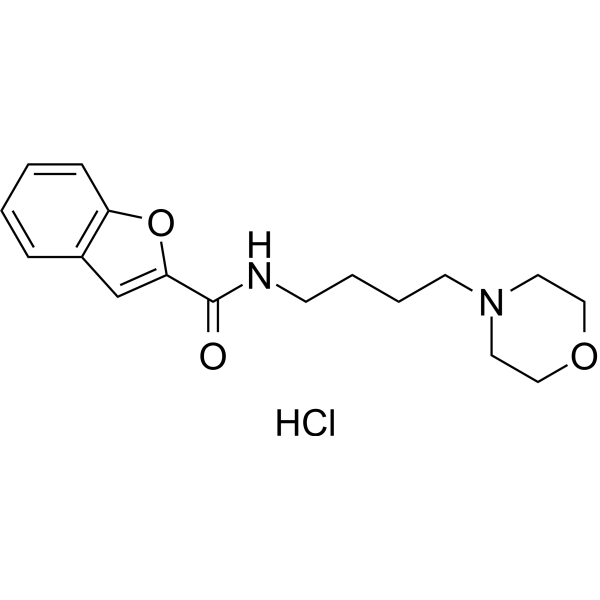
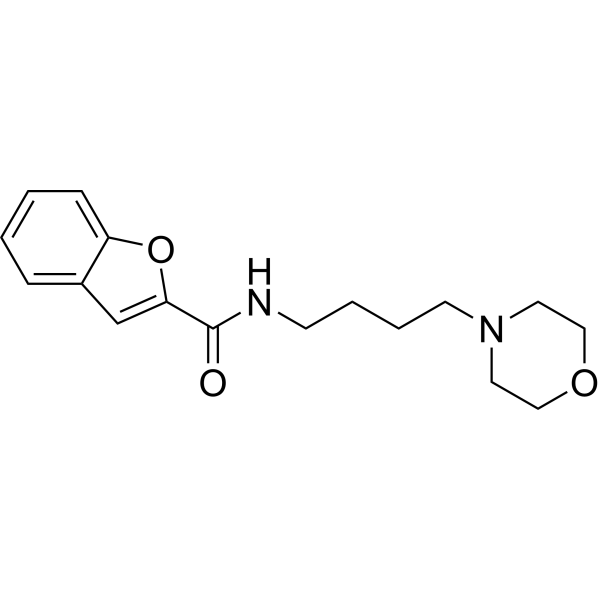
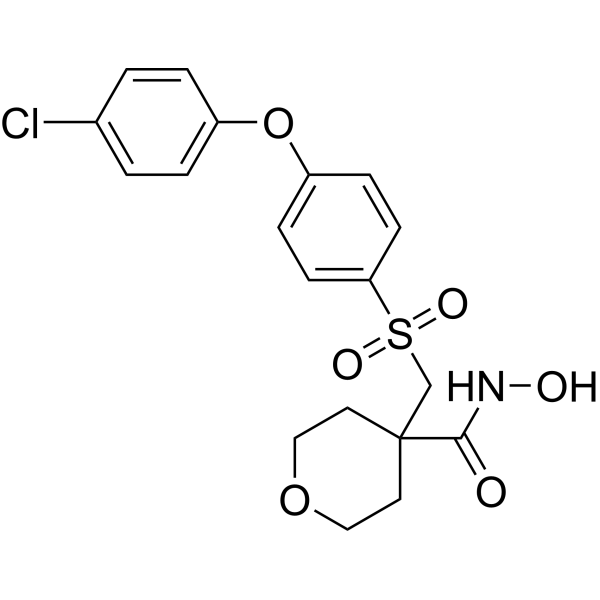
CL-82198 hydrochloride is a selective inhibitor of MMP-13. CL-82198 hydrochloride binds to the entire S1’ pocket of MMP-13, which is the basis of its selectivity against MMP-1, MMP-9, and TACE.
For research use only. We do not sell to patients.
- Purity : 99.58%
- CAS No.: 1188890-36-9
- Formula: C17H23ClN2O3
- Molecular Weight:338.83
-
Storage:
4°C, sealed storage, away from moisture and light
* In solvent : -80°C, 6 months; -20°C, 1 month (sealed storage, away from moisture and light)

To place orders, for customer services and technical support, please contact: MedChemExpress USA
Tel: 609-228-6898 E-mail: [email protected] [email protected]


-
 Biological Activity
-
Chemical Information
-
Solvent & Solubility
- Protocols
- Purity & Documentation
- References
-
 Help & FAQs


-
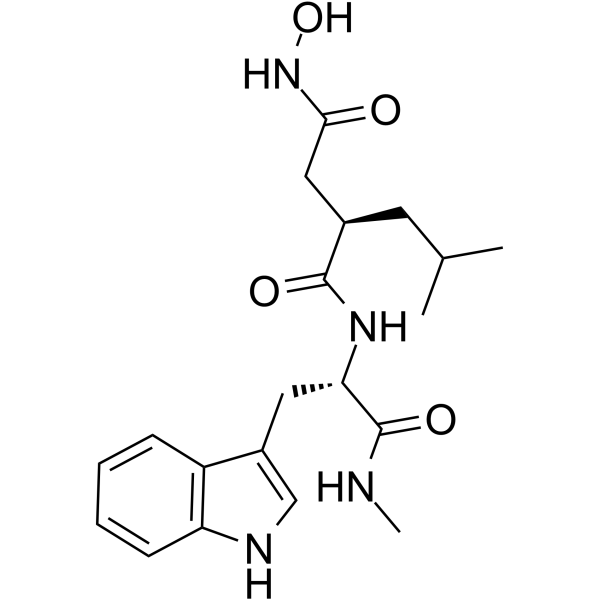
HY-15768
IlomastatMMP Inhibitor -
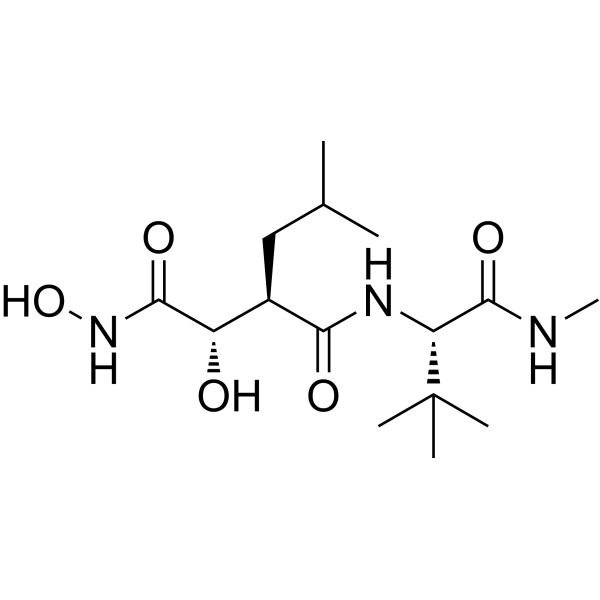
HY-12169
MarimastatMMP Inhibitor -
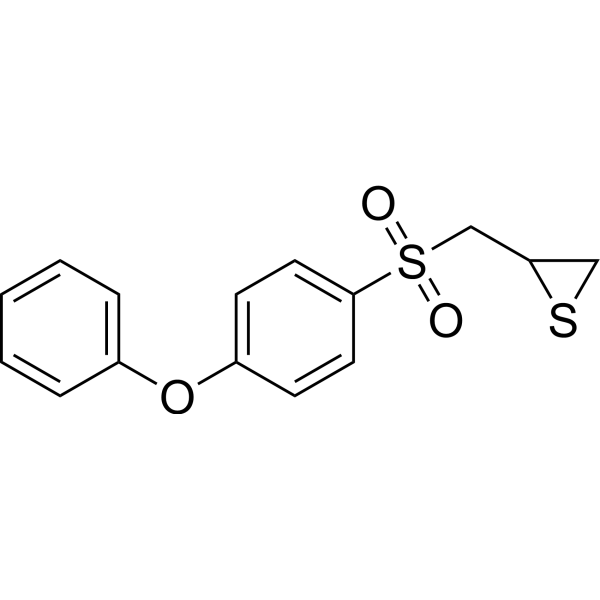
HY-12354
SB-3CTMMP2/9 Inhibitor -
HY-13564
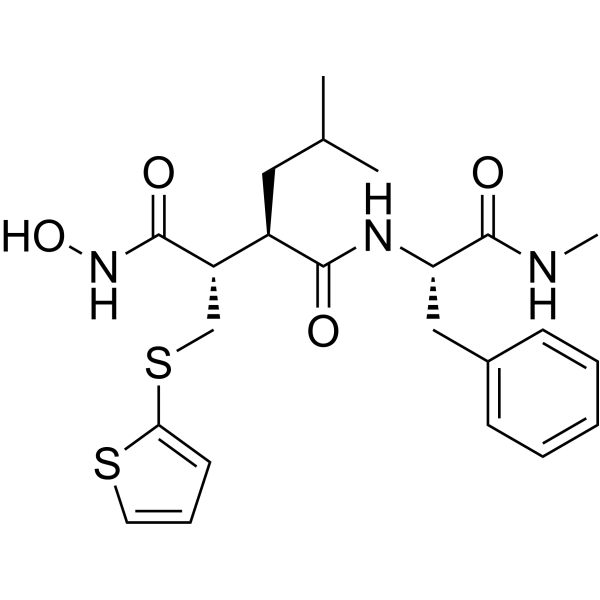
BatimastatMMP Inhibitor -
HY-15827
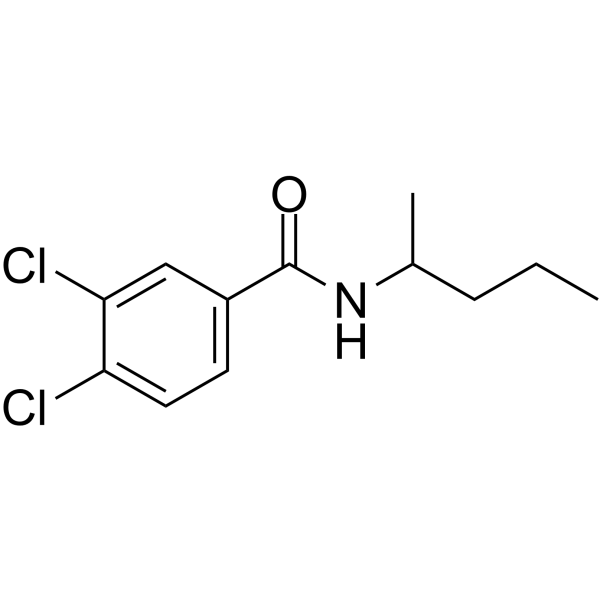
NSC 405020MMP14 Inhibitor -
HY-135232
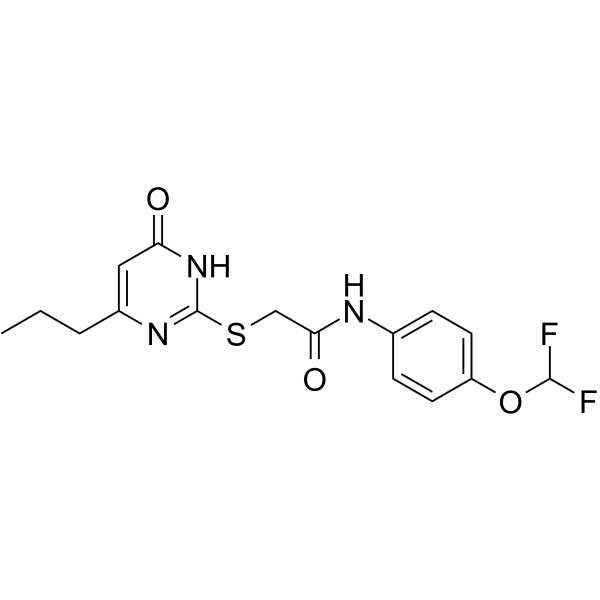
MMP-9-IN-1MMP-9 Inhibitor -
HY-100359
CL-82198MMP-13 Inhibitor -
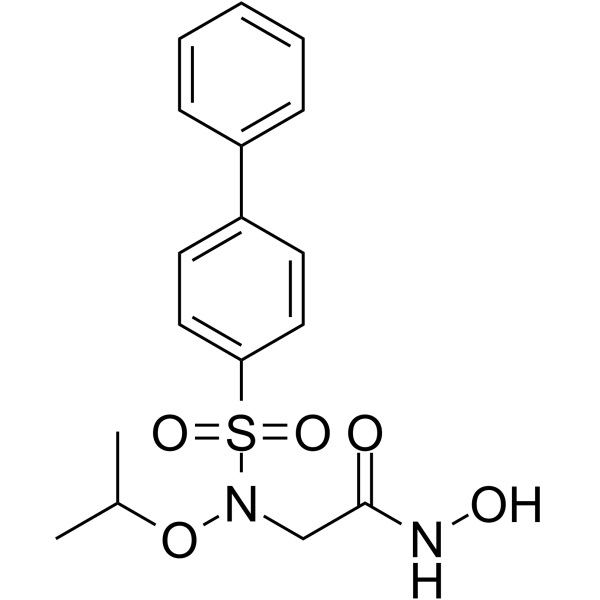
HY-103444
ARP-100MMP-2 Inhibitor -
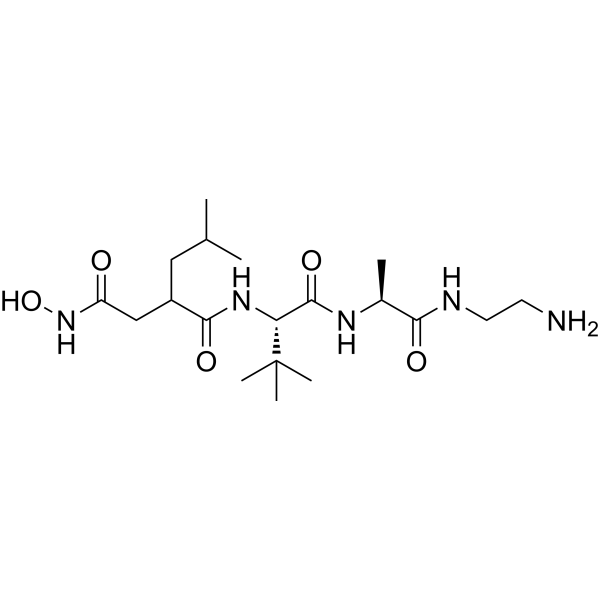
HY-100211
TAPI-2MMP/TACE/ADAM Inhibitor -
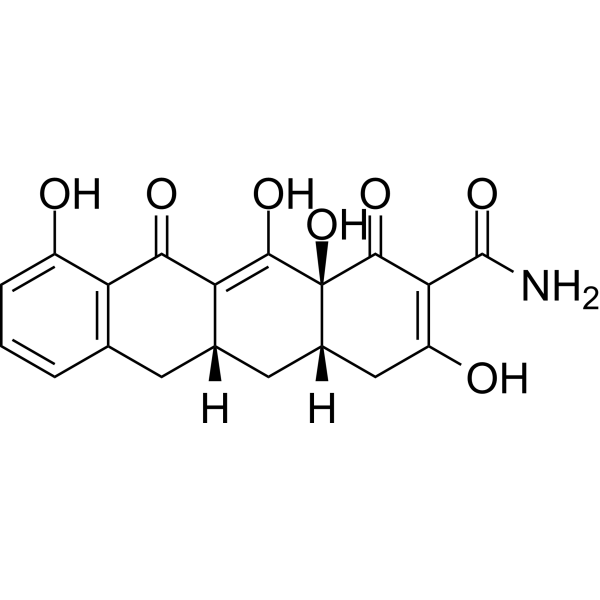
HY-13648
IncyclinideMMP Inhibitor -
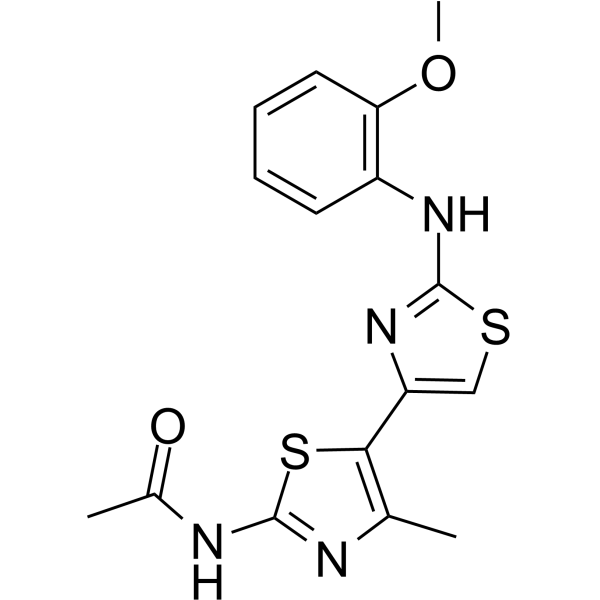
HY-103482
JNJ0966MMP-9 Inhibitor -
HY-10398
CTS-1027MMP Inhibitor
Publications Citing Use of MedChemExpress (MCE) CL-82198 hydrochloride
More- Nat Biomed Eng. 2025 May 16. [Abstract]
- Cell Stem Cell. 2023 May 4;30(5):648-664.e8. [Abstract]
- Nat Commun. 2026 Jun 11. [Abstract]
- Nat Commun. 2022 Jul 11;13(1):4007. [Abstract]
- Mar Drugs. 2023 Jul 31;21(8):433. [Abstract]
- J Cell Physiol. 2019 Sep;234(9):15395-15406. [Abstract]
- Biol Reprod. 2025 Apr 13;112(4):709-727. [Abstract]
- bioRxiv. 2025 Sep 21:2025.09.18.677154. [Abstract]
- Patent. US20240271130A1.


Biological Activity
Description
IC50 & Target
|
MMP13 |


Chemical Information
-
CAS No. 1188890-36-9
-
Appearance Solid
-
Molecular Weight 338.83
-
Formula C17H23ClN2O3
-
Color Light yellow to yellow
-
SMILES
O=C(C1=CC2=C(C=CC=C2)O1)NCCCCN3CCOCC3.Cl
-
Shipping
Room temperature in continental US; may vary elsewhere.
-
Storage
4°C, sealed storage, away from moisture and light
* In solvent : -80°C, 6 months; -20°C, 1 month (sealed storage, away from moisture and light)


Publications (9)
-
Journal Impact Factor
-
Most Recent
-
Nat Biomed Eng
siRNA conjugate with high albumin affinity and degradation resistance for delivery and treatment of arthritis in mice and guinea pigs. [Abstract]2025 May 16. PMID: 40379798 -
Cell Stem Cell
Osteoprogenitor-GMP crosstalk underpins solid tumor-induced systemic immunosuppression and persists after tumor removal. [Abstract]2023 May 4;30(5):648-664.e8. PMID: 37146584 -
Nat Commun
Bone-derived Osterix+ osteolineage cells are a source of tumor-promoting myofibroblastic cancer-associated fibroblasts in breast cancer. [Abstract]2026 Jun 11. PMID: 42277024 -
Nat Commun
Blocking glycine utilization inhibits multiple myeloma progression by disrupting glutathione balance. [Abstract]2022 Jul 11;13(1):4007. PMID: 35817773 -
Mar Drugs
Astaxanthin: A Marine Drug That Ameliorates Cerebrovascular-Damage-Associated Alzheimer's Disease in a Zebrafish Model via the Inhibition of Matrix Metalloprotease-13. [Abstract]2023 Jul 31;21(8):433. PMID: 37623714 -
J Cell Physiol
2019 Sep;234(9):15395-15406. PMID: 30710340 -
Biol Reprod
Collagen turnover during cervical remodeling involves both intracellular and extracellular collagen degradation pathways. [Abstract]2025 Apr 13;112(4):709-727. PMID: 39823285 -
bioRxiv
Myofibroblastic CAFs arising from bone-resident osteoblast precursors retain an osteolineage signature and support breast cancer progression via Osterix-mediated signaling. [Abstract]2025 Sep 21:2025.09.18.677154. PMID: 41279302 -


Solvent & Solubility
In Vitro:
DMSO : 100 mg/mL (295.13 mM; Need ultrasonic; Hygroscopic DMSO has a significant impact on the solubility of product, please use newly opened DMSO)
Please refer to the solubility information to select the appropriate solvent. Once prepared, please aliquot and store the solution to prevent product inactivation from repeated freeze-thaw cycles.
Storage method and period of stock solution: -80°C, 6 months; -20°C, 1 month (sealed storage, away from moisture and light). When stored at -80°C, please use it within 6 months. When stored at -20°C, please use it within 1 month.
Please refer to the solubility information to select the appropriate solvent. Once prepared, please aliquot and store the solution to prevent product inactivation from repeated freeze-thaw cycles.
Storage method and period of stock solution: -80°C, 6 months; -20°C, 1 month (sealed storage, away from moisture and light). When stored at -80°C, please use it within 6 months. When stored at -20°C, please use it within 1 month.
Concentration (start) × Volume (start) = Concentration (final) × Volume (final)

Protocols
-
Mitochondrial membrane-potential fluorescent assay
Mitochondrial membrane potential fluorescent assays estimate ΔΨm in living cells using lipophilic cationic dyes such as TMRM, TMRE, rhodamine 123, and JC-1, which accumulate in mitochondria according to membrane polarization; loss of signal after FCCP or CCCP treatment is interpreted as mitochondrial depolarization. TMRM/TMRE and rhodamine 123 are commonly used for semi-quantitative live-cell microscopy or flow cytometry, while JC-1 can report a shift from red aggregate fluorescence to green monomer fluorescence during depolarization; interpretation requires controls because dye concentration, quenching mode, cell type, dye efflux, and mitochondrial mass can affect fluorescence independently of ΔΨm.
-
Mitochondrial membrane-potential and mitochondrial mass staining
Mitochondrial membrane potential staining measures the electrochemical polarization across the mitochondrial inner membrane in live cells using lipophilic cationic fluorescent probes; early rhodamine-based work showed that selective mitochondrial dye accumulation is lost when the mitochondrial transmembrane potential is dissipated. JC-1 reports mitochondrial polarization by shifting from green monomer fluorescence to red J-aggregate fluorescence as dye concentration increases within energized mitochondria; therefore, the red/green fluorescence ratio is used as a relative readout of mitochondrial membrane potential. TMRE or TMRM staining provides a single-channel relative readout because these cationic rhodamine esters accumulate in polarized mitochondria, and lower fluorescence indicates reduced mitochondrial polarization when acquisition and dye-loading conditions are controlled. Mitochondrial mass staining is commonly performed with MitoTracker Green FM or related MitoTracker dyes as


Purity & Documentation
-
Data Sheet (270 KB)
-
SDS (252 KB)
- English - EN (252 KB)
- Français - FR (252 KB)
- Deutsch - DE (252 KB)
- Norwegian - NO (252 KB)
- Español - ES (252 KB)
- Swedish - SV (252 KB)
- Italian - IT (252 KB)
- Korean - KR (252 KB)
- Portuguese - PT (252 KB)
-
Handling Instructions (2659 KB)
References


Complete Stock Solution Preparation Table
Please refer to the solubility information to select the appropriate solvent. Once prepared, please aliquot and store the solution to prevent product inactivation from repeated freeze-thaw cycles.
Storage method and period of stock solution: -80°C, 6 months; -20°C, 1 month (sealed storage, away from moisture and light). When stored at -80°C, please use it within 6 months. When stored at -20°C, please use it within 1 month.
| Optional Solvent | Concentration Solvent Mass | 1 mg | 5 mg | 10 mg | 25 mg |
|---|---|---|---|---|---|
| DMSO | 1 mM | 2.9513 mL | 14.7567 mL | 29.5133 mL | 73.7833 mL |
| 5 mM | 0.5903 mL | 2.9513 mL | 5.9027 mL | 14.7567 mL | |
| 10 mM | 0.2951 mL | 1.4757 mL | 2.9513 mL | 7.3783 mL | |
| 15 mM | 0.1968 mL | 0.9838 mL | 1.9676 mL | 4.9189 mL | |
| 20 mM | 0.1476 mL | 0.7378 mL | 1.4757 mL | 3.6892 mL | |
| 25 mM | 0.1181 mL | 0.5903 mL | 1.1805 mL | 2.9513 mL | |
| 30 mM | 0.0984 mL | 0.4919 mL | 0.9838 mL | 2.4594 mL | |
| 40 mM | 0.0738 mL | 0.3689 mL | 0.7378 mL | 1.8446 mL | |
| 50 mM | 0.0590 mL | 0.2951 mL | 0.5903 mL | 1.4757 mL | |
| 60 mM | 0.0492 mL | 0.2459 mL | 0.4919 mL | 1.2297 mL | |
| 80 mM | 0.0369 mL | 0.1845 mL | 0.3689 mL | 0.9223 mL | |
| 100 mM | 0.0295 mL | 0.1476 mL | 0.2951 mL | 0.7378 mL |


CL-82198 hydrochloride Related Classifications
HY-110046 Related Classifications
 Powered by Bioz