



HBDDE

Based on 1 Customer Validation
HBDDE, a derivative of Ellagic acid, is an isoform-selective PKCα and PKCγ inhibitor with IC50s of 43 μM and 50 μM, respectively. HBDDE shows selective for PKCα/PKCγ over PKCδ, PKCβI and PKCβII isozymes. HBDDE induces neuronal apoptosis.
For research use only. We do not sell to patients.
- Purity : 98.03%
- CAS No.: 154675-18-0
- Formula: C16H18O8
- Molecular Weight:338.31
-
Storage:Powder -20°C, 3 years , 4°C, 2 years ; In solvent -80°C, 6 months , -20°C, 1 month

To place orders, for customer services and technical support, please contact: MedChemExpress USA
Tel: 609-228-6898 E-mail: [email protected] [email protected]


-
 Biological Activity
-
Chemical Information
-
Solvent & Solubility
- Protocols
- Purity & Documentation
- References
-
 Help & FAQs


-
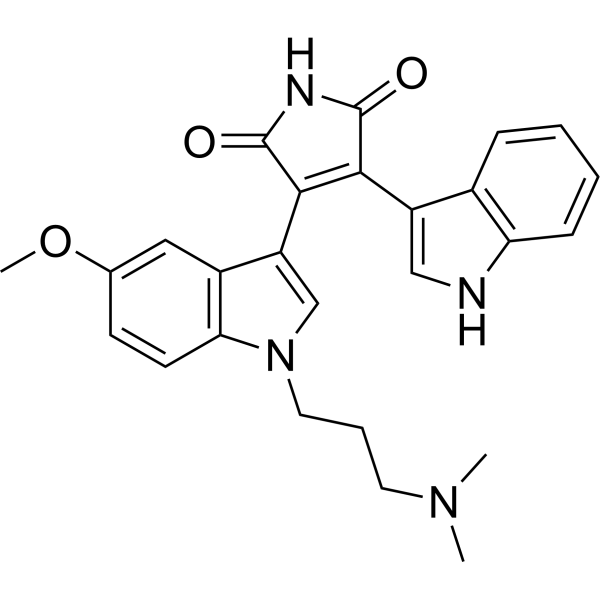
HY-13689
Go 6983PKC Inhibitor -
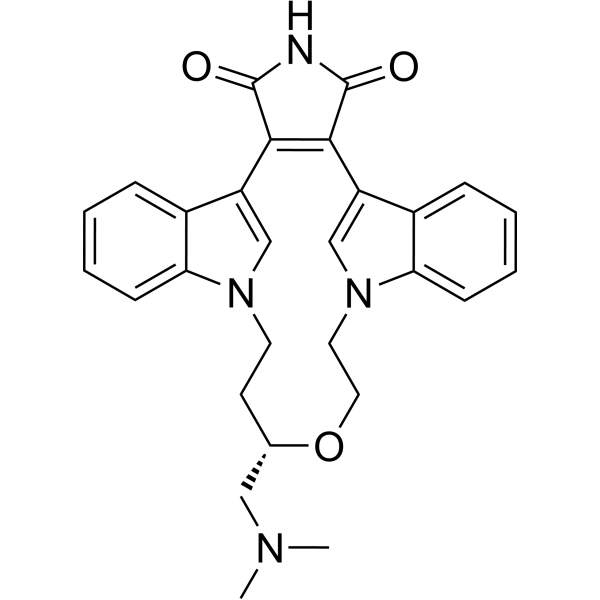
HY-10195
RuboxistaurinPKCβ Inhibitor -
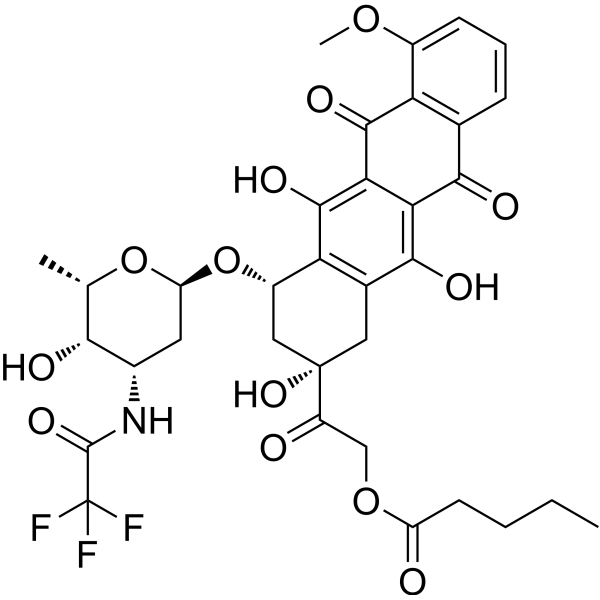
HY-13772
ValrubicinAntibiotic -
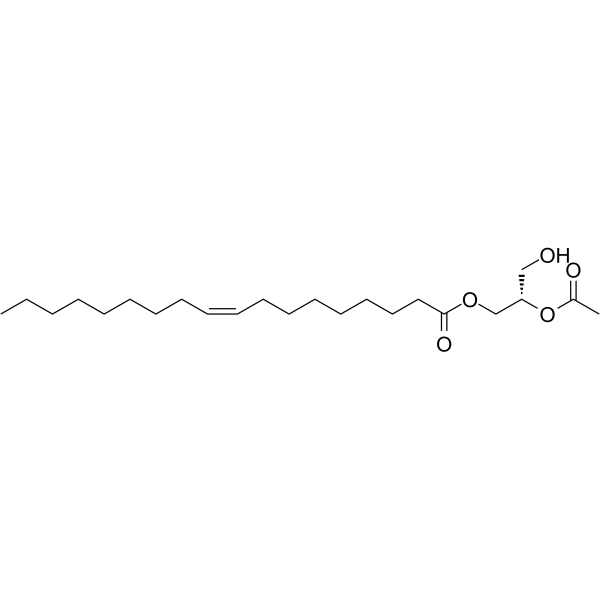
HY-131648
1-Oleoyl-2-acetyl-sn-glycerolDrug Analog -
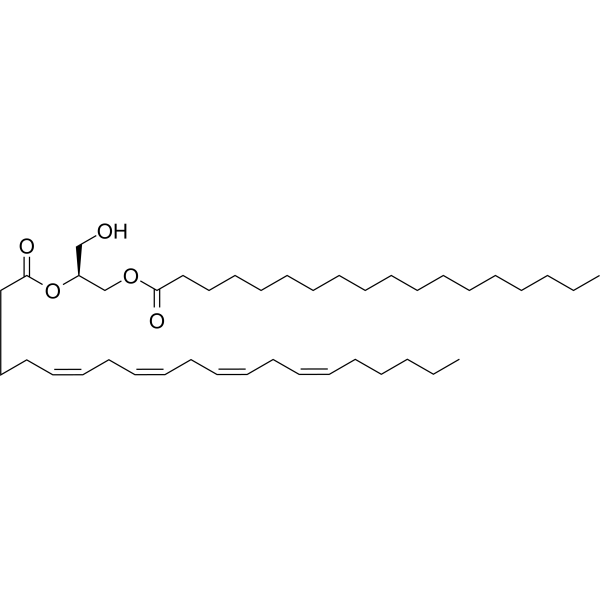
HY-131897
1-Stearoyl-2-arachidonoyl-sn-glycerolPKC Activator -
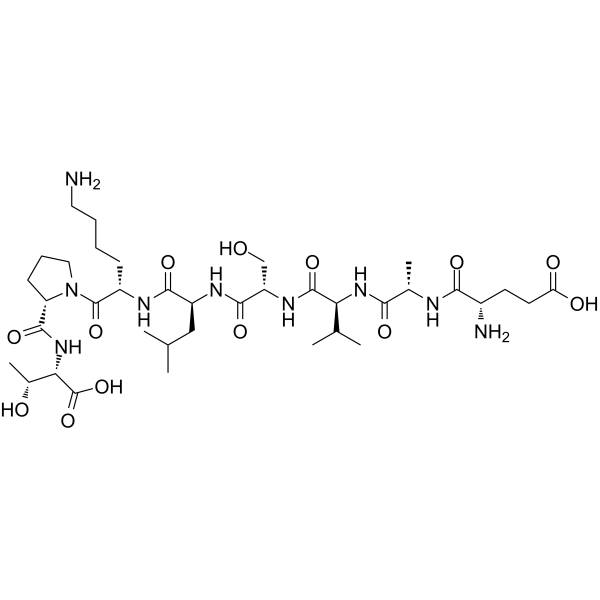
HY-P0154
Epsilon-V1-2PKCε Inhibitor -
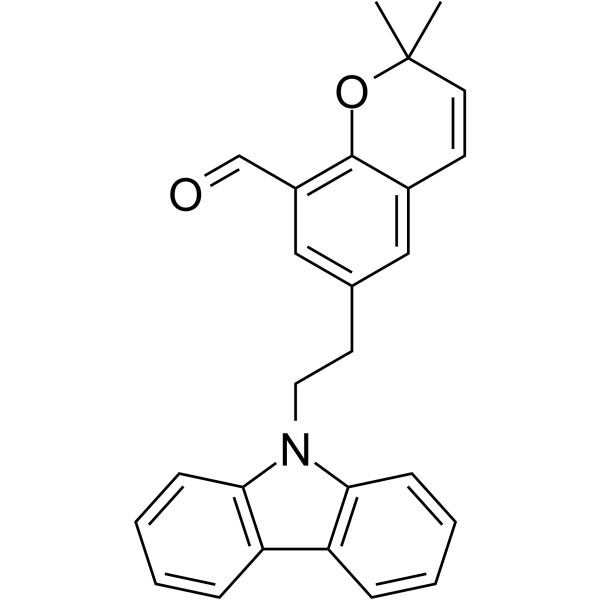
HY-117800
BJE6-106PKCδ Inhibitor -
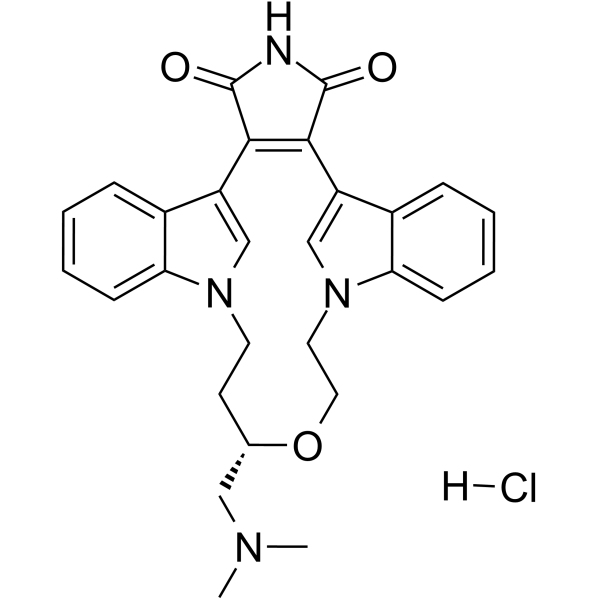
HY-10195B
Ruboxistaurin hydrochloridePKCβ Inhibitor -
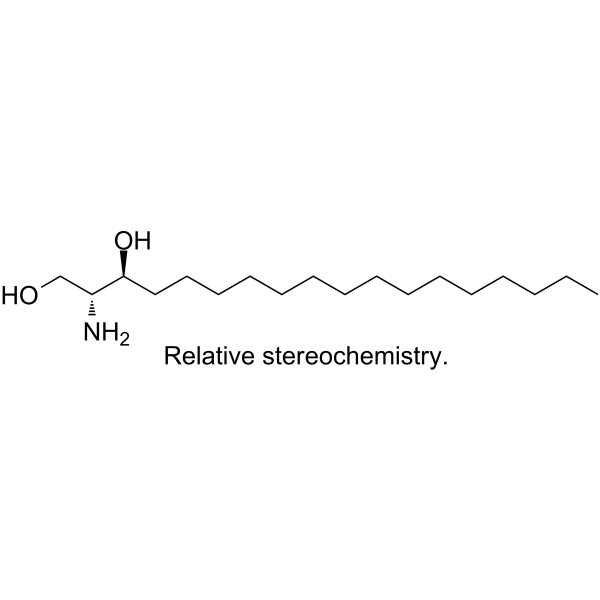
HY-101195
DL-erythro-DihydrosphingosinePKC Inhibitor -
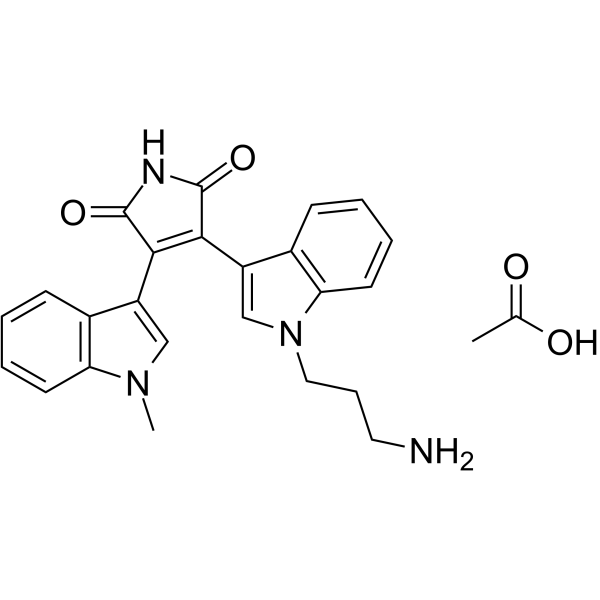
HY-129624A
Bisindolylmaleimide VIII acetatePKC Inhibitor -
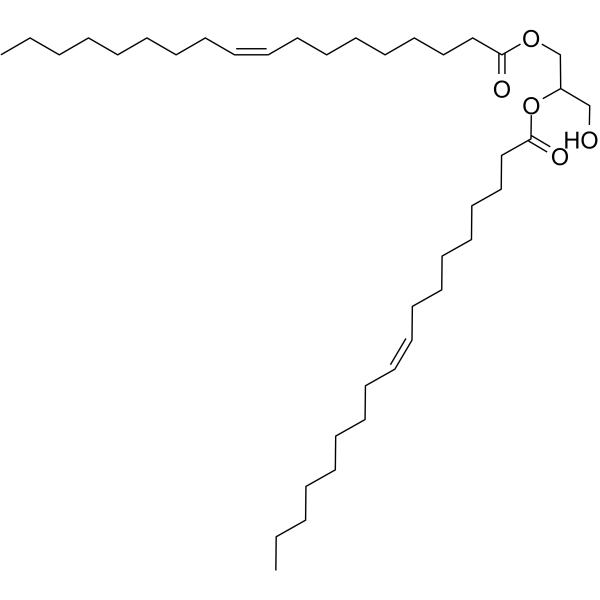
HY-115767
(±)-1,2-DioleinPKC activator -
HY-123979
ζ-StatPKC-ζ Inhibitor


Biological Activity
Description
IC50 & Target
[1]|
PKCα 43 μM (IC50) |
PKCγ 50 μM (IC50) |
In Vitro
HBDDE (50 μM; 5 hours) treatment reduces cell viability significantly by ~70%. HBDDE exhibits a marked increase in caspase-3 activity[1].
MedChemExpress (MCE) has not independently confirmed the accuracy of these methods. They are for reference only.
-
Cell Line:Cerebellar granule cells
-
Concentration:50 μM
-
Incubation Time:5 hours
-
Result:Reduced cell viability significantly by ~70%.


Chemical Information
-
CAS No. 154675-18-0
-
Appearance Solid
-
Molecular Weight 338.31
-
Formula C16H18O8
-
Color Brown to khaki
-
SMILES
OC1=CC(COC)=C(C2=C(C(O)=C(C=C2COC)O)O)C(O)=C1O
-
Shipping
Room temperature in continental US; may vary elsewhere.
-
Storage
Powder -20°C 3 years 4°C 2 years In solvent -80°C 6 months -20°C 1 month


Solvent & Solubility
In Vitro:
DMSO : 5 mg/mL (14.78 mM; Need ultrasonic and warming; Hygroscopic DMSO has a significant impact on the solubility of product, please use newly opened DMSO)
Please refer to the solubility information to select the appropriate solvent. Once prepared, please aliquot and store the solution to prevent product inactivation from repeated freeze-thaw cycles.
Storage method and period of stock solution: -80°C, 6 months; -20°C, 1 month. When stored at -80°C, please use it within 6 months. When stored at -20°C, please use it within 1 month.
Please refer to the solubility information to select the appropriate solvent. Once prepared, please aliquot and store the solution to prevent product inactivation from repeated freeze-thaw cycles.
Storage method and period of stock solution: -80°C, 6 months; -20°C, 1 month. When stored at -80°C, please use it within 6 months. When stored at -20°C, please use it within 1 month.
Concentration (start) × Volume (start) = Concentration (final) × Volume (final)


Purity & Documentation
-
Data Sheet (278 KB)
-
SDS (251 KB)
- English - EN (251 KB)
- Français - FR (251 KB)
- Deutsch - DE (251 KB)
- Norwegian - NO (251 KB)
- Español - ES (251 KB)
- Swedish - SV (251 KB)
- Italian - IT (251 KB)
- Korean - KR (251 KB)
- Portuguese - PT (251 KB)
-
Handling Instructions (2659 KB)
References
[1]. A Mathur, et al. 2,2',3,3',4,4'-Hexahydroxy-1,1'-biphenyl-6,6'-dimethanol dimethyl ether (HBDDE)-induced neuronal apoptosis independent of classical protein kinase C alpha or gamma inhibition. Biochem Pharmacol. 2000 Sep 15;60(6):809-15. [Content Brief]
[2]. Y Kashiwada, et al. New hexahydroxybiphenyl derivatives as inhibitors of protein kinase C. J Med Chem. 1994 Jan 7;37(1):195-200. [Content Brief]


Complete Stock Solution Preparation Table
Please refer to the solubility information to select the appropriate solvent. Once prepared, please aliquot and store the solution to prevent product inactivation from repeated freeze-thaw cycles.
Storage method and period of stock solution: -80°C, 6 months; -20°C, 1 month. When stored at -80°C, please use it within 6 months. When stored at -20°C, please use it within 1 month.
| Optional Solvent | Concentration Solvent Mass | 1 mg | 5 mg | 10 mg | 25 mg |
|---|---|---|---|---|---|
| DMSO | 1 mM | 2.9559 mL | 14.7793 mL | 29.5587 mL | 73.8967 mL |
| 5 mM | 0.5912 mL | 2.9559 mL | 5.9117 mL | 14.7793 mL | |
| 10 mM | 0.2956 mL | 1.4779 mL | 2.9559 mL | 7.3897 mL |


HBDDE Related Classifications
HY-131305 Related Classifications
 Powered by Bioz