



ML324
Based on 12 publication(s) in Google Scholar
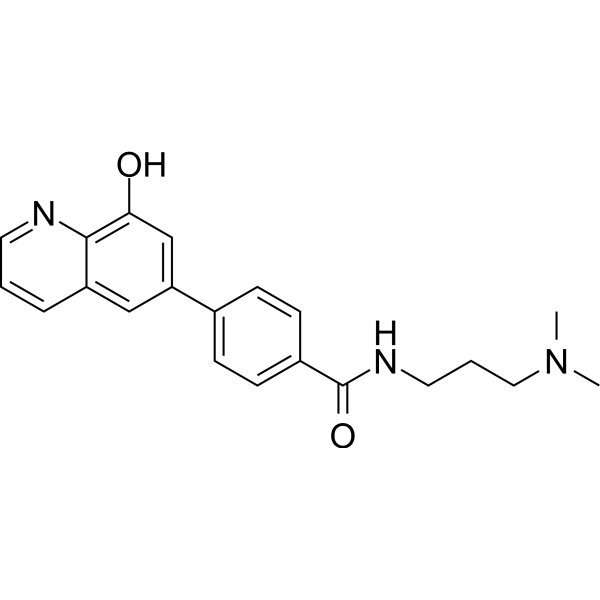
ML324 is a potent JMJD2 demethylase inhibitor with antiviral activity. ML324 also exhibits inhibition for the histone demethylase KDM4B, with an IC50 of 4.9 μM. ML324 has potent anti-viral activity against both herpes simplex virus (HSV) and human cytomegalovirus (hCMV) infection via inhibition viral IE gene expression.
商品は「研究用試薬」です。人や動物の医療用・臨床診断用・食品用の製品ではありません。
研究用途以外に使用した場合、当社は一切の責任を負いかねます。
- 純度 : 98.35%
- CAS 番号: 1222800-79-4
- 分子式: C21H23N3O2
- 分子量:349.43
-
保管条件:Powder -20°C, 3 years , 4°C, 2 years ; In solvent -80°C, 2 years , -20°C, 1 year

To place orders, for customer services and technical support, please contact: MedChemExpress USA
Tel: 609-228-6898 E-mail: [email protected] [email protected]


-
 生物活性
生物活性
-
化学情報
-
溶剤 & 溶解度
- プロトコル
- 純度とドキュメンテーション
- 参考文献
-
 Help & FAQs


-
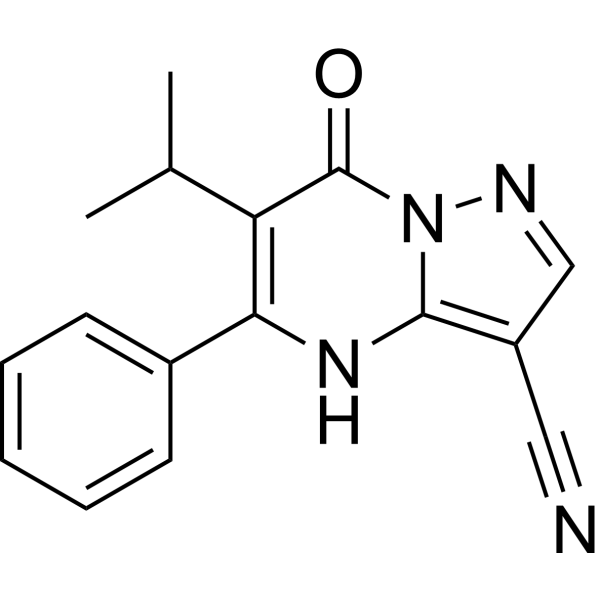
HY-100421
CPI-455KDM5 Inhibitor -
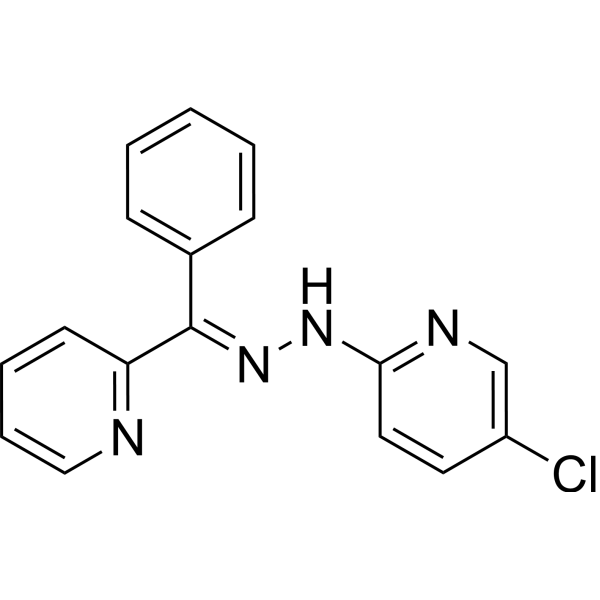
HY-13953
JIB-04Histone Demethylase Inhibitor -
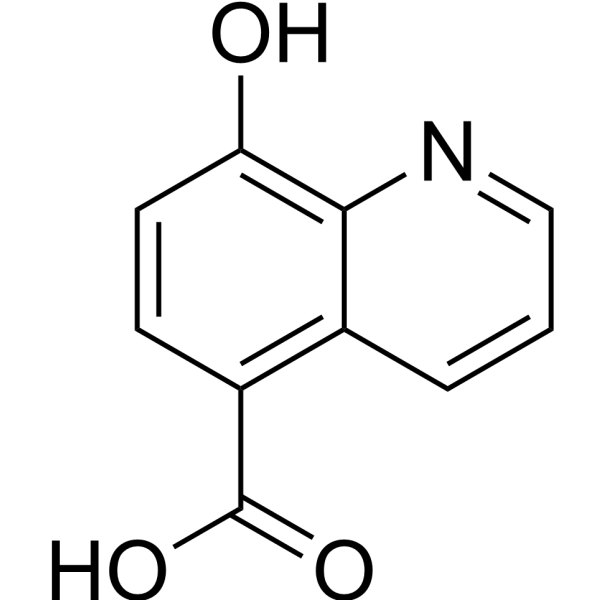
HY-12304
IOX12OG Oxygenases Inhibitor -
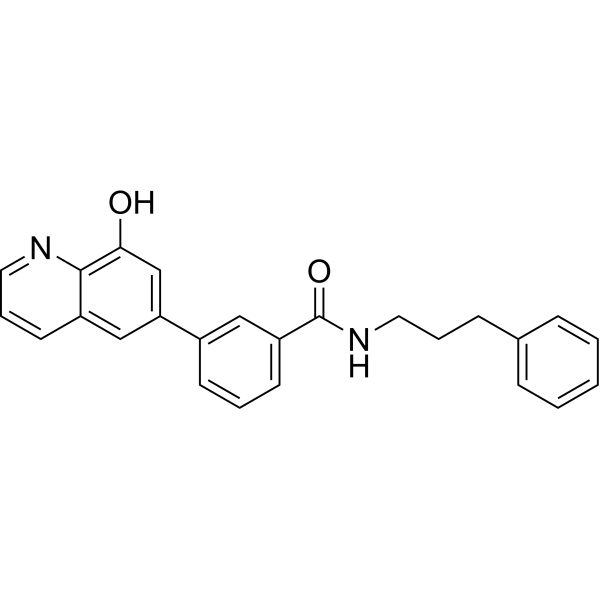
HY-101799
NCGC00244536KDM4B Inhibitor -
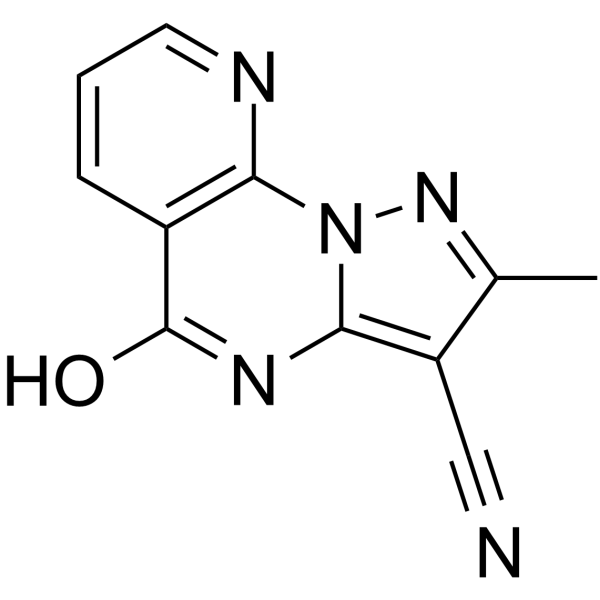
HY-101928
KDM4D-IN-1KDM4D Inhibitor -
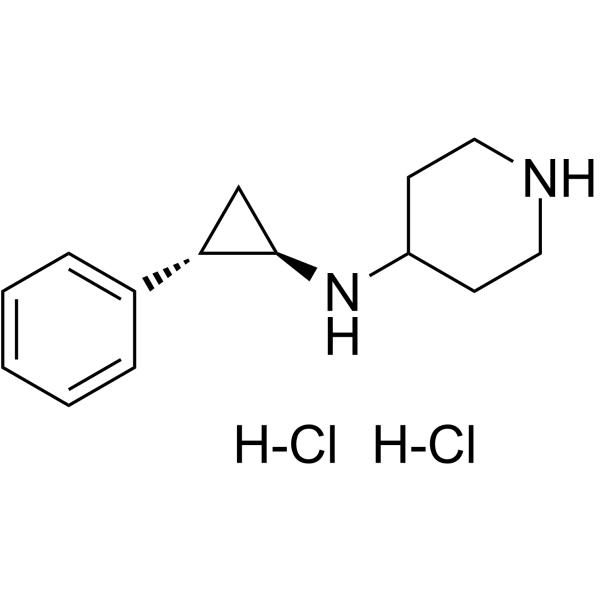
HY-100546A
GSK-LSD1 dihydrochlorideLSD1 Inhibitor -
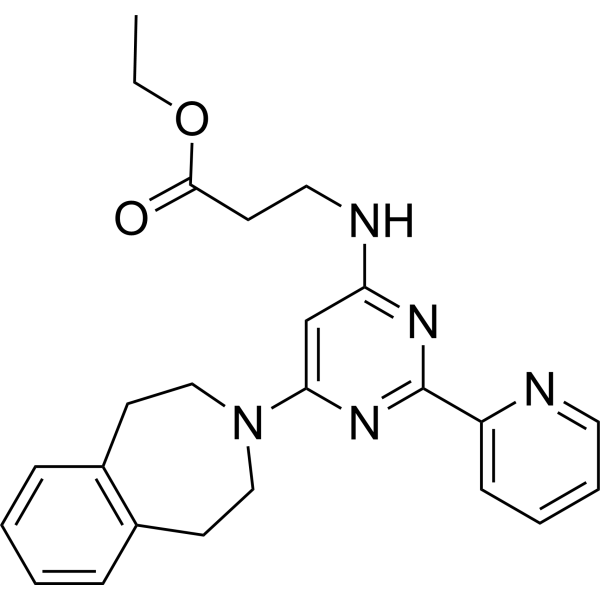
HY-15648B
GSK-J4JMJD3/UTX Inhibitor -
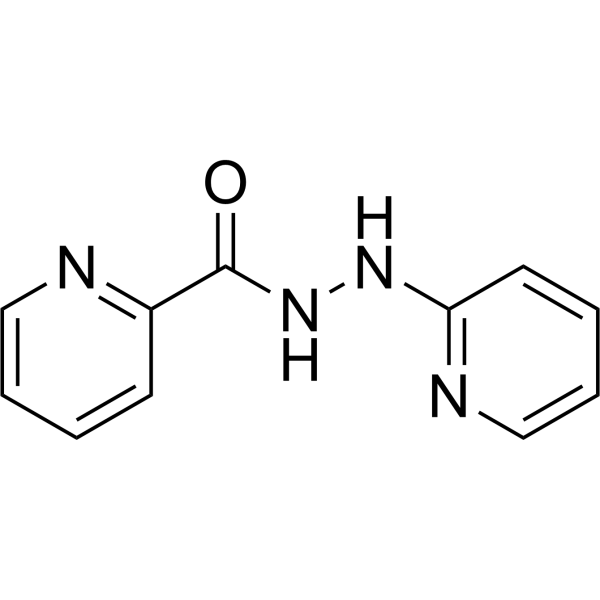
HY-139348
PFI-90KDM3B Inhibitor -
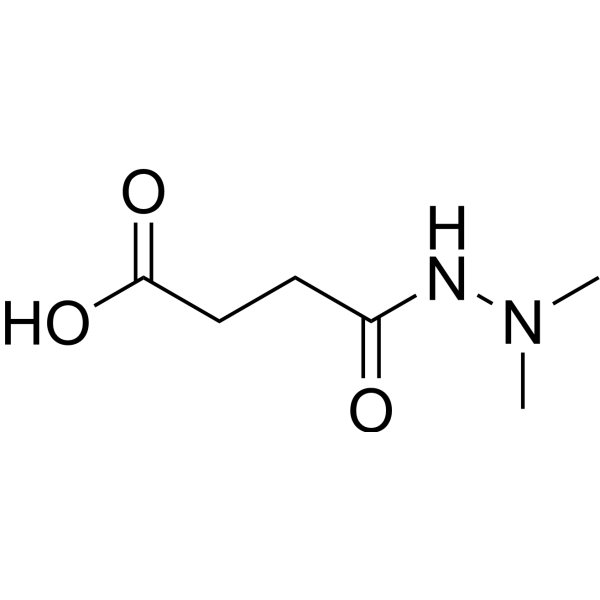
HY-13643
DaminozideKDM2/7 Inhibitor -
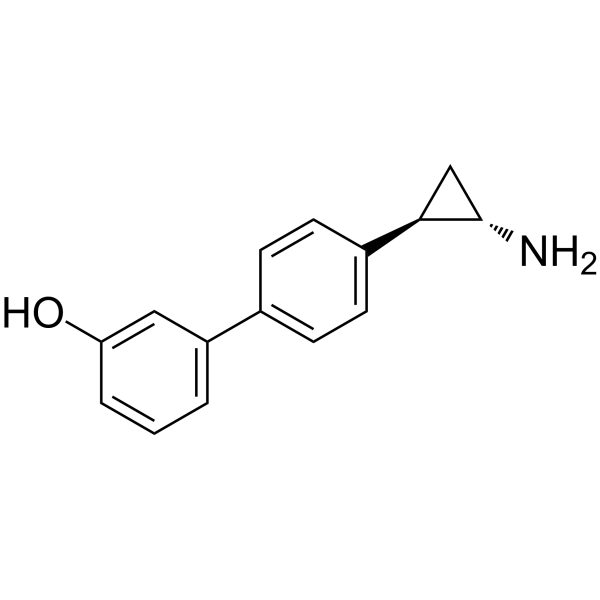
HY-19333
OG-L002LSD1 Inhibitor -
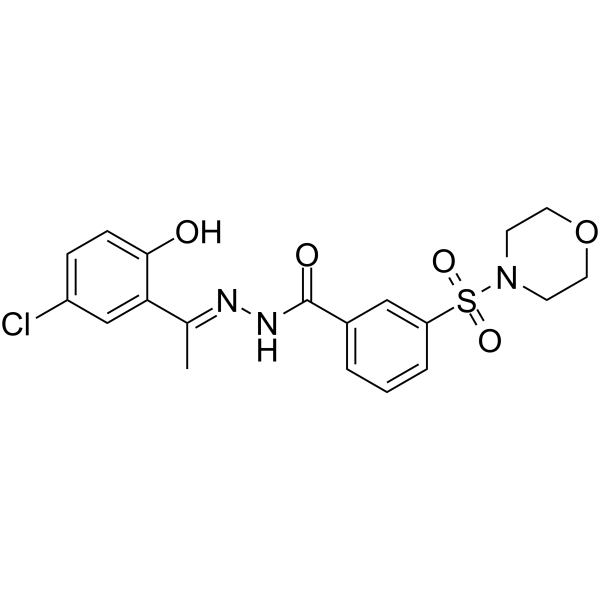
HY-12635
SP2509LSD1 Antagonist -
HY-18632
GSK2879552LSD1 Inhibitor
MedChemExpress(MCE)の使用を引用している文献 ML324
More- Nat Commun. 2026 Feb 12;17(1):1214. [Abstract]
- Cell Death Dis. 2025 Nov 17;16(1):843. [Abstract]
- Acta Pharmacol Sin. 2022 Feb;43(2):457-469. [Abstract]
- Oncogene. 2021 Apr;40(15):2711-2724. [Abstract]
- Int J Mol Sci. 2022 Jul 8;23(14):7586. [Abstract]
- PLoS Pathog. 2020 Mar 24;16(3):e1008429. [Abstract]
- RSC Med Chem. 2025 Jul 1. [Abstract]
- Clin Exp Med. 2025 Nov 25;26(1):33. [Abstract]
- Mol Divers. 2024 Dec;28(6):4403-4424. [Abstract]
- Exp Cell Res. 2026 Jul 1;460(1):115042. [Abstract]
- Genes (Basel). 2026 Aug 30;17(9):1047.
- Patent. US20180263995A1.
 Customer Validation & Images

-
WB
-
RT-PCR
-
Cell Imaging/Staining
-
Microbiological Assay


生物活性
製品説明
IC50 & Target
|
KDM4 |
Cellular Effect
|
Cell Line

|
Type | Value | Description | References |
|---|---|---|---|---|
| LNCaP | GI50 |
53 μM
Compound: ML324
|
Cytotoxicity against human LnCaP cells assessed as growth inhibition after 48 hrs by alamar blue assay
Cytotoxicity against human LnCaP cells assessed as growth inhibition after 48 hrs by alamar blue assay
|
[PMID: 34555281] |
体外実験
ML324 produces a significant reduction in Aa-LPS-induced osteoclastogenesis in osteoclast progenitors[1].
MedChemExpress (MCE) has not independently confirmed the accuracy of these methods. They are for reference only.


化学情報
-
CAS 番号 1222800-79-4
-
性状 Solid
-
分子量 349.43
-
分子式 C21H23N3O2
-
Color Yellow to gray
-
SMILES
O=C(NCCCN(C)C)C1=CC=C(C2=CC(O)=C3N=CC=CC3=C2)C=C1
-
輸送条件
Room temperature in continental US; may vary elsewhere.
-
保管条件
Powder -20°C 3 years 4°C 2 years In solvent -80°C 2 years -20°C 1 year


Publications (12)
-
Journal Impact Factor
-
Most Recent
-
Nat Commun
Human iPSC-based Modeling of Pulmonary Fibrosis Reveals p300/CBP Inhibition Suppresses Alveolar Transitional Cell State. [Abstract]2026 Feb 12;17(1):1214. PMID: 41680175 -
Cell Death Dis
BRD4 inhibition suppresses histone H4 UFMylation to increase ferroptosis sensitivity through TXNIP. [Abstract]2025 Nov 17;16(1):843. PMID: 41249136
ML324 purchased from MedChemExpress. Usage Cited in: Cell Death Dis. 2025 Nov 17;16(1):843. [Abstract]
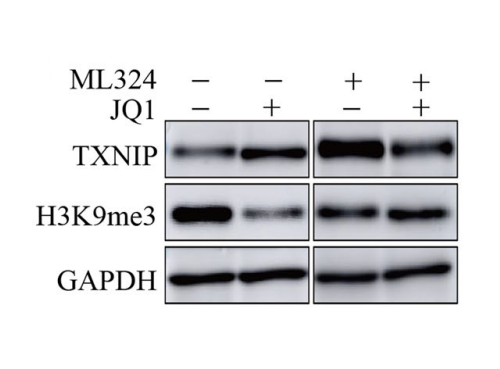
The protein levels of TXNIP and H3K9Me3 in cells treated by JQ1, ML324 (20 μM, 24 h), and a combination of JQ1 and ML324.
ML324 purchased from MedChemExpress. Usage Cited in: Cell Death Dis. 2025 Nov 17;16(1):843. [Abstract]
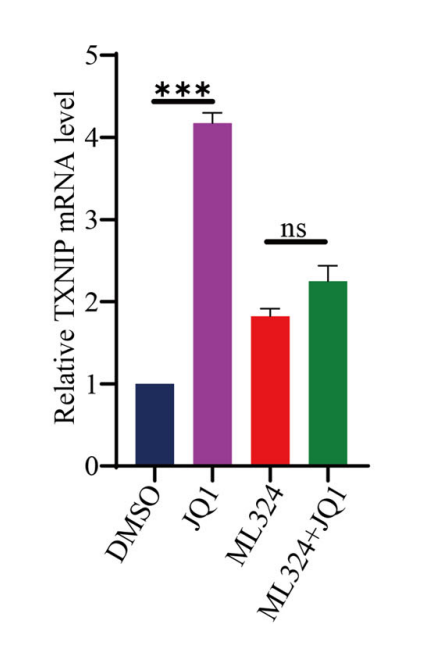
The mRNA levels of TXNIP in cells treated by JQ1, ML324 (20 μM, 24 h), and a combination of JQ1 and ML324.
-
Acta Pharmacol Sin
2022 Feb;43(2):457-469. PMID: 33850273 -
Oncogene
2021 Apr;40(15):2711-2724. PMID: 33712705 -
Int J Mol Sci
KDM4C Contributes to Trophoblast-like Stem Cell Conversion from Porcine-Induced Pluripotent Stem Cells (piPSCs) via Regulating CDX2. [Abstract]2022 Jul 8;23(14):7586. PMID: 35886932
ML324 purchased from MedChemExpress. Usage Cited in: Int J Mol Sci. 2022 Jul 8;23(14):7586. [Abstract]
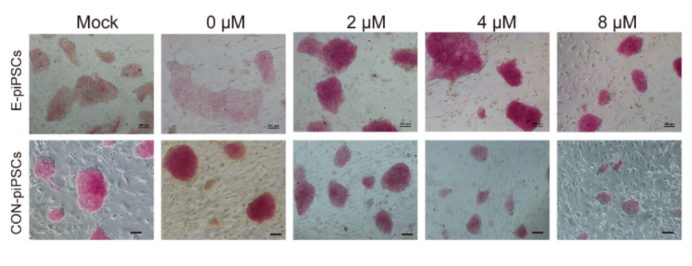
Representative image of AP-stained colonies after adding ML324 in CON- and E-piPSCs.
-
PLoS Pathog
BRD4 inhibition exerts anti-viral activity through DNA damage-dependent innate immune responses. [Abstract]2020 Mar 24;16(3):e1008429. PMID: 32208449
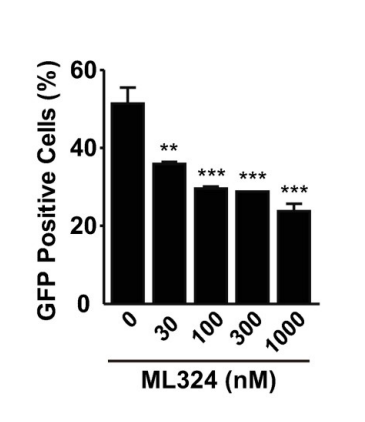
ML324 purchased from MedChemExpress. Usage Cited in: PLoS Pathog. 2020 Mar 24;16(3):e1008429. [Abstract]
ML324 (30, 100, 300, 1000 nM) showed a significant inhibitory effect toward PRV-GFP infection .
-
RSC Med Chem
2025 Jul 1. PMID: 40656835 -
Clin Exp Med
Corin: a dual inhibitor for KDM1A/HDAC1, suppresses hepatocellular carcinoma by triggering cuproptosis. [Abstract]2025 Nov 25;26(1):33. PMID: 41286164 -
Mol Divers
Exploring host epigenetic enzymes as targeted therapies for visceral leishmaniasis: in silico design and in vitro efficacy of KDM6B and ASH1L inhibitors. [Abstract]2024 Dec;28(6):4403-4424. PMID: 38522046 -
Exp Cell Res
The combinations of histone lysine demethylase inhibitors with panobinostat exert enhanced effects against head and neck cancer cells. [Abstract]2026 Jul 1;460(1):115042. PMID: 42019757 -
-


溶剤 & 溶解度
体外:
DMSO : 31.25 mg/mL (89.43 mM; ultrasonic and warming and heat to 60°C; Hygroscopic DMSO has a significant impact on the solubility of product, please use newly opened DMSO)
Please refer to the solubility information to select the appropriate solvent. Once prepared, please aliquot and store the solution to prevent product inactivation from repeated freeze-thaw cycles.
Storage method and period of stock solution: -80°C, 2 years; -20°C, 1 year. When stored at -80°C, please use it within 2 years. When stored at -20°C, please use it within 1 year.
Please refer to the solubility information to select the appropriate solvent. Once prepared, please aliquot and store the solution to prevent product inactivation from repeated freeze-thaw cycles.
Storage method and period of stock solution: -80°C, 2 years; -20°C, 1 year. When stored at -80°C, please use it within 2 years. When stored at -20°C, please use it within 1 year.
濃度 (開始) × 体積 (開始) = 濃度 (終了) × 体積 (終了)
体内:
Select the appropriate dissolution method based on your experimental animal and administration route.
- For the following dissolution methods, please ensure to first prepare a clear stock solution using an In Vitro approach and then sequentially add co-solvents:
- To ensure reliable experimental results, the clarified stock solution can be appropriately stored based on storage conditions. As for the working solution for In Vivo experiments, it is recommended to prepare freshly and use it on the same day.
- The percentages shown for the solvents indicate their volumetric ratio in the final prepared solution. If precipitation or phase separation occurs during preparation, heat and/or sonication can be used to aid dissolution.
Add each solvent one by one: 10% DMSO 40% PEG300 5% Tween-80 45% Saline
Solubility: ≥ 2.5 mg/mL (7.15 mM); Clear solution
This protocol yields a clear solution of ≥ 2.5 mg/mL (saturation unknown).
Taking 1 mL working solution as an example, add 100 μL DMSO stock solution (25.0 mg/mL) to 400 μL PEG300, and mix evenly; then add 50 μL Tween-80 and mix evenly; then add 450 μL Saline to adjust the volume to 1 mL.
Preparation of Saline: Dissolve 0.9 g sodium chloride in ddH₂O and dilute to 100 mL to obtain a clear Saline solution.
Add each solvent one by one: 10% DMSO 90% (20% SBE-β-CD in Saline)
Solubility: ≥ 2.08 mg/mL (5.95 mM); Clear solution
This protocol yields a clear solution of ≥ 2.08 mg/mL (saturation unknown).
Taking 1 mL working solution as an example, add 100 μL DMSO stock solution (20.8 mg/mL) to 900 μL 20% SBE-β-CD in Saline, and mix evenly.
Preparation of 20% SBE-β-CD in Saline (4°C, storage for one week): 2 g SBE-β-CD powder is dissolved in 10 mL Saline, completely dissolve until clear.
In Vivo Dissolution Calculator
Please enter the basic information of animal experiments:
-
-
-
-
Recommended: Prepare an additional quantity of animals to account for potential losses during experiments.
Please enter your animal formula composition:
-
%DMSO +
Recommended: Keep the proportion of DMSO in working solution below 2% if your animal is weak.
-
%+
-
+%Tween-80 + +
-
%Saline +
The co-solvents required include: DMSO, . All of co-solvents are available by MedChemExpress (MCE). , Tween 80. All of co-solvents are available by MedChemExpress (MCE).
Working solution concentration: 0.22 mg/mL
Method for preparing stock solution: mg drug dissolved in μL DMSO. Stock solution concentration: mg/mL.
1. Take μL DMSO stock solution;
2. Add μL .
μL , mix evenly;
3. Then add μL Tween 80, mix evenly;
4. Then add μL
Please ensure that the stock solution in the first step is dissolved to a clear state, and add co-solvents in sequence. You can use ultrasonic heating (ultrasonic cleaner, recommended frequency 20-40 kHz), vortexing, etc. to assist dissolution.


純度とドキュメンテーション
-
データシート (271 KB)
-
SDS (392 KB)
- English - EN (392 KB)
- Français - FR (392 KB)
- Deutsch - DE (392 KB)
- Norwegian - NO (392 KB)
- Español - ES (392 KB)
- Swedish - SV (392 KB)
- Italian - IT (392 KB)
- Korean - KR (392 KB)
- Portuguese - PT (392 KB)
-
取扱説明書 (2659 KB)
参考文献
[1]. Rai G, et al. Discovery of ML324, a JMJD2 demethylase inhibitor with demonstrated antiviral activity. [Content Brief]
[2]. Joy E. Kirkpatrick, et al. Inhibition of the histone demethylase KDM4B leads to activation of KDM1A, attenuates bacterial-induced pro-inflammatory cytokine release, and reduces osteoclastogenesis. Epigenetics. 2018; 13(5): 557–572. [Content Brief]


Complete Stock Solution Preparation Table
Please refer to the solubility information to select the appropriate solvent. Once prepared, please aliquot and store the solution to prevent product inactivation from repeated freeze-thaw cycles.
Storage method and period of stock solution: -80°C, 2 years; -20°C, 1 year. When stored at -80°C, please use it within 2 years. When stored at -20°C, please use it within 1 year.
| Optional Solvent | Concentration Solvent Mass | 1 mg | 5 mg | 10 mg | 25 mg |
|---|---|---|---|---|---|
| DMSO | 1 mM | 2.8618 mL | 14.3090 mL | 28.6180 mL | 71.5451 mL |
| 5 mM | 0.5724 mL | 2.8618 mL | 5.7236 mL | 14.3090 mL | |
| 10 mM | 0.2862 mL | 1.4309 mL | 2.8618 mL | 7.1545 mL | |
| 15 mM | 0.1908 mL | 0.9539 mL | 1.9079 mL | 4.7697 mL | |
| 20 mM | 0.1431 mL | 0.7155 mL | 1.4309 mL | 3.5773 mL | |
| 25 mM | 0.1145 mL | 0.5724 mL | 1.1447 mL | 2.8618 mL | |
| 30 mM | 0.0954 mL | 0.4770 mL | 0.9539 mL | 2.3848 mL | |
| 40 mM | 0.0715 mL | 0.3577 mL | 0.7155 mL | 1.7886 mL | |
| 50 mM | 0.0572 mL | 0.2862 mL | 0.5724 mL | 1.4309 mL | |
| 60 mM | 0.0477 mL | 0.2385 mL | 0.4770 mL | 1.1924 mL | |
| 80 mM | 0.0358 mL | 0.1789 mL | 0.3577 mL | 0.8943 mL |


ML324 関連分類
HY-12725 関連分類
 Powered by Bioz