



Vicriviroc malate
Vicriviroc (SCH 417690) malate is an orally active CCR5 antagonist with the IC50 of 10 nM, and also inhibts MIP-1α and intracellular calcium release induced by the ligand RANTES (10 nM) with the IC50 values of 0.91 nM and 16 nM,,respectively. Vicriviroc malate can inhibits human immunodeficiency virus type 1 (HIV-1) infection, and can also used for study of cancer.
商品は「研究用試薬」です。人や動物の医療用・臨床診断用・食品用の製品ではありません。
研究用途以外に使用した場合、当社は一切の責任を負いかねます。
- CAS 番号: 541503-81-5
- 分子式: C32H44F3N5O7
- 分子量:667.72
-
保管条件:
Please store the product under the recommended conditions in the Certificate of Analysis.


To place orders, for customer services and technical support, please contact: MedChemExpress USA
Tel: 609-228-6898 E-mail: [email protected] [email protected]


-
 生物活性
生物活性
-
化学情報
- プロトコル
- 純度とドキュメンテーション
- 参考文献
-
 Help & FAQs


-
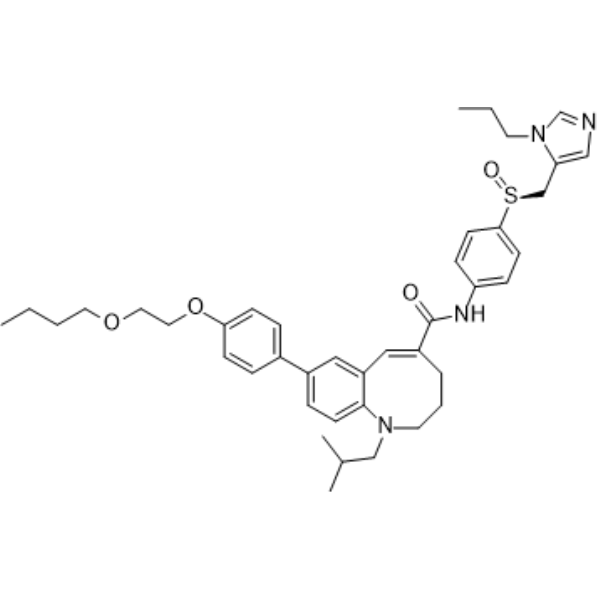
HY-14882
CenicrivirocCCR2/5 Antagonist -
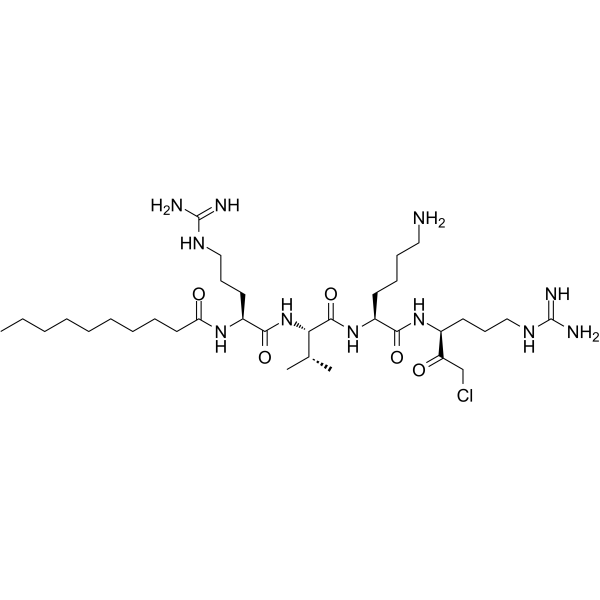
HY-107760
Decanoyl-RVKR-CMKHIV Inhibitor -
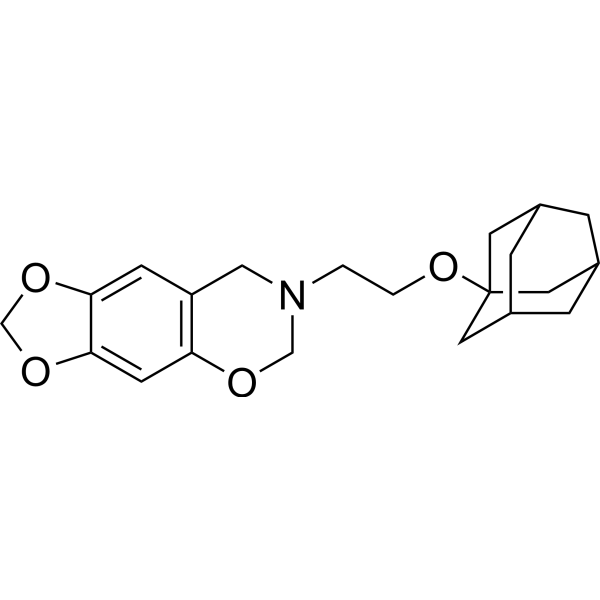
HY-122219
R243CCR8 Antagonist -
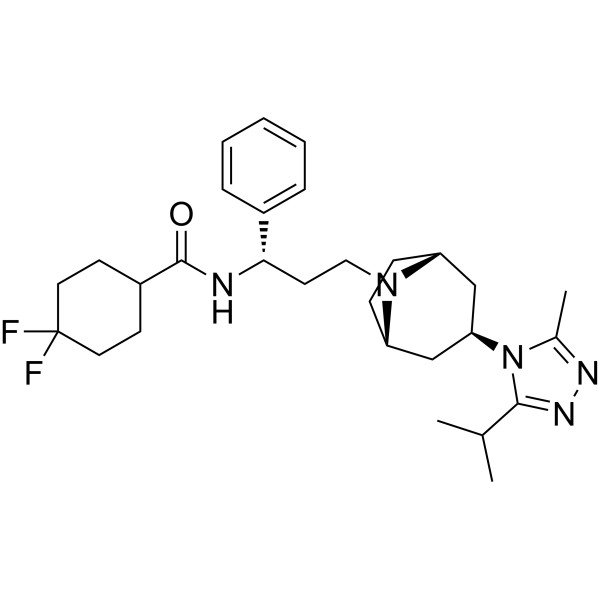
HY-13004
MaravirocCCR5 Antagonist -
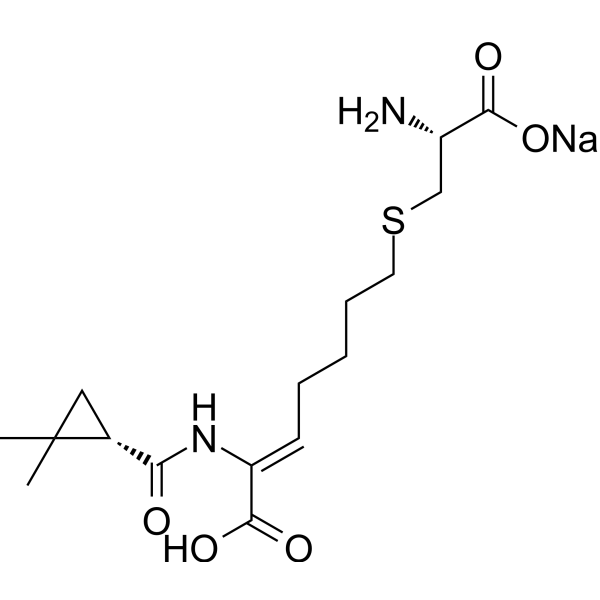
HY-A0166A
Cilastatin sodiumRenal Dehydropeptidase I Inhibitor -
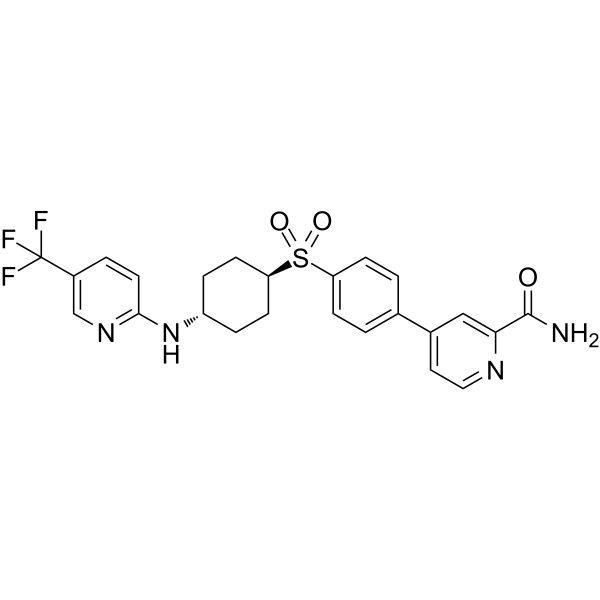
HY-112701
CCR6 inhibitor 1CCR Inhibitor -
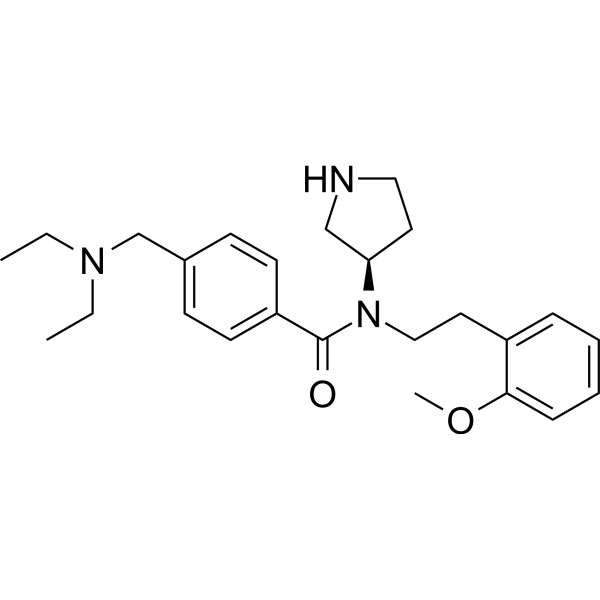
HY-13447
PF-429242S1P Inhibitor -
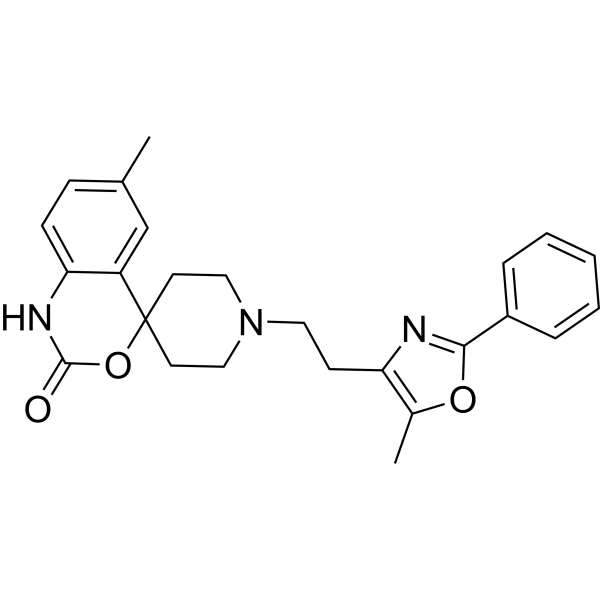
HY-15418
RS 504393CCR2 Antagonist -
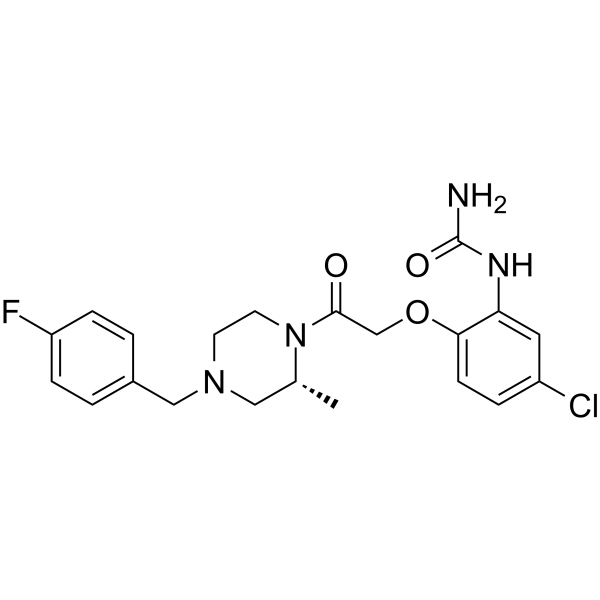
HY-12080
BX471CCR1 Antagonist -
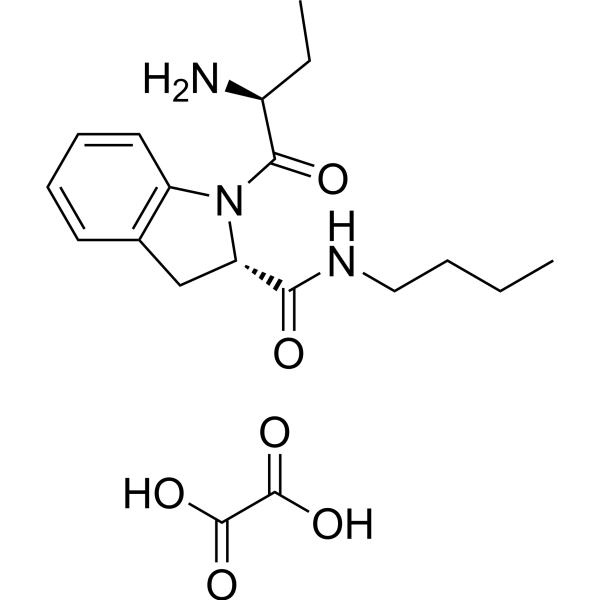
HY-107759
Butabindide oxalateTPP II Inhibitor -
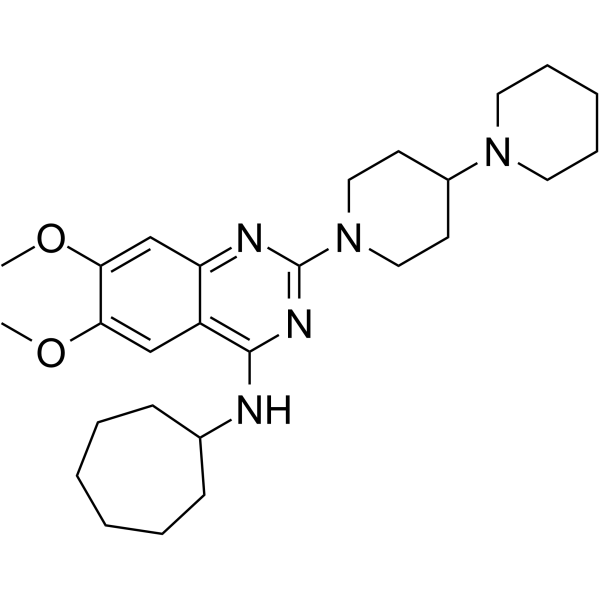
HY-103364
C-021CCR4 Antagonist -
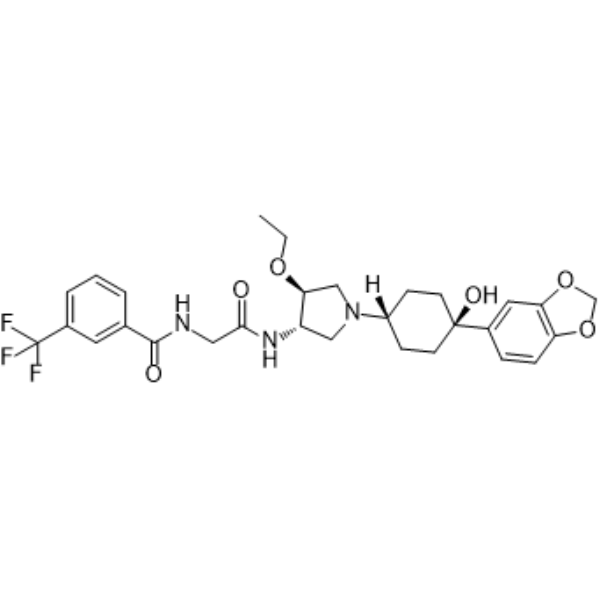
HY-50674
INCB3344CCR2 Antagonis


生物活性
製品説明


化学情報
-
CAS 番号 541503-81-5
-
分子量 667.72
-
分子式 C32H44F3N5O7
-
SMILES
COC[C@@H](C1=CC=C(C=C1)C(F)(F)F)N2[C@H](CN(C3(CCN(CC3)C(C4=C(C)N=CN=C4C)=O)C)CC2)C.O=C(O)C(O)CC(O)=O
-
別名
SCH 417690 malate; SCH-D malate; MK-7690
-
輸送条件
Room temperature in continental US; may vary elsewhere.
-
保管条件
Please store the product under the recommended conditions in the Certificate of Analysis.

プロトコル
-
Research Protocol for Infectious Diseases
Infectious-disease experiments test how pathogens interact with host barriers, innate immune receptors, inflammatory signaling, pathogen replication, and tissue injury; pattern-recognition receptors such as TLRs, RIG-I-like receptors, NOD-like receptors, and inflammasomes detect microbial molecules and activate NF-κB, interferon, and cytokine responses. The central hypothesis is that infection severity reflects the balance between pathogen burden and host response: protective inflammation restricts pathogen growth, whereas excessive or mislocalized inflammation contributes to tissue damage and disease phenotype. Unresolved questions include which host pathways are protective versus pathogenic, why some infection models fail to translate to human disease, and which combined readouts best predict clinically relevant infection outcomes.
-
Cell Cytotoxicity Assay
Cytotoxicity assays are usually based on the assessment of cell membrane damage, which can also be indirectly detected by measuring cell viability. Detection methods include MTT assay, CKK-8 assay, LDH assay and ATP assay, etc.
-
Calcium Spark Assay
Calcium sparks are localized, transient increases in intracellular calcium concentration ([Ca2+]i) that occur in cardiac myocytes and represent elementary events underlying excitation-contraction coupling. These events are generated by the coordinated opening of clusters of ryanodine receptors (RyRs) on the sarcoplasmic reticulum membrane, leading to a brief release of Ca2+ into the cytosol. The detection and analysis of calcium sparks provide insights into the mechanisms of calcium handling and signaling in cardiac cells. Imaging techniques using fluorescent calcium indicators such as Fluo-3 are employed to visualize these subcellular calcium transients with high spatial and temporal resolution. The protocol is based on established methodologies described in primary literature for both experimental measurement and automated analysis of calcium sparks.
-
Ca2+ Staining Technique
Ca2+ staining is an experimental technique that utilizes specific fluorescent probes (such as Fluo-4 AM, Fura-2, etc.) to qualitatively or quantitatively detect dynamic changes in intracellular Ca2+ concentrations; this is achieved by monitoring the changes in fluorescent signals generated when these probes bind to free intracellular calcium ions. The underlying principle relies primarily on the presence of chelating groups within the probe's molecular structure that possess high affinity for calcium ions.


純度とドキュメンテーション
参考文献
[1]. Strizki JM, et al. Discovery and characterization of vicriviroc (SCH 417690), a CCR5 antagonist with potent activity against human immunodeficiency virus type 1. Antimicrob Agents Chemother. 2005;49(12):4911-4919. [Content Brief]
[2]. Bessudo A, et al. Safety and Efficacy of Vicriviroc (MK-7690) in Combination With Pembrolizumab in Patients With Advanced or Metastatic Microsatellite Stable Colorectal Cancer. Clin Colorectal Cancer. 2024;23(3):285-294. [Content Brief]

Calculators
濃度 (開始) × 体積 (開始) = 濃度 (終了) × 体積 (終了)


Vicriviroc malate 関連分類
HY-B0155B 関連分類
 Powered by Bioz