



PTHR
Parathyroid hormone receptor
PTHR is a G protein-coupled receptor (GPCR) that regulates calcium and phosphate homeostasis, bone formation, and renal function. PTHR is activated by PTH, PTH-related peptide (PTHrP), and tuberoinfundibular peptide of 39 residues (TIP39), which activates G-protein and initiates downstream signaling cascades such as Gαs/cAMP/PKA signaling pathway. PTHR promotes the release of calcium ions from bones and increases the kidneys' reabsorption of calcium ions, thereby maintaining blood calcium homeostasis. PTHR also reduces blood phosphorus levels by promoting renal phosphorus excretion. PTHR participates in bone formation, cartilage development, and the development of the pancreas, teeth and mammary glands. PTHR exists in three isoforms, PTH1R, PTH2R and PTH3R. PTH1R has a high affinity for PTH and PTHrP and is the main receptor for calcium homeostasis regulation. PTH2R has a high affinity for TIP39 and is involved in the functional regulation of the central nervous system. PTH3R is mainly expressed in non-mammalian vertebrates and has a higher affinity for PTHrP. PTHR dysfunction could lead to Blomstrand’s lethal chondroplasia, Ollier’s disease, Jansen’s metaphyseal chondroplasia, hypoparathyroidism, hyperparathyroidism and osteoporosis[1][2].
References:
- [1]. Cheloha RW, et al., PTH receptor-1 signalling-mechanistic insights and therapeutic prospects. Nat Rev Endocrinol. 2015 Dec;11(12):712-24. [Content Brief]
- [2]. On JS, et al., Evolution of parathyroid hormone receptor family and their ligands in vertebrate. Front Endocrinol (Lausanne). 2015 Mar 10;6:28. [Content Brief]
PTHR Isoform Specific Products
All Product Categories
-
PTHR 관련 제품 (39)
관련 제품 (39)

-
Antibodies (1)
-
PTHR Isoform Comparison
- 1
- 2
-
Teriparatide
 0 ImagesSynonyms: Human parathyroid hormone-(1-34); hPTH (1-34)Teriparatide (Human parathyroid hormone-(1-34)) is a PTH1 receptor agonist. Teriparatide (Human parathyroid hormone-(1-34)) can be used for osteoporosis research.
-
PCO371
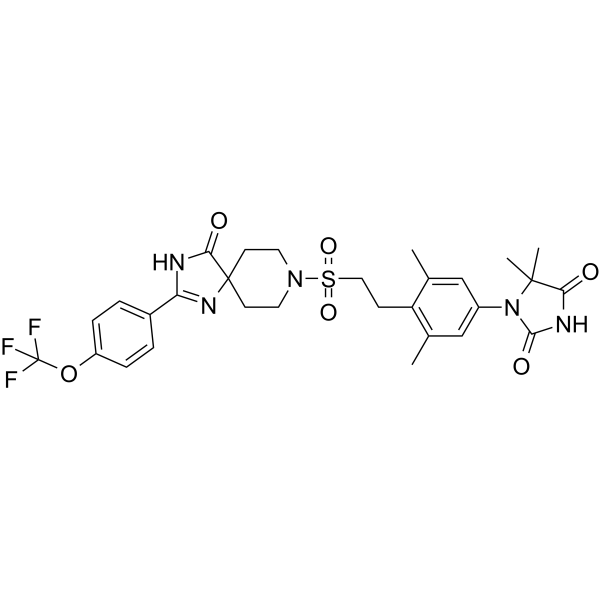 0 ImagesPCO371 is an orally active full agonist of parathyroid hormone receptor 1 (PTHR1), with no effect on PTH type 2 receptor.
-
Abaloparatide
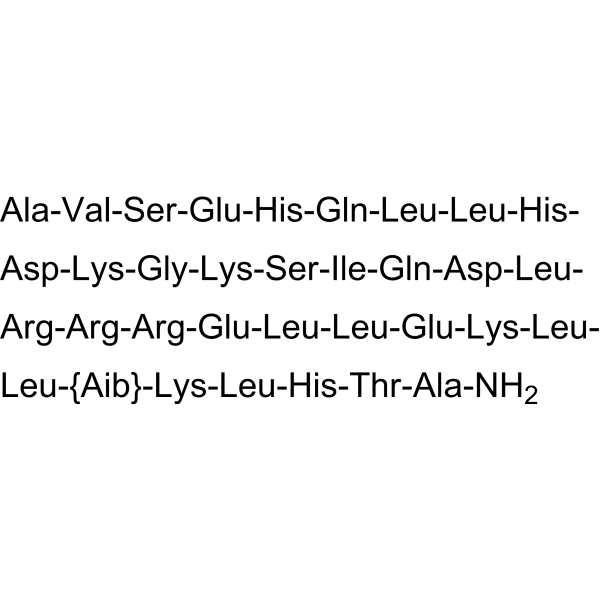 0 ImagesSynonyms: BA 058; BIM 44058Abaloparatide (BA 058) is a parathyroid hormone receptor 1 (PTHR1) analog. Abaloparatide also is a selective PTHR1 activator. Abaloparatide enhances Gs/cAMP signaling and β-arrestin recruitment. Abaloparatide enhances bone formation and cortical structure in mice. Abaloparatide has the potential for the research of osteoporosis.
-
Human PTHrP-(1-36)
 0 ImagesHuman PTHrP-(1-36) is a secretory form of PTHrP with anticalciuric effects. Human PTHrP-(1-36) enhances beta cell function and proliferation. Human PTHrP-(1-36) can be used in the research of humoral hypercalcemia of malignancy (HHM) and hyperparathyroidism.
-
(Asn10,Leu11,D-Trp12)-pTH-Related Protein (7-34) amide (human, mouse, rat)
 0 Images(Asn10,Leu11,D-Trp12)-pTH-Related Protein (7-34) amide (human, mouse, rat) is a potent PTH-1R antagonist and does not display any partial agonist activity.
-
pTH-Related Protein (1-34) (human,mouse,rat)
 0 ImagesSynonyms: pTHrP (1-34)pTH-Related Protein (1-34) (human,mouse,rat) (pTHrP (1-34)) is a parathyroid hormone-related protein fragment. Binding of pTH-Related Protein (1-34) (human,mouse,rat) to PTH1R triggers cAMP/PKA and PKC signaling, PI3K-mediated Akt and ERK1/2 phosphorylation, NADPH oxidase-dependent ROS generation, and TGF-beta1 and p47phox expression. pTH-Related Protein (1-34) (human,mouse,rat) induces fibronectin upregulation, osteoblast differentiation, osteoclastic bone resorption, bone formation, eNOS/NO-mediated vasodilation, and sensitization of type II pneumocytes to ultraviolet-induced apoptosis (apoptosis) via caspase 3. pTH-Related Protein (1-34) (human,mouse,rat) can be used in research on diabetic nephropathy, breast cancer, acute lung injury, humoral hypercalcemia of malignancy, osteoporosis, and cartilage degeneration.
-
Canvuparatide
 0 ImagesCat. No.: HY-P10909CAS No.: 2925554-87-4Synonyms: MBX 2109Canvuparatide (MBX 2109) is a PTH analog prodrug that releases the biologically active peptide through temperature- and pH-controlled intramolecular cyclization. The peptide released by Canvuparatide binds to and activates the PTH1 receptor, stimulating dose-dependent cAMP accumulation. Canvuparatide can be used in research on hypoparathyroidism.
-
Anti-PTHrP Antibody
 0 ImagesCat. No.: HY-P992296
-
TIP 39, Tuberoinfundibular Neuropeptide
 0 ImagesTIP 39, Tuberoinfundibular Neuropeptide is an endogenous PTH2 receptor agonist and antihypertensive agent. TIP 39, Tuberoinfundibular Neuropeptide selectively activates the PTH2 receptor with no activity on the PTH1 receptor, stimulates cAMP production, activates adenylate cyclase, and elevates intracellular calcium levels via mobilization from intracellular stores. TIP 39, Tuberoinfundibular Neuropeptide is highly conserved in humans, mice, and rats. TIP 39, Tuberoinfundibular Neuropeptide is applicable to research related to nociception and inflammation-induced pain.
-
DS69910557
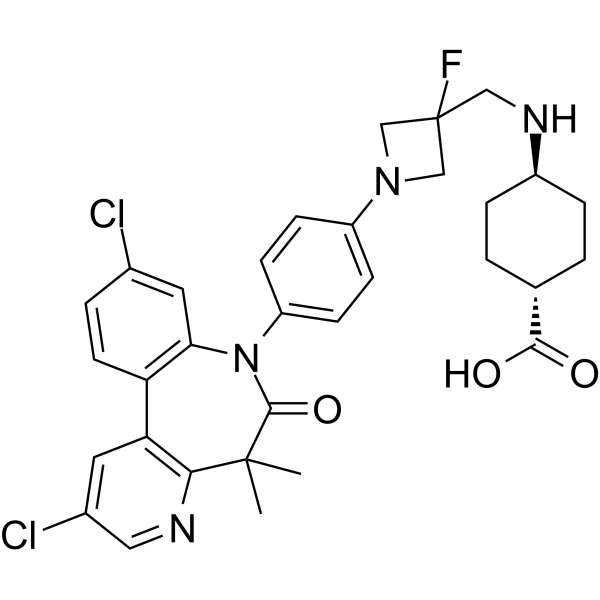 0 ImagesDS69910557 is a potent, selective and orally activehuman parathyroid hormone receptor 1 (hPTHR1) antagonist. DS69910557 has antagonistic activity for PTHR1 with an IC50 value of 0.08 μM. DS69910557 can be used for the research of hyperparathyroidism, hypercalcemia of malignancy and osteoporosis.
-
pTH (1-34) amide (human)
 0 ImagesPTH (1-34) amide human is a type 1 PTH/PTHrP receptor agonist. PTH (1-34) amide human activates adenylate cyclase and phospholipase C pathways, thereby mediating mineral ion homeostasis and bone metabolism regulation. PTH (1-34) amide human increases serum calcium, decreases serum phosphorus, regulates renal excretion, while inducing the inhibition of endogenous PTH (1-84) and the increase of 1,25-dihydroxyvitamin D2 and bone resorption. PTH (1-34) amide human stimulates phosphatidylcholine hydrolysis via phospholipase D mediation, and its hypercalcemic effect is inhibited by human PTH-(7-84). PTH (1-34) amide human can be used in the research of diseases related to humoral hypercalcemia of malignancy.
-
Abaloparatide TFA
 0 ImagesCat. No.: HY-108742APurity: 98.80%Synonyms: BA 058 TFA; BIM 44058 TFAAbaloparatide TFA (BA 058 TFA) is a parathyroid hormone receptor 1 (PTHR1) analogue. Abaloparatide TFA also is a selective PTHR1 activator. Abaloparatide TFA enhances Gs/cAMP signaling and β-arrestin recruitment. Abaloparatide TFA enhances bone formation and cortical structure in mice. Abaloparatide TFA has the potential for the research of osteoporosis.
-
pTH (1-37) (human)
 0 ImagesPTH (1-37) human is an adenylate cyclase stimulator and a normocalcemic regulator. PTH (1-37) human participates in cAMP-dependent signal transduction to affect the proliferation of skeletal tissue cells and bone metabolism. PTH (1-37) human induces cyclic adenosine monophosphate responses in human primary osteoblast-like cells and is also widely used in osteoporosis-related research.
-
DS08210767
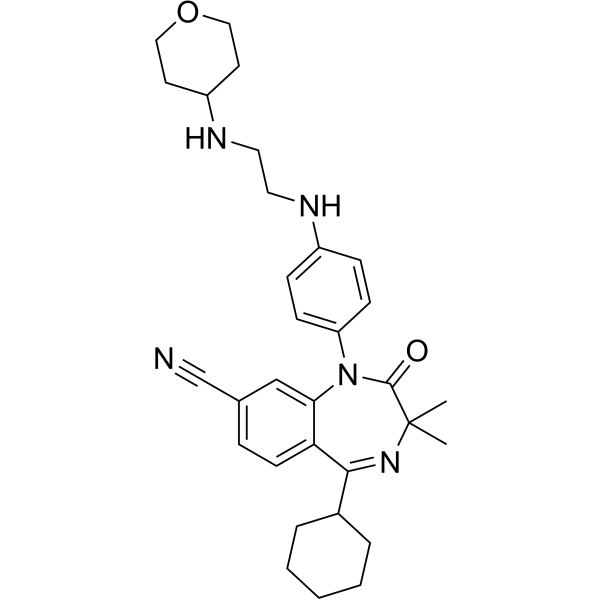 0 ImagesDS08210767 is a highly potent, orally bioavailable PTHR1 antagonist with IC50 of 90 nM.
-
AH3960
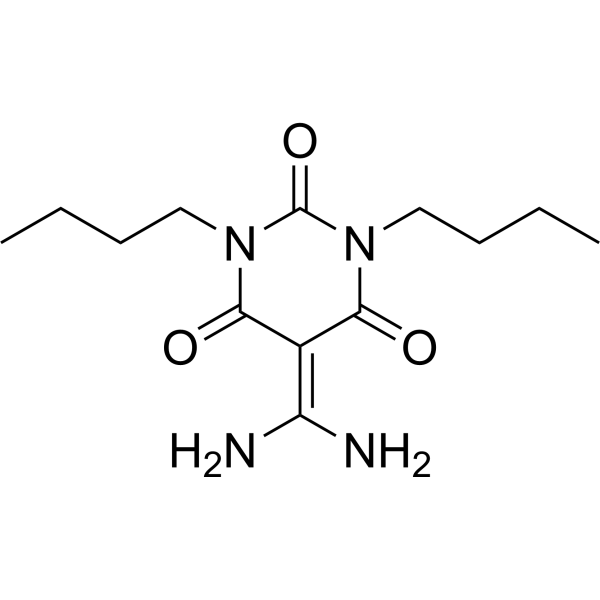 0 ImagesAH3960 (compound 16c) is an antagonist of androgen receptor. AH3960 binds wild as well as T877 mutant type androgen receptors. AH3960 selectively inhibits T877 with an IC50 value of 0.82 μM. AH3960 also serves as an agonist of parathyroid hormone receptor-1 (PTHR1).
-
(Tyr36)-pTH-Related Protein (1-36) (human, mouse, rat)
 0 Images(Tyr36)-pTH-Related Protein (1-36) (human, mouse, rat) is a peptide and can be used as a parathyroid hormone (PTH) receptor ligand.
-
pTH-Related Protein (1-34) amide (human, mouse, rat)
 0 ImagesSynonyms: Human PTHrP-(1-34)NH2pTH-Related Protein (1-34) amide (human, mouse, rat) (Human PTHrP-(1-34)NH2) is a N-terminal fragments of PTHrP. pTH-Related Protein (1-34) amide (human, mouse, rat) induces hypercalcemia, and can be used for research of humoral hypercalcaemia of malignancy.
-
pTH-Related Protein (1-37) (human, mouse, rat)
 0 ImagesCat. No.: HY-P4849CAS No.: 206010-80-2pTH-Related Protein (1-37) (human, mouse, rat), the peptide analogue of pTH-Related Protein (pTHrP). pTHrP refers to parathyroid-hormone-related protein, involved in physiological regulation of bone formation.
-
[Nle8,18,Tyr34]-pTH (3-34) amide (human)
![[Nle8,18,Tyr34]-pTH (3-34) amide (human)](https://file.medchemexpress.com/product_pic/hy-p10309.gif "Click to View [Nle8,18,Tyr34]-pTH (3-34) amide (human) Product Detail") 0 ImagesCat. No.: HY-P10309CAS No.: 120527-89-1Synonyms: [Nle8'18,Tyr34]hPTH (3-34) amide[Nle8,18,Tyr34]-pTH (3-34) amide human ([Nle8,18,Tyr34]hPTH (3-34) amide) is a parathyroid hormone (PTH) analog.
0 ImagesCat. No.: HY-P10309CAS No.: 120527-89-1Synonyms: [Nle8'18,Tyr34]hPTH (3-34) amide[Nle8,18,Tyr34]-pTH (3-34) amide human ([Nle8,18,Tyr34]hPTH (3-34) amide) is a parathyroid hormone (PTH) analog.
-
SW-106
 0 ImagesCat. No.: HY-113918SW-106 is a selective antagonist of parathyroid hormone/parathyroid hormone-related peptide receptor (PPR) and PTHR1, with an IC50 value of 0.99 μM against PPR. SW-106 antagonizes cAMP responses. SW-106 can be used in the research of osteoporosis.
- 1
- 2




