



Pyrrothiogatain
Based on 2 publication(s) in Google Scholar
Pyrrothiogatain is a transcription factor GATA3 inhibitor with an IC50 of 54.7 μM. Pyrrothiogatain inhibits the DNA-binding activity of GATA3 and inhibits the T helper 2 (Th2) cell differentiation and expression of Th2 cytokines. Pyrrothiogatain shows anti-infection effect by inhibiting ACE2 expression. Pyrrothiogatain can be used for the researches of inflammation, immunology, infection and cancer, such as colon cancer and SARS-CoV-2 infection.
For research use only. We do not sell to patients.
- Purity : 96.77%
- CAS No.: 477888-48-5
- Formula: C11H11NO2S
- Molecular Weight:221.28
-
Storage:Powder -20°C, 3 years , 4°C, 2 years ; In solvent -80°C, 6 months , -20°C, 1 month


To place orders, for customer services and technical support, please contact: MedChemExpress USA
Tel: 609-228-6898 E-mail: [email protected] [email protected]


-
 Biological Activity
-
Chemical Information
-
Solvent & Solubility
- Protocols
- Purity & Documentation
- References
-
 Help & FAQs


-
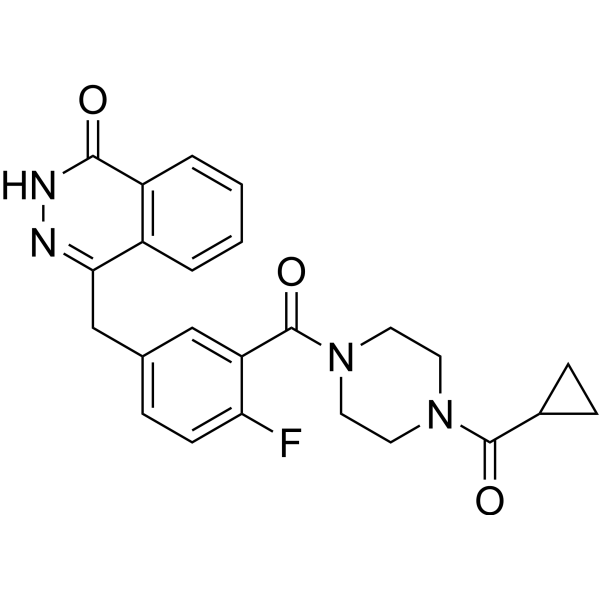
HY-10162
OlaparibPARP Inhibitor -
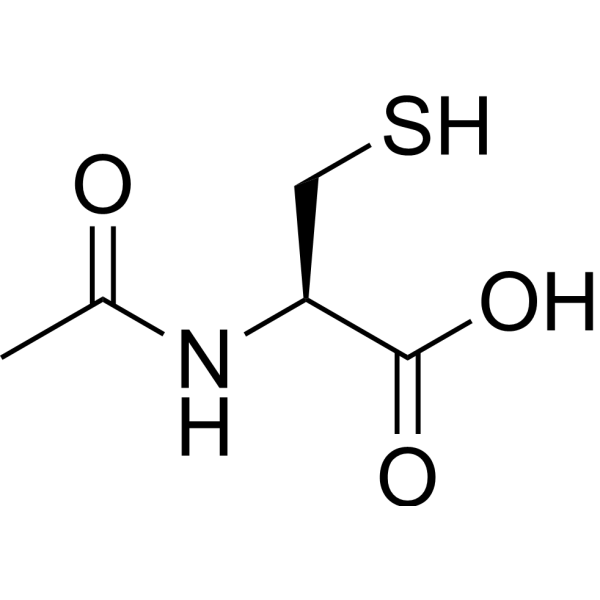
HY-B0215
AcetylcysteineMucolytic Agent -
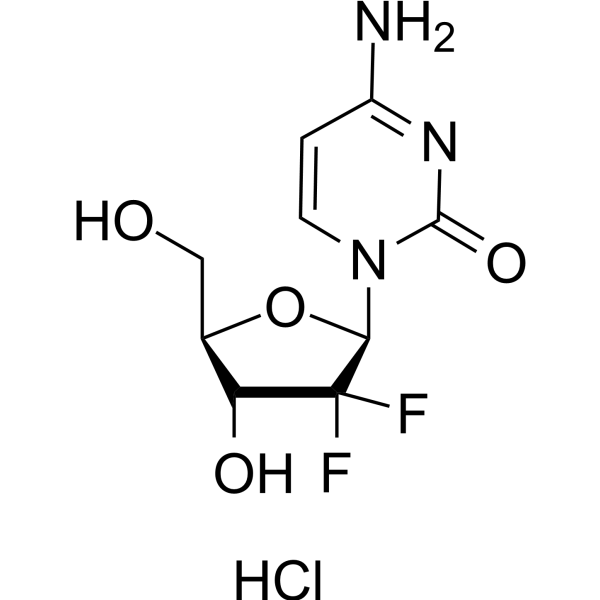
HY-B0003
Gemcitabine hydrochlorideDNA Synthesis Inhibitor -
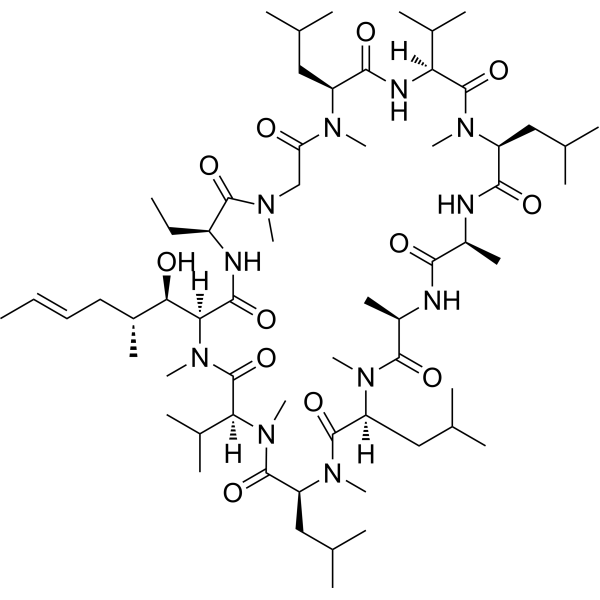
HY-B0579
Cyclosporin ACalcineurin Inhibitor -
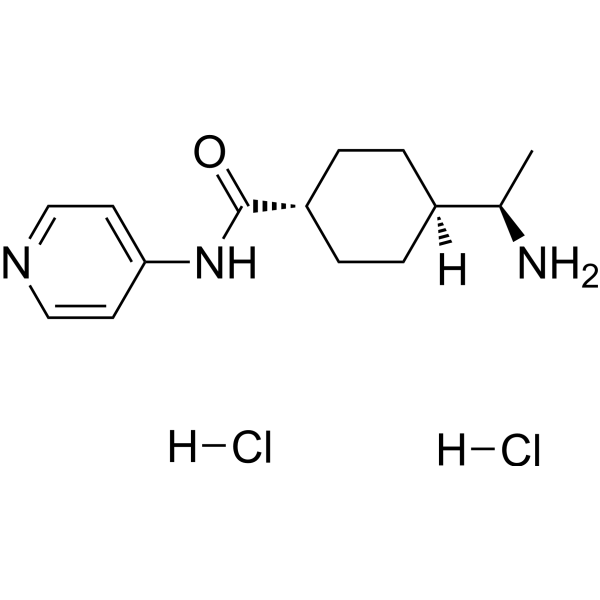
HY-10583
Y-27632 dihydrochlorideROCK Inhibitor -
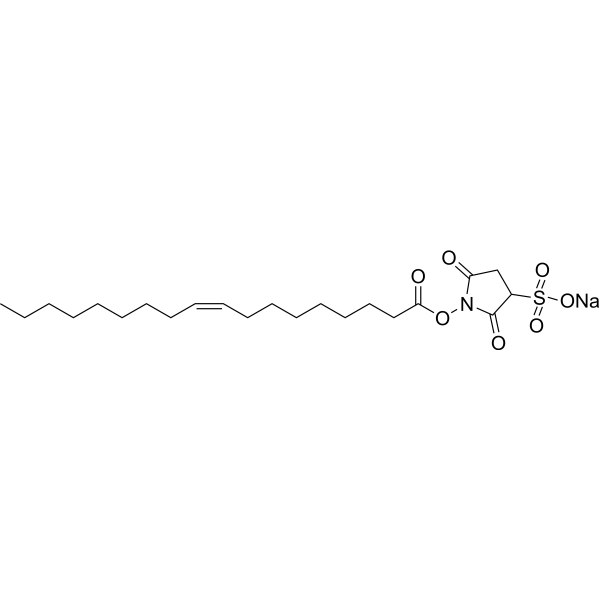
HY-112847A
Sulfosuccinimidyl oleate sodiumFatty Acid Transport Inhibitor -
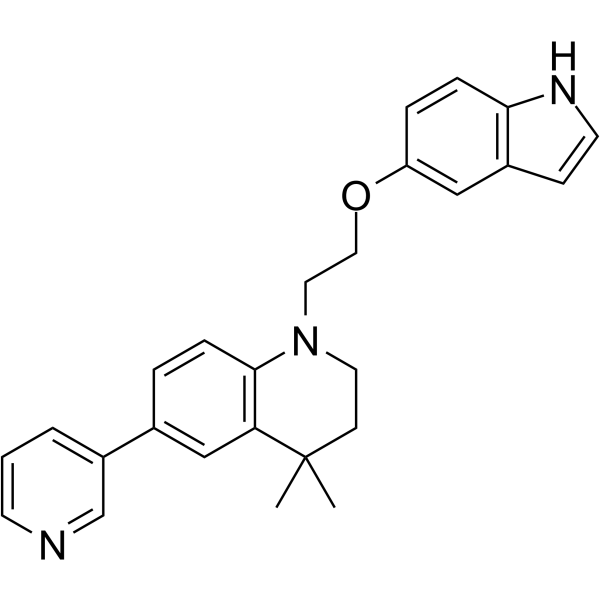
HY-102048
STAT5-IN-2STAT5 Inhibitor
Publications Citing Use of MedChemExpress (MCE) Pyrrothiogatain
MoreAll DNA/RNA Synthesis Isoforms
More

Biological Activity
Description
|
GATA3 54.7 μM (IC50) |
IL-4 |
IL-5 |
IL-6 |
IL-13 |
ACE |
In Vitro
Pyrrothiogatain (50-100 μM) inhibits the DNA-binding activity of GATA3[1].
Pyrrothiogatain (0-100 μM, 3 days) does not influence cell viability in Jurkat cells[1].
Pyrrothiogatain (10-30 μM) suppresses GATA3-dependent transcriptional activation of the IL-5 promoter in HEK293T cells[1].
Pyrrothiogatain (30-80 μM, 5 days) inhibits Th2 cell differentiation in CD4+ T cells[1].
Pyrrothiogatain (80 μM, 2 days) inhibits GATA3 binding to Th2 cytokine gene locus in CD4+ T cells[1].
Pyrrothiogatain (50 μM, 4 days) decreases cell ount in both NT and GATA-3 knockout 3T3L1 cells[2].
Pyrrothiogatain (50 μM) reduces IL-6 and TNF-α levels in 3T3L-1 preadipocytes[2].
Pyrrothiogatain (50-500 μM) reduces ACE2 and in HEK293T cells[3].
Pyrrothiogatain (500 μM, 48 h) reduces SARS-CoV-2 viral load in Calu-3 cells[3].
MedChemExpress (MCE) has not independently confirmed the accuracy of these methods. They are for reference only. Further protocols information, click here.
-
Cell Line:CD4+ T cells
-
Concentration:30 and 80 μM
-
Incubation Time:5 days
-
Result:Inhibited generation of IL-4-, IL-5-, and IL-13-producing Th2 cells.
Decreased production and mRNA expression of IL-4, IL-5 and IL-13.
In Vivo
MedChemExpress (MCE) has not independently confirmed the accuracy of these methods. They are for reference only.
-
Animal Model:Cdc42+/+Foxp3YFP-Cre mice with MC38 tumor[4]
-
Dosage:60 mg/kg
-
Administration:Intraperitoneally injection, once a day
-
Result:Reduced tumor volume.


Chemical Information
-
CAS No. 477888-48-5
-
Appearance Solid
-
Molecular Weight 221.28
-
Formula C11H11NO2S
-
Color Light yellow to orange
-
SMILES
O=C(C1=C(N2C(C)=CC=C2C)C=CS1)O
-
Shipping
Room temperature in continental US; may vary elsewhere.
-
Storage
Powder -20°C 3 years 4°C 2 years In solvent -80°C 6 months -20°C 1 month


Publications (2)
-
Journal Impact Factor
-
Most Recent
-
-
Cell Rep
Tfam-mediated metabolic perturbation in RORγt+ lymphocytes impacts intestinal tissue homeostasis and promotes GATA3+RORγt+ innate lymphoid cells. [Abstract]2026 Feb 24;45(2):116952. PMID: 41678335


Solvent & Solubility
In Vitro:
DMSO : 125 mg/mL (564.90 mM; Need ultrasonic; Hygroscopic DMSO has a significant impact on the solubility of product, please use newly opened DMSO)
Please refer to the solubility information to select the appropriate solvent. Once prepared, please aliquot and store the solution to prevent product inactivation from repeated freeze-thaw cycles.
Storage method and period of stock solution: -80°C, 6 months; -20°C, 1 month. When stored at -80°C, please use it within 6 months. When stored at -20°C, please use it within 1 month.
Please refer to the solubility information to select the appropriate solvent. Once prepared, please aliquot and store the solution to prevent product inactivation from repeated freeze-thaw cycles.
Storage method and period of stock solution: -80°C, 6 months; -20°C, 1 month. When stored at -80°C, please use it within 6 months. When stored at -20°C, please use it within 1 month.
Concentration (start) × Volume (start) = Concentration (final) × Volume (final)

Protocols
-
Nuclear Protein Extraction (High-Salt/Hypotonic Fractionation)
The high-salt/hypotonic fractionation method for nuclear protein extraction is based on the differential solubility of cellular components. Cytoplasmic proteins are extracted first using a hypotonic buffer that causes cell swelling and membrane rupture, followed by centrifugation to separate the cytoplasmic supernatant from the nuclear pellet. The nuclear pellet is then subjected to high-salt extraction (e. g. , 0. 4 M (NH4)2SO4 or 1 M NaCl) to solubilize tightly bound nuclear matrix proteins, including transcription factors, histones, and structural proteins associated with chromatin and the nuclear scaffold. This approach allows for the isolation of both soluble cytoplasmic proteins and salt-resistant nuclear proteins while minimizing cross-contamination.
-
RNA extraction experimental
By lysing cells, releasing RNA, and removing impurities such as proteins and DNA, high-purity RNA products are finally obtained. The commonly used traditional method is the guanidine isothiocyanate/phenol/chloroform method (Trizol), which is suitable for a variety of animal materials including animal tissues, microorganisms, cultured cells, etc., and most plant materials.
-
Research Protocol for Infectious Diseases
Infectious-disease experiments test how pathogens interact with host barriers, innate immune receptors, inflammatory signaling, pathogen replication, and tissue injury; pattern-recognition receptors such as TLRs, RIG-I-like receptors, NOD-like receptors, and inflammasomes detect microbial molecules and activate NF-κB, interferon, and cytokine responses. The central hypothesis is that infection severity reflects the balance between pathogen burden and host response: protective inflammation restricts pathogen growth, whereas excessive or mislocalized inflammation contributes to tissue damage and disease phenotype. Unresolved questions include which host pathways are protective versus pathogenic, why some infection models fail to translate to human disease, and which combined readouts best predict clinically relevant infection outcomes.
-
Cell Cytotoxicity Assay
Cytotoxicity assays are usually based on the assessment of cell membrane damage, which can also be indirectly detected by measuring cell viability. Detection methods include MTT assay, CKK-8 assay, LDH assay and ATP assay, etc.
-
Naïve CD4+ T-cell subset differentiation/polarization
Naïve CD4+ T-cell subset differentiation/polarization is an in vitro assay in which purified naïve CD4+ T cells are activated through TCR and CD28 costimulation and cultured with defined cytokines and neutralizing antibodies to generate Th0, Th1, Th2, Th17, or induced Treg-like populations. Differentiation is detected by subset-associated cytokines and transcription factors: IFN-γ/T-bet for Th1, IL-4/GATA3 for Th2, IL-17A/RORγt for Th17, and Foxp3 for induced Treg cells. The assay readout is usually generated by intracellular cytokine staining after restimulation, transcription-factor staining by flow cytometry, ELISA of secreted cytokines, or gene-expression analysis. The result reflects cytokine-directed lineage commitment or polarization rather than antigen-specific immune protection by itself.
-
Research Protocol for Inflammation-related Diseases
The NLRP3 inflammasome is a cytosolic innate immune signaling platform that integrates priming signals and danger-signal activation to promote caspase-1 activation, maturation of IL-1β and IL-18, and gasdermin D-mediated pyroptotic cell death. The core experimental logic is to determine whether inflammatory disease phenotypes are driven by increased NLRP3 expression, ASC-containing inflammasome assembly, caspase-1 cleavage, GSDMD cleavage, and extracellular release of IL-1β/IL-18 rather than by nonspecific cell injury alone. The pathway is strongly linked to inflammation-related disease phenotypes because monosodium urate crystals activate NALP3/NLRP3 inflammasome signaling in gout-like crystal inflammation, cholesterol crystals activate NLRP3 inflammasomes in atherogenesis models, and DSS-induced intestinal inflammation has been reported to involve NLRP3 inflammasome activity. However, experimental colitis studies also show context-dependent protective effects of NLRP3 inflammasome co
-
iPSC cell differentiation
Induced pluripotent stem cells (iPSCs) are a type of cell that has similar properties to embryonic stem cells through somatic cell reprogramming.


Purity & Documentation
-
Data Sheet (284 KB)
-
SDS (393 KB)
- English - EN (393 KB)
- Français - FR (393 KB)
- Deutsch - DE (393 KB)
- Norwegian - NO (393 KB)
- Español - ES (393 KB)
- Swedish - SV (393 KB)
- Italian - IT (393 KB)
- Korean - KR (393 KB)
- Portuguese - PT (393 KB)
-
Handling Instructions (2659 KB)
References
[1]. Nomura S, et al. Pyrrothiogatain acts as an inhibitor of GATA family proteins and inhibits Th2 cell differentiation in vitro. Sci Rep. 2019 Nov 22;9(1):17335. [Content Brief]
[2]. Almuraikhy S, et al. Targeted Inhibition of GATA-3 by Pyrrothiogatain: Implications for Adipocyte Biology and Inflammatory Response. Cells. 2025 Jan 10;14(2):100. [Content Brief]
[3]. Israeli M, et al. Genome-wide CRISPR screens identify GATA6 as a proviral host factor for SARS-CoV-2 via modulation of ACE2. Nat Commun. 2022 Apr 25;13(1):2237. [Content Brief]
[4]. Kalim KW, et al. Targeting of Cdc42 GTPase in regulatory T cells unleashes antitumor T-cell immunity. J Immunother Cancer. 2022 Nov;10(11):e004806. [Content Brief]


Complete Stock Solution Preparation Table
Please refer to the solubility information to select the appropriate solvent. Once prepared, please aliquot and store the solution to prevent product inactivation from repeated freeze-thaw cycles.
Storage method and period of stock solution: -80°C, 6 months; -20°C, 1 month. When stored at -80°C, please use it within 6 months. When stored at -20°C, please use it within 1 month.
| Optional Solvent | Concentration Solvent Mass | 1 mg | 5 mg | 10 mg | 25 mg |
|---|---|---|---|---|---|
| DMSO | 1 mM | 4.5192 mL | 22.5958 mL | 45.1916 mL | 112.9790 mL |
| 5 mM | 0.9038 mL | 4.5192 mL | 9.0383 mL | 22.5958 mL | |
| 10 mM | 0.4519 mL | 2.2596 mL | 4.5192 mL | 11.2979 mL | |
| 15 mM | 0.3013 mL | 1.5064 mL | 3.0128 mL | 7.5319 mL | |
| 20 mM | 0.2260 mL | 1.1298 mL | 2.2596 mL | 5.6490 mL | |
| 25 mM | 0.1808 mL | 0.9038 mL | 1.8077 mL | 4.5192 mL | |
| 30 mM | 0.1506 mL | 0.7532 mL | 1.5064 mL | 3.7660 mL | |
| 40 mM | 0.1130 mL | 0.5649 mL | 1.1298 mL | 2.8245 mL | |
| 50 mM | 0.0904 mL | 0.4519 mL | 0.9038 mL | 2.2596 mL | |
| 60 mM | 0.0753 mL | 0.3766 mL | 0.7532 mL | 1.8830 mL | |
| 80 mM | 0.0565 mL | 0.2824 mL | 0.5649 mL | 1.4122 mL | |
| 100 mM | 0.0452 mL | 0.2260 mL | 0.4519 mL | 1.1298 mL |


Pyrrothiogatain Related Classifications
HY-138113 Related Classifications
 Powered by Bioz