
278 Results for "

Streptococcus

" in MedChemExpress (MCE) Product Catalog:
Products (278)

278 Results for "Streptococcus" in MCE Product Catalog:

Cat. No.: HY-N19666
CAS No.: 1820968-26-0
2-Hexylglutaconic acid is a 2-Pentenedioic acid (HY-W073501A) derivative found in the soil-derived fungus Gongronella butleri. 2-Pentenedioic acid is a chemical building block in synthesis, with research applications focusing on metabolic studies .
loading...
    loading...
Cat. No.: HY-N0466
CAS No.: 58543-16-1
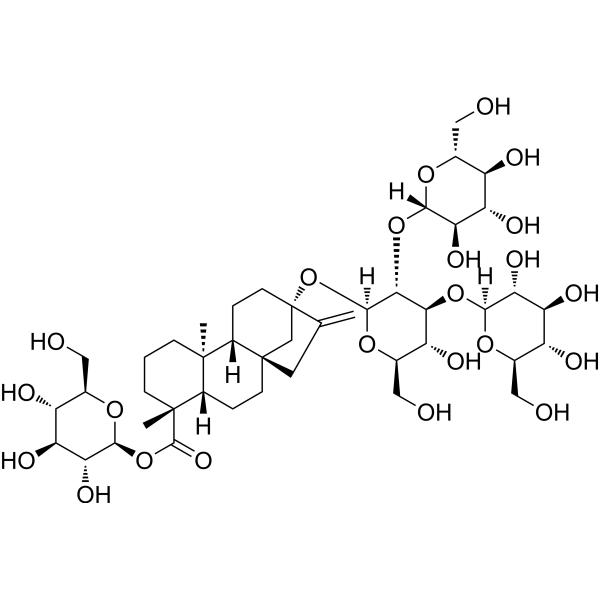
Rebaudioside A is an orally effective steviol glycoside with high sweetness. Rebaudioside A acts as an inhibitor of α-glucosidase with an IC50 value of 35.01 μg/mL. Rebaudioside A increases the ATP/ADP ratio in β cells in a glucose-dependent manner, thereby inhibiting KATP channels, leading to membrane depolarization, calcium influx, and ultimately stimulating insulin secretion. Rebaudioside A activates the SREBP signaling pathway by inhibiting HMGCR, the rate-limiting enzyme in cholesterol synthesis, resulting in increased expression of LDLR on the cell surface, thus promoting the uptake of LDL-C in the blood. Rebaudioside A can be used for studies on blood glucose and lipid regulation as well as anti-obesity .
loading...
    loading...
Cat. No.: HY-W028720
CAS No.: 3228-02-2
Target:  

Bacterial Fungal Parasite

Research Areas:  

Infection

4-Isopropyl-3-methylphenol acts as a biofilm inhibitor, Antibacterial agent, Antifungal agent, and Acaricide. 4-Isopropyl-3-methylphenol reduces the expression levels of biofilm-associated gtfB, gtfD, and gtfC genes. 4-Isopropyl-3-methylphenol disrupts ion and redox homeostasis in fungal cells, and its combination with Octylgallate enhances antifungal activity. 4-Isopropyl-3-methylphenol exhibits fumigant toxicity and direct contact toxicity against Dermatophagoides farinae and Dermatophagoides pteronyssinus. 4-Isopropyl-3-methylphenol is applicable to research related to dental caries and Aspergillus infections/contamination .
loading...
    loading...
Cat. No.: HY-124350
CAS No.: 134-05-4
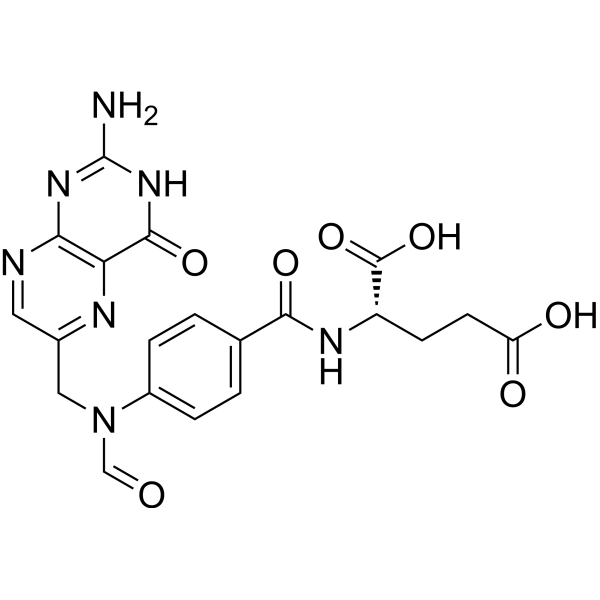
10-Formylfolic acid is a potent inhibitor of dihydrofolate reductase, with an IC50 of 80 nM against the rat enzyme. 10-Formylfolic acid also acts as an orally active folate source and a growth factor for specific bacteria. 10-Formylfolic acid supports growth and increases plasma folate levels; its absorption and metabolism patterns are similar to those of folic acid, but its liver retention is slightly higher. It exhibits high folate activity in microbial assays, serves as a growth factor for Enterococcus faecalis and Lactobacillus casei, aids folate nutrient supply, and may exert cell regulatory functions .
loading...
    loading...
Cat. No.: HY-124350R
CAS No.: 134-05-4
10-Formylfolic acid (Standard) is the analytical standard of 10-Formylfolic acid (HY-124350). This product is intended for research and analytical applications. 10-Formylfolic acid is a potent inhibitor of dihydrofolate reductase, with an IC50 of 80 nM against the rat enzyme. 10-Formylfolic acid also acts as an orally active folate source and a growth factor for specific bacteria. 10-Formylfolic acid supports growth and increases plasma folate levels; its absorption and metabolism patterns are similar to those of folic acid, but its liver retention is slightly higher. It exhibits high folate activity in microbial assays, serves as a growth factor for Enterococcus faecalis and Lactobacillus casei, aids folate nutrient supply, and may exert cell regulatory functions .
loading...
    loading...
Cat. No.: HY-124350S
CAS No.: 461426-41-5
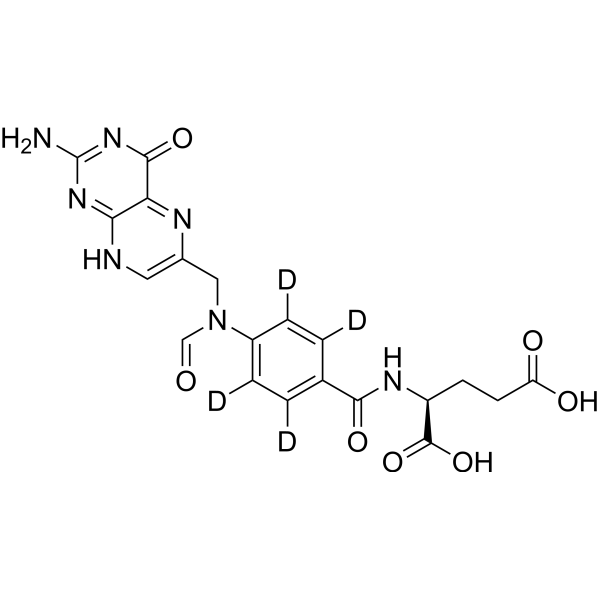
10-Formylfolic acid-d4 is the deuterated-labeled 10-Formylfolic acid (HY-124350). 10-Formylfolic acid is a potent inhibitor of dihydrofolate reductase, with an IC50 of 80 nM against the rat enzyme. 10-Formylfolic acid also acts as an orally active folate source and a growth factor for specific bacteria. 10-Formylfolic acid supports growth and increases plasma folate levels; its absorption and metabolism patterns are similar to those of folic acid, but its liver retention is slightly higher. It exhibits high folate activity in microbial assays, serves as a growth factor for Enterococcus faecalis and Lactobacillus casei, aids folate nutrient supply, and may exert cell regulatory functions .
loading...
    loading...
Cat. No.: HY-175595
CAS No.: 1846579-07-4
Synonyms: ADEP26
Target:  

ClpP Bacterial

Research Areas:  

Infection

ADEP-14 (ADEP26) is a ClpP activator. ADEP-14 exhibits antibacterial activity against Gram-negative and Gram-positive bacteria. ADEP-14 can be used in studies related to bacterial infections .
loading...
    loading...
Cat. No.: HY-187934
CAS No.: 431058-65-0
DX-619 is an antibacterial agent. DX-619 inhibits bacterial type II topoisomerases, DNA gyrase (GyrA), and topoisomerase IV (GrlA). DX-619 can be used in research related to bacterial infections, pneumonia, and other conditions .
loading...
    loading...
Cat. No.: HY-B0512A
CAS No.: 127-58-2
Synonyms: RP2632 sodium
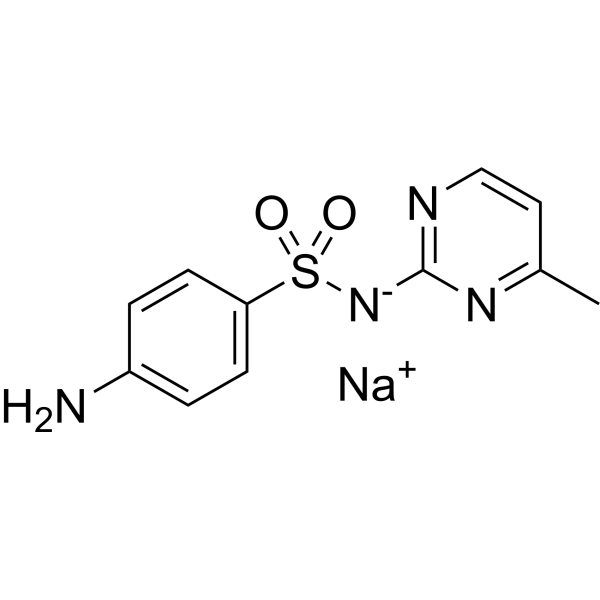
Sulfamerazine (RP2632) sodium is a brain-penetrant and orally active sulfonamide antibiotic and α-synuclein inhibitor with human α-synuclein KD of 352 μM. Sulfamerazine sodium inhibits the synthesis of dihydrofolate by bacteria, thereby inhibiting bacterial growth. Sulfamerazine sodium inhibits α-synuclein fibrillation, reduces α-synuclein aggregation-associated toxicity and α-synuclein aggregate accumulation. Sulfamerazine sodium can be used for the research of Parkinson’s disease and bacterial infection .
loading...
    loading...
Cat. No.: HY-D3390
sCy5DA is a is a fluorescent D-amino acid . sCy5DA incorporates into bacterial peptidoglycan layers and cross-links via transpeptidase action, replacing peptidoglycan stem peptide D-amino acids. sCy5DA labels live bacterial cell walls, nascent peptidoglycan biosynthesis sites, and diverse bacterial species including Gram-negative, Gram-positive, and mycobacteria (Ex/Em = 646/665 nm) .
loading...
    loading...
Cat. No.: HY-W019938
CAS No.: 7785-84-4
Synonyms: Trisodium cyclo-triphosphate
Target:  

Others

Research Areas:  

Others

Sodium trimetaphosphate (Trisodium cyclo-triphosphate) is an orally active, multifunctional compound. Sodium trimetaphosphate serves as a buffer and chelating agent in cosmetics, a starch modifier in food, and can also act as a bone imaging agent. Sodium trimetaphosphate undergoes alkaline hydrolysis, with the rate-limiting first step producing sodium tripolyphosphate; the conversion rate is low when sodium carbonate or silicate is used. Sodium trimetaphosphate can be used in caries-related research .
loading...
    loading...
Cat. No.: HY-135532
CAS No.: 74469-00-4
Research Areas:  

Infection

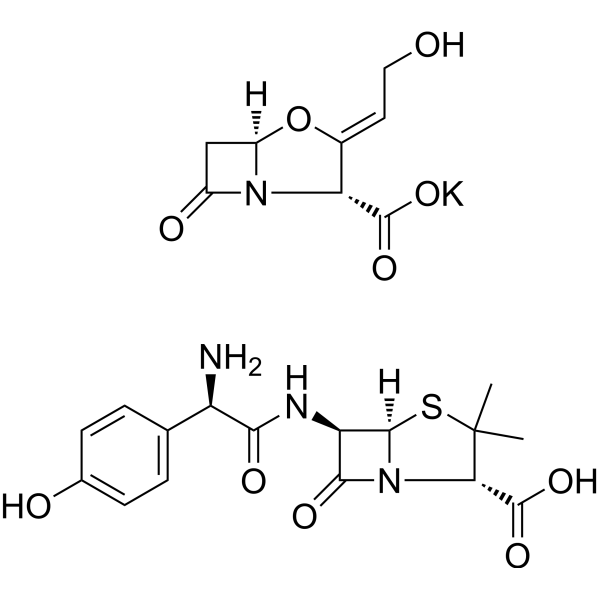
Amoxicillin-clavulanate potassium is an orally active antibacterial composition consisting of Amoxicillin (HY-B0467A) and the β-lactamase inhibitor Clavulanate potassium (HY-A0256A). In Amoxicillin-clavulanate potassium, Amoxicillin binds to bacterial penicillin-binding proteins to inhibit peptidoglycan synthesis and exert a bactericidal effect; Clavulanate potassium protects Amoxicillin from hydrolysis by β-lactamase. Amoxicillin-clavulanate potassium exhibits antibacterial activity against β-lactamase-producing Gram-positive and Gram-negative bacteria. Amoxicillin-clavulanate potassium dose-dependently interferes with the function of ameloblasts at the maturation stage, disrupts the enamel mineralization process, and induces enamel developmental defects. Amoxicillin-clavulanate potassium can be used in research related to bacterial infections .
loading...
    loading...
Cat. No.: HY-P2723
CAS No.: 9032-14-8
Target:  

Endogenous Metabolite

Research Areas:  

Metabolic Disease

Dextran sucrase is an extracellular glucosyltransferase. It uses sucrose as a glucosyl donor to transfer D-glucopyranosyl groups to growing dextran chains, while releasing fructose, thereby catalyzing the synthesis of dextran with α-(1→6) glycosidic bonds as the main component. In the presence of acceptor sugars such as maltose, dextran sucrase also catalyzes the synthesis of oligosaccharides. Dextran sucrase can be used in studies related to dextran, glucooligosaccharides and glycosyl transfer .
loading...
    loading...
Cat. No.: HY-P2840
CAS No.: 9025-70-1
Target:  

Glycosidase

Research Areas:  

Metabolic Disease

Dextranase, Trichoderma reesei belongs to glycoside hydrolase family 49. It catalyzes the hydrolysis of α-1,6-glycosidic linkages in dextran via a single-displacement reaction, ultimately releasing shorter isomaltooligosaccharides. Dextranase, Trichoderma reesei reduces the molecular size of dextran, inhibits the formation of insoluble dextran and dental plaque, and decreases the viscosity of dextran-contaminated sugar juice. Dextranase, Trichoderma reesei can be used in relevant research in fields such as chemical production, including beer manufacturing, feed additives, and toothpaste formulations .
loading...
    loading...
Cat. No.: HY-P2840A
Target:  

Glycosidase

Research Areas:  

Metabolic Disease

Dextranase, Penicillium sp. belongs to glycoside hydrolase family 49. It catalyzes the hydrolysis of α-1,6-glycosidic linkages in dextran via a single-displacement reaction, ultimately releasing shorter isomaltooligosaccharides. Dextranase, Penicillium sp. reduces the molecular size of dextran, inhibits the formation of insoluble dextran and dental plaque, and decreases the viscosity of dextran-contaminated sugar juice. Dextranase, Penicillium sp. can be used in relevant research in fields such as chemical production, including beer manufacturing, feed additives, and toothpaste formulations .
loading...
    loading...
Cat. No.: HY-W104752
CAS No.: 15264-63-8
5-(Pyridin-4-yl)-1,3,4-oxadiazole-2-thiol (Compound 3n) is an antimicrobial and antioxidant agent, that inhibits Escherichia coli and Staphylococcus epidermidis, with MIC of 8 and 4 μg/mL. 5-(Pyridin-4-yl)-1,3,4-oxadiazole-2-thiol exhibits antioxidant activity with IC50 of 17.47 μM using DPPH free radical-scavenging method .
loading...
    loading...
Cat. No.: HY-W683763
CAS No.: 167887-97-0
Synonyms: HSR-903 free base
Target:  

Bacterial

Research Areas:  

Infection

Olamufloxacin (HSR-903) is an orally active fluoroquinolone antibacterial agent. Olamufloxacin inhibits DNA supercoiling activity. Olamufloxacin exhibits activity against Gram-positive, Gram-negative, chlamydial, and quinolone-resistant bacterial strains. Olamufloxacin can be used for the research of bacterial infections .
loading...
    loading...
Cat. No.: HY-W683763A
CAS No.: 167888-07-5
Synonyms: HSR-903
Target:  

Bacterial

Research Areas:  

Infection

Olamufloxacin (HSR-903) methanesulfonate is an orally active fluoroquinolone antibacterial agent. Olamufloxacin methanesulfonate inhibits DNA supercoiling activity. Olamufloxacin methanesulfonate exhibits activity against Gram-positive, Gram-negative, chlamydial, and quinolone-resistant bacterial strains. Olamufloxacin methanesulfonate can be used for the research of bacterial infections .
loading...
    loading...
Cat. No.: HY-184417
CAS No.: 3085883-97-9
Target:  

Bacterial

Research Areas:  

Infection

Energy-coupling factor-IN-1 is an energy-coupling factor (ECF) transporter inhibitor with an IC50 of 42.84 μM against ECF-FolT2. Energy-coupling factor-IN-1 binds to the interface between the S component and the ECF module, and inhibits the uptake of folic acid and pantothenic acid via the target transporter. Energy-coupling factor-IN-1 acts as a bactericidal agent, exerting rapid and sustained activity for 24 h against Enterococcus faecium, while also acting against Gram-positive bacteria including drug-resistant strains. Energy-coupling factor-IN-1 improves the survival rate of zebrafish embryos infected with Enterococcus faecium. Energy-coupling factor-IN-1 can be used in studies of Gram-positive bacterial infections .
loading...
    loading...
Cat. No.: HY-N21935
CAS No.: 49863-48-1
Verdamicin is an aminoglycoside antibiotic isolated from Micromonospora grisea, exhibiting broad-spectrum antibacterial activity against Gram-negative and Gram-positive bacteria. Verdamicin inhibits bacterial protein synthesis by binding to the 30S ribosomal subunit. Verdamicin exerts bactericidal effects against Gram-negative and Gram-positive isolates. Verdamicin can be used for research on bacterial infections .
loading...
    loading...

