
84 Results for "

adjuvant activity

" in MedChemExpress (MCE) Product Catalog:
Products (84)

84 Results for "adjuvant activity" in MCE Product Catalog:

Cat. No.: HY-D1005A23
CAS No.: 9003-11-6
Synonyms: PEG-PPG-PEG, 4400 (Average)
Poloxamer 401 L121 is a block copolymer of polyethylene oxide and polypropylene oxide with an average molecular weight of 4400. Poloxamer has the ability to inhibit P-gp. Poloxamer 401 inhibits multiagent resistance and adjuvant activity. Poloxamer 401 can be used as a cosmetic ingredient. Poloxamer 401 can be used in nanoparticle engineering (lymphatic targeting particles) research .
loading...
    loading...
Cat. No.: HY-116442
CAS No.: 13539-59-8
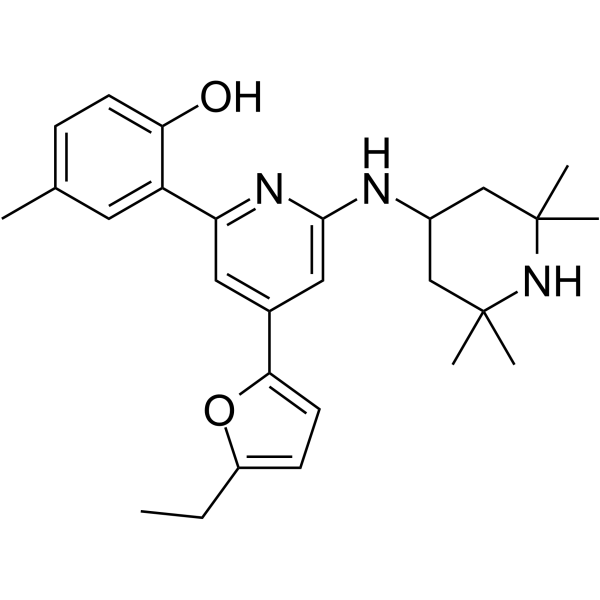
Azapropazone is an orally active nonsteroidal anti-inflammatory agent. Azapropazone inhibits Xanthine oxidase activity with an IC50 of 70-140 μg/mL. Azapropazone exerts significant cardiomyocyte protective effects on dogs with ischemia-reperfusion injury . Azapropazone reduces arthritis. Azapropazone inhibits Adrenaline-induced platelet aggregation. Azapropazone can be used for the research of myocardial ischemia and reperfusion injury, adjuvant arthritis, and gouty arthritis .
loading...
    loading...
Cat. No.: HY-112589
CAS No.: 503105-88-2
Purity:  98.93%
Target:  

Bacterial

Research Areas:  

Infection Cancer

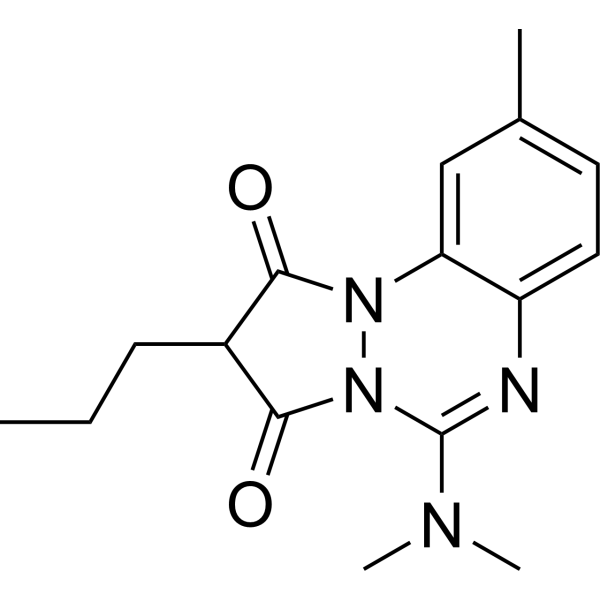
BRITE-338733 is an inhibitor of E. coli RecA ATPase activity (IC50: 4.7 μM). BRITE-338733 also inhibits the ATP hydrolysis activity of RSC chromatin remodeling enzyme by binding to its ATP-binding pocket and DNA (IC50: 0.316 μM). BRITE-338733 exhibits cytotoxicity against MCF-7 and MDA-MB-231 breast cancer cells. BRITE-338733 can be used in studies on antibacterial adjuvants and anticancer research .
loading...
    loading...
Cat. No.: HY-165613
CAS No.: 656831-18-4
Synonyms: Dipalmitoyl-S-glyceryl-cysteine; S-[2,3-Bis(palmitoyloxy)propyl]cysteine
Pam2Cys (Dipalmitoyl-S-glyceryl-cysteine; S-[2,3-Bis(palmitoyloxy)propyl]cysteine) is a TLR2 agonist and immunostimulant. Pam2Cys binds to TLR2 to activate dendritic cells and trigger the TLR2-dependent NF-κB signaling pathway. Pam2Cys also induces dendritic cell maturation by upregulating the expression of cell surface MHC II molecules. Pam2Cys activates innate immune signaling pathways, drives pro-inflammatory and antimicrobial responses, enhances the expression of macrophage activation markers, increases phagocytic activity, induces the release of IL-12 and pro-inflammatory cytokines, and polarizes macrophages into a pro-inflammatory, antimicrobial phenotype without interfering with IL-10-induced macrophage polarization. Pam2Cys also serves as the lipid moiety in synthetic lipopeptide vaccines and possesses self-adjuvant properties. Pam2Cys enhances the immunogenicity of conjugated peptide segments and induces cellular and humoral immune responses. However, it does not activate CD4 T cells in mouse splenocyte cultures when used alone. Pam2Cys activates pulmonary TLR2 signaling pathways, triggers innate immune responses, recruits neutrophils and macrophages, induces the secretion of various cytokines, alleviates symptoms and damages associated with influenza A virus infection in mice without impairing adaptive immunity. Pam2Cys can be used in studies related to tuberculosis and influenza A virus infection .
loading...
    loading...
Cat. No.: HY-13219
CAS No.: 103475-41-8
Purity:  99.05%
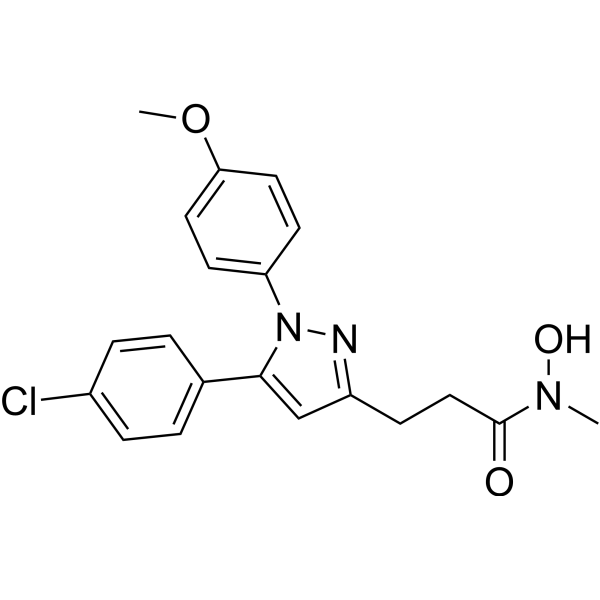
Tepoxalin is an orally active dual inhibitor of Cyclooxygenase/Lipoxygenase, with IC50 values of 4.6 μM (sheep cyclooxygenase), 2.85 μM (rat cyclooxygenase), 0.15 μM (rat 5-lipoxygenase), and 3.0 μM (h12-lipoxygenase), respectively. Tepoxalin inhibits ROS production and NF-κB activation. Tepoxalin suppresses the production of thromboxane B2, leukotriene B4, prostaglandins and cytokines, and blocks platelet aggregation. Tepoxalin exhibits potent anti-inflammatory activity in rats with adjuvant-induced arthritis. Tepoxalin possesses analgesic activity. Tepoxalin shows no ulcerogenic activity within the anti-inflammatory dose range. Tepoxalin can be used in studies related to adjuvant-induced arthritis, skin inflammation and Alzheimer's disease .
loading...
    loading...
Cat. No.: HY-N11630
CAS No.: 97134-11-7
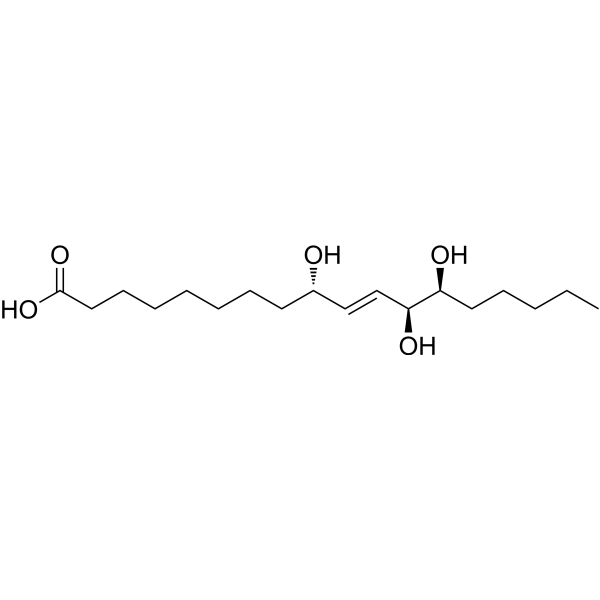
Pinellic acid is an orally active adjuvant for intranasal influenza vaccines. Pinellic acid can be extracted from the tubers of Pinellia ternata Breitenbach. When administered intranasally in combination with influenza HA vaccine, Pinellic acid slightly increases the titers of antiviral IgG antibodies in bronchoalveolar lavage fluid and serum. Pinellic acid shows no hemolytic activity. Pinellic acid can be used in studies related to influenza virus infection .
loading...
    loading...
Cat. No.: HY-111792
CAS No.: 1233589-81-5
Purity:  94.48%
Synonyms: CRX-601
Research Areas:  

Inflammation/Immunology Cancer

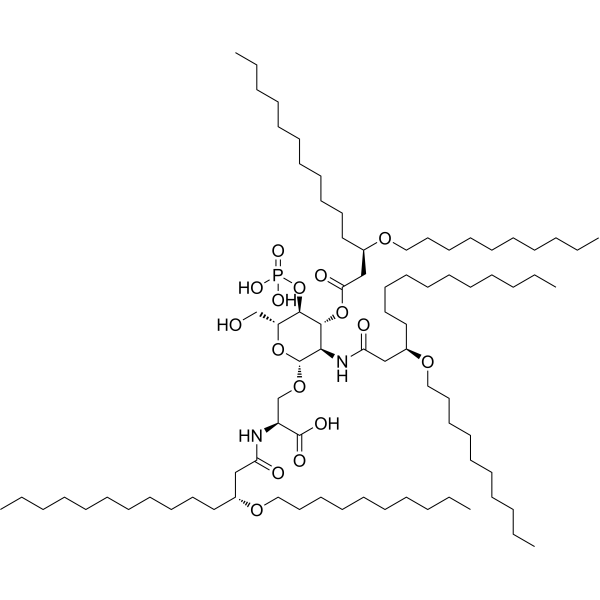
GSK1795091 (CRX-601), an immunologic stimulator, is a synthetic TLR4 agonist. Antitumor activity. GSK1795091 can be used as a vaccine adjuvant to enhance both mucosal and systemic immunity to influenza virus vaccines. Not only, GSK1795091 inhibits tumor growth and increases the survival in mice model, but results in long term survival in influenza challenge model in mice .
loading...
    loading...
Cat. No.: HY-N125722
CAS No.: 33538-71-5
Synonyms: Aabomycin A1
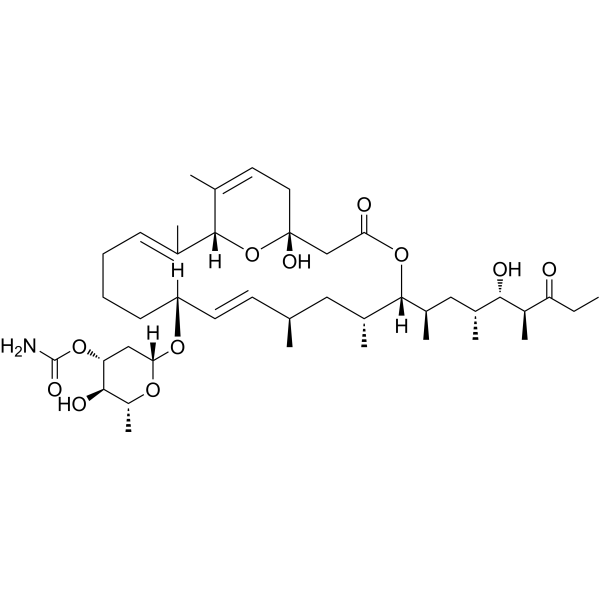
Venturicidin A (Aabomycin A1) is a natural product derived from Streptomyces, possessing antifungal, anti-Trypanosoma brucei, anti-Leishmania donovani, and ATP synthase inhibitory activities. Venturicidin A acts as an antibiotic adjuvant, promoting the uptake of aminoglycoside antibiotics and enhancing bactericidal efficacy. Venturicidin A inhibits ATP synthesis by blocking proton translocation through the FO subunit. In bloodstream-form Trypanosoma brucei, Venturicidin A causes collapse of the mitochondrial membrane potential; in fungi, it disrupts cell membrane integrity, induces leakage of cytoplasmic contents, elevates ROS levels, and downregulates the expression of fungal pathogenicity-related genes. Venturicidin A exhibits antifungal activity against Botrytis cinerea. Venturicidin A is used in research on bacterial infections, trypanosome/leishmania infections, and gray mold disease .
loading...
    loading...
Cat. No.: HY-N9517
CAS No.: 208933-54-4
Synonyms: QS 7 Api
QS 7 (QS 7 Api) is a triterpene saponin found in the bark of Quillaja saponaria and immune adjuvant with immune response potentiator activity. QS 7 can be used as vaccine adjuvant for the research of antitumor and antiviral vaccine development .
loading...
    loading...
Cat. No.: HY-D1056B4
Synonyms: LPS, from bacterial (Salmonella typhosa)
Lipopolysaccharides, from Salmonella typhosa are lipopolysaccharide endotoxins and TLR-4 activators derived from Salmonella typhosa, classified as S-type LPS, which can activate pathogen-associated molecular patterns (PAMP) of the immune system and induce cellular secretion of migrasomes. Lipopolysaccharides, from Salmonella typhosa exhibit a typical three-part structure: O-antigen, core oligosaccharide, and lipid A. Lipopolysaccharides, from Salmonella typhosa can serve as vaccine adjuvants and demonstrate adjuvant activity targeting B cells in immune responses in vivo .
It is recommended to prepare a solution with concentration ≥2 mg/mL. Vortex thoroughly for more than 10 minutes. Due to the adsorption characteristics of LPS, silanized container or low adsorption centrifuge tubes should be used for aliquoting and storage, and mix thoroughly before use.
loading...
    loading...
Cat. No.: HY-108062A
CAS No.: 2580120-08-5
Purity:  ≥99.0%
Research Areas:  

Infection

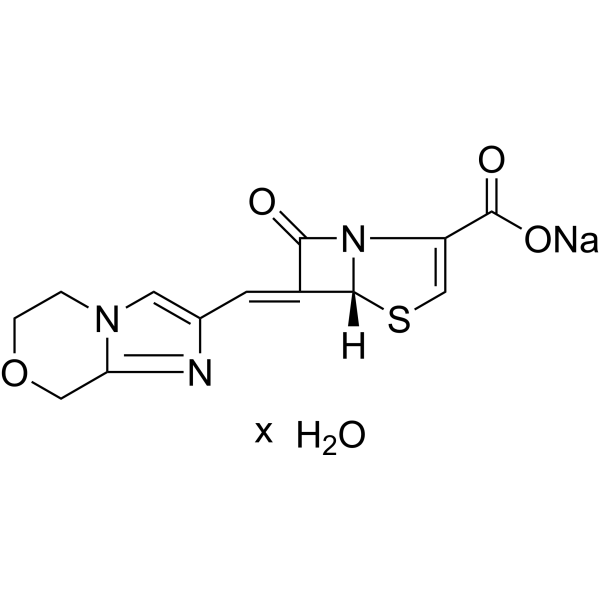
BLI-489 hydrate is a Beta-lactamase inhibitor. BLI-489 hydrate is an antibacterial adjuvant that significantly enhances the antibacterial efficacy of β-lactam antibiotics. BLI-489 hydrate blocks the hydrolytic activity of the enzyme by forming a stable intermediate in serine Beta-lactamase, or by coordinating with the binuclear Zn 2+ through an oxygen atom in metallo-Beta-lactamase. BLI-489 hydrate can be used for research on bacterial infections .
loading...
    loading...
Cat. No.: HY-W145481A
CAS No.: 11078-30-1
Synonyms: Carob galactomannan
D-Galacto-D-mannan (Carob galactomannan) is an orally active Dectin-2 agonist. D-Galacto-D-mannan exerts antioxidant activity against hydroxyl radical generation. D-Galacto-D-mannan activates Dectin-2 to trigger downstream signaling pathways, promote the expression of immunoregulatory molecules, coordinate innate and adaptive immune responses, and inhibit excessive inflammatory responses by upregulating the expression of Sirtuin 1. When used as a vaccine adjuvant, D-Galacto-D-mannan induces cellular and humoral immune responses, promotes IFNγ secretion, increases antibody levels and virus neutralization titers, and elevates the levels of immunoglobulin G and A. D-Galacto-D-mannan can serve as an adjuvant for foot-and-mouth disease vaccines, enhance the vaccine-mediated ability of hosts to defend against viral infection in mice, and reduce local side effects at the inoculation site in pigs. D-Galacto-D-mannan can be used in the research of inflammatory and immune diseases, such as foot-and-mouth disease .
loading...
    loading...
Cat. No.: HY-B0350AG
CAS No.: 156-54-7
Synonyms: Butanoic acid sodium (GMP); Butyric acid sodium (GMP)
Sodium butyrate (GMP) refers to Sodium butyrate (HY-B0350A) of GMP grade. Small molecules of GMP grade can be used as adjuvants in cell therapy. Sodium Butyrate (sodium butanoate) is an inhibitor of HDAC, possessing anti-tumor activity .
loading...
    loading...
Cat. No.: HY-W698462
CAS No.: 35683-15-9
Synonyms: (3S)-3-Hydroxytetradecanoic acid
Target:  

Drug Isomer

Research Areas:  

Inflammation/Immunology

(S)-3-Hydroxymyristic acid ((3S)-3-Hydroxytetradecanoic acid) is the enantiomer of (R)-3-hydroxytetradecanoic acid (a lipid A component) (HY-W288375), and enhances the inherent immune adjuvant activity of lipid A .
loading...
    loading...
Cat. No.: HY-19542S1
Synonyms: C6-Cer-d11; N-Hexanoylsphingosine-d11
Research Areas:  

Cancer

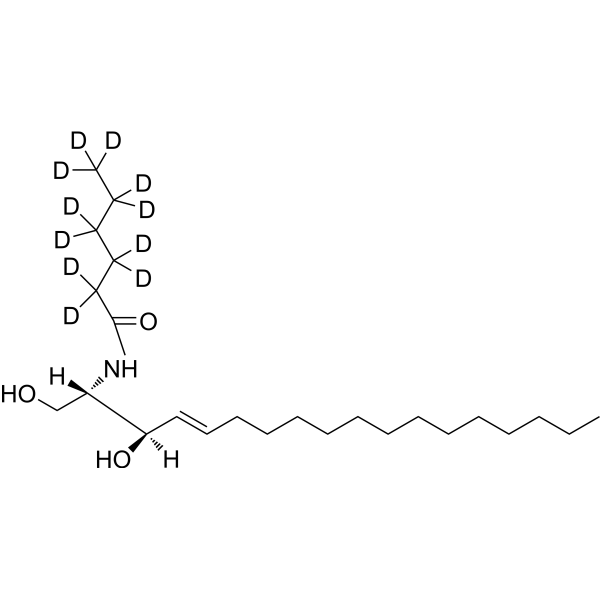
C6 Ceramide-d11 is deuterated labeled C6 Ceramide (HY-19542). C6-ceramide, a ceramide pathway activator, shows activity against a variety of cancer cell lines. C6-ceramide can be used as an adjuvant for chemotherapeutic agents, to enhance anti-tumor effects .
loading...
    loading...
Cat. No.: HY-168159
TLR7 agonist 27 (compound 24) is a potent TLR7 agonist with an EC50 of 238.1 nM. TLR7 agonist 27 shows weak agonistic activity against NOD2 (nucleotide-binding oligomerization domain 2) (EC50 of 6.2 μM). TLR7 agonist 27 is a potent immunostimulant, and can be used as a vaccine adjuvant and/or immunotherapeutic .
loading...
    loading...
Cat. No.: HY-108062
CAS No.: 623564-40-9
Purity:  95.77%
Research Areas:  

Infection

BLI-489 is a Beta-lactamase inhibitor. BLI-489 is an antibacterial adjuvant that significantly enhances the antibacterial efficacy of β-lactam antibiotics. BLI-489 blocks the hydrolytic activity of the enzyme by forming a stable intermediate in serine Beta-lactamase, or by coordinating with the binuclear Zn 2+ through an oxygen atom in metallo-Beta-lactamase. BLI-489 can be used for research on bacterial infections .
loading...
    loading...
Cat. No.: HY-178966
CAS No.: 3027712-31-5
Target:  

STING

Research Areas:  

Infection Inflammation/Immunology

STING agonist-48 is a potent STING agonist that exhibits STING-dependent activity in vitro (EC50 = 4.02 μM). STING agonist-48 prefers to bind with the transmembrane domain (TMD) over the cytosolic cyclic dinucleotide (CDN) domain. STING agonist-48 shows adjuvant efficacy, enhancing IgG and Th1/Th2 cytokine responses in humanized STING mice. STING agonist-48 can be used for the study of inflammation-related diseases .
loading...
    loading...
Cat. No.: HY-401721
CAS No.: 204852-67-5
Research Areas:  

Others

5-CNAC is an orally active enhancer of absorption, with no pharmacological activity on its own. 5-CNAC can significantly enhance the absorption efficiency of the drug (such as Salmon calcitonin (HY-P0090)) when administered together with it in the gastrointestinal tract. 5-CNAC binds reversibly and non-covalently to peptide drugs, protecting them from degradation by gastrointestinal enzymes, increasing their lipid solubility, promoting passive transcellular absorption, and not damaging the integrity of the intestinal epithelium. 5-CNAC can be used in the research of adjuvants for orally administered peptide agents .
loading...
    loading...
Cat. No.: HY-100754A
CAS No.: 2140301-97-7
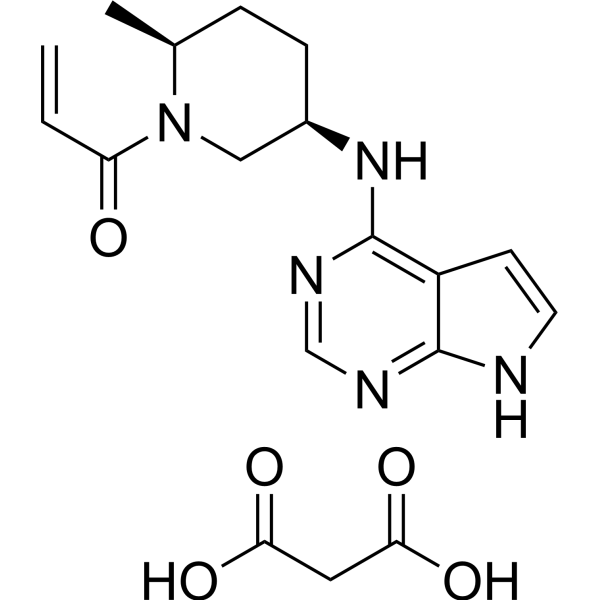
Synonyms: PF-06651600 malonate
Research Areas:  

Inflammation/Immunology

Ritlecitinib (PF-06651600) malonate is a highly selective, orally active, irreversible covalent JAK3 inhibitor (IC50=33 nM) without inhibitory activity towards JAK1, JAK2, and TYK2 (IC50 >10 μ M). Ritlecitinib malonate rapidly inactivates the JAK3 kinase, and blocks signaling and downstream STAT phosphorylation mediated by common gamma chain cytokines such as IL-2 and IL-15. Ritlecitinib malonate can inhibit Th1/Th17 cell differentiation and function, and effectively suppress preclinical animal models such as alopecia areata, adjuvant-induced arthritis (AIA), and experimental autoimmune encephalomyelitis (EAE) .
loading...
    loading...

