416 Results for "

proline editing

" in MedChemExpress (MCE) Product Catalog:
Products (416)

416 Results for "proline editing" in MCE Product Catalog:

  • Categories Recommended:
    More
1
1 Cited Publications
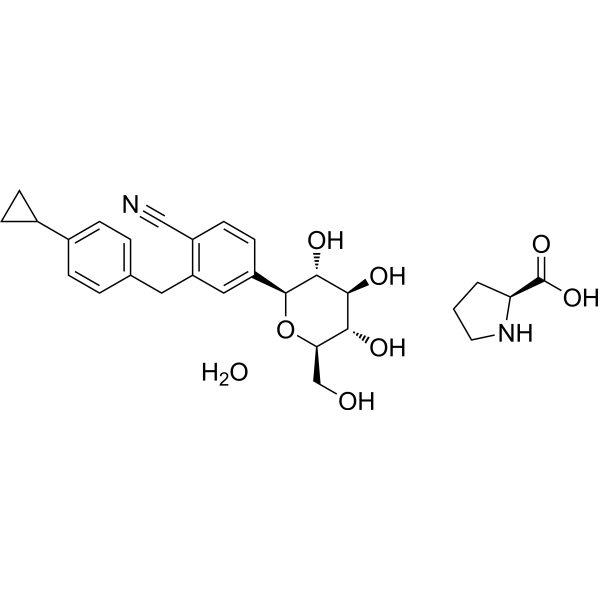
Cat. No.: HY-109018B
CAS No.: 1661838-94-3
Purity:  99.43%
Target:  

SGLT

Research Areas:  

Metabolic Disease

Velagliflozin proline hydrate is the clinical form of Velagliflozin (HY-109018). Velagliflozin is an oral sodium-glucose cotransporter 2 (SGLT2) inhibitor with antidiabetic activity. Velagliflozin reduces renal glucose reabsorption and stimulates glycosuria, which lowers blood sugar and insulin concentrations .
loading...
    loading...
1
1 Cited Publications
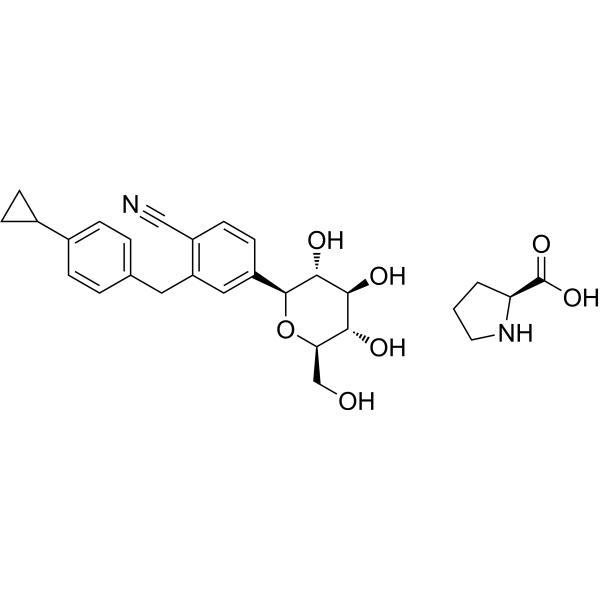
Cat. No.: HY-109018A
CAS No.: 1539295-26-5
Purity:  99.43%
Target:  

SGLT

Research Areas:  

Metabolic Disease

Velagliflozin proline is an oral sodium-glucose cotransporter 2 (SGLT2) inhibitor with antidiabetic activity. Velagliflozin proline reduces renal glucose reabsorption and stimulates glycosuria, which lowers blood sugar and insulin concentrations .
loading...
    loading...
1
1 Cited Publications
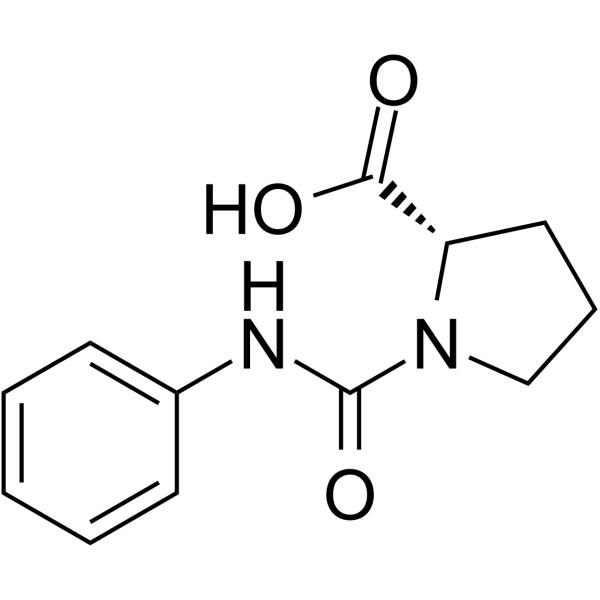
Cat. No.: HY-134145
CAS No.: 73096-22-7
Purity:  99.60%
Target:  

Fluorescent Dye

Research Areas:  

Neurological Disease

1-(Anilinocarbonyl)proline can be used to identify dual action probes in a cell model of Huntington .
loading...
    loading...
1
1 Cited Publications
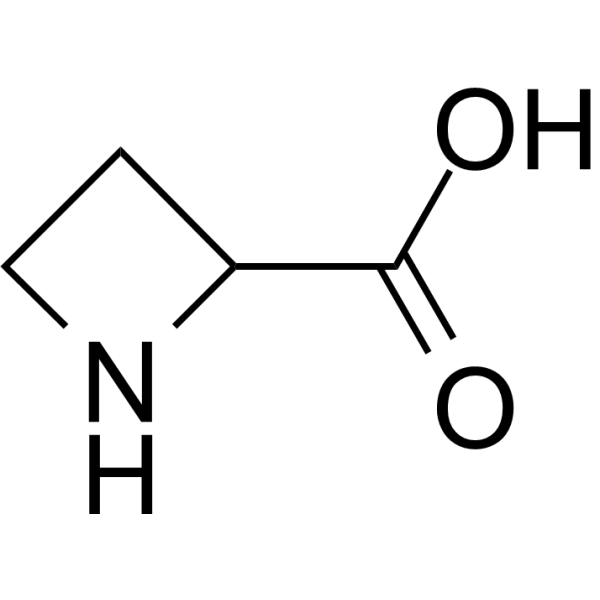
Cat. No.: HY-75308
CAS No.: 2517-04-6
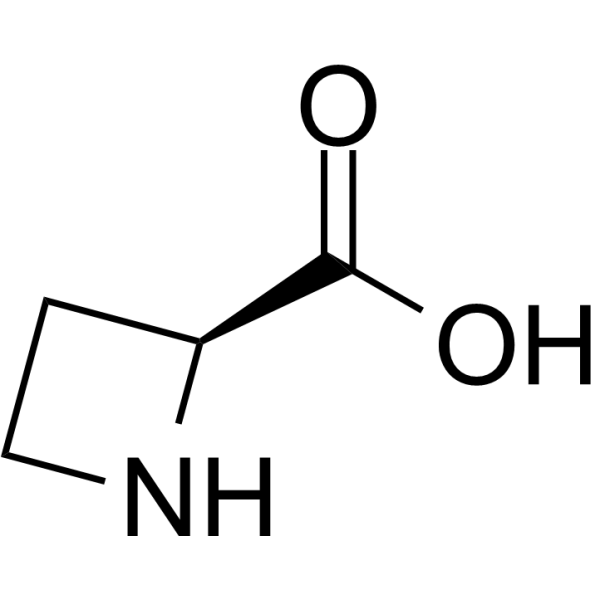
Azetidine-2-carboxylic acid is a non proteinogenic amino acid homologue of proline. Found in common beets. Azetidine-2-carboxylic acid can be misincorporated into proteins in place of proline in many species, including humans. Toxic and teratogenic agent .
loading...
    loading...
1
1 Cited Publications
Cat. No.: HY-142035
CAS No.: 58160-95-5
Purity:  99.70%
N-Propargylglycine is a brain-penetrant and orally active PRODH inhibitor. N-Propargylglycine covalently modifies enzyme-bound FAD and active site lysine, causing enzyme structural distortion, protein decay, and irreversible inhibition of proline and 4-hydroxyproline catabolism. N-Propargylglycine induces UPRmt, upregulates mitochondrial chaperones and YME1L1, enhances mitochondrial proteostasis, blocks astrocytic L-proline consumption, and abolishes L-proline’s ATP-maintaining and viability-protective effects. N-Propargylglycine stimulates neural processes, increases brain proline, hydroxyproline, and sarcosine levels, partially normalizes Huntington’s disease whole brain transcriptomes. N-Propargylglycine reduces hyperoxaluria, prevents calcium oxalate stone formation, reduces kidney tubular damage, and restores weight and survival in Grhpr knockout mice. N-Propargylglycine can be used for the research of breast cancer, neurodegenerative disorders, Huntington’s disease, and primary hyperoxaluria type 2 .
loading...
    loading...
1
1 Cited Publications
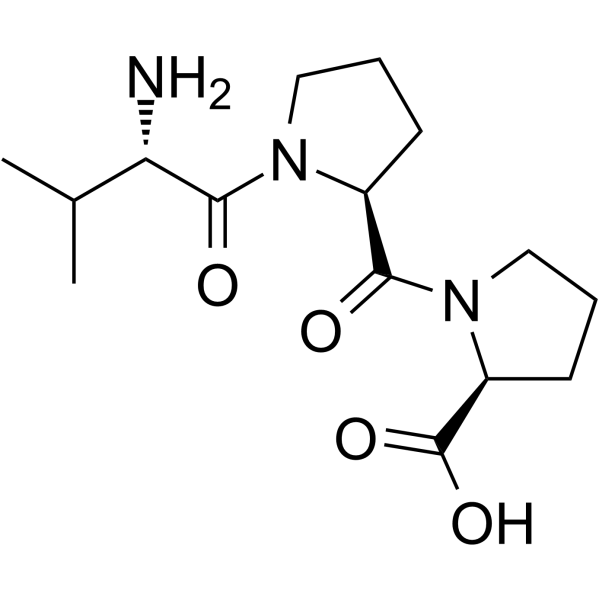
Cat. No.: HY-114161
CAS No.: 58872-39-2
Purity:  99.86%
H-Val-Pro-Pro-OH, a milk-derived proline peptides derivative, is an inhibitor of Angiotensin I converting enzyme (ACE), with an IC50 of 9 μM.
loading...
    loading...
1
1 Cited Publications
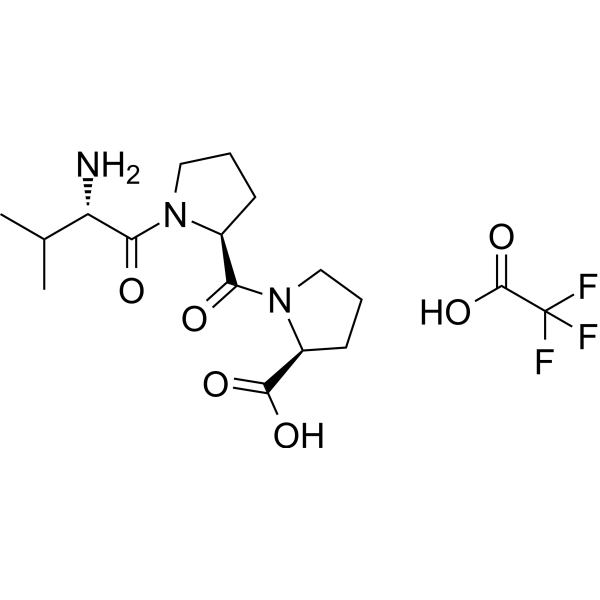
Cat. No.: HY-114161A
CAS No.: 2828433-08-3
Purity:  ≥98.0%
H-Val-Pro-Pro-OH (TFA), a milk-derived proline peptides derivative, is an inhibitor of Angiotensin I converting enzyme (ACE), with an IC50 of 9 μM.
loading...
    loading...
1
1 Cited Publications
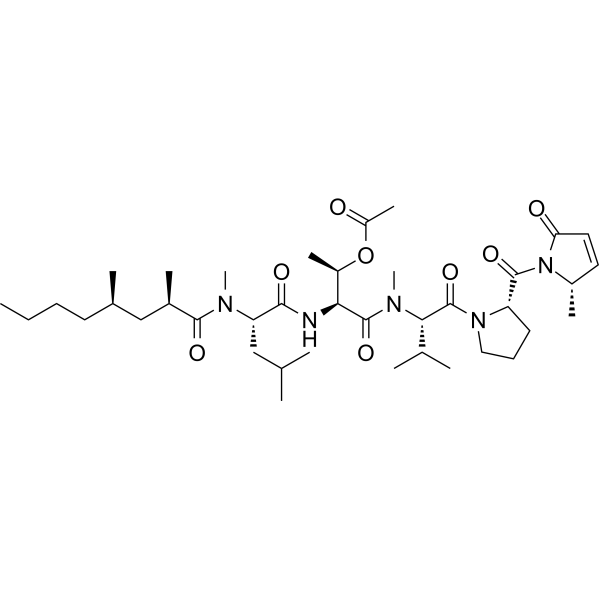
Cat. No.: HY-130999
CAS No.: 141205-32-5
Microcolin B is an extremely potent unusual acylpeptide, proline-containing potent immunosuppressant. Microcolin B is isolated from blue-green alga Lyngbya majuscule .
loading...
    loading...
1
1 Cited Publications
Cat. No.: HY-P77380
Purity:  ≥ 95%, as determined by reducing SDS-PAGE or Bis-Tris PAGE.
Synonyms: HRG; Histidine-proline-Rich Glycoprotein; Histidine Rich Glycoprotein; Histidine-proline Rich Glycoprotein; HPRG; Thrombophilia Due To Elevated HRG; Histidine-Rich Glycoprotein; THPH11; HRGP
Species:  
Human
Source:  
HEK293
loading...
    loading...
1
1 Cited Publications
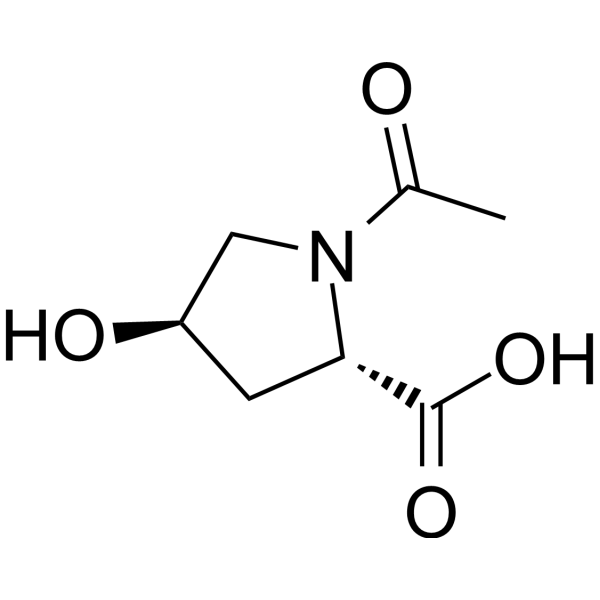
Cat. No.: HY-17490
CAS No.: 33996-33-7
Synonyms: N-Acetyl-L-hydroxyproline
Oxaceprol (N-Acetyl-L-hydroxyproline), an orally active derivative of L-proline, possesses distinct anti-inflammatory activity. Oxaceprol is usually used for the research of osteoarthritis and rheumatoid arthritis .
loading...
    loading...
1
1 Cited Publications
Cat. No.: HY-156257
CAS No.: 3032393-24-8
Purity:  98.90%
Target:  

DNA/RNA Synthesis

Research Areas:  

Cancer

UNC9512 is a selective 53BP1 inhibitor with an IC50 of 0.46 μM, and a Kd values of 0.17 μM. UNC9512 binds 53BP1 and its tandem Tudor domain, disrupts histone H4 interaction, and inhibits 53BP1 activity. UNC9512 can be used as a probe for DNA damage repair and Gene editing .
loading...
    loading...
1
1 Cited Publications
Cat. No.: HY-E70005I
CAS No.: 9001-12-1
Synonyms: Type VI collagenase
Target:  

MMP

Research Areas:  

Cancer

Collagenase, Type VI (EC 3.4.24.3) is a collagenase that can degrade type VI collagen. Type VI collagen is a component of cell membranes in various tissues (such as skin, heart, blood vessels, cartilage, and synovial fluid). Excessive collagenase can cause extracellular matrix lesions. Collagenase is also a biomarker for tumor invasion and metastasis. Collagenase, Type VI can specifically act on the peptide bond between proline and glycine. This feature can be used to quickly and sensitively detect its concentration level in experiments using corresponding modified electrodes .
loading...
    loading...
1
1 Cited Publications
Cat. No.: HY-N2368
CAS No.: 499-04-7
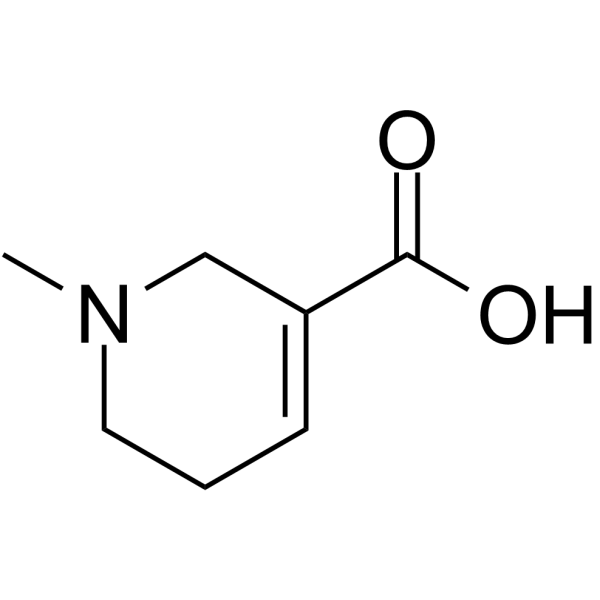
Arecaidine is a GABA transport system inhibitor. Arecaidine inhibits the proliferation of oral mucosal fibroblasts, increases the secretion of IL-6, TGF-β and TNF-α in cells, downregulates the expression of PPAR-γ and PCK1 in cells, and upregulates the expression of TGF-β1 . Arecaidine inhibits the uptake of γ-aminobutyric acid and β-alanine by the central nervous system of cats . Arecaidine inhibits hPAT1-mediated L-[ 3H]proline uptake in cells. Arecaidine can be used in research related to neurological diseases .
loading...
    loading...
1
1 Cited Publications
Cat. No.: HY-N2368A
CAS No.: 6018-28-6
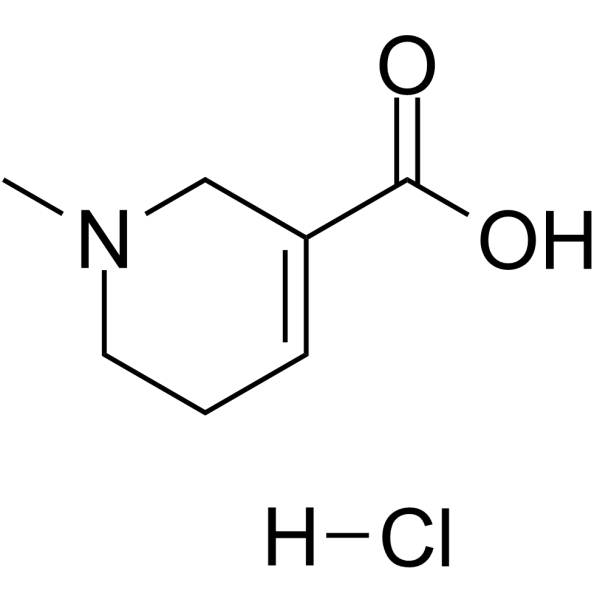
Arecaidine hydrochloride is a GABA transport system inhibitor. Arecaidine hydrochloride inhibits the proliferation of oral mucosal fibroblasts, increases the secretion of IL-6, TGF-β and TNF-α in cells, downregulates the expression of PPAR-γ and PCK1 in cells, and upregulates the expression of TGF-β1 . Arecaidine hydrochloride inhibits the uptake of γ-aminobutyric acid and β-alanine by the central nervous system of cats . Arecaidine hydrochloride inhibits hPAT1-mediated L-[ 3H]proline uptake in cells. Arecaidine hydrochloride can be used in research related to neurological diseases .
loading...
    loading...
1
1 Cited Publications
Cat. No.: HY-N2368B
CAS No.: 6013-57-6
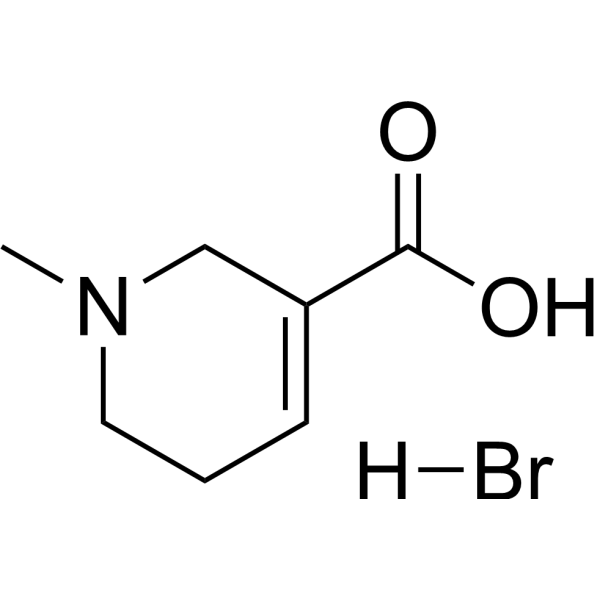
Arecaidine hydrobromide is a GABA transport system inhibitor. Arecaidine hydrobromide inhibits the proliferation of oral mucosal fibroblasts, increases the secretion of IL-6, TGF-β and TNF-α in cells, downregulates the expression of PPAR-γ and PCK1 in cells, and upregulates the expression of TGF-β1 . Arecaidine hydrobromide inhibits the uptake of γ-aminobutyric acid and β-alanine by the central nervous system of cats . Arecaidine hydrobromide inhibits hPAT1-mediated L-[ 3H]proline uptake in cells. Arecaidine hydrobromide can be used in research related to neurological diseases .
loading...
    loading...
1
1 Cited Publications
Cat. No.: HY-W050044
CAS No.: 2133-34-8
L-Azetidine-2-carboxylic acid is a proline analog. L-Azetidine-2-carboxylic acid upregulates the lipid autophagy marker LC3-II via activation of the PERK pathway. L-Azetidine-2-carboxylic acid increases pro-apoptotic BAX protein. L-Azetidine-2-carboxylic acid induces ATF6 cleavage and upregulates phosphorylated eIF2α levels. L-Azetidine-2-carboxylic acid induces ER stress, inducing protein misfolding and aggregation. L-Azetidine-2-carboxylic acid shows teratogenic, pro-inflammatory and pro-apoptotic effects .
loading...
    loading...
1
1 Cited Publications
Cat. No.: HY-P71917
Purity:  ≥ 95%, as determined by reducing SDS-PAGE.
Synonyms: P4HB; Protein Disulfide Isomerase Family A, Member 1; Prev. ERBA2L; Cellular Thyroid Hormone-Binding Protein; Prev. PO4DB; Prolyl 4-Hydroxylase, Beta Polypeptide; PDIA1; Collagen Prolyl 4-Hydroxylase Beta; PDI; Procollagen-proline, 2-Oxoglutarate 4-Dioxyg
Species:  
Human
Source:  
E. coli
loading...
    loading...
1
1 Cited Publications
Cat. No.: HY-P77934
Purity:  ≥ 95%, as determined by reducing SDS-PAGE or Bis-Tris PAGE.
Synonyms: FAP; Prolyl Endopeptidase FAP; Fibroblast Activation Protein Alpha; Dipeptidyl Peptidase FAP; Seprase; FAPalpha; DPPIV; SIMP; 170 KDa Melanoma Membrane-Bound Gelatinase; CDNA FLJ60298, Highly Similar To Seprase; Gelatine Degradation Protease FAP; Fibroblast Activation Protein, Alpha; Integral Membrane Serine Protease; Serine Integral Membrane Protease; Post-proline Cleaving Enzyme; FAPA; Surface-Expressed Protease
Species:  
Mouse
Source:  
HEK293
loading...
    loading...
Cat. No.: HY-Y0252R
CAS No.: 147-85-3
L-Proline (Standard) is the analytical standard of L-Proline. This product is intended for research and analytical applications. L-Proline is one of the twenty amino acids used in living organisms as the building blocks of proteins.
loading...
    loading...
Cat. No.: HY-Y0252S
CAS No.: 201740-83-2
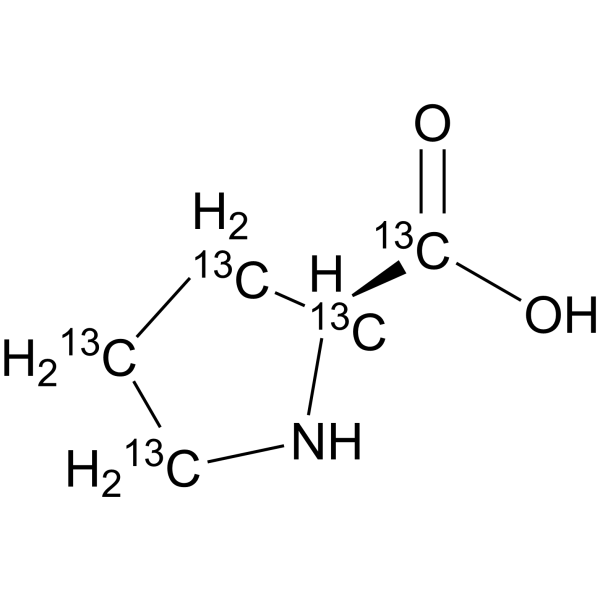
L-Proline- 13C5 is the 13C-labeled L-Proline. L-Proline is one of the twenty amino acids used in living organisms as the building blocks of proteins.
loading...
    loading...

