407 Results for "

indole ester

" in MedChemExpress (MCE) Product Catalog:
Products (407)

407 Results for "indole ester" in MCE Product Catalog:

Cat. No.: HY-P702162
Purity:  ≥ 90%, as determined by reducing SDS-PAGE.
Synonyms: IDO1; indoleamine-Pyrrole 2,3-Dioxygenase; Prev. INDO; Indolamine 2,3 Dioxygenase; Prev. IDO; indole 2,3-Dioxygenase; IDO-1; indoleamine 2,3-Dioxygenase 1; indoleamine-Pyrrole 2,3 Dioxygenase
Species:  
Others
Source:  
E. coli
loading...
    loading...
Cat. No.: HY-P70679
Purity:  ≥ 90%, as determined by reducing SDS-PAGE.
Synonyms: IDO1; indoleamine-Pyrrole 2,3-Dioxygenase; Prev. INDO; Indolamine 2,3 Dioxygenase; Prev. IDO; indole 2,3-Dioxygenase; IDO-1; indoleamine 2,3-Dioxygenase 1; indoleamine-Pyrrole 2,3 Dioxygenase
Species:  
Human
Source:  
E. coli
loading...
    loading...
Cat. No.: HY-P72616
Purity:  ≥ 95%, as determined by reducing SDS-PAGE.
Synonyms: IDO1; indoleamine-Pyrrole 2,3-Dioxygenase; Prev. INDO; Indolamine 2,3 Dioxygenase; Prev. IDO; indole 2,3-Dioxygenase; IDO-1; indoleamine 2,3-Dioxygenase 1; indoleamine-Pyrrole 2,3 Dioxygenase
Species:  
Mouse
Source:  
E. coli
loading...
    loading...
Cat. No.: HY-P702163
Purity:  ≥ 90%, as determined by reducing SDS-PAGE.
Synonyms: IDO1; indoleamine-Pyrrole 2,3-Dioxygenase; Prev. INDO; Indolamine 2,3 Dioxygenase; Prev. IDO; indole 2,3-Dioxygenase; IDO-1; indoleamine 2,3-Dioxygenase 1; indoleamine-Pyrrole 2,3 Dioxygenase
Species:  
Others
Source:  
E. coli
loading...
    loading...
Cat. No.: HY-115004
CAS No.: 1006604-91-6
Target:  

FAAH

Research Areas:  

Neurological Disease

MM-433593 is a potent and selective inhibitor of fatty acid amide hydrolase-1 (FAAH-1) that is orally administered to inhibit pain, inflammation, and related disorders. Pharmacokinetic studies of MM-433593 in macaques revealed a biphasic elimination profile with a rapid distribution phase and a slower elimination phase, with a systemic clearance of 8-11 mL/min/kg. MM-433593 exhibits moderate oral bioavailability (14-21%) and its metabolism primarily involves oxidation of the methyl group on the indole ring, resulting in a variety of sulfate, glucuronide, or glutathione-conjugated metabolites .
loading...
    loading...
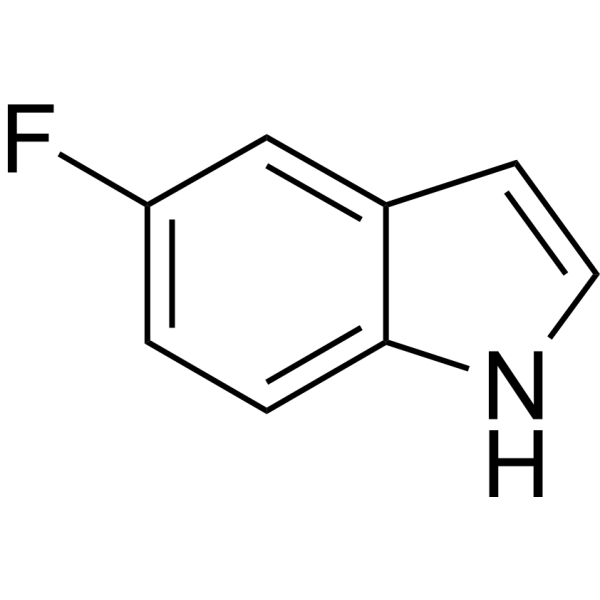
Cat. No.: HY-40156
CAS No.: 399-52-0
5-Fluoroindole is an orally active fluorinated indole derivative and antibacterial agent. 5-Fluoroindole induces ROS accumulation and triggers Apoptosis. 5-Fluoroindole inhibits the growth of pan-susceptible Mycobacterium tuberculosis (Mtb) H37Rv strains. 5-Fluoroindole has significant bactericidal activity against Pseudomonas syringae pv. actinidiae (Psa) with an EC50 of 15.34 μg/mL. 5-Fluoroindole introduces fluorine labeling for protein research. 5-Fluoroindole can be used in the study of tuberculosis and kiwifruit bacterial canker .
loading...
    loading...
Cat. No.: HY-B1021R
CAS No.: 1617-90-9
Vincamine (Standard) is the analytical standard of Vincamine. This product is intended for research and analytical applications. Vincamine is a monoterpenoid indole alkaloid extracted from the Madagascar periwinkle. Vincamine is a peripheral vasodilator and exerts a selective vasoregulator action on the brain microcapilar circulation . Vincamine is a GPR40 agonist and acts as a β-cell protector by ameliorating β-cell dysfunction and promoting glucose-stimulated insulin secretion (GSIS). Vincamine improves glucose homeostasis in vivo, and has the potential for the type 2 diabetes mellitus (T2DM) research .
loading...
    loading...
Cat. No.: HY-W115741S1
1-Phenylethanamine-d3 hydrochloride is the deuterated-labeled 1-Phenylethanamine hydrochloride. 1-Phenylethanamine is a potential central nervous system stimulant and a related compound of β-phenylethylamine. Due to the replacement of its benzene ring with an indole group, its brain glycogenolytic activity is significantly reduced. Therefore, 1-Phenylethanamine can be used to study the impact of the chemical structure of phenylethylamine derivatives on central nervous system activity. In addition, 1-Phenylethanamine can also be used to synthesize the tyrosine kinase (tyrosine kinase) inhibitor CLM3 (HY-164413).
loading...
    loading...
Cat. No.: HY-L0107V
13,236 compounds
Natural products are small molecules produced naturally by any organism including primary and secondary metabolites. Nowadays, new drugs based on Natural products are successfully applied to treat tumors, viral and bacterial diseases, and nervous disorders. In response to the current drug discovery demand, we created this natural product-like compound library with 13,236 in-stock synthetic compounds similar to natural ones. The library was designed by 2D fingerprint similarity filtering, chemical descriptor-based and natural-likeness scoring selection. These compounds are useful tools for high throughput screening (HTS) and high content screening (HCS) programs.
Cat. No.: HY-124253
CAS No.: 1147823-21-9
Target:  

p97

Research Areas:  

Cancer

SMDC818909 is an indole amide-derived uncompetitive inhibitor targeting p97 AAA+ ATPase, with an IC50 of 3.5 μM and a Ka of 9.1 μM. SMDC818909 binds to the D2 ATPase domain of p97, preferentially associates with the ADP-bound conformation of p97, allosterically blocks the ATP hydrolysis cycle of p97, and inhibits its mediated intracellular protein homeostasis regulatory function. SMDC818909 is applied to the research and development of p97-targeted antitumor drugs, as well as studies on cancer-related proteotoxic stress mechanisms .
loading...
    loading...
Cat. No.: HY-L071
594 compounds

Alkaloids are a large and complex group of cyclic compounds that contain N. About 2,000 different alkaloids have been isolated. Important alkaloids include morphine, strychnine, atropine, colchicine, ephedrine, quinine, and nicotine. Alkaloids are useful as diet ingredients, supplements, and pharmaceuticals, in medicine and in other applications in human life. They showed anti-inflammatory, anticancer, analgesics, local anesthetic and pain relief, neuropharmacologic, antimicrobial, antifungal, and many other activities. Alkaloids are also important compounds in organic synthesis for searching new semisynthetic and synthetic compounds with possibly better biological activity than parent compounds.

MCE designs a unique collection of 594 alkaloids that all come from natural products. MCE Alkaloids Library is a useful tool for drug discovery that can be used for high throughput screening (HTS) and high content screening (HCS).

Cat. No.: HY-122189
CAS No.: 3512-87-6
Synonyms: (-)-Akuammine; Vincamajoridine
Target:  

Others

Research Areas:  

Neurological Disease

Akuammine is an indole alkaloid that has been found in Picralima nitida and has analgesic activity. It selectively binds to the μ- and κ-opioid receptors over the δ-opioid receptor (Kis=0.3, 1.68, and 10.4 μM for the human receptors, respectively). Akuammine inhibits forskolin-induced cAMP production in HEK293 cells expressing human μ- or κ-opioid receptors (IC50s=2.6 and 0.073 μM, respectively). It increases the latency to withdrawal in the tail-flick or hot plate test in mice when administered at a dose of 60 mg/kg.
loading...
    loading...
Cat. No.: HY-19699
CAS No.: 86-86-2
Synonyms: NAAM; 1-Naphthaleneacetamide; α-Naphthylacetamide
1-Naphthylacetamide is an orally active nonsteroidal anti-inflammatory agent (NAIA) and also an indole-type auxin plant growth regulator. 1-Naphthylacetamide inhibits inflammatory response-related pathways and modulates plant hormone signaling, exhibiting anti-inflammatory, local anesthetic, antispasmodic, analgesic, and diuretic activities. 1-Naphthylacetamide promotes plant cell expansion, differentiation, and fruit enlargement. Additionally, 1-Naphthylacetamide induces central nervous system (CNS) depression in mice, characterized by reduced spontaneous activity, decreased irritability, decreased muscle tone, and attenuated ear-cuff reflex, ipsilateral flexor reflex, and corneal reflex [1][2].
loading...
    loading...
Cat. No.: HY-W115741S
CAS No.: 474267-40-8
Synonyms: (±)-1-Phenylethylamine-d3; DL-alpha-Methylbenzylamine-d3
1-Phenylethanamine-d3 ((±)-1-Phenylethylamine-d3) is the deuterium labeled 1-Phenylethanamine (HY-W012848). 1-Phenylethanamine is a potential central nervous system stimulant and a related compound of β-phenylethylamine. Due to the replacement of its benzene ring with an indole group, its brain glycogenolytic activity is significantly reduced. Therefore, 1-Phenylethanamine can be used to study the impact of the chemical structure of phenylethylamine derivatives on central nervous system activity. In addition, 1-Phenylethanamine can also be used to synthesize the tyrosine kinase (tyrosine kinase) inhibitor CLM3 (HY-164413).
loading...
    loading...
Cat. No.: HY-W001160R
CAS No.: 1953-54-4
5-Hydroxyindole (Standard) is the analytical standard of 5-Hydroxyindole (HY-W001160). This product is intended for research and analytical applications. 5-Hydroxyindole is an orally active hydroxylated indole and tryptophan metabolite. 5-Hydroxyindole activates α7 nicotinic acetylcholine receptors and acts on intestinal L-type calcium channels. 5-Hydroxyindole slows down the desensitization of 5-HT3 receptor-mediated ion currents in cells. 5-Hydroxyindole causes convulsions and loss of consciousness. 5-Hydroxyindole is used in the study of neuroblastoma, schizophrenia, and diseases related to intestinal motility disorders .
loading...
    loading...
Cat. No.: HY-118197
CAS No.: 130007-52-2
Target:  

FLAP

Research Areas:  

Inflammation/Immunology

L-669083 is a leukotriene biosynthesis inhibitor whose structure is based on a mixture of indole and quinoline. In this study, a potent radioiodinated photoaffinity analog of L-689,037, [125I] L-691,678, was developed and characterized for immunoprecipitation studies showing that the quindole series of leukotriene biosynthesis inhibitors directly interact with FLAP. In addition, the results showed that MK-886, L-674,573, and L-689,037 competed with [125I] L-691,678 and [125I] L-669083 for binding to FLAP in a concentration-dependent manner, indicating that these three leukotriene biosynthesis inhibitors share a binding site on FLAP, further demonstrating that FLAP is a suitable target for structurally diverse leukotriene biosynthesis inhibitors.
loading...
    loading...
Cat. No.: HY-126638
CAS No.: 75731-43-0
Synonyms: NSC 324645
Marcfortine A is an indole alkaloid originally isolated from P. roqueforti. It has nematocidal activity against the parasitic nematode H. contortus (LD99=0.06 μg/mL) and inhibits motility of adult worms (EC50=2 μM). Marcfortine A eliminates H. contortus, T. colubriformis, and O. ostertagi from experimentally infected jirds (ED95s=0.33, 0.11, and 2.5 mg/animal, respectively). It dose-dependently inhibits nicotine-induced calcium mobilization in SH-SY5Y and TE-671 cells expressing α3 subunit-containing human nicotinic acetylcholine receptors (nAChRs) and muscle-type nAChRs, respectively.
loading...
    loading...
Cat. No.: HY-N9164
CAS No.: 62874-52-6
Hecubine is a monoterpene indole alkaloid found in Ervatamia ocinalis. Hecubine activates TREM2 expression, reduces LPS (HY-D1056)-stimulated inammatory cytokines (TNF-α、IL-6、IL-1β) overexpression, as well as suppresses the levels of TLR4-, MyD88-, MAPK/PI3K/AKT- and NF-κB-related proteins. Hecubin also exhibits antioxidative effect, reduces ROS production and activates of the Nrf2/HO-1 pathway. Hecubine rescues LPS-induced behavioral deficits in zebrash larvae. Hecubine can be used for the research of neural inflammation-associated central nervous system diseases .
loading...
    loading...
Cat. No.: HY-Y0136R
CAS No.: 771-51-7
3-Indoleacetonitrile (Standard) is the analytical standard of 3-Indoleacetonitrile. This product is intended for research and analytical applications. 3-Indoleacetonitrile is an indole derivative with anti-influenza activity. 3-Indoleacetonitrile is a plant hormone produced by cruxiferous vegetables. 3-Indoleacetonitrile exerts profound antiviral activity against a broad spectrum of influenza A viruses, HSV-1 and VSV viruses in vitro. 3-Indoleacetonitrile diminishes lung virus titers and alleviates lung lesions in vivo. 3-Indoleacetonitrile induces an increase in mitochondrial antiviral-signaling (MAVS) protein levels. 3-Indoleacetonitrile can be used in research for combating viral infections including COVID-19, HSV-1, and VSV .
loading...
    loading...
Cat. No.: HY-Y0136S1
CAS No.: 927182-31-8
3-Indoleacetonitrile-d4 is deuterium labeled 3-Indoleacetonitrile (HY-Y0136). 3-Indoleacetonitrile is an indole derivative with anti-influenza activity. 3-Indoleacetonitrile is a plant hormone produced by cruxiferous vegetables. 3-Indoleacetonitrile exerts profound antiviral activity against a broad spectrum of influenza A viruses, HSV-1 and VSV viruses in vitro. 3-Indoleacetonitrile diminishes lung virus titers and alleviates lung lesions in vivo. 3-Indoleacetonitrile induces an increase in mitochondrial antiviral-signaling (MAVS) protein levels. 3-Indoleacetonitrile can be used in research for combating viral infections including COVID-19, HSV-1, and VSV.
loading...
    loading...

