496 Results for "

bark exudates

" in MedChemExpress (MCE) Product Catalog:
Products (496)

496 Results for "bark exudates" in MCE Product Catalog:

Cat. No.: HY-N1381R
CAS No.: 13137-64-9
Periplocin (Standard) is the analytical standard of Periplocin. This product is intended for research and analytical applications. Periplocin is a cardiotonic steroid isolated from root-bark Periploca sepium Bunge. Periplocin promotes tumor cell apoptosis and inhibits tumor growth. Periplocin has the potential to facilitate wound healing through the activation of Src/ERK and PI3K/Akt pathways mediated by Na/K-ATPase .
loading...
    loading...
Cat. No.: HY-N21945
CAS No.: 19086-75-0
Castalin is a polyphenolic anticancer compound isolated and identified from the bark or nut shells of Castanea sativa Mill. Castalin induces DNA damage by increasing ROS to activate CHK1, while recruiting 53BP1/RIF1 and activating DNA-PKcs to initiate the NHEJ pathway for DNA repair. Castalin can be used in research related to cervical cancer and breast cancer .
loading...
    loading...
Cat. No.: HY-N0242R
CAS No.: 28808-62-0
Fraxinellone (Standard) is the analytical standard of Fraxinellone. This product is intended for research and analytical applications. Fraxinellone is isolated from the root bark of the Rutaceae plant, Dictamnus dasycarpus. Fraxinellone is a PD-L1 inhibitor and inhibits HIF-1α protein synthesis without affecting HIF-1α protein degradation. Fraxinellone has the potential to be a valuable candidate for cancer treatment by targeting PD-L1 .
loading...
    loading...
Cat. No.: HY-N15614
CAS No.: 471-71-6
Cassamine is a diterpenoid compound that can be isolated from the bark of Erythrophleum fordii. Cassamine exhibits certain cytotoxicity against non-small cell lung cancer cell lines, with IC50 values of 3.4, 2.1, and 1.9 μM against A549, NCI-H1975, and NCI-H1299, respectively. Cassamine has antitumor activity and can be used in the research of lung cancer and other tumors .
loading...
    loading...
Cat. No.: HY-N16480
CAS No.: 651750-97-9
Synonyms: Lindetannin trimer
Lindetannin (Lindetannin trimer) is an A-type trimer of proanthocyanidin (HY-N0794) found in the bark of Cinnamomum trees. Proanthocyanidin are a class of polyphenolic that are widely distributed in higher plants, consisted of an electrophilic flavanyl unit. Proanthocyanidin can be used as antioxidant and anti-cancer agent. Proanthocyanidin also exhibit anti-inflammatory, cardioprotective, antibacterial and antifungal properties, which can be used in the treatment of chronic venous insufficiency, capillary fragility, sunburn and retinopathy .
loading...
    loading...
Cat. No.: HY-N19724
CAS No.: 62346-20-7
Buddledin A is a 5-LOX inhibitor (IC50 = 50.4 μM) and a COX inhibitor (IC50 = 13.7 μM). Buddedin A inhibits arachidonic acid metabolism via the 5-LOX and COX pathways, suppresses fungal growth, and exerts toxic effects on fish. Buddedin A may play an ecological role in protecting plant roots and stem barks from fungal infection. Buddedin A can be used in studies related to fungal infections .
loading...
    loading...
Cat. No.: HY-W017158R
CAS No.: 495-78-3
Melilotic acid (Standard) is an analytical standard for Melilotic acid (HY-W017158). This product is intended for research and analytical applications. Melilotic acid (3-(2-hydroxyphenyl)-propanoic acid) is an orally active compound. Melilotic acid can be isolated from the bark of Chinese cinnamon. Melilotic acid has a significant inhibitory effect on gastric ulcers induced by serotonin (HY-B1473A), phenylbutazone (HY-B0230), ethanoyl, and water immersion stress .
loading...
    loading...
Cat. No.: HY-117651R
CAS No.: 16518-94-8
Research Areas:  

Cancer

Quinine (sulfate hydrate) (Standard) is the analytical standard of Quinine (sulfate hydrate). This product is intended for research and analytical applications. Quinine sulfate hydrate (2:1:4) is an orally active alkaloid extracted from cinchona bark and can be used in anti-malarial studies. Quinine sulfate hydrate (2:1:4) is a potassium channel inhibitor that inhibits WT mouse Slo3 (KCa5.1) channel currents evoked by voltage pulses to +100?mV with an IC50 of 169 μM .
loading...
    loading...
Cat. No.: HY-D0143AR
CAS No.: 60-93-5
Quinine dihydrochloride (Standard) is the analytical standard of Quinine dihydrochloride (HY-D0143A). This product is intended for research and analytical applications. Quinine dihydrochloride is an orally active alkaloid extracted from cinchona bark, possessing various biological activities including antimalarial, antidengue virus (DENV), and anticancer properties. Quinine dihydrochloride is a potassium channel inhibitor that inhibits WT mouse Slo3 (KCa5.1) channel currents evoked by voltage pulses to +100 mV with an IC50 of 169 μM .
loading...
    loading...
Cat. No.: HY-D0143R
CAS No.: 130-95-0
Quinine (Standard) is the analytical standard of Quinine (HY-D0143). This product is intended for research and analytical applications. Quinineis an orally active alkaloid extracted from cinchona bark, possessing various biological activities including antimalarial, antidengue virus (DENV), and anticancer properties. Quinine is a potassium channel inhibitor that inhibits WT mouse Slo3 (KCa5.1) channel currents evoked by voltage pulses to +100 mV with an IC50 of 169 μM .
loading...
    loading...
Cat. No.: HY-N0188R
CAS No.: 531-75-9
Esculin (Standard) is the analytical standard of Esculin. This product is intended for research and analytical applications. Esculin is a fluorescent coumarin glucoside, the active ingredient in ash bark. Esculin has antidiabetic effects, improves cognitive impairment in experimental diabetic nephropathy (DN) via the MAPK signaling pathway, and exerts antioxidant stress and anti-inflammatory effects. Esculin also has anticancer, antibacterial, antiviral, neuroprotective, antithrombotic, and therapeutic properties for eye diseases .
loading...
    loading...
Cat. No.: HY-N0349S1
CAS No.: 1581694-95-2
Synonyms: Methyl 4-hydroxybenzoate-13C6
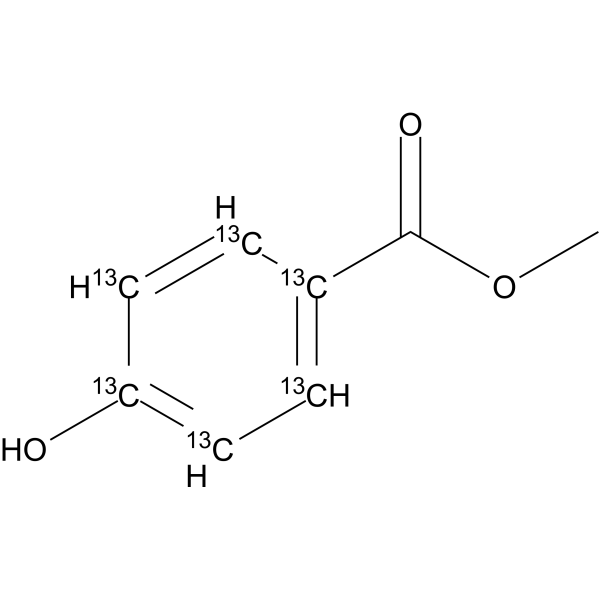
Methyl Paraben- 13C6 (Methyl 4-hydroxybenzoate- 13C6) is a 13C labeled Methyl Paraben (HY-N0349) . Methyl Paraben, isolated from the barks of Tsuga dumosa the methyl ester of p-hydroxybenzoic acid, is a standardized chemical allergen. Methyl Paraben is a stable, non-volatile compound used as an antimicrobial preservative in foods, agents and cosmetics. The physiologic effect of Methyl Paraben is by means of increased histamine release, and cell-mediated immunity .
loading...
    loading...
Cat. No.: HY-N0627
CAS No.: 16290-07-6
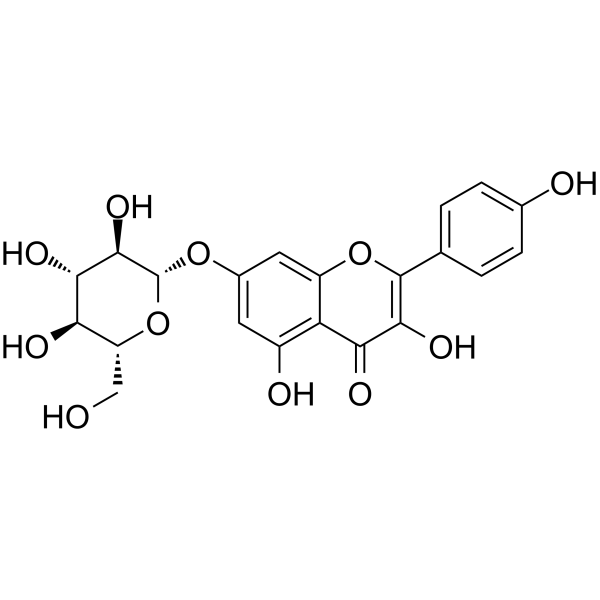
Kaempferol-7-O-β-D-glucopyranoside is a flavonoid glycoside. Kaempferol-7-O-β-D-glucopyranoside exists in the root bark of Cudrania tricuspidata. Kaempferol-7-O-β-D-glucopyranoside inhibits Cu 2+-induced lipid peroxidation of low-density lipoprotein. Kaempferol-7-O-β-D-glucopyranoside possesses antioxidant activity and scavenges DPPH free radicals .
loading...
    loading...
Cat. No.: HY-N10854
CAS No.: 130825-80-8
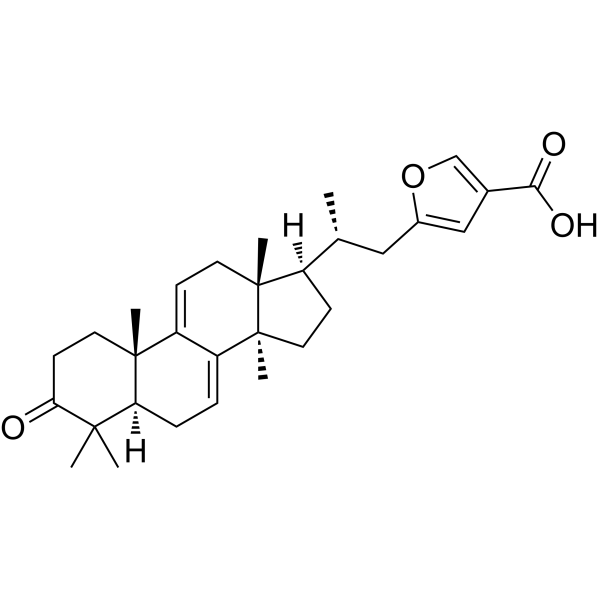
Lanosta-7,9(11),23,25(27)-tetraen-26-oic acid, 23,27-epoxy-3-oxo- is a lanosterane type compound. Lanosta-7,9(11),23,25(27)-tetraen-26-oic acid, 23,27-epoxy-3-oxo- can be isolated from Tu-Jin-Pi (the root bark of Pseudolarix kaempferi) .
loading...
    loading...
Cat. No.: HY-N16683
CAS No.: 104594-69-6
Galangin 5-methyl ether is a potentially active compound that can be naturally extracted from propolis. Propolis is a resinous substance collected by bees from the leaf buds and bark cracks of various trees, enriched with saliva and enzyme secretions. The propolis extract containing Galangin 5-methyl ether has pharmacological activities such as antibacterial, antiviral, and anti-inflammatory effects, and can be used in research related to cold syndromes, skin diseases, and oral inflammation .
loading...
    loading...
Cat. No.: HY-N2056
CAS No.: 17019-92-0
Synonyms: 11-Keto-β-boswellic acid
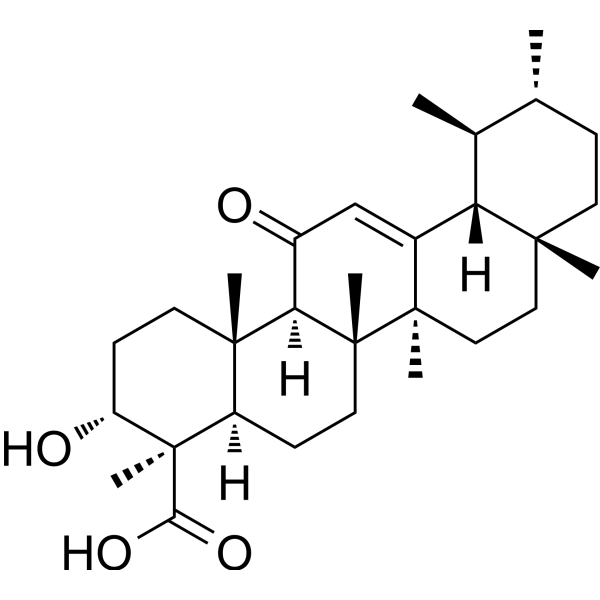
11-Keto-beta-boswellic acid (11-Keto-β-boswellic acid) is a pentacyclic triterpenic acid of the oleogum resin from the bark of the Boswellia serrate tree, popularly known as Indian Frankincense. 11-Keto-beta-boswellic acid has the anti-inflammatory activity is primarily due to inhibit 5-lipoxygenase (5-LOX) and subsequent leukotriene and nuclear factor-kappa B (NF-κB) activation and tumor necrosis factor alpha generation production .
loading...
    loading...
Cat. No.: HY-N21864
CAS No.: 1303438-53-0
Cathayanon J is a flavanone natural product with 2R configuration, which is found in the stem bark of Morus cathayana. Cathayanon J exhibits weak cytotoxicity against A549, Bel 7402, BGC-823, HCT-8 and A2780 human cancer cells, with IC50 values of 4.67, 5.95, 6.70, 5.86 and 5.79 μg/mL, respectively. Cathayanon J can be used in cancer-related research .
loading...
    loading...
Cat. No.: HY-N3426A
CAS No.: 2097138-89-9
(2R)-Kazinol B is a prenylated flavane enantiomer found in the stem and root barks of Daphne giraldii, and it is also an isomer of Kazinol B (HY-N3426). (2R)-Kazinol B exerts selective cytotoxicity against liver cancer cells, induces apoptosis via both intrinsic and extrinsic pathways, and triggers protective autophagy through AMPK activation. (2R)-Kazinol B can be used in the research of liver cancer .
loading...
    loading...
Cat. No.: HY-W010668R
CAS No.: 6119-70-6
Quinine (sulfate hydrate) (Standard) is the analytical standard of Quinine (sulfate hydrate). This product is intended for research and analytical applications. Quinine sulfate hydrate (2:1:4) is an orally active alkaloid extracted from cinchona bark and can be used in anti-malarial studies. Quinine sulfate hydrate (2:1:4) is a potassium channel inhibitor that inhibits WT mouse Slo3 (KCa5.1) channel currents evoked by voltage pulses to +100?mV with an IC50 of 169 μM .
loading...
    loading...
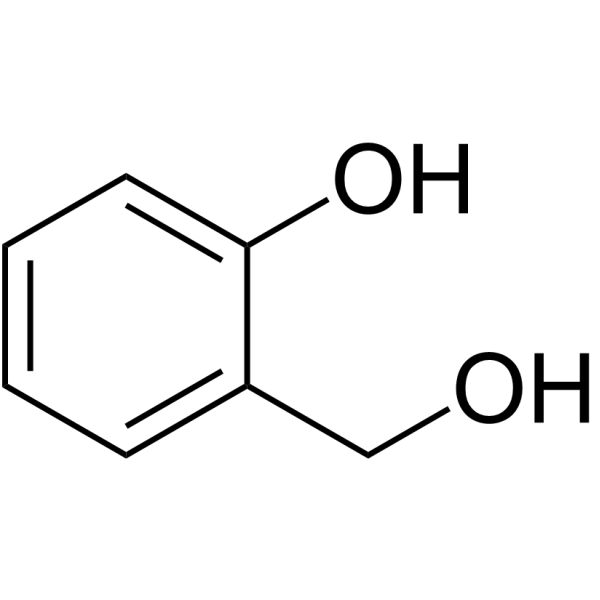
Cat. No.: HY-B1419
CAS No.: 90-01-7
Synonyms: 2-Hydroxybenzyl alcohol; Saligenin
Salicyl alcohol (2-Hydroxybenzyl alcohol; Saligenin) is a phenolic alcohol-type topical anesthetic and strong sensitizer with antiseptic, antibacterial and antipyretic activities. Salicyl alcohol serves as a precursor for salicin synthesis. Salicyl alcohol induces contact dermatitis and eczematous skin reactions, and is a well-known allergen identified in phenolic resins. Salicyl alcohol is isolated from the barks of European aspen (Populus tremula), rowan (Sorbus aucuparia) and willow (Salix spp.). Salicyl alcohol is used in studies related to allergic contact dermatitis .
loading...
    loading...

