509 Results for "

membrane potential

" in MedChemExpress (MCE) Product Catalog:
Products (509)

509 Results for "membrane potential" in MCE Product Catalog:

Cat. No.: HY-17001R
CAS No.: 75507-68-5
Synonyms: D 9998 Maleate (Standard)
Flupirtine Maleate (Standard) is the analytical standard of Flupirtine Maleate (HY-17001). This product is intended for research and analytical applications. Flupirtine Maleate is an orally active, blood-brain barrier-crossing non-opioid analgesic and neuroprotective agent. Flupirtine Maleate is a neuronal potassium channel opener (Kv7 activator), a NMDA receptor antagonist and a GABA receptor activator. Flupirtine Maleate stabilizes blood-brain-barrier integrity, reduces oxidative stress and brain leukocyte infiltration, enhances angioneurogenesis, suppresses calcium influx, stabilizes neuronal resting membrane potential, and counteracts focal cerebral ischemia. Flupirtine Maleate exhibits analgesic, muscle relaxant properties, protects neurons from excitotoxic, ischemic, or cytokine-mediated death. Flupirtine Maleate functions as a non-opioid analgesic without antipyretic or antiphlogistic properties, shows no relevant affinity to opiate receptor. Flupirtine Maleate can be used for the research of focal cerebral ischemia, pain, Alzheimer’s disease, or multiple sclerosis .
loading...
    loading...
Cat. No.: HY-173007
CAS No.: 3050831-84-7
ALK/PI3K/AKT-IN-1 (Compound 45) inhibits the proliferation of cancer cell A549, H1975 and PC9 with an IC50 of 0.44, 0.83 and 1.51 μM. ALK/PI3K/AKT-IN-1 increases the expression of p21 and p27, inhibits the activity of CDK2 and p-Rb, arrests the cell cycle at G1 phase. ALK/PI3K/AKT-IN-1 inhibits the ALK/PI3K/AKT signaling pathway, promotes the depolarization of mitochondrial membrane potential, and inducing apoptosis in A549 cell. ALK/PI3K/AKT-IN-1 inhibits the formation and growth of A549 cell spheroids .
loading...
    loading...
Cat. No.: HY-18234
CAS No.: 55123-66-5
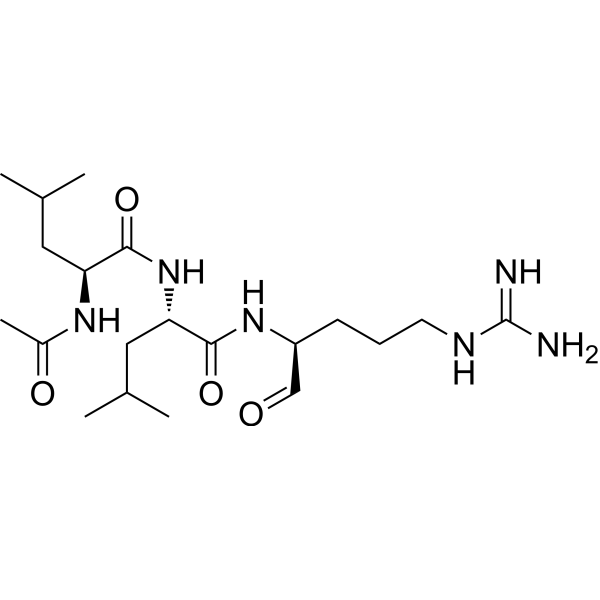
Leupeptin is a broad-spectrum protease inhibitor . By inhibiting the activation of the PTEN/PI3K/Akt/NF-κB/ERK1/2/p38 signaling pathway, Leupeptin significantly reduces LPS-induced NO and ROS production, mitochondrial membrane potential hyperpolarization, phagocytic activity, pro-inflammatory cytokine release, and M1 polarization in mouse peritoneal macrophages, and reverses autophagic flux impairment. It also decreases Concanavalin A (HY-P2149)-induced proliferation index of mouse splenic lymphocytes and the Th1/IL-10 and Th2/IL-10 cytokine ratios, thereby modulating innate and adaptive immune responses. Leupeptin inhibits blood coagulation and tumorigenesis in mouse skin. Leupeptin can be used in research on chronic inflammatory diseases and skin tumorigenesis .
loading...
    loading...
Cat. No.: HY-182469
FuBIG is an iminoguanidine derivative with neuroprotective effects. FuBIGL inhibits L-LDH activation and reduces lactate production. FuBIGL exerts protective effects on inflammatory nerve cells, upregulates the expressions of AMPK, pAMPK and FOXO3, and activates the AMPK pathway in cells. FuBIG exerts anti-inflammatory effects by reducing pro-inflammatory cytokines (IL-6, IL-1β, TNF-α) and increasing the anti-inflammatory cytokine IL-10. FuBIG maintains mitochondrial membrane potential, alleviates mitochondrial dysfunction, reduces ROS production, and relieves oxidative stress. FuBIG upregulates Bcl-2, downregulates Bax and Caspase-3, and inhibits cell apoptosis (apoptosis). FuBIG improves metabolic disorders in diabetic mice, decreases the levels of LDL-C, ALT and AST, and increases HDL-C level simultaneously. FuBIG can be used in the research of diabetic neuroinflammation .
loading...
    loading...
Cat. No.: HY-183478
CAS No.: 39740-82-4
Leupeptin hydrochloride is a broad-spectrum protease inhibitor . By inhibiting the activation of the PTEN/PI3K/Akt/NF-κB/ERK1/2/p38 signaling pathway, Leupeptin hydrochloride significantly reduces LPS-induced NO and ROS production, mitochondrial membrane potential hyperpolarization, phagocytic activity, pro-inflammatory cytokine release, and M1 polarization in mouse peritoneal macrophages, and reverses autophagic flux impairment. It also decreases Concanavalin A (HY-P2149)-induced proliferation index of mouse splenic lymphocytes and the Th1/IL-10 and Th2/IL-10 cytokine ratios, thereby modulating innate and adaptive immune responses. Leupeptin hydrochloride inhibits blood coagulation and tumorigenesis in mouse skin. Leupeptin hydrochloride can be used in research on chronic inflammatory diseases and skin tumorigenesis .
loading...
    loading...
Cat. No.: HY-184587
Antibacterial agent 356 is an orally active antibacterial agent. Antibacterial agent 356 binds to the Mrr1 transcription factor, inhibits the expression of the MDR1 efflux pump gene, reduces the efflux of Rhodamine 123, and increases the accumulation of intracellular substrates in drug-resistant Candida albicans cells. Antibacterial agent 356 induces mitochondrial membrane potential reduction and ROS accumulation in Candida albicans, inhibits the yeast-hypha transition process, and suppresses its biofilm formation. Antibacterial agent 356 reverses efflux pump-mediated drug resistance in azole-resistant Candida albicans with overexpressed Mdr1. Antibacterial agent 356 improves the survival rate of Galleria mellonella larvae infected with azole-resistant Candida albicans*CA632, and reduces the renal fungal load and renal tissue damage in infected BALB/c mice. Antibacterial agent 356 can be used for the research of Candida albicans infection .
loading...
    loading...
Cat. No.: HY-187473
PARP1-IN-58 is a ROS-responsive prodrug constructed based on a natural stilbene scaffold, and its active parent nucleus 24c acts as a selective PARP-1 inhibitor. PARP1-IN-58 only hydrolyzes to release the active parent compound in the high-ROS microenvironment of tumors; the active parent compound competitively binds to PARP-1 and blocks DNA single-strand damage repair, upregulates intracellular ROS levels, reduces mitochondrial membrane potential, and thereby induces cell cycle arrest and mitochondria-dependent apoptosis. PARP1-IN-58 exerts potent proliferation-inhibiting effects on BRCA-deficient breast cancer cells under simulated tumor oxidative stress conditions, and exhibits tumor growth inhibitory activity in breast cancer xenograft models. PARP1-IN-58 can be used in cancer-related research .
loading...
    loading...
Cat. No.: HY-187719
CAS No.: 318262-42-9
Target:  

Proton Pump Apoptosis

Research Areas:  

Cancer

NIK-12192 is an orally active inhibitor of vacuolar H +-ATPase. NIK-12192 reduces intracellular pH, decreases lysosomal volume and acidity, and alters the intracellular localization of V-ATPase by inhibiting proton pumps . NIK-12192 induces αvβ5 integrin polarization, cytoskeletal disruption, cell detachment, anoikis-mediated delayed apoptosis and necrosis, a delayed reduction in mitochondrial membrane potential, and lysosomal/phagosomal accumulation. NIK-12192 inhibits tumor cell migration, invasion, and three-dimensional spheroid growth, and enhances the activity of Topotecan (HY-13768). NIK-12192 suppresses spontaneous lung metastasis in vivo. NIK-12192 is used in research related to colon cancer, ovarian cancer, lung cancer, breast cancer, renal cancer, prostate cancer, acute myeloid leukemia, and melanoma .
loading...
    loading...
Cat. No.: HY-189384
CAS No.: 113062-58-1
PB1-3 is an orally active CDK4/CDK6 inhibitor with selective antiproliferative activity against 4T1 and MCF-7 breast cancer cells. PB1-3 directly binds to CDK4 and CDK6, downregulates total protein expression, reduces Rb phosphorylation, and induces G0/G1 phase arrest. PB1-3 induces ROS accumulation, mitochondrial membrane potential collapse, initiation of mitochondria-mediated intrinsic apoptosis, upregulation of the Bax/Bcl-2 ratio, and activation of cleaved caspase-3. PB1-3 inhibits tumor growth in a 4T1 orthotopic syngeneic mouse model. PB1-3 can be used for research related to triple-negative breast cancer .
loading...
    loading...
Cat. No.: HY-D1072
CAS No.: 53213-81-3
Synonyms: 3,3′-Dipentyloxacarbocyanine iodide
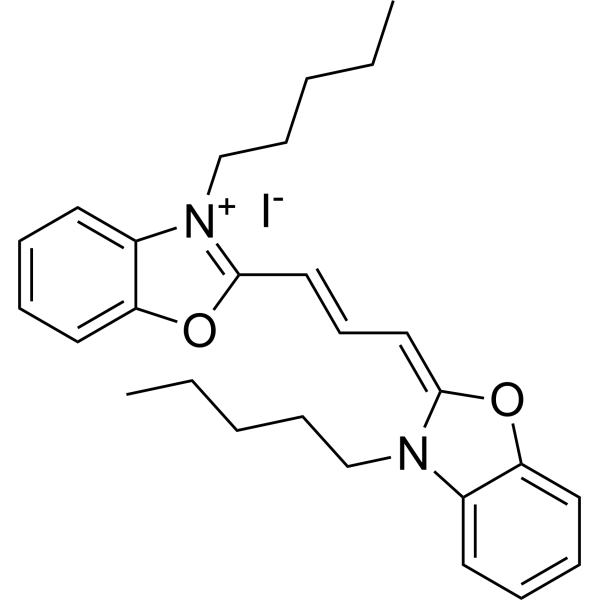
DiOC5(3) (3,3′-Dipentyloxacarbocyanine iodide) is a mitochondrial Fluorescent dye that alters membrane potential, and it also acts as an inhibitor of NADH-ubiquinone reductase (respiratory complex I). DiOC5(3) increases the NADH/NAD ratio and induces excessive production of ROS. DiOC5(3) induces Apoptosis. DiOC5(3) accumulates in the mitochondria of leukemia stem-like cells via organic anion-transporting polypeptides, specifically labels these cells, and inhibits their proliferation. DiOC5(3) enhances the cellular uptake of Hoechst 33342 (HY-15559), reduces Hoechst 33342-associated cytotoxicity, and improves the resolution of DNA content analysis by flow cytometry. DiOC5(3) shows no detectable fluorescence signal when excited in the 400-500 nm ultraviolet light range. DiOC5(3) is applicable to leukemia-related research .
loading...
    loading...
Cat. No.: HY-N3963
CAS No.: 82425-45-4
Synonyms: (+)-Gomisin M2
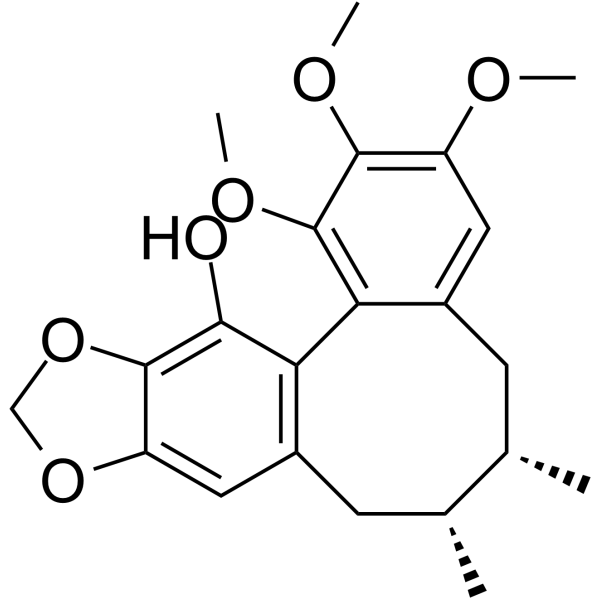
Gomisin M2 ((+)-Gomisin M2) is a lignan isolated from the fruits of Schisandra chinensis with oral availability. Gomisin M2 inhibits STAT1 phosphorylation as well as NF-κB p65 phosphorylation and nuclear translocation. Gomisin M2 reduces inflammatory cell infiltration, cytokine and chemokine expression, and serum IgE and IgG2a levels. Gomisin M2 inhibits MAPK phosphorylation, IκBα degradation, and NF-κB nuclear translocation in keratinocytes. Gomisin M2 induces apoptosis, mitochondrial membrane potential disruption, and cytochrome c release, and inhibits DNA synthesis and mammosphere formation through downregulation of Wnt/β-catenin. Gomisin M2 can be used for research on atopic dermatitis, psoriasis, breast cancer, liver injury, and multidrug-resistant mammary adenocarcinoma .
loading...
    loading...
Cat. No.: HY-N5008
CAS No.: 146100-02-9
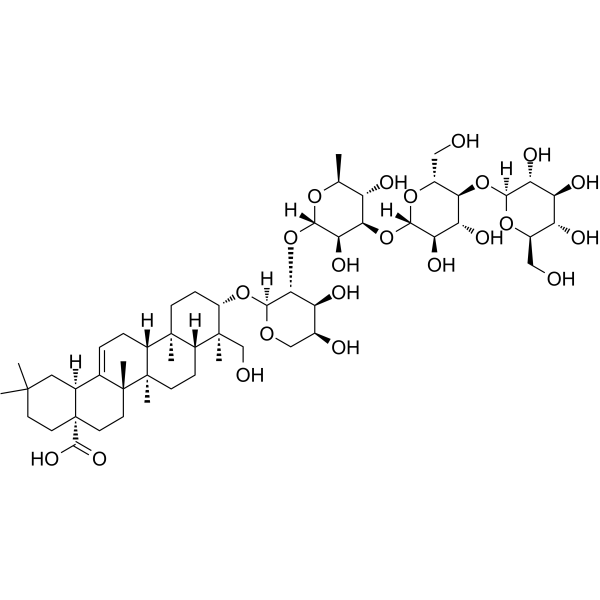
Macranthoside B is an apoptosis inducer with in vitro and in vivo anticancer activity. Macranthoside B induces autophagy and ferroptosis in cancer cells. Macranthoside B induces intracellular ROS accumulation, activates AMPK, inhibits mTOR and P70S6 kinase phosphorylation, and modulates Bcl-2/Bax expression. Macranthoside B activates caspase-3, caspase-9, and the intrinsic caspase cascade, induces PARP cleavage/degradation, and inhibits NRF2 signaling. Macranthoside B disrupts iron homeostasis via NCOA4-dependent ferritinophagy, up-regulates Lip-ROS, reduces mitochondrial membrane potential, and activates the JNK pathway. Macranthoside B can be used for the research of ovarian cancer, hepatoma, gastric carcinoma, breast carcinoma, colon carcinoma, glioma, melanoma, adenocarcinoma of the esophagogastric junction, and cervical cancer .
loading...
    loading...
Cat. No.: HY-N6799R
CAS No.: 36519-25-2
Neosolaniol (Standard) is the analytical standard of Neosolaniol (HY-N6799). This product is intended for research and analytical applications. Neosolaniol is an orally active type A trichothecene mycotoxin, and it is a metabolite of T-2 Toxin (HY-N6792) in human cancer cells and renal epithelial cells. Neosolaniol targets Bax, Bcl-2, caspase 3, caspase 8, and cytochrome c, thereby inducing apoptosis, emesis and anorexia. Neosolaniol reduces intracellular ATP levels, elevates ROS levels, decreases mitochondrial membrane potential, induces mitochondrial damage, and exerts toxicity on Leydig cells. Neosolaniol downregulates the expression of intestinal tight junction proteins in broilers and increases the load of Salmonella enteritidis in the cecum of broilers. Neosolaniol can be used in research related to anorexia, lymphoma, Fusarium melonis rot, and Salmonella infection .
loading...
    loading...
Cat. No.: HY-W709349S
Synonyms: D 9998-d6 hydrochloride
Flupirtine-d6 (D 9998-d6) hydrochloride is the deuterium labeled Flupirtine hydrochloride (HY-W709349). Flupirtine hydrochloride is an orally active, blood-brain barrier-crossing non-opioid analgesic and neuroprotective agent. Flupirtine hydrochloride is a neuronal potassium channel opener (Kv7 activator), a NMDA receptor antagonist and a GABA receptor activator. Flupirtine hydrochloride stabilizes blood-brain-barrier integrity, reduces oxidative stress and brain leukocyte infiltration, enhances angioneurogenesis, suppresses calcium influx, stabilizes neuronal resting membrane potential, and counteracts focal cerebral ischemia. Flupirtine hydrochloride exhibits analgesic, muscle relaxant properties, protects neurons from excitotoxic, ischemic, or cytokine-mediated death. Flupirtine hydrochloride functions as a non-opioid analgesic without antipyretic or antiphlogistic properties, shows no relevant affinity to opiate receptor. Flupirtine hydrochloride can be used for the research of focal cerebral ischemia, pain, Alzheimer’s disease, or multiple sclerosis .
loading...
    loading...
Cat. No.: HY-L923
9000 compounds

Ion channels are key proteins on the cell membrane that regulate the flow of ions across membranes. They participate in nearly all physiological processes, including nerve conduction, muscle contraction, heart rhythm, and pain perception. Abnormalities in their function can lead to various serious diseases such as arrhythmia, epilepsy, hypertension, neuropathic pain, and cancer. Therefore, ion channels are highly valuable drug targets—over 15% of approved drugs target ion channels currently, demonstrating their irreplaceable therapeutic value in cardiovascular, neurological, and analgesic fields.

MCE has collected a library of over 5,000 reported ion channel-related bioactive compounds targeting major sites such as Na+ channels, K+ channels, Ca2+ channels, GABA receptors, iGluRs, and others. Using AI models, these compounds are characterized through both 2D representations (molecular fingerprints, pharmacophores) and 3D representations (3D conformation) to screen for a collection of lead-like compounds highly similar to known active molecules. Additionally, an hERG channel prediction algorithm integrating XGB and ISE mapping strategy is employed to assess and exclude potential cardiotoxicity in the library.. This step significantly reduces safety risks in subsequent screenings, particularly for ion channel drug development related to cardiovascular systems (e.g., Nav1.5, Cav1.2), effectively minimizing failures due to hERG inhibition and serving as a valuable tool for ion channel drug screening.

Cat. No.: HY-121337
CAS No.: 61213-25-0
Purity:  99.61%
Synonyms: R-40244
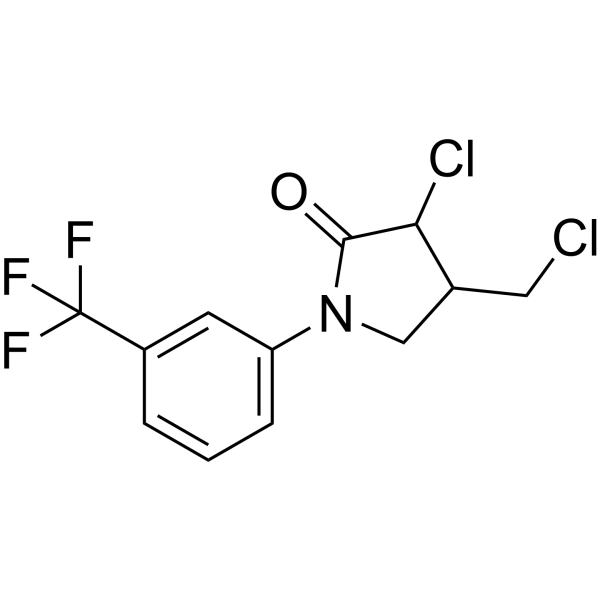
Flurochloridone (R-40244) is an orally active herbicide and an inducer of ER stress, apoptosis, and cytotoxicity. Flurochloridone upregulates GRP78 and activates the PERK-eIF2α-ATF4 UPR axis, ATF6, CHOP, Bax, and Bim. Flurochloridone decreases Akt, p-Akt, GSK3β, and p-GSK3β levels, and induces ROS, oxidative stress, γ-glutamyl cycle activation, and GSH accumulation. Flurochloridone inhibits mitochondrial respiration and ATP production while enhancing glycolysis and cell viability inhibition. Flurochloridone inhibits spermatogonial proliferation, spermatocyte meiosis, and sperm mitochondrial membrane potential, and induces Sertoli cell apoptosis and mitochondrial damage. Flurochloridone non-competitively binds phytoene desaturase, blocking phytoene desaturation and carotenoid synthesis, leading to leaf bleaching and phytotoxicity. Flurochloridone can be used for research on male reproductive toxicity, hepatotoxicity, and as a herbicide .
loading...
    loading...
Cat. No.: HY-168962
HDAC-IN-88 (Compound HJ-9) is the inhibitor for HDAC that inhibits HDAC6, HDAC1, HDAC2, HDAC8 and HDAC3 with IC50s of 0.226, 1.103, 2.308, 3.255 and 3.864 μM, respectively. HDAC-IN-88 inhibits the proliferation of cancer cell HepG2, HCT116 and MV4-11 with IC50 of 5.47, 9.78 and 0.38 μM, inhibits the migration of HCT116, arrests the cell cycle at G0/G1 phase, and induces apoptosis and autophagy in MV4-11. HDAC-IN-88 reduces ROS level and mitochondrial membrane potential. HDAC-IN-88 exhibits antimalarial activity that inhibits P. falciparum 3D7 with EC50 of 165 nM. HDAC-IN-88 also exhibits anti-angiogenic activity .
loading...
    loading...
Cat. No.: HY-17001AR
CAS No.: 56995-20-1
Synonyms: D 9998 (Standard)
Flupirtine (Standard) (D 9998 (Standard)) is the analytical standard of Flupirtine (HY-17001A). This product is intended for research and analytical applications. Flupirtine is an orally active, blood-brain barrier-crossing non-opioid analgesic and neuroprotective agent. Flupirtine is a neuronal potassium channel opener (Kv7 activator), a NMDA receptor antagonist and a GABA receptor activator. Flupirtine stabilizes blood-brain-barrier integrity, reduces oxidative stress and brain leukocyte infiltration, enhances angioneurogenesis, suppresses calcium influx, stabilizes neuronal resting membrane potential, and counteracts focal cerebral ischemia. Flupirtine exhibits analgesic, muscle relaxant properties, protects neurons from excitotoxic, ischemic, or cytokine-mediated death. Flupirtine functions as a non-opioid analgesic without antipyretic or antiphlogistic properties, shows no relevant affinity to opiate receptor. Flupirtine can be used for the research of focal cerebral ischemia, pain, Alzheimer’s disease, or multiple sclerosis .
loading...
    loading...
Cat. No.: HY-18234B
CAS No.: 24365-47-7
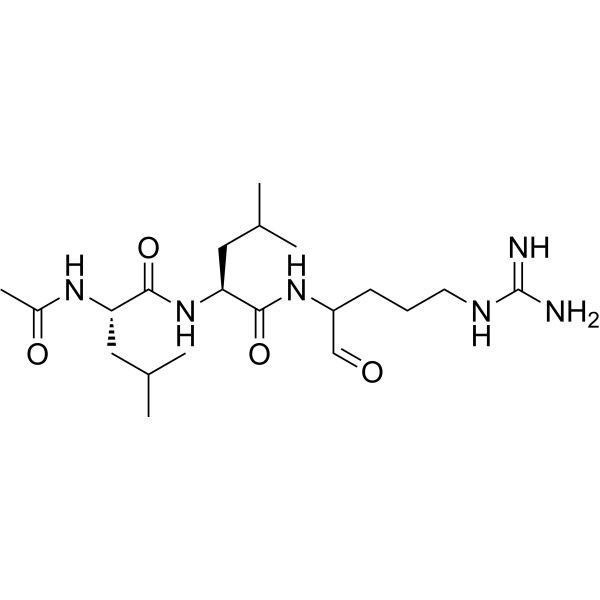
Leupeptin Ac-LL is a broad-spectrum protease inhibitor . By inhibiting the activation of the PTEN/PI3K/Akt/NF-κB/ERK1/2/p38 signaling pathway, Leupeptin Ac-LL significantly reduces LPS-induced NO and ROS production, mitochondrial membrane potential hyperpolarization, phagocytic activity, pro-inflammatory cytokine release, and M1 polarization in mouse peritoneal macrophages, and reverses autophagic flux impairment. It also decreases Concanavalin A (HY-P2149)-induced proliferation index of mouse splenic lymphocytes and the Th1/IL-10 and Th2/IL-10 cytokine ratios, thereby modulating innate and adaptive immune responses. Leupeptin Ac-LL inhibits blood coagulation and tumorigenesis in mouse skin. Leupeptin Ac-LL can be used in research on chronic inflammatory diseases and skin tumorigenesis .
loading...
    loading...
Cat. No.: HY-18234C
CAS No.: 24125-16-4
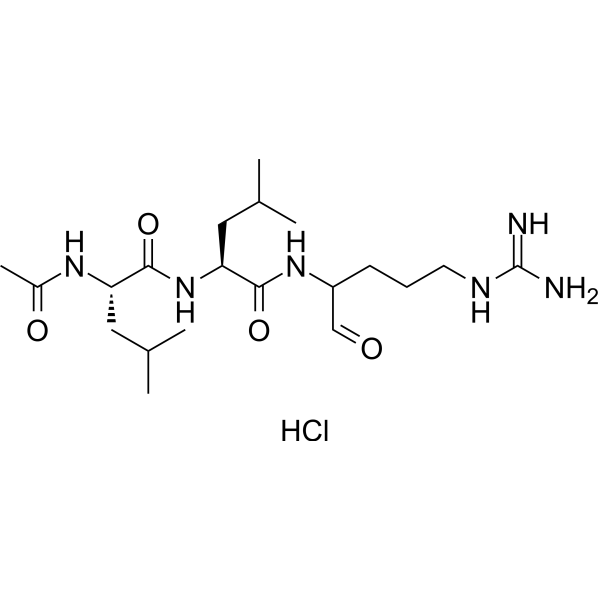
Leupeptin Ac-LL hydrochloride is a broad-spectrum protease inhibitor . By inhibiting the activation of the PTEN/PI3K/Akt/NF-κB/ERK1/2/p38 signaling pathway, Leupeptin Ac-LL hydrochloride significantly reduces LPS-induced NO and ROS production, mitochondrial membrane potential hyperpolarization, phagocytic activity, pro-inflammatory cytokine release, and M1 polarization in mouse peritoneal macrophages, and reverses autophagic flux impairment. It also decreases Concanavalin A (HY-P2149)-induced proliferation index of mouse splenic lymphocytes and the Th1/IL-10 and Th2/IL-10 cytokine ratios, thereby modulating innate and adaptive immune responses. Leupeptin Ac-LL hydrochloride inhibits blood coagulation and tumorigenesis in mouse skin. Leupeptin Ac-LL hydrochloride can be used in research on chronic inflammatory diseases and skin tumorigenesis .
loading...
    loading...

