405 Results for "

Translation

" in MedChemExpress (MCE) Product Catalog:
Products (405)

405 Results for "Translation" in MCE Product Catalog:

1
1 Cited Publications
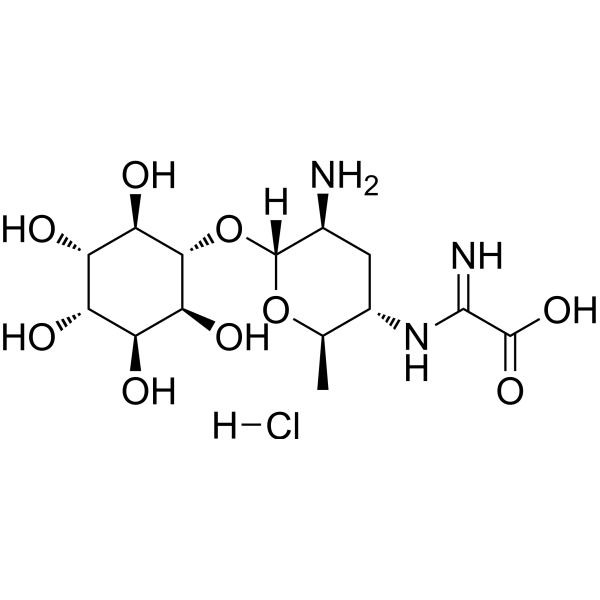
Cat. No.: HY-B1864A
CAS No.: 19408-46-9
Synonyms: Ksg hydrochloride
Kasugamycin (Ksg) hydrochloride is an aminoglycoside antibiotic (antibiotic) that binds to the bacterial 30S ribosomal subunit and inhibits canonical translation initiation. Kasugamycin hydrochloride binds to the P-site and E-site codon regions in the mRNA channel and interferes with mRNA-tRNA codon-anticodon interactions, thereby destabilizing initiator tRNA binding. Kasugamycin hydrochloride possesses anti-infective activity. Kasugamycin hydrochloride is used in research on bacterial translation and Pseudomonas infection .
loading...
    loading...
1
1 Cited Publications
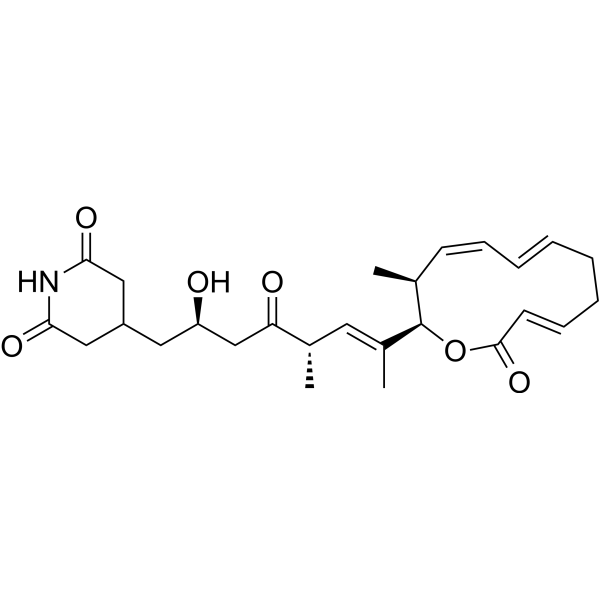
Cat. No.: HY-18979
CAS No.: 134869-15-1
Lactimidomycin is a glutarimide-containing compound isolated from Streptomyces. Lactimidomycin is a potent inhibitor of eukaryotic translation elongation. Lactimidomycin has a potent antiproliferative effect on tumor cell lines and selectively inhibit protein translation. Lactimidomycin inhibits protein synthesis with an IC50 value of 37.82 nM. Lactimidomycin is also a potent and non-toxic inhibitor of dengue virus 2 and other RNA viruses. Anticancer and antiviral activities .
loading...
    loading...
1
1 Cited Publications
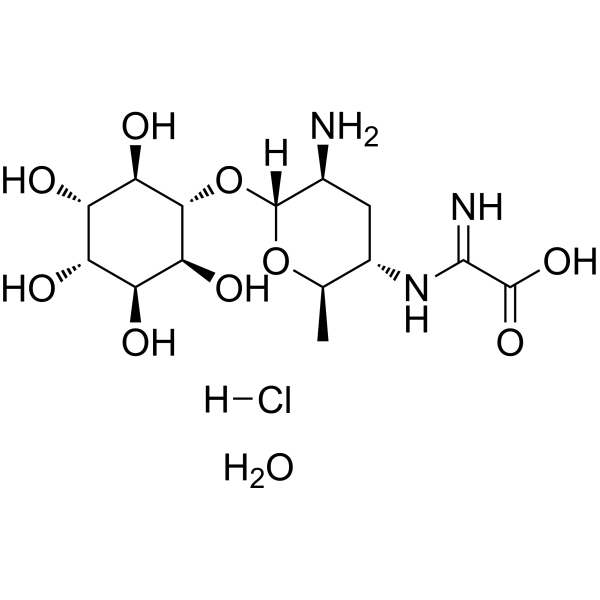
Cat. No.: HY-B1864B
CAS No.: 200132-83-8
Synonyms: Ksg hydrochloride hydrate
Target:  

Antibiotic Bacterial

Research Areas:  

Infection

Kasugamycin (Ksg) hydrochloride hydrate is an aminoglycoside antibiotic (antibiotic) that binds to the bacterial 30S ribosomal subunit and inhibits canonical translation initiation. Kasugamycin hydrochloride hydrate binds to the P-site and E-site codon regions in the mRNA channel and interferes with mRNA-tRNA codon-anticodon interactions, thereby destabilizing initiator tRNA binding. Kasugamycin hydrochloride hydrate possesses anti-infective activity. Kasugamycin hydrochloride hydrate is used in research on bacterial translation and Pseudomonas infection .
loading...
    loading...
1
1 Cited Publications
Cat. No.: HY-B1864
CAS No.: 6980-18-3
Synonyms: Ksg
Target:  

Antibiotic Bacterial

Research Areas:  

Infection

Kasugamycin (Ksg) is an aminoglycoside antibiotic (antibiotic) that binds to the bacterial 30S ribosomal subunit and inhibits canonical translation initiation. Kasugamycin binds to the P-site and E-site codon regions in the mRNA channel and interferes with mRNA-tRNA codon-anticodon interactions, thereby destabilizing initiator tRNA binding. Kasugamycin possesses anti-infective activity. Kasugamycin is used in research on bacterial translation and Pseudomonas infection .
loading...
    loading...
1
1 Cited Publications
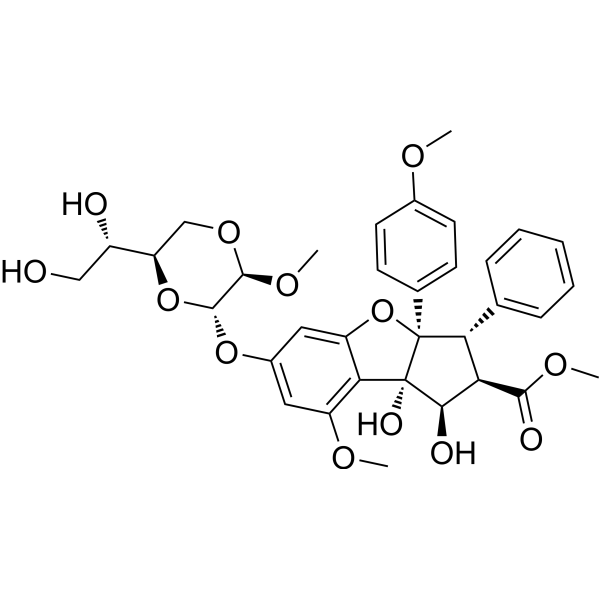
Cat. No.: HY-15359
CAS No.: 697235-39-5
Purity:  99.86%
Episilvestrol is a derivative of silvestrol, isolated from the fruits and twigs of Aglaia perviridis, and is a specific eIF4A-targeting translation inhibitor, with antitumor activity.
loading...
    loading...
1
1 Cited Publications
Cat. No.: HY-163299
CAS No.: 3027172-23-9
Target:  

Ras Apoptosis PI3K Akt p38 MAPK

Research Areas:  

Cancer

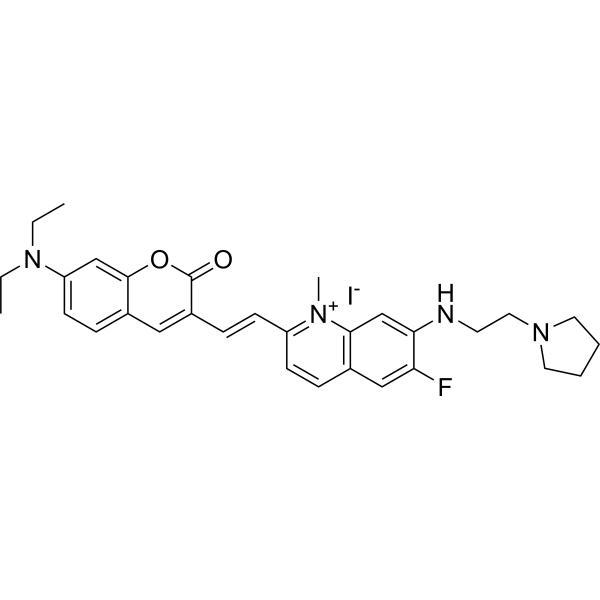
pan-KRAS-IN-5 is a pan-KRAS translation inhibitor by targeting 5′-UTR RNA G-quadruplexes (rG4s). pan-KRAS-IN-5 strongly binds to and stabilizes KRAS rG4s, inhibits KRAS translation, and blocks the MAPK and PI3K-AKT pathways. pan-KRAS-IN-5 induces cell cycle arrest, prompts apoptosis in KRAS-driven cancer cells. pan-KRAS-IN-5 inhibits tumor growth and KRAS expression in KRAS-mutant xenograft. KRAS-IN-5 can be used for KRAS-driven cancer research .
loading...
    loading...
1
1 Cited Publications
Cat. No.: HY-16009B
CAS No.: 865795-23-9
Synonyms: (+)-Phenserine L-Tartrate; ANVS401 L-Tartrate
Target:  

Amyloid-β

Research Areas:  

Neurological Disease

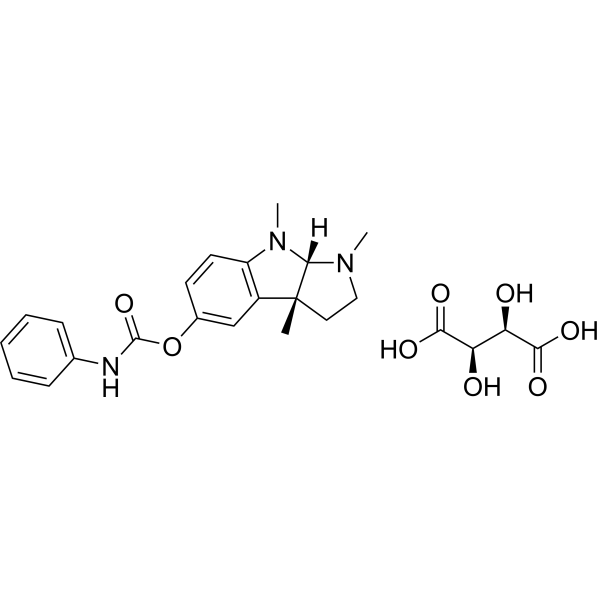
Buntanetap L-Tartrate (Phenserine L-Tartrate) is a selective AChE inhibitor (IC50 = 22.2 nM). Buntanetap is a multiple neurotoxic protein translation inhibitor with oral activity, including amyloid precursor protein (APP), α-synuclein (αSYN) and huntingtin protein (HTT). Buntanetap reduces the production of β-amyloid precursor protein by blocking its mRNA translation. Buntanetap has anti-inflammatory effects and can be used in the study of Alzheimer's disease and Parkinson's disease .
loading...
    loading...
1
1 Cited Publications
Cat. No.: HY-108666
CAS No.: 93839-89-5
Purity:  94.15%
Synonyms: Adenosine-5'-O-3-thiotriphosphate tetralithium salt; Adenosine 5'-[γ-thio]triphosphate tetralithium salt
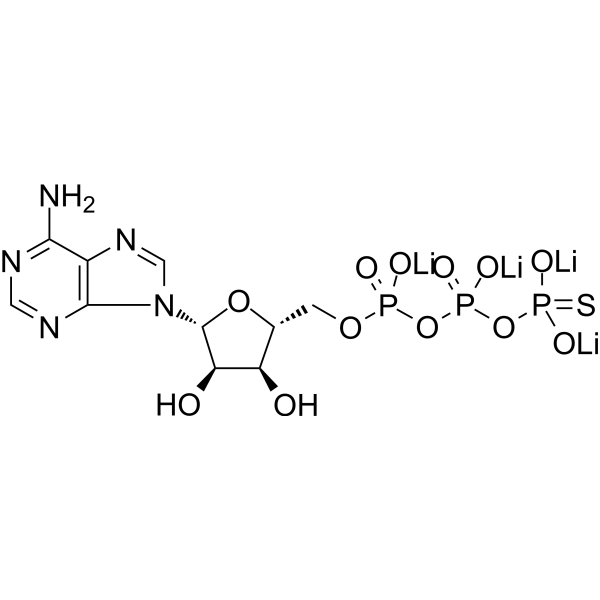
ATPγS (tetralithium salt) is a P2Y11 receptor agonist, an antioxidant and a neuroprotective agent. ATPγS (tetralithium salt) can be used as a substrate for the nucleotide hydrolysis and RNA unwinding activities of eukaryotic translation initiation factor eIF4A. ATPγS (tetralithium salt) is active in ATP hydrolysis .
loading...
    loading...
1
1 Cited Publications
Cat. No.: HY-W011209
CAS No.: 7724-76-7
Synonyms: Riboprine
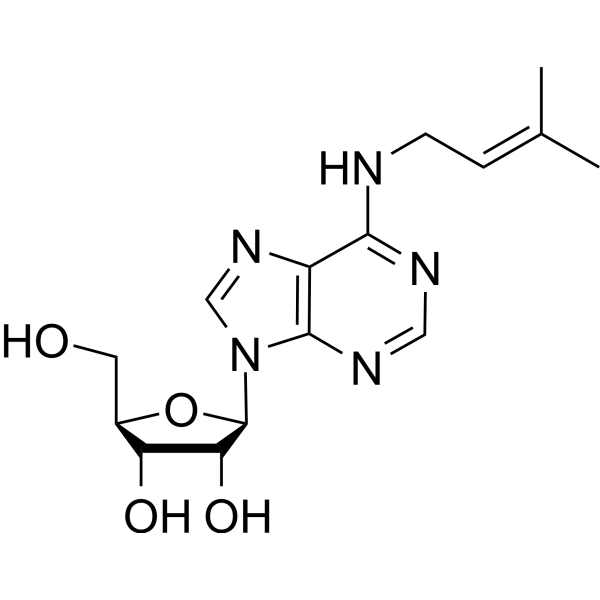
N6-Isopentenyladenosine (Riboprine), an RNA modification found in cytokinins, which regulate plant growth/differentiation, and a subset of tRNAs, where it improves the efficiency and accuracy of translation. N6-Isopentenyladenosine, an end product of the mevalonate pathway, is an autophagy inhibitor with an interesting anti-melanoma activity .
loading...
    loading...
1
1 Cited Publications
Cat. No.: HY-100131
CAS No.: 1622849-58-4
Purity:  98.57%
Target:  

RIP kinase

Research Areas:  

Inflammation/Immunology

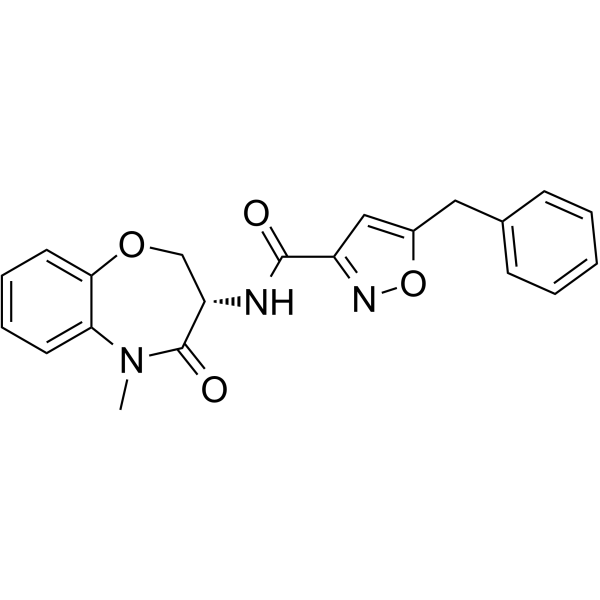
GSK481 is a highly potent, selective, and specific receptor interacting protein 1 (RIP1) kinase inhibitor with an IC50 of 1.3 nM, which inhibits Ser 166 phosphorylation in wild-type human RIP1 (IC50=2.8 nM). GSK481 also exhibits excellent translation in the U937 cellular assay with an IC50 of 10 nM .
loading...
    loading...
1
1 Cited Publications
Cat. No.: HY-153083
Target:  

mRNA SARS-CoV

Research Areas:  

Infection

COVID-19 Spike Protein mRNA (N1-Me-Pseudo UTP) is an mRNA encoding the SARS-CoV-2 spike protein with enhanced performance via chemical modification. COVID-19 Spike Protein mRNA (N1-Me-Pseudo UTP) replaces natural uridine (UTP) with N1-Me-Pseudo UTP, which effectively reduces immunogenicity and improves stability and translation efficiency. The 3' UTR of COVID-19 Spike Protein mRNA (N1-Me-Pseudo UTP) optimizes AU-rich elements through HuR anchor sites, exhibiting higher translation efficiency. COVID-19 Spike Protein mRNA is widely used in COVID-19-related scientific research and vaccine development .
loading...
    loading...
1
1 Cited Publications
Cat. No.: HY-113061
CAS No.: 1445-07-4
Purity:  99.93%
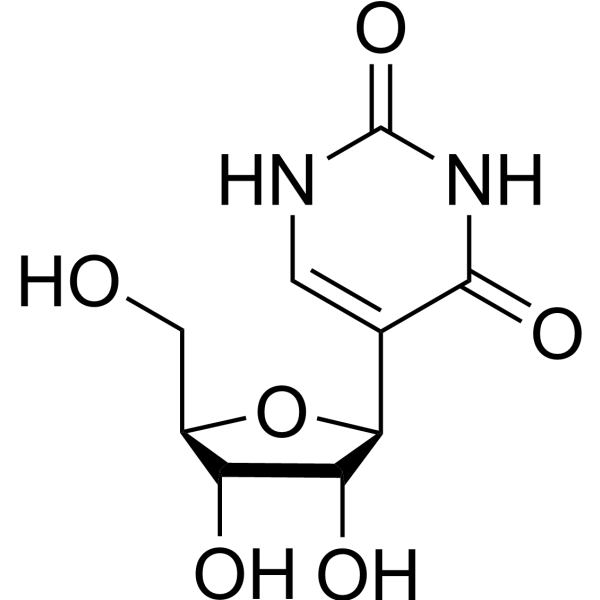
Pseudouridine is an isomer of uridine and the most abundant modified nucleoside in non-coding RNA. It fine-tunes and stabilizes regional structures in rRNA and tRNA, maintaining their functions in mRNA decoding, ribosome assembly, processing, and translation. Pseudouridine-modified tRNA fragments can inhibit aberrant protein synthesis and hold promise for research on myelodysplastic syndrome (MDS)-related leukemia. .
loading...
    loading...
1
1 Cited Publications
Cat. No.: HY-W016647
CAS No.: 4289-98-9
Synonyms: N-Formylmethionine
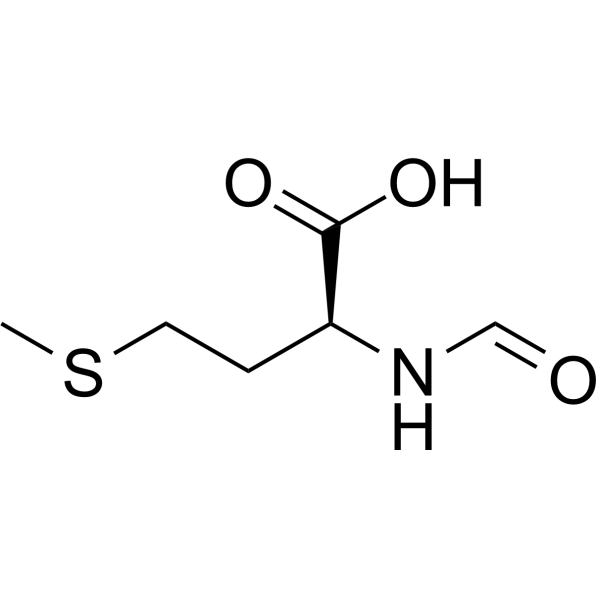
For-Met-OH (N-Formylmethionine) can be involved in the translation process of bacteria, chloroplasts, and mitochondria. For-Met-OH plays different roles in different species and organelles, such as promoting the formation of protein complexes in mitochondria and acting as a degradation signal in bacteria and yeast. The level of For-Met-OH is closely related to certain diseases, for example, For-Met-OH is a potential biomarker for metabolic disorders and poor prognosis in critically ill patients .
loading...
    loading...
1
1 Cited Publications
Cat. No.: HY-Q66655
CAS No.: 3120494-74-5
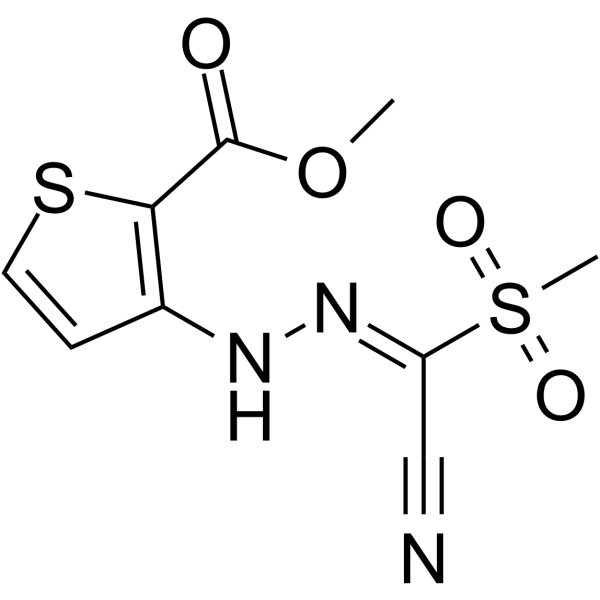
YRDC-IN-1 is a blood-brain barrier-permeable YRDC inhibitor. YRDC is a key enzyme that catalyzes the formation of N 6-threonylcarbamoyladenosine at position 37 of tRNA (t 6A37). YRDC-IN-1 selectively inhibits the translation of ANN codon-enriched FABP7, thereby reducing lipid droplet formation, increasing ROS, and reversing the acquired resistance of GBM to Temozolomide (TMZ) (HY-17364). YRDC-IN-1 can be used for the research of glioblastoma .
loading...
    loading...
1
1 Cited Publications
Cat. No.: HY-136748
CAS No.: 882268-69-1
Purity:  99.96%
Research Areas:  

Cancer

HIF-2α-IN-4 is a potent inhibitor of hypoxia inducible factor-2α (HIF-2α) translation, with an IC50 of 5 μM. HIF-2α-IN-4 decreases both constitutive and hypoxia-induced HIF-2α protein expression. HIF-2α-IN-4 links its 5'UTR iron-responsive element to oxygen sensing .
loading...
    loading...
1
1 Cited Publications
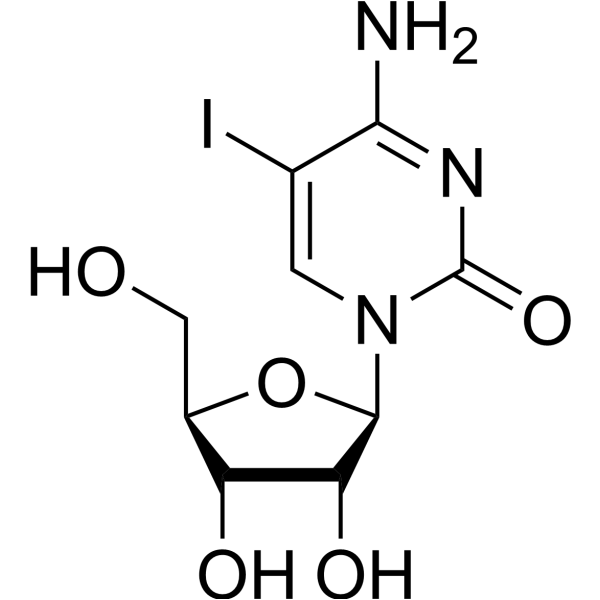
Cat. No.: HY-W008615
CAS No.: 1147-23-5
Synonyms: 5-Iodo-D-cytidine
5-Iodo-cytidine (5-Iodo-D-cytidine) is a purine nucleoside analog that acts as an intermediate in organic synthesis. 5-Iodo-cytidine serves as a chemically modified nucleotide to replace partial cytidine residues in in vitro transcription, enhancing the translation efficiency and stability of chemically modified mRNA. Purine nucleoside analogs exhibit broad anti-tumor activity and target indolent lymphoid malignancies. 5-Iodo-cytidine can be used in mRNA therapy and tumor-related research .
loading...
    loading...
1
1 Cited Publications
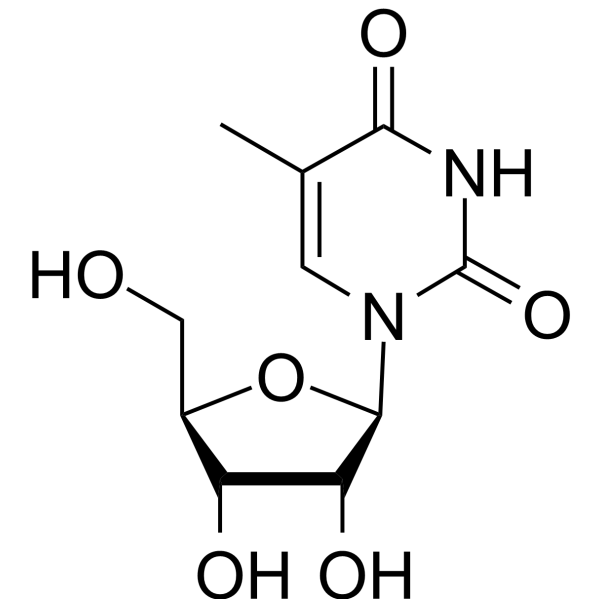
Cat. No.: HY-W009444
CAS No.: 1463-10-1
5-Methyluridine (m 5U) is an RNA modified nucleotide generated by RNA methyltransferases (such as TrmA and RumA), which mainly targets specific uracil sites in RNA molecules such as the T arm of tRNA and rRNA. 5-Methyluridine relies on enzyme recognition of RNA secondary/tertiary structures (such as the T loop of tRNA or the specific stem-loop structure of rRNA) and participates in physiological processes such as translation accuracy and ribosome function by stabilizing RNA folding or regulating base pairing .
loading...
    loading...
1
1 Cited Publications
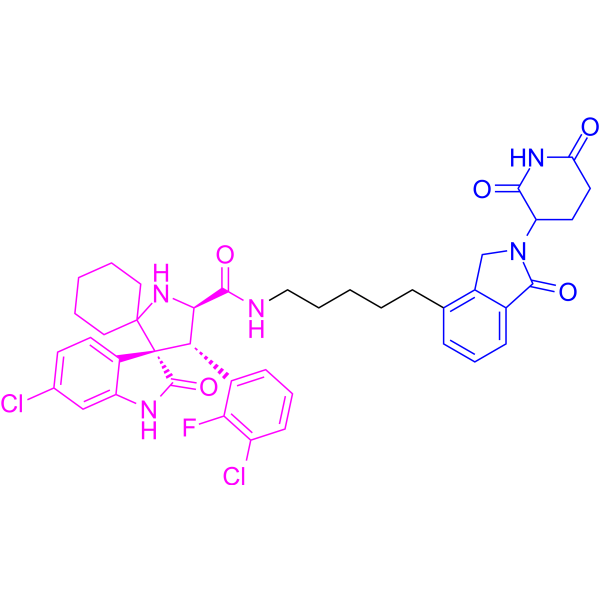
Cat. No.: HY-130122
CAS No.: 2411085-89-5
Purity:  98.66%
MG-277, a molecular glue degrader, effectively induces degradation of a translation termination factor based on Cereblon E3 ligand, GSPT1, with a DC50 of 1.3 nM. MG-277 potently inhibits tumor cell growth in a p53-independent manner, with IC50s of 3.5 nM for RS4;11 cells and 3.4 nM for p53 mutant RS4;11/IRMI-2 cells, respectively. Anticancer activity .
loading...
    loading...
1
1 Cited Publications
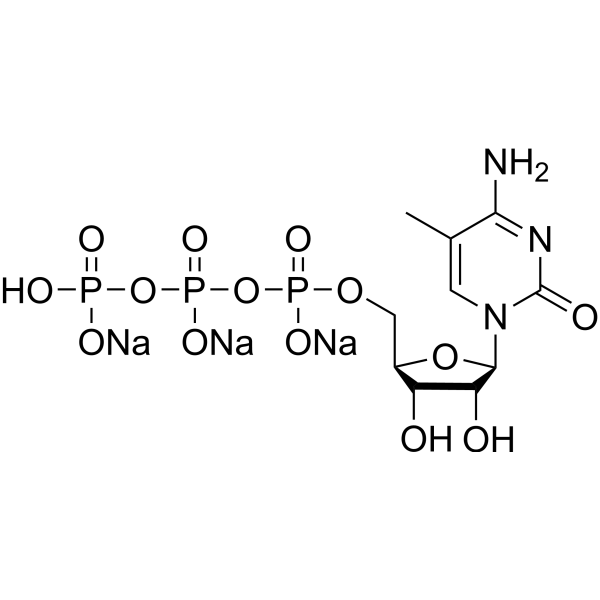
Cat. No.: HY-147338A
Purity:  99.40%
Synonyms: 5-Methyl-CTP trisodium
5-Methylcytidine 5′-triphosphate trisodium (5-Methyl-CTP trisodium) is a modified cytidine triphosphate nucleotide. 5-Methylcytidine 5′-triphosphate trisodium serves as a modified nucleotide substrate for in vitro transcription, partially or completely replacing CTP. 5-Methylcytidine 5′-triphosphate trisodium enhances mRNA stability and translation efficiency, and reduces activation of the innate immune system. 5-Methylcytidine 5′-triphosphate trisodium is used in RNA synthesis-related research .
loading...
    loading...
1
1 Cited Publications
Cat. No.: HY-153229
Research Areas:  

Others

Firefly luciferase mRNA-LNP is a lipid nanoparticle (LNP) containing firefly luciferase mRNA. Firefly luciferase mRNA-LNP exhibits a stable nanostructure, in which LNP plays a key role in effectively protecting and transporting mRNA to cells. Luciferase is a bioluminescent reporter gene for gene regulation and functional studies. Firefly Luciferase mRNA-LNP expresses firefly luciferase protein after entering the cells, which is often used for promoter activity detection or dual fluorescent molecular complementation experiments. Firefly luciferase mRNA-LNP is studied in research for RNA delivery, cell viability, and translation efficiency .
loading...
    loading...

