

300 Results for "

Prostate Cancer Tumor

" in MedChemExpress (MCE) Product Catalog:
Products (300)

300 Results for "Prostate Cancer Tumor" in MCE Product Catalog:

Cat. No.: HY-P99517
CAS No.: 2411871-58-2
Synonyms: JNJ-63898081; JNJ-081

Target:  

CD3 PSMA

Research Areas:  

Cancer

Voxalatamab (JNJ-63898081) is a bispecific IgG4 antibody targeting PSMA and CD3. Voxalatamab attacks PSMA-expressing tumor cells by activating T cells. Voxalatamab has anticancer activity and is being studied for the treatment of solid tumors such as prostate cancer .
loading...
    loading...
Cat. No.: HY-W782083
CAS No.: 1583289-85-3
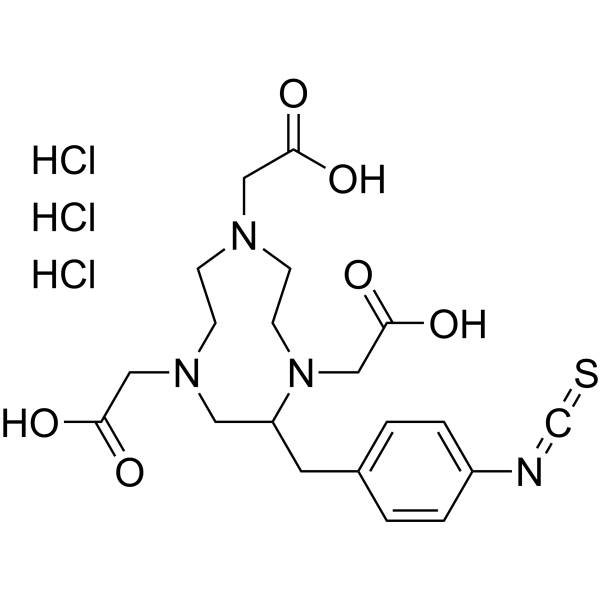
p-SCN-Bn-NOTA trihydrochloride is a macrocyclic chelator. p-SCN-Bn-NOTA trihydrochloride can be covalently coupled to molecules such as peptides through the thiocyanate group to form hexacoordinate copper (such as 64Cu) complexes. p-SCN-Bn-NOTA trihydrochloride specifically binds to GRPR or EGFR highly expressed on the surface of tumor cells, mediating tumor enrichment of radioactive probes. p-SCN-Bn-NOTA trihydrochloride can be used to study malignant tumors expressing GRPR or EGFR, such as prostate cancer and colorectal cancer .
loading...
    loading...
Cat. No.: HY-175023A
Target:  

Phosphatase

Research Areas:  

Cancer

OncoACP3 TFA is a small-molecule ligand of prostatic acid phosphatase (ACP3) with an IC50 of 0.30 nM. OncoACP3 TFA has a modular structure that supports flexible payload delivery. After radiolabeling with Lu-177 it selectively accumulates in ACP3-expressing tumors with a long retention time, enabling targeted radiation delivery. OncoACP3 TFA is applicable to research related to prostate cancer .
loading...
    loading...
Cat. No.: HY-P9992
CAS No.: 2414550-93-7
Synonyms: BAY-2315497; PSMA-TTC

Target:  

PSMA Apoptosis

Research Areas:  

Cancer

Peligifatamab is a PSMA-targeted α-radioimmunoconjugate with an EC50 of 1.2 nM against human targets. Peligifatamab induces DNA damage, DNA double-strand breaks, cell cycle arrest and apoptosis (Apoptosis) in PSMA-positive prostate cancer cells. Peligifatamab reduces cell viability in a manner dependent on cellular PSMA expression levels. Peligifatamab inhibits tumor growth and tumor-induced abnormal bone growth in prostate cancer bone metastasis models. Peligifatamab exhibits antitumor efficacy in subcutaneous prostate cancer models and xenograft models. Peligifatamab can be used for the research of metastatic castration-resistant prostate cancer .
loading...
    loading...
Cat. No.: HY-20167A
CAS No.: 32677-01-3
Target:  

Neurokinin Receptor

Research Areas:  

Cancer

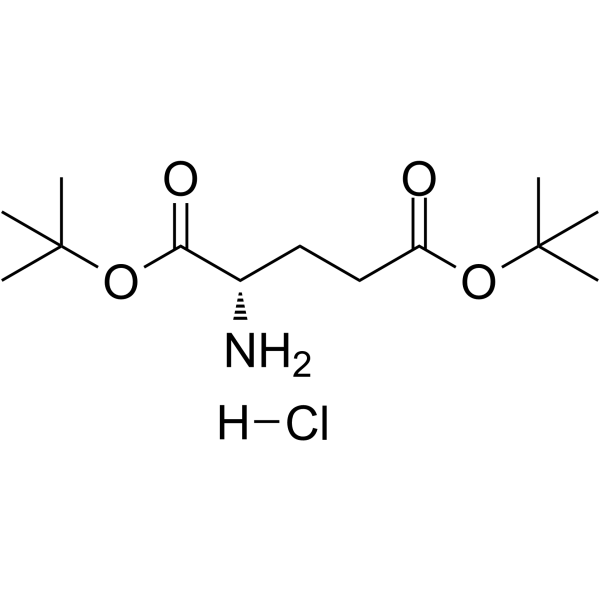
H-Glu(OtBu)-OtBu hydrochloride is a key intermediate that can be used to synthesize prostate-specific membrane antigen (PSMA) targeting probes. H-Glu(OtBu)-OtBu hydrochloride can reduce nonspecific background binding through negatively charged linkers, improve tumor/background contrast, and can be used in prostate cancer PET/SPECT imaging studies .
loading...
    loading...
Cat. No.: HY-45661
CAS No.: 2370913-42-9
Synonyms: NUV-422
Target:  

CDK

Research Areas:  

Neurological Disease Cancer

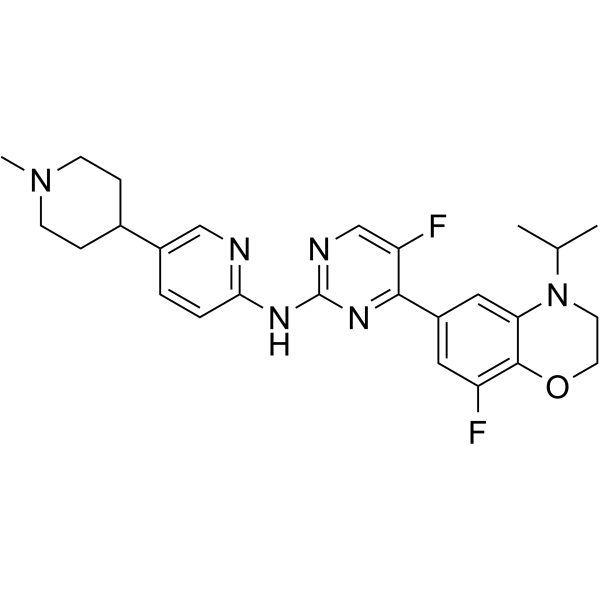
Inixaciclib (NUV-422) is a blood-brain barrier-penetrant inhibitor of CDK2, CDK4 and CDK6. Inixaciclib inhibits cancer cell growth. Inixaciclib induces anti-tumor activity in xenograft models of glioblastoma, CDK4/CDK6 inhibitor-resistant HR + HER2 - metastatic breast cancer, and anti-androgen-resistant prostate cancer. Inixaciclib can be used for the research of relapsed or metastatic castration-resistant prostate cancer .
loading...
    loading...
Cat. No.: HY-P99217
CAS No.: 872514-65-3
Synonyms: AMG 102

Target:  

c-Met/HGFR

Research Areas:  

Cancer

Rilotumumab (AMG 102) is an anti-HGF (anti-hepatocyte growth factor) monoclonal antibody, inhibits HGF/MET-driven signaling. Rilotumumab shows anti-tumor activity, and can be used in castration-resistant prostate cancer (CRPC) and solid tumor research .
loading...
    loading...
Cat. No.: HY-168555
CAS No.: 3053716-98-3
Target:  

PROTACs CDK Apoptosis Akt mTOR

Research Areas:  

Cancer

YJ1206 is an orally active selective CDK12/CDK13 PROTAC degrader. YJ1206 induces DNA damage and genomic instability, activates the AKT pathway, and triggers apoptosis. YJ1206 reduces tumor cell viability, inhibits tumor growth, and attenuates tumor cell dissemination. YJ1206 is applicable to research related to prostate cancer and high-grade serous tubo-ovarian cancer .
loading...
    loading...
Cat. No.: HY-N15637
CAS No.: 514-92-1
Torularhodin is a carotenoid with anti-cancer activity. Torularhodin induces apopotsis of tumor cells and can be used for the study of prostate cancer .
loading...
    loading...
Cat. No.: HY-159500
CAS No.: 2206660-94-6
Synonyms: OTL-0078; OTL78
Target:  

PSMA

Research Areas:  

Cancer

Zopocianine (OTL-0078; OTL78) is a near-infrared optical probe targeting PSMA. Zopocianine binds to PSMA on the surface of PSMA-expressing cells, enters cells via receptor-mediated endocytosis, and accumulates in acidic endosomes. Zopocianine selectively accumulates in PSMA-positive cancer tissues and enables the detection of small tumors, primary prostate tumors, and locoregional metastases. Zopocianine helps achieve negative tumor surgical margins during fluorescence-guided surgery. Zopocianine is applicable to research related to prostate cancer .
loading...
    loading...
Cat. No.: HY-160020
CAS No.: 2820120-95-2
Target:  

Androgen Receptor

Research Areas:  

Cancer

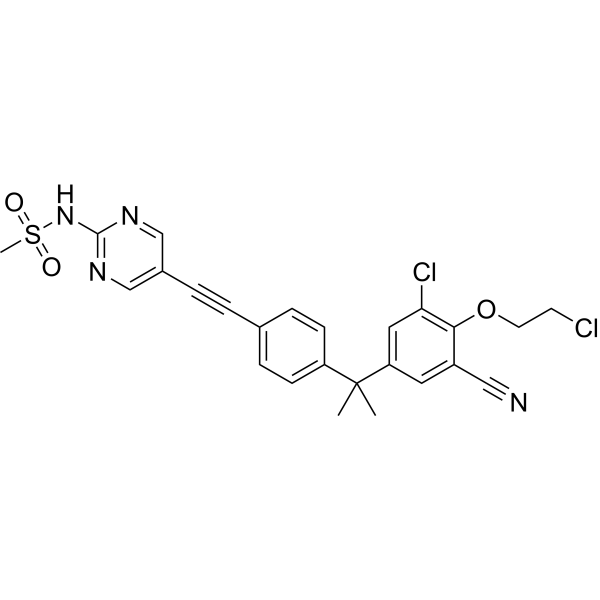
ET516 is a potent inhibitor of Androgen Receptor. ET516 significantly inhibits the proliferation and tumor growth of prostate cancer cells expressing AR-resistant mutants .
loading...
    loading...
Cat. No.: HY-N0475
CAS No.: 74285-86-2
Synonyms: Hypolide; (+)-Triptophenolide
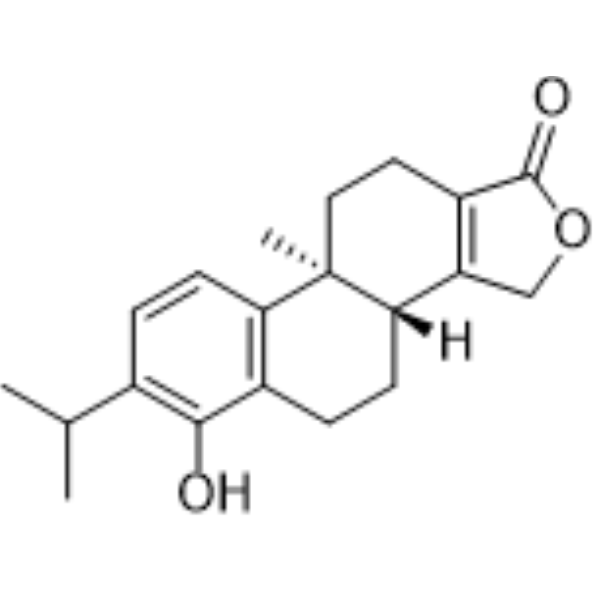
Triptophenolide (Hypolide) is a colorless crystal isolated from the ethyl acetate extract of Tripterygium wilfordii. Triptophenolide is an orally active pan‑antagonist of the androgen receptor (AR) with an IC50 of 467 nM against human wild‑type AR. Triptophenolide reduces AR expression, inhibits AR nuclear translocation, downregulates prostate‑specific antigen mRNA levels, and suppresses the growth of AR‑positive prostate cancer cells. Triptophenolide shows anti-tumor effects against breast cancer by inhibiting cell proliferation and migration, inducing G1-phase arrest and apoptosis, repressing xenograft tumor growth. Triptophenolide inhibits pyroptosis, alleviates tissue inflammation, and ameliorates synovial injury. Triptophenolide can be used for the study of prostate cancer, rheumatoid arthritis and breast cancer .
loading...
    loading...
Cat. No.: HY-132292
CAS No.: 2222111-87-5
Purity:  99.40%
Research Areas:  

Cancer

ARD-2128 is a highly potent, orally bioavailable PROTAC androgen receptor (AR) degrader. ARD-2128 effectively reduces AR protein, suppresses AR-regulated genes in tumor tissues, and inhibits growth of tumor without signs of toxicity. ARD-2128 has the potential for the research of the prostate cancer .
loading...
    loading...
Cat. No.: HY-175023
CAS No.: 3084147-81-6
Target:  

Phosphatase

Research Areas:  

Cancer

OncoACP3 is a small-molecule ligand of prostatic acid phosphatase (ACP3) with an IC50 of 0.30 nM. OncoACP3 has a modular structure that supports flexible payload delivery. After radiolabeling with Lu-177 it selectively accumulates in ACP3-expressing tumors with a long retention time, enabling targeted radiation delivery. OncoACP3 is applicable to research related to prostate cancer .
loading...
    loading...
Cat. No.: HY-N2122
CAS No.: 59122-93-9
Synonyms: Neoisoliquiritigenin
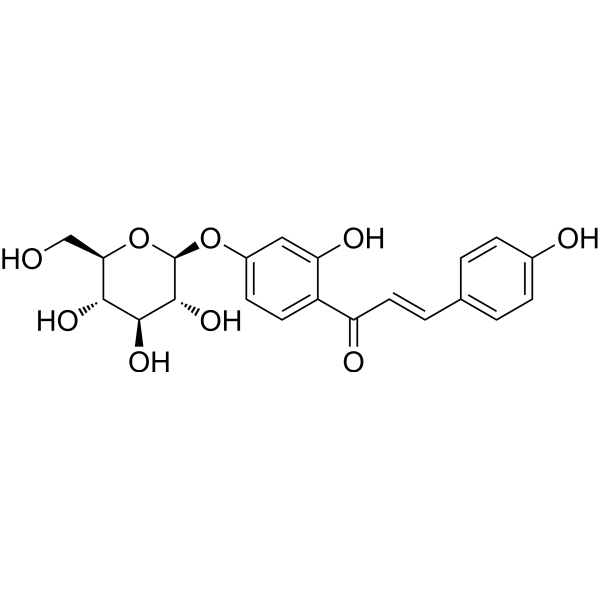
Neoisoliquiritin (Neoisoliquiritigenin) is an androgen receptor (AR) inhibitor. Neoisoliquiritin inhibits the ATPase activity of GRP78. Neoisoliquiritin induces G0/G1 cell cycle arrest and inhibits proliferation in cancer cells, while it also induces cell apoptosis (apoptosis). Neoisoliquiritin suppresses tumor growth in mouse models of prostate cancer and breast cancer. Neoisoliquiritin can be used in studies related to prostate cancer and breast cancer .
loading...
    loading...
Cat. No.: HY-P5290
CAS No.: 2213408-17-2
Research Areas:  

Cancer

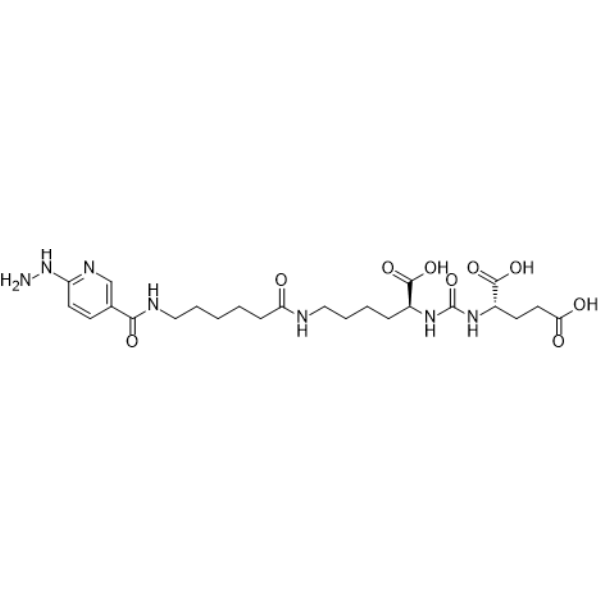
HYNIC-PSMA is a ligand for molecular imaging of tumors. Hynic-psma consists of two components: HYNIC (6-hydrazinonicotinamide) and PSMA (Prostate-Specific Membrane Antigen). HYNIC is a compound used to attach radioactive isotopes to targeted molecules, such as 188Re-HYNIC-PSMA. PSMA is a membrane antigen that is specifically expressed on the surface of prostate cancer cells. HYNIC-PSMA can be used in prostate cancer research . HYNIC-PSMA can be used for the synthesis/research of Radionuclide-Drug Conjugates (RDCs).
loading...
    loading...
Cat. No.: HY-N15686
CAS No.: 547-23-9
Synonyms: Torulin
Torulene (Torulin) is an orally active carotenoid with anti-cancer activity. Torulene inhibits proliferation and induces apoptosis of tumor cells via a mitochondrial signal pathway and the down-regulation of androgen receptor (AR) expression. Torulene can be used for the study of prostate cancer .
loading...
    loading...
Cat. No.: HY-143883
CAS No.: 2376137-41-4
Target:  

PROTACs Akt

Research Areas:  

Cancer

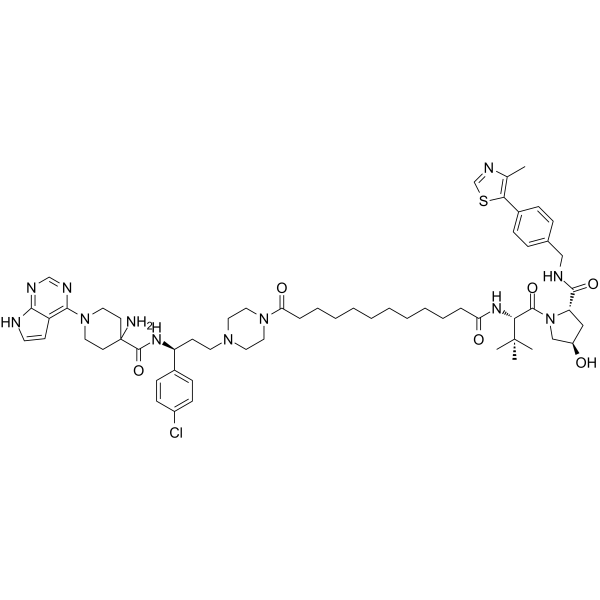
MS143 is a VHL-recruiting AKT protein PROTAC degrader with a DC50 of 46 nM in PC3 prostate cancer cells. MS143 preferentially binds to AKT1 and AKT3, with weaker binding activity towards AKT2. MS143 degrades AKT and blocks the phosphorylation of downstream signaling molecules in the PI3K/AKT/mTOR pathway. MS143 inhibits cancer cell growth and xenograft tumor growth. MS143 can be used for research on prostate cancer, triple-negative breast cancer, and breast cancer .
loading...
    loading...
Cat. No.: HY-175652
CAS No.: 3056515-10-4
Research Areas:  

Cancer

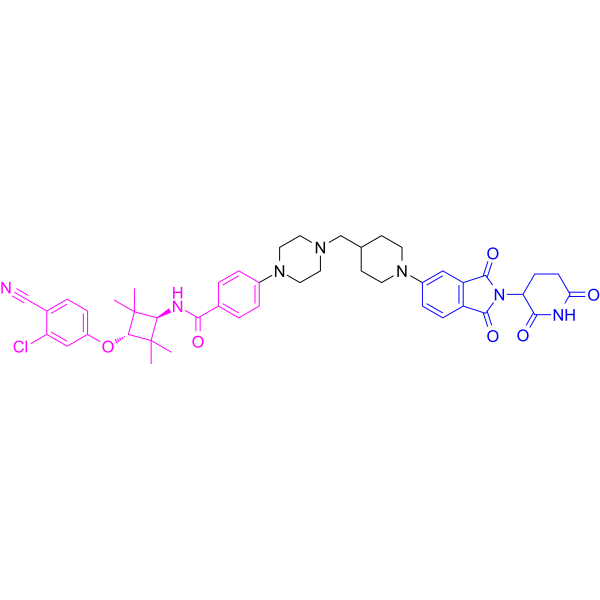
AZD9750 is an orally active, Cereblon (CRBN)-recruiting, androgen receptor (AR)-targeted PROTAC degrader. AZD9750 induces the proteasome-dependent degradation of both wild-type AR and the drug-resistant mutant AR L702H, thereby inhibiting the AR signaling pathway. AZD9750 suppresses tumor growth in mouse prostate cancer xenograft models and has been utilized in prostate cancer research .
loading...
    loading...
Cat. No.: HY-P10740
CAS No.: 2923068-30-6
CBP-1018 is a PDC (peptide-drug conjugate) formed by conjugating Monomethyl auristatin E (HY-15162) to a dual-targeting ligand of FLOR1/PSMA (prostate-specific membrane antigen) via a linker (HY-78738). CBP-1018 binds to FLOR1 and prostate-specific membrane antigen (PSMA). CBP-1018 is applicable to the research of solid tumors and metastatic castration-resistant prostate cancer .
loading...
    loading...

