

1190 Results for "

central

" in MedChemExpress (MCE) Product Catalog:
Products (1190)

1190 Results for "central" in MCE Product Catalog:

6
6 Cited Publications
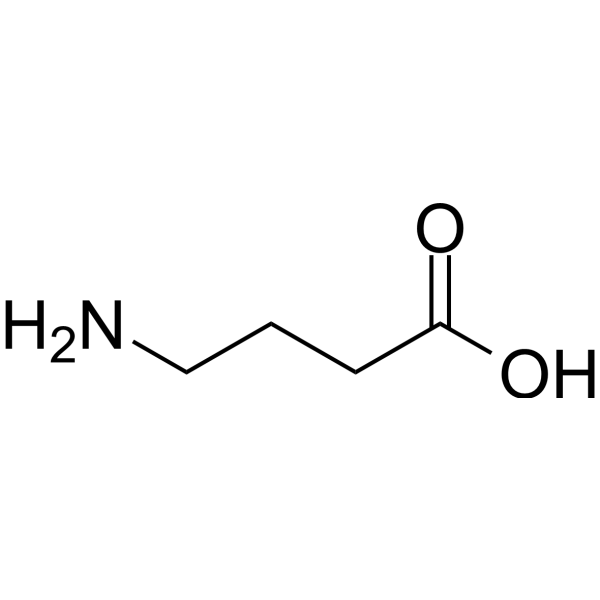
Cat. No.: HY-N0067
CAS No.: 56-12-2
Synonyms: 4-Aminobutyric acid
γ-Aminobutyric acid (4-Aminobutyric acid) is a major inhibitory neurotransmitter in the adult mammalian brain, binding to the ionotropic GABA receptors (GABAA receptors) and metabotropic receptors (GABAB receptors. γ-Aminobutyric acid shows calming effect by blocking specific signals of central nervous system .
loading...
    loading...
6
6 Cited Publications
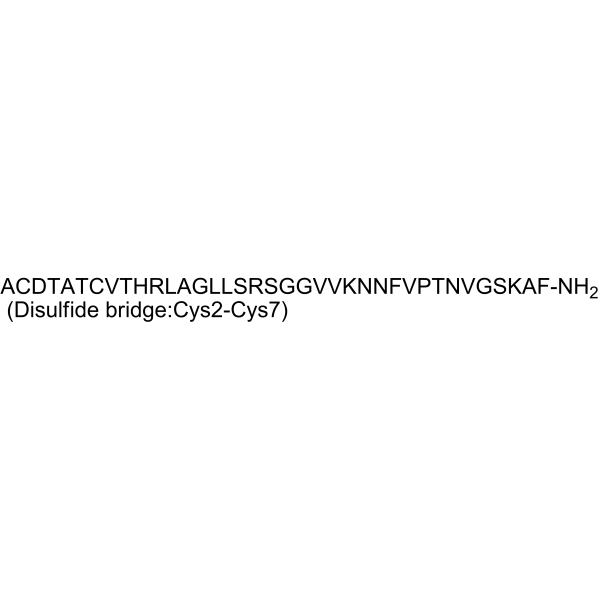
Cat. No.: HY-P1071
CAS No.: 90954-53-3
Synonyms: Calcitonin gene-related peptide
Target:  

CGRP Receptor

Research Areas:  

Cardiovascular Disease

α-CGRP (human) (Calcitonin gene-related peptide) is a regulatory neuropeptide of 37 amino acids. α-CGRP (human) is widely distributed in the central and peripheral nervous system. α-CGRP (human) is a potent vasodilator and has inotropic and chronotropic effects .
loading...
    loading...
6
6 Cited Publications
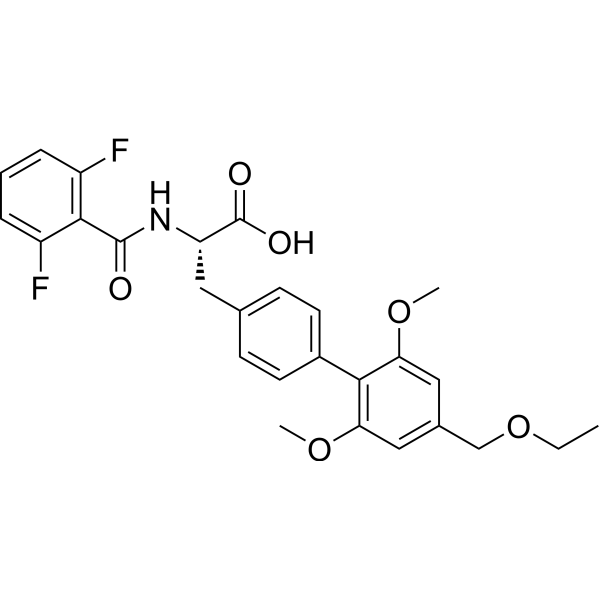
Cat. No.: HY-14951
CAS No.: 402567-16-2
Purity:  99.75%
Synonyms: SB 683699
Target:  

Integrin

Research Areas:  

Neurological Disease

Firategrast (SB 683699) is an orally active and specific α4β1/α4β7 integrin antagonist. Firategrast reduces trafficking of lymphocytes into the central nervous system (CNS) and decreases multiple sclerosis (MS) activity .
loading...
    loading...
6
6 Cited Publications
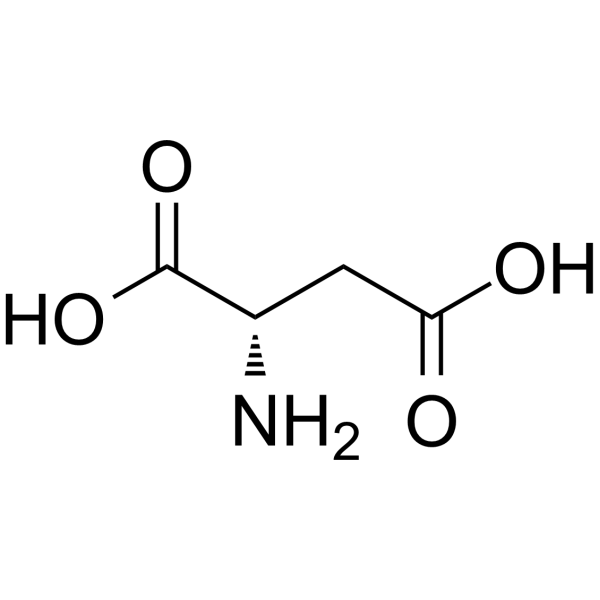
Cat. No.: HY-N0666
CAS No.: 56-84-8
L-Aspartic acid is a NMDA receptor agonist and acidic amino acid. L-Aspartic acid has no independent analgesic activity. L-Aspartic acid can antagonize the analgesic effects of D-Aspartic acid and Morphine. L-Aspartic acid regulates polymorph transformation, crystal growth/aggregation and nucleation processes of calcium carbonate, and can serve as a biomineralization template. L-Aspartic acid promotes burst firing of central neurons. L-Aspartic acid can be used in studies related to cerebral ischemia and epilepsy .
loading...
    loading...
6
6 Cited Publications
Cat. No.: HY-N0666A
CAS No.: 1115-63-5
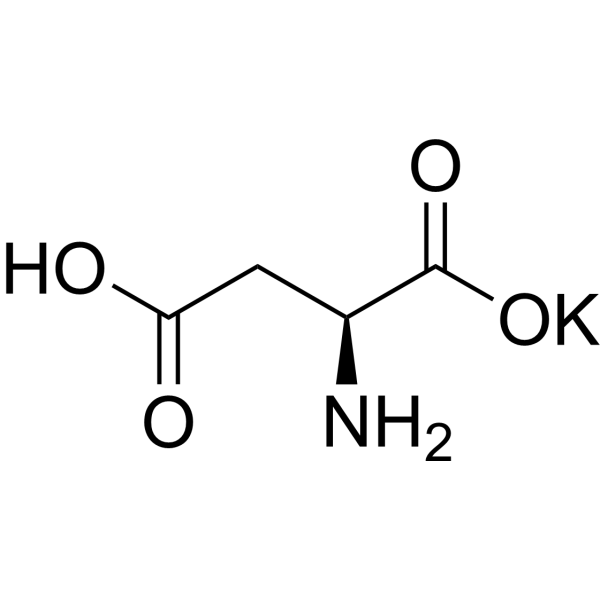
L-Aspartic acid potassium (potassium L-aspartate) is a NMDA receptor agonist and acidic amino acid. L-Aspartic acid potassium has no independent analgesic activity. L-Aspartic acid potassium can antagonize the analgesic effects of D-Aspartic acid and Morphine. L-Aspartic acid potassium regulates polymorph transformation, crystal growth/aggregation and nucleation processes of calcium carbonate, and can serve as a biomineralization template. L-Aspartic acid potassium promotes burst firing of central neurons. L-Aspartic acid potassium can be used in studies related to cerebral ischemia and epilepsy .
loading...
    loading...
6
6 Cited Publications
Cat. No.: HY-N0666B
CAS No.: 10389-09-0
Synonyms: Calcium L-aspartate
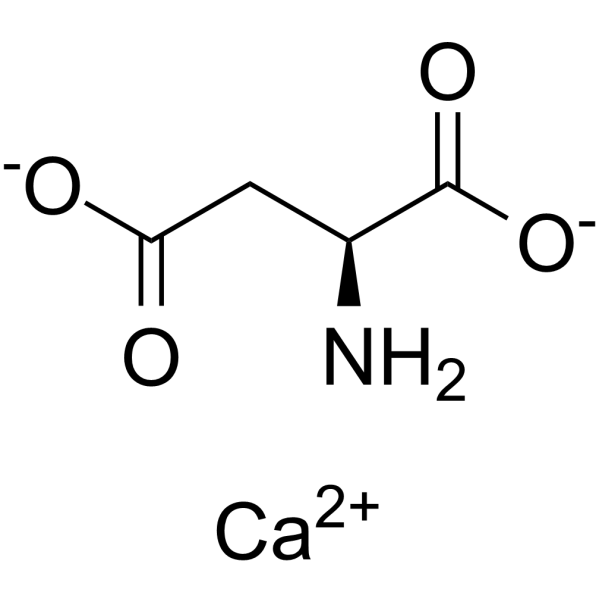
Aspartic acid calcium (calcium L-aspartate) is a NMDA receptor agonist and acidic amino acid. Aspartic acid calcium has no independent analgesic activity. Aspartic acid calcium can antagonize the analgesic effects of D-Aspartic acid and Morphine. Aspartic acid calcium regulates polymorph transformation, crystal growth/aggregation and nucleation processes of calcium carbonate, and can serve as a biomineralization template. Aspartic acid calcium promotes burst firing of central neurons. Aspartic acid calcium can be used in studies related to cerebral ischemia and epilepsy .
loading...
    loading...
6
6 Cited Publications
Cat. No.: HY-N0666C
CAS No.: 3792-50-5
Synonyms: Sodium L-aspartate
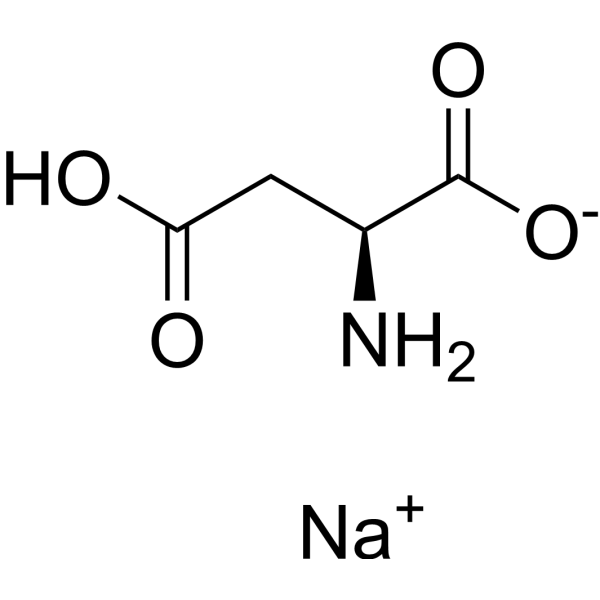
L-Aspartic acid sodium (Sodium L-aspartate) is a NMDA receptor agonist and acidic amino acid. L-Aspartic acid sodium has no independent analgesic activity. L-Aspartic acid sodium can antagonize the analgesic effects of D-Aspartic acid and Morphine. L-Aspartic acid sodium regulates polymorph transformation, crystal growth/aggregation and nucleation processes of calcium carbonate, and can serve as a biomineralization template. L-Aspartic acid sodium promotes burst firing of central neurons. L-Aspartic acid sodium can be used in studies related to cerebral ischemia and epilepsy .
loading...
    loading...
6
6 Cited Publications
Cat. No.: HY-B1337
CAS No.: 67-48-1
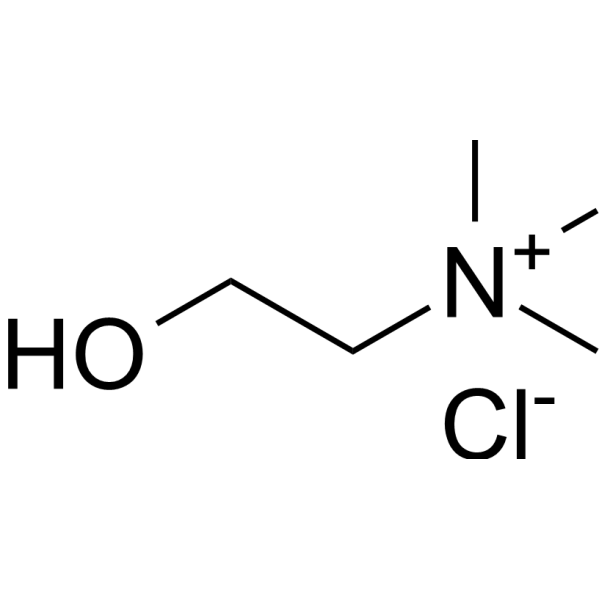
Choline chloride is an orally active methylxanthine derivative. Choline chloride exhibits weak antihistaminic and anticholinergic activities and potentiates the effects of histamine and acetylcholine. Choline chloride relaxes bronchial smooth muscle, dilates coronary and peripheral blood vessels, increases urine output and electrolyte excretion, stimulates locomotor activity in the central nervous system, and induces transient hypotension following a pressor phase. Choline chloride modulates sleep architecture by increasing wakefulness time and reducing slow-wave sleep, without altering the frequency or severity of nocturnal hypoxemia, apnea, or hypopnea events. Choline chloride is used in studies of bronchospasm, nocturnal asthma, and chronic asthma .
loading...
    loading...
6
6 Cited Publications
Cat. No.: HY-B1718
CAS No.: 4499-40-5
Synonyms: Oxtriphylline
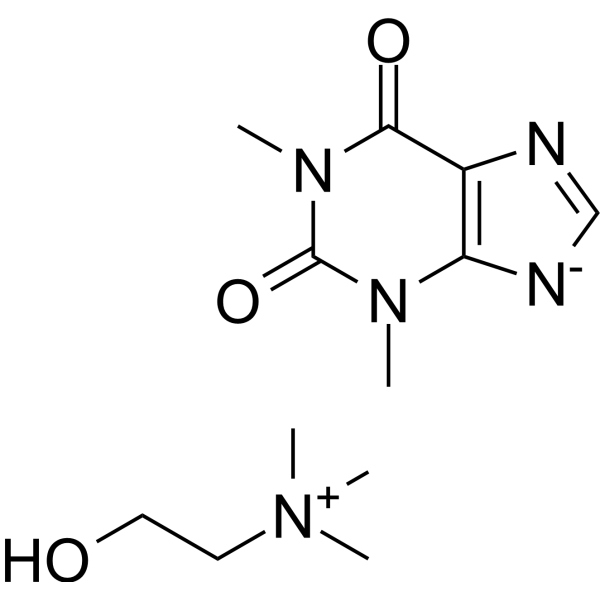
Choline theophyllinate (Oxtriphylline) is an orally active methylxanthine derivative. Choline theophyllinate exhibits weak antihistaminic and anticholinergic activities and potentiates the effects of histamine and acetylcholine. Choline theophyllinate relaxes bronchial smooth muscle, dilates coronary and peripheral blood vessels, increases urine output and electrolyte excretion, stimulates locomotor activity in the central nervous system, and induces transient hypotension following a pressor phase. It modulates sleep architecture by increasing wakefulness time and reducing slow-wave sleep, without altering the frequency or severity of nocturnal hypoxemia, apnea, or hypopnea events. Choline theophyllinate is used in studies of bronchospasm, nocturnal asthma, and chronic asthma .
loading...
    loading...
6
6 Cited Publications
Cat. No.: HY-101036
CAS No.: 87-67-2
Purity:  ≥98.0%
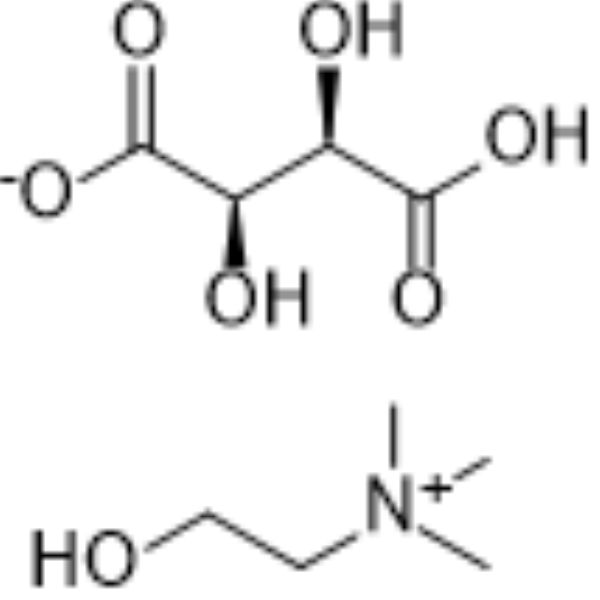
Choline bitartrate (Oxtriphylline) is an orally active methylxanthine-derived choline salt of theophylline. Choline bitartrate exhibits weak antihistaminic and anticholinergic activities and can enhance the effects of histamine and acetylcholine. Choline bitartrate relaxes bronchial smooth muscle, dilates coronary and peripheral blood vessels, increases urine output and electrolyte excretion, stimulates central nervous system motor activity, and induces transient hypotension following a pressor phase. Choline bitartrate modulates sleep architecture by increasing wakefulness time and reducing slow-wave sleep, without altering the frequency or severity of nocturnal hypoxemia, apnea, or hypopnea events. Choline bitartrate is used in studies of bronchospasm, nocturnal asthma, and chronic asthma .
loading...
    loading...
5
5 Cited Publications
Cat. No.: HY-101022
CAS No.: 1873376-49-8
Purity:  99.54%
Target:  

CXCR

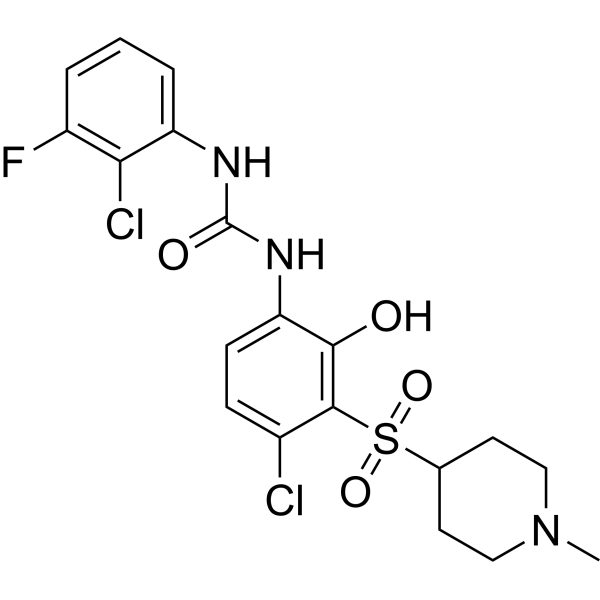
CXCR2-IN-1 is a central nervous system penetrant CXCR2 antagonist with a pIC50 of 9.3.
loading...
    loading...
5
5 Cited Publications
Cat. No.: HY-101456
CAS No.: 14173-40-1
Purity:  99.89%
Synonyms: 4-Chloro-DL-phenylalanine methyl ester hydrochloride
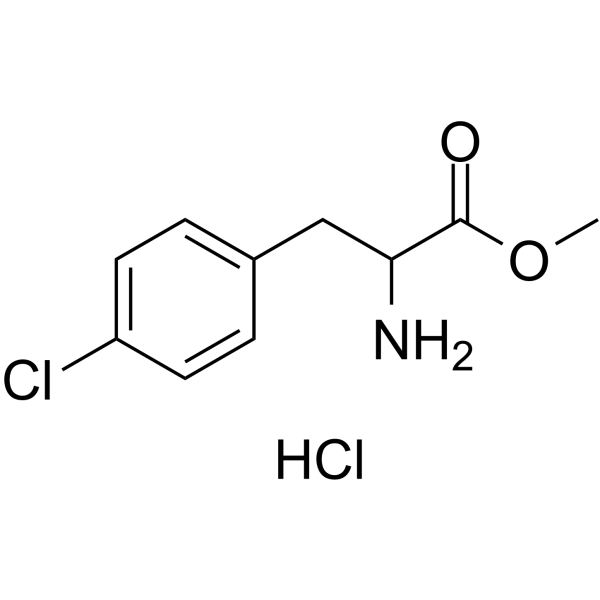
PCPA methyl ester hydrochloride (4-Chloro-DL-phenylalanine methyl ester hydrochloride), a reversible tryptophan hydroxylase inhibitor, is a serotonin (5-HT) synthesis inhibitor. PCPA methyl ester hydrochloride crosses the blood brain barrier and reduces 5-HT central availability .
loading...
    loading...
5
5 Cited Publications
Cat. No.: HY-B0520A
CAS No.: 132-17-2
Synonyms: Benzatropine mesylate; Benzotropine mesylate; Benztropine methanesulfonate
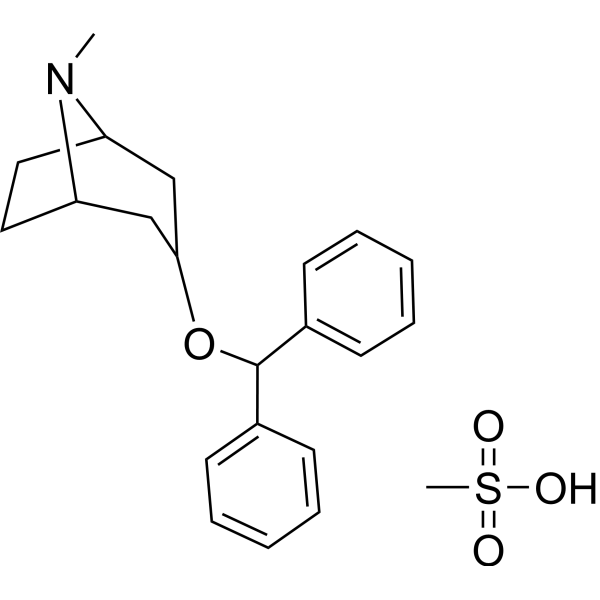
Benztropine mesylate (Benzatropine mesylate) is an orally active and BBB-permeable centrally acting anticholinergic agent that can be used for Parkinson's disease research. Benztropine mesylate is an anti-histamine agent and a dopamine re-uptake inhibitor. Benztropine mesylate is also a human D2 dopamine receptor allosteric antagonist. Benztropine mesylate also has anti-CSCs (cancer stem cells) effects .
loading...
    loading...
5
5 Cited Publications
Cat. No.: HY-B0520
CAS No.: 86-13-5
Synonyms: Benzatropine; Benzotropine
Research Areas:  

Cancer

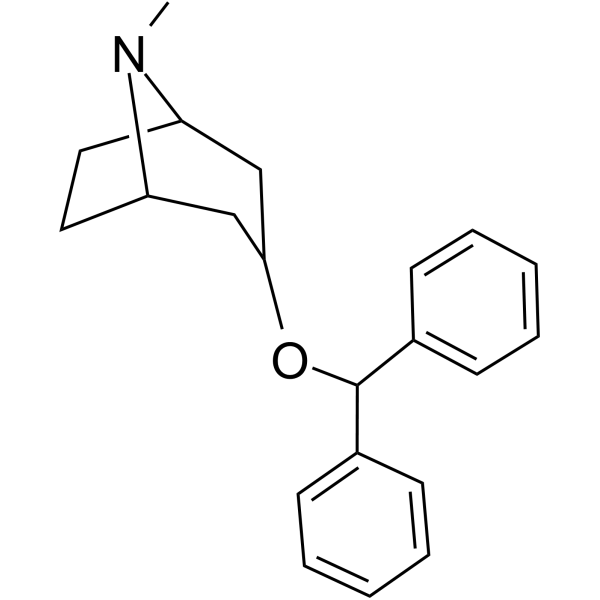
Benztropine (Benzatropine; Benzotropine) is an orally active and BBB-permeable centrally acting anticholinergic agent that can be used for Parkinson's disease research . Benztropine is an anti-histamine agent and a dopamine re-uptake inhibitor. Benztropine is also a human D2 dopamine receptor allosteric antagonist. Benztropine mesylate also has anti-CSCs (cancer stem cells) effects .
loading...
    loading...
5
5 Cited Publications
Cat. No.: HY-108831
CAS No.: 189261-10-7
Purity:  99.10%
Natalizumab (AN100226; BG00002) is a humanized monoclonal IgG4 antibody inhibitor that selectively targets α4 integrin (CD49d). It blocks the interaction of integrins such as α4β1 (VLA-4) with vascular cell adhesion molecule VCAM-1, intercellular adhesion molecule ICAM-1, and fibronectin by competitively binding to the α4 subunit. Natalizumab inhibits the adhesion, retention, and transendothelial migration of immune cells (such as CD4 + T cells), reducing the infiltration of inflammatory cells into the central nervous system or lesion sites, thus exerting anti-inflammatory and immunomodulatory activity. Natalizumab is used in the study of relapsing-remitting multiple sclerosis (RRMS) and also has applications in the study of autoimmune or inflammation-related diseases such as Crohn's disease, B-cell lymphoma, and non-infectious uveitis. Natalizumab can also prevent lymphocytes from entering the central nervous system, thereby preventing acute demyelinating relapses .
loading...
    loading...
5
5 Cited Publications
Cat. No.: HY-108831A
CAS No.: 189261-10-7
Purity:  98.72%
Synonyms: AN100226; BG00002
Natalizumab (Anti-CD49d) (AN100226; BG00002) Solution is a humanized monoclonal IgG4 antibody inhibitor that selectively targets α4 integrin (CD49d), blocking the interaction of integrins such as α4β1 (VLA-4) with vascular cell adhesion molecule VCAM-1, intercellular adhesion molecule ICAM-1, and fibronectin by competitively binding to the α4 subunit. Natalizumab solution inhibits the adhesion, retention, and transendothelial migration of immune cells (such as CD4 + T cells), reducing the infiltration of inflammatory cells into the central nervous system or lesion sites, thereby exerting anti-inflammatory and immunomodulatory activity. Natalizumab (Anti-CD49d) solution is used in the study of relapsing-remitting multiple sclerosis (RRMS) and is also applied in the research of autoimmune or inflammation-related diseases such as Crohn's disease, B-cell lymphoma, and non-infectious uveitis. Natalizumab (Anti-CD49d) can also prevent lymphocytes from entering the central nervous system, thus preventing acute demyelinating relapses .
loading...
    loading...
5
5 Cited Publications
Cat. No.: HY-N0666D
CAS No.: 5598-53-8
Synonyms: Disodium L-aspartate
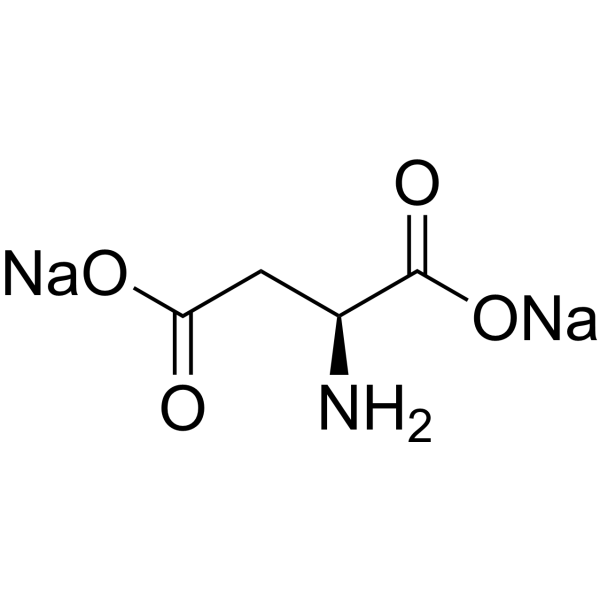
L-Aspartic acid disodium (disodium L-aspartate) is a NMDA receptor agonist and acidic amino acid. L-Aspartic acid disodium has no independent analgesic activity. L-Aspartic acid disodium can antagonize the analgesic effects of D-Aspartic acid and Morphine. L-Aspartic acid disodium regulates polymorph transformation, crystal growth/aggregation and nucleation processes of calcium carbonate, and can serve as a biomineralization template. L-Aspartic acid disodium promotes burst firing of central neurons. L-Aspartic acid disodium can be used in studies related to cerebral ischemia and epilepsy .
loading...
    loading...
5
5 Cited Publications
Cat. No.: HY-10968
CAS No.: 1094042-01-9
Purity:  98.83%
Target:  

LPL Receptor

Research Areas:  

Neurological Disease

CYM5442 is a potent, highly-selective and orally active sphingosine 1-phosphate (S1P1) receptor agonist with an EC50 of 1.35 nM. CYM5442 is inactive against S1P2, S1P3, S1P4, and S1P5. CYM5442 activates S1P1-dependent p42/p44-MAPK phosphorylation. CYM5442 exerts retinal neuroprotection. CYM5442 can easily penetrate the central nervous system (CNS) .
loading...
    loading...
5
5 Cited Publications
Cat. No.: HY-10968A
CAS No.: 1783987-80-3
Target:  

LPL Receptor

Research Areas:  

Neurological Disease

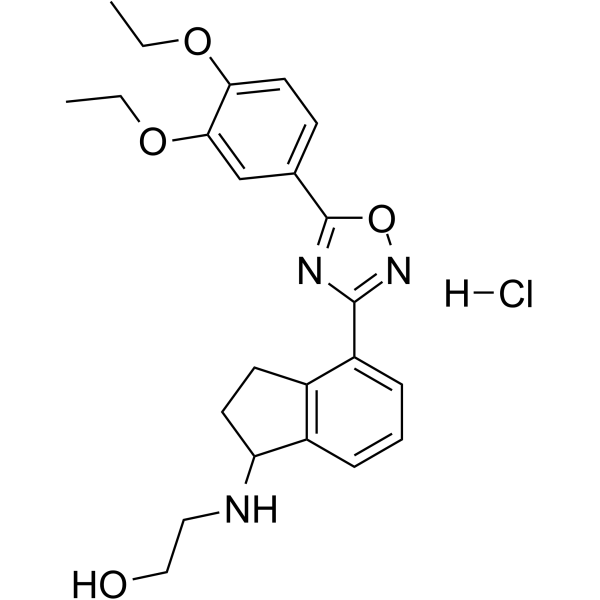
CYM5442 hydrochloride is a potent, highly-selective and orally active sphingosine 1-phosphate (S1P1) receptor agonist with an EC50 of 1.35 nM. CYM5442 hydrochloride is inactive against S1P2, S1P3, S1P4, and S1P5. CYM5442 hydrochloride activates S1P1-dependent p42/p44-MAPK phosphorylation. CYM5442 exerts retinal neuroprotection. CYM5442 hydrochloride can easily penetrate the central nervous system (CNS) .
loading...
    loading...
5
5 Cited Publications
Cat. No.: HY-N2259
CAS No.: 19431-84-6
Synonyms: (+)-Curcumenol
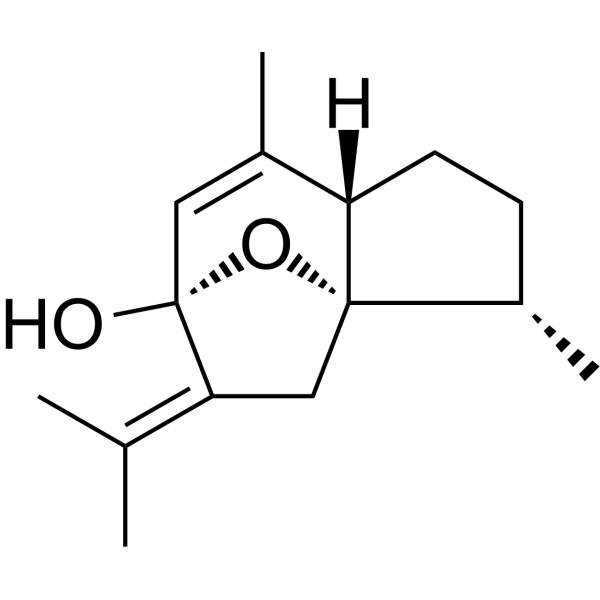
Curcumenol ((+)-Curcumenol) is a natural compound with oral efficacy, exhibiting an IC50 of 12.6 μM and a Ki of 10.8 μM against human CYP3A4. Curcumenol inhibits TNFα-induced phosphorylation/degradation of IκBα, phosphorylation/nuclear translocation of NF-κB p65, as well as the upregulation of MMP3, MMP9, MMP13, TRAF3, IL1RL1, TNFα and IL-1β. Curcumenol suppresses LPS-induced phosphorylation of Akt and p38 MAPK, as well as the production of pro-inflammatory mediators/proteins, and downregulates the SLC7A11/NF-κB/TGF-β pathway. Curcumenol binds to and inhibits the activation of Fyn and Lyn, blocks the function of downstream FcεRI signaling components, and reduces the release of allergic mediators/cytokines. Curcumenol upregulates the expression of KDM6B, and promotes chondrocyte proliferation and cartilage repair. Curcumenol induces ferroptosis and apoptosis, regulates the EMT process, and inhibits tumor growth and metastasis of triple-negative breast cancer. Curcumenol possesses anti-inflammatory, neuroprotective, antioxidant, antitumor, antiviral and hepatoprotective activities. Curcumenol can be used in research related to intervertebral disc degeneration, cancer, inflammation, central nervous system neurodegenerative diseases, allergic reactions and knee osteoarthritis .
loading...
    loading...

