
1038 Results for "

Acid Red

" in MedChemExpress (MCE) Product Catalog:
Products (1038)

1038 Results for "Acid Red" in MCE Product Catalog:

Cat. No.: HY-P991022
CAS No.: 2842046-67-5
Synonyms: NM8074

Target:  

Complement System

Research Areas:  

Endocrinology

Ruxoprubart (NM8074) is an inhibitor of complement factor B (Bb subunit). Ruxoprubart selectively binds to active Bb to inhibit the alternative complement pathway without affecting the classical complement pathway. By blocking the activities of AP C3 and C5 convertases, Ruxoprubart effectively inhibits red blood cell hemolysis and reduces C3b deposition, thereby preventing intravascular and extravascular hemolysis. Ruxoprubart can be used in research related to paroxysmal nocturnal hemoglobinuria, atypical hemolytic uremic syndrome, C3 glomerulopathy, and IgA nephropathy .
loading...
    loading...
Cat. No.: HY-W010254R
CAS No.: 875-59-2
4′-Hydroxy-2′-methylacetophenone (Standard) is the analytical standard of 4′-Hydroxy-2′-methylacetophenone (HY-W010254). This product is intended for research and analytical applications. 4′-Hydroxy-2′-methylacetophenone, an aroma compound of red wines, is isolated from cv. Bobal grape variety. 4′-Hydroxy-2′-methylacetophenone has ciliate toxicity. 4′-Hydroxy-2′-methylacetophenone inhibits the growth of T. pyriformis, with an IC50 of 0.65 mM .
loading...
    loading...
Cat. No.: HY-W127790
CAS No.: 52746-49-3
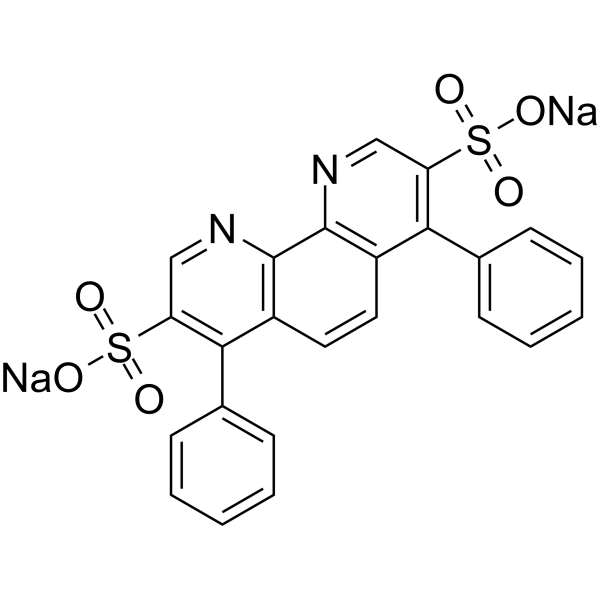
Bathophenanthrolinedisulfonic acid disodium is an iron ion chelator that serves as a colorimetric reagent for iron ion detection. Bathophenanthrolinedisulfonic acid disodium forms stable, strong complexes with Fe 2+ and Fe 3+, and each complex exhibits reversible redox behavior. Bathophenanthrolinedisulfonic acid disodium can act as a ligand to form water-soluble ruthenium catalysts, which promote the hydrogenation of the ketone group in levulinic acid to produce γ-valerolactone. When Bathophenanthrolinedisulfonic acid disodium and its iron complex are incorporated into a polymer-modified electrode, rapid color change from red to transparent occurs during potential cycling .
loading...
    loading...
Cat. No.: HY-W134423
CAS No.: 9002-18-0
Agar, microbiology tested, for cell culture (powder) is a jelly like substance that contains agarose and agar gel. Agar, microbiology tested, for cell culture (powder) can be isolated from the cell walls of red algae species such as Gelidium and Gracilaria (Ogonori). The gelation and melting of Agar, microbiology tested, for cell culture (powder) is based on the hydrogen bridge (physical gels), so the gelation is reversible. Agar, microbiology tested, for cell culture (powder) is widely used in food additives, plant tissue culture, microorganisms culture media, fingerprint recognition, and medical fields .
loading...
    loading...
Cat. No.: HY-W020780
CAS No.: 724722-89-8
Synonyms: mPEG5000-Maleimide
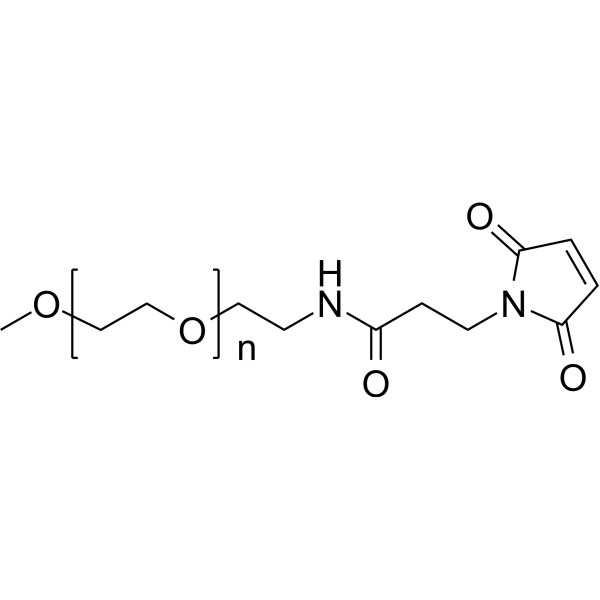
mPEG5000-Mal (mPEG5000-Maleimide) is a PEG-derived selective covalent binding agent for sulfhydryl groups (RSGs), which can form irreversible thioether bonds with sulfhydryl groups under near-neutral conditions via the maleimide group. The mechanism of action of mPEG5000-Mal can be divided into two categories: firstly, as an enzyme modifier, it binds to target proteins through hydrophobic interactions, hydrogen bonds, and van der Waals forces, altering the protein's secondary structure; secondly, as a nanoparticle surface modifier, it covalently binds to sulfhydryl groups on the surface of red blood cells, changing the surface properties and morphology of the red blood cells, leading to their phagocytosis by macrophages of the reticuloendothelial system. mPEG5000-Mal can react with free cysteine in proteins, increasing the apparent molecular weight of the modified protein by 10-15 kDa for detection purposes. mPEG5000-Mal can enhance the thermal stability and catalytic activity of enzymes, and improve the macrophage targeting of nanoparticles, enabling targeted drug delivery. mPEG5000-Mal can be applied in enzyme engineering research in the food industry and in oncology, assisting radiotherapy by inhibiting tumor-associated macrophage infiltration and enhancing anti-tumor immune responses .
loading...
    loading...
Cat. No.: HY-P12260
CAS No.: 3027489-02-4
Research Areas:  

Cancer

AJICAP reagent 1b is a thiophenyl ester-based site-specific conjugation reagent for antibody modification applications. AJICAP reagent 1b is used in HER2-positive gastric cancer-related research .
loading...
    loading...
Cat. No.: HY-P12261
Research Areas:  

Cancer

AJICAP reagent 6b is an Fc-affinity peptide reagent that site-specifically modifies Lys288 of native antibodies via thiophenyl ester chemistry. AJICAP reagent 6b enables site-specific conjugation of native antibodies at Lys288 with high conversion yield and reduced aggregation. AJICAP reagent 6b can be used for the research of cancer .
loading...
    loading...
Cat. No.: HY-131029
Purity:  ≥95.0%
Synonyms: JF646, Maleimide
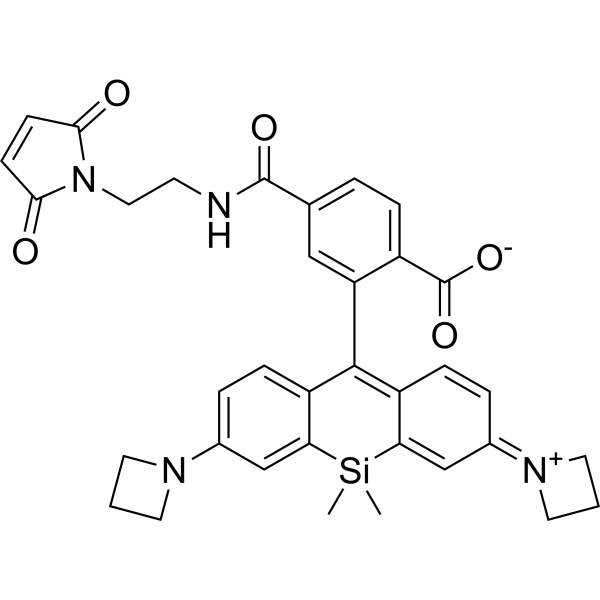
Janelia Fluor 646, Maleimide (JF646, Maleimide) is a red fluorescent dye that contains a maleimide group. JF646, Maleimide can be used in cellular imaging . Janelia Fluor fluorescent dyes can be chemically conjugated to the specific HaloTag substrate (a chloroalkane ligand) to form a fluorescent ligand, rather than binding directly to the HaloTag protein itself. Janelia Fluor products are licensed under U.S. Pat. Nos. 9,933,417, 10,018,624 and 10,161,932 and other patents from Howard Hughes Medical Institute (Ex/Em = 646/664 nm).
loading...
    loading...
Cat. No.: HY-162818
Research Areas:  

Infection

Antibacterial agent 237 (compound Ru-8) is a bacteriostatic agent for Staphylococcus aureus, with MIC of 0.78-1.56 μg/mL. Antibacterial agent 237 destroys bacterial cell membranes, changes their permeability, and induces bacteria to produce Reactive Oxygen Species, leading to bacterial death without causing drug resistance. Antibacterial agent 237 has low hemolytic toxicity to rabbit red blood cells and Raw 264.7 cells, and has significant antibacterial effects against Staphylococcus aureus in mouse skin wound infection models and Bacillus major larvae infection models .
loading...
    loading...
Cat. No.: HY-D1190
CAS No.: 198696-03-6
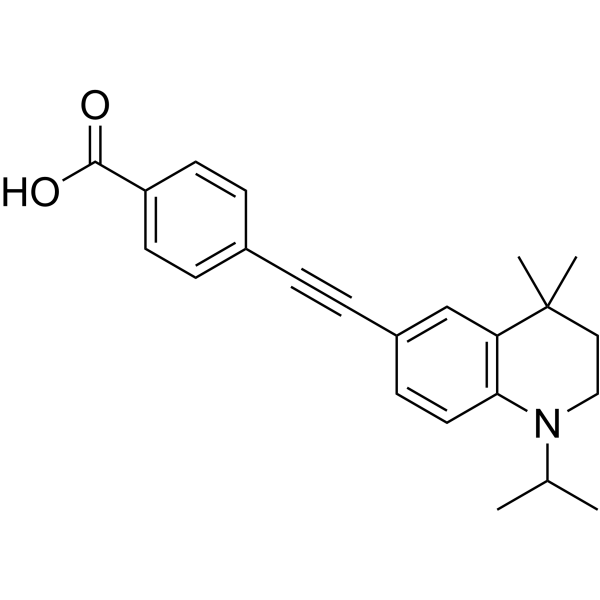
DC271 is a RAR agonist and synthetic retinoid that binds to the retinoid-binding site of cellular retinoic acid-binding protein II (CRBP-II). DC271 exhibits solvatochromic fluorescence properties: it produces intense blue-shifted emission in nonpolar environments and weak red-shifted emission in polar environments, and its severe fluorescence quenching in aqueous solutions can be reversed by embedding in the hydrophobic retinoid-binding protein pocket. DC271 enables direct detection of the binding between unlabeled compounds and related retinoid-binding proteins via fluorescence competition assays (Ex/Em = 355 nm/460 nm) .
loading...
    loading...
Cat. No.: HY-D3162
CAS No.: 2390002-31-8
Research Areas:  

Cancer

HMBI is a fluorescent probe that enables dual-color visualization of both the nucleus and mitochondria and monitors apoptosis. HMBI emits green fluorescence in the nucleus with Ex/Em=405/510-560 nm, and red fluorescence in mitochondria with Ex/Em=543/560-660 nm. The localization and emission properties of HMBI depend on subcellular pH and mitochondrial membrane potential. HMBI can serve as a feed additive for in vitro rumen fermentation; it is partially degraded, absorbed or converted into HMB by microorganisms in the system, so as to support microbial protein synthesis, alter the concentration of rumen metabolites and adjust the composition of bacterial communities .
loading...
    loading...
Cat. No.: HY-D3182
CAS No.: 2252329-12-5
AldeRed 588-A is a fluorescent labeling reagent and a substrate for aldehyde dehydrogenase (ALDH). AldeRed 588-A is metabolized by functionally active ALDH enzymes, thereby specifically labeling viable ALDH bright cell populations with red-shifted fluorescence. AldeRed 588-A supports one-step isolation and sorting of ALDH-expressing cells (including normal stem cells and cancer stem cells), and can be used in combination with green fluorophores for multicolor experimental applications. AldeRed 588-A is widely applicable to research related to various cancers such as bladder cancer, breast cancer, and head and neck cancer .
loading...
    loading...
Cat. No.: HY-D3195
CAS No.: 2028316-19-8
CDr15 is a deep-red fluorescent probe (Ex=733 nm) that can selectively intercalate into and label bacterial extracellular DNA (eDNA). CDr15 exhibits extremely high specificity for biofilm imaging and cannot effectively bind to mammalian nuclear DNA. CDr15 enables real-time visualization of the microcolony structure and developmental process of three-dimensional *Pseudomonas aeruginosa* biofilms, and accurately localizes biofilm-forming regions of microorganisms in a mouse corneal infection model. With low background interference signals, CDr15 serves as an ideal diagnostic tool for research fields including bacterial biofilms and corneal infections .
loading...
    loading...
Cat. No.: HY-D3402
CAS No.: 3121511-18-7
Research Areas:  

Others

LHA675 is a fluorescent probe for early detection of ferroptosis. LHA675 mimics polyunsaturated lipids via a 4-phenyl-3-methylbut-2-enyl group to specifically detect highly oxidative radicals associated with ferroptosis, and releases a fluorophore after the reaction. LHA675 has excitation and emission wavelengths of 647 nm and 663-738 nm, respectively. LHA675 enables wash-free labeling of ferroptosis in living cells; the generated fluorophore localizes to mitochondria and emits deep red fluorescence. LHA675 can be used in studies related to the early detection of ferroptosis .
loading...
    loading...
Cat. No.: HY-DY1015
CAS No.: 104821-25-2
Dihydroethidium (solution) , also known as DHE, is a peroxide indicator. Dihydroethidium penetrates cell membranes to form a fluorescent protein complex with blue fluoresces. After entering the cells, Dihydroethidium is mainly localized in the cell membrane, cytoplasm and nucleus, and the staining effect is the strongest in the nucleus. Dihydroethidium produces inherent blue fluorescence with a maximum excitation wavelength of 370 nm and a maximum emission wavelength of 420 nm; after dehydrogenation, Dihydroethidium combines with RNA or DNA to produce red fluorescence with a maximum excitation wavelength of 300 nm and a maximum emission wavelength of 610 nm. 535 nm can also be used as the excitation wavelength for actual observation .
Solvent and concentration: DMSO: 5 mM
loading...
    loading...
Cat. No.: HY-N0120
CAS No.: 65914-17-2
Synonyms: (E/Z)-Piceid
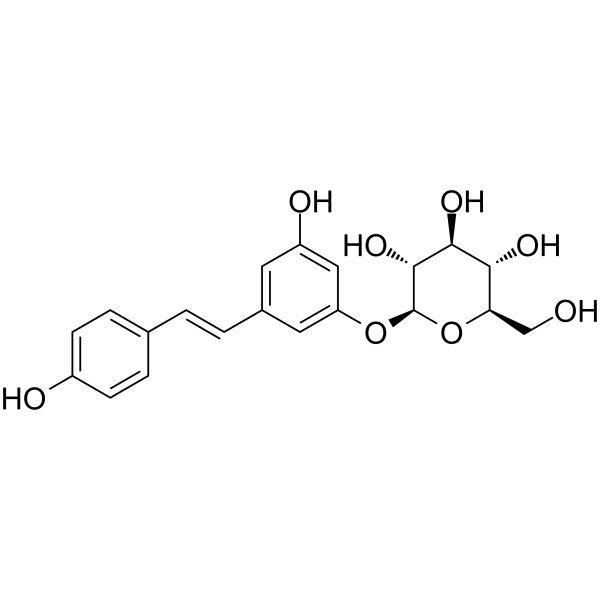
(E/Z)-Polydatin ((E/Z)-Piceid) is a mixture of the E/Z configurations of Polydatin (HY-N0120A). Polydatin can be isolated from Polygonum cuspidatum, grapes, peanuts, red wine, hop pellets, cocoa-containing products and chocolate products. Polydatin exhibits multiple biological properties, such as anti-platelet aggregation, anti-low-density lipoprotein oxidation, cardioprotective activity, anti-inflammatory and immunomodulatory functions. Polydatin shows favorable cytotoxic effects against various tumor cell lines, including cervical cancer cells, liver cancer cells, and nasopharyngeal carcinoma cells .
loading...
    loading...
Cat. No.: HY-N7106S2
Synonyms: DMP-13C6,d4
Dimethyl phthalate- 13C6,d4 (DMP- 13C6,d4) is the deuterium labeled and 13C-labeled Dimethyl phthalate (HY-N7106). Dimethyl phthalate (DMP) can be used as a plasticizer to impart flexibility to rigid polyvinyl chloride (PVC) resin. Additionally, Dimethyl phthalate is an oral active endocrine disruptor that can cause ovarian dysfunction in mice. Dimethyl phthalate can also induce oxidative stress and apoptosis in cells, thereby affecting blood and red blood cell function in rats .
loading...
    loading...
Cat. No.: HY-W009311
CAS No.: 1226-46-6
Synonyms: 4,4'-Bis(dimethylamino)thiobenzophenone
Thiomichler's ketone (4,4'-Bis (dimethylamino) thiobenzophenone) is a heavy metal complexing agent and a colorimetric/spectrophotometric reagent. Thiomichler's ketone shows selectivity for Hg 2+ at pH 3, and exhibits activity towards Pd 2+ and Ag + at pH 3.5. Thiomichler's ketone enables accurate detection of trace Pd 2+ by forming an extractable Hg 2+ complex via micelle-mediated cloud point extraction, or generating a red coordination complex including Pd (TMK)4. Thiomichler's ketone is applicable for the determination of trace Pd 2+ in antibiotics and catalysts of automobile exhaust purifiers .
loading...
    loading...
Cat. No.: HY-W747297
CAS No.: 17066-67-0
β-Selinene is a sesquiterpene and is the main active component of the essential oil of red purple hibiscus (Callicarpa macrophylla). β-Selinene exhibits significant related antioxidant activity, anti-inflammatory activity, and antipyretic analgesic activity. β-Selinene may exert antioxidant effects by directly scavenging free radicals (DPPH, NO, •OH) and chelating pro-oxidative metal ions (Fe²⁺); inhibit cyclooxygenase (COX) activity, reduce prostaglandin (such as PGE₂) synthesis to exert anti-inflammatory effects; regulate the thermoregulatory set point of the hypothalamus and inhibit inflammatory mediators to exert antipyretic and analgesic effects .
loading...
    loading...
Cat. No.: HY-107864
CAS No.: 15905-32-5
Purity:  99.07%
Synonyms: Erythrosin extra bluish free Acid; Tetraiodofluorescein
Research Areas:  

Infection

Erythrosine B free acid​ (Erythrosin extra bluish free acid; Tetraiodofluorescein) is a visible red dye and insecticide with colorimetric and fluorescent properties. Erythrosine B free acid serves as a membrane-impermeant live-cell dye for Gram-positive and Gram-negative bacteria, primarily staining dead cells with damaged plasma membranes. Erythrosine B free acid exhibits photosensitive larvicidal toxicity against Culex pipiens quinquefasciatus larvae. Erythrosine B free acid is used in live/dead bacterial assays in colorimetric and fluorescent measurements for low-, medium-, and high-throughput experiments, as well as in research related to mosquito-borne diseases and food coloring .
loading...
    loading...

