1309 Results for "

PI3K-

" in MedChemExpress (MCE) Product Catalog:
Products (1309)

1309 Results for "PI3K-" in MCE Product Catalog:

Cat. No.: HY-N0259R
CAS No.: 110623-73-9
Synonyms: Epmedin B (Standard)
Epimedin B (Standard) (Epmedin B (Standard)) is the analytical standard of Epimedin B (HY-N0259). This product is intended for research and analytical applications. Epimedin B (Epmedin B) is a flavonoid active component found in Epimedium, with oral activity, and exhibits anti-osteoporotic and neuroprotective effects. Epimedin B inhibits RANKL-induced osteoclast differentiation, F-actin ring formation, and mature osteoclast bone resorption, inhibits the phosphorylation of JNK, p38 MAPK, PI3K, and AKT, activates the AMPK-Nrf2 antioxidant pathway, and reduces cellular and mitochondrial ROS. Epimedin B acts on ESR1 and exerts its effects via GPER. Epimedin B alleviates bone loss and improves bone microstructure in vivo, and in Parkinson's models protects dopaminergic neurons and maintains striatal dopamine levels through anti-apoptotic and anti-endoplasmic reticulum stress effects. Epimedin B can be used for research related to osteoporosis, diabetic osteoporosis, and Parkinson's disease [3] .
loading...
    loading...
Cat. No.: HY-N0392
CAS No.: 882664-74-6
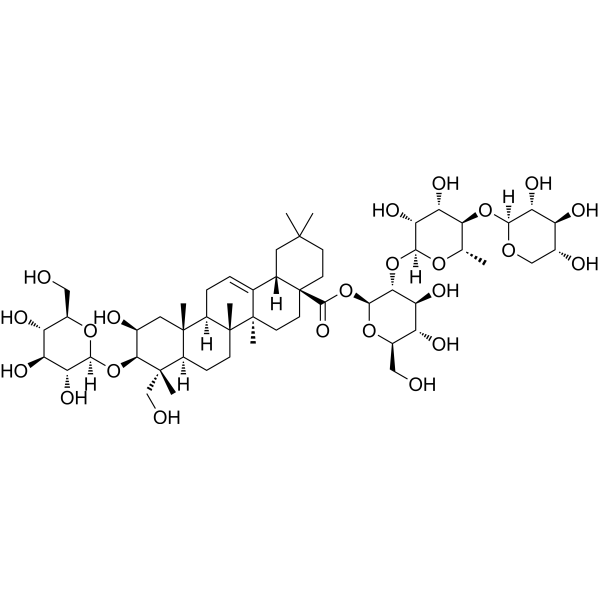
Polygalasaponin F is an orally active triterpenoid saponin monomer. Polygalasaponin F downregulates the expression of Bax, p53, caspase-3, NF-κB p65 and MEK1; restores and upregulates the expression of Bcl-2; activates the PI3K/Akt signaling pathway; inhibits the phosphorylation of p38 MAPK, nuclear translocation of NF-κB, TLR4-mediated signaling pathway, mitophagy (Mitophagy) and ROS production; enhances cell viability and suppresses apoptosis (Apoptosis). Polygalasaponin F maintains mitochondrial function, alleviates Ca 2+ overload, upregulates pCREB and BDNF, preserves cell viability and inhibits the release of inflammatory cytokines. Polygalasaponin F alleviates lung injury induced by influenza A H1N1 and cerebral ischemia-reperfusion injury. Polygalasaponin F is applicable to researches related to Parkinson's disease, cerebral ischemia, pneumonia induced by influenza A H1N1, stroke and Alzheimer's disease [3] .
loading...
    loading...
Cat. No.: HY-N0427
CAS No.: 6873-13-8
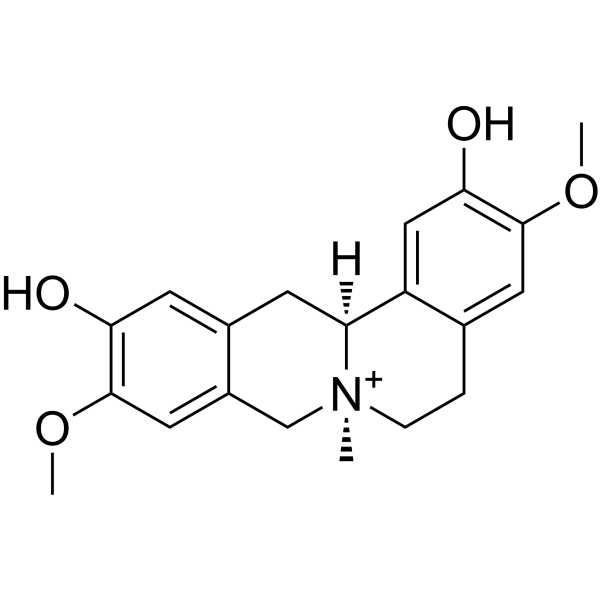
Phellodendrine is an orally active plant alkaloid. Phellodendrine inhibits the proliferation of KRAS-mutated pancreatic cancer cells by suppressing macropinocytosis and glutamine metabolism, inducing ROS accumulation and mitochondrial apoptosis. Phellodendrine promotes autophagy by activating the AMPK/mTOR pathway, alleviating intestinal damage in ulcerative colitis. Phellodendrine can alleviate gouty arthritis by inhibiting the IL-6/STAT3 signaling pathway. Phellodendrine suppresses allergic reactions by altering the conformation of MRGPRB3/MRGPRX2 protein, thereby inhibiting the activation of PKC and subsequent downstream MAPK and NF-κB signaling. Phellodendrine inhibits the AKT/NF-κB pathway and down-regulates the expression of COX-2, thereby protecting zebrafish embryos from oxidative stress. Phellodendrine has an anti-major depressive disorder (MDD) effect by down-regulating CHRM1, HTR1A, and the PI3K/Akt signaling pathway [3] .
loading...
    loading...
Cat. No.: HY-N0565AR
CAS No.: 10592-13-9
Doxycycline hydrochloride (Standard) is the analytical standard of Doxycycline hydrochloride (HY-N0565A). This product is intended for research and analytical applications. Doxycycline hydrochloride is an orally active highly lipophilic, tissue-permeable MMP inhibitor with broad-spectrum antibacterial activity. Doxycycline hydrochloride is also a semi-synthetic antibiotic with chelating properties, which blocks bacterial protein synthesis and inhibits extracellular matrix degradation through interactions with zinc and calcium atoms. Doxycycline hydrochloride also inhibits mitochondrial biogenesis, translation, and the expression of respiratory chain proteins. Doxycycline hydrochloride induces apoptosis, inhibits autophagy and EMT, downregulates stem cell markers, and activates the PI3K-AKT pathway, thereby effectively inhibiting the viability and proliferation of cancer cells such as breast cancer cells. Doxycycline hydrochloride also promotes the survival and self-renewal of embryonic stem cells and neural stem cells, and reduces the frequency of medium changes in culture. Doxycycline hydrochloride has been applied in studies related to breast cancer, prostate cancer, bladder cancer, and other cancers [3] .
loading...
    loading...
Cat. No.: HY-N0565AS
Doxycycline-d3 hydrochloride is deuterium labeled Doxycycline hydrochloride (HY-N0565A). Doxycycline hydrochloride is an orally active highly lipophilic, tissue-permeable MMP inhibitor with broad-spectrum antibacterial activity. Doxycycline hydrochloride is also a semi-synthetic antibiotic with chelating properties, which blocks bacterial protein synthesis and inhibits extracellular matrix degradation through interactions with zinc and calcium atoms. Doxycycline hydrochloride also inhibits mitochondrial biogenesis, translation, and the expression of respiratory chain proteins. Doxycycline hydrochloride induces apoptosis, inhibits autophagy and EMT, downregulates stem cell markers, and activates the PI3K-AKT pathway, thereby effectively inhibiting the viability and proliferation of cancer cells such as breast cancer cells. Doxycycline hydrochloride also promotes the survival and self-renewal of embryonic stem cells and neural stem cells, and reduces the frequency of medium changes in culture. Doxycycline hydrochloride has been applied in studies related to breast cancer, prostate cancer, bladder cancer, and other cancers [3] .
loading...
    loading...
Cat. No.: HY-N0565R
CAS No.: 564-25-0
Doxycycline (Standard) is the analytical standard of Doxycycline (HY-N0565). This product is intended for research and analytical applications. Doxycycline is an orally active highly lipophilic, tissue-permeable MMP inhibitor with broad-spectrum antibacterial activity. Doxycycline is also a semi-synthetic antibiotic with chelating properties, which blocks bacterial protein synthesis and inhibits extracellular matrix degradation through interactions with zinc and calcium atoms. Doxycycline also inhibits mitochondrial biogenesis, translation, and the expression of respiratory chain proteins. Doxycycline induces apoptosis, inhibits autophagy and EMT, downregulates stem cell markers, and activates the PI3K-AKT pathway, thereby effectively inhibiting the viability and proliferation of cancer cells such as breast cancer cells. Doxycycline also promotes the survival and self-renewal of embryonic stem cells and neural stem cells, and reduces the frequency of medium changes in culture. Doxycycline has been applied in studies related to breast cancer, prostate cancer, bladder cancer, and other cancers [3] .
loading...
    loading...
Cat. No.: HY-N0565S3
CAS No.: 1902958-13-7
Doxycycline- 13C,d3 is 13C and deuterium labeled Doxycycline (HY-N0565). Doxycycline is an orally active highly lipophilic, tissue-permeable MMP inhibitor with broad-spectrum antibacterial activity. Doxycycline is also a semi-synthetic antibiotic with chelating properties, which blocks bacterial protein synthesis and inhibits extracellular matrix degradation through interactions with zinc and calcium atoms. Doxycycline also inhibits mitochondrial biogenesis, translation, and the expression of respiratory chain proteins. Doxycycline induces apoptosis, inhibits autophagy and EMT, downregulates stem cell markers, and activates the PI3K-AKT pathway, thereby effectively inhibiting the viability and proliferation of cancer cells such as breast cancer cells. Doxycycline also promotes the survival and self-renewal of embryonic stem cells and neural stem cells, and reduces the frequency of medium changes in culture. Doxycycline has been applied in studies related to breast cancer, prostate cancer, bladder cancer, and other cancers [3] .
loading...
    loading...
Cat. No.: HY-N0657R
CAS No.: 63902-38-5
Pinoresinol Diglucoside (Standard) is the analytical standard of Pinoresinol Diglucoside (HY-N0657). This product is intended for research and analytical applications. Pinoresinol Diglucoside is an orally active lignan with multifunctional bioactivity. Pinoresinol Diglucoside interacts with targets including ALB, HIF1A, GSK3B, BCL2, MARK3, IL6, NF-κB p65, Nrf2, HO-1, and TLR4, and modulates pathways including PI3K-Akt, estrogen, MAPK, Rap1, AKT/mTOR/NF-κB, and TGF-β1/Smads. Pinoresinol Diglucoside regulates osteogenesis, bone resorption, oxidative stress, inflammation, apoptosis, ferroptosis, ferritinophagy, cardiac fibrosis, and vasorelaxation. Pinoresinol Diglucoside can be used for the research of osteoporosis, ischemia/reperfusion-induced brain injury, Alzheimer’s disease, myocardial ischemia-reperfusion injury, chondrodysplasia, diabetic cardiomyopathy, cardiac hypertrophy, hypertension, cisplatin-induced hearing loss, atherosclerotic cardiovascular diseases, and disuse osteoporosis.
loading...
    loading...
Cat. No.: HY-N0735R
CAS No.: 104112-82-5
Phellodendrine chloride (Standard) is the analytical standard of Phellodendrine chloride (HY-N0735). Phellodendrine chloride is an orally active plant alkaloid. Phellodendrine chloride inhibits the proliferation of KRAS-mutated pancreatic cancer cells by suppressing macropinocytosis and glutamine metabolism, inducing ROS accumulation and mitochondrial apoptosis. Phellodendrine chloride promotes autophagy by activating the AMPK/mTOR pathway, alleviating intestinal damage in ulcerative colitis. Phellodendrine chloride can alleviate gouty arthritis by inhibiting the IL-6/STAT3 signaling pathway. Phellodendrine chloride suppresses allergic reactions by altering the conformation of MRGPRB3/MRGPRX2 protein, thereby inhibiting the activation of PKC and subsequent downstream MAPK and NF-κB signaling. Phellodendrine chloride inhibits the AKT/NF-κB pathway and down-regulates the expression of COX-2, thereby protecting zebrafish embryos from oxidative stress. Phellodendrine chloride has an anti-major depressive disorder (MDD) effect by down-regulating CHRM1, HTR1A, and the PI3K/Akt signaling pathway.
loading...
    loading...
Cat. No.: HY-N19029
CAS No.: 21871-10-3
Vernodalin is an orally active, cytotoxic sesquiterpene lactone with a Kd value of 9.55 μM for p38 MAPK. Vernodalin downregulates the expression of phosphorylated ERK, JNK, AKT, PI3K, mTOR, p38MAPK, FAK, MMP-2, MMP-9, and uPA, while upregulates the expression of TIMP-1 and TIMP-2. Vernodalin increases ROS production, upregulates the expression of Bax and caspase 3, downregulates the expression of Bcl-2, and induces apoptosis (apoptosis), oxidative stress response and cell cycle arrest. Vernodalin inhibits the proliferation, adhesion and metastasis of cancer cells. Vernodalin enhances the activity of VEGF-B, AMPK and eNOS signaling pathways. Vernodalin alleviates myocardial injury and restores hemodynamic parameters. Vernodalin inhibits the growth of Trypanosoma brucei rhodesiense. Vernodalin can be used in research related to various cancers including gastric cancer, colorectal cancer and lung cancer, as well as African human trypanosomiasis and myocardial infarction [3] .
loading...
    loading...
Cat. No.: HY-N2942
CAS No.: 52328-96-8
Bisdemethoxycurcumin is an orally effective curcuminoid. Bisdemethoxycurcumin downregulates pro-inflammatory cytokines in macrophages by inhibiting the phosphorylation of PI3K/Akt and p38 MAPK. Bisdemethoxycurcumin relieves autophagy inhibition and promotes lipophagy to clear vascular smooth muscle foam cells by inhibiting the PDK1/Akt/mTOR pathway. Bisdemethoxycurcumin activates the cAMP/Epac/AMPKα axis and the NRF2/HO-1 antioxidant axis, thereby indirectly inhibiting the phosphorylation of NF-κB p65 and pro-inflammatory outputs such as IL-1β/IL-6/TNF-α, so as to alleviate pulmonary oxidative stress, inflammatory infiltration and pulmonary edema. Bisdemethoxycurcumin blocks NLRP3-mediated pyroptosis and protects cartilage extracellular matrix degradation by activating NRF2/HO-1. Bisdemethoxycurcumin also exerts a synergistic effect with potassium iodide against Candida [3] .
loading...
    loading...
Cat. No.: HY-N4246R
CAS No.: 382148-47-2
Bacopaside I (Standard) is the analytical standard of Bacopaside I. This product is intended for research and analytical applications. Bacopaside I is an orally active aquaporin AQP1 inhibitor and PKC modulator with neuroprotective and anticancer activities. Bacopaside I specifically blocks the water channel and cGMP-gated ion channel activities of AQP1 without affecting AQP4, thereby inhibiting the migration of colon cancer cells expressing AQP1. Bacopaside I activates the Akt pathway by interacting with PI3K, specifically inhibits MAO-A, effectively alleviates neuron necrosis and apoptosis induced by oxygen-glucose deprivation, reduces oxidative stress, and regulates the surface expression of neuroreceptors. When combined with Bacopaside II (HY-N6016), Bacopaside I significantly reduces the viability, proliferation and invasion ability of breast cancer cells, and binds to the pregnane X receptor (PXR). Bacopaside I is applicable to the research of colon cancer, breast cancer, vascular dementia, cerebral ischemia and other related diseases [3] .
loading...
    loading...
Cat. No.: HY-P6292
CAS No.: 2724212-01-3
Research Areas:  

Neurological Disease Cancer

KS-133 is a bicyclic peptide with VIPR2 antagonistic activity that can cross the blood-brain barrier. KS-133 selectively blocks VIPR2-mediated Gq/Ca, Gs/cAMP, cAMP/PKA/ERK and PI3K/AKT/GSK3β signaling pathways. KS-133 inhibits VIPR2 agonist-induced CREB phosphorylation in the prefrontal cortex of mice. KS-133 shifts the polarization direction of macrophages toward M1. KS-133 attenuates cancer cell proliferation and reduces the cell cycle distribution level at the S-M phase. KS-133 exerts antitumor effects in a mouse model of colorectal cancer. KS-133 reverses cognitive decline in mouse models of psychiatric disorders. KS-133 can be used for research related to schizophrenia, colorectal cancer and breast cancer [3] .
loading...
    loading...
Cat. No.: HY-W274807
CAS No.: 4921-82-8
TM-2-51 is a HDAC8 activator with a Kd value of 0.28 μM. TM-2-51 inhibits α-glucosidase with an IC50 of 171.21 μM. TM-2-51 upregulates HDAC8 expression, modulates the TP53, STAT3/ERK and PI3K-AKT pathways, alleviates LeTx-induced cell cycle arrest, downregulates JMJD3 and increases H3K27me3 levels. TM-2-51 selectively induces apoptosis in tumor cell and upregulates p53/p21 expression. TM-2-51 inhibits tumor cell proliferation, migration and invasion, induces G1-phase arrest and suppresses tumor growth in vivo. TM-2-51 can be used in research on osteosarcoma, anthrax, type 2 diabetes and neuroblastoma [3] .
loading...
    loading...
Cat. No.: HY-W778236
CAS No.: 1346603-47-1
Synonyms: SAN 9789-13C,d3
Norflurazon- 13C,d3 (SAN 9789- 13C,d3) is the d3, 13C-labeled Norflurazon (HY-114849). Norflurazon (SAN 9789) is a pre-emergence Herbicide. Norflurazon non-competitively inhibits phytoene desaturase by competing with the enzyme cofactor and disrupts carotenoid biosynthesis, thereby leading to chlorophyll photodegradation and chlorosis. Norflurazon inhibits MGDG synthase, CDP-choline phosphotransferase, Omega-3 FAD7 desaturase, and PG delta-3-trans desaturase, and activates LysoPC-acyltransferase and Omega-3 FAD3 desaturase. Norflurazon inhibits photosynthetic membrane organization, mitochondrial respiration, ATP production, PI3K signaling, and ERK1/2 phosphorylation. Norflurazon activates MAPK P38 phosphorylation and ER stress signaling. Norflurazon induces morphological malformations and cardiovascular effects in zebrafish embryos [3] .
loading...
    loading...
Cat. No.: HY-RS10532
Research Areas:  

Others

PIK3CG Human Pre-designed siRNA Set A contains three designed siRNAs for PIK3CG gene (Human), as well as a negative control, a positive control, and a FAM-labeled negative control.

loading...
    loading...
Cat. No.: HY-113720
CAS No.: 1041469-97-9
RKS262 is an orally active cyclin/CDK inhibitor. RKS262 is also an apoptosis inducer and cell cycle regulator, exhibiting cytotoxic activity against cancer cells. RKS262 induces caspase-3 cleavage, ROS generation, SAPK/JNK activation, and upregulates the expression of p53, Bid, Bad, Bok, and p27. RKS262 inhibits the expression of Bcl-2, Mcl-1, Bcl-xL, p21, cyclin D1, cyclin B1, cdc-2, cyclin D4, and DNA-pk KU-80 subunit. RKS262 suppresses the phosphorylation of the IGF-1R/PI3K/PKC pathway, ras oncogene activity, and Cdk-6, while increasing total Akt expression. RKS262 induces G2/M or S phase cell cycle arrest, disrupts mitochondrial transmembrane potential, and reduces tumor burden in xenograft models. RKS262 is used in research on neuroblastoma and ovarian cancer [3].
loading...
    loading...
Cat. No.: HY-125848
CAS No.: 62025-49-4
Purity:  99.95%
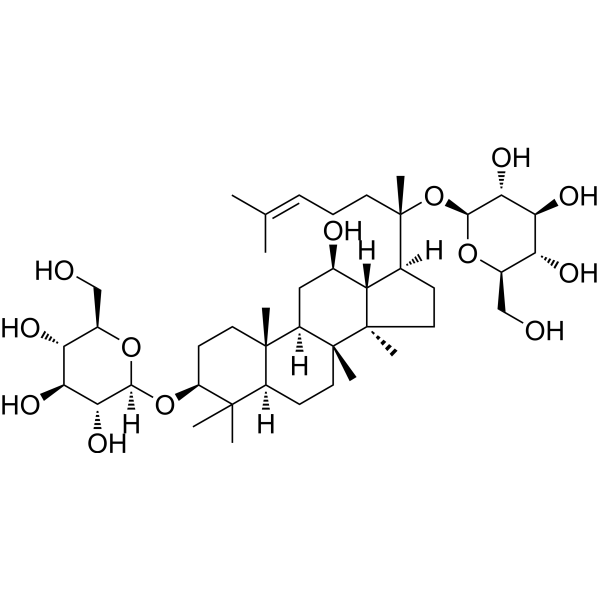
Ginsenoside F2 is an orally active bioactive compound that participates in the regulation of metabolism and inflammation. Ginsenoside F2 promotes the phosphorylation of AMPK and ACC, binds to PPARγ, inhibits the phosphorylation of MAPK, activates the PI3K/AKT/GSK-3β pathway, reduces GLRX expression, and regulates lipid metabolism. Ginsenoside F2 reduces ROS production and MDA levels, restores SOD activity in cells, and alleviates oxidative stress. Ginsenoside F2 induces cell apoptosis (Apoptosis) and increases the number of cleaved caspase-3-positive cells. Ginsenoside F2 reduces body weight gain, adipose tissue weight and serum lipid levels in obese mice, and activates the hepatic AMPK signaling pathway and the expression of antioxidant enzymes. Ginsenoside F2 alleviates atopic dermatitis in mice by inhibiting inflammation and reshaping the gut microbiota . Ginsenoside F2 is applicable to research related to insulin resistance, obesity, atopic dermatitis, liver cancer, glioblastoma and glioma [3] .
loading...
    loading...
Cat. No.: HY-159892
CAS No.: 1393644-68-2
Research Areas:  

Cancer

PD-1/PD-L1-IN-54 (Compound 6) is a moderately affinic PD-1/PD-L1 inhibitor (KD: PD-1, 55.8 μM; PD-L1, 46.4 μM; IC50: 88.6 μM). PD-1/PD-L1-IN-54 inhibits PD-1/PD-L1 interactions and shows anticancer activity by activating CD8 + T cells, upregulating PD-1 expression, and increasing secretion of IFN-γ and IL-2. PD-1/PD-L1-IN-54 inhibits cancer cell proliferation and promotes apoptosis. PD-1/PD-L1-IN-54 also regulates T cell immunity through the PI3K/Akt pathway correlated with PD-1/PD-L1 .
loading...
    loading...
Cat. No.: HY-163962
CAS No.: 2451070-32-7
L18I is a Bruton's tyrosine kinase (BTK) PROTAC degrader that targets wild-type and BTK C481, and recruits the cereblon E3 ligase to mediate proteasomal degradation. L18I regulates the BCR, TLR, FcγR and NLRP3 inflammasome signaling pathways, inhibits the phosphorylation of PLCγ-2, ERK1/2 and p38, and reduces the levels of B cell activation markers CD25, CD69 and CD86. L18I downregulates the NF-κB, TNF and TLR signaling pathways, reduces the production of pro-inflammatory cytokines, and decreases immune cell infiltration and immune complex deposition. L18I inhibits the proliferation of BTK-expressing lymphoma cells, induces tumor regression in xenograft models, and exhibits synergistic activity when combined with inhibitors of SYK, PI3K or Lyn. L18I can be used in research related to lupus, diffuse alveolar hemorrhage and B-cell lymphoma [3] .
loading...
    loading...

