138 Results for "

NOS

" in MedChemExpress (MCE) Product Catalog:
Products (138)

138 Results for "NOS" in MCE Product Catalog:

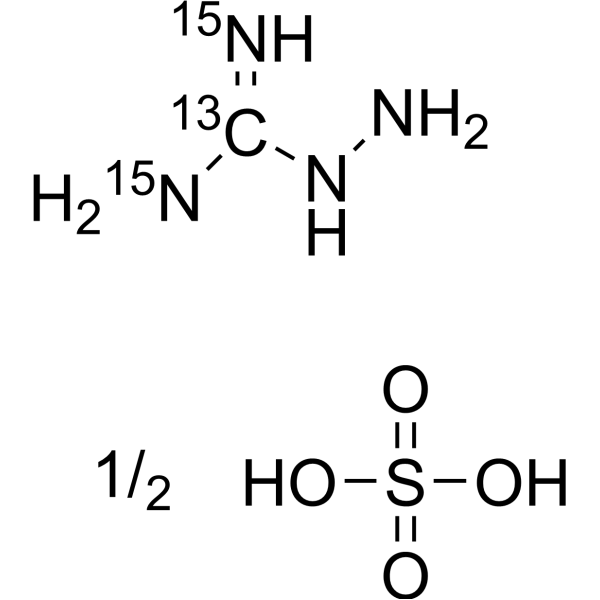
Cat. No.: HY-W020772AS
Synonyms: Pimagedine-13C,15N2 hemisulfate; GER-11-13C,15N2 hemisulfate; Aminoguanidinium-13C,15N2 hemisulfate
Aminoguanidine- 13C, 15N2 (Pimagedine- 13C, 15N2) hemisulfate is the 13C, 15N2-labeled Aminoguanidine hemisulfate (HY-W020772). Aminoguanidine hemisulfate is an inhibitor of diamine oxidase (DAO) and nitric oxide synthase (NOS). Aminoguanidine hemisulfate can reduce the formation of advanced glycation end products (AGEs). Aminoguanidine hemisulfate has a dose-dependent inhibitory effect on Doxorubicin (HY-15142)-induced cell apoptosis. Aminoguanidine hemisulfate has antioxidant properties. Aminoguanidine hemisulfate can be used in the research of diabetic nephropathy .
loading...
    loading...
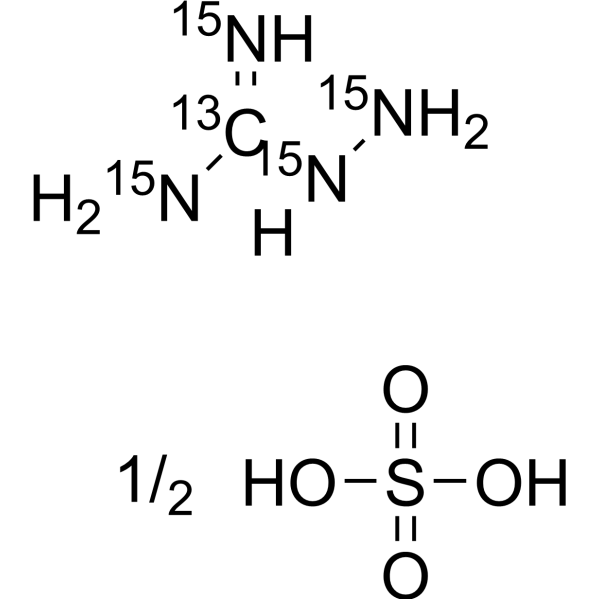
Cat. No.: HY-W020772AS1
Synonyms: Pimagedine-13C,15N4 hemisulfate; GER-11-13C,15N4 hemisulfate; Aminoguanidinium-13C,15N4 hemisulfate
Aminoguanidine- 13C, 15N4 (Pimagedine- 13C, 15N4) hemisulfate is the 13C, 15N4-labeled Aminoguanidine hemisulfate (HY-W020772). Aminoguanidine hemisulfate is an inhibitor of diamine oxidase (DAO) and nitric oxide synthase (NOS). Aminoguanidine hemisulfate can reduce the formation of advanced glycation end products (AGEs). Aminoguanidine hemisulfate has a dose-dependent inhibitory effect on Doxorubicin (HY-15142)-induced cell apoptosis. Aminoguanidine hemisulfate has antioxidant properties. Aminoguanidine hemisulfate can be used in the research of diabetic nephropathy .
loading...
    loading...
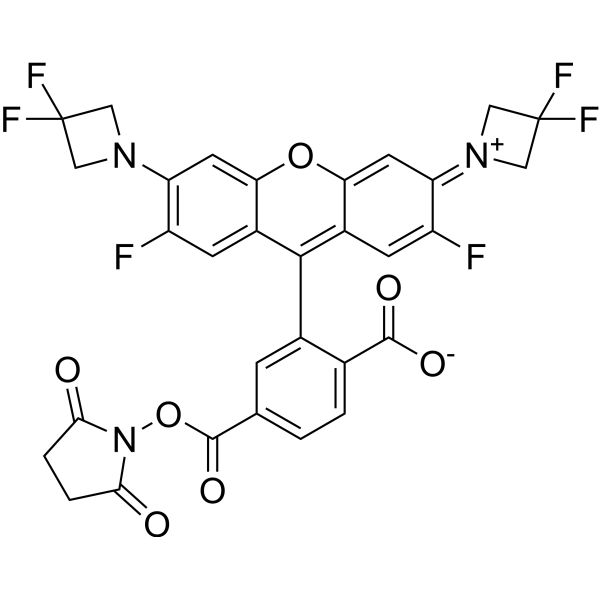
Cat. No.: HY-138658
Synonyms: JF526, SE; JF526, NHS
Janelia Fluor 526, SE (JF526,SE) is a fluorogenic yellow fluorescent dye that contains NHS ester group. JF526 is a versatile scaffold for fluorogenic ligands, including labels for genetically encoded self-labeling protein tags and stains for endogenous structures . Janelia Fluor fluorescent dyes can be chemically conjugated to the specific HaloTag substrate (a chloroalkane ligand) to form a fluorescent ligand, rather than binding directly to the HaloTag protein itself. Janelia Fluor products are licensed under U.S. Pat. Nos. 9,933,417, 10,018,624 and 10,161,932 and other patents from Howard Hughes Medical Institute (Ex/Em = 526/550 nm).
loading...
    loading...
Cat. No.: HY-W008385AS
Synonyms: L-Homoarginine-d4 dihydrochloride
H-HoArg-OH-d4 dihydrochloride (L-Homoarginine-d4 dihydrochloride) is the d4-labeled H-HoArg-OH dihydrochloride. H-HoArg-OH dihydrochloride (L-Homoarginine dihydrochloride) is an orally active endogenous non-protein amino acid. H-HoArg-OH dihydrochloride acts as a weak alternative substrate for NOS and interferes with NO production, selectively inhibits tissue-nonspecific alkaline phosphatase (TNAP), and suppresses the uptake of arginine by y +-type transporters (system y +). H-HoArg-OH dihydrochloride increases tissue hArg concentrations in vivo, regulates amino acid homeostasis, and improves renal function and pathological features of diabetic nephropathy. H-HoArg-OH dihydrochloride can be used in studies related to diabetes and cardiomyopathy .
loading...
    loading...
Cat. No.: HY-W012340R
CAS No.: 1483-01-8
H-HomoArg-OH hydrochloride (Standard) is the analytical standard of H-HomoArg-OH hydrochloride (HY-W012340). This product is intended for research and analytical applications. H-HomoArg-OH hydrochloride (L-Homoarginine hydrochloride) is an orally active endogenous non-protein amino acid. H-HomoArg-OH hydrochloride acts as a weak alternative substrate for NOS and interferes with NO production, selectively inhibits tissue-nonspecific alkaline phosphatase (TNAP), and suppresses the uptake of arginine by y +-type transporters (system y +). H-HomoArg-OH hydrochloride increases tissue hArg concentrations in vivo, regulates amino acid homeostasis, and improves renal function and pathological features of diabetic nephropathy. H-HomoArg-OH hydrochloride can be used in studies related to diabetes and cardiomyopathy .
loading...
    loading...
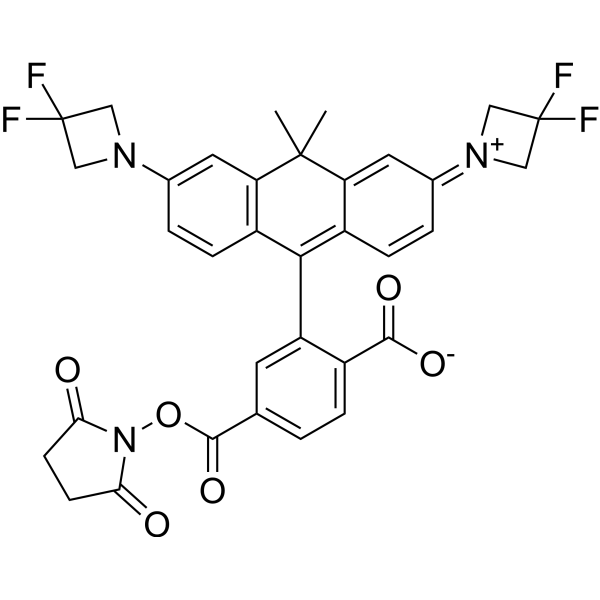
Cat. No.: HY-131025
CAS No.: 1811539-88-4
Synonyms: JF585, SE; JF585, NHS
Janelia Fluor 585, SE (JF585, SE) is an orange fluorescent dye containing an NHS ester that can be conjugated with primary amine groups. Janelia Fluor 585, SE can be used immediately for structured illumination (SIM) and stimulated emission depletion (STED) imaging and could be converted to photoactivatable derivative for single-molecule localization microscopy (SMLM) experiments . Janelia Fluor fluorescent dyes can be chemically conjugated to the specific HaloTag substrate (a chloroalkane ligand) to form a fluorescent ligand, rather than binding directly to the HaloTag protein itself. Janelia Fluor products are licensed under U.S. Pat. Nos. 9,933,417, 10,018,624 and 10,161,932 and other patents from Howard Hughes Medical Institute (Ex/Em = 585/609 nm).
loading...
    loading...
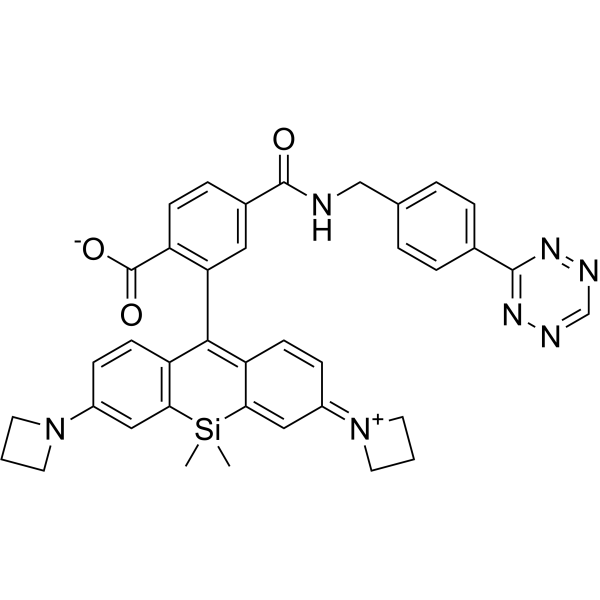
Cat. No.: HY-138659
CAS No.: 2042192-00-5
Purity:  95.29%
Synonyms: JF646, Tetrazine
Janelia Fluor 646, Tetrazine (JF646, Tetrazine) a red fluorescent dye that contains a tetrazine group. JF646, Tetrazine can be used in cellular imaging . Janelia Fluor fluorescent dyes can be chemically conjugated to the specific HaloTag substrate (a chloroalkane ligand) to form a fluorescent ligand, rather than binding directly to the HaloTag protein itself. Janelia Fluor products are licensed under U.S. Pat. Nos. 9,933,417, 10,018,624 and 10,161,932 and other patents from Howard Hughes Medical Institute. Janelia Fluor 646, Tetrazine is a click chemistry reagent, it contains a Tetrazine group that can undergo an inverse electron demand Diels-Alder reaction (iEDDA) with molecules containing TCO groups (Ex/Em = 646/664 nm).
loading...
    loading...
Cat. No.: HY-DY2050
Methylene Blue Staining Solution (1%) (Basic Blue 9) is a guanylyl cyclase (sGC), monoamine oxidase A (MAO-A) and NO synthase (NOS) inhibitor. Methylene Blue Staining Solution (1%) is a vasopressor and is often used as a dye in several medical procedures. Methylene Blue Staining Solution (1%) through the nitric oxide syntase/guanylate cyclase signalling pathway to reduce prepulse inhibition. Methylene Blue Staining Solution (1%) is a REDOX cycling compound and able to cross the blood-brain barrier. Methylene Blue Staining Solution (1%) is a Tau aggregation inhibitor. Methylene Blue Staining Solution (1%) is a photosensitizer and redox agent. Methylene Blue Staining Solution (1%) reduces cerebral edema, attenuated microglial activation and reduced neuroinflammation .
loading...
    loading...
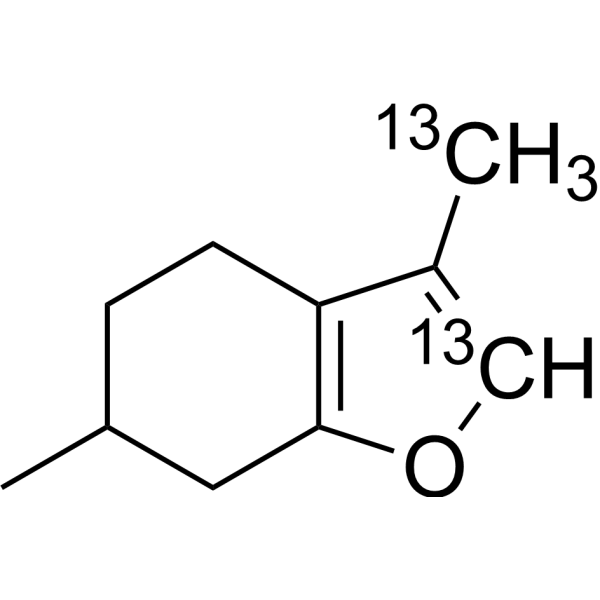
Cat. No.: HY-N9484S
CAS No.: 3028870-62-1
Menthofuran-13C2 is the 13C-labeled Menthofuran, 84% (HY-N9484). Menthofuran, 84% is an orally active modulator of pulegone reductase with gastroprotective activity, and it is the metabolite of (R)-(+)-Pulegone. Menthofuran, 84% reduces the transcriptional level of pulegone reductase in immature peppermint leaves, increases the content of pulegone in peppermint essential oil, and regulates the biosynthesis of peppermint essential oil through a feedforward-like inhibition mechanism. Menthofuran, 84% decreases total gastric acidity, restores non-protein thiol levels, inhibits lipid peroxidation, and reduces myeloperoxidase activity, with its mechanism of action related to the NOS pathway and endogenous prostaglandins. Menthofuran, 84% can be used in studies related to gastric ulcers .
loading...
    loading...
Cat. No.: HY-W008385R
CAS No.: 156-86-5
Synonyms: L-Homoarginine (Standard)
H-HoArg-OH (Standard) (L-Homoarginine (Standard)) is the analytical standard of H-HoArg-OH (HY-W008385). This product is intended for research and analytical applications. H-HomoArg-OH (L-Homoarginine) is an orally active endogenous non-protein amino acid. H-HomoArg-OH acts as a weak alternative substrate for NOS and interferes with NO production, selectively inhibits tissue-nonspecific alkaline phosphatase (TNAP), and suppresses the uptake of arginine by y +-type transporters (system y +). H-HomoArg-OH increases tissue hArg concentrations in vivo, regulates amino acid homeostasis, and improves renal function and pathological features of diabetic nephropathy. H-HomoArg-OH can be used in studies related to diabetes and cardiomyopathy .
loading...
    loading...
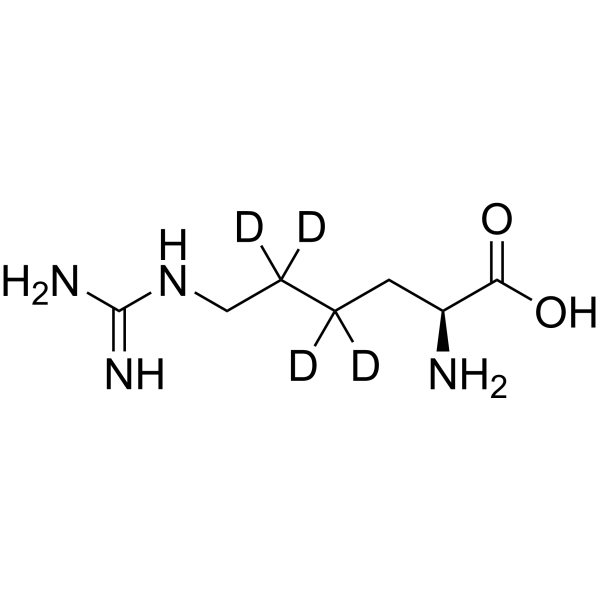
Cat. No.: HY-W008385S
CAS No.: 1332075-41-8
Synonyms: L-Homoarginine-d4
H-HoArg-OH-d4 (L-Homoarginine-d4) is the d4-labeled H-HoArg-OH (HY-W008385). H-HoArg-OH (L-Homoarginine) is an orally active endogenous non-protein amino acid. H-HoArg-OH acts as a weak alternative substrate for NOS and interferes with NO production, selectively inhibits tissue-nonspecific alkaline phosphatase (TNAP), and suppresses the uptake of arginine by y +-type transporters (system y +). H-HoArg-OH increases tissue hArg concentrations in vivo, regulates amino acid homeostasis, and improves renal function and pathological features of diabetic nephropathy. H-HoArg-OH can be used in studies related to diabetes and cardiomyopathy .
loading...
    loading...
Cat. No.: HY-W008646R
CAS No.: 6779-87-9
NADH (disodium salt) (Standard) is the analytical standard of NADH (disodium salt). This product is intended for research and analytical applications. 7,8-Dihydro-L-biopterin is a NOS uncoupling inducer with blood-brain barrier permeability, and it is a reduced non-conjugated pteridine. 7,8-Dihydro-L-biopterin is the main metabolite of 4-amino-tetrahydro-L-biopterin, and it undergoes photooxidation to form biopterin. 7,8-Dihydro-L-biopterin promotes the conversion of nitric oxide synthase to a superoxide-producing form, thereby increasing oxidative stress levels in the renal outer medulla and inducing apoptosis. 7,8-Dihydro-L-biopterin is sensitive to the inhibitory effect of SOD, and it can be applied to research related to salt-sensitive hypertension, moderate to severe traumatic brain injury, and neurodegenerative diseases .
loading...
    loading...
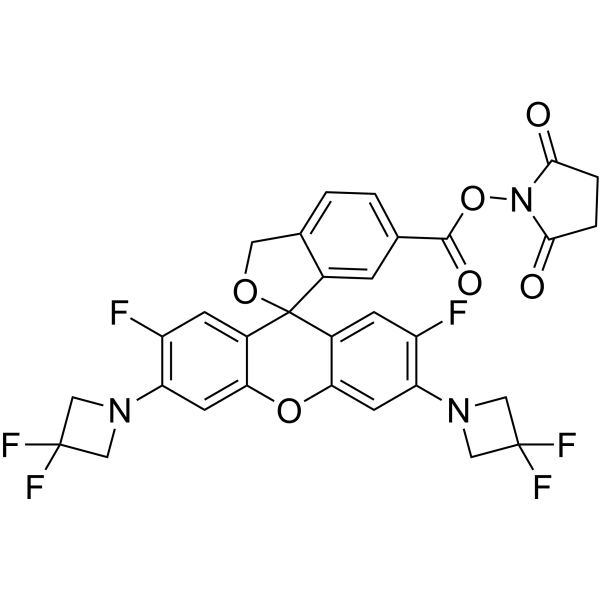
Cat. No.: HY-138660
CAS No.: 2376841-30-2
Synonyms: HM-JF526 NHS
Target:  

Fluorescent Dye

Research Areas:  

Others

HM Janelia Fluor 526, SE (HM-JF526 NHS) is a derivative of hydroxymethyl JF526 (HM-JF526). SMLM (single-molecule localization microscopy) imaging in standard phosphate-buffered saline (pH 7.4) revealed that the HM-JF526 label showed spontaneous blinking behavior throughout the imaging session and did not require short-wavelength activation light . Janelia Fluor fluorescent dyes can be chemically conjugated to the specific HaloTag substrate (a chloroalkane ligand) to form a fluorescent ligand, rather than binding directly to the HaloTag protein itself. Janelia Fluor products are licensed under U.S. Pat. Nos. 9,933,417, 10,018,624 and 10,161,932 and other patents from Howard Hughes Medical Institute.
loading...
    loading...
Cat. No.: HY-W012340S
CAS No.: 2483830-23-3
Synonyms: L-Homoarginine-13C7,15N4 hydrochloride
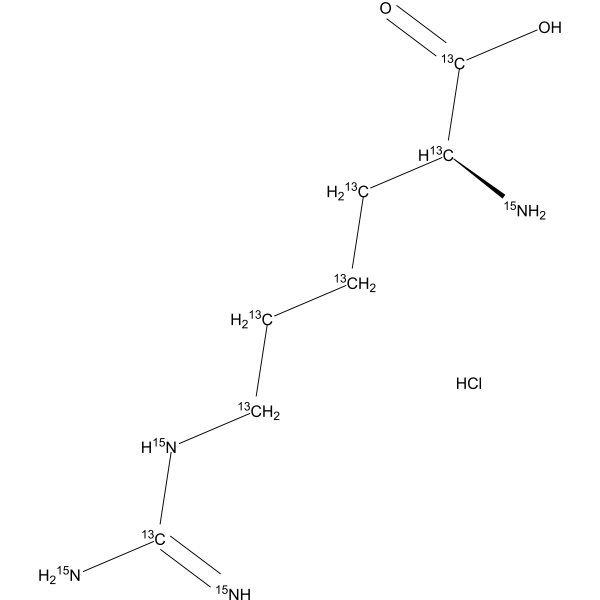
H-HomoArg-OH- 13C7, 15N4 hydrochloride (L-Homoarginine- 13C7, 15N4 hydrochloride) is the 15N, 13C-labeled H-HomoArg-OH (hydrochloride) (HY-W012340). H-HomoArg-OH hydrochloride (L-Homoarginine hydrochloride) is an orally active endogenous non-protein amino acid. H-HomoArg-OH hydrochloride acts as a weak alternative substrate for NOS and interferes with NO production, selectively inhibits tissue-nonspecific alkaline phosphatase (TNAP), and suppresses the uptake of arginine by y +-type transporters (system y +). H-HomoArg-OH hydrochloride increases tissue hArg concentrations in vivo, regulates amino acid homeostasis, and improves renal function and pathological features of diabetic nephropathy. H-HomoArg-OH hydrochloride can be used in studies related to diabetes and cardiomyopathy .
loading...
    loading...
Cat. No.: HY-P701358
Purity:  ≥ 90%, as determined by reducing SDS-PAGE.
Synonyms: ATG9B; FLJ14885; Prev. NOS3AS; Endothelial Nitric Oxide Synthase Antisense; APG9L2; ATG9 Autophagy Related 9 Homolog B; SONE; Nitric Oxide Synthase 3 Antisense; Nitric Oxide Synthase 3-Overlapping Antisense Gene Protein; Autophagy 9-Like 2 Protein; Autoph
Species:  
Human
Source:  
HEK293
loading...
    loading...
Cat. No.: HY-P701359
Purity:  ≥ 90%, as determined by reducing SDS-PAGE.
Synonyms: ATG9B; FLJ14885; Prev. NOS3AS; Endothelial Nitric Oxide Synthase Antisense; APG9L2; ATG9 Autophagy Related 9 Homolog B; SONE; Nitric Oxide Synthase 3 Antisense; Nitric Oxide Synthase 3-Overlapping Antisense Gene Protein; Autophagy 9-Like 2 Protein; Autoph
Species:  
Human
Source:  
HEK293
loading...
    loading...
Cat. No.: HY-131027
Purity:  99.87%
Synonyms: JF646, Azide
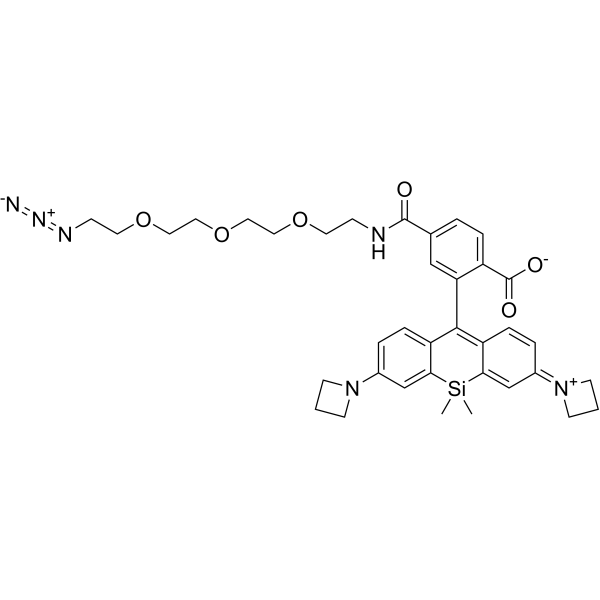
Janelia Fluor 646, Azide (JF646, Azide) is a red fluorogenic fluorescent dye containing a click chemistry group Azide. Janelia Fluor 646, Azide can be used for live-cell imaging experiments . Janelia Fluor fluorescent dyes can be chemically conjugated to the specific HaloTag substrate (a chloroalkane ligand) to form a fluorescent ligand, rather than binding directly to the HaloTag protein itself. Janelia Fluor products are licensed under U.S. Pat. Nos. 9,933,417, 10,018,624 and 10,161,932 and other patents from Howard Hughes Medical Institute. Janelia Fluor 646, Azide is a click chemistry reagent, it contains an Azide group and can undergo copper-catalyzed azide-alkyne cycloaddition reaction (CuAAc) with molecules containing Alkyne groups. It can also undergo strain-promoted alkyne-azide cycloaddition (SPAAC) reactions with molecules containing DBCO or BCN groups (Ex/Em = 646/664 nm).
loading...
    loading...
Cat. No.: HY-N12586
CAS No.: 603-17-8
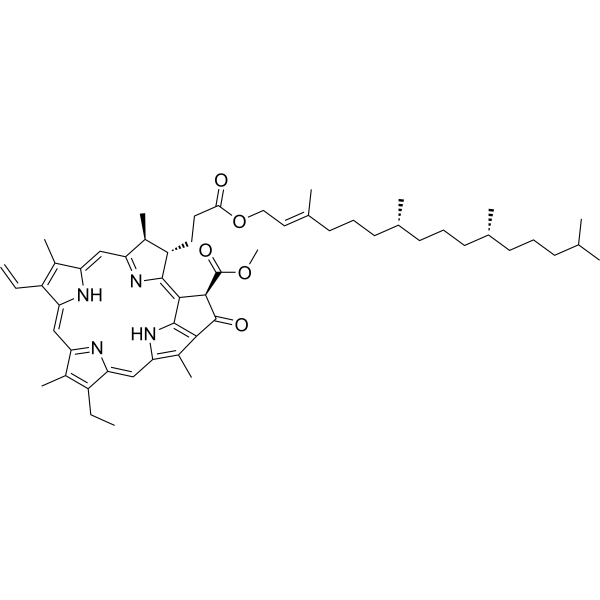
Pheophytin a is a multi-target inhibitor, anticancer agent, antioxidant and antiviral agent. Pheophytin a directly binds to and inhibits HCV-NS3/4A protease (IC50=0.89 μM) to block viral replication. Pheophytin a also scavenges free radicals, reduces ferric ions, and exhibits cytotoxic activity against breast cancer cells. Pheophytin a effectively inhibits LPS-induced production of nitric oxide, prostaglandin E2, NOS2 and COX-2, as well as various pro-inflammatory cytokines, by downregulating the transcription levels of inflammatory mediators and blocking the ERK1/2 and STAT-1 pathways. In a low nerve growth factor environment, Pheophytin a also enhances ERK1/2 phosphorylation and synergistically promotes neurite outgrowth through MAPK pathway. Pheophytin a can be used to investigate the pathogenic mechanisms of diseases including chronic hepatitis C, sepsis, breast cancer and Alzheimer's disease .
loading...
    loading...

