176 Results for "

human DOR

" in MedChemExpress (MCE) Product Catalog:
Products (176)

176 Results for "human DOR" in MCE Product Catalog:

Cat. No.: HY-P2452
CAS No.: 1217344-74-5
Research Areas:  

Others

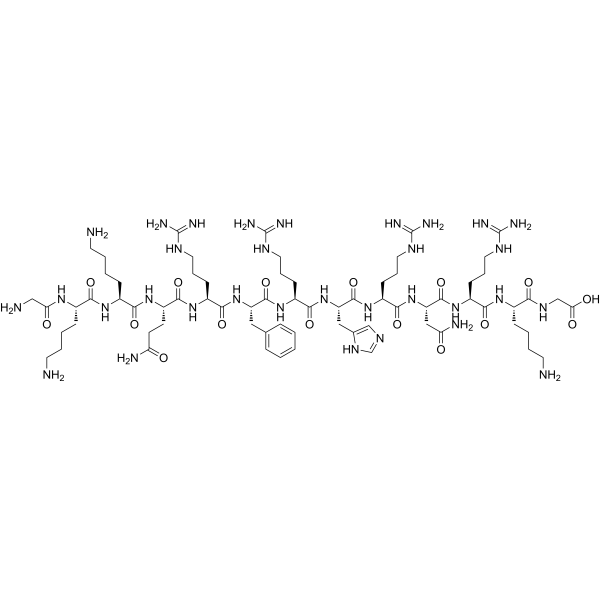
Vitronectin (367-378) corresponds to the 367-378 residue fragment of Vitronectin and is a heparin/glycosaminoglycan-binding peptide. Vitronectin (367-378) acts on cell surface glycosaminoglycans and does not directly bind integrins. Vitronectin (367-378) supports pluripotent stem cell adhesion, proliferation, long-term self-renewal, pluripotency markers, normal karyotype, and undifferentiated culture. Vitronectin (367-378) facilitates the differentiation of human pluripotent stem cells into definitive endoderm and mesoderm . Vitronectin (367-378) can be used in research related to stem cell fate regulation .
loading...
    loading...
Cat. No.: HY-P11220
Research Areas:  

Infection

Hs02 is a cationic amphiphilic antibacterial peptide derived from human proteins, and it is the membrane-active module of the core chimeric peptide Chim2. Hs02 exhibits broad-spectrum and potent antibacterial activity against various human pathogenic bacteria with the MIC for Staphylococcus aureus and Escherichia coli of as low as 2 μM, and the MBC is 2-4 μM. Hs02 primarily kills bacteria by disrupting the integrity of the bacterial cell membrane, and it has a relatively low selectivity for eukaryotic cell membranes. Hs02 induces the release of IL-12 but does not induce the release of IL-6, indicating its potential for pro-inflammatory or immune activation. Hs02 can be used in antibacterial and immunomodulatory research .
loading...
    loading...
Cat. No.: HY-116163
CAS No.: 1565852-90-5
Synonyms: CYM50202
Target:  

Endogenous Metabolite

Research Areas:  

Others

ML350 (CYM50202) is a highly potent OPRK1 antagonist with selectivity and broad biological applications. With IC50 values of 9-16 nM, ML350 shows high selectivity for OPRK1, with selectivity of 219-382-fold and 20-35-fold relative to OPRD1 and OPRM1, respectively. ML350 exhibited favorable characteristics in in vivo pharmacokinetic analysis, including high passive membrane permeability and moderate human plasma protein binding. Extensive screening of ML350 against multiple ion channels, receptors, and transporters showed that it does not have adverse off-target effects .
loading...
    loading...
Cat. No.: HY-117724
CAS No.: 1418747-15-5
Purity:  98.03%
Target:  

PAI-1

Research Areas:  

Cardiovascular Disease

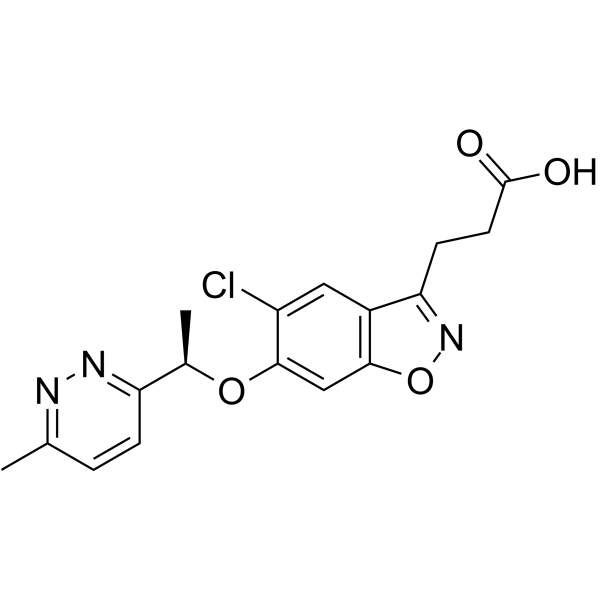
AZ3976 is a potent plasminogen activator inhibitor type 1 (PAI-1) inhibitor with an IC50 value of 26 μM in an enzymatic chromogenic assay. AZ3976 is active with an IC50 of 16 μM in a plasma clot lysis assay. AZ3976 does not bind to active PAI-1 but bound reversibly to latent PAI-1. AZ3976 inhibits PAI-1 by enhancing the latency transition of active PAI-1. AZ3976 displays profibrinolytic activities in a human plasma clot lysis assay .
loading...
    loading...
Cat. No.: HY-19869
CAS No.: 878670-89-4
Research Areas:  

Infection

VRX-480773 is an efficient non-nucleoside reverse transcriptase inhibitor (NNRTI), used for HIV infection. VRX-480773 has high specificity for HIV-1, with an EC50 for wild-type HIV-1 being 0.14 nM. VRX-480773 does not inhibit HIV-2, HBV or HCV, and has no effect on human DNA polymerase α/β. VRX-480773 retains inhibitory activity against Efavirenz (HY-10572) resistant strains, with EC50s mostly < 1 nM. VRX-480773 can be used for research on AIDS .
loading...
    loading...
Cat. No.: HY-B1259R
CAS No.: 57-08-9
Synonyms: Acexamic acid (Standard); 6-Acetamidocaproic acid (Standard)
6-Acetamidohexanoic acid (Acexamic acid; 6-Acetamidocaproic acid) (Standard) is the analytical standard of 6-Acetamidohexanoic acid. This product is intended for research and analytical applications. 6-Acetamidohexanoic acid (Acexamic acid; 6-Acetamidocaproic acid) is a metabolite of Hexamethylene bisacetamide (HMBA) (HY-124284) with anti-pulmonary fibrosis activity. 6-Acetamidohexanoic acid does not induce differentiation of human promyelocytic leukemia cells, but is taken up by such cells. 6-Acetamidohexanoic acid serves as a carboxylic acid substrate component for constructing carboxylesterase-responsive near-infrared phototheranostic probes. 6-Acetamidohexanoic acid is applicable to research related to pulmonary fibrosis, refractory hypoxemia and cervical cancer.
loading...
    loading...
Cat. No.: HY-119171
CAS No.: 1953157-39-5
Purity:  99.80%
Target:  

KMO

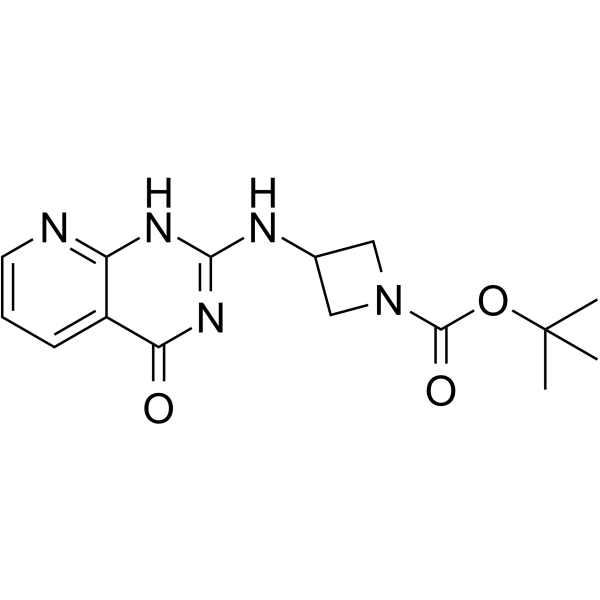
GSK 366 is a type II kynurenine-3-monooxygenase (KMO) inhibitor with IC50 values of 2.3 nM and 0.7 nM for human KMO and P. fluorescens-KMO (Pf-KMO). GSK 366 binds to KMO’s substrate site, prevents productive NADPH association, substrate binding, and FAD hydroperoxy species formation. GSK 366 does not stimulate hydrogen peroxide (H2O2) production and reduces H2O2 levels. GSK 366 can be used for the researches of inflammation and neurological disease, such as acute pancreatitis multiple organ dysfunction syndrome and Alzheimer’s disease .
loading...
    loading...
Cat. No.: HY-121998
CAS No.: 220088-42-6
Target:  

Aurora Kinase

Research Areas:  

Others

Binucleine 2 is an isoform-specific and ATP-competitive inhibitor of Drosophila Aurora B kinase (Ki=0.36 μM), a kinase involved in cell division. It is specific for Drosophila Aurora B kinase, inhibiting it in a dose-dependent manner, with minimal inhibition of human or X. laevis Aurora B kinases at concentrations up to 100 μM. Binucleine 2 induces mitotic and cytokinesis defects in Drosophila Kc167 cells. It prevents Drosophila S2 cells from assembling a contractile ring during cell division when used at a concentration of 40 μM but does not affect ring ingression, suggesting that Aurora B kinase activity is not required for that step.
loading...
    loading...
Cat. No.: HY-175278
BAL-1516 is an orally active NLRP3 inhibitor with human NLRP3 Kd of 14.2 nM, mouse NLRP3 Kd of 200 nM, and blood-brain barrier penetration.BAL-1516 binds to a surface groove of the NLRP3 nucleotide-binding domain, contacts FISNA and WHD subdomains, forms three hydrogen bonds to the peripheral β-strand of the triple-ATPase, and does not alter NLRP3 ATP-hydrolysis activity.BAL-1516 shows specificity for NLRP3 over other NOD-like receptors, directly binds mouse NLRP3, and inhibits inflammasome formation in monocytes and microglia .
loading...
    loading...
Cat. No.: HY-178738
CAS No.: 1371629-36-5
GC-072 is an orally active, 4-oxoquinolizine antibiotic that selectively inhibits bacterial DNA gyrase and Topo IV enzymes. GC-072 does not inhibit human topoisomerases I and II. GC-072 demonstrates strong antimicrobial activity against various bacterial strains, including Gram-positive, Gram-negative, and resistant bacteria. GC-072 also exhibits bactericidal activity against Burkholderia pseudomallei both extracellularly and intracellularly, leading to dose-dependent survival in mice exposed to lethal inhalational models of B. pseudomallei infection. GC-072 can be used for the research of melioidosis .
loading...
    loading...
Cat. No.: HY-N13838
CAS No.: 22518-03-2
8,9-Dehydro-7,9-diisobutyryloxythymol is a Thymol (HY-N6810) derivative, as well as an antibacterial agent. 8,9-Dehydro-7,9-diisobutyryloxythymol can be found in the aerial parts of Ageratina adenophora, with selective activity against Gram-positive bacterial strains including Bacillus cereus. 8,9-Dehydro-7,9-diisobutyryloxythymol does not exhibit detectable in vitro cytotoxic activity against human cancer cell lines. 8,9-Dehydro-7,9-diisobutyryloxythymol can be used for the research of bacterial infection .
loading...
    loading...
Cat. No.: HY-123189
CAS No.: 89139-28-6
Target:  

Dopamine Receptor

Research Areas:  

Neurological Disease

LY 171859 is a D2 receptor agonist with significant reductase activity. LY 171859 exhibits enzymatic activity in the cytoplasm of liver, lung, and kidney, and also contains significant reductase activity in rat and human blood. LY 171859 has higher hepatic reductase activity in guinea pigs, followed by hamsters, rabbits, rats, and mice. The substrate of LY 171859 shows an apparent Km of 5.6 μM. The reduction reaction of LY 171859 is NADPH-dependent with an apparent Km of 14.8 μM. Only the A-side hydrogen of NADPH is incorporated in the reduction product of LY 171859. The reaction of LY 171859 is inhibited by cyanide and thiol reagents, and phenobarbital does not induce its activity in rats .
loading...
    loading...
Cat. No.: HY-125327
CAS No.: 1610007-47-0
Target:  

SGLT

Research Areas:  

Metabolic Disease

YM-543 is a selective SGLT2 inhibitor that effectively reduces hyperglycemia in type 2 diabetic mice through increased urinary glucose excretion. YM-543 demonstrates potent inhibition of both mouse and human SGLT2 activities at nanomolar concentrations. YM-543, when administered orally, significantly improves glucose tolerance in diabetic models and sustains its effects for over 12 hours. YM-543, in combination with other antidiabetic agents like rosiglitazone or metformin, enhances the therapeutic effects on diabetic symptoms. YM-543 does not affect blood glucose levels in normal mice, indicating its specificity for diabetic conditions.
loading...
    loading...
Cat. No.: HY-135439
CAS No.: 135938-17-9
Target:  

5-HT Receptor

Research Areas:  

Neurological Disease

SB-203186 is a highly selective 5-HT4 receptor antagonist. SB-203186 exhibits a potent competitive antagonistic effect, with its pKB value being 8.3 in the isolated right atrium model of piglets. SB-203186 can dose-dependently shift the 5-HT-induced tachycardia curve to the right, and does not inhibit the maximum response. SB-203186 is an efficient 5-HT₄ antagonist in pig and human atria, but has no significant inhibitory effect in rat atria. SB-203186 can be used for the study of diseases such as arrhythmias and abnormal myocardial contraction .
loading...
    loading...
Cat. No.: HY-158976
Synonyms: Lactated ringer's solution (LRS)
Sodium lactate ringer's solution (Lactated ringer's solution (LRS)) is an isotonic crystal intravenous injection and arthroscopic irrigation solution containing racemic sodium lactate and electrolytes such as sodium, potassium, calcium and chloride (130 mEq sodium/L, 274 mOsm/L), which can be used as a cell integrity protectant. Sodium lactate ringer's solution maintains the integrity of human meniscus cells, ensures that they retain normal cell morphology, membrane regularity, size and density, and does not alter the mRNA expression levels of α1 (I) procollagen, α1 (II) procollagen, aggrecan or HSP70. Sodium lactate ringer's solution can be applied to studies related to extracellular fluid deficiency and meniscus tears .
loading...
    loading...
Cat. No.: HY-187653
CAS No.: 2556837-25-1
Target:  

HSP Akt ERK Apoptosis

Research Areas:  

Cancer

DCZ3112 is a Hsp90/Cdc37 protein-protein interaction inhibitor, with a Kd value of 4.98 µM against human Hsp90. DCZ3112 binds to the N-terminal domain of Hsp90, disrupts the Hsp90-Cdc37 interaction, and does not inhibit the ATPase activity of Hsp90. DCZ3112 induces G1 phase cell cycle arrest, apoptosis, reduces the phosphorylation levels of AKT and ERK, and inhibits the proliferation of HER2-positive breast cancer cells. DCZ3112 can be used in breast cancer-related research .
loading...
    loading...
Cat. No.: HY-N6861
CAS No.: 95311-95-8
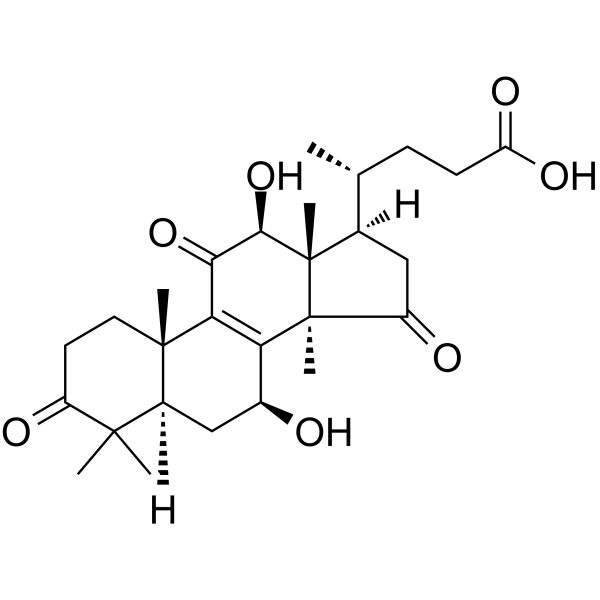
Lucidenic acid B is a triterpenoid compound. Lucidenic acid B inhibits the activities of ERK1/2, AP-1, NF-kB, and IKK, suppresses PMA (Phorbol 12-myristate 13-acetate) (HY-18739)-induced MMP-9 expression and cell invasion, and induces apoptosis in leukemia cells via the mitochondrial pathway. Lucidenic acid B inhibits the growth of various cancer cell lines without affecting normal lymphocytes and does not induce G1 phase arrest or necrosis. Lucidenic acid B can be used in research on hepatocellular carcinoma, human acute promyelocytic leukemia, and skin tumor promotion .
loading...
    loading...
Cat. No.: HY-P992365

Target:  

CCR

Research Areas:  

Cancer

HFB101110 is a human-derived inhibitor and Treg depleter that specifically targets CCR8. It does not bind to the homologous CCR4 receptor and is mainly used in research on solid tumors, renal cell carcinoma and colorectal cancer. HFB101110 blocks hCCL1 binding by interacting with the N-terminal extracellular domain of hCCR8, thereby inhibiting hCCL1-induced calcium influx, chemotaxis and downstream signaling pathways. Meanwhile, HFB101110 can mediate ADCC effects to specifically deplete CCR8-positive cells, including intratumoral Tregs. HFB101110 exhibits favorable anti-tumor activity and pharmacokinetic properties .
loading...
    loading...
Cat. No.: HY-P5357
CAS No.: 261521-21-5
Research Areas:  

Others

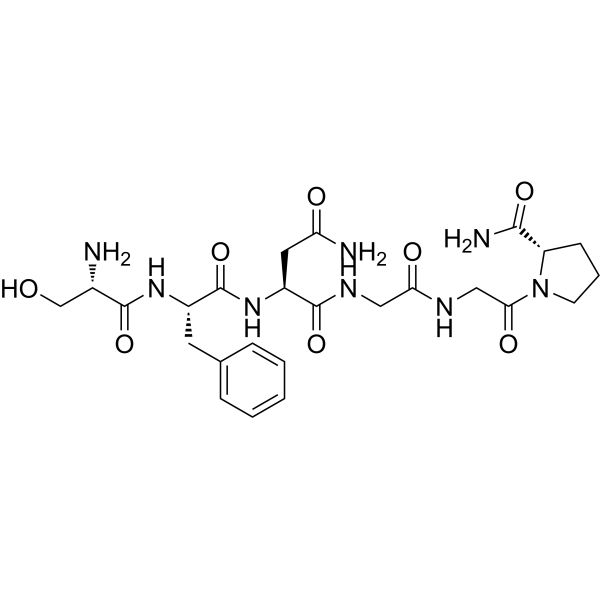
SFNGGP-NH2 is a biological active peptide. (PAR-3 is a high-affinity thrombin receptor. PAR-3 mRNA is expressed in the cutaneous mast cells of humans. Protease-Activated Receptors (PARs) have been studied for their roles in itch and their itch-associated response through histamine-dependent/independent pathways have been reported. PAR-3 has been shown not to induce itching alone but possibly in conjunction with PAR-4. Co-expression of PAR-3 and PAR-4 enhances thrombin action suggesting that PAR-3 alone does not mediate transmembrane signaling but instead functions as a cofactor to activate PAR-4.)
loading...
    loading...
Cat. No.: HY-P992437

Target:  

CD44 Apoptosis

Research Areas:  

Inflammation/Immunology Cancer

PF-03475952 is a fully human IgG2 monoclonal antibody targeting CD44. PF-03475952 binds an epitope in CD44’s constant exons, blocks CD44-hyaluronic acid interaction, reduces cell surface CD44, and does not cross-react with rodent CD44 or LYVE-1. PF-03475952 induces cancer cell apoptosis, inhibits LPS (HY-D1056)-induced leukocyte cytokine release and cancer metastasis, and reduces CD44 expression on circulating CD3+ lymphocytes in cynomolgus monkeys. PF-03475952 can be used for the research of rheumatoid arthritis and hepatocellular carcinoma .
loading...
    loading...

