197 Results for "

H2O2

" in MedChemExpress (MCE) Product Catalog:
Products (197)

197 Results for "H2O2" in MCE Product Catalog:

Art. -Nr.: HY-E70385A
Target:  

Endogenous Metabolite

Forschungsgebiete:  

Metabolic Disease

Oxalate oxidase, B. subtilis (EC 1.2.3.4) is a redox enzyme that acts on the donor aldehyde or carbonyl group, using oxygen as the acceptor. Oxalate oxidase, B is involved in the metabolism of glyoxylate and dicarboxylic acids. Oxalate oxidase, B has two cofactors: FAD and manganese. Oxalate oxidase, B has three substrates: oxalic acid, O2, and H +, and two products: CO2 and H2O2.
loading...
    loading...
Art. -Nr.: HY-E70926
Target:  

Endogenous Metabolite

Forschungsgebiete:  

Metabolic Disease

Lysine Oxidase, Trichoderma viride (EC 1.4.3.14), is an oxidoreductase that acts on the CH-NHsub>2 group in the donor molecule and uses oxygen as the acceptor. Lysine Oxidase participates in the degradation of lysine. The three substrates of lysine oxidase are L-lysine, O2, and H2O, while its three products are 6-amino-2-oxohexanoic acid, NH3, and H2O2.
loading...
    loading...
Art. -Nr.: HY-N0501R
CAS. Nr.: 126105-11-1
11-oxo-mogroside V (Standard) is the analytical standard of 11-oxo-mogroside V. This product is intended for research and analytical applications. 11-oxo-mogroside V is a natural sweetener that exhibits strong antioxidant activity. It exhibits significant inhibitory effects on reactive oxygen species (O2-, H2O2 and *OH) with EC50 of 4.79, 16.52, and 146.17 μg/mL, respectively.
loading...
    loading...
Art. -Nr.: HY-P2936A
CAS. Nr.: 9031-54-3
Sphingomyelin phosphodiesterase, Bacillus cereus is a sphingomyelin hydrolase and Insecticide. Sphingomyelin phosphodiesterase, Bacillus cereus catalyzes the decomposition of sphingomyelin into ceramide and phosphorylcholine. Sphingomyelin phosphodiesterase, Bacillus cereus causes rapid paralysis and death in injected insects, including German cockroaches and black cutworms. Sphingomyelin phosphodiesterase, Bacillus cereus reduces H2O2 production. Sphingomyelin phosphodiesterase, Bacillus cereus can be used in studies related to sepsis and endophthalmitis .
loading...
    loading...
Art. -Nr.: HY-114809
CAS. Nr.: 126455-04-7
AL-1 is a potent O2 - generation inhibitor (IC50 = 7.6 μM) through the inhibition of leukocytic NADPH oxidase. AL-1 inhibits 12-O-Tetradecanoylphorbol-13-acetate (TPA)-induced H2O2 production. AL-1 reduces tumor incidence in ICR mouse skin. AL-1 can be used for research on oxidative stress-related diseases including cancer .
loading...
    loading...
Art. -Nr.: HY-141712
CAS. Nr.: 2696407-32-4
Target:  

TRP Channel

ZA18 is a selective TRPM2 channel inhibitor, with an IC50 value of 6.2 μM. ZA18 can effectively suppress intracellular Ca 2+ overload triggered by TRPM2 channel activation. ZA18 significantly reduce the mortality of SH-SY5Y cells induced by H2O2. ZA18 can be used for the study of ischemia-reperfusion injury, inflammation, or other neurodegenerative diseases .
loading...
    loading...
Art. -Nr.: HY-141713
CAS. Nr.: 2696407-24-4
Target:  

TRP Channel

ZA10 is a selective TRPM2 channel inhibitor, with an IC50 value of 8.1 μM. ZA10 can effectively suppress intracellular Ca 2+ overload triggered by TRPM2 channel activation. ZA10 significantly reduce the mortality of SH-SY5Y cells induced by H2O2. ZA10 can be used for the study of ischemia-reperfusion injury, inflammation, or other neurodegenerative diseases .
loading...
    loading...
Art. -Nr.: HY-174460
Target:  

Drug Intermediate

Forschungsgebiete:  

Cancer

pCR8 is a CR8 prodrug and anticancer agent responsive to H2O2. pCR8 achieves selective release of CR8 via boronate ester oxidation mediated by elevated hydrogen peroxide levels at tumor sites, self-assembles into nanoparticles, and degrades cell cycle-related proteins. A synergistic effect is produced when pCR8 is used in combination with immune checkpoint inhibitors. pCR8 can be used for the research of triple-negative breast cancer .
loading...
    loading...
Art. -Nr.: HY-W112021
CAS. Nr.: 3117-03-1
Synonyms: 2,5-Dimethoxybenzoquinone
Forschungsgebiete:  

Others

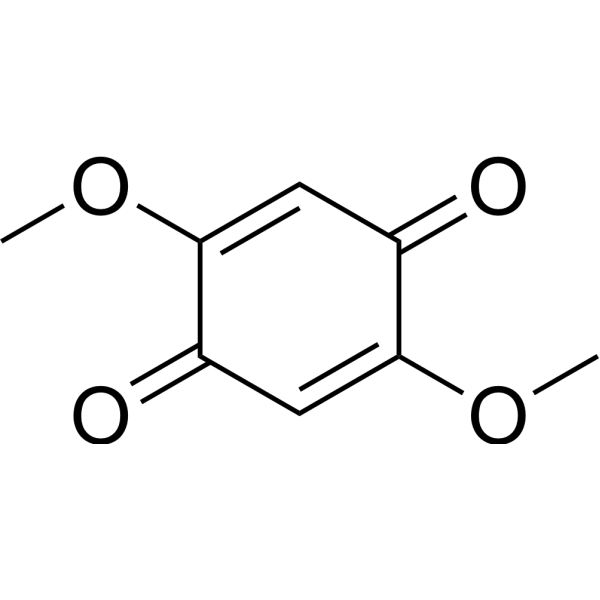
2,5-DMBQ (2,5-Dimethoxybenzoquinone) serves as an extracellular reductant. 2,5-DMBQ is involved in a crucial redox cycle, namely the extracellular hydroquinone-quinone redox cycle. In this cycle, 2,5-DMBQ is capable of reducing extracellular Fe ³⁺ and generating H2O2. 2,5-DMBQ plays a pivotal role in the biodegradation mechanism of brown rot fungal, assisting the fungi in decomposing and utilizing organic matter .
loading...
    loading...
Art. -Nr.: HY-W112021R
CAS. Nr.: 3117-03-1
Synonyms: 2,5-Dimethoxybenzoquinone (Standard)
Forschungsgebiete:  

Others

2,5-DMBQ (2,5-Dimethoxybenzoquinone) serves as an extracellular reductant. 2,5-DMBQ is involved in a crucial redox cycle, namely the extracellular hydroquinone-quinone redox cycle. In this cycle, 2,5-DMBQ is capable of reducing extracellular Fe³⁺ and generating H2O2. 2,5-DMBQ plays a pivotal role in the biodegradation mechanism of brown rot fungal, assisting the fungi in decomposing and utilizing organic matter .
loading...
    loading...
Art. -Nr.: HY-161783
CAS. Nr.: 3048532-05-1
HDAC6-IN-45 (Compound 15) is a selective inhibitor for HDAC6 with IC50 of 15.2 nM. HDAC6-IN-45 exhibits neurotrophic through the upregulation of GAP43 and Beta-3 tubulin markers. HDAC6-IN-45 activates the Nrf2 signaling pathway, reduces H2O2-induced ROS production, inhibits apoptosis in PC12, and exhibits neuroprotective efficacy in SCOP-induced zebrafish Alzheimer's Disease models. HDAC6-IN-45 exhibits antioxidant activity and good blood-brain barrier (BBB) permeability .
loading...
    loading...
Art. -Nr.: HY-P11474
FZ1 peptide is a cyclic heptapeptide and also an integrin αvβ3 agonist. FZ1 peptide activates the FAK/PI3K-AKT/ERK pathway and upregulates VEGFC to promote angiogenesis. FZ1 peptide exhibits antibacterial activity in extracts of HA-c-FZ1 hydrogel; it inhibits LPS-induced proinflammatory cytokine secretion in RAW264.7 macrophages; it reduces H2O2-induced ROS levels; it increases the healing rate of scratch wounds. FZ1 peptide can be used in studies related to diabetic skin wounds .
loading...
    loading...
Art. -Nr.: HY-118622
CAS. Nr.: 491-64-5
Reinheit:  ≥95.0%
Isogentisin is a Monoamine oxidase inhibitor. Isogentisin reduces basal Caspase-3 activity levels. Isogentisin induces mild intracellular oxidative stress, reduces protein oxidation after prolonged incubation, and does not significantly reduce ROS generated by CSE or H2O2. Isogentisin protects cells from cigarette smoke extract-, hydrogen peroxide-, and UV-induced death through cellular interactions rather than chemical neutralization of smoke. Isogentisin can be used in research on endothelial injury .
loading...
    loading...
Art. -Nr.: HY-162860
CAS. Nr.: 1030759-58-0
Target:  

mGluR CaMK Tau Protein

Forschungsgebiete:  

Neurological Disease

FO-4-15 is an mGluR1/CaMKIIα activator. FO-4-15 has a protective effect against H2O2 in human neuroblastoma (SH-SY5Y) cells. FO-4-15 can improve cognitive impairment in Alzheimer’s disease mice by activating the mGluR1/CaMKIIα pathway, and can reduce Aβ accumulation, hyperphosphorylated Tau, and synaptic damage .
loading...
    loading...
Art. -Nr.: HY-P5247
Synonyms: PTP20
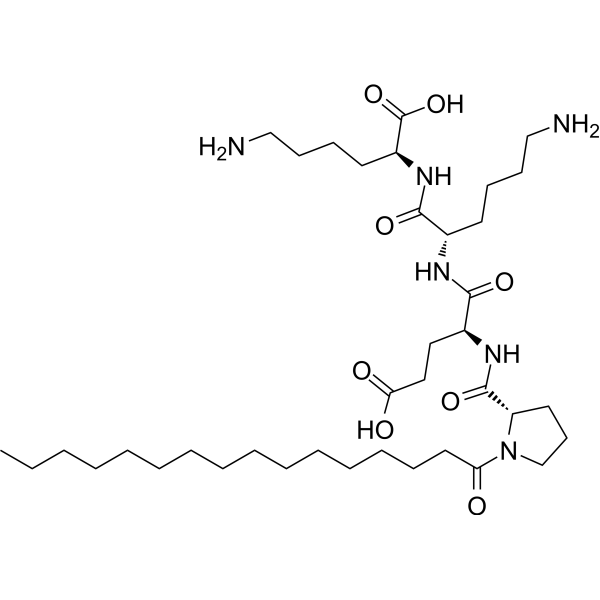
Palmitoyl tetrapeptide-20 (PTP20) is a biomimetic peptide agonist of α-MSH. Palmitoyl tetrapeptide-20 promotes hair pigmentation and delays hair graying by activating the MC1-R pathway (AC50: 0.16 nM), enhancing catalase activity to reduce H2O2 accumulation, and upregulating SIRT1 activity. Palmitoyl tetrapeptide-20 can be used in research on preventing hair loss and improving hair graying .
loading...
    loading...
Art. -Nr.: HY-P5247A
Synonyms: PTP20 TFA
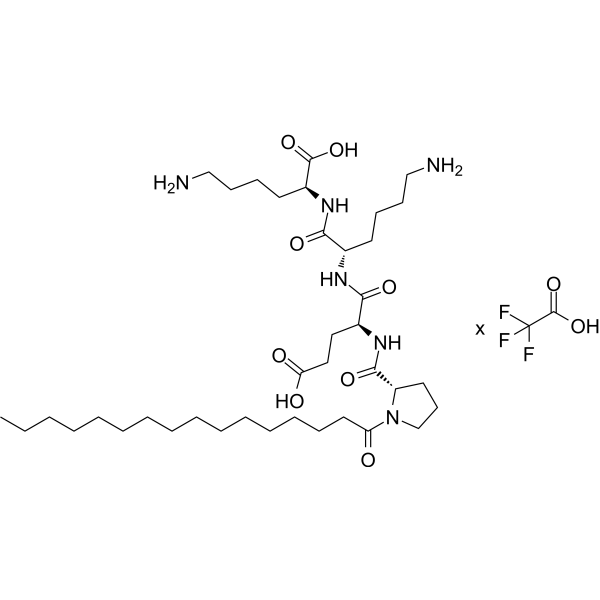
Palmitoyl tetrapeptide-20 (PTP20) TFA is a biomimetic peptide agonist of α-MSH. Palmitoyl tetrapeptide-20 TFA promotes hair pigmentation and delays hair graying by activating the MC1-R pathway (AC50: 0.16 nM), enhancing catalase activity to reduce H2O2 accumulation, and upregulating SIRT1 activity. Palmitoyl tetrapeptide-20 TFA can be used in research on preventing hair loss and improving hair graying .
loading...
    loading...
Art. -Nr.: HY-119590
CAS. Nr.: 31501-55-0
Synonyms: Lonchocarpine
Lonchocarpin (Lonchocarpine) is a Wnt/β-catenin signaling pathway inhibitor. The IC50 of Lonchocarpin in SW480 pBAR/Renilla cells is 4 μM. Acting downstream of β-catenin stabilization, Lonchocarpin inhibits β-catenin nuclear localization and TCF-mediated transcription, as well as the proliferation and migration of colorectal cancer cells. Lonchocarpin enhances Nrf2/ARE-mediated antioxidant responses in primary astrocytes via AMPK and JNK-related signaling, reduces H2O2-induced ROS production, and increases the expression of HO-1, NQO1 and MnSOD. Lonchocarpin can be used in research on colorectal cancer and oxidative stress .
loading...
    loading...
Art. -Nr.: HY-N20734
CAS. Nr.: 64527-08-8
Synonyms: Polygalacin
Rhamnazin 3-O-rutinoside (Polygalacin) is a flavonoid compound. Rhamnazin 3-O-rutinoside can be extracted from Areca catechu L. Rhamnazin 3-O-rutinoside shows no significant inhibitory effect on recombinant hPTP1B, with an IC50 > 100 μM. Rhamnazin 3-O-rutinoside reduces Apoptotic cell death. Rhamnazin 3-O-rutinoside possesses cellular antioxidant activity and alleviates H2O2-induced oxidative stress. Rhamnazin 3-O-rutinoside lacks free radical scavenging activity. Rhamnazin 3-O-rutinoside can be used in the research of neurodegenerative diseases .
loading...
    loading...
Art. -Nr.: HY-W587784
CAS. Nr.: 542-40-5
Norbixin is an orally active natural product with multiple activities such as retinal protection and oxidative stress regulation. Norbixin scavenges ROS, chelates metal ions, regulates plasmid and genomic DNA breakage, inhibits H2O2-induced mutagenesis, activates PPAR-α, modulates lipid levels, restores or regulates antioxidant enzyme activity, and alters NO levels. Norbixin prevents A2E accumulation and protects photoreceptor cells and retinal pigment epithelial cells. Norbixin is a derivative of Bixin (HY-N6884). Norbixin can be used in research related to diseases such as macular degeneration and diabetes, and also serves as a natural textile dye .
loading...
    loading...
Art. -Nr.: HY-129109
CAS. Nr.: 1955505-54-0
Reinheit:  99.94%
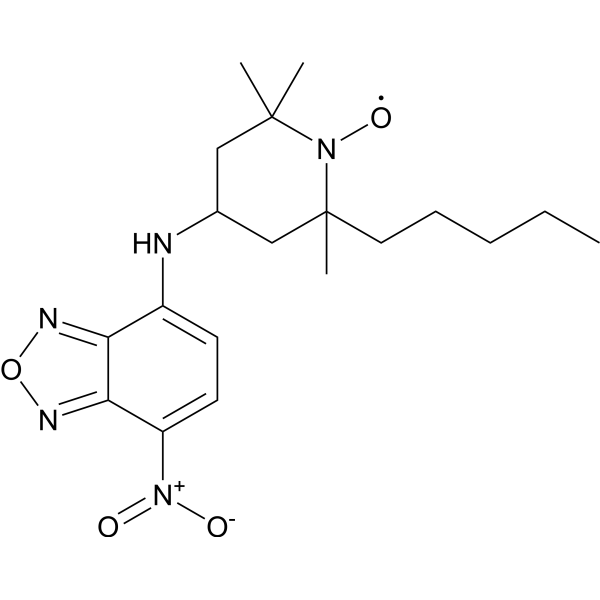
NBD-Pen is the first fluorescence probe for lipid radicals with high selectivity and sensitivity (λex: 470 nm, λem: 530 nm). NBD-Pen specifically detects lipid derived radicals over other reactive species present in biological systems, including H2O2, ClO -, O2 -?, and ?OH. NBD-Pen directly detects lipid radicals in living cells by turn-on fluorescence. NBD-Pen decreases inflammation, apoptosis, and oxidative stress markers. NBD-Pen can be studied in various disease models such as hepatic carcinoma .
loading...
    loading...

