1. Search Result
Search Result
Results for "

p-Aminobenzoic acid

" in MedChemExpress (MCE) Product Catalog:

14

Inhibitors & Agonists

3

Peptides

2

Natural
Products

1

Isotope-Labeled Compounds

Cat. No. Product Name Target Research Areas Chemical Structure
  • HY-B1008
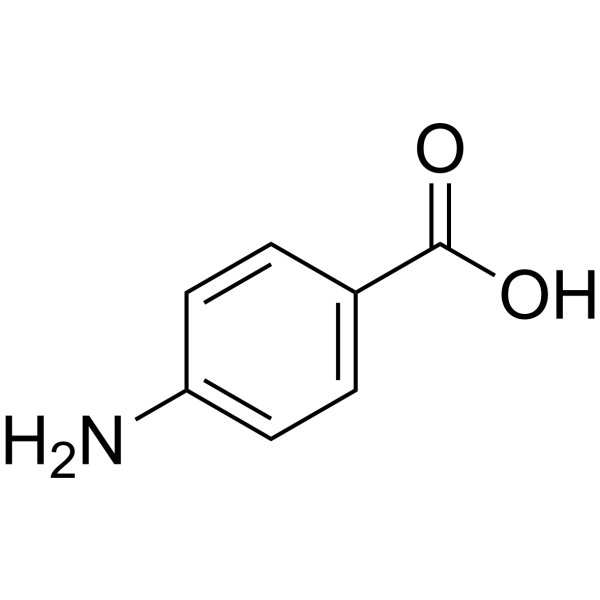
    4-Aminobenzoic acid
    1 Publications Verification

    PABA; p-Aminobenzoic acid

    Environmental Pollutants Endogenous Metabolite Bacterial Infection
    4-Aminobenzoic acid is an intermediate in the synthesis of folic acid by bacteria, plants and fungi. 4-Aminobenzoic acid has antibacterial and plant growth regulating properties .
    4-Aminobenzoic acid
  • HY-B0880
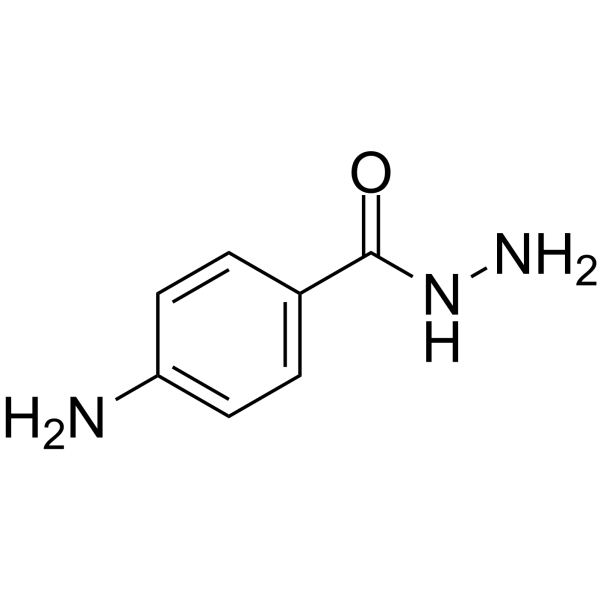
    4-Aminobenzohydrazide
    1 Publications Verification

    p-Aminobenzohydrazide; p-Aminobenzoic acid hydrazide

    Glutathione Peroxidase Neurological Disease
    4-Aminobenzohydrazide (p-Aminobenzohydrazide) is an irreversible myeloperoxidase (MPO) inhibitor (IC50=0.3 μM) that induces oxidative stress burst in neutrophils (ROS IC50=43.6 μM). 4-Aminobenzohydrazide has been used in subacute stroke research .
    4-Aminobenzohydrazide
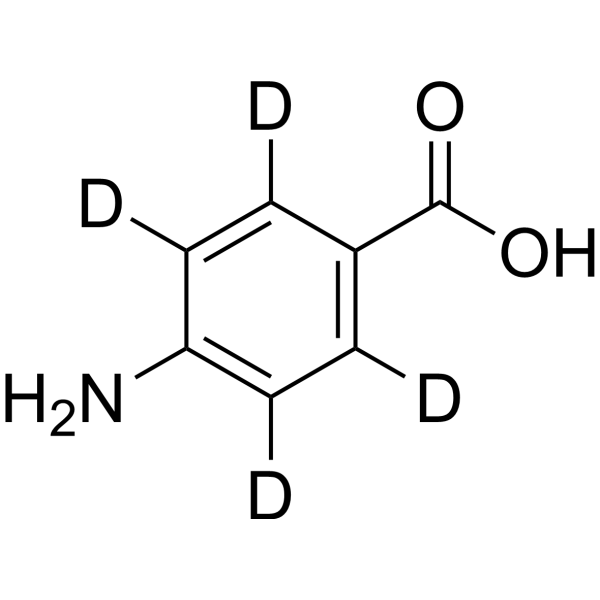
  • HY-B1008S

    PABA-d4; Vitamin Bx-d4; Vitamin H1-d4; p-Aminobenzoic acid-d4

    Isotope-Labeled Compounds Endogenous Metabolite Others
    4-Aminobenzoic acid-d4 is the deuterium labeled 4-Aminobenzoic acid. 4-Aminobenzoic acid is an intermediate in the synthesis of folate by bacteria, plants, and fungi.
    4-Aminobenzoic acid-d4
  • HY-Y0258A
    Benzocaine (hydrochloride)
    1 Publications Verification

    Sodium Channel Calcium Channel Neurological Disease
    Benzocaine hydrochloride is an orally active local anesthetic. Benzocaine hydrochloride non-competitively inhibits the binding of Ca-ATPase to Ca 2+, with an IC50 of 47.1 mM. Benzocaine hydrochloride exerts anesthetic effects by blocking voltage-gated sodium channels. Benzocaine hydrochloride induces methemoglobinemia in various experimental animals .
    Benzocaine (hydrochloride)
  • HY-B1008A
    4-Aminobenzoic acid potassium
    1 Publications Verification

    PABA potassium; p-Aminobenzoic acid potassium

    Endogenous Metabolite Cardiovascular Disease Neurological Disease
    4-Aminobenzoic acid (PABA) potassium is a modifier of catecholamine oxidation reactions. 4-Aminobenzoic acid potassium is promising for research of Parkinson's disease and hypertension .
    4-Aminobenzoic acid potassium
  • HY-B1008R

    PABA (Standard); p-Aminobenzoic acid (Standard)

    Reference Standards Endogenous Metabolite Others
    4-Aminobenzoic acid (Standard) is the analytical standard of 4-Aminobenzoic acid. This product is intended for research and analytical applications. 4-Aminobenzoic acid is an intermediate in the synthesis of folic acid by bacteria, plants and fungi.
    4-Aminobenzoic acid (Standard)
  • HY-P10341

    GCGR Metabolic Disease
    ZP3022 is a dual agonist of glucagon-like peptide-1 (GLP-1) and gastrin that has the ability to sustainably improve glycemic control. Additionally, ZP3022 can effectively increase β-cell mass, promote β-cell proliferation, and enhance the function of pancreatic islets. ZP3022 can be used in anti-diabetic research .
    ZP3022
  • HY-B1008AR

    PABA potassium (Standard); p-Aminobenzoic acid potassium (Standard)

    Reference Standards Endogenous Metabolite
    4-Aminobenzoic acid (potassium) (Standard) is the analytical standard of 4-Aminobenzoic acid (potassium). This product is intended for research and analytical applications.
    4-Aminobenzoic acid potassium (Standard)
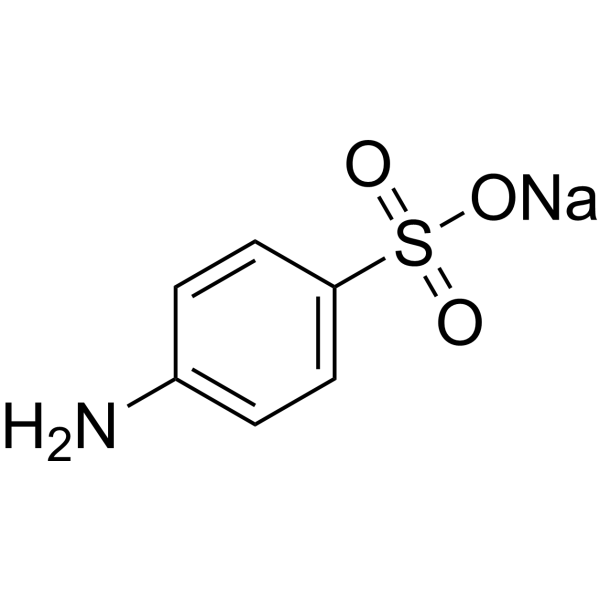
  • HY-W042216

    Sodium 4-aminobenzenesulfonate

    Fungal Infection
    Sodium Sulphanilate (Sodium 4-aminobenzenesulfonate) is a folic acid synthetase inhibitor and antifungal agent, as well as a structural analog of p-aminobenzoic acid, that competitively inhibits folate biosynthesis in fungal pathogens. Sodium Sulphanilate induces host disease resistance via changes in amino acid profiles, reduces chlorophyll content in peanut leaves at high concentrations, and controls rust diseases in various plant species. Sodium Sulphanilate is applicable to studies related to peanut rust .
    Sodium Sulphanilate
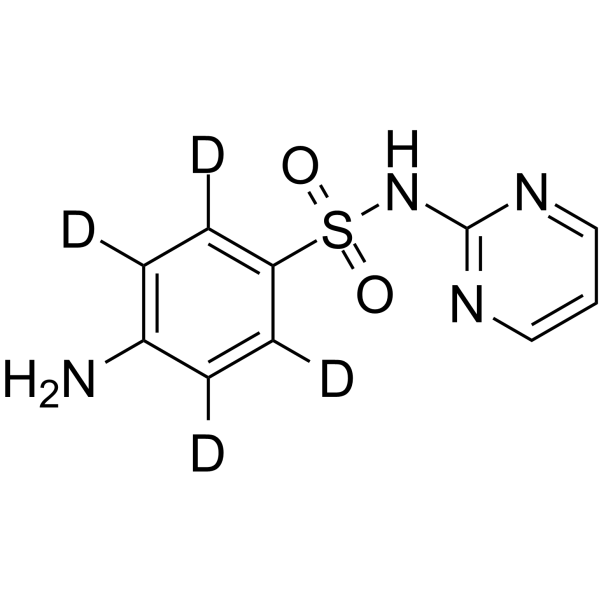
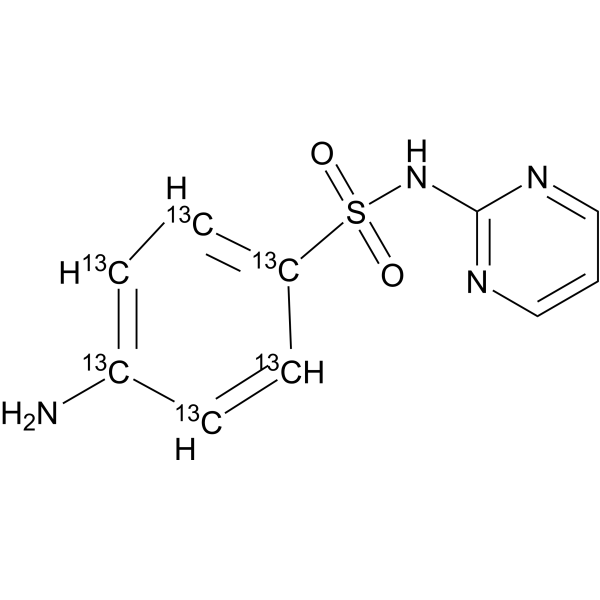
  • HY-B0273B
    Sulfadiazine 100 µg/mL in methanol
    Maximum Cited Publications
    8 Publications Verification

    Parasite Bacterial Environmental Pollutants Infection
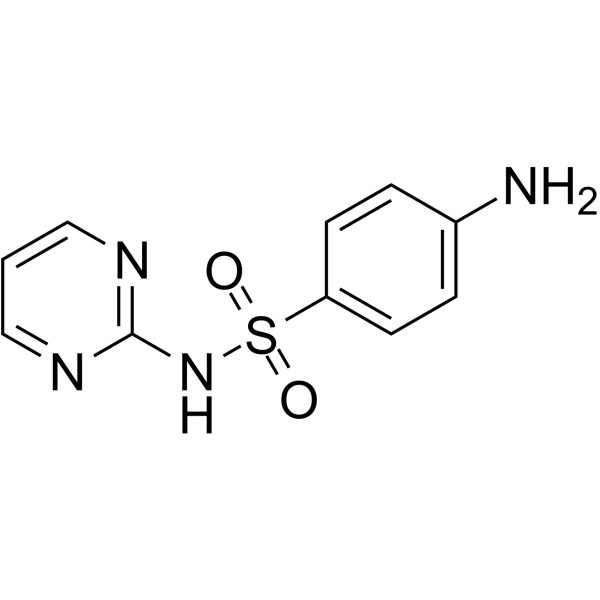
    Sulfadiazine 100 µg/mL in methanol is an orally active sulfonamide antibiotic. Sulfadiazine 100 µg/mL in methanol competitively inhibits p-aminobenzoic acid in the folic-acid-metabolism cycle, inhibiting multiplication of most Gram-positive and many Gram-negative bacteria. Sulfadiazine 100 µg/mL in methanol persists in soil long-term, and exerts selective pressure for sulfonamide-resistant microbial populations. Sulfadiazine 100 µg/mL in methanol targets Toxoplasma gondii DHPS enzyme. Sulfadiazine 100 µg/mL in methanol can be used for the research of congenital toxoplasmosis and bacterial infection .
    Sulfadiazine 100 µg/mL in methanol
  • HY-B0880R

    p-Aminobenzohydrazide (Standard); p-Aminobenzoic acid hydrazide (Standard)

    Glutathione Peroxidase Reference Standards Neurological Disease
    4-Aminobenzohydrazide (Standard) is the analytical standard of 4-Aminobenzohydrazide. This product is intended for research and analytical applications. 4-Aminobenzohydrazide (p-Aminobenzohydrazide) is an irreversible myeloperoxidase (MPO) inhibitor (IC50=0.3 μM) that induces oxidative stress burst in neutrophils (ROS IC50=43.6 μM). 4-Aminobenzohydrazide has been used in subacute stroke research .
    4-Aminobenzohydrazide (Standard)
  • HY-P11243

    Ephrin Receptor Neurological Disease
    EphA4 agonist compound 23 is a novel EphA4 agonist peptide mimic. EphA4 agonist compound 23 exhibits high affinity, high selectivity, and significant receptor activation ability. EphA4 agonist compound 23 is commonly used in the study of neurodegenerative diseases .
    EphA4 agonist compound 23
  • HY-P10876

    Amyloid-β Neurological Disease
    mcK6A1 is an inhibitor for the aggregation of amyloid-β (), that selectively binds to the 16KLVFFA21 segment of Aβ42, forms an extended β-folded structure, and inhibits the formation of Aβ42 oligomers. mcK6A1 can be used in research of Alzheimer's disease and other amyloid-related diseases .
    mcK6A1
  • HY-100010

    Fungal Antifolate Infection
    Sulfathiourea is an inhibitor of Pneumocystis carinii dihydropteroate synthetase (dihydropteroate synthetase), with an IC50 of 0.022 μM and a Ki of 16.5 nM. Sulfathiourea blocks folate biosynthesis by inhibiting the enzyme that links 7,8-dihydro-6-hydroxymethylpterin pyrophosphate with p-aminobenzoic acid to form dihydropteroate. Sulfathiourea can be used in research related to *Pneumocystis carinii* pneumonia .
    Sulfathiourea

Inquiry Online

Your information is safe with us. * Required Fields.

Salutation


Country or Region *

Applicant Name *


Organization Name *

Department *


Email Address *


Product Name *

Cat. No.


Requested quantity *

Phone Number *


Remarks

Inquiry Online

Inquiry Information

Product Name:
Cat. No.:
Quantity:
MCE Japan Authorized Agent:

