1. Search Result
Search Result
Pathways Recommended: PI3K/Akt/mTOR
Results for "

Akt activity

" in MedChemExpress (MCE) Product Catalog:

647

Inhibitors & Agonists

7

Screening Libraries

7

Biochemical Assay Reagents

12

Peptides

9

Inhibitory Antibodies

253

Natural
Products

41

Isotope-Labeled Compounds

3

Click Chemistry

3

Oligonucleotides

Targets Recommended:
Cat. No. Product Name Target Research Areas Chemical Structure
  • HY-N0003
    Honokiol
    Maximum Cited Publications
    66 Publications Verification

    NSC 293100

    Akt Autophagy HCV ERK Cancer
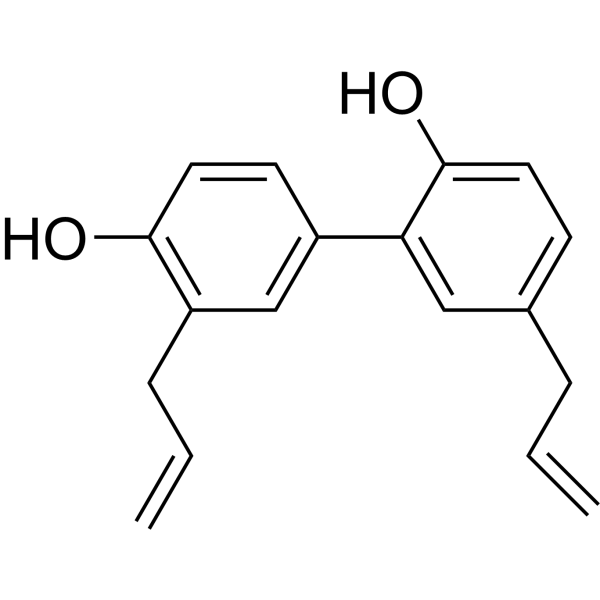
    Honokiol is a bioactive, biphenolic phytochemical that possesses potent antioxidative, anti-inflammatory, antiangiogenic, and anticancer activities by targeting a variety of signaling molecules. It inhibits the activation of Akt. Honokiol can readily cross the blood brain barrier .
    Honokiol
  • HY-N2117
    Isoginkgetin
    15+ Cited Publications

    MMP Akt NF-κB Proteasome Apoptosis Autophagy Inflammation/Immunology Cancer
    Isoginkgetin is a pre-mRNA splicing inhibitor inhibitor. Isoginkgetin also inhibits activities of both Akt, NF-κB and MMP-9. Isoginkgetin inhibits the activity of the 20S proteasome, induces apoptosis and activates autophagy .
    Isoginkgetin
  • HY-10249A
    AKT Kinase Inhibitor
    15+ Cited Publications

    Akt Cancer
    AKT Kinase Inhibitor is an Akt kinase inhibitor with anti-tumor activity .
    AKT Kinase Inhibitor
  • HY-10355
    AKT inhibitor VIII
    55+ Cited Publications

    Akti-1/2

    Akt Apoptosis Metabolic Disease Cancer
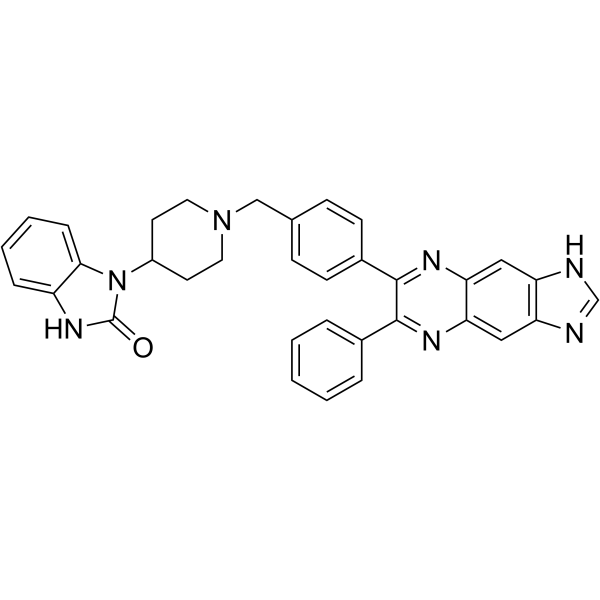
    AKT inhibitor VIII (AKTi-1/2) is a cell-permeable quinoxaline compound that has been shown to potently, selectively, allosterically, and reversibly inhibit Akt1, Akt2, and Akt3 activity with IC50s of 58 nM, 210 nM, and 2119 nM, respectively.
    AKT inhibitor VIII
  • HY-13685
    Miltefosine
    10+ Cited Publications

    HePC; Hexadecyl phosphocholine

    Akt HIV Parasite Infection Cancer
    Miltefosine is a broad spectrum antimicrobial, anti-leishmanial, phospholipid agent acting by inhibiting the PI3K/Akt activity . Miltefosine is an inhibitor of CTP-phosphocholine cytidyltransferase (CCT) .
    Miltefosine
  • HY-100018
    BAY1125976
    3 Publications Verification

    Akt Cancer
    BAY1125976, a chemical probe, is a selective allosteric Akt1/Akt2 inhibitor; inhibits Akt1 and Akt2 activity with IC50 values of 5.2 nM and 18 nM at 10 μM ATP, respectively.
    BAY1125976
  • HY-14463
    Onalespib
    10+ Cited Publications

    AT13387

    HSP Cancer
    Onalespib (AT13387) is a potent and cross the blood-brain barrier heat-shock-protein-90 (Hsp90) inhibitor. Onalespib inhibits the proliferation, survival and migration. Onalespib decreases the expression of EGFR, p-EGFR, AKT, P-AKT, ERK1/2, P-ERK1/2, S6, P-S6 protein. Onalespib shows antitumor activity. Onalespib has the potential for the research of non-small cell lung cancer (NSCLC) .
    Onalespib
  • HY-N0797
    (20S)-Protopanaxadiol
    3 Publications Verification

    20-Epiprotopanaxadiol; 20(S)-APPD

    P-glycoprotein Reactive Oxygen Species (ROS) Apoptosis Cancer
    20S-protopanaxadiol (aPPD) is a metabolite of ginseng saponins, inhibits Akt activity and induces apoptosis in various tumor cells .
    (20S)-Protopanaxadiol
  • HY-19542
    C6 Ceramide
    3 Publications Verification

    C6-Cer; N-Hexanoylsphingosine

    Apoptosis Cancer
    C6 Ceramide (C6-Cer) is a short-chain, cell-permeable ceramide pathway activator with anticancer activity. C6 Ceramide-mediated miR-29b expression participates in the progression of multiple myeloma through suppressing the proliferation, migration and angiogenesis of endothelial cells by targeting Akt signal pathway. C6 Ceramide exhibits multiple anti-cancer properties including cell cycle arrest, Apoptosis, inhibition of tumor growth and enhances the effects of chemotherapy in drug-resistant cancer cells. C6-ceramide can be used as an adjuvant for chemotherapeutic agents, to enhance anti-tumor effects .
    C6 Ceramide
  • HY-10249
    GSK-690693
    40+ Cited Publications

    Akt AMPK Autophagy Cancer
    GSK-690693 is an ATP-competitive pan-Akt inhibitor with IC50s of 2 nM, 13 nM, 9 nM for Akt1, Akt2 and Akt3, respectively. GSK-690693 is also an AMPK inhibitor, affects Unc-51-like autophagy activating kinase 1 (ULK1) activity and robustly inhibits STING-dependent IRF3 activation .
    GSK-690693
  • HY-101625
    Recilisib
    40+ Cited Publications

    ON 01210

    Akt PI3K Cancer
    Recilisib (ON 01210) is a radioprotectant, which can activate AKT, PI3K activities in cells .
    Recilisib
  • HY-18719
    Endoxifen (Z-isomer)
    3 Publications Verification

    Estrogen Receptor/ERR Drug Metabolite PKC Akt Apoptosis Neurological Disease Cancer
    Endoxifen Z-isomer hydrochloride, an orally active Tamoxifen (HY-13757A) metabolite, is a selective estrogen receptor modulator with 100-fold more potency than its parent agent, Tamoxifen. Endoxifen Z-isomer inhibits PKCβ1 kinase activity. Endoxifen Z-isomer attenuates PKCβ1-activated AKT Ser473 phosphorylation, diminishes AKT substrate phosphorylation, and induces Apoptosis. Endoxifen Z-isomer exhibits anticancer activity against hormone-resistant metastatic breast cancer .
    Endoxifen (Z-isomer)
  • HY-121401A

    (1R)-(−)-Myrtenal; (−)-(1R,5S)-Myrtenal

    Akt Metabolic Disease Cancer
    (-)-Myrtenal ((1R)-(-)-Myrtenal) is an orally active terpene with antitumour activity. (-)-Myrtenal ameliorates hyperglycemia by enhancing GLUT2 through Akt in the skeletal muscle and liver of diabetic rats .
    (−)-Myrtenal
  • HY-13260
    CCT128930
    5+ Cited Publications

    Akt Autophagy Apoptosis Cancer
    CCT128930 is a ATP-competitive and selective inhibitor of AKT (IC50=6 nM for AKT2). CCT128930 has 28-fold selectivity over the closely related PKA kinase (IC50=168 nM) through the targeting of Met282 of AKT (Met173 of PKA-AKT chimera), as well as 20-fold selectivity over p70S6K (IC50=120 nM). Antitumor activity.
    CCT128930
  • HY-100501
    M2698
    1 Publications Verification

    MSC2363318A

    Ribosomal S6 Kinase (RSK) Akt Cancer
    M2698 (MSC2363318A) is an orally active, ATP competitive, selective p70S6K and Akt dual-inhibitor with IC50s of 1 nM for p70S6K, Akt1 and Akt3. M2698 can cross the blood-brain barrier and has anti-cancer activity .
    M2698
  • HY-144806
    PI3K/AKT-IN-1
    10+ Cited Publications

    PI3K Akt Apoptosis Cancer
    PI3K/AKT-IN-1 is an effective PI3K/AKT dual inhibitor (IC50 of 6.99, 4.01 and 3.36 μM for PI3Kγ, PI3Kδ and AKT, respectively). PI3K/AKT-IN-1 has anticancer activity and acts by inhibiting PI3K/AKT axis and inducing caspase 3 dependent apoptosis .
    PI3K/AKT-IN-1
  • HY-19934

    TAS-117

    Akt Apoptosis Autophagy Cancer
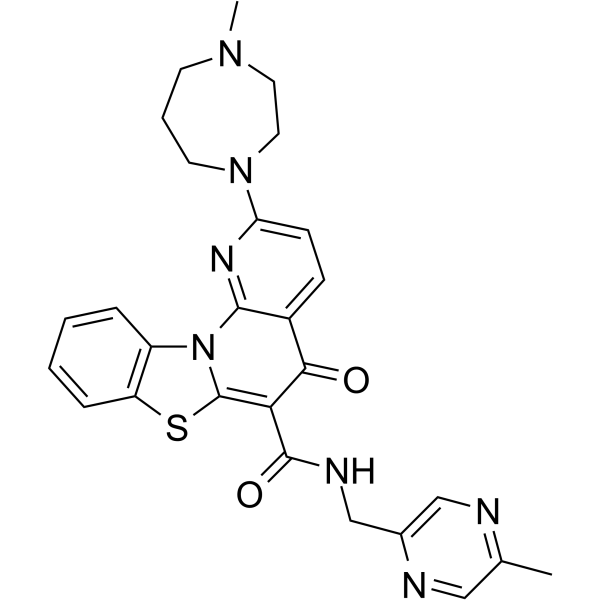
    Pifusertib (TAS-117) is a potent, selective, orally active allosteric Akt inhibitor (with IC50s of 4.8, 1.6, and 44 nM for Akt1, 2, and 3, respectively). Pifusertib triggers anti-myeloma activities and enhances fatal endoplasmic reticulum (ER) stress induced by proteasome inhibition. Pifusertib induces apoptosis and autophagy .
    Pifusertib
  • HY-N0757
    8-​O-​Acetylharpagide
    1 Publications Verification

    Akt Bcl-2 Family Apoptosis Adrenergic Receptor Cardiovascular Disease Inflammation/Immunology Cancer
    8-O-Acetylharpagide is an orally active iridoid glycoside compound. 8-O-Acetylharpagide exhibits anti-aging activity at low doses and anticancer activity at high doses. 8-O-Acetylharpagide induces late-stage apoptosis and necrosis-like death in cancer cells, and downregulates anti-apoptotic proteins such as Akt, p-Akt and Bcl-2. 8-O-Acetylharpagide is mainly metabolized in rats via demethylation, hydrolysis and glucuronidation, and its active metabolites downregulate the AKT/NF-κB/MMP9 signaling axis. 8-O-Acetylharpagide exerts vasoconstrictive effects by activating vascular α-adrenoceptor .
    8-​O-​Acetylharpagide
  • HY-B1104

    (±)-Indoprofe

    Akt AMPK NF-κB p38 MAPK Inflammation/Immunology
    Indoprofen ((±)-Indoprofe) activates AKT-AMPK signaling pathway, inhibits NF-κB/MAPK signaling pathway. Indoprofen exhibits anti-inflammatory and immunomodulatory activities. Indoprofen is orally active .
    Indoprofen
  • HY-N1103
    Vasicine
    2 Publications Verification

    Peganine

    Bacterial PI3K Akt Infection Inflammation/Immunology
    Vasicine (peganine) is a quinazoline alkaloid isolated from Justicia adhatoda. Vasicine activates PI3K/Akt signaling pathway, exhibits antioxidant, anti-inflammatory and antibacterial activities .
    Vasicine
  • HY-N1505
    Loureirin A
    5+ Cited Publications

    Akt Cardiovascular Disease
    Loureirin A is a flavonoid extracted from Dragon's Blood, can inhibit Akt phosphorylation, and has antiplatelet activity.
    Loureirin A
  • HY-N2283
    Deltonin
    1 Publications Verification

    ERK Akt Endogenous Metabolite Cancer
    Deltonin, a steroidal saponin, isolated from Dioscorea zingiberensis, has antitumor activity; Deltonin inhibits ERK1/2 and AKT activation.
    Deltonin
  • HY-19934A

    TAS-117 hydrochloride

    Akt Apoptosis Autophagy Cancer
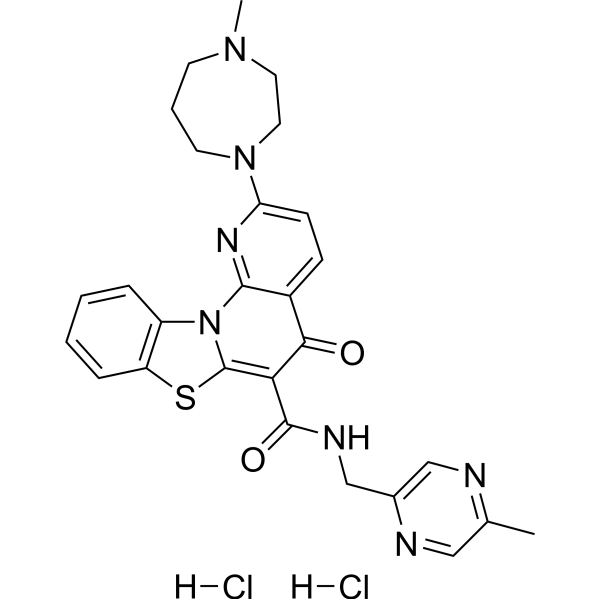
    Pifusertib (TAS-117) hydrochloride is a potent, selective, orally active allosteric Akt inhibitor (with IC50s of 4.8, 1.6, and 44 nM for Akt1, 2, and 3, respectively). Pifusertib hydrochloride triggers anti-myeloma activities and enhances fatal endoplasmic reticulum (ER) stress induced by proteasome inhibition. Pifusertib hydrochloride induces apoptosis and autophagy .
    Pifusertib hydrochloride
  • HY-B0960
    Sulfabenzamide
    1 Publications Verification

    N-Sulfanilylbenzamide

    Bacterial Autophagy MDM-2/p53 Caspase PARP DNA-PK Akt Infection Cancer
    Sulfabenzamide (N-Sulfanilylbenzamide) is a sulfonamide antibacterial agent. Sulfabenzamide exhibit antibacterial activity against Staphylococcus aureus (ATCC 25923) and Escherichia coli (ATCC 8739). Sulfabenzamide can promote autophagic cell autophagy in breast cancer cells through p53/ DRAM pathway. Sulfabenzamide increases caspase-3 activity, deactivates PARP1 and DNA-PK, downregulates AKT1 and AKT2. Sulfabenzamide can be used for the researches of breast cancer and bacterial infections .
    Sulfabenzamide
  • HY-107586

    DAQ B1; L-783281; Dimethylasterriquinone

    Insulin Receptor Akt NO Synthase NADPH Oxidase JAK STAT FOXO DNA/RNA Synthesis ERK Flavivirus Cardiovascular Disease Infection Metabolic Disease Inflammation/Immunology
    Demethylasterriquinone B1 (DAQ B1; L-783281) is an orally active insulin receptor (insulin receptor) agonist and AKT activator. By activating AKT, Demethylasterriquinone B1 upregulates the expression and activity of eNOS to increase NO production, while downregulating the expression of the NADPH oxidase subunit p22phox to reduce oxidative stress and improve vascular endothelial dysfunction in hypertensive rats. Demethylasterriquinone B1 combind with an AKT inhibitor targets the insulin signaling pathway to activate two antiviral pathways, RNA interference and JAK/STAT, in mosquitoes, thereby reducing Zika virus infection .
    Demethylasterriquinone B1
  • HY-141807

    PROTACs Akt Cancer
    MS21 is an effective AKT PROTAC degrader. MS21 can inhibit mutations in the PI3K/PTEN pathway, suppress the proliferation and induce cell cycle arrest of tumor cells. MS21 has anti-tumor activity. (Pink: AKT ligand-2 (HY-48682); Black: Linker (HY-W014125); Blue: (S,R,S)-AHPC (HY-125845)) .
    MS21
  • HY-18676B

    OSU-T315 analog

    Integrin Autophagy Apoptosis Caspase PDHK Cancer
    ILK-IN-2 (OSU-T315 analog) is an oral PDK2 inhibitor and also an ILK inhibitor, with an IC50 of 0.6 μM. ILK-IN-2 induces cell autophagy and apoptosis, showing anti-tumor activity. ILK-IN-2 directly abolishes AKT activation by preventing AKT from translocating to lipid rafts, triggering Caspase-dependent apoptosis in chronic lymphocytic leukemia (CLL) and extending the lifespan in TCL1 mouse models .
    ILK-IN-2
  • HY-18719A
    Endoxifen Z-isomer hydrochloride
    3 Publications Verification

    Estrogen Receptor/ERR Drug Metabolite PKC Akt Apoptosis Neurological Disease Cancer
    Endoxifen Z-isomer hydrochloride, an orally active Tamoxifen (HY-13757A) metabolite, is a selective estrogen receptor modulator with 100-fold more potency than its parent agent, Tamoxifen. Endoxifen Z-isomer hydrochloride inhibits PKCβ1 kinase activity. Endoxifen Z-isomer hydrochloride attenuates PKCβ1-activated AKT Ser473 phosphorylation, diminishes AKT substrate phosphorylation, and induces Apoptosis. Endoxifen Z-isomer hydrochloride exhibits anticancer activity against hormone-resistant metastatic breast cancer .
    Endoxifen Z-isomer hydrochloride
  • HY-W073128

    PFTeDA

    PPAR Apoptosis PGC-1α AMPK Akt mTOR Reactive Oxygen Species (ROS) Endocrinology
    Perfluorotetradecanoic acid (PFTeDA) is an orally active perfluoroalkyl substance. Perfluorotetradecanoic acid directly binds to the ligand-binding domain of purified hPPARγ, with a Kd value of 157.8 μM. Perfluorotetradecanoic acid significantly reduces the activity of the SIRT1/PGC1α and AMPK signaling pathways while stimulating the activity of the AKT1/mTOR signaling pathway. Perfluorotetradecanoic acid significantly upregulates the expression of corticosterone biosynthesis genes. Perfluorotetradecanoic acid increases ROS levels and promotes Apoptosis. Perfluorotetradecanoic acid impairs Leydig cell function and male reproductive endocrine function in adult male rats .
    Perfluorotetradecanoic acid
  • HY-N10303
    Withangulatin A
    1 Publications Verification

    COX Parasite Reactive Oxygen Species (ROS) Apoptosis p38 MAPK NF-κB Akt mTOR TGF-beta/Smad Inflammation/Immunology Cancer
    Withangulatin A is the inhibitor for COX-2. Withangulatin A inhibits MAPK, NF-κB, Akt/mTOR/p70S6K pathway, exhibits antitumor, anti-inflammatory and trypanocidal activities .
    Withangulatin A
  • HY-50862
    Akt1/Akt2-IN-1
    2 Publications Verification

    Akt Cancer
    Akt1/Akt2-IN-1 (Compound 17) is an allosteric inhibitor of Akt1 (IC50=3.5 nM) and Akt2 (IC50=42 nM), with potent and balanced activity .
    Akt1/Akt2-IN-1
  • HY-157133

    Akt Ribosomal S6 Kinase (RSK) Apoptosis Cancer
    TAS0612 is the orally active inhibitor of RSKAKT and S6K. TAS0612 has antitumor activity .
    TAS0612
  • HY-122965

    FAK Akt Cancer
    Batatasin III, a stilbenoid, inhibits cancer migration and invasion by suppressing epithelial to mesenchymal transition (EMT) and FAK-AKT signals. Batatasin III has anti-cancer activities .
    Batatasin III
  • HY-160469

    Akt PROTACs Cancer
    INY-05-040 is an AKT degrader that can selectively and quickly degrade all three AKT isoforms. INY-05-040 exhibits anti-cancer activity. INY-05-040 can inhibit downstream signaling and cell proliferation in 288 cancer cell lines. INY-05-040 can suppress AKT signaling and induces the stress mitogen-activated protein kinase (MAPK) c-Jun N-terminal kinase (JNK). INY-05-040 is effective for breast cancer lines with a low-baseline activation of stress MAPK pathway. INY-05-040 can be studied for anti-cancer research .
    INY-05-040
  • HY-N2902

    Reactive Oxygen Species (ROS) Cancer
    Artocarpin is an orally active apoptosis inducer. Artocarpin targets NF-κB, Erk1/2, p38 MAPK, AktS473, p53, Akt 1 kinase and Akt 2 kinase. Artocarpin induces reactive oxygen species (ROS) production, mediates p53-dependent and p53-independent apoptotic signaling pathways, induces G1-phase cell cycle arrest, and triggers autophagic cell death. Artocarpin exerts cytotoxic and bactericidal effects on cancer cells, reduces bacterial load, and exhibits anti-inflammatory, analgesic and anti-angiogenic activities .
    Artocarpin
  • HY-18366A
    RU-SKI 43 hydrochloride
    2 Publications Verification

    Hedgehog Cancer
    RU-SKI 43 hydrochloride is a potent and selective Hedgehog acyltransferase (Hhat) inhibitor with an IC50 of 850 nM. RU-SKI 43 hydrochloride reduces Gli-1 activation through Smoothened-independent non-canonical signaling and decreases Akt and mTOR pathway activity. RU-SKI 43 hydrochloride has anti-cancer activity .
    RU-SKI 43 hydrochloride
  • HY-129119

    Akt Caspase Cancer
    Akt1/Akt2-IN-2 (compound 7) is an allosteric dual Akt1 and Akt2 inhibitor (IC50=138 nM and 212 nM, respectively). Akt1/Akt2-IN-2 increases activity of caspase-3, and inhibits viability of a number of tumor cells .
    Akt1/Akt2-IN-2
  • HY-10249D

    Akt Cancer
    AKT Kinase Inhibitor hydrochloride is an Akt kinase inhibitor with anti-tumor activity . AKT Kinase Inhibitor (hydrochloride) is a click chemistry reagent, it contains an Alkyne group and can undergo copper-catalyzed azide-alkyne cycloaddition (CuAAc) with molecules containing Azide groups.
    AKT Kinase Inhibitor hydrochloride
  • HY-151613A

    PROTACs Akt Cancer
    MS15 TFA is a potent and selective AKT PROTAC degrader. MS15 TFA inhibits the AKT1, -2, and -3 activities, with IC50 values of 798 nM, 90 nM, and 544 nM, respectively .
    MS15 TFA
  • HY-151606

    Akt Cancer
    Akt3 degrader 1 (compound 12l) is a selective Akt3 degrader that overcomesOsimertinib (HY-15772)-induced resistance in H1975OR NSCLC cells. Akt3 degrader 1 also has anti-proliferative activity and significantly inhibits tumour growth in mice. Akt3 degrader 1 can be used in the study of drug-resistant non-small cell lung cancer .
    Akt3 degrader 1
  • HY-N1904

    8-Methoxyapigenin

    IKK NF-κB p38 MAPK PI3K Akt Reactive Oxygen Species (ROS) Interleukin Related TNF Receptor Apoptosis Caspase Bcl-2 Family Cardiovascular Disease Inflammation/Immunology Cancer
    4′-Hydroxywogonin (8-Methoxyapigenin), a flavonoid, could be isolated from a variety of plants including Scutellaria barbata and Verbena littoralis. 4′-Hydroxywogonin has anti-inflammatory activity via TAK1/IKK/NF-κB, MAPKs and PI3/AKT signaling pathways. 4′-Hydroxywogonin inhibits angiogenesis by disrupting PI3K/AKT signaling. 4′-Hydroxywogonin inhibits cell proliferation and induces apoptosis .
    4′-Hydroxywogonin
  • HY-N4182
    Licochalcone E
    4 Publications Verification

    Akt p38 MAPK Autophagy Inflammation/Immunology
    Licochalcone E, a flavonoid compound isolated from Glycyrrhiza uralensis, inhibits NF-κB and AP-1 transcriptional activity through the inhibition of AKT and MAPK activation .
    Licochalcone E
  • HY-124740

    Melanocortin Receptor Cancer
    ML00253764 is a selective melanocortin receptor 4 (MC4R) antagonist, can induce apoptosis by inhibiting ERK1/2 and Akt phosphorylation, and has anticancer activity .
    ML00253764
  • HY-N0797R

    20-Epiprotopanaxadiol (Standard); 20(S)-APPD (Standard)

    Reference Standards P-glycoprotein Reactive Oxygen Species (ROS) Apoptosis Cancer
    (20S)-Protopanaxadiol (Standard) is the analytical standard of (20S)-Protopanaxadiol. This product is intended for research and analytical applications. 20S-protopanaxadiol (aPPD) is a metabolite of ginseng saponins, inhibits Akt activity and induces apoptosis in various tumor cells .
    (20S)-Protopanaxadiol (Standard)
  • HY-151613

    PROTACs Akt Cancer
    MS15 is a potent and selective AKT PROTAC degrader. MS15 inhibits the AKT1, -2, and -3 activities, with IC50 values of 798 nM, 90 nM, and 544 nM, respectively .
    MS15
  • HY-13260A
    CCT128930 hydrochloride
    5+ Cited Publications

    Akt Autophagy Apoptosis Cancer
    CCT128930 hydrochloride is a potent and selective inhibitor of AKT (IC50=6 nM). CCT128930 hydrochloride has 28-fold selectivity over the closely related PKA kinase (IC50=168 nM) through the targeting of Met282 of AKT (Met173 of PKA-AKT chimera), as well as 20-fold selectivity over p70S6K (IC50=120 nM). CCT128930 hydrochloride induces cell cycle arrest, DNA damage, and autophagy. Antitumor activity .
    CCT128930 hydrochloride
  • HY-106263B

    PTEN PDK-1 MDM-2/p53 Apoptosis Akt Cancer
    Tyroserleutide hydrochloride is a tripeptide isolated from the degradation products of porcine spleen with antitumor activity. Tyroserleutide hydrochloride can upregulate the expression of the tumor suppressor gene PTEN and inhibit the activity of AKT and PDK1. Tyroserleutide hydrochloride inhibits tumor cell proliferation and MDM2 phosphorylation by inhibiting the PI3K/AKT pathway, and also upregulates P21, P27, P53, and induces mitochondrial damage and cell apoptosis .
    Tyroserleutide hydrochloride
  • HY-N3188

    Akt NF-κB Infection
    Niloticin, tetracyclic triterpenoid compound, is a osteoclastogenesis inhibitor. Niloticin shows anti-viral, antioxidative, and mosquitocidal activities. Niloticin inhibits osteoclastogenesis by blocking RANKL-RANK interaction and suppressing the AKT, MAPK, and NF-κB signaling pathways .
    Niloticin
  • HY-N1103A
    Vasicine hydrochloride
    2 Publications Verification

    Peganine hydrochloride

    Bacterial PI3K Akt Infection Inflammation/Immunology
    Vasicine hydrochloride (peganine hydrochloride) is a quinazoline alkaloid isolated from Justicia adhatoda. Vasicine hydrochloride activates PI3K/Akt signaling pathway, exhibits antioxidant, anti-inflammatory and antibacterial activities .
    Vasicine hydrochloride
  • HY-126257

    Akt Apoptosis Cancer
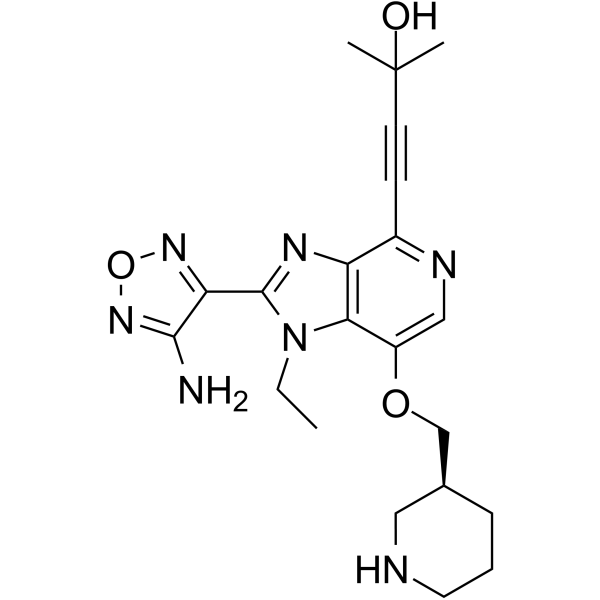
    AKT-IN-3 (compound E22) is a potent, orally active low hERG blocking Akt inhibitor, with 1.4 nM, 1.2 nM and 1.7 nM for Akt1, Akt2 and Akt3, respectively. AKT-IN-3 (compound E22) also exhibits good inhibitory activity against other AGC family kinases, such as PKA, PKC, ROCK1, RSK1, P70S6K, and SGK. AKT-IN-3 (compound E22) induces apoptosis and inhibits metastasis of cancer cells .
    AKT-IN-3

Inquiry Online

Your information is safe with us. * Required Fields.

Salutation


Country or Region *

Applicant Name *


Organization Name *

Department *


Email Address *


Product Name *

Cat. No.


Requested quantity *

Phone Number *


Remarks

Inquiry Online

Inquiry Information

Product Name:
Cat. No.:
Quantity:
MCE Japan Authorized Agent:

