



1. Search Result
Search Result
Results for "

Au/PdTFPP/n-Si/Al junction devices

" in MedChemExpress (MCE) Product Catalog:

198

Inhibitors & Agonists

2

Screening Libraries

11

Fluorescent Dyes

37

Biochemical Assay Reagents

29

Peptides

4

MCE Kits

9

Inhibitory Antibodies

26

Natural
Products

7

Recombinant Proteins

6

Isotope-Labeled Compounds

12

Antibodies

5

Oligonucleotides

1

GMP Molecules

Targets Recommended:
Cat. No. Product Name Target Research Areas Chemical Structure
  • HY-Y0873J
    PEG8000
    2 Publications Verification

    Polyethylene glycol 8000

    Environmental Pollutants Biochemical Assay Reagents Others
    PEG8000 can be used for phage precipitation, isolation of plasmid DNA, and promotion of flat end-junction reactions .
    PEG8000
  • HY-13813
    Blebbistatin
    Maximum Cited Publications
    42 Publications Verification

    Myosin Others
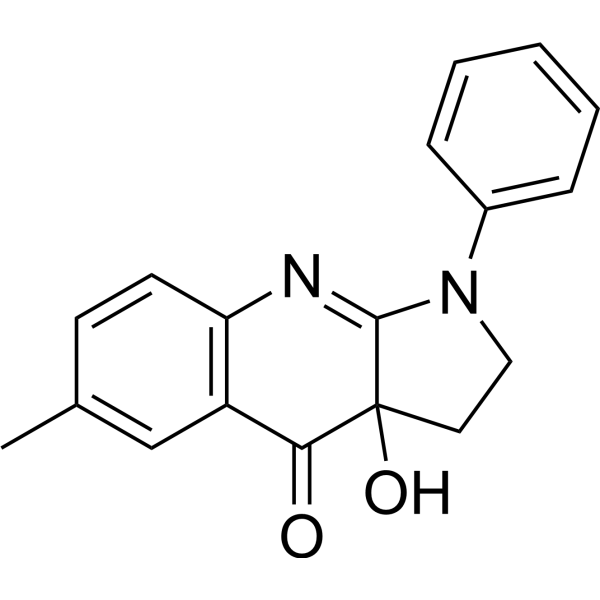
    Blebbistatin is a selective non-muscle myosin II (NMII) inhibitor, promotes directional migration of corneal endothelial cells (CECs) and accelerates wound healing, and better preserves cell junctional integrity and barrier function. Blebbistatin blocks cell migration .
    Blebbistatin
  • HY-B2247
    PLGA (50:50)
    25+ Cited Publications

    poly(lactic-co-glycolic acid) (50:50)

    Biochemical Assay Reagents Others
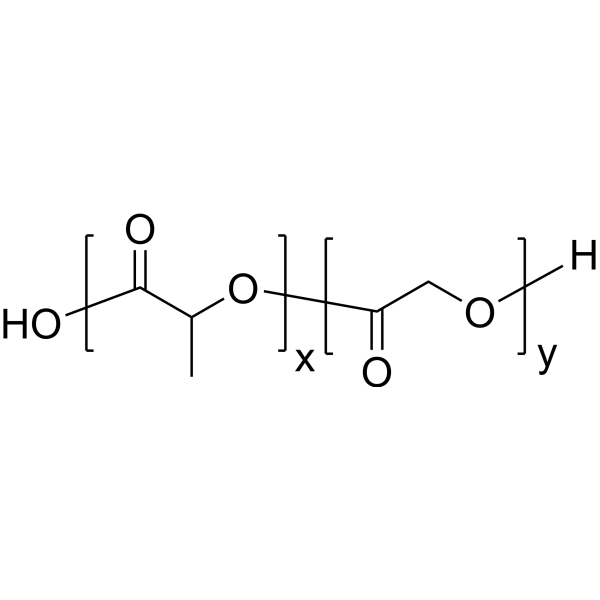
    PLGA (50:50) (poly(lactic-co-glycolic acid) (50:50)) is a copolymer of poly lactic acid (PLA) and poly glycolic acid (PGA) which can be used to fabricate devices for drug delivery and tissue engineering applications.
    PLGA (50:50)
  • HY-N6684
    Deoxynivalenol
    Maximum Cited Publications
    16 Publications Verification

    Vomitoxin

    P-glycoprotein Metabolic Disease
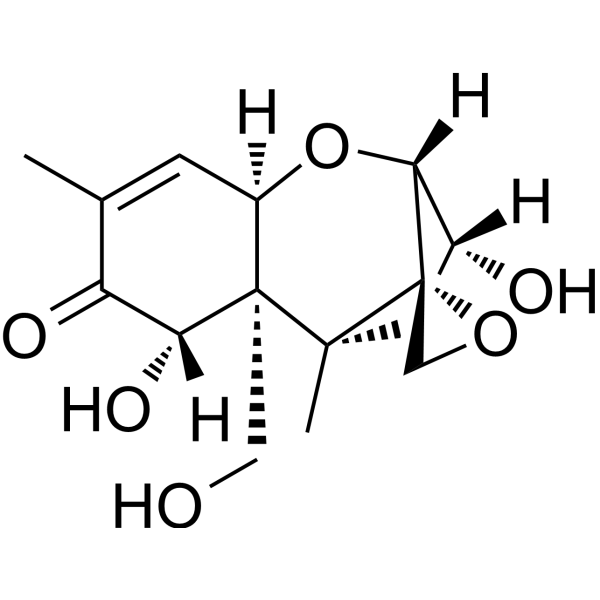
    Deoxynivalenol, an orally active mycotoxin of the trichothecenes family, crosses the intestinal mucosa by a paracellular pathway through the tight junctions. The Deoxynivalenol transport is not affected by P-glycoprotein (PgP) or multidrug resistance-associated proteins (MRPs) inhibitors .
    Deoxynivalenol
  • HY-14946

    3,4-Diaminopyridine

    Potassium Channel Neurological Disease
    Amifampridine (3,4-Diaminopyridine) is an orally active, potent and cell permeable voltage-gated potassium (Kv) channel blocker (PCB). Amifampridine is efficacy in the reversal of BoNT/A (HY-P79153) intoxication. Amifampridine increases transmitter release from neuromuscular junctions (NMJs). Amifampridine can be used for Lambert-Eaton myasthenic syndrome (LEMS) research .
    Amifampridine
  • HY-148033

    N,N,N-Trimethylchitosan

    Drug Derivative Others
    Trimethyl chitosan (N,N,N-Trimethylchitosan) is a multifunctional polymer and a derivative of Chitosan (HY-B2144A). Trimethyl chitosan targets the absorption enhancing proteins of tight junctions of intestinal and mucosal epithelial cells, induces tight junction protein rearrangement, and increases intercellular permeability. Trimethyl chitosan can stimulate the activity of promoting transmembrane transport of hydrophilic drugs (such as peptides and proteins) and can be used for drug delivery and synthesis of nanoparticles .
    Trimethyl chitosan
  • HY-P0033
    Argireline
    2 Publications Verification

    Acetyl hexapeptide-3; Acetyl hexapeptide-8

    Calcium Channel Neurological Disease
    Argireline (Acetyl hexapeptide-3) is a non-toxic, skin-permeable, antiwrinkle peptide. Argireline significantly inhibits Ca 2+ dependent neurotransmitter release (acetylcholine) at the neuromuscular junction. Argireline has antiwrinkle and anti-aging activity .
    Argireline
  • HY-117275
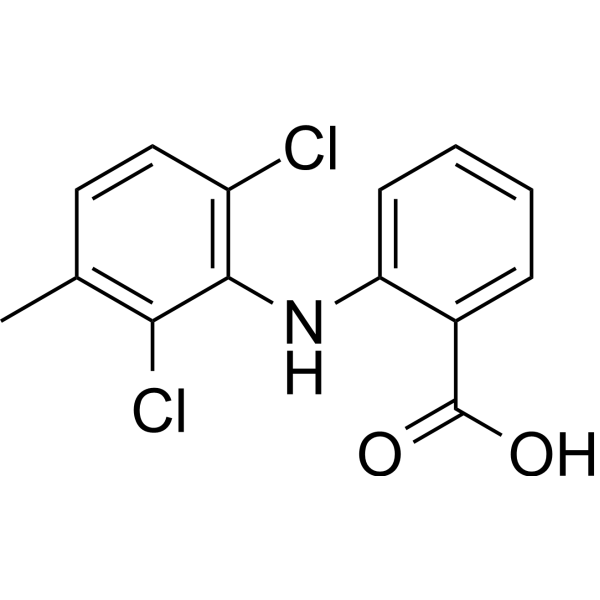
    Meclofenamic acid
    5+ Cited Publications

    Meclofenamate

    Fat Mass and Obesity-associated Protein (FTO) Potassium Channel Gap Junction Protein Endogenous Metabolite Neurological Disease Metabolic Disease Inflammation/Immunology
    Meclofenamic acid (Meclofenamate) is a non-steroidal anti-inflammatory agent. Meclofenamic acid is a highly selective FTO (fat mass and obesity-associated) enzyme inhibitor. Meclofenamic acid competes with FTO binding for the m(6)A-containing nucleic acid. Meclofenamic acid is a non-selective gap-junction blocker. Meclofenamic acid inhibits hKv2.1 and hKv1.1, with IC50 values of 56.0 and 155.9 μM, respectively .
    Meclofenamic acid
  • HY-15204
    Tonabersat
    15+ Cited Publications

    SB-220453

    Gap Junction Protein Neurological Disease Inflammation/Immunology
    Tonabersat (SB-220453) is a gap-junction modulator. Tonabersat prevents inflammatory damage in the central nervous system .
    Tonabersat
  • HY-P0139
    Gap 27
    5+ Cited Publications

    Gap Junction Protein Cardiovascular Disease
    Gap 27, a synthetic connexin43 mimetic peptide, is a gap junction inhibitor. Gap 27 possesses conserved sequence homology to a portion of the second extracellular loop leading into the fourth transmembrane connexin segment .
    Gap 27
  • HY-B1320
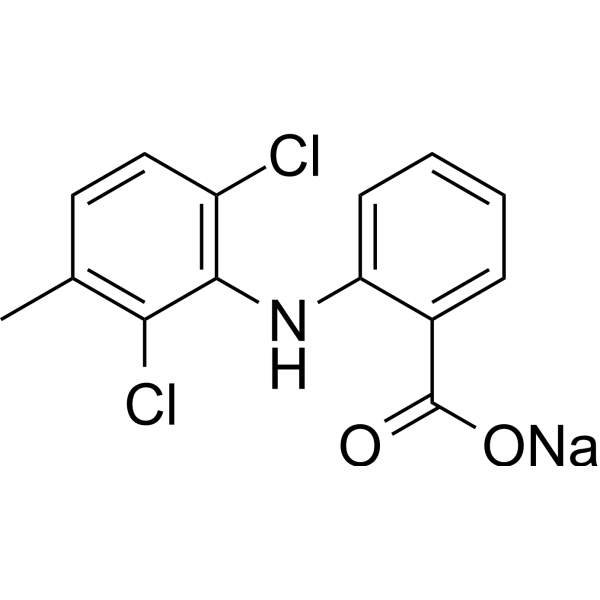
    Meclofenamic acid sodium
    5+ Cited Publications

    Meclofenamate sodium

    Gap Junction Protein Endogenous Metabolite Fat Mass and Obesity-associated Protein (FTO) Inflammation/Immunology Cancer
    Meclofenamic acid (Meclofenamate) sodium is a non-steroidal anti-inflammatory agent (NSAID). Meclofenamic acid sodium is a non-selective gap-junction blocker and a highly selective inhibitor of fat - and obesity-related enzyme (FTO). Meclofenamic acid sodium has anti-inflammatory and antitumor activities .
    Meclofenamic acid sodium
  • HY-106225
    Rotigaptide
    1 Publications Verification

    ZP123

    Gap Junction Protein Cardiovascular Disease
    Rotigaptide (ZP123) is a novel and specific modulator of connexin 43 (Cx43). Rotigaptide prevents the uncoupling of Cx43-mediated gap junction communication and normalizes cell-to-cell communication during acute metabolic stress. Rotigaptide is a potent antiarrhythmic peptide (AAP) with improved stability and has the potential for the investigation of cardiac arrhythmias-specifically atrial fibrillation .
    Rotigaptide
  • HY-P0102

    nAChR Neurological Disease Metabolic Disease
    Dipeptide diaminobutyroyl benzylamide diacetate, a Wagerlin-1-mimicking peptide, is a nAChR antagonist. Dipeptide diaminobutyroyl benzylamide diacetate mimics Waglerin-1 to block neuromuscular junction nicotinic acetylcholine receptors, partially inhibits neuronal signal transduction, and relaxes muscles. Dipeptide diaminobutyroyl benzylamide diacetate reduces appearance of facial wrinkles linked to repeated muscle movement.Dipeptide diaminobutyroyl benzylamide diacetate can be used for the research of mild-to-moderate fine and coarse periocular and perioral wrinkles and periorbital ageing .
    Dipeptide diaminobutyroyl benzylamide diacetate
  • HY-10913A
    Danegaptide Hydrochloride
    1 Publications Verification

    GAP-134 Hydrochloride; ZP 1609 Hydrochloride

    Gap Junction Protein Cardiovascular Disease
    Danegaptide Hydrochloride (GAP-134 Hydrochloride) is a potent, selective and orally active gap-junction modifier with an antiarrhythmic effect .
    Danegaptide Hydrochloride
  • HY-P1082
    Gap 26
    Maximum Cited Publications
    8 Publications Verification

    Connexin Gap Junction Protein Cardiovascular Disease
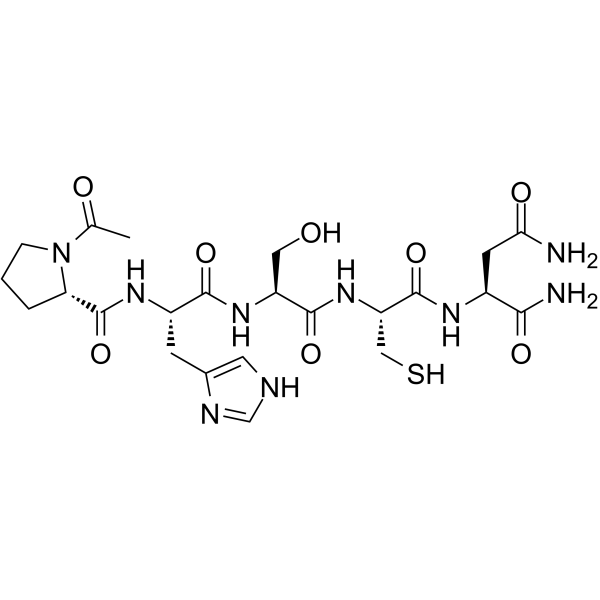
    Gap 26 is a connexin mimetic peptide, composed of residue numbers 63-75 of the first extracellular loop of connexin 43 (gap junction blocker), containing the SHVR amino acid motif .
    Gap 26
  • HY-W010653

    lrganox 1010; AT1010

    Environmental Pollutants Biochemical Assay Reagents Others
    Antioxidant 1010 (lrganox 1010; AT1010) is a hindered phenolic antioxidant. Antioxidant 1010 does not inhibit intercellular gap-junctional communication. Antioxidant 1010 exhibits antioxidant efficacy in plastic, rubber and synthetic fiber .
    Antioxidant 1010
  • HY-13831
    BPTU
    1 Publications Verification

    BMS-646786

    P2Y Receptor Neurological Disease Cancer
    BPTU (BMS-646786) is a non-nucleotide P2Y1 receptor allosteric antagonist with antithrombotic activity. BPTU is able to block the P2Y1 receptor located at the neuromuscular junction of the gastrointestinal tract .
    BPTU
  • HY-13999

    NSi-189

    Trk Receptor Neurological Disease
    Amdiglurax (NSI-189) is an orally active chemical entity with enhanced neurogenic activity. Amdiglurax up-regulates neurogenic factors such as BDNF (brain derived-neurotrophic factor) and SCF. Amdiglurax exhibits anti-depressant effect. Amdiglurax enhances synaptic plasticity and reduces cognitive dysfunction. Amdiglurax holds potential for psychiatric disorder research .
    Amdiglurax
  • HY-N2376
    Chrysin-7-O-glucuronide
    1 Publications Verification

    Glycosidase Amylases NF-κB Metabolic Disease Inflammation/Immunology
    Chrysin-7-O-glucuronide is a flavonoid found in Scutellaria baicalensis. Chrysin-7-O-glucuronide inhibits α-glucosidase and α-amylase with IC50 values of 612.13 and 980.73 μg/mL. Chrysin-7-O-glucuronide suppresses NF-κB signaling activity. Chrysin-7-O-glucuronide scavenges free radicals, acts as a tight junction protector, and mitigates intestinal mucosal barrier injury. Chrysin-7-O-glucuronide can be used for the research of type 2 diabetes and severe acute pancreatitis-induced intestinal mucosal barrier injury .
    Chrysin-7-O-glucuronide
  • HY-E70005K

    Proteasome Others
    Collagenase (Type A, animal free) is a proteolytic enzyme targeting collagen, capable of releasing corneal endothelial cells (CECs) without damaging cell junctions .
    Collagenase (Type A, animal free)
  • HY-114426A

    Gap Junction Protein Metabolic Disease
    AT-1002 TFA, a 6-mer synthetic peptide , is a tight junction regulator and absorption enhancer .
    AT-1002 TFA
  • HY-E70005M

    Proteasome Others
    Collagenase (Type C, animal free) is a proteolytic enzyme targeting collagen, capable of releasing corneal endothelial cells (CECs) without damaging cell junctions .
    Collagenase (Type C, animal free)
  • HY-42935A
    Heptanoate sodium
    1 Publications Verification

    Enanthate sodium

    Biochemical Assay Reagents Others
    Heptanoate sodium is an organic sodium salt compound widely used in various industries and laboratories. It can be used as surfactant, emulsifier, lubricant and preservative, etc., and plays an important role in some electronic devices. In addition, Heptanoate sodium is also used in the preparation of certain chemicals and raw materials such as paints, plastics, fragrances, etc. Although the compound has no direct medical application, it plays an important role in chemical research and industrial production.
    Heptanoate sodium
  • HY-34515

    TMPhen; 3,4,7,8-Tetramethyl-1,10-phenanthroline

    Biochemical Assay Reagents Others
    3,4,7,8-Tetramethyl-1,10-phenanthroline (TMPhen) is an organic molecule commonly used as a ligand or catalyst. It has a wide range of applications in different fields, such as organometallic chemical reactions, electrochemical detection, and organic optoelectronic devices. Due to its excellent performance in fluorescent probes, biosensors and photocatalytic reactions, it has been widely used in research in the fields of chemistry and life sciences.
    3,4,7,8-Tetramethyl-1,10-phenanthroline
  • HY-P99523

    AMG 199

    CD3 Cancer
    Vepsitamab (AMG 199) is a bispecific T-cell engager (HLE BiTE) that binds to MUC17 and CD3. Vepsitamab directs CD3-positive cells to target MUC17-positive cells. Vepsitamab induces cell activation and proliferation. Vepsitamab is applicable to research related to gastric cancer and gastroesophageal junction (g/gej) cancer .
    Vepsitamab
  • HY-P3443
    Peanut agglutinin
    1 Publications Verification

    PNA

    Biochemical Assay Reagents Cancer
    Peanut agglutinin (PNA) is a carbohydrate-recognition protein that binds competitively and irreversibly to cell-surface β-D-Gal (1-3)-GalNAc, and this binding can be inhibited by D-galactose and asialofetuin. Peanut agglutinin recognizes exposed glycoepitopes and reflects the glycosylation status of cells. Peanut agglutinin can label glycoconjugates at neuromuscular junctions to safely visualize synaptic structures. Peanut agglutinin can be used to synthesize dyes to distinguish between normal and tumor tissues. Peanut agglutinin provides support for research on leukemia, Burkitt's tumors, and cutaneous squamous lesions .
    Peanut agglutinin
  • HY-E70005L

    Proteasome Others
    Collagenase (Type B, animal free) is a proteolytic enzyme targeting collagen, capable of releasing corneal endothelial cells (CECs) without damaging cell junctions .
    Collagenase (Type B, animal free)
  • HY-D2264

    Fluorescent Dye Others
    Caffeine orange (Compound 1) is an aqueous-phase fluorescence turn-on sensor for caffeine that is highly selective to caffeine. Caffeine orange makes caffeinated coffee appear orange when exposed to 532 nM of green excitation light. Caffeine orange has excellent photophysical properties such as high extinction coefficient, high light stability and narrow emission bandwidth, which can be used in the research of caffeine detection devices .
    Caffeine orange
  • HY-D0830

    Fluorexon tetraethyl ester

    Fluorescent Dye Others
    Calcein tetraethyl ester is a tetraethylated derivative of calcein, with its core function serving as a live cell-specific fluorescent tracer. Calcein tetraethyl ester can diffuse between human periodontal ligament cells via gap junctions, thus enabling the evaluation of gap junction intercellular communication function, and its diffusion is enhanced under hydrogen peroxide induction. Calcein tetraethyl ester can be applied in the fields of cell biology and fluorescent labeling .
    Calcein (tetraethyl ester)
  • HY-P10886

    Gap Junction Protein Claudin Inflammation/Immunology
    Zifogaptide is a gap junction protein channel regulator. Zifogaptide mimics the PDZ-binding motif at the C-terminal of Claudin C and competitively interferes with the interaction between Claudin–TJP1 (ZO-1) scaffold. Zifogaptide can promote epithelial cell migration, reduce scar formation, and accelerate wound healing. Zifogaptide can be used for radiation dermatitis, skin injuries, etc .
    Zifogaptide
  • HY-139446A

    ETPTA (MW 912); TMPETA (MW 912)

    Biochemical Assay Reagents Others
    Trimethylolpropane ethoxylate triacrylate (MW 912) (ETPTA (MW 912); TMPETA (MW 912)) is a trifunctional acrylate monomer with multiple acrylate functional groups, which can be used in polymerization and crosslinking reactions. Trimethylolpropane ethoxylate triacrylate (MW 912) is widely used in the preparation of cured resins for 3D printing, optical coatings for display devices, and dental composite restorative materials .
    Trimethylolpropane ethoxylate triacrylate (MW 912)
  • HY-B1588
    Carbenoxolone
    5+ Cited Publications

    Amyloid-β Gap Junction Protein Neurological Disease Metabolic Disease
    Carbenoxolone is a blood-brain barrier-permeable Pannexin1 inhibitor, gap junction (Gap junction) blocker, and β-amyloid 42 inhibitor. Carbenoxolone modulates voltage-gated currents of wild-type and mutant Panx1, and inhibits stimulus-activated Panx1 channel function. Carbenoxolone interacts with stable residues of β-amyloid 42 peptides, fibrils and oligomers, thereby inhibiting their aggregation. Carbenoxolone alleviates liver fibrosis. Carbenoxolone exerts neuroprotective and nootropic effects. Carbenoxolone can be used in studies related to Alzheimer's disease and liver fibrosis .
    Carbenoxolone
  • HY-W099682

    n-Hexyl trimethylammonium bromide

    Biochemical Assay Reagents Others
    Hexyltrimethylammonium bromide is a cationic surfactant, quaternary ammonium compound, detergent, emulsifier, phase transfer catalyst, antibacterial agent, electrochemical device, corrosion inhibitor, micelle former, industrial chemical.
    Hexyltrimethylammonium bromide
  • HY-P991739

    VEGFR PD-1/PD-L1 Cancer
    RC148 is a humanized IgG1 bispecific antibody targeting VEGF and PD-1. RC148 blocks PD-1-PD-L1 and VEGF-VEGFR interactions, triggers VEGF-dependent enhanced PD-1 binding, enables VEGF crosslinking, and inhibits PD-1-mediated immunosuppression. RC148 can be used for the research of metastatic gastric/gastroesophageal junction adenocarcinoma, non-small cell lung cancer, and metastatic breast cancer .
    RC148
  • HY-13999A1

    NSi-189 phosphate

    Trk Receptor Neurological Disease
    Amdiglurax (NSI-189) phosphate is an orally active chemical entity with enhanced neurogenic activity. Amdiglurax phosphate up-regulates neurogenic factors such as BDNF (brain derived-neurotrophic factor) and SCF. Amdiglurax phosphate exhibits anti-depressant effect. Amdiglurax enhances synaptic plasticity and reduces cognitive dysfunction. Amdiglurax phosphate holds potential for psychiatric disorder research .
    Amdiglurax phosphate
  • HY-21170B

    Triflate lithium; Trifluoromethylsulfonate lithium; Trifluoromethanesulphonic acid lithium

    Biochemical Assay Reagents Herbicide Others
    Trifluoromethanesulfonate (Triflate;Trifluoromethylsulfonate) lithium is a stable lithium salt and dopant with four resonance states, which is commonly used as an electrolyte component in polymer light-emitting electrochemical cells and primary lithium batteries. Trifluoromethanesulfonate lithiumalso acts as a catalyst for the preparation of the herbicide Imazapyr. In MEH-PPV-based light-emitting electrochemical cells, Trifluoromethanesulfonate lithium promotes electrochemical p-type doping at the anode interface under applied bias, thereby facilitating the formation of p-i-n junctions, exciton generation, and light emission. Trifluoromethanesulfonate lithiumexhibits strong ion pairing in non-aqueous electrolytes, but its electrochemical stability window is narrower than that of lithium bistrifluoromethylsulfonyl imidee .
    Trifluoromethanesulfonate lithium
  • HY-W248583

    PM650

    Fluorescent Dye Others
    Pyrromethene 650 (PM650) is a green-fluorescent polar tracer dye. It is used for investigations of membrane fusion, lysis, and gap-junctional communication and to detect volume changes in cells or liposomes.
    Pyrromethene 650
  • HY-P1082A
    Gap 26 TFA
    Maximum Cited Publications
    8 Publications Verification

    Connexin Gap Junction Protein Cardiovascular Disease
    Gap 26 TFA is a connexin mimetic peptide, composed of residue numbers 63-75 of the first extracellular loop of connexin 43 (gap junction blocker), containing the SHVR amino acid motif .
    Gap 26 TFA
  • HY-W101255

    MTEACl

    Biochemical Assay Reagents Others
    Triethylmethylammonium chloride is a quaternary ammonium salt belonging to the class of alkylammonium salts. This compound is widely used as a phase transfer catalyst in organic synthesis to facilitate the transfer of reactants between immiscible phases. In addition, it can be used as an electrolyte in electrochemical devices, a surfactant in emulsion polymerization, and a corrosion inhibitor. Its unique chemical properties make it an important ingredient in a variety of industrial applications, including pharmaceuticals, agrochemicals, and materials science.
    Triethylmethylammonium chloride
  • HY-10913

    GAP-134; ZP 1609

    Gap Junction Protein Cardiovascular Disease
    Danegaptide (GAP-134) is a potent, selective and orally active gap-junction modifier with an antiarrhythmic effect .
    Danegaptide
  • HY-114426

    Gap Junction Protein Metabolic Disease
    AT-1002, a 6-mer synthetic peptide , is a tight junction regulator and absorption enhancer .
    AT-1002
  • HY-137292

    Biochemical Assay Reagents Others
    PTB7-Th is a classic organic photovoltaic (OPV) cell donor polymer that can be added as a dielectric to increase the short-circuit current and fill factor of polymer solar cells, improving the photovoltaic efficiency of the device .
    PTB7-Th
  • HY-E70005O

    Proteasome Others
    Collagenase (Type A, filtered, animal free) is a proteolytic enzyme targeting collagen, capable of releasing corneal endothelial cells (CECs) without damaging cell junctions .
    Collagenase (Type A, filtered, animal free)
  • HY-D1777

    PM605

    Fluorescent Dye Others
    Pyrromethene 605 (PM605) is a green-fluorescent polar tracer dye. It is used for investigations of membrane fusion, lysis, and gap-junctional communication and to detect volume changes in cells or liposomes.
    Pyrromethene 605
  • HY-P5486

    Bacterial Others
    Tet-20 is a biological active peptide. (Tet-20, is a synthetic cathelicidin-derived peptide. It was tested as infection-resistant coating for medical devices. When tethered on an implant surface Tet-20 exhibited broad antimicrobial activities both in vivo and in vitro. It can stop biofilm formation and appears to be non-toxic to eukaryotic cells)
    Tet-20
  • HY-W099641

    Biochemical Assay Reagents Others
    Methyltrioctylammonium hydrogen sulfate is a quaternary ammonium salt that is mainly used as an extraction solvent and a phase transfer catalyst in various chemical reactions. It is also used as an electrolyte in electrochemical devices such as batteries and fuel cells, and as a building block for the synthesis of pharmaceuticals and agrochemicals. MTOAHS are multifunctional compounds with many potential industrial applications due to their reactivity, stability, and ability to selectively extract certain compounds from mixtures.
    Methyltrioctylammonium hydrogen sulfate
  • HY-W101718

    ADC Linker Cancer
    Fmoc-N-(2-Boc-aminoethyl)-Gly-OH is a Fmoc-protected glycine derivative that can be used in antibody agent coupling (ADC) synthesis. ADC consists of antibodies that are linked to ADC cytotoxins via ADC junctions .
    Fmoc-N-(2-Boc-aminoethyl)-Gly-OH
  • HY-Y0407A

    TPAOH (40% w/w in water)

    Biochemical Assay Reagents Others
    Tetrapropylammonium hydroxide (40% w/w in water)It is a compound belonging to the class of quaternary ammonium compounds and is a strong base with cationic properties. Tetrapropylammonium hydroxide (40% w/w in water)It is usually used as a phase transfer catalyst to promote the transfer of reactants between immiscible phases in various organic synthesis reactions. It is also used in the production of semiconductors, especially the manufacture of thin-film transistors and other electronic devices.
    Tetrapropylammonium hydroxide (40% w/w in water)
  • HY-W101253

    Biochemical Assay Reagents Others
    Tetraethylammonium (iodide) is a quaternary ammonium compound belonging to the class of alkylammonium salts. This compound is commonly used as a phase-transfer catalyst in organic synthesis because it facilitates the transfer of reactants between immiscible phases. It can also be used as an electrolyte in electrochemical devices and as a surfactant in detergent formulations. Its unique chemical properties make it an important ingredient in a variety of industrial applications, including pharmaceuticals, agrochemicals, and materials science.
    Tetraethylammonium iodide
  • HY-W010750

    TOTM

    Biochemical Assay Reagents Others
    Trioctyl trimellitate (TOTM) is a plasticizer. Trioctyl trimellitate increases material plasticity by interacting with PVC molecular chains. Trioctyl trimellitate is promising for research of the safety of medical device materials .
    Trioctyl trimellitate

Inquiry Online

Your information is safe with us. * Required Fields.

Salutation


Country or Region *

Applicant Name *


Organization Name *

Department *


Email Address *


Product Name *

Cat. No.


Requested quantity *

Phone Number *


Remarks

Inquiry Online

Inquiry Information

Product Name:
Cat. No.:
Quantity:
MCE Japan Authorized Agent:

