Search Result
Results for "
Botrytis
" in MedChemExpress (MCE) Product Catalog:
1
Biochemical Assay Reagents
4
Isotope-Labeled Compounds
| Cat. No. |
Product Name |
Target |
Research Areas |
Chemical Structure |
-
- HY-119459
-
-
-
- HY-W004263
-
|
Arachidyl alcohol
|
Environmental Pollutants
Fungal
|
Infection
|
|
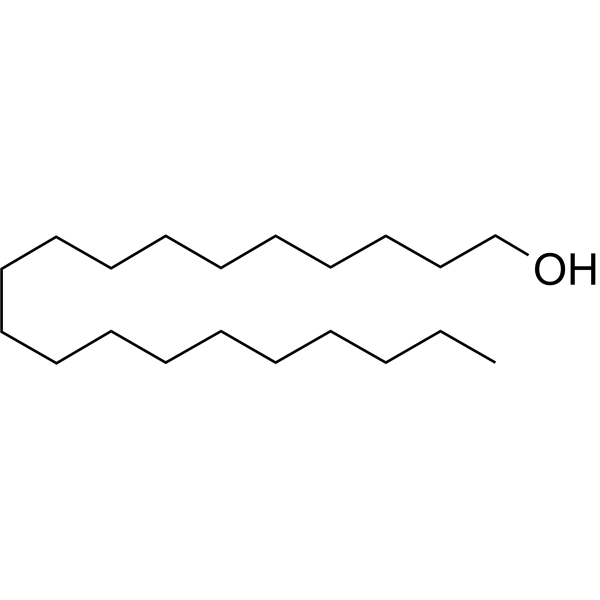
1-Eicosanol (Arachidyl alcohol) is a long-chain fatty alcohol and volatile organic compound that can be isolated from the leaves of Leea indica and produced by Bacillus velezensis ZJ1. 1-Eicosanol inhibits mycelial growth of Alternaria solani and Botrytis cinerea. 1-Eicosanol is applicable to research related to tomato early blight and tomato gray mold .
|
-
-
- HY-N6784
-
|
|
ATP Synthase
Bacterial
Apoptosis
Antibiotic
|
Infection
Neurological Disease
|
|
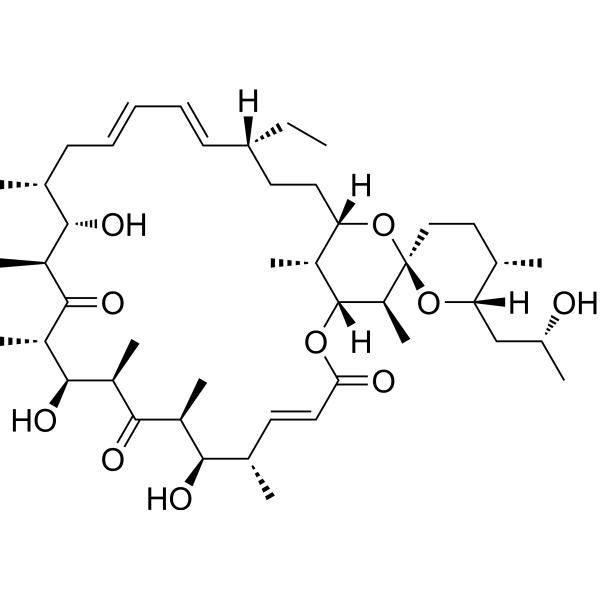
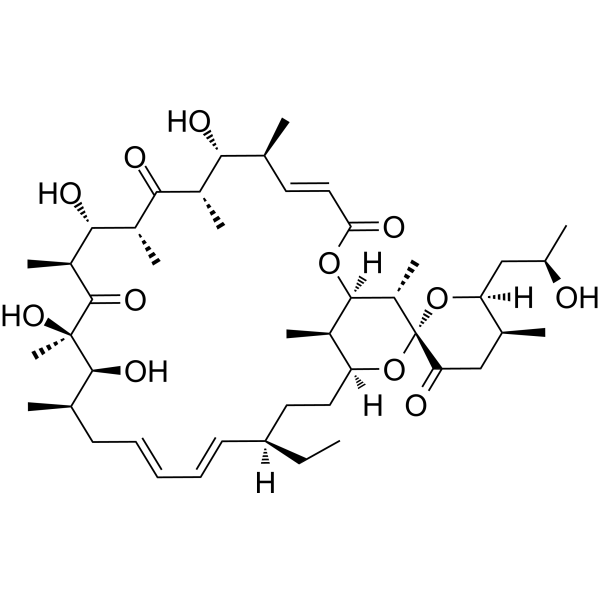
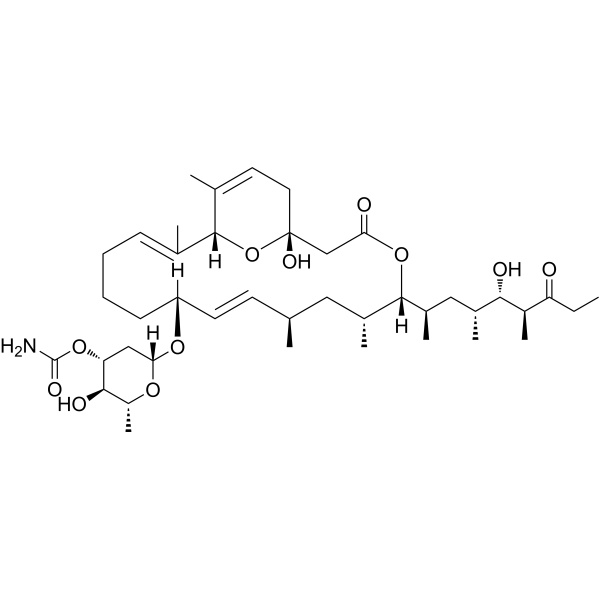
Oligomycin B is an antibiotic that acts as a non-selective inhibitor of ATP Synthase. Oligomycin B increases mitochondrial membrane potential. Oligomycin B induces apoptosis and necrosis. Oligomycin B impairs the motility of Plasmopara viticola zoospores and induces their lysis. Oligomycin B inhibits Magnaporthe oryzae (wheat blast fungus) and suppresses the development of wheat blast. Oligomycin B reduces hyphal growth and spore germination of Botrytis cinerea, and protects Arabidopsis thaliana against Botrytis cinerea infection. Oligomycin B exacerbates cytotoxic brain edema in rats with cerebral cortical contusion, increases intracranial pressure and brain water content, and aggravates mitochondrial damage in these rats. Oligomycin B is used in studies related to grape downy mildew, traumatic brain injury, wheat blast, and gray mold .
|
-
-
- HY-B1584
-
|
|
Environmental Pollutants
Bacterial
|
Others
|
|
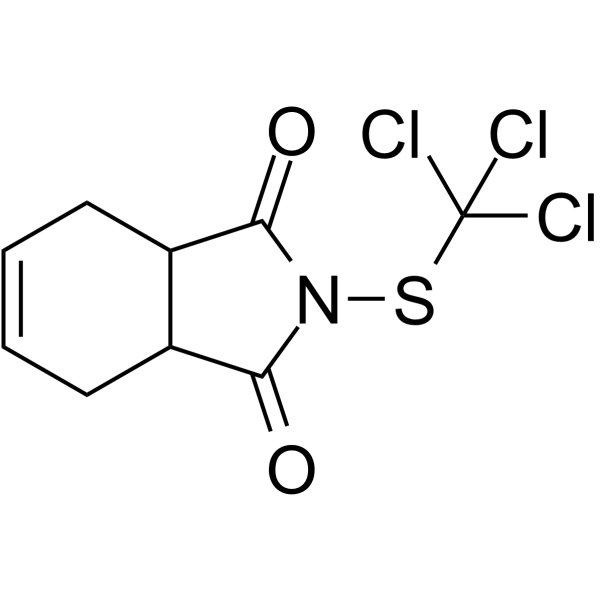
Captan is a common agricultural fungicide used to control Botrytis, Fusarium, Fusicoccum, Pythium. Captan enhances denitrifying and total culturable bacteria .
|
-
-
- HY-W094710
-
|
Sodium hydrogen diacetate
|
Environmental Pollutants
Bacterial
|
Infection
|
|
Sodium diacetate (Sodium hydrogen diacetate) is a multifunctional biochemical reagent with antibacterial (bacteria) and antifungal (fungi) activities. Sodium diacetate exerts its antimicrobial effect mainly by effectively penetrating the cell walls of microorganisms and interfering with enzyme interactions. Sodium diacetate inhibits the growth and survival of fungi such as Botrytis cinerea, as well as bacteria such as Listeria and Escherichia coli. Sodium diacetate inhibits the growth of endothelial cells. Sodium diacetate can be used in the synthesis of food preservatives, flavoring agents and pH control additives .
|
-
-
- HY-B2033
-
|
|
Environmental Pollutants
Fungal
|
Infection
|
|
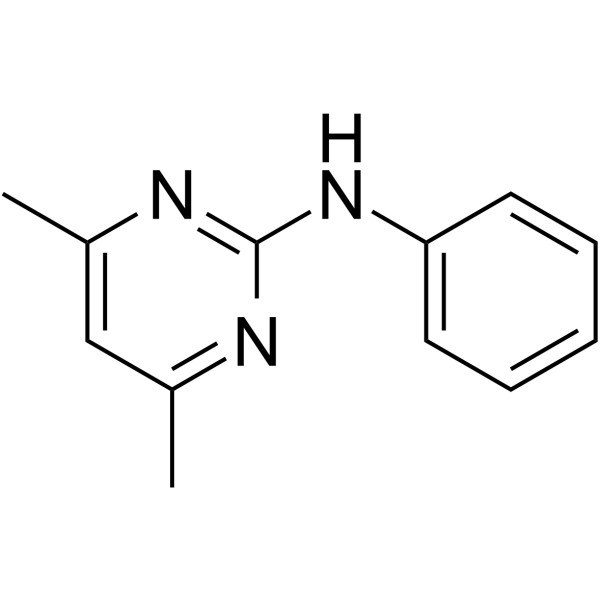
Pyrimethanil is an anilinopyrimidine and broad-spectrum contact fungicide for the control of Botrytis spp. on a wide variety of crops . Pyrimethanil inhibits the biosynthesis of methionine and other amino acids in Botrytis cinerea. Pyrimethanil can be used for the research of fungal diseases prevention on fruit, vegetable and ornamental plants with mold infection .
|
-
-
- HY-17520
-
|
MTF-753
|
Environmental Pollutants
Fungal
|
Infection
|
|
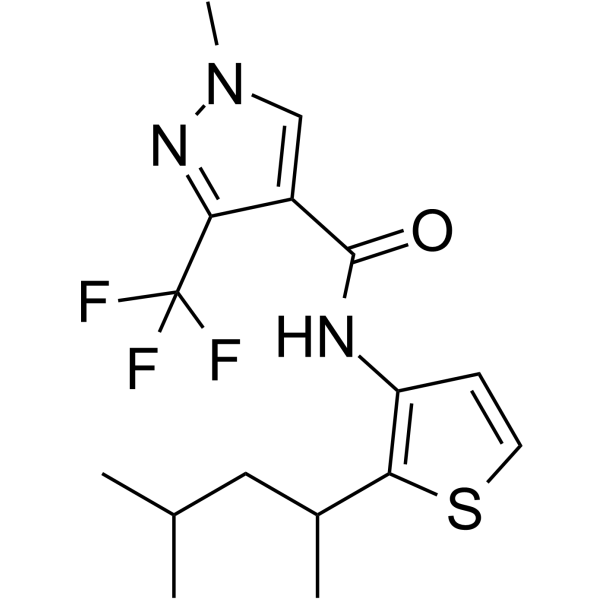
Penthiopyrad (MTF-753) is a carboxamide Fungicide. Penthiopyrad inhibits SDH. Penthiopyrad exhibits broad-spectrum antifungal activity, being effective not only against Basidiomycetes, but also against Ascomycetes and Deuteromycetes. Penthiopyrad inhibits the mycelial growth of Alternaria mali, Botrytis cinerea, Monilinia mali, Rhizoctonia solani and Sclerotinia sclerotiorum on PDA medium, with EC50 values ranging from <0.4 ppm to 0.34 ppm and MIC values ranging from 6.6 ppm to 47.9 ppm .
|
-
-
- HY-N10895
-
|
|
Fungal
|
Infection
|
|
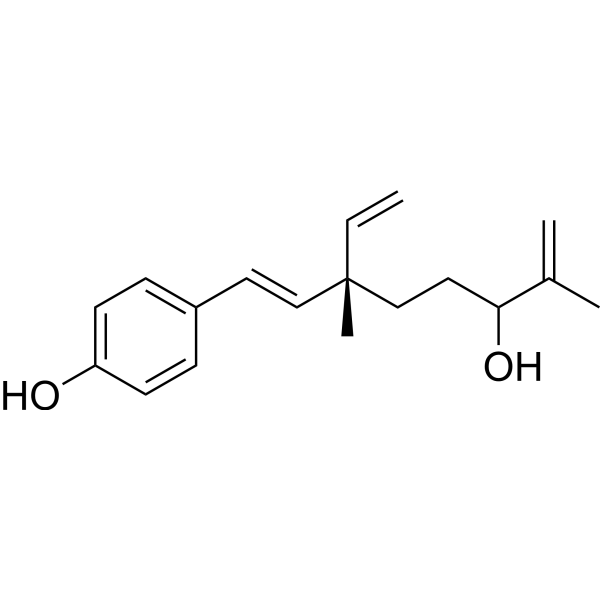
12-Hydroxyisobakuchiol is a hemiterpenoid compound that can be isolated from the leaves of Psoralea glandulosa. 12-Hydroxyisobakuchiol inhibits mycelial growth of Botrytis cinerea in vitro. 12-Hydroxyisobakuchiol is applicable to research related to phytopathogenic fungal infections .
|
-
-
- HY-169790
-
|
|
Dihydrofolate reductase (DHFR)
Parasite
Fungal
|
Infection
|
|
Phomarin is an inhibitor for dihydrofolate reductase (DHFR). Phomarin exhibits activity against Plasmodium parasites and fungi including Mycrobotryum violaceum and Botrytis cinerea. Phomarin can be used for the research of malaria and fungal infections .
|
-
-
- HY-118065
-
-
-
- HY-W049970
-
|
|
Environmental Pollutants
Bacterial
|
Infection
|
|
Carvacrol methyl ether is a carvacrol derivative isolated from plant essential oils. Carvacrol methyl ether essentially lost its antibacterial activity, exhibiting only a weak inhibitory effect on Saccharomyces cerevisiae at the highest tested concentration of 3 g/L .
|
-
-
- HY-P10447
-
|
Fengycin IX; SNA-60-367-3
|
Phospholipase
|
Infection
|
|
Plipastatin A1 is a lipopeptide with phospholipase A2 inhibitory activity. Plipastatin A1 inhibits conidial germination of Botrytis cinerea in vitro and reduces the incidence of gray mold on tomato leaves. Plipastatin A1 is applicable to research related to gray mold .
|
-
-
- HY-W020043
-
|
|
Fungal
|
Infection
|
|
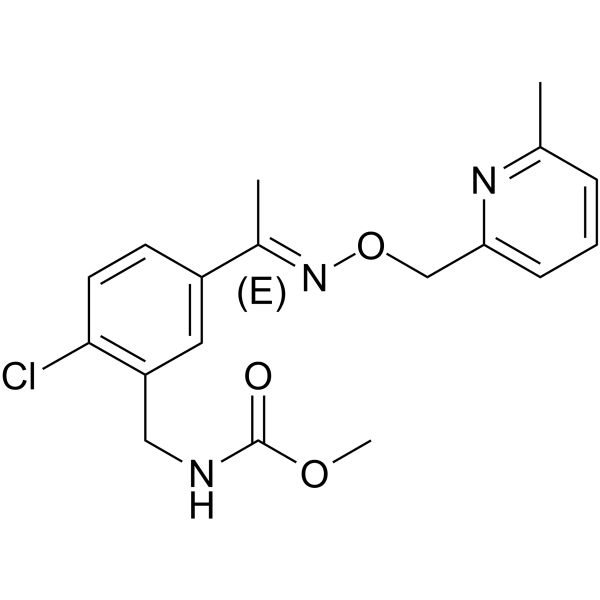
Pyribencarb is a benzylcarbamate-type fungicide, which is active against a wide range of plant pathogenic fungi. Pyribencarb is a potent Qo inhibitor of cytochrome b. Pyribencarb is especially active against Botrytis cinerea and Sclerotinia sclerotirum .
|
-
-
- HY-75828
-
|
Dibenzalacetone
|
Bacterial
|
Infection
|
|
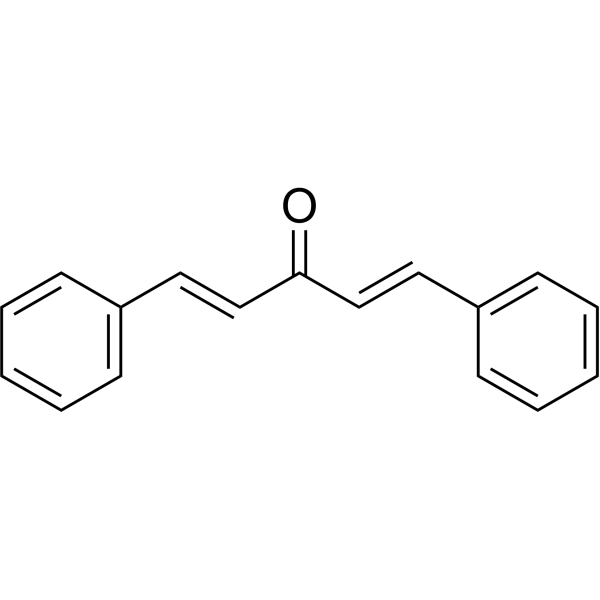
Dibenzylideneacetone (Dibenzalacetone) is a potent inhibitor of chitinase with an IC50 value of 13.10 μM. The MIC value of Dibenzylideneacetone against Botrytis cinerea is 32 μg/mL, and the EC50 values for inhibiting mycelium growth and spore germination are 16.29 and 14.64 μg/mL, respectively. Dibenzylideneacetone can be used in research on fruit and vegetable preservatives .
|
-
-
- HY-163459
-
|
|
Fungal
|
Infection
|
|
HWY-289 is a semisynthetic protoberberine derivative, has broad-spectrum and potent activities against phytopathogenic fungi, particularly Botrytis cinerea (EC50 = 1.34 μg/mL). HWY-289 changes the morphology of the mycelium and the internal structure of cells. HWY-289 reduces ATP content, ATPase activities, and key enzyme activities in the TCA cycle .
|
-
-
- HY-B2033R
-
|
|
Reference Standards
Fungal
|
Infection
|
|
Pyrimethanil (Standard) is the analytical standard of Pyrimethanil. This product is intended for research and analytical applications. Pyrimethanil is an anilinopyrimidine and broad-spectrum contact fungicide for the control of Botrytis spp. on a wide variety of crops . Pyrimethanil inhibits the biosynthesis of methionine and other amino acids in Botrytis cinerea. Pyrimethanil can be used for the research of fungal diseases prevention on fruit, vegetable and ornamental plants with mold infection .
|
-
-
- HY-B2033S
-
|
|
Isotope-Labeled Compounds
Fungal
|
Infection
|
|
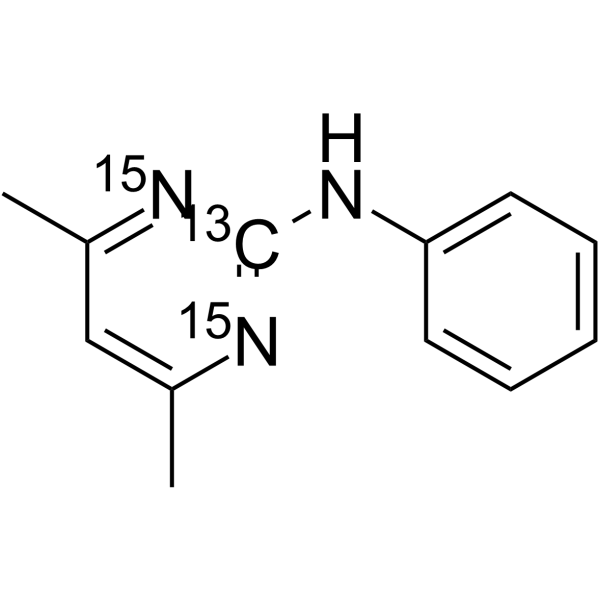
Pyrimethanil- 13C, 15N2 is the 13C-labeled and 15N-labeled Pyrimethanil. Pyrimethanil is an?anilinopyrimidine?and broad-spectrum?contact fungicide for the control of Botrytis spp. on a wide variety of crops . Pyrimethanil inhibits the biosynthesis of methionine and other amino acids in?Botrytis cinerea. Pyrimethanil can be used for the research of fungal diseases prevention on fruit, vegetable and ornamental plants with mold infection .
|
-
-
- HY-N5020
-
|
|
Bacterial
|
Infection
Cancer
|
|
Carabrone is isolated from the fruits of Carpesium abrotanoides , is a well-known sesquiterpene and exhibits significant anti-bacterial and anti-tumor activities .
Carabrone exhibits antifungal activities in vitro and in vivo against Botrytis cinerea, Colletotrichum lagenarium(EC50=7.10 μg/mL) and Erysiphe graminis .
|
-
-
- HY-119459R
-
|
|
Reference Standards
Succinate Dehydrogenase
Fungal
Parasite
Constitutive Androstane Receptor
Caspase
NF-κB
|
Infection
Cancer
|
|
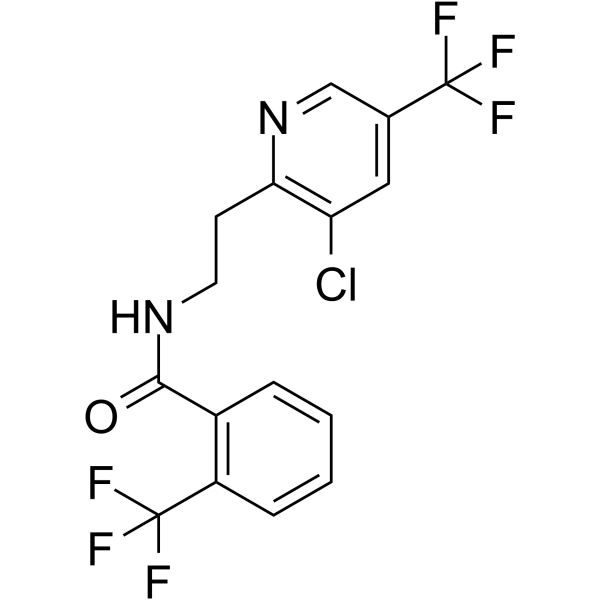
Fluopyram (Standard) is the analytical standard of Fluopyram (HY-119459). This product is intended for research and analytical applications. Fluopyram is an orally active succinate dehydrogenase inhibitor, antifungal and nematicide. Fluopyram inhibits succinate dehydrogenase activity, activates CAR/PXR nuclear receptors, and increases caspase-3, TNF-α and NF-κB. Fluopyram inhibits the growth of F. virguliforme, Botrytis cinerea and Alternaria solani with EC50 values of 3.35, 5.389 and 0.244 µg/mL, respectively. Fluopyram induces liver and thyroid tumor formation. Fluopyram is nephrotoxic and embryotoxic .
|
-
-
- HY-119898
-
|
|
Fungal
|
Infection
|
|
Alloocimene is a diterpenoid that activates defense genes and induces resistance to Botrytis cinerea in Arabidopsis thaliana .
|
-
-
- HY-N6783
-
|
|
Fungal
Antibiotic
|
Infection
|
|
Oligomycin C is a macrolide antibiotic produced by Streptomyces strains. Oligomycin C exhibits a strong activity against Aspergillus niger, Alternaria alternata, Botrytis cinerea and Phytophthora capsici but no activity toward bacteria .
|
-
-
- HY-N3706
-
|
|
Fungal
|
Infection
|
|
Dehydro-α-lapachone can be isolated from the methanol extract of stems of Catalpa ovata G Don. Dehydro-α-lapachone inhibits mycelial growth of Botrytis cinerea with IC50 value 0.41 mg/L .
|
-
-
- HY-N9768
-
|
9-oxo-ODA
|
Fungal
PPAR
|
Infection
|
|
(10E,12E)-9-Oxo-10,12-octadecadienoic acid (9-oxo-ODA) is a PPARα agonist that can be isolated from the basidiomycete Gomphus floccosus. (10E,12E)-9-Oxo-10,12-octadecadienoic acid enhances fatty acid oxidation through PPARα activation, thereby inhibiting triglyceride accumulation. (10E,12E)-9-Oxo-10,12-octadecadienoic acid also has antifungal (Fungal) activity .
|
-
-
- HY-W286805
-
|
Phenalenone
|
Fungal
|
Infection
|
|
Perinaphthenone has antifungal activity, with IC50s of 36.2 μM (at day 3), 13.3 μM (at day 3), and 39.0 μM (at 60 h) for Botrytis spp., Fusarium spp. and Botryodiplodia spp., respectively .
|
-
-
- HY-169972
-
|
|
Succinate Dehydrogenase
|
Infection
|
|
Succinate dehydrogenase-IN-5 (Compound M8) is the inhibitor for succinate dehydrogenase. Succinate dehydrogenase-IN-5 interfers with the energy metabolism and growth of fungi, inhibits Rhizoctonia solani, Sclerotinia sclerotiorum, Botrytis cinerea and Fusarium graminearum with EC50 < 0.3 μg/mL .
|
-
-
- HY-N11546
-
|
|
Cytochrome P450
Bacterial
Fungal
|
Infection
Cancer
|
|
Sapindoside B is a substance with hepatoprotective activity, and also acts as a cytochrome P-450 (cytochrome P-450) inhibitor, antibacterial agent and membrane-disrupting agent. Sapindoside B reversibly inhibits the content of cytochrome P-450 in liver microsomes, suppresses the phenobarbital-induced increase in enzyme content, reduces the production of active metabolites mediated by cytochrome P-450, and alleviates hepatotoxic injury. Sapindoside B binds to Cutibacterium acnes lipase, reduces lipase activity, inhibits biofilm formation, and decreases bacterial adhesion. Sapindoside B exhibits cytotoxicity against human cancer, liver cancer, leukemia and glioblastoma cells. Sapindoside B inhibits mycelial growth of phytopathogenic fungal strains, possesses antibacterial activity against dermatophytes, and also has hemolytic/membrane-lytic activity. Sapindoside B can be used in research related to liver injury, Cutibacterium acnes biofilm-associated infections, gastric cancer, carcinoma, promyelocytic leukemia, glioblastoma, apple scab and grape gray mold .
|
-
-
- HY-N10482
-
|
|
Fungal
|
Infection
|
|
Tinophyllol, a furanoditerpenoid, is a natural product found in Arcangelisia flava MERR. Tinophyllol has good activity against Botrytis cinerea .
|
-
-
- HY-P5591
-
|
|
Fungal
|
Infection
|
|
PAF26 is an antimicrobial peptide against phytopathogenic fungi Penicillium digitatum, Penicillium italicum and Botrytis cinerea .
|
-
-
- HY-B1584R
-
|
|
Reference Standards
Bacterial
|
Others
|
|
Captan (Standard) is the analytical standard of Captan. This product is intended for research and analytical applications. Captan is a common agricultural fungicide used to control Botrytis, Fusarium, Fusicoccum, Pythium. Captan enhances denitrifying and total culturable bacteria .
|
-
-
- HY-163634
-
|
|
Fungal
|
Infection
|
|
YZK-C22, containing a 1,2,3-thiadiazol-[1,2,4]triazolo[3,4-b][1,3,4]thiadiazole skeleton, is a fungicide lead compound with broad-spectrum fungicidal activity .
|
-
-
- HY-179212
-
|
|
Drug Derivative
Fungal
|
Infection
|
|
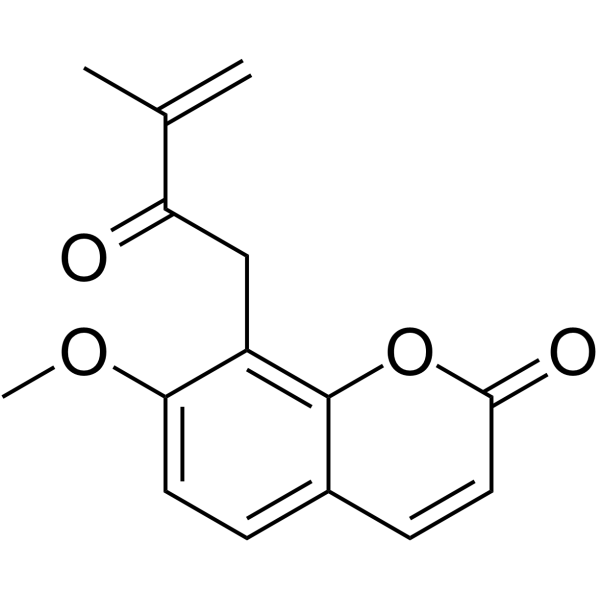
(±)-Coladonin (Compound (±)-12), Coumarin (HY-N0709) derivative, is an antifungal agent. (±)-Coladonin exhibits potent inhibitory effect on the plant pathogenic fungus Botrytis cinerea. (±)-Coladonin is mainly used for the research on the prevention and control of gray mold disease in crops .
|
-
-
- HY-172222
-
|
|
Fungal
|
Infection
|
|
Antifungal agent 127 (Compound 6c) is an antifungal agent. Antifungal agent 127 exhibits strong inhibitory activity against Botrytis cinerea, Rhizoctonia solani, and other fungi .
|
-
-
- HY-149615
-
|
|
Fungal
|
Infection
|
|
Antibacterial agent 157 (compound B12) is a fungicidal agent. Antibacterial agent 157 can influence the protein synthesis of Botrytis cinerea. Antibacterial agent 157 can be used for gray mold resistance control research .
|
-
-
- HY-158054
-
|
|
Fungal
|
Infection
|
|
Antifungal agent 95 (Compound CN21b) is an antifungal agent for Sclerotinia sclerotiorum and Botrytis cinerea, with EC50s of 2.11 and 0.97 μM, respectively. Antifungal agent 95 exhibits antifungal activity against resistant B. cinerea strains, with EC50s less than 10 μM .
|
-
-
- HY-N13154
-
|
|
Antibiotic
Fungal
|
Infection
|
|
Malolactomycin C (compound 1) is a macrolide antifungal antibiotic isolated from Streptomyces strain KP-3144. Malolactomycin C is an effective inhibitor of Botrytis cinerea and thus controls a variety of plant diseases including gray mold .
|
-
-
- HY-169069
-
|
|
Fungal
|
Infection
|
|
Antifungal agent 110 exhibits fungicidal activity toward Botrytis cinerea and Rhizoctonia solani. Antifungal agent 110 displays antifungal activity against R. solani with an EC50 value of 0.27 mg/L. Antifungal agent 110 is promising for research of plant diseases .
|
-
-
- HY-174831
-
|
|
Fungal
Succinate Dehydrogenase
|
Infection
|
|
SDH-IN-28 is a succinate dehydrogenase inhibitor with an IC50 value of 2.65 mg/L. SDH-IN-28 demonstrates broad-spectrum fungicidal efficacy, with EC50 values of 0.21 (Valsa mali), 0.95 (Botrytis cinerea), 0.64 (Rhizoctonia solani), 1.33 (Fusarium graminearum), and 0.66 mg/L (Gaeumannomyces graminis). SDH-IN-28 effectively prevents V. mali infection in apples .
|
-
-
- HY-163693
-
|
|
Fungal
|
Infection
|
|
Antifungal agent 104 (Compound 5e) exhibits antifungal activity against Sclerotinia sclerotiorum, Rhizoctonia solani and Botrytis cinerea, with EC50 of 1.52 μg/mL, 0.06 μg/mL and 15.69 μg/mL, respectively. Antifungal agent 104 exhibits low cytotoxicity to human renal cell 239A (6.28-100 mM) .
|
-
-
- HY-172810
-
|
|
Succinate Dehydrogenase
Fungal
|
Infection
|
|
Succinate dehydrogenase-IN-8 (compound i19) is a potent succinate dehydrogenase (SDH) inhibitor. Succinate dehydrogenase-IN-8, an indene amino acid derivative, demonstrates potent in vitro antifungal activity against Rhizoctonia solani (EC50=0.1843 mg/L), Botrytis cinerea (EC50=0.4829 mg/L), and Sclerotinia sclerotiorum (EC50=0.1349 mg/L) .
|
-
-
- HY-162648
-
|
|
Fungal
|
Infection
|
|
Succinate dehydrogenase-IN-1 (Compound 34) is an inhibitor for succinate dehydrogenase (SDH) with an IC50 of 0.94 μM and a KD of 22.4 μM. Succinate dehydrogenase-IN-1 exhibits antifungal activity against Rhizoctonia solani, Sclerotinia sclerotiorum, Monilinia fructicola, and Botrytis cinerea, with EC50 of 0.04 μM, 1.13 μM, 1.61 μM and 1.21 μM, respectively .
|
-
-
- HY-176552
-
|
|
Fungal
Microtubule/Tubulin
|
Infection
|
|
Tubulin polymerization-IN-83 (Compound A23) is a flavonol derivative. Tubulin polymerization-IN-83 exhibits antifungal activity against various phytopathogenic fungi, with an EC50 of 0.338 μg/mL against Botrytis cinerea. Tubulin polymerization-IN-83 exerts its effects by targeting β-tubulin, disrupting mycelial morphology, and increasing cell membrane permeability, with relatively low ecological and environmental risks .
|
-
-
- HY-N14269
-
|
|
Antibiotic
Fungal
|
Infection
|
|
Ezomycin A2 is an antifungal antibiotic. Ezomycin A2 is mainly active against phytopathogens such as Sclerotinia sclerotiorum and Botrytis, and has a control effect on Sclerotinia, Botrytis and Candidiasis of crops .
|
-
-
- HY-N14283
-
|
|
Antibiotic
Fungal
|
Infection
|
|
Ezomycin D2 is an antifungal antibiotic. Ezomycin D2 is mainly active against phytopathogens such as Sclerotinia sclerotiorum and Botrytis, and has a control effect on Sclerotinia, Botrytis and Candidiasis of crops .
|
-
-
- HY-N14560
-
|
|
Fungal
|
Infection
|
|
Cyclopaldic acid of 2.5 μg/mL can inhibit the spore germination of Garlic botrytis spore 95%-100% .
|
-
-
- HY-B2033S1
-
|
|
Fungal
Isotope-Labeled Compounds
|
Others
|
|
Pyrimethanil-d5 is the deuterium labeled Pyrimethanil (HY-B2033). Pyrimethanil is an anilinopyrimidine and broad-spectrum contact fungicide for the control of Botrytis spp. on a wide variety of crops . Pyrimethanil inhibits the biosynthesis of methionine and other amino acids in Botrytis cinerea. Pyrimethanil can be used for the research of fungal diseases prevention on fruit, vegetable and ornamental plants with mold infection .
|
-
-
- HY-136384
-
|
|
Fungal
|
Infection
|
|
Diethofencarb is a fungicide with strong activity against Botrytis cinerea and Benzimidazole-resistant strains of Botryis spp. Diethofencarb has a role as an antifungal agrochemical .
|
-
-
- HY-162687
-
|
|
Fungal
|
Infection
|
|
Antibacterial agent 232 (compound Y41) is a potent antibacterial agent. Antibacterial agent 232 disrupts the cell membrane integrity by inducing cell peroxidation .
|
-
-
- HY-N14282
-
-
-
- HY-W441968
-
|
|
Antibiotic
Bacterial
|
Infection
|
|
L-threo-β-Hydroxyaspartic acid is an amino acid antibiotic. L-threo-β-Hydroxyaspartic acid has the activity of inhibiting Bacillus subtilis, Xanthomonas oryzae, Mycobacterium phlei and Botrytis cinerea .
|
-
-
- HY-125727
-
|
|
Fungal
|
Infection
Cancer
|
|
Globosuxanthone A is a dihydroxanthenone with obvious antifungal activity towards Fusarium graminearum, Fusarium solani, and Botrytis cinerea with MIC values of 4, 8, and 16 μg/mL, respectively. Anticancer activity .
|
-
- HY-B1584S
-
|
|
Bacterial
|
Others
|
|
Captan-d6 is the deuterium labeled Captan . Captan is a common agricultural fungicide used to control Botrytis, Fusarium, Fusicoccum, Pythium. Captan enhances denitrifying and total culturable bacteria .
|
-
- HY-N14102
-
|
|
Fungal
|
Infection
|
|
Chlorflavonin has the activities of anti-aspergillus, yeast, botrytis, and other fungal. Among these fungi, anti-Aspergillus fumigatus activity is particularly strong, the minimum inhibitory concentration up to 0.08 μg/mL .
|
-
- HY-135307
-
|
Huanjunzuo
|
Fungal
|
Infection
|
|
SSF-109 is a broad-spectrum fungicide which has protective activity against plant disease. SSF-109 inhibits the biosynthesis of ergosterol at the 14α-demethylation step in Botrytis cinerea .
|
-
- HY-N11528
-
|
7-Noreugenitin
|
Others
|
Infection
|
|
Eugenitol (Compound 3) is an antifungal metabolite isolated and purified from Diaporthe eucalyptorum. Eugenitol has inhibitory effect on four plant pathogenic fungi (Alternaria solani, Botrytis cinerea, Fusarium solani and Gibberella saubinettii) .
|
-
- HY-N10292
-
|
|
Fungal
Endogenous Metabolite
|
Infection
|
|
Chaetosemin J, an antifungal metabolite, exhibits inhibitory activity against plant pathogenic fungi Botrytis cinerea, Alternaria solani, Magnaporthe oryzae, and Gibberella saubinettii, with MIC values ranging from 12.5-25 μM .
|
-
- HY-136384R
-
|
|
Reference Standards
Fungal
|
Infection
|
|
Diethofencarb (Standard) is the analytical standard of Diethofencarb. This product is intended for research and analytical applications. Diethofencarb is a fungicide with strong activity against Botrytis cinerea and Benzimidazole-resistant strains of Botryis spp. Diethofencarb has a role as an antifungal agrochemical .
|
-
- HY-118065R
-
|
KBR 2738 (Standard)
|
Reference Standards
Fungal
Estrogen Receptor/ERR
PI3K
|
Infection
Cancer
|
|
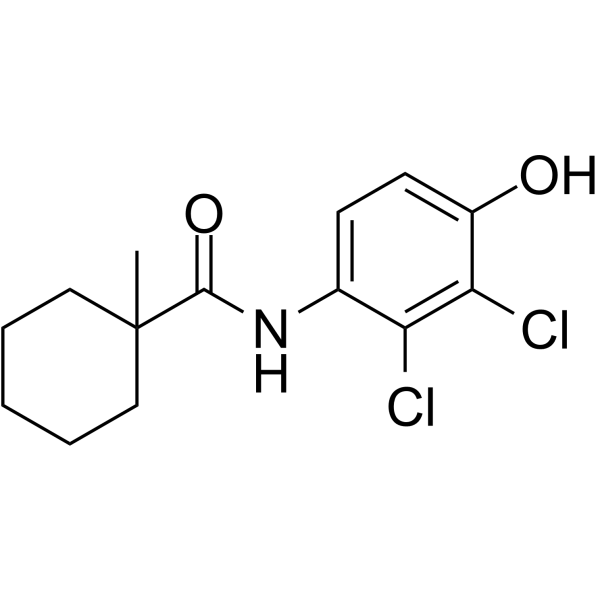
Fenhexamid (Standard) is the analytical standard of Fenhexamid. This product is intended for research and analytical applications. Fenhexamid, a botryticide, is a sterol biosynthesis inhibitor. Fenhexamid shows fungicide efficient against the plant pathogenic fungus Botryotinia fuckeliana (Botrytis cinerea) .
|
-
- HY-W701943
-
|
|
Isotope-Labeled Compounds
Fungal
PI3K
Estrogen Receptor/ERR
|
Cancer
|
|
Fenhexamid-d10 is the deuterium labeled Fenhexamid (HY-118065). Fenhexamid, a botryticide, is a sterol biosynthesis inhibitor. Fenhexamid shows fungicide efficient against the plant pathogenic fungus Botryotinia fuckeliana (Botrytis cinerea) .
|
-
- HY-163297
-
|
|
Fungal
|
Infection
|
|
Antifungal agent 90 (Compound 7n) is an antifungal agent that inhibits ergosterol biosynthesis. Antifungal agent 90 showed excellent antifungal activity against Valsa mali and Botrytis cinerea with EC50 values respectively. 4.26 and 1.41 μg/mL .
|
-
- HY-W020043R
-
|
|
Reference Standards
Fungal
|
Infection
|
|
Pyribencarb (Standard) is the analytical standard of Pyribencarb. This product is intended for research and analytical applications. Pyribencarb is a benzylcarbamate-type fungicide, which is active against a wide range of plant pathogenic fungi. Pyribencarb is a potent Qo inhibitor of cytochrome b. Pyribencarb is especially active against Botrytis cinerea and Sclerotinia sclerotirum .
|
-
- HY-W741555
-
|
7-Dechlorogriseofulvin
|
Antibiotic
Fungal
|
Infection
|
|
Dechlorogriseofulvin (7-Dechlorogriseofulvin) is an antibiotic, and exhibits inhibitory activity against various plant pathogenic fungi. Dechlorogriseofulvin inhibits Botrytis cinerea, Rhizoctonia solani, Pythium ultimum, and Sclerotinia sclerotiorum with MIC of 40.0 µg/ml, 43.9 µg/ml, 81.7 µg/ml, and 28.5 µg/ml, respectively .
|
-
- HY-137085
-
|
|
Antibiotic
Fungal
|
Infection
|
|
Antibiotic AB023b is part of macrocyclic pentaene antibiotic complex, forming the main components with Antibiotic AB023a (HY-137084). Antibiotic AB023b exhibits antifungal activity against Candida albicans, and plant pathogenic fungi, Botrytis cinerea, Fusarium moniliforme and Pythium ultimum .
|
-
- HY-137084
-
|
|
Antibiotic
Fungal
|
Infection
|
|
Antibiotic AB023a is part of macrocyclic pentaene antibiotic complex, forming the main components with Antibiotic AB023b (HY-137085). Antibiotic AB023a exhibits antifungal activity against Candida albicans, and plant pathogenic fungi, Botrytis cinerea (MIC= 5 μg/mL), Fusarium moniliforme and Pythium ultimum .
|
-
- HY-175722
-
|
|
Fungal
|
Infection
|
|
JSZ16 is a Succinate dehydrogenase (SDH) inhibitor with an IC50 of 30.3 μM. JSZ16 has potent broad-spectrum fungicidal activity, such as Sclerotinia sclerotiorum, Botrytis cinerea and Colletotrichum fragariae, with an EC50 of 4.4 mg/L for Sclerotinia sclerotiorum. JSZ16 influences the cell membrane permeability of pathogenic fungi. JSZ16 can be used for the development of fungicide .
|
-
- HY-W037200
-
|
2,3,5-Tri-O-benzyl-D-ribofuranose
|
Fungal
|
Infection
|
|
2,3,5-Tri-O-benzyl-D-ribose (Compound 1) is an effective inhibitor of Botrytis cinerea chitin synthase (CHS) with an IC50 value of 1.8 μM. 2,3,5-Tri-O-benzyl-D-ribose exhibits antifungal activity and is able to inhibit the B. cinerea BD90 strain, with a MIC value of 190 μM .
|
-
- HY-171542
-
|
|
Fungal
|
Infection
|
|
CDA-IN-2 (Compound VS#2-3) is a chitin deacetylase (Chitin Deacetylase, CDA) inhibitor with antifungal activity. At a concentration of 100 μM, it can inhibit the CDA PxCDA1 and PxCDA2 of P. xanthii by 83.7% and 74.5% respectively. CDA-IN-2 can be applied to the research in the field of controlling agricultural fungal diseases, such as dealing with resistant powdery mildew and Botrytis cinerea .
|
-
- HY-161504
-
|
|
Fungal
Succinate Dehydrogenase
|
Infection
|
|
SDH-IN-14 (Compound Z2) is an inhibitor of succinate dehydrogenase (SDH). SDH-IN-14 has antifungal activity (EC50=2.7 μg/mL) against B.cinerea. SDH-IN-14 acts by disrupting the integrity of the cell wall and cell membrane .
|
-
- HY-P11343
-
|
|
Fungal
|
Infection
|
|
Verlamelin B (Compound 147) is effective against plant pathogenic fungal and is a derivative of Verlamelin (HY-N14856).Verlamelin B exhibits potent plant protective activity in vivo, particularly against rice blast and barley powdery mildew. Verlamelin B causes morphological changes in fungal cells, such as swelling or expansion. Verlamelin B exhibits weaker antifungal activity in vitro against plant pathogens such as rice blast, Dipolaris zeae, and Botrytis cinerea. Verlamelin B is useful for research on antifungal activities against plant pathogens .
|
-
- HY-172804
-
|
|
Succinate Dehydrogenase
Fungal
Apoptosis
|
Infection
|
|
SDH-IN-26 (Compound C3) is a succinate dehydrogenase (SDH) inhibitor. SDH-IN-26 exhibits significant inhibitory activity against multiple phytopathogenic fungi, such as Rhizoctonia solani and Botrytis cinerea, with an EC50 value of 0.270 μg/mL against Rhizoctonia solani. SDH-IN-26 damages the integrity of the fungal cell membrane, increases membrane permeability, disrupts cell structure, and reduces the number of mitochondria, thus affecting the normal growth of mycelia. SDH-IN-26 leads to a decrease in mitochondrial membrane potential, and induces cell apoptosis. SDH-IN-26 is promising for research of plant diseases caused by fungi .
|
-
- HY-174388
-
|
|
Fungal
Herbicide
Reactive Oxygen Species (ROS)
|
Infection
|
|
Antifungal agent 134 (Compound B13) is an antifungal agent with EC50s of 3.24, 1.89, 1.70, 0.36, 4.27, and 1.50 μg/mL for Botrytis cinerea, Alternaria solani, Fusarium graminearum, Rhizoctonia solani, Colletotrichum orbiculare, and Alternaria alternata, respectively. Antifungal agent 134 can disrupt the cell membrane and mitochondria of the hyphae, leading to significant ROS accumulation. Antifungal agent 134 also has significant herbicidal activities against field weeds, such as Amaranthus retroflexus L and Abutilon theophrasti Medicus. Antifungal agent 134 can be used for crop diseases and field weeds research .
|
-
- HY-135752
-
|
|
Bacterial
|
Infection
|
|
Carbendazim mixture with flusilazole is a fungicide used to control sooty mold caused by Botrytis narcissicola. The disease is the most common foliar disease of daffodils (Narcissus cultivars) in the UK and causes significant losses in bulb and flower production. Carbendazim mixture with flusilazole was found to be effective in reducing lesion size and significantly reducing symptoms of secondary sooty mold after spraying when used in combination with several other fungicides. In field trials in Cambridgeshire and Lincolnshire, a spraying program using this fungicide mixture was effective in controlling sooty mold. In addition, alternating four to six sprays using two or three fungicides with different modes of action not only reduced disease damage but also increased bulb production. The study discusses the selection of appropriate fungicides and control methods that may reduce the number of spraying applications.
|
-
- HY-169161
-
|
|
Bacterial
|
Infection
|
|
Antibacterial agent 245 (Dc-2) is an antibacterial against plant pathogen fungi and bacteria with an EC50 value of 1.29 μg/mL for Botrytis cinerea .
|
-
- HY-N12652
-
|
Botcineric acid
|
Others
|
Infection
|
|
Homobotcinolide is a novel bioactive natural product that can be isolated from Botrytis cinerea infecting raspberry fruit (Rubus ideaus). Homobotcinolide significantly inhibited the growth of yellowed wheat germ tissue .
|
-
- HY-181610
-
|
|
Succinate Dehydrogenase
Fungal
|
Infection
|
|
SDH-IN-45 is a succinate dehydrogenase BcSDH inhibitor and mycelial growth inhibitor targeting Botrytis cinerea, with an IC50 of 5.97 μg/mL against Botrytis cinerea. SDH-IN-45 inhibits succinate dehydrogenase, a component of the mitochondrial electron transport chain, via a unique binding mode, thereby regulating fungal energy metabolism. SDH-IN-45 causes morphological damage to Botrytis cinerea mycelia, leading to collapse and shrinkage of mycelial structures. SDH-IN-45 exhibits in vitro fungicidal activity against Botrytis cinerea. SDH-IN-45 can be used in research related to cucumber gray mold .
|
-
- HY-W169645
-
|
NSC 102761
|
Fungal
|
Infection
|
|
1,5-Hexadien-3-ol is a green leaf volatile (GLV) alcohol that can be found in tomato plants. 1,5-Hexadien-3-ol contributes to protection against Botrytis cinerea. 1,5-Hexadien-3-ol can be used for the research of grey mould disease .
|
-
- HY-182471
-
|
|
Fungal
|
Infection
|
|
Aminopyrifen is a GWT-1 inhibitor. Aminopyrifen inhibits the inositol acylation of phosphatidylinositol, disrupting the maturation process of GPI-anchored proteins and the integrity of fungal cell walls. Aminopyrifen strongly inhibits germ tube elongation of Botrytis cinerea, delays spore germination, prevents appressorium formation, and blocks the infection of plant tissues by pathogenic fungi. Aminopyrifen is effective against field populations of eggplant gray mold and cucumber powdery mildew, and can be used for research on various plant fungal diseases such as gray mold and powdery mildew .
|
-
- HY-182496
-
|
|
Antibiotic
Bacterial
|
Infection
|
|
Kanchanamycin A is a 36-membered polyol macrolide antibiotic found in Streptomyces olivaceus Tü 4018, with high activity against Pseudomonas fluorescens, weak activity against Gram-positive bacteria and filamentous fungi, and no activity against yeasts. Kanchanamycin A inhibits growth of Pseudomonas fluorescens, Botrytis cinerea, Mucor miehei, Penicillium notatum, and Staphylococcus aureus. Kanchanamycin A is commonly used in the study of bacterial infections .
|
-
- HY-N19791
-
|
|
NF-κB
Fungal
Interleukin Related
|
Infection
Cancer
|
|
6-Methoxymellein, a phytoalexin, is a NF-κB inhibitor. 6-Methoxymellein reduces nuclear localization and DNA binding activity of NF-κB p65 and p50 subunits. 6-Methoxymellein decreases mRNA transcription and secretion of IL-6 and IL-8. 6-Methoxymellein reduces the proportion of CD44 +/CD24 − breast cancer cells, decreases expression of c-Myc, Sox-2 and Oct4, inhibits proliferation and migration of breast cancer cells, and reduces mammosphere growth. 6-Methoxymellein inhibits fungal growth of Trichophyton rubrum and Botrytis cinerea, and inhibits Trichophyton rubrum biofilm formation via hyphal disintegration. 6-Methoxymellein can be used for the research of breast cancer, tinea corporis, and carrot post-harvest storage rot .
|
-
- HY-118699
-
|
|
Fungal
|
Infection
|
|
Indole-3-thio carboxamide is an antifungal agent. Indole-3-thio carboxamide is a biotransformation product of Camalexin (HY-119502) by plant pathogenic fungi Botrytis cinerea .
|
-
- HY-181002
-
|
|
Fungal
|
Infection
|
|
CDA-IN-5 (Compound M-09) is a Chitin deacetylase inhibitor with a Ki of 27.5 μM against PstCDA. CDA-IN-5 is an antifungal agent. CDA-IN-5 can inhibit infection by Rhizoctonia solani, Pyricularia oryzae, and Botrytis cinerea and exhibits moderate control efficacy against rice sheath blight .
|
-
- HY-W158616
-
|
|
Fungal
|
Infection
|
|
3-Methyl-1-hexanol, a volatile organic compound, is a microbial antagonist that can be isolated from Aureobasidium pullulans. 3-Methyl-1-hexanol has antifungal activities against Alternaria alternate and Botrytis cinerea. 3-Methyl-1-hexanol can be used for microbial infections research .
|
-
- HY-N16428
-
|
NSC 356436
|
Endogenous Metabolite
Fungal
Bacterial
|
Infection
Cancer
|
|
Neoaspergillic acid (NSC 356436) (Compound 2) is a microbial secondary metabolite. Neoaspergillic acid can be isolated from the endophytic fungus Aspergillus sp. SPH2. Neoaspergillic acid has potent antifungal activity against Alternaria alternata, Botrytis cinerea and Fusarium oxysporum. Neoaspergillic acid appears during the exponential phase of fungal growth. Neoaspergillic acid also antitumor and antibacterial effects .
|
-
- HY-180927
-
|
|
Bacterial
Fungal
|
Infection
|
|
Antibacterial agent 316 (Compound C1-15) is an antibacterial agent. Antibacterial agent 316 shows antibacterial activity against Xanthomonas oryzae pv oryzae, Xanthomonas axonopodis pv citri, Pseudomonas solanacearum with MICs ranging from 1.56 to 6.25 μg/mL. Antibacterial agent 316 shows antifungal activity against Rhizoctonia solani, Botrytis cinerea .
|
-
- HY-W094881
-
|
|
Fungal
|
Infection
|
|
1,5-Dimethylnaphthalene is a volatile organic compound. 1,5-Dimethylnaphthalene is a good marker for B. cinerea quantification. 1,5-dimethylnaphthalene is highly positively correlated to B. cinerea infection levels in Chardonnay berries .
|
-
- HY-175647
-
|
|
Myosin
Fungal
|
Infection
|
|
Myosin-5-IN-2 (Compound G19) is a Myosin-5 inhibitor. Myosin-5-IN-2 has an antifungal activity against Fusarium graminearum (Fg), Botrytis cinerea and Rhizoctonia solani with an EC50 s of 0.326 μg/mL for Fg. Myosin-5-IN-2 has effective protective and curative control efficiency for wheat leaves. Myosin-5-IN-2 severely damages the surface integrity of mycelial cells and induces cytoplasmic leakage. Myosin-5-IN-2 can be used for fungal infections like fusarium head blight (FHB) research .
|
-
- HY-N19663
-
|
|
Fungal
|
Infection
Others
|
|
12-O-Methyl chebulic acid is an antifungal agent, methylated chebulic acid derivative and probable isolation artifact from Terminalia dhofarica leaves. 12-O-Methyl chebulic acid inhibits growth of several plant pathogens. 12-O-Methyl chebulic acid can be used for the research of phytopathogenic fungal infection and phytopathogenic oomycete infection .
|
-
- HY-N19785
-
|
|
Fungal
|
Infection
|
|
11,12-Dimethyl chebulate is a phenolic acid chebulate derivative that can be found in Acer saccharum fall leaves and Terminalia dhofarica leaf extracts. 11,12-Dimethyl exhibits antifungal activity and DPPH scavenging activity.11,12-Dimethyl chebulate can be used for the research of fungal infection .
|
-
- HY-N19881
-
|
|
Fungal
|
Infection
|
|
Drimenal is a pimarane-type natural sesquiterpene with antifungal activity. Drimenal inhibits the growth of yeasts and dermatophytes. Drimenal can be used for the development of pesticide candidates and in research related to fungal infections .
|
-
- HY-178196
-
|
|
Fungal
MMP
Apoptosis
|
Infection
|
|
SDH-IN-32 is a succinate dehydrogenase (SDH) inhibitor with an IC50 of 2.74 μM. SDH-IN-32 exhibits excellent antifungal activity. SDH-IN-32 can destroy the cell membrane structure and increase the permeability of the cell membrane. SDH-IN-32 can decrease the mitochondrial membrane potential (MMP), thereby inducing cell apoptosis and inhibiting the normal growth of mycelia. SDH-IN-32 can be used for the research of infection .
|
-
- HY-121443
-
|
|
Fungal
|
Infection
|
|
Cyflufenamid is an oxime amide fungicide. Cyflufenamid inhibits the formation of haustoria, colonies and spores of Blumeria graminis f. sp. tritici, and prevents germ tube elongation of Monilinia fructicola. Cyflufenamid is applicable to research related to powdery mildew and brown rot .
|
-
- HY-183722
-
|
|
Fungal
Succinate Dehydrogenase
|
Infection
|
|
SDH-IN-46 is a succinate dehydrogenase (SDH) inhibitor with an IC50 of 1.21 μM. SDH-IN-46 disrupts fungal respiration via mitochondrial respiratory chain enzyme targeting and exhibits broad-spectrum antifungal activity. SDH-IN-46 exhibits substantial protective effects against S. sclerotiorum on oilseed rape leaves, Rhizoctonia solani on rice leaves, and Valsa mali on apple fruits .
|
-
- HY-W743904
-
|
|
Drug Derivative
Fungal
|
Infection
|
|
Quininone is a Quinine (HY-D0143) derivative that exhibits in vitro antifungal activity. Quininone can be used for antifungal research .
|
-
- HY-N19784
-
|
|
Fungal
|
Infection
|
|
12,13-Dimethyl chebulate is a methylated chebulic acid derivative that can be found in sugar maple fall leaves and Terminalia dhofarica leaves. 12,13-Dimethyl chebulate exhibits antifungal activity and DPPH scavenging activity. 12,13-Dimethyl chebulate can be used for the research of fungal infection .
|
-
- HY-W012475
-
|
|
Fungal
|
Infection
|
|
cis-3-Hexenyl benzoate is a volatile organic compound with a grassy aroma, widely used in the fragrance and cosmetic industries. It exhibits weak antifungal activity. cis-3-Hexenyl benzoate shows no significant risks in genotoxicity, reproductive toxicity, or environmental toxicity, and its skin sensitization potential is controllable within defined concentration limits .
|
-
- HY-183792
-
|
|
Bacterial
Reactive Oxygen Species (ROS)
|
Infection
|
|
Antibacterial agent 347 (Compound 4d) is an Antibacterial agent. Antibacterial agent 347 exhibits selective antibacterial activity against Streptococcus mutans. Antibacterial agent 347 shows moderate ABTS• + free radical scavenging activity .
|
-
| Cat. No. |
Product Name |
Type |
-
- HY-W037200
-
|
2,3,5-Tri-O-benzyl-D-ribofuranose
|
Biochemical Assay Reagents
|
|
2,3,5-Tri-O-benzyl-D-ribose (Compound 1) is an effective inhibitor of Botrytis cinerea chitin synthase (CHS) with an IC50 value of 1.8 μM. 2,3,5-Tri-O-benzyl-D-ribose exhibits antifungal activity and is able to inhibit the B. cinerea BD90 strain, with a MIC value of 190 μM .
|
| Cat. No. |
Product Name |
Target |
Research Area |
-
- HY-P10447
-
|
Fengycin IX; SNA-60-367-3
|
Phospholipase
|
Infection
|
|
Plipastatin A1 is a lipopeptide with phospholipase A2 inhibitory activity. Plipastatin A1 inhibits conidial germination of Botrytis cinerea in vitro and reduces the incidence of gray mold on tomato leaves. Plipastatin A1 is applicable to research related to gray mold .
|
-
- HY-P5591
-
|
|
Fungal
|
Infection
|
|
PAF26 is an antimicrobial peptide against phytopathogenic fungi Penicillium digitatum, Penicillium italicum and Botrytis cinerea .
|
-
- HY-P11343
-
|
|
Fungal
|
Infection
|
|
Verlamelin B (Compound 147) is effective against plant pathogenic fungal and is a derivative of Verlamelin (HY-N14856).Verlamelin B exhibits potent plant protective activity in vivo, particularly against rice blast and barley powdery mildew. Verlamelin B causes morphological changes in fungal cells, such as swelling or expansion. Verlamelin B exhibits weaker antifungal activity in vitro against plant pathogens such as rice blast, Dipolaris zeae, and Botrytis cinerea. Verlamelin B is useful for research on antifungal activities against plant pathogens .
|
| Cat. No. |
Product Name |
Category |
Target |
Chemical Structure |
-
- HY-W004263
-
-
-
- HY-N6784
-
|
|
Structural Classification
Microorganisms
Antifungal
Macrolide Antibiotics
Antibiotics
Disease Research
Source Classification
|
ATP Synthase
Bacterial
Apoptosis
Antibiotic
|
|
Oligomycin B is an antibiotic that acts as a non-selective inhibitor of ATP Synthase. Oligomycin B increases mitochondrial membrane potential. Oligomycin B induces apoptosis and necrosis. Oligomycin B impairs the motility of Plasmopara viticola zoospores and induces their lysis. Oligomycin B inhibits Magnaporthe oryzae (wheat blast fungus) and suppresses the development of wheat blast. Oligomycin B reduces hyphal growth and spore germination of Botrytis cinerea, and protects Arabidopsis thaliana against Botrytis cinerea infection. Oligomycin B exacerbates cytotoxic brain edema in rats with cerebral cortical contusion, increases intracranial pressure and brain water content, and aggravates mitochondrial damage in these rats. Oligomycin B is used in studies related to grape downy mildew, traumatic brain injury, wheat blast, and gray mold .
|
-
-
- HY-N10895
-
-
-
- HY-169790
-
-
-
- HY-W049970
-
-
-
- HY-N5020
-
-
-
- HY-119898
-
-
-
- HY-N6783
-
-
-
- HY-N3706
-
-
-
- HY-N9768
-
|
9-oxo-ODA
|
Microorganisms
Ketones, Aldehydes, Acids
Source Classification
|
Fungal
PPAR
|
|
(10E,12E)-9-Oxo-10,12-octadecadienoic acid (9-oxo-ODA) is a PPARα agonist that can be isolated from the basidiomycete Gomphus floccosus. (10E,12E)-9-Oxo-10,12-octadecadienoic acid enhances fatty acid oxidation through PPARα activation, thereby inhibiting triglyceride accumulation. (10E,12E)-9-Oxo-10,12-octadecadienoic acid also has antifungal (Fungal) activity .
|
-
-
- HY-N11546
-
|
|
Structural Classification
Eleutherococcus sieboldianus Makino
Terpenoids
Diterpenoids
Plants
Araliaceae
Source Classification
|
Cytochrome P450
Bacterial
Fungal
|
|
Sapindoside B is a substance with hepatoprotective activity, and also acts as a cytochrome P-450 (cytochrome P-450) inhibitor, antibacterial agent and membrane-disrupting agent. Sapindoside B reversibly inhibits the content of cytochrome P-450 in liver microsomes, suppresses the phenobarbital-induced increase in enzyme content, reduces the production of active metabolites mediated by cytochrome P-450, and alleviates hepatotoxic injury. Sapindoside B binds to Cutibacterium acnes lipase, reduces lipase activity, inhibits biofilm formation, and decreases bacterial adhesion. Sapindoside B exhibits cytotoxicity against human cancer, liver cancer, leukemia and glioblastoma cells. Sapindoside B inhibits mycelial growth of phytopathogenic fungal strains, possesses antibacterial activity against dermatophytes, and also has hemolytic/membrane-lytic activity. Sapindoside B can be used in research related to liver injury, Cutibacterium acnes biofilm-associated infections, gastric cancer, carcinoma, promyelocytic leukemia, glioblastoma, apple scab and grape gray mold .
|
-
-
- HY-N10482
-
-
-
- HY-N13154
-
-
-
- HY-N14269
-
-
-
- HY-N14283
-
-
-
- HY-N14560
-
-
-
- HY-N14282
-
-
-
- HY-125727
-
-
-
- HY-N14102
-
-
-
- HY-N11528
-
|
7-Noreugenitin
|
Natural Products
Microorganisms
Source Classification
|
Others
|
|
Eugenitol (Compound 3) is an antifungal metabolite isolated and purified from Diaporthe eucalyptorum. Eugenitol has inhibitory effect on four plant pathogenic fungi (Alternaria solani, Botrytis cinerea, Fusarium solani and Gibberella saubinettii) .
|
-
-
- HY-N10292
-
-
-
- HY-P11343
-
|
|
Structural Classification
Natural Products
Microorganisms
Source Classification
|
Fungal
|
|
Verlamelin B (Compound 147) is effective against plant pathogenic fungal and is a derivative of Verlamelin (HY-N14856).Verlamelin B exhibits potent plant protective activity in vivo, particularly against rice blast and barley powdery mildew. Verlamelin B causes morphological changes in fungal cells, such as swelling or expansion. Verlamelin B exhibits weaker antifungal activity in vitro against plant pathogens such as rice blast, Dipolaris zeae, and Botrytis cinerea. Verlamelin B is useful for research on antifungal activities against plant pathogens .
|
-
-
- HY-N12652
-
-
-
- HY-W169645
-
-
-
- HY-182496
-
|
|
Structural Classification
Microorganisms
Ketones, Aldehydes, Acids
Source Classification
|
Antibiotic
Bacterial
|
|
Kanchanamycin A is a 36-membered polyol macrolide antibiotic found in Streptomyces olivaceus Tü 4018, with high activity against Pseudomonas fluorescens, weak activity against Gram-positive bacteria and filamentous fungi, and no activity against yeasts. Kanchanamycin A inhibits growth of Pseudomonas fluorescens, Botrytis cinerea, Mucor miehei, Penicillium notatum, and Staphylococcus aureus. Kanchanamycin A is commonly used in the study of bacterial infections .
|
-
-
- HY-N19791
-
|
|
Structural Classification
Monophenols
Coumarins
Phenols
Phenylpropanoids
Decachaeta ovatifolia (DC.) R.M.King & H.Rob.
Umbelliferae
Plants
Source Classification
|
NF-κB
Fungal
Interleukin Related
|
|
6-Methoxymellein, a phytoalexin, is a NF-κB inhibitor. 6-Methoxymellein reduces nuclear localization and DNA binding activity of NF-κB p65 and p50 subunits. 6-Methoxymellein decreases mRNA transcription and secretion of IL-6 and IL-8. 6-Methoxymellein reduces the proportion of CD44 +/CD24 − breast cancer cells, decreases expression of c-Myc, Sox-2 and Oct4, inhibits proliferation and migration of breast cancer cells, and reduces mammosphere growth. 6-Methoxymellein inhibits fungal growth of Trichophyton rubrum and Botrytis cinerea, and inhibits Trichophyton rubrum biofilm formation via hyphal disintegration. 6-Methoxymellein can be used for the research of breast cancer, tinea corporis, and carrot post-harvest storage rot .
|
-
-
- HY-W158616
-
-
-
- HY-N16428
-
|
NSC 356436
|
Natural Products
Microorganisms
Source Classification
|
Endogenous Metabolite
Fungal
Bacterial
|
|
Neoaspergillic acid (NSC 356436) (Compound 2) is a microbial secondary metabolite. Neoaspergillic acid can be isolated from the endophytic fungus Aspergillus sp. SPH2. Neoaspergillic acid has potent antifungal activity against Alternaria alternata, Botrytis cinerea and Fusarium oxysporum. Neoaspergillic acid appears during the exponential phase of fungal growth. Neoaspergillic acid also antitumor and antibacterial effects .
|
-
-
- HY-N19663
-
-
-
- HY-N19785
-
-
-
- HY-N19881
-
-
-
- HY-W743904
-
-
-
- HY-N19784
-
-
| Cat. No. |
Product Name |
Chemical Structure |
-
- HY-B2033S
-
|
|
|
Pyrimethanil- 13C, 15N2 is the 13C-labeled and 15N-labeled Pyrimethanil. Pyrimethanil is an?anilinopyrimidine?and broad-spectrum?contact fungicide for the control of Botrytis spp. on a wide variety of crops . Pyrimethanil inhibits the biosynthesis of methionine and other amino acids in?Botrytis cinerea. Pyrimethanil can be used for the research of fungal diseases prevention on fruit, vegetable and ornamental plants with mold infection .
|
-
-
- HY-B2033S1
-
|
|
|
Pyrimethanil-d5 is the deuterium labeled Pyrimethanil (HY-B2033). Pyrimethanil is an anilinopyrimidine and broad-spectrum contact fungicide for the control of Botrytis spp. on a wide variety of crops . Pyrimethanil inhibits the biosynthesis of methionine and other amino acids in Botrytis cinerea. Pyrimethanil can be used for the research of fungal diseases prevention on fruit, vegetable and ornamental plants with mold infection .
|
-
-
- HY-B1584S
-
|
|
|
Captan-d6 is the deuterium labeled Captan . Captan is a common agricultural fungicide used to control Botrytis, Fusarium, Fusicoccum, Pythium. Captan enhances denitrifying and total culturable bacteria .
|
-
-
- HY-W701943
-
|
|
|
Fenhexamid-d10 is the deuterium labeled Fenhexamid (HY-118065). Fenhexamid, a botryticide, is a sterol biosynthesis inhibitor. Fenhexamid shows fungicide efficient against the plant pathogenic fungus Botryotinia fuckeliana (Botrytis cinerea) .
|
-
Your information is safe with us. * Required Fields.
Inquiry Information
- Product Name:
- Cat. No.:
- Quantity:
- MCE Japan Authorized Agent:

