
148 Results for "

CO2

" in MedChemExpress (MCE) Product Catalog:
Products (148)

148 Results for "CO2" in MCE Product Catalog:

17
17 Publications Verification
Cat. No.: HY-126823
CAS No.: 234075-45-7
Purity:  95.33%
Synonyms: PGSK diacetate (5/6-mixture)
Target:  

Fluorescent Dye

Research Areas:  

Others

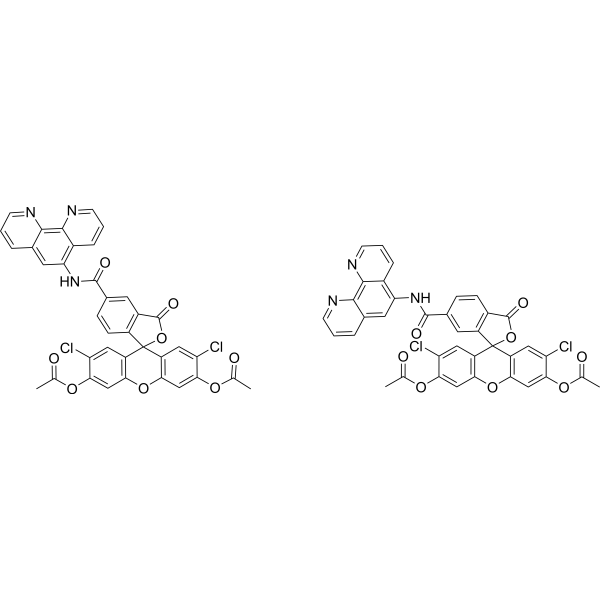
Phen green SK (PGSK) diacetate (PGSK diacetate (5/6-mixture)) is a metal ion-sensitive fluorescent probe that can penetrate cell membranes. Phen green SK (PGSK) diacetate can react with a variety of metal ions, including Fe 2+, Cd 2+, Co 2+, Ni 2+, Zn 2+, etc. Phen green SK (PGSK) diacetate chelates Fe 2+, resulting in fluorescence quenching, which can be restored when a membrane-permeable chelator is added, thereby reflecting the changes in the intracellular chelatable iron pool. The excitation/emission maxima of Phen green SK diacetate are 507/532 nm, respectively [2] .
loading...
    loading...
3
3 Cited Publications
Cat. No.: HY-D0227
CAS No.: 77-86-1
Synonyms: Tris; Tris(hydroxymethyl)aminomethane
Research Areas:  

Metabolic Disease

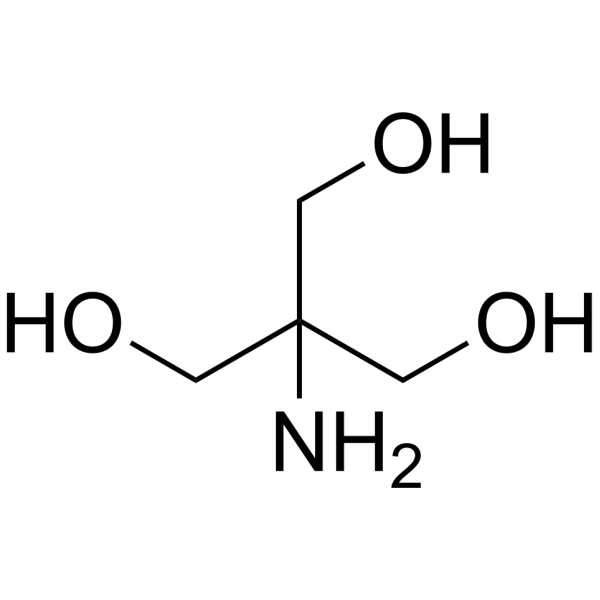
THAM (Tris) is a low-toxicity amino alcohol buffer, a specific CO2-consuming proton acceptor that buffers carbon dioxide and acid both in vitro and in vivo. THAM binds protons to form bicarbonate, reduces PaCO2, and induces intracellular alkalization, thereby ameliorating hypercapnia-induced elevation of pulmonary blood vessels and pulmonary arterial pressure. THAM may cause PaCO2 rebound, hypoglycemia, and respiratory depression. THAM removes amniotic epithelium and preserves the basement membrane, but depletes extracellular matrix and reduces the adhesion rate of limbal epithelial cells. THAM can act as a CO2 carrier to enhance the productivity and carbon utilization rate of Scenedesmus obliquus. THAM is a key component of buffer solutions used in various biological, cell culture, biochemical, and molecular biology applications [2] .
loading...
    loading...
2
2 Cited Publications
Cat. No.: HY-D0227J
CAS No.: 1185-53-1
Synonyms: Tris HCl (≥99%, for cell culture); Tris hydrochloride (≥99%, for cell culture)
THAM hydrochloride (≥99%, for cell culture) is a low-toxicity amino alcohol buffer, a specific CO2-consuming proton acceptor that buffers carbon dioxide and acid both in vitro and in vivo. THAM hydrochloride (≥99%, for cell culture) binds protons to form bicarbonate, reduces PaCO2, and induces intracellular alkalization, thereby ameliorating hypercapnia-induced elevation of pulmonary blood vessels and pulmonary arterial pressure. THAM hydrochloride (≥99%, for cell culture) may cause PaCO2 rebound, hypoglycemia, and respiratory depression. THAM hydrochloride (≥99%, for cell culture) removes amniotic epithelium and preserves the basement membrane, but depletes extracellular matrix and reduces the adhesion rate of limbal epithelial cells. THAM hydrochloride (≥99%, for cell culture) can act as a CO2 carrier to enhance the productivity and carbon utilization rate of Scenedesmus obliquus. THAM hydrochloride (≥99%, for cell culture) is a key component of buffer solutions used in various biological, cell culture, biochemical, and molecular biology applications [2] .
loading...
    loading...
2
2 Cited Publications
Cat. No.: HY-D0227B
CAS No.: 6850-28-8
Synonyms: Tris acetate; Tris(hydroxymethyl)aminomethane acetate
Research Areas:  

Metabolic Disease

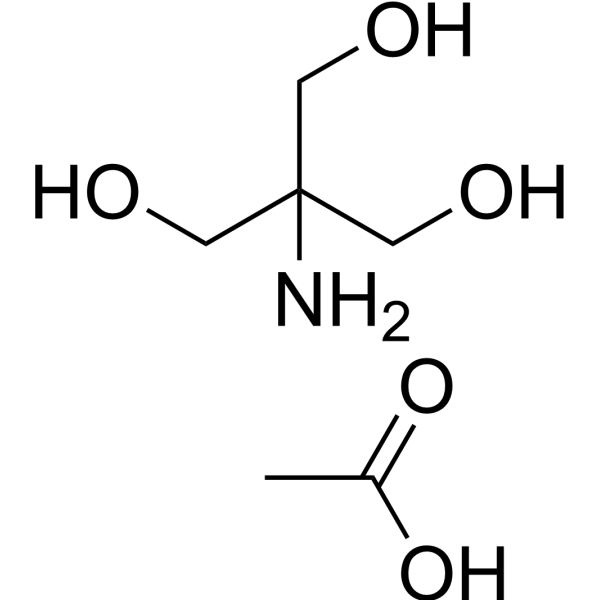
THAM acetate is a low-toxicity amino alcohol buffer, a CO2-consuming proton acceptor that buffers carbon dioxide and acid both in vitro and in vivo. THAM acetate binds protons to form bicarbonate, reduces PaCO2, and induces intracellular alkalization, thereby ameliorating hypercapnia-induced elevation of pulmonary blood vessels and pulmonary arterial pressure. THAM acetate may cause PaCO2 rebound, hypoglycemia, and respiratory depression. THAM acetate removes amniotic epithelium and preserves the basement membrane, but depletes extracellular matrix and reduces the adhesion rate of limbal epithelial cells. THAM acetate can act as a CO2 carrier to enhance the productivity and carbon utilization rate of Scenedesmus obliquus. THAM acetate is a key component of buffer solutions used in various biological, cell culture, biochemical, and molecular biology applications [2] .
loading...
    loading...
1
1 Cited Publications
Cat. No.: HY-10932
CAS No.: 72432-10-1
Purity:  99.94%
Synonyms: Ro 13-5057
Target:  

nAChR iGluR

Research Areas:  

Neurological Disease

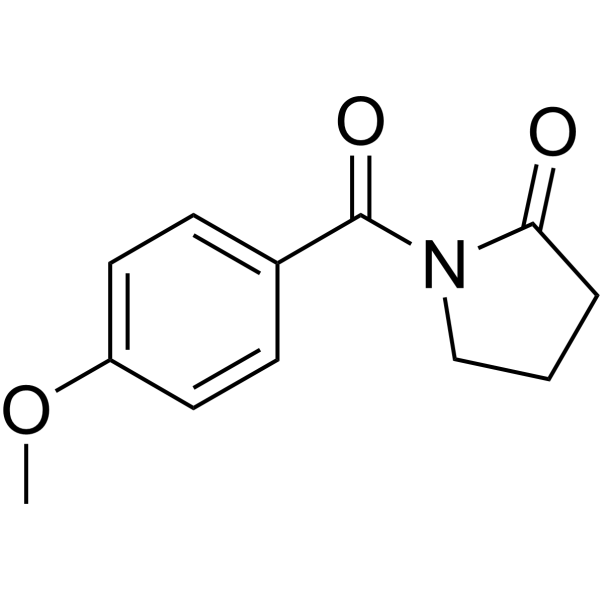
Aniracetam (Ro 13-5057) is an orally active neuroprotective agent, possessing nootropics effects. Aniracetam potentiates the ionotropic quisqualate (iQA) responses in the CA1 region of rat hippocampal slices. Aniracetam also potentiates the excitatory post synaptic potentials (EPSPs) in Schaffer collateral-commissural synapses. Aniracetam can prevents the CO2-induced impairment of acquisition in hypercapnia model rats. Aniracetam can be used to research cerebral dysfunctional disorders [2] .
loading...
    loading...
1
1 Cited Publications
Cat. No.: HY-P74375
Purity:  ≥ 95%, as determined by reducing SDS-PAGE.
Synonyms: C2; COmplement COmponent 2; COmplement C2; COmplement Protein; C3/C5 COnvertase; ARMD14; COmplement COmponent C2; CO2
Species:  
Human
Source:  
HEK293
loading...
    loading...
1
1 Cited Publications
Cat. No.: HY-117146
CAS No.: 173584-44-6
Synonyms: (S)-DPX-JW062
Target:  

Parasite

Research Areas:  

Infection

Indoxacarb ((S)-DPX-JW062) is an oxathiazole insecticide with activity against a wide range of insect pests. Indoxacarb is used in forest pest management to control insect pests, and its toxicity has significant effects on adult individuals of the predatory stink bug Podisus distinctus. Indoxacarb showed high toxicity to P. distinctus at a lethal concentration (LC50 = 2.62 g L-1). Indoxacarb treatment significantly reduced the survival rate of P. distinctus, with the survival rate of individuals exposed to 2.62 g L-1 decreasing to 40.7%. Indoxacarb also reduced the respiration rate of P. distinctus from 18.45 to 14.41 μL CO2 h-1, and inhibited its food intake. P. distinctus showed hyperexcitatory responses after Indoxacarb treatment .
loading...
    loading...
1
1 Cited Publications
Cat. No.: HY-W157376
CAS No.: 155773-72-1
Research Areas:  

Infection Cancer

PAMAM Dendrimer G0.0 amine is a pore-forming channel antagonist, including anthrax toxin protective antigen 63 (PA63, IC50 = 231 nM) and C. botulinum C2 toxin subunit (C2IIa, IC50 = 940 nM). At concentrations of 10 and 20 µM, PAMAM Dendrimer G0.0 amine reduces C2 toxin-induced death in HeLa cells. Additionally, PAMAM Dendrimer G0.0 amine is a chelator of nickel. In complexes with polysulfone membrane-bound chitosan, PAMAM Dendrimer G0.0 amine selectively captures and stores carbon dioxide (CO2) in a gas-feed system. PAMAM Dendrimer G0.0 amine has been used in the synthesis of PAMAM Dendrimer G0.5 Carboxylate (CAS 339334-01-9) and PAMAM Dendrimer G1.0 Amine (CAS 142986-44-5). PAMAM Dendrimer G0.0 amine can be used in research related to infections, cancer, and drug delivery systems [2] .
loading...
    loading...
1
1 Cited Publications
Cat. No.: HY-151644
CAS No.: 78044-20-9
Purity:  98.90%
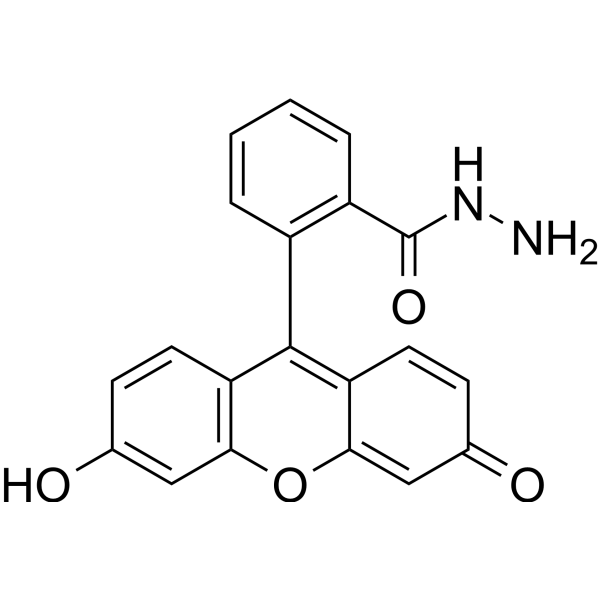
Fluorescein hydrazide is a sensitive fluorescent probe for Hg 2+ and Co 2+ that induces obvious color changes and fluorescence changes. Fluorescein hydrazide can be prepared by the reaction of fluorescein and hydrazine. Fluorescein hydrazide exhibits an excitation wavelength of 508 nM and an emission wavelength of 531 nM [1][2][3].
loading...
    loading...
1
1 Cited Publications
Cat. No.: HY-P81047
Synonyms: COllagen II alpha 1; COL2A1; COL2A1 protein; COllagen, type II, alpha 1; COllagen alpha-1(II); type II COllagen; alpha-1 type II COllagen; alpha1 type II COllagen; COl2a1; AOM; Cartilage COllagen; Chondrocalcin; COL11A3; COllagen alpha 1(II) chain precursor; COllagen II alpha 1 polypeptide; COllagen type II alpha 1 (primary osteoarthritis spondyloepiphyseal dysplasia COngenital); MGC131516; SEDC; COllagen alpha-1(II) chain; Alpha-1 type II COllagen; CO2A1_HUMAN.; COllagenII;

Host:  

Rabbit

Application:  

WB, IHC-P, IF-Tissue

Reactivity:  

Human

loading...
    loading...
1
1 Cited Publications
Cat. No.: HY-P81047A
Synonyms: COllagen II alpha 1; COL2A1; COL2A1 protein; COllagen, type II, alpha 1; COllagen alpha-1(II); type II COllagen; alpha-1 type II COllagen; alpha1 type II COllagen; COl2a1; AOM; Cartilage COllagen; Chondrocalcin; COL11A3; COllagen alpha 1(II) chain precursor; COllagen II alpha 1 polypeptide; COllagen type II alpha 1 (primary osteoarthritis spondyloepiphyseal dysplasia COngenital); MGC131516; SEDC; COllagen alpha-1(II) chain; Alpha-1 type II COllagen; CO2A1_HUMAN.; COllagenII;

Host:  

Rabbit

Application:  

WB, IHC-P, IF-Tissue

Reactivity:  

Human, Mouse, Rat

loading...
    loading...
Cat. No.: HY-164642
CAS No.: 24218-00-6
Synonyms: RuBP
Ribulose 1,5-bisphosphate (RUBP) is a vital photosynthetic intermediate and substrate. Ribulose 1,5-bisphosphate acts as both product and substrate for Thermococcus kodakarensis KOD1 R15Pi. Ribulose 1,5-bisphosphate tightly binds to inactive RuBP carboxylase sites in plant leaves.Ribulose 1,5-bisphosphate serves as the key substrate for CO2 fixation in photosynthesis. Ribulose 1,5-bisphosphate supports carboxylation and regeneration processes in photosynthesis. Ribulose 1,5-bisphosphate determines the dynamic transition temperature of photosynthetic control. Ribulose 1,5-bisphosphate can be used for photosynthesis and enzyme mechanism research [2] .
loading...
    loading...
Cat. No.: HY-E70015
CAS No.: 9067-77-0
Synonyms: PEPC
Target:  

Others

Research Areas:  

Others

Phosphoenolpyruvate carboxylase, Microorganism (PEPC) is a carbon dioxide fixing enzyme that in an irreversible manner and in the presence of Mg 2+, converts phosphoenolpyruvate and bicarbonate into oxaloacetate and inorganic phosphorus. Phosphoenolpyruvate carboxylase catalyses the primary assimilation of CO(2) in Crassulacean acid metabolism plants. Phosphoenolpyruvate carboxylase plays a major role in setting the day-night pattern of metabolism in plants [2].
loading...
    loading...
Cat. No.: HY-D0142
CAS No.: 59572-10-0
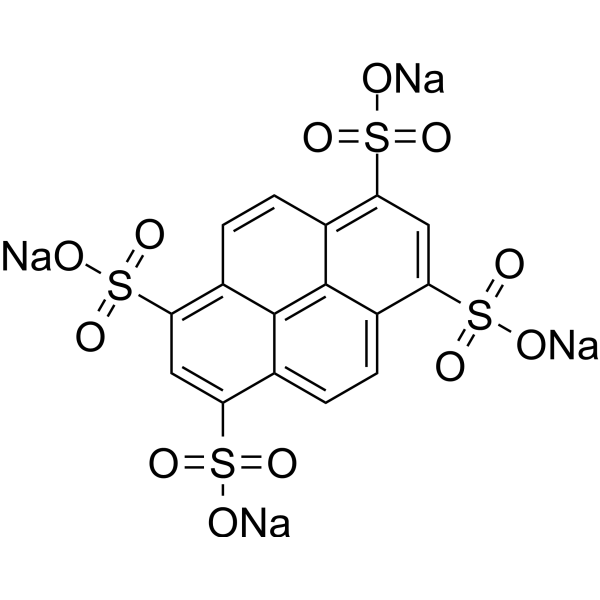
Pyrene-1,3,6,8-tetrasulfonic acid tetrasodium is a fluorescent dye and pH indicator, also as a ligand of multifunctional metal-organic framework. Pyrene-1,3,6,8-tetrasulfonic acid tetrasodium has been used to detect CO2 release. Pyrene-1,3,6,8-tetrasulfonic acid tetrasodium acts as a water-soluble fluorescent dye for fluorescence quenching assays monitoring gramicidin ion-channel activity [2] . Ex/Em = 396/404 nm.
loading...
    loading...
Cat. No.: HY-P2796
CAS No.: 9001-04-1
Synonyms: PDC
Research Areas:  

Metabolic Disease

Pyruvate decarboxylase (PDC) is an enzyme that catalyses the decarboxylation of pyruvic acid to acetaldehyde. Pyruvate decarboxylase catalyses the non-oxidative conversion of pyruvate (or other 2-oxo acids) to acetaldehyde and CO2 .
loading...
    loading...
Cat. No.: HY-W002925
CAS No.: 213697-53-1
Target:  

Drug Intermediate

Research Areas:  

Others

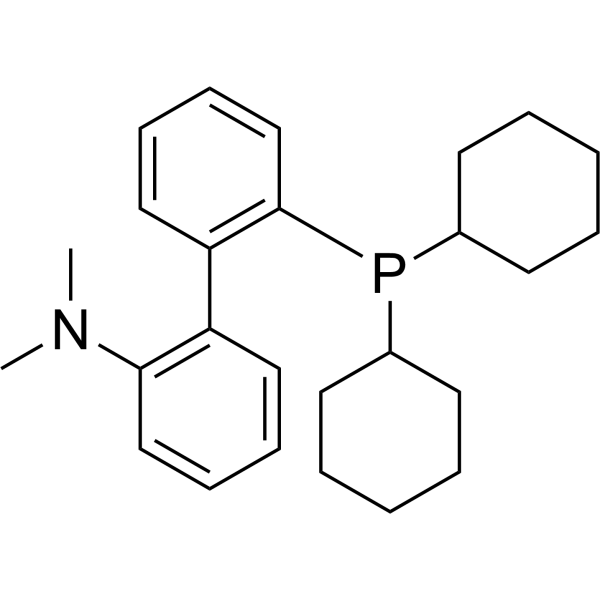
DavePhos is a phosphine ligand and electron donor. DavePhos can form cationic rhodium complexes to promote the selective hydrocarboxylation of styrene derivatives with CO2 and H2. As a sacrificial electron donor, DavePhos assists in generating active Rh-H species to initiate the catalytic cycle. DavePhos can be used in Buchwald−Hartwig cross-coupling reactions within palladium-based catalytic systems. DavePhos is applicable to platinum-catalyzed reductive amination of amine-acid [2] .
loading...
    loading...
Cat. No.: HY-116482
CAS No.: 13684-56-5
Target:  

Herbicide

Research Areas:  

Others

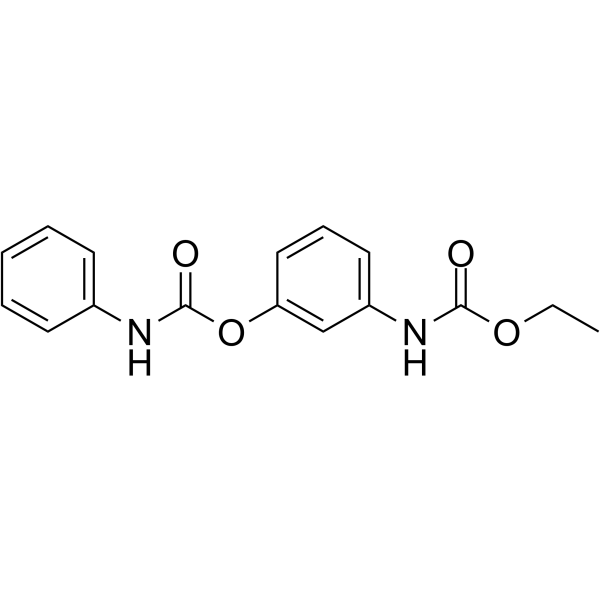
Desmedipham is a selective systemic phenyl-carbamate herbicide. Desmedipham acts by disrupting CO2 fixation and the production of intermediary energy components-ATP and NADPH2 and inhibition of Hill reaction .
loading...
    loading...
Cat. No.: HY-W250110A
CAS No.: 9002-98-6
Synonyms: PEI (linear, average Mn 10000)
Polyethylenimine (linear, average Mn 10000) (PEI (linear, average Mn 10000)) is a linear polyethylenimine with weight-average molecular weight of 10000 g·mol −1, composed exclusively of secondary amino groups, and acts as a CO2 adsorbent and desorbent. Polyethylenimine (linear, average Mn 10000) reversibly adsorbs CO2 from gas mixtures including dry air, forms carbamates with CO2, and forms bicarbonates in water .
loading...
    loading...
Cat. No.: HY-151824
CAS No.: 2576508-03-5
Target:  

ADC Linkers

Research Areas:  

Others

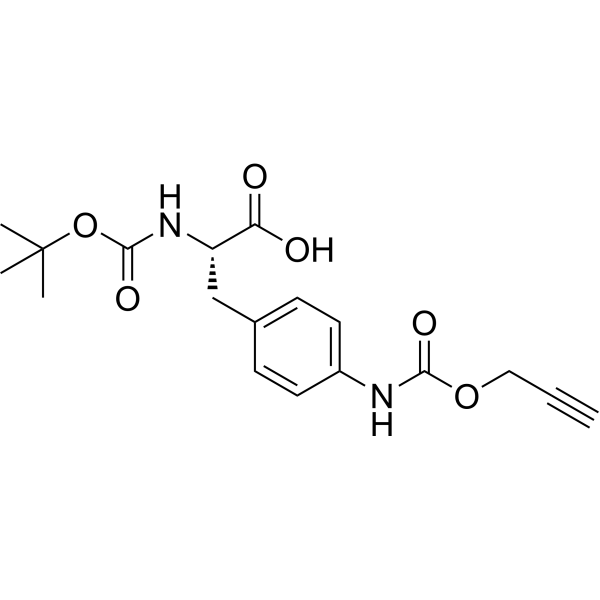
Boc-L-Phe(4-NH-Poc)-OH is a click chemistry reagent containing an azide group. Used as an orthogonally protected building block in peptide synthesis. Propargyloxycarbonyl, commonly abbreviated as Poc or Pryoc, can either be used as alkyne component for standard Click conjugation or in combination with tetrazine linkers in copper-free Diels-Alder type Click reactions. It also has applications as unusual protecting group for amines, hydroxy functions and as esters. All 3 are stable to neat TFA, but can be cleaved at ambient temperature with Co2(CO)8 in TFA:DCM. Deprotection with other transition metals like palladium have also been reported [2]. Boc-L-Phe(4-NH-Poc)-OH is a click chemistry reagent, it contains an Alkyne group and can undergo copper-catalyzed azide-alkyne cycloaddition (CuAAc) with molecules containing Azide groups.
loading...
    loading...
Cat. No.: HY-N3887
CAS No.: 522-11-2
Synonyms: Haplophytin B; Haplophytine B
Evoxine (Haplophytin B) is a compound that selectively inhibits CO2-induced immunosuppression and has activity in inhibiting the expression of interleukin-6 and chemokine CCL2 in human THP-1 macrophages. Evoxine shows antimicrobial activity against a wide range of bacteria, especially performing well in minimum inhibitory concentration (MIC) tests against Escherichia coli, Bacillus subtilis, and Staphylococcus aureus. Evoxine extracts may find application in crude drug preparations in West Africa, provided that their in vivo toxicity results are negative .
loading...
    loading...

