
1. Search Result
Search Result
Results for "

Co2

" in MedChemExpress (MCE) Product Catalog:

79

Inhibitors & Agonists

3

Fluorescent Dye

9

Biochemical Assay Reagents

1

Peptides

7

Natural
Products

7

Recombinant Proteins

1

Isotope-Labeled Compounds

6

Antibodies

9

Click Chemistry

8

Oligonucleotides

Cat. No. Product Name Target Research Areas Chemical Structure
  • HY-D0227
    THAM
    1 Publications Verification

    Tris; Tris(hydroxymethyl)aminomethane

    Biochemical Assay Reagents Metabolic Disease
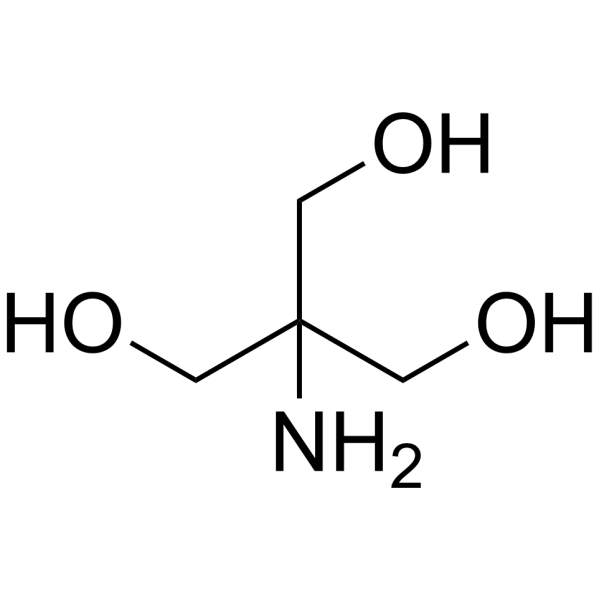
    THAM (Tris) is a low-toxicity amino alcohol buffer, a specific CO2-consuming proton acceptor that buffers carbon dioxide and acid both in vitro and in vivo. THAM binds protons to form bicarbonate, reduces PaCO2, and induces intracellular alkalization, thereby ameliorating hypercapnia-induced elevation of pulmonary blood vessels and pulmonary arterial pressure. THAM may cause PaCO2 rebound, hypoglycemia, and respiratory depression. THAM removes amniotic epithelium and preserves the basement membrane, but depletes extracellular matrix and reduces the adhesion rate of limbal epithelial cells. THAM can act as a CO2 carrier to enhance the productivity and carbon utilization rate of Scenedesmus obliquus. THAM is a key component of buffer solutions used in various biological, cell culture, biochemical, and molecular biology applications [2] .
    THAM
  • HY-10932
    Aniracetam
    1 Publications Verification

    Ro 13-5057

    nAChR iGluR Neurological Disease
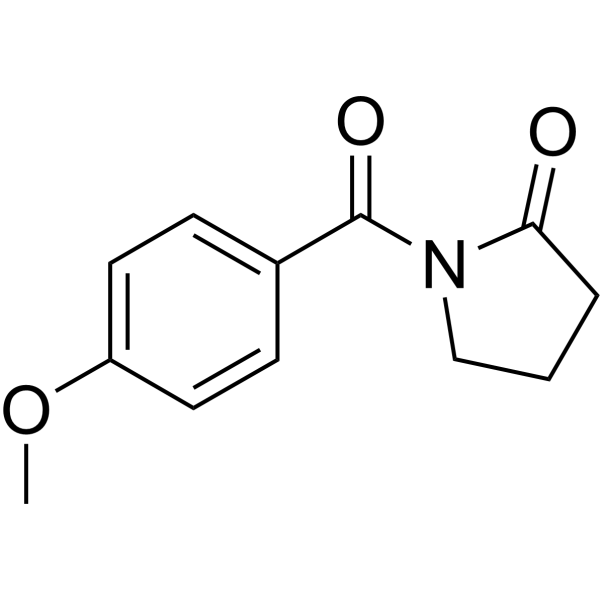
    Aniracetam (Ro 13-5057) is an orally active neuroprotective agent, possessing nootropics effects. Aniracetam potentiates the ionotropic quisqualate (iQA) responses in the CA1 region of rat hippocampal slices. Aniracetam also potentiates the excitatory post synaptic potentials (EPSPs) in Schaffer collateral-commissural synapses. Aniracetam can prevents the CO2-induced impairment of acquisition in hypercapnia model rats. Aniracetam can be used to research cerebral dysfunctional disorders [2] .
    Aniracetam
  • HY-P0294

    6X His Tag

    Biochemical Assay Reagents Others
    Hexa-His (6X His Tag) is a commonly used affinity tag made up of six histidine residues. HEXA-HIS can bind to affinity chromatography media containing transition metal ions like nickel (Ni 2+) or cobalt (Co 2+), making it useful for protein purification [2].
    Hexa-His
  • HY-151644
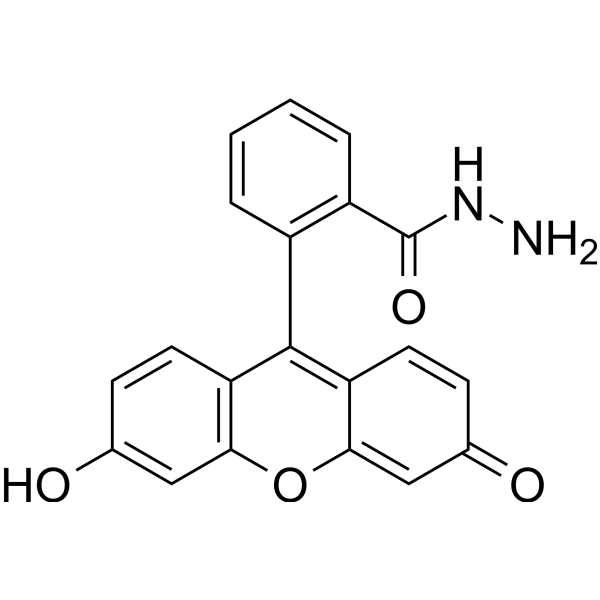
    Fluorescein hydrazide
    1 Publications Verification

    Fluorescent Dye Others
    Fluorescein hydrazide is a sensitive fluorescent probe for Hg 2+ and Co 2+ that induces obvious color changes and fluorescence changes. Fluorescein hydrazide can be prepared by the reaction of fluorescein and hydrazine. Fluorescein hydrazide exhibits an excitation wavelength of 508 nM and an emission wavelength of 531 nM [1][2][3].
    Fluorescein hydrazide
  • HY-126823

    PGSK diacetate (5/6-mixture)

    Fluorescent Dye Others
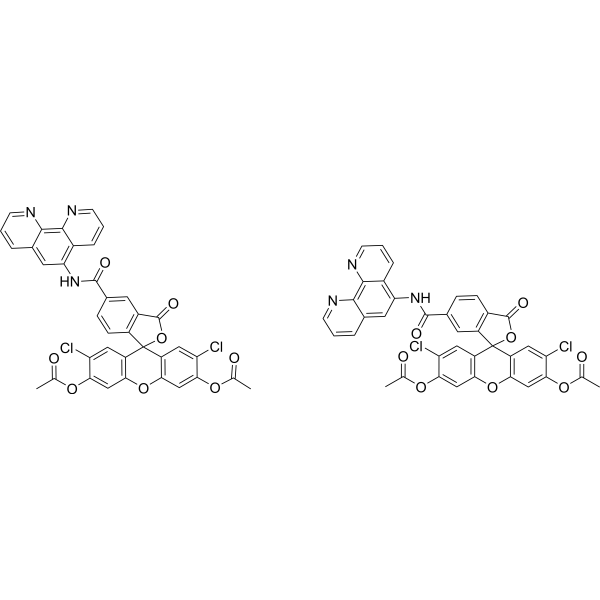
    Phen green SK (PGSK) diacetate (PGSK diacetate (5/6-mixture)) is a metal ion-sensitive fluorescent probe that can penetrate cell membranes. Phen green SK (PGSK) diacetate can react with a variety of metal ions, including Fe 2+, Cd 2+, Co 2+, Ni 2+, Zn 2+, etc. Phen green SK (PGSK) diacetate chelates Fe 2+, resulting in fluorescence quenching, which can be restored when a membrane-permeable chelator is added, thereby reflecting the changes in the intracellular chelatable iron pool. The excitation/emission maxima of Phen green SK diacetate are 507/532 nm, respectively [2] .
    Phen Green SK diacetate (5/6-mixture)
  • HY-108369

    PROTAC Linkers Cancer
    Azido-PEG1-CH2CO2H is a PROTAC linker, which refers to the alkyl/ether composition .
    Azido-PEG1-CH2CO2H
  • HY-D0227J

    Tris HCl (≥99%, for cell culture); Tris hydrochloride (≥99%, for cell culture)

    Biochemical Assay Reagents Metabolic Disease
    THAM hydrochloride (≥99%, for cell culture) is a low-toxicity amino alcohol buffer, a specific CO2-consuming proton acceptor that buffers carbon dioxide and acid both in vitro and in vivo. THAM hydrochloride (≥99%, for cell culture) binds protons to form bicarbonate, reduces PaCO2, and induces intracellular alkalization, thereby ameliorating hypercapnia-induced elevation of pulmonary blood vessels and pulmonary arterial pressure. THAM hydrochloride (≥99%, for cell culture) may cause PaCO2 rebound, hypoglycemia, and respiratory depression. THAM hydrochloride (≥99%, for cell culture) removes amniotic epithelium and preserves the basement membrane, but depletes extracellular matrix and reduces the adhesion rate of limbal epithelial cells. THAM hydrochloride (≥99%, for cell culture) can act as a CO2 carrier to enhance the productivity and carbon utilization rate of Scenedesmus obliquus. THAM hydrochloride (≥99%, for cell culture) is a key component of buffer solutions used in various biological, cell culture, biochemical, and molecular biology applications [2] .
    THAM hydrochloride (≥99%, for cell culture)
  • HY-W011060

    4,7,13,16,21,24-Hexaoxa-1,10-diazabicyclo[8.8.8]hexaCosane

    Biochemical Assay Reagents Others
    Cryptand 2.2.2 (4,7,13,16,21,24-Hexaoxa-1,10-diazabicyclo[8.8.8]hexacosane) is a metal ion chelator. Cryptand 2.2.2 forms stable mononuclear, protonated and dinuclear complexes with copper (II) ions; forms protonated complexes with hydrogen ions; and also forms stable complexes with Zn 2+, Co 2+, Ni 2+, Cd 2+, Hg 2+ and Pb 2+ ions. Cryptand 2.2.2 can be used for the preparation of nanoparticles, transition metal compounds, etc.
    Cryptand 2.2.2
  • HY-Y1422I

    Environmental Pollutants Biochemical Assay Reagents Lipase Others
    Lipase, Pseudomonas fluorescens (Immobilized) is an immobilized biocatalyst derived from Pseudomonas fluorescens. Lipase, Pseudomonas fluorescens (Immobilized) efficiently catalyzes the hydrolysis, esterification and transesterification of triacylglycerols in solvent-free systems, and is particularly suitable for biodiesel production from soybean oil and selective modification of oils rich in EPA and DHA. Lipase, Pseudomonas fluorescens (Immobilized) exhibits optimal activity at pH 8.5 and 45°C, and retains residual activity after repeated cycles of use. Lipase, Pseudomonas fluorescens (Immobilized) is activated by Ca 2+, but inhibited by Co 2+, Ni 2+, Fe 3+, Fe 2+ and EDTA [2].
    Lipase,Pseudomonas fluorescens (Immobilized)
  • HY-164642

    RuBP

    Endogenous Metabolite Metabolic Disease
    Ribulose 1,5-bisphosphate (RUBP) is a vital photosynthetic intermediate and substrate. Ribulose 1,5-bisphosphate acts as both product and substrate for Thermococcus kodakarensis KOD1 R15Pi. Ribulose 1,5-bisphosphate tightly binds to inactive RuBP carboxylase sites in plant leaves.Ribulose 1,5-bisphosphate serves as the key substrate for CO2 fixation in photosynthesis. Ribulose 1,5-bisphosphate supports carboxylation and regeneration processes in photosynthesis. Ribulose 1,5-bisphosphate determines the dynamic transition temperature of photosynthetic control. Ribulose 1,5-bisphosphate can be used for photosynthesis and enzyme mechanism research [2] .
    Ribulose 1,5-bisphosphate
  • HY-D0142

    Environmental Pollutants Fluorescent Dye Others
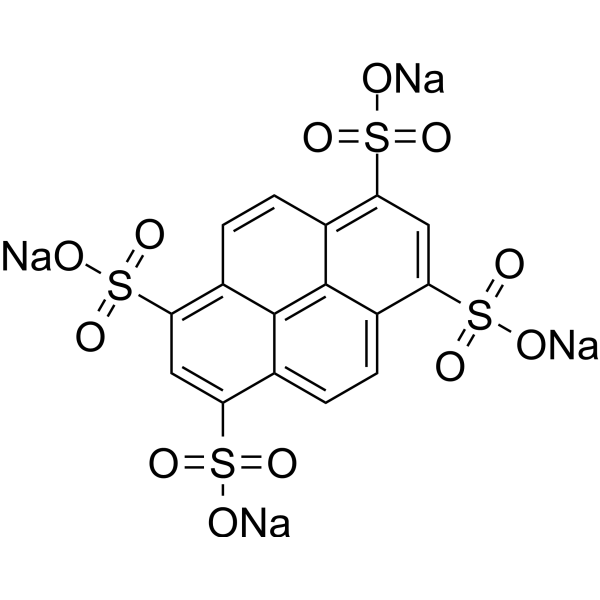
    Pyrene-1,3,6,8-tetrasulfonic acid tetrasodium is a fluorescent dye and pH indicator, also as a ligand of multifunctional metal-organic framework. Pyrene-1,3,6,8-tetrasulfonic acid tetrasodium has been used to detect CO2 release [2] .
    Pyrene-1,3,6,8-tetrasulfonic acid tetrasodium
  • HY-E70015

    PEPC

    Others Others
    Phosphoenolpyruvate carboxylase, Microorganism (PEPC) is a carbon dioxide fixing enzyme that in an irreversible manner and in the presence of Mg 2+, converts phosphoenolpyruvate and bicarbonate into oxaloacetate and inorganic phosphorus. Phosphoenolpyruvate carboxylase catalyses the primary assimilation of CO(2) in Crassulacean acid metabolism plants. Phosphoenolpyruvate carboxylase plays a major role in setting the day-night pattern of metabolism in plants [2].
    Phosphoenolpyruvate carboxylase, Microorganism
  • HY-118877
    Urea-13C
    1 Publications Verification

    Carbonyl diamide-13C

    Isotope-Labeled Compounds Infection
    Urea- 13C is the 13C labelled urea. The Urea- 13C breath test ( 13C-UBT) is one of the best methods for the diagnosis of Helicobacter pylori infection .
    Urea-13C
  • HY-P2796

    PDC

    Biochemical Assay Reagents Metabolic Disease
    Pyruvate decarboxylase (PDC) is an enzyme that catalyses the decarboxylation of pyruvic acid to acetaldehyde. Pyruvate decarboxylase catalyses the non-oxidative conversion of pyruvate (or other 2-oxo acids) to acetaldehyde and CO2 .
    Pyruvate decarboxylase
  • HY-D2775

    Fluorescent Dye Others
    Cobalt(II) ions probe 1 (Compound L) is a fluorescent sensor for Co 2+ detecting in biological environments. Cobalt(II) ions probe 1 can selectively bind with Co 2+ in the presence of other metal ions (Ex: 380 nm) .
    Cobalt(II) ions probe 1
  • HY-116482

    Herbicide Others
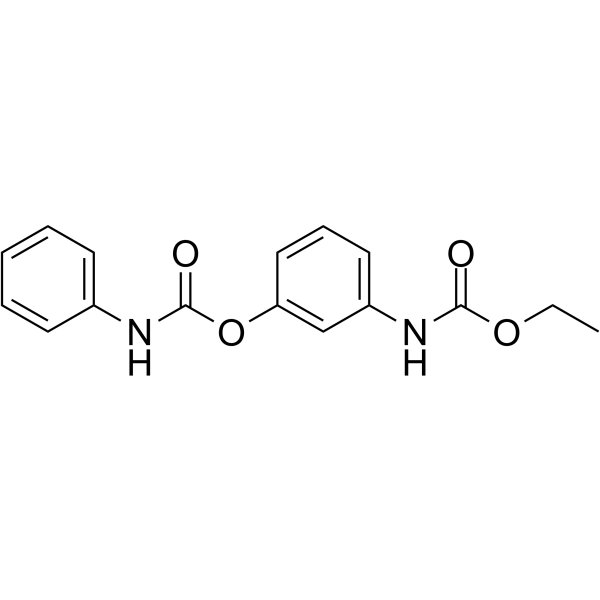
    Desmedipham is a selective systemic phenyl-carbamate herbicide. Desmedipham acts by disrupting CO2 fixation and the production of intermediary energy components-ATP and NADPH2 and inhibition of Hill reaction .
    Desmedipham
  • HY-122702

    PROTAC Linkers Others
    PEG6-(CH2CO2H)2 is a symmetric PEG PROTAC linker, for the synthesis of Homo-PROTACs which is bivalent small-molecule dimerizers of the VHL E3 ubiquitin ligase to induce self-degradation .
    PEG6-(CH2CO2H)2
  • HY-131647

    Pomalidomide-PEG5-Co2H

    E3 Ligase Ligand-Linker Conjugates Cancer
    Pomalidomide 4'-PEG5-acid (Pomalidomide-PEG5-CO2H) is a synthesized E3 ligase ligand-linker conjugate that incorporates the Pomalidomide based cereblon ligand and 5-unit PEG linker used in PROTAC technology .
    Pomalidomide 4'-PEG5-acid
  • HY-W157376

    Bacterial Antibiotic Drug Intermediate Infection Cancer
    PAMAM Dendrimer G0.0 amine is a pore-forming channel antagonist, including anthrax toxin protective antigen 63 (PA63, IC50 = 231 nM) and C. botulinum C2 toxin subunit (C2IIa, IC50 = 940 nM). At concentrations of 10 and 20 µM, PAMAM Dendrimer G0.0 amine reduces C2 toxin-induced death in HeLa cells. Additionally, PAMAM Dendrimer G0.0 amine is a chelator of nickel. In complexes with polysulfone membrane-bound chitosan, PAMAM Dendrimer G0.0 amine selectively captures and stores carbon dioxide (CO2) in a gas-feed system. PAMAM Dendrimer G0.0 amine has been used in the synthesis of PAMAM Dendrimer G0.5 Carboxylate (CAS 339334-01-9) and PAMAM Dendrimer G1.0 Amine (CAS 142986-44-5). PAMAM Dendrimer G0.0 amine can be used in research related to infections, cancer, and drug delivery systems [2] .
    PAMAM Dendrimer G0.0 amine (20% in methanol)
  • HY-W004297

    Drug Intermediate Others
    1-Nonadecanol is one of the compositions of supercritical carbon dioxide (SC-CO2) essential oil of Heracleum thomsonii. 1-Nonadecanol is also an important aroma compound in Neotinea ustulata [2].
    1-Nonadecanol
  • HY-D0227B
    THAM acetate
    1 Publications Verification

    Tris acetate; Tris(hydroxymethyl)aminomethane acetate

    Biochemical Assay Reagents Metabolic Disease
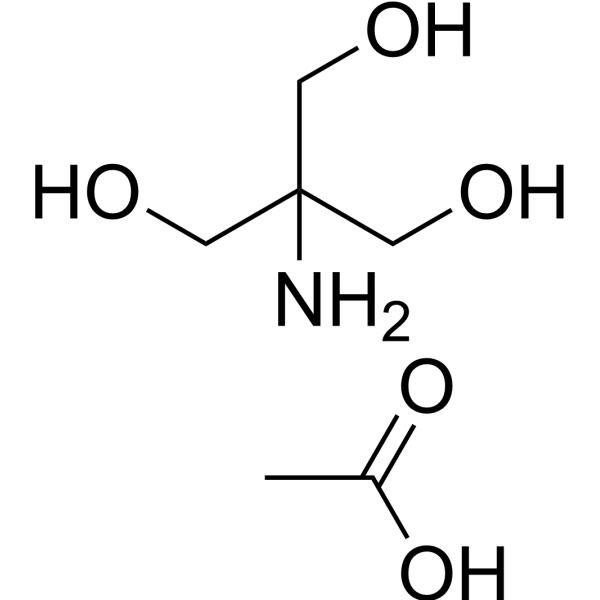
    THAM acetate is a low-toxicity amino alcohol buffer, a CO2-consuming proton acceptor that buffers carbon dioxide and acid both in vitro and in vivo. THAM acetate binds protons to form bicarbonate, reduces PaCO2, and induces intracellular alkalization, thereby ameliorating hypercapnia-induced elevation of pulmonary blood vessels and pulmonary arterial pressure. THAM acetate may cause PaCO2 rebound, hypoglycemia, and respiratory depression. THAM acetate removes amniotic epithelium and preserves the basement membrane, but depletes extracellular matrix and reduces the adhesion rate of limbal epithelial cells. THAM acetate can act as a CO2 carrier to enhance the productivity and carbon utilization rate of Scenedesmus obliquus. THAM acetate is a key component of buffer solutions used in various biological, cell culture, biochemical, and molecular biology applications [2] .
    THAM acetate
  • HY-Y0850U5

    Polyvinyl alCohol (Mw 27000, 98-99% hydrolyzed, ~600 polymerization); Poly(Ethenol) (Mw 27000, 98-99% hydrolyzed, ~600 polymerization)

    Biochemical Assay Reagents Fungal Infection
    PVA (Polyvinyl alcohol) (Mw 27000, 98-99% hydrolyzed, ~600 polymerization) is a nonionic ethanol homopolymer with hydrophilicity, water solubility and biodegradability. PVA (Mw 27000, 98-99% hydrolyzed, ~600 polymerization) exhibits biocompatibility, non-toxicity and non-carcinogenicity, as well as antibacterial activity against Gram-positive bacteria, Gram-negative bacteria and fungal strains. PVA (Mw 27000, 98-99% hydrolyzed, ~600 polymerization) can serve as a solubilizer, stabilizer, mucoadhesive agent and sustained-release agent, and has a synergistic solubilizing effect on voriconazole/sulfobutyl ether β-cyclodextrin complexes. By stabilizing such complexes, PVA (Mw 27000, 98-99% hydrolyzed, ~600 polymerization) forms freeze-thaw hydrogels with high mucoadhesion, sustained drug release and ex vivo corneal permeability. When compounded with hyaluronic acid hydrogels, PVA (Mw 27000, 98-99% hydrolyzed, ~600 polymerization) supports chondrocyte growth in vitro, and also forms complexes with Cu 2+, Co 2+, Ni 2+ and Zn 2+ ions. PVA (Mw 27000, 98-99% hydrolyzed, ~600 polymerization) can be used in studies related to fungal keratitis, bacterial infections and fungal infections [2] .
    PVA (Mw 27000, 98-99% hydrolyzed, ~600 polymerization)
  • HY-140766

    PROTAC Linkers Cancer
    Azido-PEG5-CH2CO2-NHS is a PEG-based PROTAC linker that can be used in the synthesis of PROTACs . Azido-PEG5-CH2CO2-NHS is a click chemistry reagent, it contains an Azide group and can undergo copper-catalyzed azide-alkyne cycloaddition reaction (CuAAc) with molecules containing Alkyne groups. It can also undergo strain-promoted alkyne-azide cycloaddition (SPAAC) reactions with molecules containing DBCO or BCN groups.
    Azido-PEG5-CH2CO2-NHS
  • HY-131203

    PROTACs Epigenetic Reader Domain Apoptosis c-Myc Caspase Cancer
    PROTAC BRD4 Degrader-6 (compound 32a) is a potent small-molecule BRD4PROTAC degrader with IC50 value of 2.7 nM for BRD4 BD1. PROTAC BRD4 Degrader-6 potently degrades BRD4 protein and inhibits the expression of c-Myc. PROTAC BRD4 Degrader-6 inhibits the proliferation of pancreatic cancer cell line BxPC3 and induces apoptosis. PROTAC BRD4 Degrader-6 can be used for human pancreatic cancer research (Pink: Mivebresib (HY-100015); Black: linker, Azido-PEG1-CH2CO2H (HY-108369); Blue: Lenalidomide (HY-A0003)) .
    PROTAC BRD4 Degrader-6
  • HY-151824

    ADC Linker Others
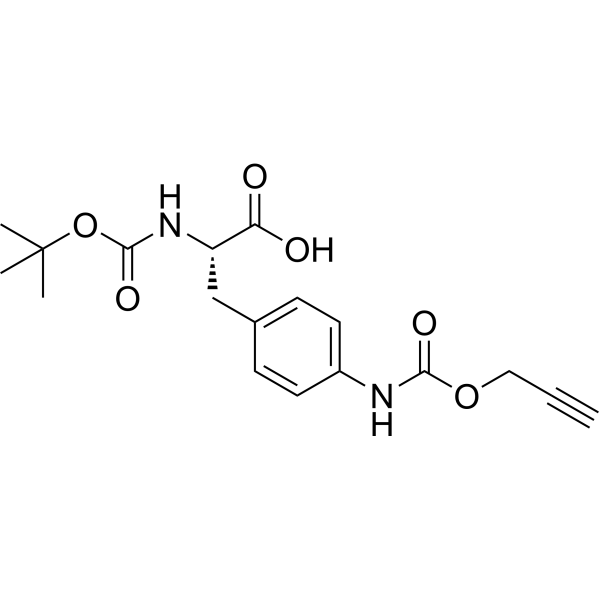
    Boc-L-Phe(4-NH-Poc)-OH is a click chemistry reagent containing an azide group. Used as an orthogonally protected building block in peptide synthesis. Propargyloxycarbonyl, commonly abbreviated as Poc or Pryoc, can either be used as alkyne component for standard Click conjugation or in combination with tetrazine linkers in copper-free Diels-Alder type Click reactions. It also has applications as unusual protecting group for amines, hydroxy functions and as esters. All 3 are stable to neat TFA, but can be cleaved at ambient temperature with Co2(CO)8 in TFA:DCM. Deprotection with other transition metals like palladium have also been reported [2]. Boc-L-Phe(4-NH-Poc)-OH is a click chemistry reagent, it contains an Alkyne group and can undergo copper-catalyzed azide-alkyne cycloaddition (CuAAc) with molecules containing Azide groups.
    Boc-L-Phe(4-NH-Poc)-OH
  • HY-117146

    (S)-DPX-JW062

    Parasite Infection
    Indoxacarb ((S)-DPX-JW062) is an oxathiazole insecticide with activity against a wide range of insect pests. Indoxacarb is used in forest pest management to control insect pests, and its toxicity has significant effects on adult individuals of the predatory stink bug Podisus distinctus. Indoxacarb showed high toxicity to P. distinctus at a lethal concentration (LC50 = 2.62 g L-1). Indoxacarb treatment significantly reduced the survival rate of P. distinctus, with the survival rate of individuals exposed to 2.62 g L-1 decreasing to 40.7%. Indoxacarb also reduced the respiration rate of P. distinctus from 18.45 to 14.41 μL CO2 h-1, and inhibited its food intake. P. distinctus showed hyperexcitatory responses after Indoxacarb treatment .
    Indoxacarb
  • HY-W007431

    Biochemical Assay Reagents Others
    Methyl 3,4-diaminobenzoate is an analogue of 3,4-diaminobenzoic acid, which contains the CO2H group protected as a methyl ester and the amino (NH2) substituents required to form the quinoxaline .
    Methyl 3,4-diaminobenzoate
  • HY-W011816

    Biochemical Assay Reagents Others
    1,2-Hexadecanediol is a reducing agent. 1,2-Hexadecanediol facilitates the decomposition of the metal-organic precursor, forms an intermediate Co 2+Fe 3+-oleate complex .
    1,2-Hexadecanediol
  • HY-N3887

    Haplophytin B; Haplophytine B

    Bacterial Infection
    Evoxine (Haplophytin B) is a compound that selectively inhibits CO2-induced immunosuppression and has activity in inhibiting the expression of interleukin-6 and chemokine CCL2 in human THP-1 macrophages. Evoxine shows antimicrobial activity against a wide range of bacteria, especially performing well in minimum inhibitory concentration (MIC) tests against Escherichia coli, Bacillus subtilis, and Staphylococcus aureus. Evoxine extracts may find application in crude drug preparations in West Africa, provided that their in vivo toxicity results are negative .
    Evoxine
  • HY-RS08758

    Small Interfering RNA (siRNA) Others

    MT-CO2 Human Pre-designed siRNA Set A contains three designed siRNAs for MT-CO2 gene (Human), as well as a negative control, a positive control, and a FAM-labeled negative control.

    MT-CO2 Human Pre-designed siRNA Set A
    MT-CO2 Human Pre-designed siRNA Set A
  • HY-10932R

    Ro 13-5057 (Standard)

    Reference Standards nAChR iGluR Neurological Disease
    Aniracetam (Standard) is the analytical standard of Aniracetam. This product is intended for research and analytical applications. Aniracetam (Ro 13-5057) is an orally active neuroprotective agent, possessing nootropics effects. Aniracetam potentiates the ionotropic quisqualate (iQA) responses in the CA1 region of rat hippocampal slices. Aniracetam also potentiates the excitatory post synaptic potentials (EPSPs) in Schaffer collateral-commissural synapses. Aniracetam can prevents the CO2-induced impairment of acquisition in hypercapnia model rats. Aniracetam can be used to research cerebral dysfunctional disorders [2] .
    Aniracetam (Standard)
  • HY-151837

    ADC Linker Others
    H-L-Phe(4-NH-Poc)-OH (hydrochloride) is a click chemistry reagent containing an azide group. Used as a modified Phe or Tyr analogue in protein and peptide biosynthesis. Propargyloxycarbonyl, commonly abbreviated as Poc or Pryoc, can either be used as alkyne component for standard Click conjugation or in combination with tetrazine linkers in copper-free Diels-Alder type Click reactions. It also has applications as unusual protecting group for amines, hydroxy functions and as esters. All 3 are stable to neat TFA, but can be cleaved at ambient temperature with Co2(CO)8 in TFA:DCM. Deprotection with other transition metals like palladium have also been reported [2]. H-L-Phe(4-NH-Poc)-OH (hydrochloride) is a click chemistry reagent, it contains an Alkyne group and can undergo copper-catalyzed azide-alkyne cycloaddition (CuAAc) with molecules containing Azide groups.
    H-L-Phe(4-NH-Poc)-OH hydrochloride
  • HY-116482R

    Insecticide Herbicide Reference Standards Others
    Desmedipham (Standard) is the analytical standard of Desmedipham. This product is intended for research and analytical applications. Desmedipham is a selective systemic phenyl-carbamate herbicide. Desmedipham acts by disrupting CO2 fixation and the production of intermediary energy components-ATP and NADPH2 and inhibition of Hill reaction .
    Desmedipham (Standard)
  • HY-130194

    ADC Linker PROTAC Linkers Cancer
    Azido-PEG5-CH2CO2H is a cleavable 5 unit PEG ADC linker used in the synthesis of antibody-drug conjugates (ADCs). Azido-PEG5-CH2CO2H is also a PEG-based PROTAC linker that can be used in the synthesis of PROTACs . Azido-PEG5-CH2CO2H is a click chemistry reagent, it contains an Azide group and can undergo copper-catalyzed azide-alkyne cycloaddition reaction (CuAAc) with molecules containing Alkyne groups. It can also undergo strain-promoted alkyne-azide cycloaddition (SPAAC) reactions with molecules containing DBCO or BCN groups.
    Azido-PEG5-CH2CO2H
  • HY-P2744

    Ribulose 1,5-bisphosphate carboxylase

    Biochemical Assay Reagents Others
    Ribulose bisphosphate carboxylase (Ribulose 1,5-bisphosphate carboxylase) catalyses the carboxylation (CO2 addition) or oxygenation (O2 addition) of d-ribulose-1,5-bisphosphate (RuBP) and the subsequent carbon–carbon cleavage to form two molecules of 3-phospho-d-glycerate (PGA) (with CO2) or one molecule of PGA and one molecule of 2-phospho-glycolate (PG; with O2) .
    Ribulose bisphosphate carboxylase
  • HY-W016613

    Biochemical Assay Reagents Others
    Tri(ethylene glycol) monoethyl ether is a physical solvent with a strong affinity for CO2. Tri(ethylene glycol) monoethyl ether can be used for the removal of acid gases from mixtures of gases .
    Tri(ethylene glycol) monoethyl ether
  • HY-E70570

    GABA Receptor Metabolic Disease
    Glutamate decarboxylase is an enzyme that catalyzes the decarboxylation of glutamate to gamma-aminobutyric acid (GABA) and carbon dioxide (CO2). Many gut microbes can metabolize glutamate via their Glutamate decarboxylase in a pyridoxal-5′-phosphate (PLP) dependent manner .
    Glutamate decarboxylase
  • HY-W004297R

    Reference Standards Others Others
    1-Nonadecanol (Standard) is the analytical standard of 1-Nonadecanol. This product is intended for research and analytical applications. 1-Nonadecanol is one of the compositions of supercritical carbon dioxide (SC-CO2) essential oil of Heracleum thomsonii. 1-Nonadecanol is also an important aroma compound in Neotinea ustulata [2].
    1-Nonadecanol (Standard)
  • HY-RS26685

    Small Interfering RNA (siRNA) Others

    mt-Co2 Rat Pre-designed siRNA Set A contains three designed siRNAs for mt-Co2 gene (Rat), as well as a negative control, a positive control, and a FAM-labeled negative control.

    mt-Co2 Rat Pre-designed siRNA Set A
    mt-Co2 Rat Pre-designed siRNA Set A
  • HY-RS20181

    Small Interfering RNA (siRNA) Others

    mt-Co2 Mouse Pre-designed siRNA Set A contains three designed siRNAs for mt-Co2 gene (Mouse), as well as a negative control, a positive control, and a FAM-labeled negative control.

    mt-Co2 Mouse Pre-designed siRNA Set A
    mt-Co2 Mouse Pre-designed siRNA Set A
  • HY-140025

    ADC Linker Cancer
    Propargyl-PEG4-CH2CO2-NHS (compound P-7) is a PEG derivative containing a propargyl group and an NHS group. Propargyl-PEG4-CH2CO2-NHS is an ADC linker used in the synthesis of antibody-drug conjugates (ADCs). Propargyl-PEG4-CH2CO2-NHS is a click chemistry reagent, it contains an Alkyne group and can undergo copper-catalyzed azide-alkyne cycloaddition (CuAAc) with molecules containing Azide groups .
    Propargyl-PEG4-CH2CO2-NHS
  • HY-140747

    PROTAC Linkers Cancer
    BnO-PEG1-CH2CO2tBu is a PEG-based PROTAC linker that can be used in the synthesis of PROTACs .
    BnO-PEG1-CH2CO2tBu
  • HY-138350

    PROTAC Linkers Cancer
    Azido-PEG10-CH2CO2-NHS is a PEG-based PROTAC linker that can be used in the synthesis of PROTACs . Azido-PEG10-CH2CO2-NHS is a click chemistry reagent, it contains an Azide group and can undergo copper-catalyzed azide-alkyne cycloaddition reaction (CuAAc) with molecules containing Alkyne groups. It can also undergo strain-promoted alkyne-azide cycloaddition (SPAAC) reactions with molecules containing DBCO or BCN groups.
    Azido-PEG10-CH2CO2-NHS
  • HY-140853

    PROTAC Linkers Cancer
    Azido-PEG3-CH2CO2Me is a PEG-based PROTAC linker that can be used in the synthesis of PROTACs . Azido-PEG3-CH2CO2Me is a click chemistry reagent, it contains an Azide group and can undergo copper-catalyzed azide-alkyne cycloaddition reaction (CuAAc) with molecules containing Alkyne groups. It can also undergo strain-promoted alkyne-azide cycloaddition (SPAAC) reactions with molecules containing DBCO or BCN groups.
    Azido-PEG3-CH2CO2Me
  • HY-140763

    PROTAC Linkers Cancer
    Azido-PEG1-CH2CO2-NHS is an alkyl/ether-based PROTAC linker that can be used in the synthesis of PROTACs . Azido-PEG1-CH2CO2-NHS is a click chemistry reagent, it contains an Azide group and can undergo copper-catalyzed azide-alkyne cycloaddition reaction (CuAAc) with molecules containing Alkyne groups. It can also undergo strain-promoted alkyne-azide cycloaddition (SPAAC) reactions with molecules containing DBCO or BCN groups.
    Azido-PEG1-CH2CO2-NHS
  • HY-130693

    PROTAC Linkers Cancer
    Azido-PEG5-CH2CO2-PFP is a PEG- and Alkyl/ether-based PROTAC linker can be used in the synthesis of PROTACs . Azido-PEG5-CH2CO2-PFP is a click chemistry reagent, it contains an Azide group and can undergo copper-catalyzed azide-alkyne cycloaddition reaction (CuAAc) with molecules containing Alkyne groups. It can also undergo strain-promoted alkyne-azide cycloaddition (SPAAC) reactions with molecules containing DBCO or BCN groups.
    Azido-PEG5-CH2CO2-PFP
  • HY-140191

    PROTAC Linkers Cancer
    Amino-PEG4-(CH2)3CO2H is a PEG-based PROTAC linker that can be used in the synthesis of PROTACs .
    Amino-PEG4-(CH2)3CO2H
  • HY-140416

    PROTAC Linkers Cancer
    Boc-Aminooxy-PEG4-CH2CO2H is a PEG-based PROTAC linker that can be used in the synthesis of PROTACs .
    Boc-Aminooxy-PEG4-CH2CO2H
  • HY-W440953

    Biochemical Assay Reagents Others
    Stearic acid-PEG1000-CH2CO2H is an amphiphilic PEG polymer which forms micelles in an aqueous solution. The aliphatic chain of stearic acid can be used to encapsulate or congregate hydrophobic therapeutic agents while the PEG chain enhances overall solubility of the polymer.
    Stearic acid-PEG1000-CH2CO2H
  • HY-W440954

    Liposome Others
    Stearic acid-PEG2000-CH2CO2H is a heterobifunctional polyPEG with 18-carbon aliphatic chain and carboxyl. The polymer has stearic acid as the hydrophobic tail and PEG as the hydrophilic chain, therefore it forms micelles in water. Carboxyl can react with amine in the presence of activator, such as HATU/EDC to generate a stable amide bond. Reagent grade, for research use only.
    Stearic acid-PEG2000-CH2CO2H

Inquiry Online

Your information is safe with us. * Required Fields.

Salutation


Country or Region *

Applicant Name *


Organization Name *

Department *


Email Address *


Product Name *

Cat. No.


Requested quantity *

Phone Number *


Remarks

Inquiry Online

Inquiry Information

Product Name:
Cat. No.:
Quantity:
MCE Japan Authorized Agent:

