256 Results for "

Cu

" in MedChemExpress (MCE) Product Catalog:
Products (256)

256 Results for "Cu" in MCE Product Catalog:

155
155 Publications Verification
Cat. No.: HY-B0240
CAS No.: 97-77-8
Synonyms: Tetraethylthiuram disulfide; TETD
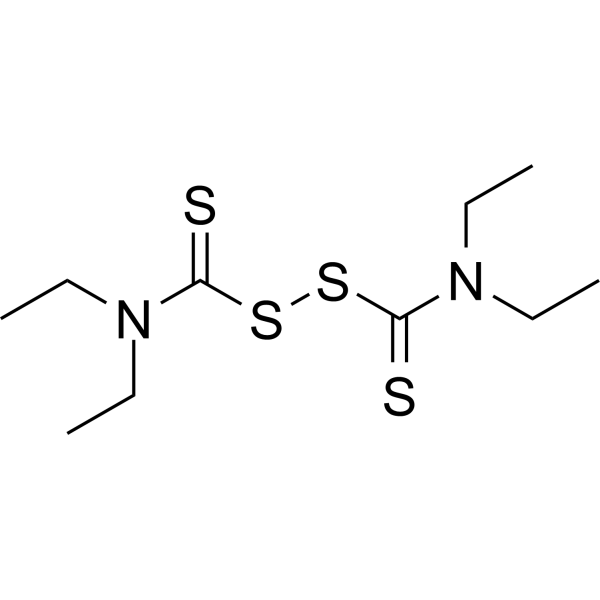
Disulfiram (Tetraethylthiuram disulfide) is a specific inhibitor of aldehyde-dehydrogenase (ALDH1), used for the treatment of chronic alcoholism by producing an acute sensitivity to alcohol. Disulfiram inhibits gasdermin D (GSDMD) pore formation in liposomes and inflammasome-mediated pyroptosis and IL-1β secretion in human and mouse cells. Disulfiram, a copper ion carrier, with Cu 2+ increases intracellular ROS levels and induces cuproptosis .
loading...
    loading...
130
130 Cited Publications
Cat. No.: HY-12040
CAS No.: 488832-69-5
Pureté:  99.80%
Synonyms: STA-4783
Domaines de recherche:  

Cancer

Elesclomol (STA-4783) is a potent copper ionophore and promotes copper-dependent cell death (cuproptosis). Elesclomol specifically binds ferredoxin 1 (FDX1) α2/α3 helices and β5 strand. Elesclomol inhibits FDX1-mediated Fe-S cluster biosynthesis. Elesclomol is an oxidative stress inducer that induces cancer cell apoptosis. Elesclomol is a reactive oxygen species (ROS) inducer. Elesclomol can be used for Menkes and associated disorders of hereditary copper deficiency research .
loading...
    loading...
34
34 Cited Publications
Cat. No.: HY-141511
CAS No.: 874748-20-6
Pureté:  97.74%
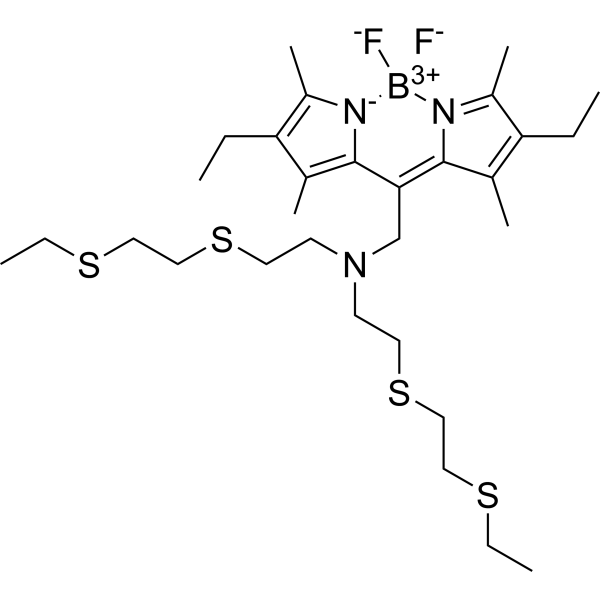
Coppersensor-1 (CS1) is a membrane-permeable fluorescent dye. Coppersensor-1 has a picomolar affinity for Cu + with high selectivity over competing cellular metalions. Coppersensor-1 as a probe, can selective and sensitive detection of copper(I) ions (Cu +) in biological samples, including live cells. Coppersensor-1 can be used for the research of imaging of severe diseases such as cancer, cardiovascular disorders and neurogenerative diseases .
loading...
    loading...
13
13 Cited Publications
Cat. No.: HY-108473
CAS No.: 1279713-77-7
Pureté:  99.34%
Synonyms: TLR3-IN-1
Domaines de recherche:  

Cancer

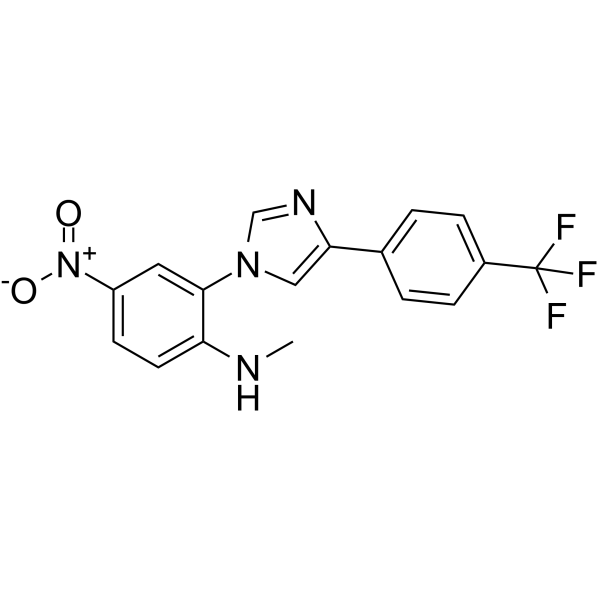
CU-CPT 4a (TLR3-IN-1) is a potent, highly selective TLR3 signaling inhibitor. CU-CPT 4a represses the expression of downstream signaling pathways mediated by the TLR3/dsRNA complex, including TNF-α and IL-1β .
loading...
    loading...
13
13 Cited Publications
Cat. No.: HY-110353
CAS No.: 1821387-73-8
Pureté:  99.96%
Domaines de recherche:  

Inflammation/Immunology Cancer

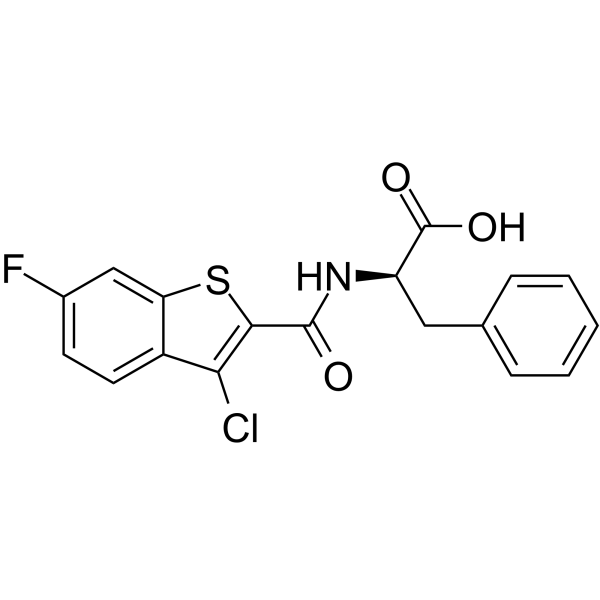
CU-T12-9 is a specific TLR1/2 agonist with EC50 of 52.9 nM in HEK-Blue hTLR2 SEAP assay. CU-T12-9 activates both the innate and the adaptive immune systems. CU-T12-9 selectively activates the TLR1/2 heterodimer, not TLR2/6. CU-T12-9 signals through NF-κB and invokes an elevation of the downstream effectors TNF-α, IL-10, and iNOS .
loading...
    loading...
12
12 Cited Publications
Cat. No.: HY-108471
CAS No.: 1416324-85-0
Pureté:  98.08%
Domaines de recherche:  

Cancer

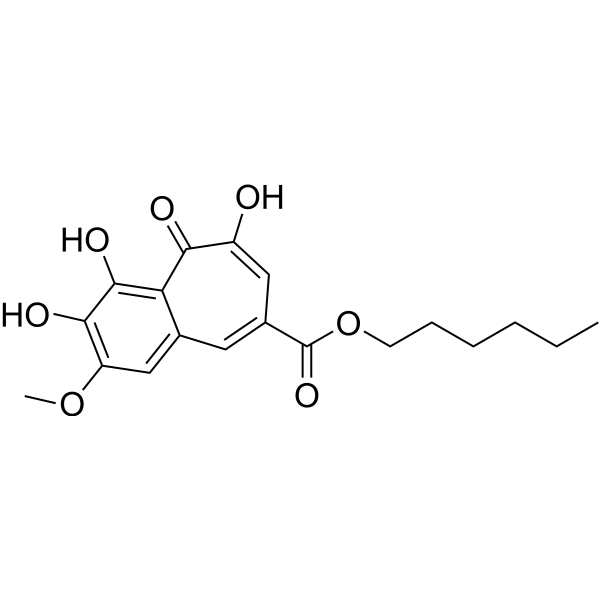
CU-CPT22 is a potent protein complex of toll-like receptor 1 and 2 (TLR1/2) inhibitor, and competes with the synthetic triacylated lipoprotein (Pam3CSK4) binding to TLR1/2 with a Ki of 0.41 µM. CU-CPT22 blocks Pam3CSK4-induced TLR1/2 activation with an IC50 of 0.58 µM .
loading...
    loading...
7
7 Cited Publications
Cat. No.: HY-156376
CAS No.: 1224195-72-5
Pureté:  99.99%
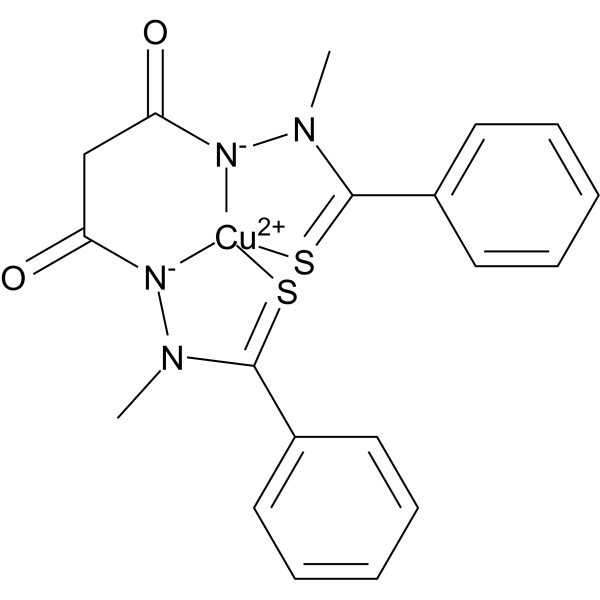
Cu(II)-Elesclomol is a complex formed by Elesclomol (HY-12040) and Cu 2+ (copper ions). Cu(II)-Elesclomol is also a weak inhibitor of DNA topoisomerase I. Cu(II)-Elesclomol exerts anticancer effects by inducing oxidative stress and DNA damage through copper chelation. Cu(II)-Elesclomol can inhibit tumor cell proliferation and induce cell cycle arrest and apoptosis. Cu(II)-Elesclomol can be used in the study of cancer .
loading...
    loading...
6
6 Cited Publications
Cat. No.: HY-128757
CAS No.: 1787294-07-8
Pureté:  99.76%
Synonyms: LOU064
Target:  

Btk

Domaines de recherche:  

Inflammation/Immunology Cancer

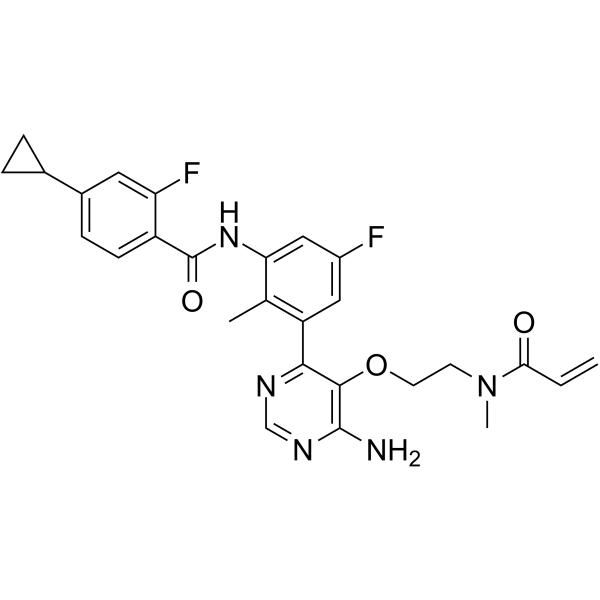
Remibrutinib, is a potent and orally active bruton tyrosine kinase (BTK) inhibitor with an IC50 value of 1 nM. Remibrutinib inhibits BTK activity with an IC50 value of 0.023 μM in blood . Remibrutinib has the potential for Chronic urticaria (CU) treatment .
loading...
    loading...
6
6 Cited Publications
Cat. No.: HY-16074
CAS No.: 649749-10-0
Synonyms: Bischolinetetrathiomolybdate
Target:  

SOD

Domaines de recherche:  

Cancer

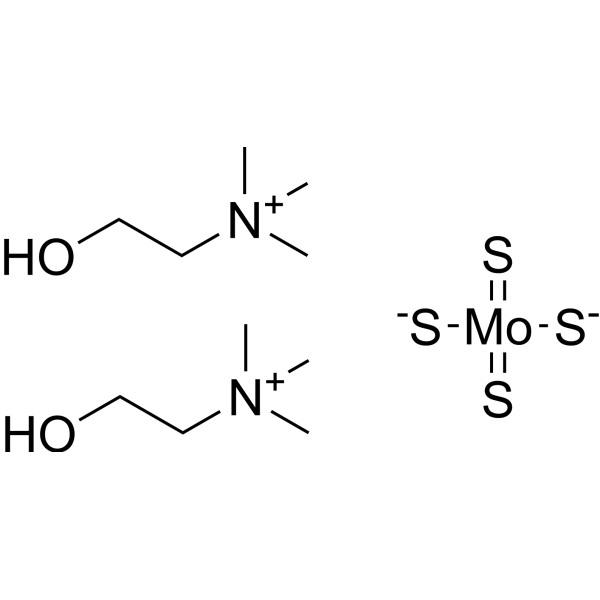
ATN-224 is an orally active Cu 2+/Zn 2+-superoxide dismutase 1 (SOD1) inhibitor. ATN-224 inhibits SOD1 activity in endothelial cells, an effect that is dose dependent with an IC50 of 17.5 nM.
loading...
    loading...
6
6 Cited Publications
Cat. No.: HY-14603
CAS No.: 130-26-7
Pureté:  99.84%
Synonyms: Iodochlorohydroxyquinoline
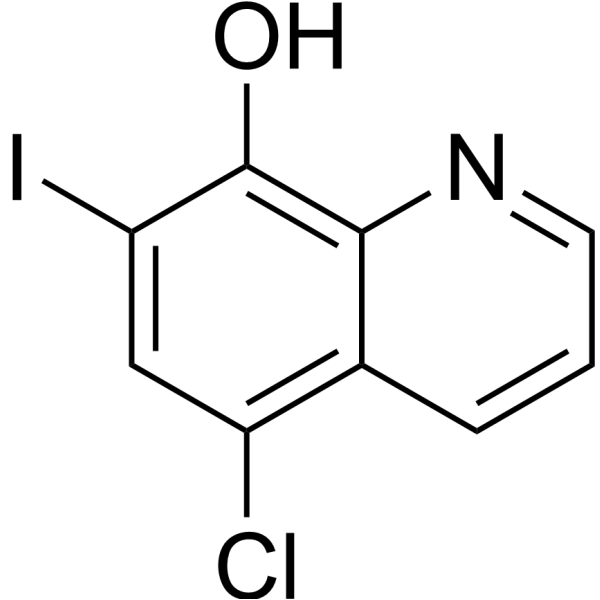
Clioquinol (Iodochlorhydroxyquin) is a topical antifungal agent with anticancer activity. Clioquinol acts as an oral antimicrobial agent for the research of diarrhea and skin infections. Antibiotic . Clioquinol is a chelator that binds to Zn 2+ and Cu 2+ with a greater affinity than it binds to Ca 2+ and Mg 2+. Clioquinol freely crosses the blood-brain barrier. Clioquinol can be used for the study of Alzheimer's disease .
loading...
    loading...
5
5 Cited Publications
Cat. No.: HY-112667
CAS No.: 2165340-32-7
Pureté:  99.74%
Domaines de recherche:  

Inflammation/Immunology

CU-CPT-9a is a specific TLR8 antagonist, with an IC50 of 0.5 nM.
loading...
    loading...
5
5 Cited Publications
Cat. No.: HY-150086
CAS No.: 2365532-64-3
Pureté:  98.44%
Synonyms: CF4
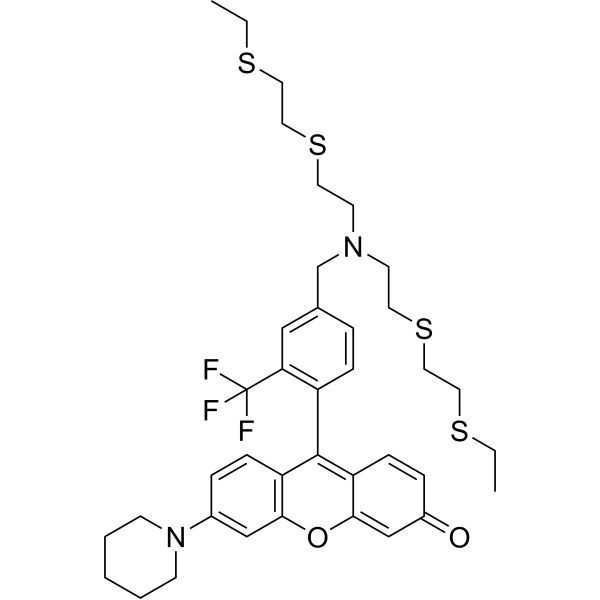
Copper Fluor-4 (CF4) is a Cu +-specific fluorescent probe based on a rhodol dye scaffold. Copper Fluor-4 has high copper selectivity with a Kd value of 2.9×10 −13 M, particularly over zinc and iron, as well as abundant cellular alkali and alkaline earth metals. Copper Fluor-4 is stable in a physiologically relevant pH regime between 6 and 8 (wavelengths of 415 nm for excitation and 660 nm for emission) .
loading...
    loading...
4
4 Cited Publications
Cat. No.: HY-B1637
CAS No.: 148-18-5
Synonyms: Sodium diethyldithiocarbamate
Domaines de recherche:  

Infection Inflammation/Immunology Cancer

Ditiocarb sodium (Sodium diethyldithiocarbamate) is an orally active copper reagent. Ditiocarb sodium exhibits activities such as antioxidation, chelation, anti-tumor effects, immunomodulation, and anti-HIV properties. Ditiocarb sodium can be used in the research of tumors, inflammatory, and immune-related diseases .
loading...
    loading...
4
4 Cited Publications
Cat. No.: HY-B1637A
CAS No.: 148-18-5
Synonyms: Sodium diethyldithiocarbamate,98%
Domaines de recherche:  

Infection Inflammation/Immunology Cancer

Ditiocarb sodium,98% (Sodium diethyldithiocarbamate,98%) is an orally active copper reagent. Ditiocarb sodium,98% exhibits activities such as antioxidation, chelation, anti-tumor effects, immunomodulation, and anti-HIV properties. Ditiocarb sodium,98% can be used in the research of tumors, inflammatory, and immune-related diseases .
loading...
    loading...
4
4 Cited Publications
Cat. No.: HY-W009722
CAS No.: 20624-25-3
Synonyms: Ditiocarb sodium trihydrate
Sodium diethylcarbamodithioate (Ditiocarb sodium) trihydrate is a copper reagent. The reaction with Cu 2+ solution resulted in the formation of a complex, which increased the copper displacement precipitation rate. Sodium diethylcarbamodithioate trihydrate can reduce HIV infection and can be used in adjuvant immune research of high-risk breast cancer .
loading...
    loading...
4
4 Cited Publications
Cat. No.: HY-B1306
CAS No.: 61-78-9
Synonyms: p-Aminohippuric acid
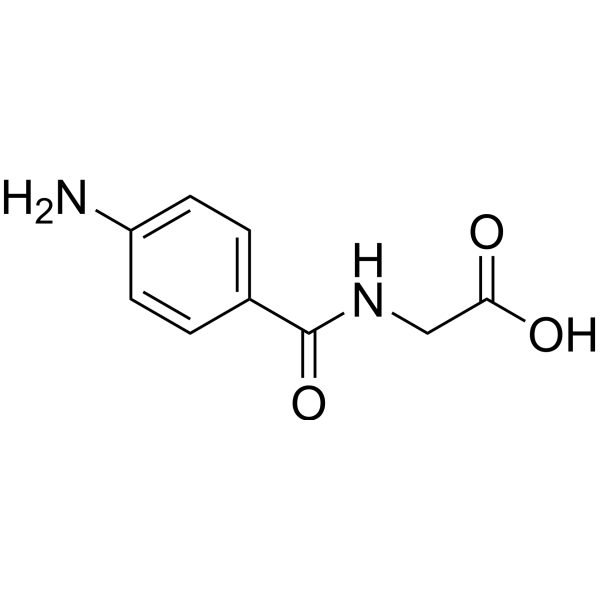
4-Aminohippuric acid (p-Aminohippuric acid) is a coordination ligand for metal ions (such as Cu 2+, Fe 3+, Hg 2+) and a functionalization reagent for nanomaterials. 4-Aminohippuric acid can coordinate with metal ions or modify the surface of materials such as carbon nanotubes and gold nanoparticles through amino and carboxyl groups. 4-Aminohippuric acid can form stable complexes with metal ions or participate in the synthesis of nanomaterials as a reducing agent/stabilizer, enriching metal ions or giving nanoparticles peroxidase-mimicking activity. 4-Aminohippuric acid can be used to construct highly sensitive electrochemical sensors or colorimetric sensors to detect and quantitatively analyze heavy metal ions such as copper, iron, and mercury in environmental water samples and biological samples. 4-Aminohippuric acid may also be a biomarker for attention-deficit/hyperactivity disorder (ADHD) .
loading...
    loading...
3
3 Cited Publications
Cat. No.: HY-101929
CAS No.: 2109805-75-4
Pureté:  99.00%
Domaines de recherche:  

Inflammation/Immunology Cancer

CU-CPT17e is a potent multi-Toll-like receptor (TLR) agonist that activates TLR3, TLR8, and TLR9.
loading...
    loading...
2
2 Cited Publications
Cat. No.: HY-100486
CAS No.: 1334179-85-9
Pureté:  99.68%
Domaines de recherche:  

Others

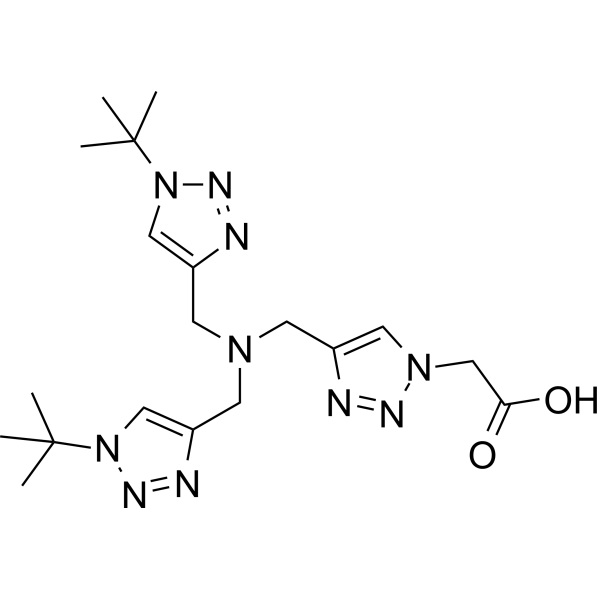
BTTAA is a Cu(I)-stabilizing ligand, whch performs potently with ubiquitin Glu18AzF.
loading...
    loading...
2
2 Cited Publications
Cat. No.: HY-Y1878C
CAS No.: 7758-98-7
Synonyms: Cupric sulfate anhydrous, 99%
Anhydrous copper sulfate, 99% (Cupric sulfate anhydrous, 99%) is an orally administerable disinfectant. Anhydrous copper sulfate, 99% can be used as a biomaterial or organic compound related to life sciences research, and it can increase the Cu content in rat organs .
loading...
    loading...
2
2 Cited Publications
Cat. No.: HY-112050
CAS No.: 125079-83-6
Pureté:  99.98%
Synonyms: TLR8-specific antagonist
Domaines de recherche:  

Inflammation/Immunology

CU-CPT-8m is a specific TLR8 antagonist, with an IC50 of 67 nM.
loading...
    loading...