Search Result
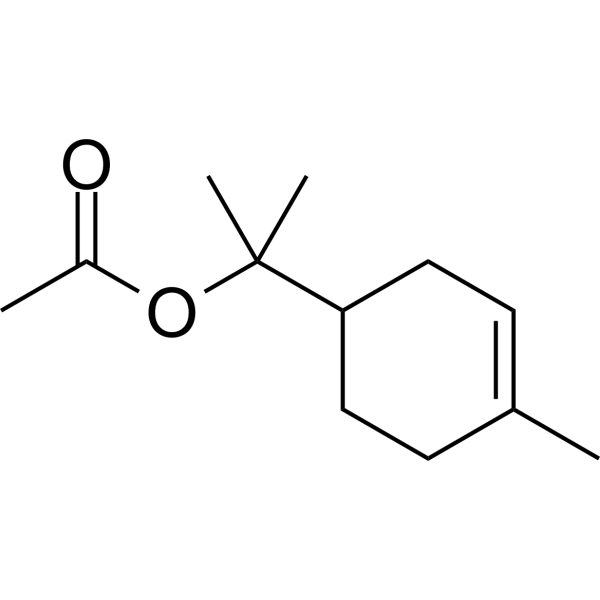
Results for "
Essential oil
" in MedChemExpress (MCE) Product Catalog:
1
Biochemical Assay Reagents
10
Isotope-Labeled Compounds
| Cat. No. |
Nombre del producto |
Target |
Áreas de investigación |
Chemical Structure |
-
- HY-N0337
-
-
-
- HY-N6968
-
|
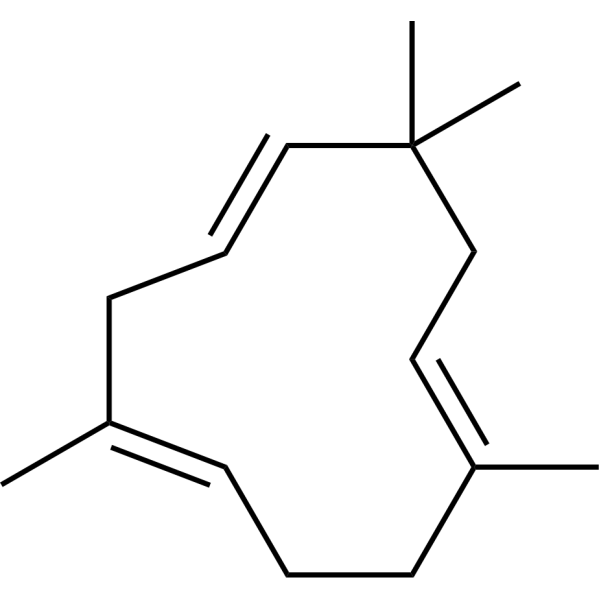
Humulene; α-Caryophyllene
|
NO Synthase
COX
|
Inflammation/Immunology
|
|
α-Humulene is a main constituent of Tanacetum vulgare L. (Asteraceae) essential oil with anti-inflammation (IC50=15±2 μg/mL). α-Humulene inhibits COX-2 and iNOS expression .
|
-
-
- HY-N7083
-
-
-
- HY-N8573
-
|
|
Bacterial
|
Infection
|
|
β-phellandrene is an orally active monocyclic monoterpenes. β-Phellandrene is obtained from Carum petroselinum. β-phellandrene has strong ability to kill pest. β-phellandrene can be used as oil additives, natural pesticides and synthetic materials .
|
-
-
- HY-N1952
-
|
Iso-Eugenol
|
Environmental Pollutants
Bacterial
|
Infection
|
|
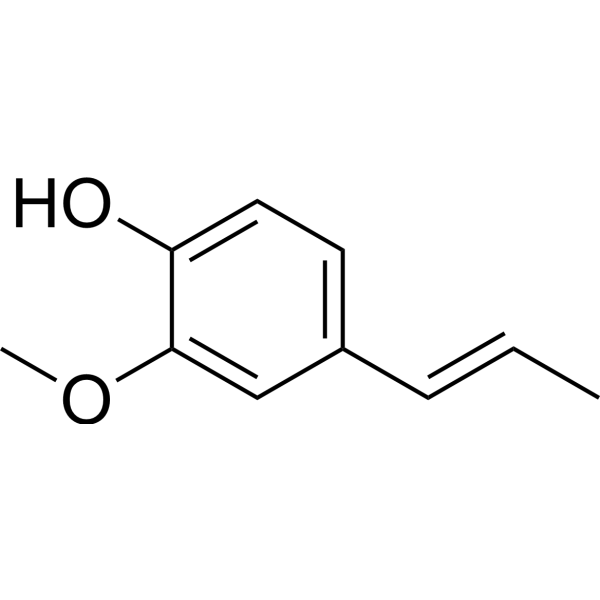
Isoeugenol is an essential oil constituent of nutmeg, clove, and cinnamon. Isoeugenol inhibits growth of Escherichia coli and Listeria innocua with MICs of 0.6 mg/mL and 1 mg/mL, respectively .
|
-
-
- HY-N9691
-
|
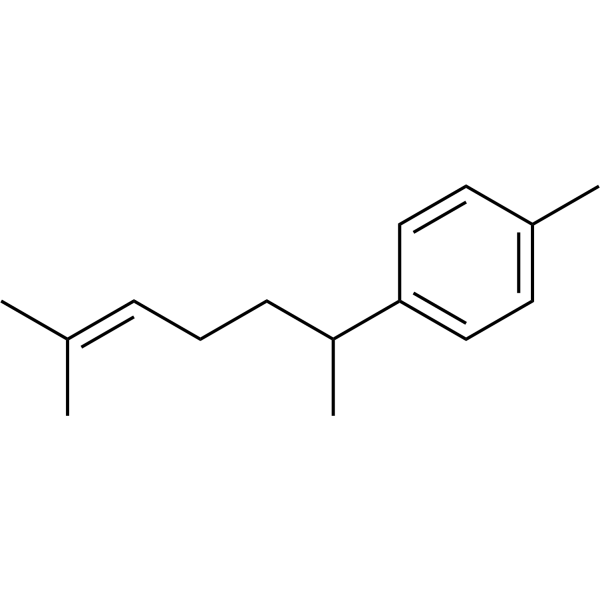
α-Curcumene
|
Fungal
Bacterial
|
Infection
|
|
Curcumene (α-Curcumene) is a monocyclic sesquiterpene found in the essential oil of rhizomes of Curcuma aromatica Salisb. Curcumene has antifungal and antibacterial activities. Curcumene can be used for the research of infection .
|
-
-
- HY-124257
-
|
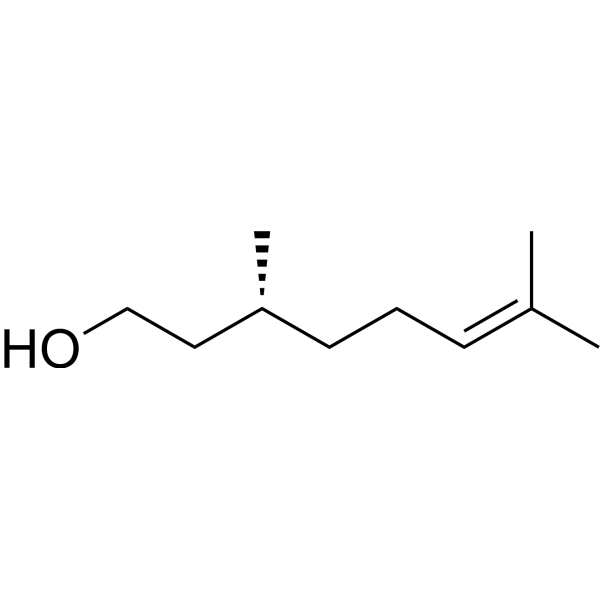
D-Citronellol; (R)-(+)-β-Citronellol
|
Endogenous Metabolite
|
Inflammation/Immunology
|
|
(R)-Citronellol (D-Citronellol) is an alcoholic monoterpene found in geranium essential oil. (R)-Citronellol inhibits degranulation of mast cells and does not affect caffeine bitterness perception. (R)-Citronellol can be used in decorative cosmetics, toiletries as well as in non-cosmetic products .
|
-
-
- HY-N2085
-
|
(S)-(-)-Perillaldehyde; (S)-Perillaldehyde
|
Environmental Pollutants
|
Neurological Disease
|
|
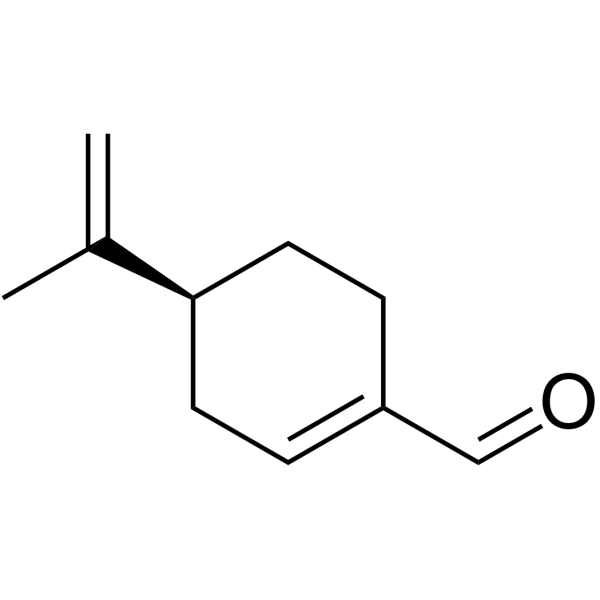
L-Perillaldehyde is a major component in the essential oil containing in Perillae Herba. Inhalation of L-Perillaldehyde shows antidepressant-like activity through the olfactory nervous function .
|
-
-
- HY-N2381
-
|
|
NF-κB
Parasite
|
Infection
Metabolic Disease
Inflammation/Immunology
Cancer
|
|
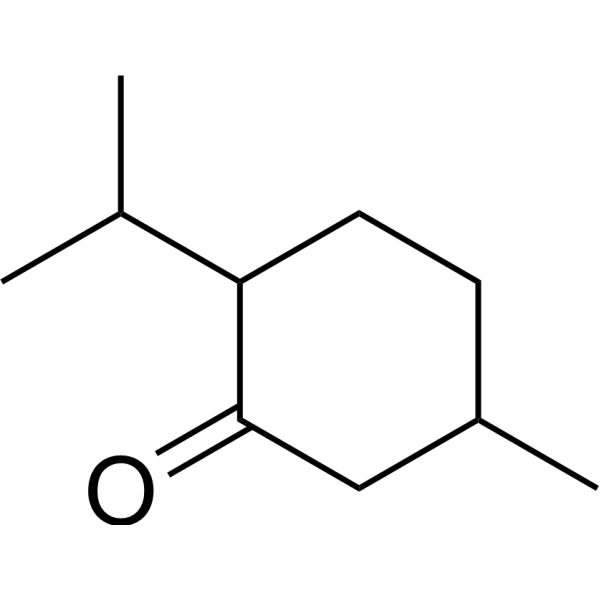
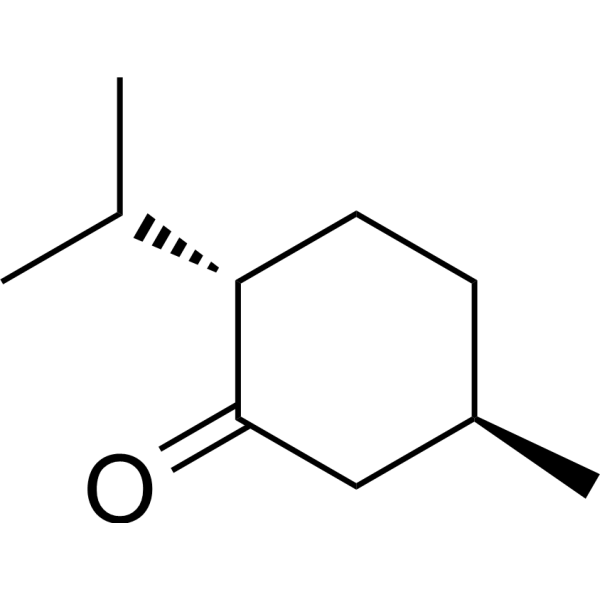
Menthone, an orally active monoterpene that can be isolated from plants and Mentha oil with antibacterial, antitumor, antioxidation, and antivirus properties. Menthone is a main volatile component of the essential oil, and has anti-Inflammatory properties in Schistosoma mansoni infection and rheumatoid arthritis .
|
-
-
- HY-N7136
-
-
-
- HY-134900
-
-
-
- HY-N0337S
-
-
-
- HY-N0337R
-
-
-
- HY-N7916
-
|
L-Menthone
|
Environmental Pollutants
|
Others
|
|
(-)-Menthone is a monoterpene component of the essential oil of maturing peppermint. (+)-Neomenthyl-β-d-glucoside is a metabolite of (-)-Menthone .Mortality of two biological forms of Anopheles stephensi(larvae) exposed to about 45 ppm (-)-Menthone is 27.67% and 94.92%.
|
-
-
- HY-B1918
-
|
|
Interleukin Related
|
Others
|
|
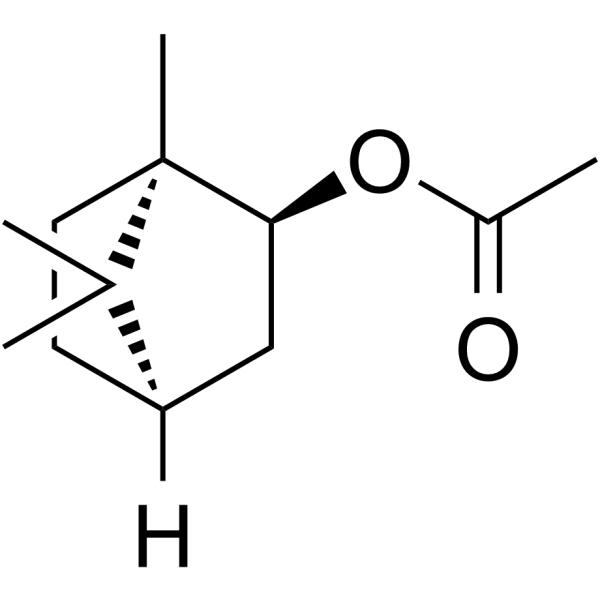
(+)-Bornyl acetate is found in pichtae essential oil (Siberian fir needle oil). (+)-Bornyl acetate has a stronger inhibitory effect on root growth of Arabidopsis seedlings .
|
-
-
- HY-W133894
-
|
oils, cedarwood
|
Environmental Pollutants
Parasite
|
Others
|
|
Cedar oil is an essential oil that can be extracted from numerous types of conifers. Cedar oil possesses some pesticidal properties. As a food additive and preservative, cedarwood oil is a blend of organic chemicals classified as safe compounds by the FDA.
|
-
-
- HY-W015879
-
|
|
Environmental Pollutants
Bacterial
|
Inflammation/Immunology
|
|
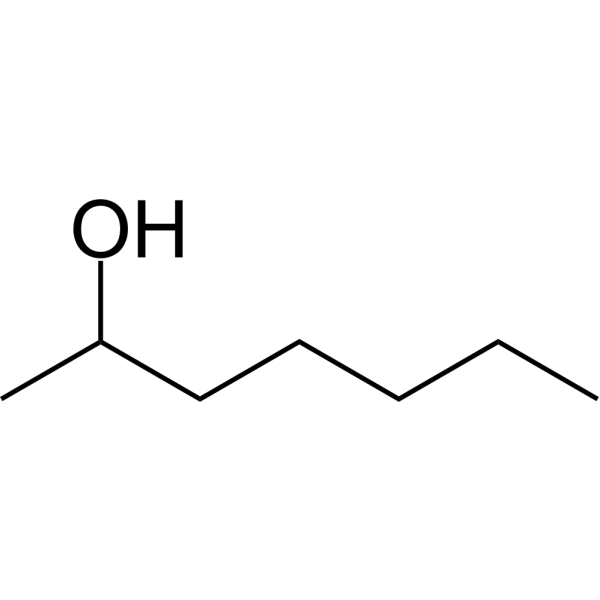
2-Heptanol is one of the chemical compounds identified in turmeric and turmeric rhizome essential oil. 2-Heptanol can speed up amino acid metabolism and slow down membrane transport, exhibiting antibacterial activity. The rhizome essential oil has good antibacterial and antioxidant properties .
|
-
-
- HY-N9484
-
|
|
Drug Metabolite
|
Others
|
|
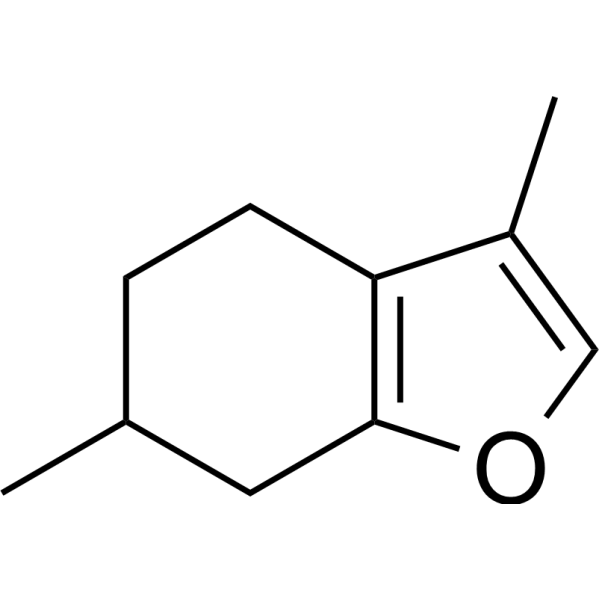
Menthofuran is a proximate toxic metabolite of (R)-(+)-Pulegone. Menthofuran regulates essential oil biosynthesis in peppermint by controlling a downstream monoterpene reductase .
|
-
-
- HY-W088037
-
|
|
Environmental Pollutants
|
Others
|
|
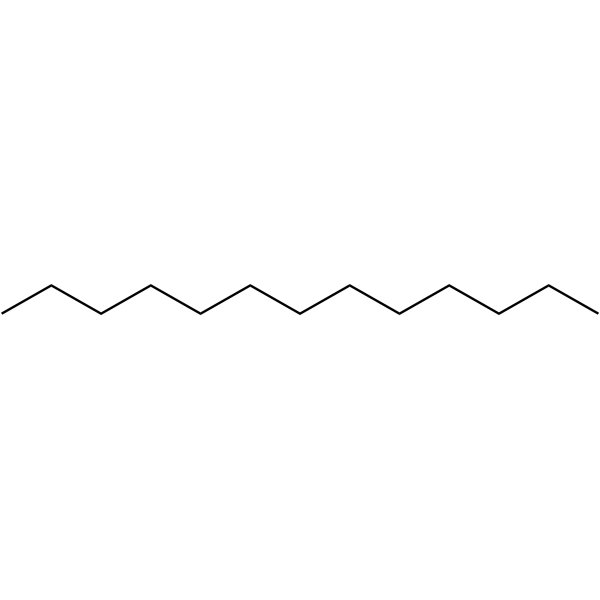
Tridecane is a short chain aliphatic hydrocarbon containing 13 carbon atoms. Tridecane is an volatile oil component isolated from essential oil of Piper aduncum L. Tridecane is a stress compound released by the brown marmorated stink bugs stress compound .
|
-
-
- HY-121206
-
|
|
Environmental Pollutants
Antibiotic
|
Infection
|
|
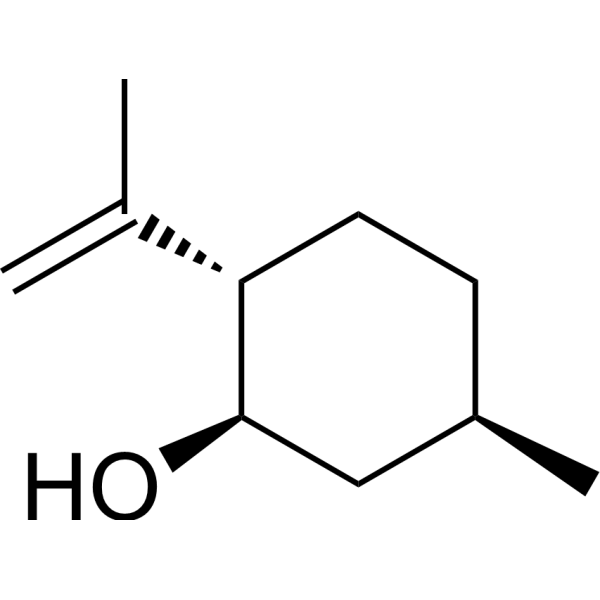
(-)-Isopulegol is prepared directly from the treatment of essential oil of citronella under solid supported acid catalysis and solvent-free microwave assisted ene-cyclisation. (-)-Isopulegol shows high activity in reacting with carbonyl compounds. (-)-Isopulegol can be used for antiviral activity research .
|
-
-
- HY-N0827
-
-
-
- HY-W004301
-
-
-
- HY-N7494
-
|
|
Environmental Pollutants
|
Cancer
|
|
Pentacosane is one of the major components in the acetone extract from Curcuma raktakanda and is also in the essential oil from the leaves of Malus domestica. Pentacosane exhibit anti-cancer activities .
|
-
-
- HY-W250151
-
|
|
Fluorescent Dye
|
Others
|
|
Leishman's stain is an essential staining tool for for staining of the peripheral blood and bone marrow smears (displayed pale bluish-grey to deep blue under oil-immersion lens) .
|
-
-
- HY-W088037S
-
|
|
Isotope-Labeled Compounds
|
Others
|
|
Tridecane-d28 is the deuterium labeled Tridecane . Tridecane is a short chain aliphatic hydrocarbon containing 13 carbon atoms. Tridecane is an volatile oil component isolated from essential oil of Piper aduncum L. Tridecane is a stress compound released by the brown marmorated stink bugs stress compound .
|
-
-
- HY-N17260
-
|
|
Bacterial
|
Infection
|
|
Phellandral is an aldehyde compound that can be found in Eucalyptus camaldulensis and Thymus seravschanicus. The phellandral-containing eucalyptus essential oil exhibits significant inhibitory effects on various plant pathogenic fungi, especially on Aspergillus flavus. Phellandral, together with other oxygenated monoterpenoids, constitutes an important basis for the antibacterial activity of the essential oil .
|
-
-
- HY-200541
-
|
|
Others
|
Metabolic Disease
|
|
Dihydro-α-ionone is a volatile compound found in the essential oil of Persicaria hydropiper L. leaves. The essential oil can inhibit α-glucosidase and α-amylase activities .
|
-
-
- HY-W004297
-
|
|
Drug Intermediate
|
Others
|
|
1-Nonadecanol is one of the compositions of supercritical carbon dioxide (SC-CO2) essential oil of Heracleum thomsonii. 1-Nonadecanol is also an important aroma compound in Neotinea ustulata .
|
-
-
- HY-W587956
-
|
|
Fungal
|
Infection
|
|
α-Guaiene is a natural sesquiterpene and fungicidal agent found in Pogostemon cablin (patchouli) essential oil. α-Guaiene suppresses the growth of Aspergillus niger, Candida albicans, Microsporum gypseum, and Trichophyton mentagrophytes. α-Guaiene can be used for the study of fungal infection .
|
-
-
- HY-147113
-
|
|
Others
|
Others
|
|
2-Methyl-3-buten-1-ol is a component of ylang-ylang oils can be extracted from the flowers .
|
-
-
- HY-N12732
-
|
|
Others
|
Others
|
|
cis-Tonghaosu is one of the chemical components of German chamomile (Matricaria chamomilla L.) essential oil .
|
-
-
- HY-N8573R
-
|
|
Reference Standards
Bacterial
|
Infection
|
|
β-phellandrene is an orally active monocyclic monoterpenes. β-Phellandrene is obtained from Carum petroselinum. β-phellandrene has strong ability to kill pest. β-phellandrene can be used as oil additives, natural pesticides and synthetic materials .
|
-
-
- HY-W012857
-
|
|
Drug Intermediate
|
Others
|
|
4-Methylethylbenzene is a volatile aromatic hydrocarbon compound. 4-Methylethylbenzene can be isolated from the essential oil of the peels of Juglans nigra L. .
|
-
-
- HY-N7494S
-
|
|
Isotope-Labeled Compounds
|
Cancer
|
|
Pentacosane-d52 is the deuterium labeled Pentacosane . Pentacosane is one of the major components in the acetone extract from Curcuma raktakanda and is also in the essential oil from the leaves of Malus domestica. Pentacosane exhibit anti-cancer activities .
|
-
-
- HY-W087919
-
|
|
Cytochrome P450
|
Others
|
|
5-Methyl-2-furanmethanol is a natural product that can be isolated from the essential oil of D. rupicola Biv.. 5-Methyl-2-furanmethanol also acts as a oxidative product of 2,5 dimethylfuran (DMF) by cytochrome P450 (CYP) .
|
-
-
- HY-W718719
-
|
|
Others
|
Others
|
|
Tricyclene is a natural bicyclic monoterpene hydrocarbon, and it is one of the main components in the essential oil of Salvia aegyptiaca L .
|
-
-
- HY-N7250
-
|
|
Others
|
Infection
|
|
(+)-trans-Isolimonene is a natural monoterpene isolated from essential oil .
|
-
-
- HY-W015482
-
-
-
- HY-N2381R
-
|
|
NF-κB
Reference Standards
Parasite
|
Infection
Metabolic Disease
Inflammation/Immunology
Cancer
|
|
Menthone (Standard) is the analytical standard of Menthone. This product is intended for research and analytical applications. Menthone, an orally active monoterpene that can be isolated from plants and Mentha oil with antibacterial, antitumor, antioxidation, and antivirus properties. Menthone is a main volatile component of the essential oil, and has anti-Inflammatory properties in Schistosoma mansoni infection and rheumatoid arthritis .
|
-
-
- HY-N5060R
-
|
4-Allylanisole (Standard)
|
Parasite
Reference Standards
|
Neurological Disease
|
|
Estragole (Standard) is the analytical standard of Estragole. This product is intended for research and analytical applications. Estragole (4-Allylanisole), a relatively nontoxic volatile terpenoid ether, is a major component of the essential oil of many plants. Estragole dose-dependently blocks nerve excitability . Estragole displays anti-toxoplasma activity .
|
-
-
- HY-N6968R
-
|
Humulene (Standard); α-Caryophyllene (Standard)
|
Reference Standards
NO Synthase
COX
|
Inflammation/Immunology
|
|
α-Humulene (Standard) is the analytical standard of α-Humulene. This product is intended for research and analytical applications. α-Humulene is a main constituent of Tanacetum vulgare L. (Asteraceae) essential oil with anti-inflammation (IC50=15±2 μg/mL). α-Humulene inhibits COX-2 and iNOS expression .
|
-
-
- HY-W540326
-
-
-
- HY-N10100
-
|
|
Others
|
Others
|
|
Epiglobulol is a natural product that can be isolated from Atalantia buxifolia. Epiglobulol is a principal components of essential oil which has significant contact toxicity against three stored-product insects .
|
-
-
- HY-N18829
-
|
|
Others
|
Others
|
|
Chamomile essential oil is extracted from fresh chamomile flowers through distillation and is mainly used in cosmetic research.
|
-
-
- HY-W1121922
-
-
-
- HY-W140227
-
|
|
Others
|
Others
|
|
(Z,Z)-4,7-Decadienol is a volatile component of acorus oil essential oil and an uncommon fragrance in orchids .
|
-
-
- HY-W835848
-
|
|
Others
|
Others
|
|
Nerolidol acetate is a compound isolated from plants and is a component of the essential oil of plant seeds.
|
-
-
- HY-N7000R
-
-
-
- HY-W670990
-
-
-
- HY-75342S
-
-
- HY-W794609
-
-
- HY-W651036
-
|
|
Herbicide
|
Others
|
|
2-Caren-10-al is a major component of essential oil derived from C. cyminum L .
|
-
- HY-W615780
-
-
- HY-122530
-
|
|
Insecticide
|
Endocrinology
|
|
Juvocimene I is a potent juvenile hormone mimic. Juvocimene I can be isolated from the essential oil of sweet basil,Ocimum basilicum L .
|
-
- HY-W015879R
-
|
|
Reference Standards
Bacterial
|
Inflammation/Immunology
|
|
2-Heptanol (Standard) is the analytical standard of 2-Heptanol. This product is intended for research and analytical applications. 2-Heptanol is one of the chemical compounds identified in turmeric and turmeric rhizome essential oil. 2-Heptanol can speed up amino acid metabolism and slow down membrane transport, exhibiting antibacterial activity. The rhizome essential oil has good antibacterial and antioxidant properties[1][2].
|
-
- HY-76633R
-
|
|
Reference Standards
Drug Intermediate
|
Others
|
|
Dimethyl 4-hydroxyisophthalate (Standard) is the analytical standard of Dimethyl 4-hydroxyisophthalate. This product is intended for research and analytical applications. Dimethyl 4-hydroxyisophthalate is a methyl salicylate analog. Dimethyl 4-hydroxyisophthalate serves as a synthetic marker for detecting adulteration of wintergreen essential oil with synthetic methyl salicylate, and is also a by-product of Kolbe-Schmitt reaction impurities, which is not detected in authentic wintergreen essential oil .
|
-
- HY-W015879S
-
|
|
Bacterial
Isotope-Labeled Compounds
|
Inflammation/Immunology
|
|
2-Heptanol-d5 is deuterated labeled 2-Heptanol (HY-W015879). 2-Heptanol is one of the chemical compounds identified in turmeric and turmeric rhizome essential oil. 2-Heptanol can speed up amino acid metabolism and slow down membrane transport, exhibiting antibacterial activity. The rhizome essential oil has good antibacterial and antioxidant properties .
|
-
- HY-W088037R
-
|
|
Reference Standards
Others
|
Others
|
|
Tridecane (Standard) is the analytical standard of Tridecane. This product is intended for research and analytical applications. Tridecane is a short chain aliphatic hydrocarbon containing 13 carbon atoms. Tridecane is an volatile oil component isolated from essential oil of Piper aduncum L. Tridecane is a stress compound released by the brown marmorated stink bugs stress compound .
|
-
- HY-77995S
-
|
o-Anisaldehyde-d3
|
Fungal
Bacterial
|
Infection
|
|
2-Methoxybenzaldehyde-d3 is the deuterium labeled 2-Methoxybenzaldehyde . 2-Methoxybenzaldehyde (o-Anisaldehyde), isolated from cinnamon essential oil (CEO), exists antibacterial and antifungal activity .
|
-
- HY-N1952R
-
|
Iso-Eugenol (Standard)
|
Reference Standards
Bacterial
|
Infection
|
|
Isoeugenol (Standard) is the analytical standard of Isoeugenol. This product is intended for research and analytical applications. Isoeugenol is an essential oil constituent of nutmeg, clove, and cinnamon. Isoeugenol inhibits growth of Escherichia coli and Listeria innocua with MICs of 0.6 mg/mL and 1 mg/mL, respectively .
|
-
- HY-N7494R
-
|
|
Reference Standards
Others
|
Cancer
|
|
Pentacosane (Standard) is the analytical standard of Pentacosane. This product is intended for research and analytical applications. Pentacosane is one of the major components in the acetone extract from Curcuma raktakanda and is also in the essential oil from the leaves of Malus domestica. Pentacosane exhibit anti-cancer activities .
|
-
- HY-N1952S
-
|
iso-Eugenol-d3
|
Bacterial
Isotope-Labeled Compounds
|
Infection
|
|
Isoeugenol-d3 is deuterated labeled Isoeugenol (HY-N1952). Isoeugenol is an essential oil constituent of nutmeg, clove, and cinnamon. Isoeugenol inhibits growth of Escherichia coli and Listeria innocua with MICs of 0.6 mg/mL and 1 mg/mL, respectively .
|
-
- HY-W004297R
-
|
|
Reference Standards
Others
|
Others
|
|
1-Nonadecanol (Standard) is the analytical standard of 1-Nonadecanol. This product is intended for research and analytical applications. 1-Nonadecanol is one of the compositions of supercritical carbon dioxide (SC-CO2) essential oil of Heracleum thomsonii. 1-Nonadecanol is also an important aroma compound in Neotinea ustulata .
|
-
- HY-N7916R
-
|
L-Menthone (Standard)
|
Reference Standards
Others
|
Others
|
|
(-)-Menthone (Standard) is the analytical standard of (-)-Menthone. This product is intended for research and analytical applications. (-)-Menthone is a monoterpene component of the essential oil of maturing peppermint. (+)-Neomenthyl-β-d-glucoside is a metabolite of (-)-Menthone .Mortality of two biological forms of Anopheles stephensi(larvae) exposed to about 45 ppm (-)-Menthone is 27.67% and 94.92%.
|
-
- HY-121206R
-
|
|
Antibiotic
Reference Standards
|
Infection
|
|
(-)-Isopulegol (Standard) is the analytical standard of (-)-Isopulegol. This product is intended for research and analytical applications. (-)-Isopulegol is prepared directly from the treatment of essential oil of citronella under solid supported acid catalysis and solvent-free microwave assisted ene-cyclisation. (-)-Isopulegol shows high activity in reacting with carbonyl compounds. (-)-Isopulegol can be used for antiviral activity research .
|
-
- HY-W510472
-
|
|
Others
|
Others
|
|
2-Pentylcyclohexanone is a compound that can be isolated from Chenopodium ambrosioides essential oil .
|
-
- HY-N18056
-
|
|
Others
|
Others
|
|
(+)-Norpatchoulenol is an oxygenated sesquiterpene. (+)-Norpatchoulenol exists in the essential oil of Pogostemon patchouli .
|
-
- HY-N17366
-
|
|
Others
|
Others
|
|
2,5-Dihydroxy-4-methylacetophenone (compound 39) is a phenolic compound that can be found in the essential oil of Flos Sophorae Immaturus .
|
-
- HY-N17641
-
|
|
Drug Derivative
|
Others
|
|
3,4-Dihydro-5-methoxyl-6-methyl-2-phenyl-2H-1-benzopyran-7-ol is a 2H-1-benzopyran derivative that can be found in the essential oil of Dalbergia pinnata (Lour.) Prain .
|
-
- HY-N18171
-
|
|
Others
|
Infection
Inflammation/Immunology
Cancer
|
|
Caryophyllene is a macrocyclic sesquiterpene alkene present in the essential oil of Artemisia annua, with anti-inflammatory and anticancer activities. Caryophyllene plays a role in the plant defense of Artemisia annua .
|
-
- HY-W708825
-
|
Methyl isohexanoate
|
Others
|
Others
|
|
Methyl 4-methylpentanoate (Methyl isohexanoate) is a natural product. Methyl 4-methylpentanoate can be isolated from the essential oil of Bourbon geranium (Pelargonium sp.) from Reunion .
|
-
- HY-41091
-
|
|
Bacterial
|
Infection
|
|
(+)-trans-Limonene oxide is an antimicrobial essential oil component with activity against Staphylococcus aureus. (+)-trans-Limonene oxide acts as a selective agent for drug-resistant bacterial mutants without increasing the mutation frequency of Staphylococcus aureus USA300. (+)-trans-Limonene oxide can be used in studies of Staphylococcus aureus infection .
|
-
- HY-N18827
-
|
|
Others
|
Others
|
|
Citronella oil is an essential oil obtained from Cymbopogon winterianus.
|
-
- HY-N18814
-
-
- HY-N18830
-
|
|
Others
|
Others
|
|
Cedarwood oil texas is an essential oil from the wood of the native Texas Cedar (Juniperus Mexicana).
|
-
- HY-N18797
-
|
|
Others
|
Others
|
|
Hop oil is a kind of essential oil isolated from the hop cones, or flowers of the hop plant.
|
-
- HY-W133975
-
|
|
Others
|
Others
|
|
Origanum oil is an essential oil extracted from origanum plants, specifically origanum, belonging to the genus Oregano of the Lamiaceae family.
|
-
- HY-N18820
-
|
|
Others
|
Inflammation/Immunology
|
|
Pennyroyal oil (Hedeoma pulegioides) is an organic essential oil extracted from the botanical source Hedeoma pulegioides with anti-inflammatory effects.
|
-
- HY-N18833
-
|
|
Bacterial
|
Infection
|
|
Lavender oil can clean skin, control oil content, remove freckles, rejuvenate, disinfect, antibacterial and deodorize. Lavender oil has a wildly application in cosmetics and daily essentials such as soap.
|
-
- HY-N18812
-
|
|
Bacterial
|
Infection
Inflammation/Immunology
|
|
Coriander oil, derived from the seeds of the Coriandrum sativum plant, serves as a natural essential oil with noteworthy antimicrobial and anti-inflammatory attributes.
|
-
- HY-N18693
-
-
- HY-N9835
-
|
|
Drug Derivative
|
Infection
Cancer
|
|
Thymol isobutyrate is a thymol derivative that can be naturally extracted from the essential oil of the roots and aerial parts (leaves, stems, and flowers) of Carpesium cernuum L. This plant's essential oil has antibacterial and cytotoxic activity and can be used in antibacterial and antitumor research .
|
-
- HY-N9836
-
|
|
Drug Derivative
|
Others
|
|
8,9-Dehydrothymol isobutyrate is a thymol (HY-N6810) derivative that can be naturally extracted from the essential oil of the trunk bark of Tetraclinis articulata (Vahl) Mast. This plant essential oil exhibits certain cytotoxicity and can be used as a research subject in the fields of natural product chemistry and the active components of plant essential oils .
|
-
- HY-N18813
-
|
|
Others
|
Inflammation/Immunology
|
|
Pennyroyal oil (mentha pulegium) is a natural essential oil extracted from the peppermint plant and can be used in research on gastrointestinal diseases, dysmenorrhea, and respiratory diseases.
|
-
- HY-N18825
-
|
|
Bacterial
|
Infection
Neurological Disease
|
|
Lemongrass oil is an essential oil extracted from lemongrass. It has anti-frustration, antibacterial, sterilizing, deodorizing, mold killing, insect killing and disease prevention effects.
|
-
- HY-W393870
-
|
|
Others
|
Others
|
|
(-)-Dihydrocarvyl acetate is a Monoterpenoids product that can be isolated from the essential oil of Mentha spicata L. var. crispa Benth. .
|
-
- HY-N18169
-
|
|
Others
|
Others
|
|
Cadalene is a natural product present in the essential oil of Pelargonium sp. (rose-scented geranium) cultivated in Cuba .
|
-
- HY-N18805
-
|
|
Others
|
Inflammation/Immunology
|
|
Tansy oil has the properties of anti-inflammatory, calming and cleaning the skin, and deodorizing. It can used in daily essentials such as soap.
|
-
- HY-N18789
-
|
|
Bacterial
|
Infection
Inflammation/Immunology
|
|
Tagetes oil is an organic essential oil extracted from the Tagetes plant exhibiting inherent anti-inflammatory and antimicrobial attributes. Its employment in the research of diverse skin infections, wounds and dermatological conditions has been extensively recognized.
|
-
- HY-N16627
-
|
|
Others
|
Others
|
|
(E)-Avocadienofuran (Compound 42) is a key avocadofuran compound that can be isolated from the leaf essential oil of Persea indica (L.) K. Spreng .
|
-
- HY-N17595
-
|
|
Others
|
Others
|
|
trans-Pseudoisoeugenyl 2-methylbutyrate is an ester constituent found in Pimpinella anisum L. .
|
-
- HY-W755231
-
|
|
Endogenous Metabolite
|
Others
|
|
3,7,11,15-Tetramethyl-1,6,10,14-hexadecatetraen-3-ol is a volatile component of the Hibiscus mutabilis essential oil.
|
-
- HY-W540176
-
|
|
Others
|
Others
|
|
2,6-Dimethyloctane is a type of straight-chain alkanoid volatile component isolated and identified from the essential oil of lemon grass (Cymbopogon citratus (DC) Stapf) leaves .
|
-
- HY-W727391
-
|
|
Drug Metabolite
|
Infection
|
|
β-calacorene is an essential oil metabolite. β-calacorene shows AMES toxicity or mutagenic potential. β-calacorene can be used in the research of Staphylococcus aureus infections.
|
-
- HY-N17152
-
|
|
Others
|
Others
|
|
4-Hydroxy-4-methylcyclohex-2-en-1-one is a compound that can be isolated from Wormwood (Artemisia afra Jacq.) essential oil .
|
-
- HY-W002049
-
|
Ethyl hydrocinnamate
|
Environmental Pollutants
|
Inflammation/Immunology
|
|
Ethyl 3-phenylpropanoate (Ethyl hydrocinnamate) is a heavy organic compound (HOC) found in the essential oil of the aerial parts of cultivated Artemisia judaica L. from the northern coast of Egypt, which exhibits significant antioxidant activity .
|
-
- HY-N18251
-
|
|
Fungal
|
Infection
Inflammation/Immunology
|
|
trans-β-Bergamotene is a sesquiterpene hydrocarbon and antifungal agent found in the essential oil of Bixa orellana L. leaves. trans-β-Bergamotene possesses antiungal and anti-inflammatory properties. trans-β-Bergamotene can be used for the research of Candida albicans infection .
|
-
- HY-N16628
-
|
|
Others
|
Others
|
|
(E)-15-(2-Furyl)-pentadec-13-ene is a natural product. (E)-15-(2-Furyl)-pentadec-13-ene can be isolated from the essential oil of Persea indica (L.) K. Spreng .
|
-
- HY-N1952S1
-
|
Iso-Eugenol-13C
|
Isotope-Labeled Compounds
Environmental Pollutants
Bacterial
|
Infection
|
|
Isoeugenol- 13C (Iso-Eugenol- 13C) is the 13C-labeled Isoeugenol (HY-N1952). Isoeugenol is an essential oil constituent of nutmeg, clove, and cinnamon. Isoeugenol inhibits growth of Escherichia coli and Listeria innocua with MICs of 0.6 mg/mL and 1 mg/mL, respectively
|
-
- HY-135873
-
|
|
Bacterial
|
Infection
|
|
Germacrene B is a central intermediate in sesquiterpene biosynthesis. Germacrene B has been ascribed a warm, sweet, woody-spicy, geranium-like odour and is an important flavour constituent of lime peel oil. Germacrene B is also one of the main constituents of the essential oils from different plants that have antibacterial activity.
|
-
- HY-N7083R
-
|
|
Reference Standards
Apoptosis
Aldehyde Dehydrogenase (ALDH)
|
Inflammation/Immunology
Cancer
|
|
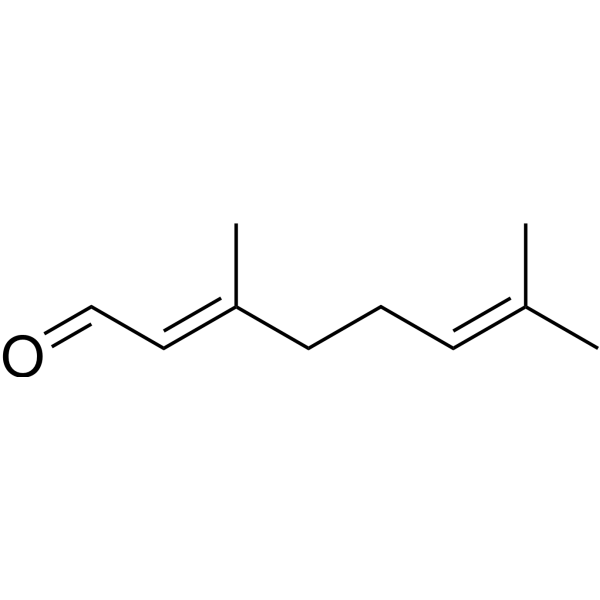
Citral (Standard) is the analytical standard of Citral. This product is intended for research and analytical applications. Citral is an orally active monoterpene compound in lemon grass essential oil and a natural ALDH1A inhibitor, which can induce apoptosis and cycle arrest in breast cancer cell lines, and has analgesic, anti-injurious and anti-inflammatory effects .
|
-
- HY-N7364R
-
|
trans-β-Farnesene (Standard)
|
Reference Standards
Fungal
|
Infection
Cancer
|
|
(E)-β-Farnesene (Standard) is the analytical standard of (E)-β-Farnesene. This product is intended for research and analytical applications. (E)-β-Farnesene (trans-β-Farnesene) is a volatile sesquiterpene hydrocarbon which can be found in Phlomis aurea Decne essential oil. (E)-β-Farnesene can be used as a feeding stimulant for the sand fly Lutzomyia longipalpis .
|
-
- HY-N9496R
-
|
|
Insecticide
Reference Standards
|
Infection
|
|
Piperitone (Standard) is the analytical standard of Piperitone. This product is intended for research and analytical applications. Piperitone is as a powerful repellent and antiappetent agent. Piperitone is very toxic to Cymbopogon schoenanthus (C. schoenanthus) adults, newly laid eggs and to neonate larvae. Insecticidal activity .
|
-
- HY-N9496
-
|
|
Insecticide
|
Infection
|
|
Piperitone is as a powerful repellent and antiappetent agent. Piperitone is very toxic to Cymbopogon schoenanthus (C. schoenanthus) adults, newly laid eggs and to neonate larvae. Insecticidal activity .
|
-
- HY-W317408
-
|
|
Biochemical Assay Reagents
|
Others
|
|
(+)-Menthyl acetate is a compound isolated from natural Cunila angustifolia Benth essential oil. The selectivity of (+)-Menthyl acetate is higher than that of MCF-7 cell line, IC50=34.0 μg?mL -1, and lower than that of SK-Mel-28 cell line, IC50=279.9 μg?mL -1, on A549 cell without fatal .
|
-
- HY-N11234A
-
|
|
Insecticide
|
Infection
|
|
(Z)-γ-Bisabolene is a monocyclic bisabolane-type sesquiterpene hydrocarbon found in the essential oil of Galinsoga parviflora, acting as a mosquito larvicide and oviposition deterrent. (Z)-γ-Bisabolene induces acute toxicity in larvae of six mosquito species. (Z)-γ-Bisabolene deters oviposition in gravid females of six mosquito species. (Z)-γ-Bisabolene can be used for the research of malaria, dengue, japanese encephalitis, zika virus .
|
-
- HY-N2510
-
|
Myristicine
|
5-HT Receptor
EGFR
ERK
Apoptosis
Bacterial
|
Infection
Neurological Disease
Inflammation/Immunology
Cancer
|
|
Myristicine is an orally bioavailable serotonin receptor antagonist and weak monoamine oxidase (MAO) inhibitor. Myristicine also exerts anti-cancer effects on gastric cancer cells by inhibiting the EGFR/ERK signaling pathway. Myristicine is the main component of nutmeg essential oil and has anti-cancer, anti-proliferative, antibacterial, anti-inflammatory and apoptosis-inducing effects. Myristicine abuse can produce hallucinogenic effects, organ damage, etc .
|
-
- HY-146196
-
|
|
Bacterial
|
Infection
|
|
Anticandidal agent-1 (compound c2) is a potent and broad-spectrum anticandidal agent. Anticandidal agent-1 shows anticandidal activity against C. albicans and C. glabrata, with MIC50 values of 8.65 and 13.51 μg/mL, respectively. Anticandidal agent-1 inhibits biofilm by blocking hyphal elongation and filamentation .
|
-
- HY-121618
-
-
- HY-W087919R
-
|
|
Reference Standards
Others
|
Others
|
|
5-Methyl-2-furanmethanol (Standard) is the analytical standard of 5-Methyl-2-furanmethanol. This product is intended for research and analytical applications. 5-Methyl-2-furanmethanol is a natural product that can be isolated from the essential oil of D. rupicola Biv.. 5-Methyl-2-furanmethanol also acts as a oxidative product of 2,5 dimethylfuran (DMF) by cytochrome P450 (CYP)[1][2].
|
-
- HY-119963A
-
|
|
Bacterial
|
Infection
Inflammation/Immunology
|
|
trans-β-Terpineol is a cyclic monoterpene alcohol present in Greek propolis and the essential oil of Peganum harmala seeds, with biological activities. trans-β-Terpineol serves as a substrate for biotransformation in tobacco suspension cells, where allylic hydroxylation occurs at specific sites. trans-β-Terpineol can be isolated from the leaves of Euryops arabicus. Terpineol (HY-N7851) exhibits antioxidant and antibacterial activities, and trans-β-terpineol is the bioactive compound responsible for the antibacterial effect in Euryops arabicus .
|
-
- HY-N7364
-
|
trans-β-Farnesene
|
Environmental Pollutants
Fungal
CDK
|
Infection
Cancer
|
|
(E)-β-Farnesene (trans-β-Farnesene) is an aphid alarm pheromone, which can be found in Phlomis aurea Decne essential oil. (E)-β-Farnesene shows good binding score with a value of -30.64 kcal/mol to the CDK2 receptor. (E)-β-Farnesene also exhibits good affinity to odorant-binding protein 3 (OBP3). (E)-β-Farnesene can be used as a feeding stimulant for the sand fly Lutzomyia longipalpis .
|
-
- HY-N14120
-
|
Opopanax oil
|
Insecticide
|
Others
|
|
Opoponax oil is an effective insecticide against mosquito larvae .
|
-
- HY-N2510R
-
|
Myristicine (Standard)
|
5-HT Receptor
EGFR
ERK
Reference Standards
Apoptosis
Bacterial
|
Infection
Neurological Disease
Inflammation/Immunology
Cancer
|
|
Myristicin (Standard) is the analytical standard of Myristicin. This product is intended for research and analytical applications. Myristicine is an orally bioavailable serotonin receptor antagonist and weak monoamine oxidase (MAO) inhibitor. Myristicine also exerts anti-cancer effects on gastric cancer cells by inhibiting the EGFR/ERK signaling pathway. Myristicine is the main component of nutmeg essential oil and has anti-cancer, anti-proliferative, antibacterial, anti-inflammatory and apoptosis-inducing effects. Myristicine abuse can produce hallucinogenic effects, organ damage, etc .
|
-
- HY-N5060
-
|
4-Allylanisole
|
Environmental Pollutants
Parasite
Apoptosis
Keap1-Nrf2
NF-κB
|
Infection
Neurological Disease
Inflammation/Immunology
|
|
Estragole (4-Allylanisole) is a relatively nontoxic volatile terpenoid ether and major component of the essential oil from many plants. Estragole significantly triggers Apoptosis, suppresses LPS-induced intracellular ROS production. Estragole activats Nrf-2 and regulates NF-κB. Estragole has anti-toxoplasma, anti-inflammatory, anti-edema, antioxidant and immunomodulatory properties. Estragole blocks DRG neuron excitability. Estragole has improves gastric ulcer activity .
|
-
- HY-121618R
-
|
|
GABA Receptor
Reactive Oxygen Species (ROS)
Parasite
Apoptosis
Autophagy
Reference Standards
|
Infection
Neurological Disease
|
|
α-Thujone (Standard) is the analytical standard of α-Thujone. This product is intended for research and analytical applications. α-Thujone is a monoterpene isolated from Thuja occidentalis essential oil with potent anti-tumor activities. α-Thujone is a reversible modulator of the GABA type A receptor and the IC50 for α-Thujone is 21 μM in suppressing the GABA-induced currents. α-Thujone induces ROS accumulation-dependent cytotoxicity, also induces cell apoptosis and autophagy. α-Thujone has antinociceptive, insecticidal, and anthelmintic activity, and easily penetrates the blood-brain barrier .
|
-
- HY-N7364S
-
|
trans-β-Farnesene-d6
|
Fungal
Isotope-Labeled Compounds
|
Cancer
|
|
(E)-β-Farnesene-d6 is deuterated labeled (E)-β-Farnesene (HY-N7364). (E)-β-Farnesene (trans-β-Farnesene) is an aphid alarm pheromone, which can be found in Phlomis aurea Decne essential oil. (E)-β-Farnesene shows good binding score with a value of -30.64 kcal/mol to the CDK2 receptor. (E)-β-Farnesene also exhibits good affinity to odorant-binding protein 3 (OBP3). (E)-β-Farnesene can be used as a feeding stimulant for the sand fly Lutzomyia longipalpis .
|
-
- HY-W747297
-
|
|
COX
Endogenous Metabolite
|
Neurological Disease
Inflammation/Immunology
|
|
β-Selinene is a sesquiterpene and is the main active component of the essential oil of red purple hibiscus (Callicarpa macrophylla). β-Selinene exhibits significant related antioxidant activity, anti-inflammatory activity, and antipyretic analgesic activity. β-Selinene may exert antioxidant effects by directly scavenging free radicals (DPPH, NO, •OH) and chelating pro-oxidative metal ions (Fe²⁺); inhibit cyclooxygenase (COX) activity, reduce prostaglandin (such as PGE₂) synthesis to exert anti-inflammatory effects; regulate the thermoregulatory set point of the hypothalamus and inhibit inflammatory mediators to exert antipyretic and analgesic effects .
|
-
- HY-Y0442
-
|
|
Insecticide
|
Cardiovascular Disease
Infection
|
|
2-Methylbenzaldehyde is an acaricide found in Morinda officinalis. 2-Methylbenzaldehyde exerts fumigant and contact acaricidal activity against Dermatophagoides farinae, Dermatophagoides pteronyssinus, and Haemaphysalis longicornis. 2-Methylbenzaldehyde can be used for the research of severe fever with thrombocytopenia syndrome .
|
-
- HY-N5060S
-
|
4-Allylanisole-d4
|
Parasite
Isotope-Labeled Compounds
|
Neurological Disease
|
|
Estragole-d4 is deuterated labeled Estragole (HY-N5060). Estragole (4-Allylanisole) is a relatively nontoxic volatile terpenoid ether and major component of the essential oil from many plants. Estragole significantly triggers Apoptosis, suppresses LPS-induced intracellular ROS production. Estragole activats Nrf-2 and regulates NF-κB. Estragole has anti-toxoplasma, anti-inflammatory, anti-edema, antioxidant and immunomodulatory properties. Estragole blocks DRG neuron excitability. Estragole has improves gastric ulcer activity [10] .
|
-
- HY-135286B
-
|
|
Drug Isomer
|
Others
|
|
(±)-rel-Neomenthol is an alcohol component and isomer of (+)-Neomenthol (HY-135286A). (±)-rel-Neomenthol is derived from the essential oils of Mentha arvensis var. piperascens and the Mentha arvensis × Mentha crispa F1 hybrid .
|
-
- HY-108943
-
|
|
Others
|
Others
|
|
Sabinene is an naturally occurring bicyclic monoterpene which can be used as flavorings, perfume additives, fine chemicals, and advanced biofuels. Sabinene is also an orally active compound to attenuates skeletal muscle atrophy and regulates ROS-mediated MAPK/MuRF-1 pathways .
|
-
- HY-W269352
-
|
|
Insecticide
|
Infection
|
|
2-Dodecanone is an insecticide with repellent activity against specific insect species. 2-Dodecanone exhibits contact toxicity against adult Tribolium castaneum, Lasioderma serricorne and Liposcelis bostrychophila. 2-Dodecanone shows repellent effects against adult Lasioderma serricorne .
|
-
- HY-121388
-
|
(+)-Ledol
|
Fungal
|
Infection
|
|
Ledol ((+)-Ledol) is an antifungal agent isolated from the volatile oil components of Rhododendron tomentosum. Ledol also acts as an expectorant and antitussive, while it can cause adverse reactions such as dizziness, nausea and vomiting .
|
-
- HY-B2167R
-
|
DHA (Standard); Cervonic acid (Standard)
|
Reference Standards
Endogenous Metabolite
|
Neurological Disease
Cancer
|
|
Docosahexaenoic acid (Standard) is the analytical standard of Docosahexaenoic acid. This product is intended for research and analytical applications. Docosahexaenoic Acid (DHA) is an omega-3 fatty acid abundantly present brain and retina. It can be obtained directly from fish oil and maternal milk.
In Vitro: Docosahexaenoic acid (DHA) is essential for the growth and functional development of the brain in infants. DHA is also required for maintenance of normal brain function in adults. The inclusion of plentiful DHA in the diet improves learning ability and memory . DHA is an essential requirement in every step of brain development like neural cell proliferation, migration, differentiation, synaptogenesis. The multiple double bonds and unique structure allow DHA to impart special membrane characteristics for effective cell signaling. Many development disorders like dyslexia, autism spectrum disorder, attention deficit hyperactivity disorder, schizophrenia etc. are causally related to decreased level of DHA . DHA is a potent RXR ligand inducing robust RXR activation already at low micro molar concentrations. The EC50 for RXRα activation by DHA is about 5-10 μM fatty acid .
In Vivo: Docosahexaenoic acid administration over 10 weeks significantly reduces the number of reference memory errors, without affecting the number of working memory errors, and significantly increases the docosahexaenoic acid content and the docosahexaenoic acid/arachidonic acid ratio in both the hippocampus and the cerebral cortex . DHA treatment exerts neuroprotective actions on an experimental mouse model of PD. There is a decrease tendency in brain lipid oxidation of MPTP mice but it does not significantly .
|
-
| Cat. No. |
Nombre del producto |
Type |
-
- HY-W250151
-
|
|
Fluorescent Dye
|
|
Leishman's stain is an essential staining tool for for staining of the peripheral blood and bone marrow smears (displayed pale bluish-grey to deep blue under oil-immersion lens) .
|
| Cat. No. |
Nombre del producto |
Type |
-
- HY-W133894
-
|
oils, cedarwood
|
Biochemical Assay Reagents
|
|
Cedar oil is an essential oil that can be extracted from numerous types of conifers. Cedar oil possesses some pesticidal properties. As a food additive and preservative, cedarwood oil is a blend of organic chemicals classified as safe compounds by the FDA.
|
| Cat. No. |
Nombre del producto |
Category |
Target |
Chemical Structure |
- HY-N7000R
-
-
- HY-W670990
-
-
- HY-W794609
-
-
- HY-W651036
-
-
- HY-W615780
-
-
- HY-122530
-
-
- HY-W015879R
-
-
- HY-W088037R
-
|
|
Productos naturales
Piper aduncum L.
Piperaceae
Plants
Source Classification
|
Reference Standards
Others
|
|
Tridecane (Standard) is the analytical standard of Tridecane. This product is intended for research and analytical applications. Tridecane is a short chain aliphatic hydrocarbon containing 13 carbon atoms. Tridecane is an volatile oil component isolated from essential oil of Piper aduncum L. Tridecane is a stress compound released by the brown marmorated stink bugs stress compound .
|
-
- HY-N1952R
-
-
- HY-N7494R
-
-
- HY-W004297R
-
-
- HY-N7916R
-
-
- HY-W510472
-
-
- HY-N18056
-
-
- HY-121618R
-
-
- HY-N17366
-
-
- HY-N17641
-
-
- HY-N18171
-
-
- HY-W708825
-
-
- HY-N18827
-
-
- HY-N18814
-
-
- HY-N18830
-
-
- HY-N18797
-
-
- HY-W133975
-
-
- HY-N18820
-
|
|
Structural Classification
Extract
|
Others
|
|
Pennyroyal oil (Hedeoma pulegioides) is an organic essential oil extracted from the botanical source Hedeoma pulegioides with anti-inflammatory effects.
|
-
- HY-N18833
-
|
|
Structural Classification
Extract
|
Bacterial
|
|
Lavender oil can clean skin, control oil content, remove freckles, rejuvenate, disinfect, antibacterial and deodorize. Lavender oil has a wildly application in cosmetics and daily essentials such as soap.
|
-
- HY-N18812
-
|
|
Structural Classification
Extract
|
Bacterial
|
|
Coriander oil, derived from the seeds of the Coriandrum sativum plant, serves as a natural essential oil with noteworthy antimicrobial and anti-inflammatory attributes.
|
-
- HY-N18693
-
-
- HY-N9835
-
-
- HY-N9836
-
-
- HY-N18813
-
|
|
Structural Classification
Extract
|
Others
|
|
Pennyroyal oil (mentha pulegium) is a natural essential oil extracted from the peppermint plant and can be used in research on gastrointestinal diseases, dysmenorrhea, and respiratory diseases.
|
-
- HY-N18825
-
|
|
Structural Classification
Extract
|
Bacterial
|
|
Lemongrass oil is an essential oil extracted from lemongrass. It has anti-frustration, antibacterial, sterilizing, deodorizing, mold killing, insect killing and disease prevention effects.
|
-
- HY-W393870
-
-
- HY-N18169
-
-
- HY-N18805
-
-
- HY-N18789
-
|
|
Structural Classification
Extract
|
Bacterial
|
|
Tagetes oil is an organic essential oil extracted from the Tagetes plant exhibiting inherent anti-inflammatory and antimicrobial attributes. Its employment in the research of diverse skin infections, wounds and dermatological conditions has been extensively recognized.
|
-
- HY-N16627
-
-
- HY-N17595
-
-
- HY-W755231
-
-
- HY-W540176
-
-
- HY-W727391
-
-
- HY-N17152
-
-
- HY-W002049
-
-
- HY-N18251
-
-
- HY-N16628
-
-
- HY-135873
-
-
- HY-N11234A
-
-
- HY-W087919R
-
-
- HY-N14120
-
-
- HY-135286B
-
-
- HY-121388
-
-
- HY-B2167R
-
|
DHA (Standard); Cervonic acid (Standard)
|
Structural Classification
Human Gut Microbiota Metabolites
Microorganisms
Ketones, Aldehydes, Acids
Disease markers
Endogenous metabolite
Cardiovascular System Disorder
Source Classification
|
Reference Standards
Endogenous Metabolite
|
|
Docosahexaenoic acid (Standard) is the analytical standard of Docosahexaenoic acid. This product is intended for research and analytical applications. Docosahexaenoic Acid (DHA) is an omega-3 fatty acid abundantly present brain and retina. It can be obtained directly from fish oil and maternal milk.
In Vitro: Docosahexaenoic acid (DHA) is essential for the growth and functional development of the brain in infants. DHA is also required for maintenance of normal brain function in adults. The inclusion of plentiful DHA in the diet improves learning ability and memory . DHA is an essential requirement in every step of brain development like neural cell proliferation, migration, differentiation, synaptogenesis. The multiple double bonds and unique structure allow DHA to impart special membrane characteristics for effective cell signaling. Many development disorders like dyslexia, autism spectrum disorder, attention deficit hyperactivity disorder, schizophrenia etc. are causally related to decreased level of DHA . DHA is a potent RXR ligand inducing robust RXR activation already at low micro molar concentrations. The EC50 for RXRα activation by DHA is about 5-10 μM fatty acid .
In Vivo: Docosahexaenoic acid administration over 10 weeks significantly reduces the number of reference memory errors, without affecting the number of working memory errors, and significantly increases the docosahexaenoic acid content and the docosahexaenoic acid/arachidonic acid ratio in both the hippocampus and the cerebral cortex . DHA treatment exerts neuroprotective actions on an experimental mouse model of PD. There is a decrease tendency in brain lipid oxidation of MPTP mice but it does not significantly .
|
-
| Cat. No. |
Nombre del producto |
Chemical Structure |
-
- HY-N0337S
-
|
|
|
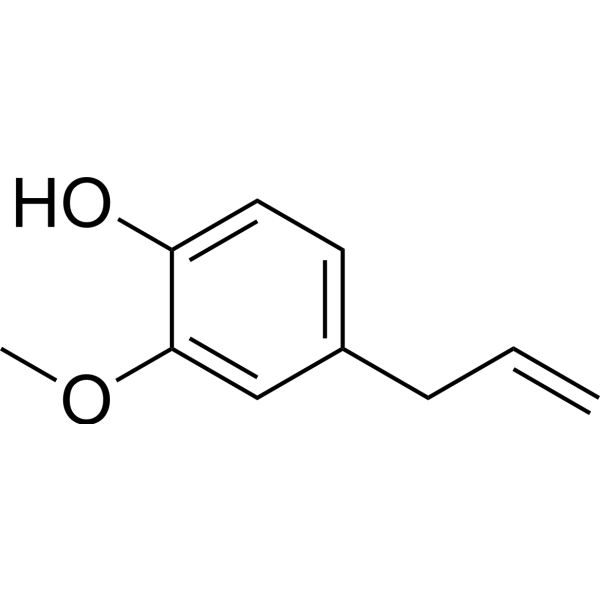
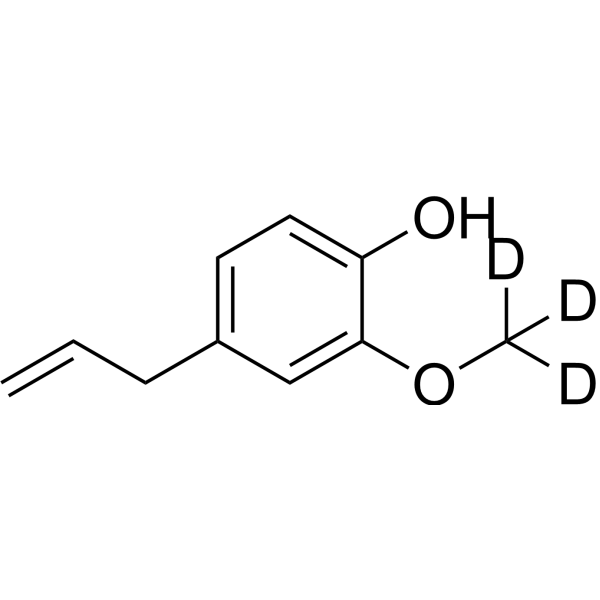
Eugenol-d3 is the deuterium labeled Eugenol. Eugenol is an essential oil found in cloves with antibacterial, anthelmintic and antioxidant activity. Eugenol is shown to inhibit lipid peroxidation.
|
-
-
- HY-N5060S
-
|
|
|
Estragole-d4 is deuterated labeled Estragole (HY-N5060). Estragole (4-Allylanisole) is a relatively nontoxic volatile terpenoid ether and major component of the essential oil from many plants. Estragole significantly triggers Apoptosis, suppresses LPS-induced intracellular ROS production. Estragole activats Nrf-2 and regulates NF-κB. Estragole has anti-toxoplasma, anti-inflammatory, anti-edema, antioxidant and immunomodulatory properties. Estragole blocks DRG neuron excitability. Estragole has improves gastric ulcer activity [10] .
|
-
-
- HY-W088037S
-
|
|
|
Tridecane-d28 is the deuterium labeled Tridecane . Tridecane is a short chain aliphatic hydrocarbon containing 13 carbon atoms. Tridecane is an volatile oil component isolated from essential oil of Piper aduncum L. Tridecane is a stress compound released by the brown marmorated stink bugs stress compound .
|
-
-
- HY-N7494S
-
|
|
|
Pentacosane-d52 is the deuterium labeled Pentacosane . Pentacosane is one of the major components in the acetone extract from Curcuma raktakanda and is also in the essential oil from the leaves of Malus domestica. Pentacosane exhibit anti-cancer activities .
|
-
-
- HY-75342S
-
|
|
|
Methyl vanillate-d3 is deuterated labeled Methyl vanillate (HY-75342). Methyl vanillate, one of the ingredients in Oryza sativa Linn., is a Wnt/β-catenin pathway activator . A benzoate ester that is the methyl ester of vanillic acid. It has a role as an antioxidant and a plant metabolite.
|
-
-
- HY-W015879S
-
|
|
|
2-Heptanol-d5 is deuterated labeled 2-Heptanol (HY-W015879). 2-Heptanol is one of the chemical compounds identified in turmeric and turmeric rhizome essential oil. 2-Heptanol can speed up amino acid metabolism and slow down membrane transport, exhibiting antibacterial activity. The rhizome essential oil has good antibacterial and antioxidant properties .
|
-
-
- HY-77995S
-
|
|
|
2-Methoxybenzaldehyde-d3 is the deuterium labeled 2-Methoxybenzaldehyde . 2-Methoxybenzaldehyde (o-Anisaldehyde), isolated from cinnamon essential oil (CEO), exists antibacterial and antifungal activity .
|
-
-
- HY-N1952S
-
|
|
|
Isoeugenol-d3 is deuterated labeled Isoeugenol (HY-N1952). Isoeugenol is an essential oil constituent of nutmeg, clove, and cinnamon. Isoeugenol inhibits growth of Escherichia coli and Listeria innocua with MICs of 0.6 mg/mL and 1 mg/mL, respectively .
|
-
-
- HY-N7364S
-
|
|
|
(E)-β-Farnesene-d6 is deuterated labeled (E)-β-Farnesene (HY-N7364). (E)-β-Farnesene (trans-β-Farnesene) is an aphid alarm pheromone, which can be found in Phlomis aurea Decne essential oil. (E)-β-Farnesene shows good binding score with a value of -30.64 kcal/mol to the CDK2 receptor. (E)-β-Farnesene also exhibits good affinity to odorant-binding protein 3 (OBP3). (E)-β-Farnesene can be used as a feeding stimulant for the sand fly Lutzomyia longipalpis .
|
-
-
- HY-N1952S1
-
|
|
|
Isoeugenol- 13C (Iso-Eugenol- 13C) is the 13C-labeled Isoeugenol (HY-N1952). Isoeugenol is an essential oil constituent of nutmeg, clove, and cinnamon. Isoeugenol inhibits growth of Escherichia coli and Listeria innocua with MICs of 0.6 mg/mL and 1 mg/mL, respectively
|
-
| Cat. No. |
Nombre del producto |
|
Classification |
-
- HY-N0337
-
|
|
|
Flavoring Agents
|
|
Eugenol is an essential oil found in cloves with antibacterial, anthelmintic and antioxidant activity. Eugenol is shown to inhibit lipid peroxidation.
|
Your information is safe with us. * Required Fields.
Inquiry Information
- Nombre del producto:
- Cat. No.:
- Cantidad:
- MCE Japan Authorized Agent:

