Search Result
Results for "
Ginsenoside
" in MedChemExpress (MCE) Product Catalog:
4
Biochemical Assay Reagents
| Cat. No. |
Product Name |
Target |
Research Areas |
Chemical Structure |
-
- HY-N0045
-
-
-
- HY-N0039
-
-
-
- HY-N0603
-
-
-
- HY-N0044
-
-
-
- HY-N0040
-
-
-
- HY-N0605
-
|
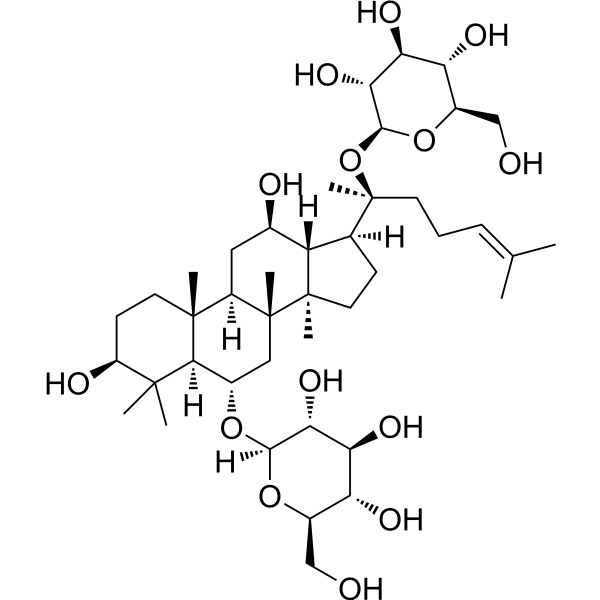
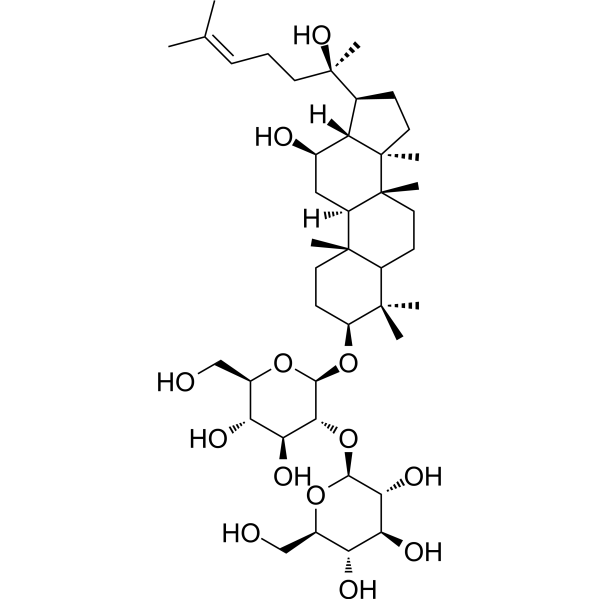
20(S)-Ginsenoside Rh2; 20(S)-Rh2
|
Caspase
Apoptosis
Endogenous Metabolite
|
Cancer
|
|
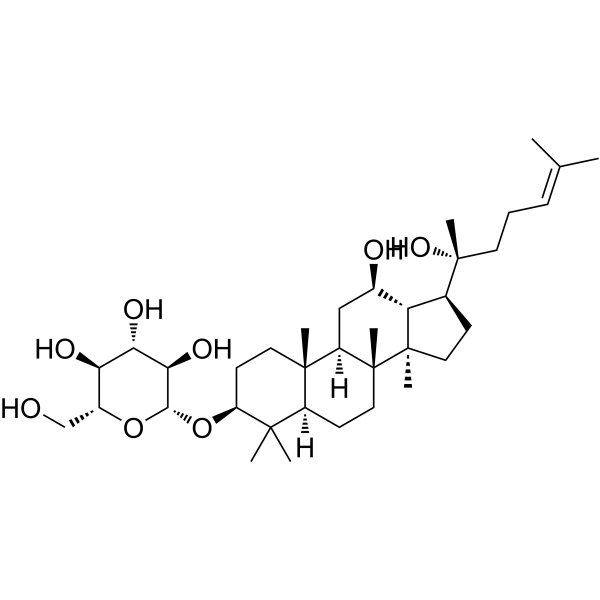
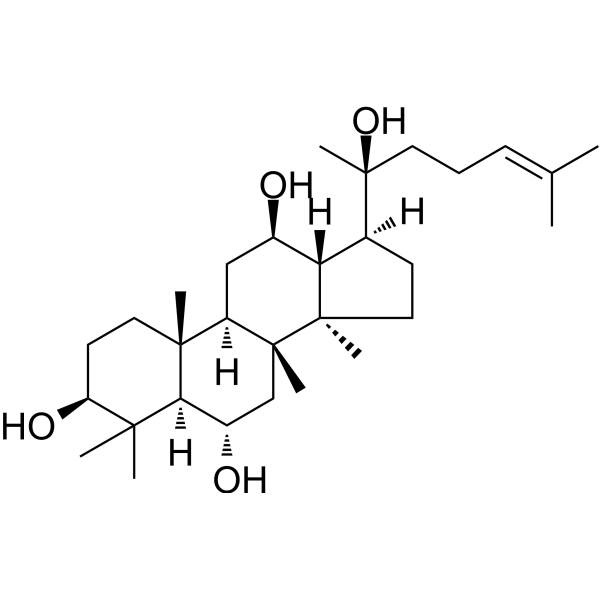
Ginsenoside Rh2 (20(S)-Ginsenoside Rh2) induces the activation of caspase-8 and caspase-9. Ginsenoside Rh2 induces cancer cell apoptosis in a multi-path manner.
|
-
-
- HY-N0904
-
|
Ginsenoside compound K; Ginsenoside K
|
COX
NO Synthase
Cytochrome P450
|
Inflammation/Immunology
|
|
Ginsenoside C-K, a bacterial metabolite of G-Rb1, exhibits anti-inflammatory effects by reducing iNOS and COX-2. Ginsenoside C-K exhibits an inhibition against the activity of CYP2C9 and CYP2A6 in human liver microsomes with IC50s of 32.0±3.6 μM and 63.6±4.2 μM, respectively.
|
-
-
- HY-N1376
-
|
(20R)-Propanaxadiol; R-Ginsenoside Rg3
|
Others
|
Cancer
|
|
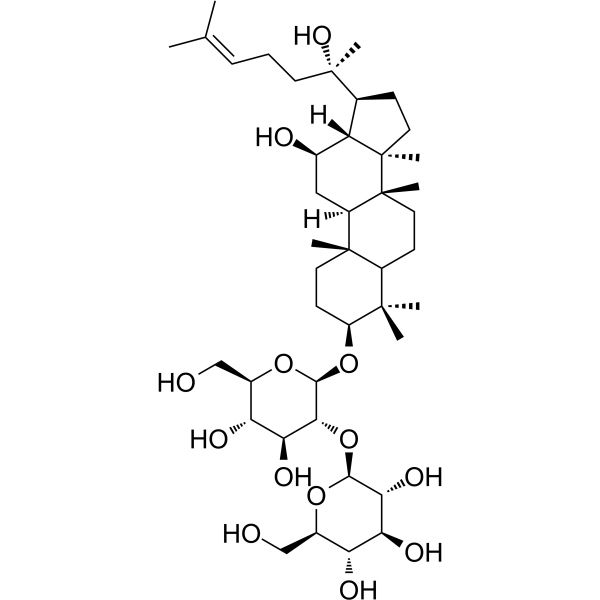
(20R)-ginsenoside Rg3 ((20R)-Propanaxadiol), one of the active compounds present in ginseng root, inhibits angiogenesis, and has anti-carcinogenic and antimetastatic effects .
|
-
-
- HY-N0042
-
-
-
- HY-N0908
-
|
|
IGF-1R
NF-κB
COX
|
Cardiovascular Disease
Inflammation/Immunology
Endocrinology
Cancer
|
|
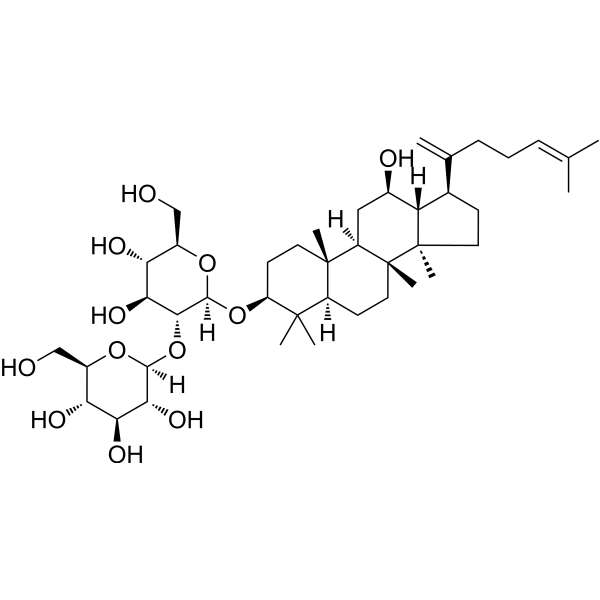
Ginsenoside Rg5 is the main component of Red ginseng and IGF-1R agonist. Ginsenoside Rg5 compets for the binding site of IGF-1R and blocks the binding of IGF-1 to IGF-1R (IC50 about 90 nM). Ginsenoside Rg5 also inhibits the mRNA expression of COX-2 via suppression of the DNA binding activities of NF-κB p65.
|
-
-
- HY-N2515
-
|
|
NF-κB
PI3K
JAK
Apoptosis
|
Inflammation/Immunology
Cancer
|
|
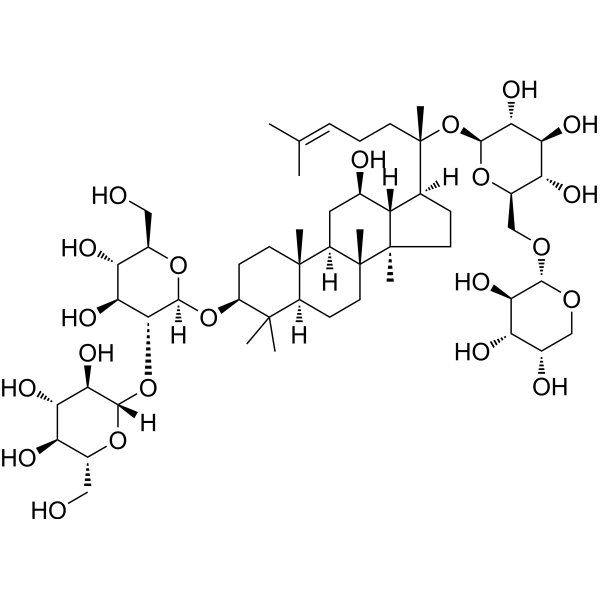
Ginsenoside Rk1 is a unique component created by processing the ginseng plant (mainly Sung Ginseng, SG) at high temperatures .
Ginsenoside Rk1 has anti-inflammatory effect, suppresses the activation of Jak2/Stat3 signaling pathway and NF-κB .
Ginsenoside Rk1 has anti-tumor effect, antiplatelet aggregation activities, anti-insulin resistance, nephroprotective effect, antimicrobial effect, cognitive function enhancement, lipid accumulation reduction and prevents osteoporosis .
Ginsenoside Rk1 induces cell apoptosis by triggering intracellular reactive oxygen species (ROS) generation and blocking PI3K/Akt pathway .
|
-
-
- HY-N0043
-
-
-
- HY-N0835
-
-
-
- HY-125848
-
|
|
Apoptosis
AMPK
PPAR
p38 MAPK
PI3K
Akt
GSK-3
Reactive Oxygen Species (ROS)
SOD
Caspase
|
Neurological Disease
Metabolic Disease
Inflammation/Immunology
Cancer
|
|
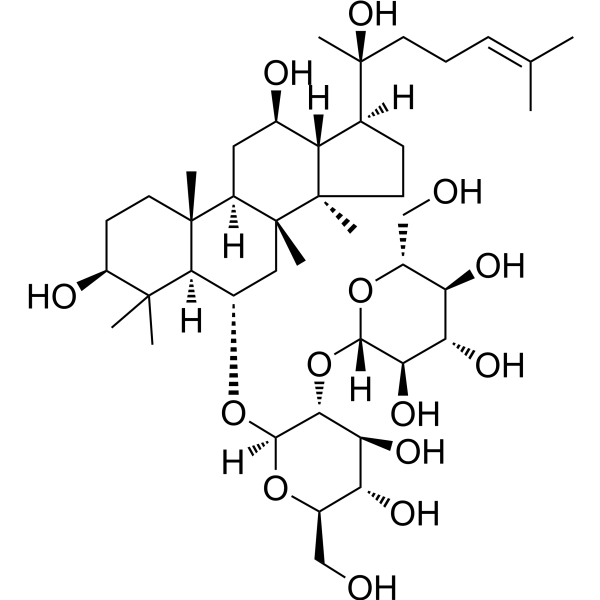
Ginsenoside F2 is an orally active bioactive compound that participates in the regulation of metabolism and inflammation. Ginsenoside F2 promotes the phosphorylation of AMPK and ACC, binds to PPARγ, inhibits the phosphorylation of MAPK, activates the PI3K/AKT/GSK-3β pathway, reduces GLRX expression, and regulates lipid metabolism. Ginsenoside F2 reduces ROS production and MDA levels, restores SOD activity in cells, and alleviates oxidative stress. Ginsenoside F2 induces cell apoptosis (Apoptosis) and increases the number of cleaved caspase-3-positive cells. Ginsenoside F2 reduces body weight gain, adipose tissue weight and serum lipid levels in obese mice, and activates the hepatic AMPK signaling pathway and the expression of antioxidant enzymes. Ginsenoside F2 alleviates atopic dermatitis in mice by inhibiting inflammation and reshaping the gut microbiota . Ginsenoside F2 is applicable to research related to insulin resistance, obesity, atopic dermatitis, liver cancer, glioblastoma and glioma .
|
-
-
- HY-N0041
-
|
Gypenoside IV
|
NF-κB
COX
NO Synthase
|
Inflammation/Immunology
Cancer
|
|
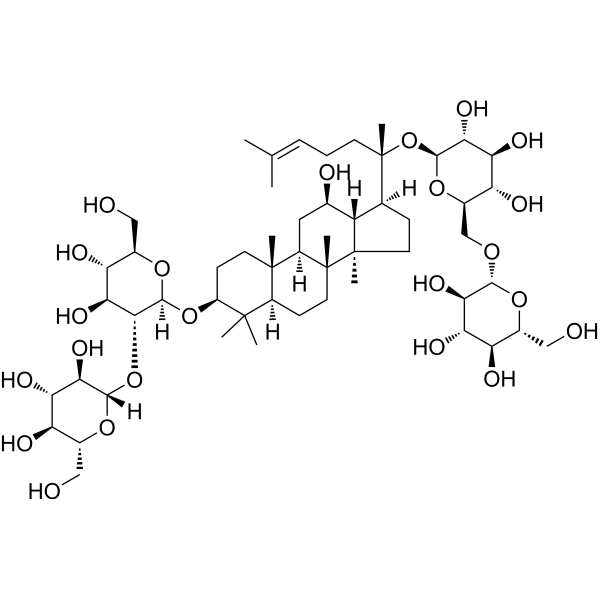
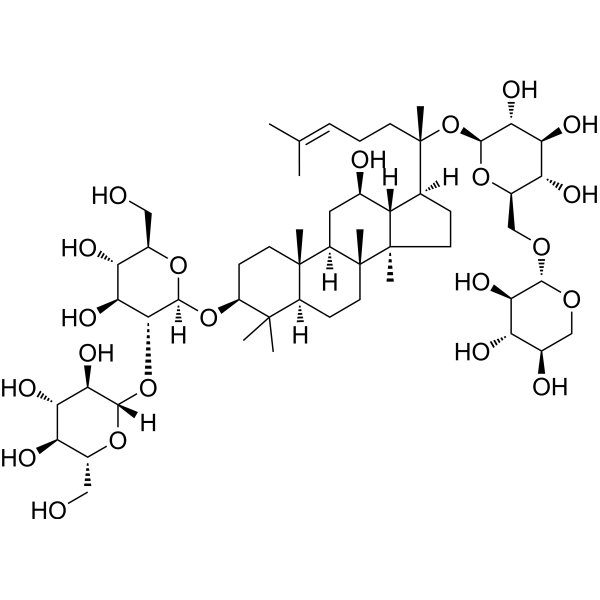
Ginsenoside Rb3 is extracted from steamed Panax ginseng C. A. Meyer. Ginsenoside Rb3 exhibits inhibitory effect on TNFα-induced NF-κB transcriptional activity with an IC50 of 8.2 μM in 293T cell lines. Ginsenoside Rb3 also inhibits the induction of COX-2 and iNOS mRNA.
|
-
-
- HY-N0604
-
-
-
- HY-N0607
-
|
Polysciasaponin P3; Chikusetsusaponin 5; Chikusetsusaponin V
|
Calcium Channel
Prostaglandin Receptor
|
Cardiovascular Disease
Endocrinology
|
|
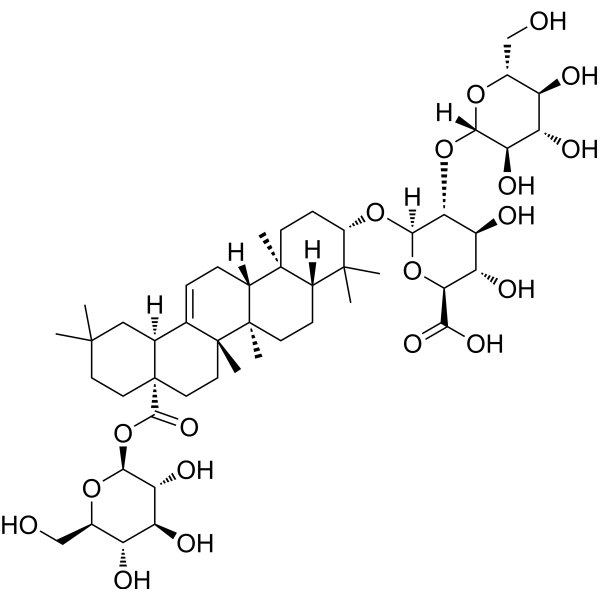
Ginsenoside Ro (Polysciasaponin P3; Chikusetsusaponin 5; Chikusetsusaponin V) exhibits a Ca 2+-antagonistic antiplatelet effect with an IC50 of 155 μM. Ginsenoside Ro reduces the production of TXA2 more than it reduces the activities of COX-1 and TXAS.
|
-
-
- HY-N0601
-
-
-
- HY-N0602
-
|
Chikusetsusaponin I; Panaxoside Rg2; Prosapogenin C2
|
NF-κB
Amyloid-β
|
Cardiovascular Disease
Neurological Disease
Cancer
|
|
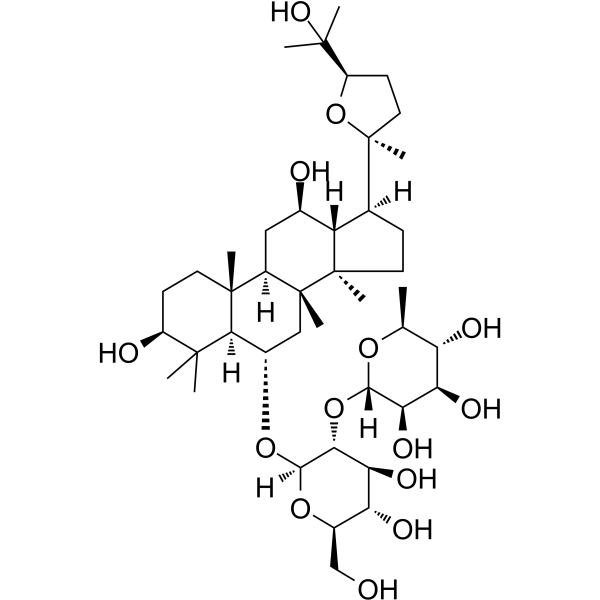
Ginsenoside Rg2 is one of the major active components of ginseng. Ginsenoside Rg2 inhibits VCAM-1 and ICAM-1 expressions stimulated with lipopolysaccharide (LPS). Ginsenoside Rg2 also reduces Aβ1-42 accumulation.
|
-
-
- HY-N0598
-
|
20(S)-Ginsenoside F1
|
Cytochrome P450
Endogenous Metabolite
|
Cancer
|
|
Ginsenoside F1, an enzymatically modified derivative of Ginsenoside Rg1, demonstrates competitive inhibition of CYP3A4 activity and weaker inhibition of CYP2D6 activity.
|
-
-
- HY-N0541
-
|
Ginsenoside A1
|
Endogenous Metabolite
|
Others
|
|
Pseudoginsenoside F11 (Ginsenoside A1), a component of Panax quinquefolium (American ginseng), has been demonstrated to antagonize the learning and memory deficits induced by scopolamine, morphine and methamphetamine in mice.
|
-
-
- HY-N1401
-
|
|
MMP
Apoptosis
HSV
DNA/RNA Synthesis
NO Synthase
Prostaglandin Receptor
Reactive Oxygen Species (ROS)
Akt
|
Infection
Inflammation/Immunology
Cancer
|
|
20(R)-Ginsenoside Rh2 is an orally active protopanaxadiol-type saponin with multiple biological activities. 20(R)-Ginsenoside Rh2 exerts a significant inhibitory effect on non-small cell lung cancer and liver cancer by inducing cell cycle arrest and promoting apoptosis. 20(R)-Ginsenoside Rh2 exerts anti-γ-herpesvirus effects by inhibiting viral DNA replication. 20(R)-Ginsenoside Rh2 inhibits inflammatory mediators by reducing the levels of NO, PGE2, and ROS; it can delay skin photoaging by reducing ROS and inhibiting MMP-9/2 activity. 20(R)-Ginsenoside Rh2 accelerates the recovery after muscle injury by activating the Akt1/PKB signaling pathway. 20(R)-Ginsenoside Rh2 can inhibit osteoclast formation and exert an anti-osteoporosis effect .
|
-
-
- HY-N0905
-
-
-
- HY-N0906
-
-
-
- HY-N0600
-
|
|
Interleukin Related
IFNAR
NF-κB
|
Inflammation/Immunology
|
|
Ginsenoside F3 is a saponin extracted from the leaves of Panax ginseng with immunoenhancing and antitumor immunostimulatory activities. Ginsenoside F3 upregulates RIPOR2 with a Kd value of 3.77 μM. Ginsenoside F3 enhances NF‑κB activation, upregulates T‑bet and downregulates GATA‑3, increases the production of IL‑2 and IFN‑γ, decreases the production of IL‑4 and IL‑10, reverses CD8⁺ T‑cell exhaustion, restores cytokine secretion, and enhances antitumor immunity in a mouse non‑small cell lung cancer model. Ginsenoside F3 can be used for the research of non-small cell lung cancer .
|
-
-
- HY-N0167
-
|
Ginsenoside C-Mx1; Gypenoside IX
|
p38 MAPK
Akt
NF-κB
COX
Interleukin Related
NO Synthase
|
Metabolic Disease
Inflammation/Immunology
|
|
Gynostemma Extract (Gypenoside IX) is a triterpenoid saponin. Gynostemma Extract can be isolated from Panax notoginseng. Gynostemma Extract reduces NFκB nuclear translocation and transcriptional activity by inhibiting the p38 MAPK/Akt/NFκB signaling pathway. Gynostemma Extract reduces the expression of cytokines (COX-2, IL-6) and the production of NO. Gynostemma Extract has anti-inflammatory activity. Gynostemma Extract can be used in the study of liver injury and neuroinflammation .
|
-
-
- HY-N2040
-
|
|
Bacterial
Interleukin Related
|
Infection
Inflammation/Immunology
Cancer
|
|
(20R)-Protopanaxadiol is a metabolite of ginsenosides. (20R)-Protopanaxadiol has anti-inflammatory and antibacterial activities, but shows no significant cytotoxicity against tumor cell lines. In addition, (20R)-Protopanaxadiol can inhibit the uptake of 2-deoxy-D-glucose (2-DG) .
|
-
-
- HY-N0606
-
-
-
- HY-N0907
-
-
-
- HY-N1400
-
|
|
PKC
|
Cardiovascular Disease
|
|
(20R)-Ginsenoside Rh1 is the R-isomer of Ginsenoside Rh1 (HY-N0604), and it is found in red ginseng, ginseng, and other sources. (20R)-Ginsenoside Rh1 inhibits thrombin-induced conversion of fibrinogen to fibrin, exerting anticoagulant and antithrombotic effects .
|
-
-
- HY-N2506
-
|
|
Others
|
Cardiovascular Disease
|
|
Ginsenoside Ra1 is a component from ginseng, inhibits protein tyrosine kinase (PTK) activation induced by hypoxia/reoxygenation .
|
-
-
- HY-N0046
-
|
Notoginseng triterpenes; Ginsenoside Mb
|
Apoptosis
Src
|
Neurological Disease
Metabolic Disease
Cancer
|
|
Notoginsenoside Fe (Notoginseng triterpenes; Ginsenoside Mb) is a saponin with anti-obesity and anti-neuroblastoma activities. Notoginsenoside Fe can be isolated from leaves of Panax notoginseng. Notoginsenoside Fe specifically activates paraventricular nucleus neurons in the hypothalamus, effectively reducing body weight, improving fasting blood glucose and protecting liver function by decreasing food intake, increasing resting metabolic rate and enhancing energy expenditure. Notoginsenoside Fe also inhibits the c-Src signaling pathway, blocks the proliferation and viability of human neuroblastoma cells, while improving mitochondrial dysfunction and alleviating apoptosis. Notoginsenoside Fe can be used in studies related to diet-induced obesity and neuroblastoma .
|
-
-
- HY-N0909
-
|
20(S)-NotoGinsenoside R2; Ginsenoside Ng-R2
|
Apoptosis
MEK
ERK
Reactive Oxygen Species (ROS)
Caspase
COX
β-catenin
Src
MDM-2/p53
JAK
STAT
|
Neurological Disease
Metabolic Disease
Inflammation/Immunology
|
|
Notoginsenoside R2 (20(S)-Notoginsenoside R2; Ginsenoside Ng-R2) is an orally active notoginsenoside . Notoginsenoside R2 activates P90RSK and Nrf2 via the MEK1/2-ERK1/2 pathway to inhibit 6-OHDA-induced apoptotic damage in nerve cells. Notoginsenoside R2 upregulates SOX8/β-catenin by reducing miR-27a, thereby suppressing Aβ25-35-induced neuronal apoptosis and inflammatory responses . Notoginsenoside R2 alleviates lipid accumulation and mitochondrial dysfunction in diabetic nephropathy by inhibiting c-Src. Notoginsenoside R2 alleviates hepatic fibrosis by inducing hepatic stellate cell senescence and inhibiting the inflammatory microenvironment via JAK/STAT3 suppression . Notoginsenoside R2 can be used in research related to Parkinson's disease, Alzheimer's disease, diabetic nephropathy and hepatic fibrosis .
|
-
-
- HY-N6580
-
-
-
- HY-N0798
-
|
20(R)-APPT
|
Others
|
Others
|
|
20(R)-Protopanaxatriol is a natural aglycone of ginsenosides Re, Rf, Rg1, Rg2 and Rh.
|
-
-
- HY-N2503
-
|
|
Apoptosis
MMP
|
Inflammation/Immunology
|
|
Ginsenoside F4 (GF4), ginseng saponinis, isolated from notoginseng or red ginseng. Ginsenoside F4 (GF4) has inhibitory effect on human lymphocytoma JK cell by inducing its apoptosis .
Ginsenoside F4 (GF4) inhibits matrix metalloproteinase 13 (MMP 13) expression in IL-1β-treated chondrocytes and blocks cartilage breakdown in rabbit cartilage tissue culture, shows therapeutic potential for preventing cartilage collagen matrix breakdown in diseased tissues .
|
-
-
- HY-N2039
-
|
|
Others
|
Cancer
|
|
20(R)-Ginsenoside Rg2 shows inhibitory effects on lung cancer NCI-H1650 cells. Anti-cancer activities .
|
-
-
- HY-108277
-
|
|
Apoptosis
|
Cancer
|
|
Ginsenoside F5, from crude extracts of flower buds of Panax ginseng, remarkably inhibits the growth of HL-60 cells by the apoptosis pathway .
|
-
-
- HY-N10336
-
|
|
VEGFR
STAT
Akt
Ras
|
Others
|
|
Notoginsenoside R4 is a ginsenoside that can be isolated from ginseng roots. In the molecular docking results, Notoginsenoside R4 can target STAT3, AKT1, HRAS, VEGFA and CASP3 .
|
-
-
- HY-N0039R
-
|
Gypenoside III (Standard)
|
Reference Standards
Na+/K+ ATPase
IRAK
NF-κB
Autophagy
Mitophagy
HSV
|
Inflammation/Immunology
Cancer
|
|
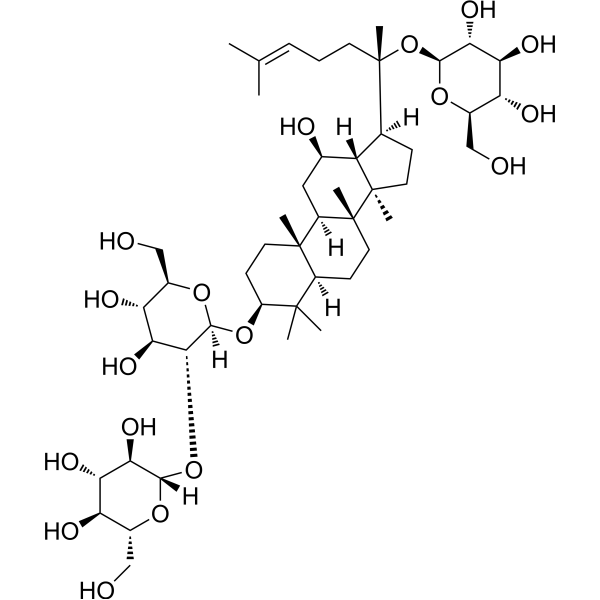
Ginsenoside Rb1 (Standard) is the analytical standard of Ginsenoside Rb1. This product is intended for research and analytical applications. Ginsenoside Rb1, a main constituent of the root of Panax ginseng, inhibits Na +, K +-ATPase activity with an IC50 of 6.3±1.0 μM. Ginsenoside also inhibits IRAK-1 activation and phosphorylation of NF-κB p65 .
|
-
-
- HY-N4259
-
-
-
- HY-W130610R
-
|
|
Liposome
Reference Standards
Akt
mTOR
|
Others
|
|
Ginsenoside C-K (Standard) is the analytical standard of Ginsenoside C-K. This product is intended for research and analytical applications. Ginsenoside C-K, a bacterial metabolite of G-Rb1, exhibits anti-inflammatory effects by reducing iNOS and COX-2. Ginsenoside C-K exhibits an inhibition against the activity of CYP2C9 and CYP2A6 in human liver microsomes with IC50s of 32.0±3.6 μM and 63.6±4.2 μM, respectively.
|
-
-
- HY-N0904R
-
|
Ginsenoside compound K(Standard); Ginsenoside K (Standard)
|
Reference Standards
COX
NO Synthase
Cytochrome P450
|
Inflammation/Immunology
|
|
Ginsenoside C-K (Standard) is the analytical standard of Ginsenoside C-K. This product is intended for research and analytical applications. Ginsenoside C-K, a bacterial metabolite of G-Rb1, exhibits anti-inflammatory effects by reducing iNOS and COX-2. Ginsenoside C-K exhibits an inhibition against the activity of CYP2C9 and CYP2A6 in human liver microsomes with IC50s of 32.0±3.6 μM and 63.6±4.2 μM, respectively.
|
-
-
- HY-N2516
-
-
-
- HY-N11226
-
|
|
Others
|
Others
|
|
Ginsenoside Ra0 (compound 17) is a dammarane-type saponin that can be isolated from Panax notoginseng .
|
-
-
- HY-N0604R
-
-
-
- HY-N9389
-
|
Ginsenoside Y
|
Drug Metabolite
|
Metabolic Disease
|
|
Ginsenoside C-Y (Ginsenoside Y) is a metabolite of Ginsenoside Rb2 (HY-N0040). Ginsenoside C-Y exhibits anti-photoaging and anti-melanogenesis properties .
|
-
-
- HY-18569AR
-
|
Indole-3-acetic acid sodium (Standard); 3-IAA sodium (Standard)
|
Reference Standards
Endogenous Metabolite
|
Metabolic Disease
|
|
Ginsenoside F1 (Standard) is the analytical standard of Ginsenoside F1. This product is intended for research and analytical applications. Ginsenoside F1, an enzymatically modified derivative of Ginsenoside Rg1, demonstrates competitive inhibition of CYP3A4 activity and weaker inhibition of CYP2D6 activity.
|
-
-
- HY-N4262
-
|
|
Others
|
Others
|
|
Ginsenoside Rh7 is a minor saponin isolated from the leaves of Panax ginseng .
|
-
-
- HY-N0040R
-
-
- HY-N0908R
-
|
|
Reference Standards
IGF-1R
NF-κB
COX
|
Cardiovascular Disease
Inflammation/Immunology
Endocrinology
Cancer
|
|
Ginsenoside Rg5 (Standard) is the analytical standard of Ginsenoside Rg5. This product is intended for research and analytical applications. Ginsenoside Rg5 is the main component of Red ginseng and IGF-1R agonist. Ginsenoside Rg5 compets for the binding site of IGF-1R and blocks the binding of IGF-1 to IGF-1R (IC50 about 90 nM). Ginsenoside Rg5 also inhibits the mRNA expression of COX-2 via suppression of the DNA binding activities of NF-κB p65.
|
-
- HY-185104
-
|
|
LXR
|
Cardiovascular Disease
|
|
Ginsenoside C-K hexapropionate ester (Structure 2) is a selective agonist of LXRα, with no significant activation effect on LXRβ. Ginsenoside C-K hexapropionate ester upregulates the expression of downstream genes such as ABCA1 by activating LXRα, promoting reverse cholesterol transport, and reducing lipid deposition in macrophage-derived foam cells. It can be used in the research of atherosclerosis. Ginsenoside C-K hexapropionate ester is a derivative synthesized from ginsenoside Compound K, an active metabolite of Panax notoginseng saponins, by modification with propionic anhydride .
|
-
- HY-N0603R
-
-
- HY-N4260
-
-
- HY-N2504
-
-
- HY-N0045R
-
|
Panaxoside A (Standard); Panaxoside Rg1 (Standard)
|
Reference Standards
Amyloid-β
NF-κB
Apoptosis
|
Neurological Disease
Inflammation/Immunology
Cancer
|
|
Ginsenoside Rg1 (Standard) is the analytical standard of Ginsenoside Rg1. This product is intended for research and analytical applications. Ginsenoside Rg1 is one of the major active components of Panax ginseng. Ginsenoside Rg1 ameliorates the impaired cognitive function, displays promising effects by reducing cerebral Aβ levels. Ginsenoside Rg1 also reduces NF-κB nuclear translocation.
|
-
- HY-N8901
-
-
- HY-N12015
-
|
Ginsenoside IV
|
Others
|
Others
|
|
Ginsenoside Ra6 (Ginsenoside IV) is a panaxadiol-type ginsenoside that can be isolated from the roots of ginseng .
|
-
- HY-N7678
-
|
|
Others
|
Cancer
|
|
Gypenoside LXXV, isolated from Gynostemma pentaphyllum, is one of the deglycosylated shapes of ginsenoside Rb1. Gypenoside LXXV significantly reduces cancer cell viability and displays an anti-cancer effect .
|
-
- HY-W087952R
-
|
|
Drug Intermediate
Reference Standards
|
Endocrinology
|
|
Ginsenoside Rg1 (Standard) is the analytical standard of Ginsenoside Rg1. This product is intended for research and analytical applications. Ginsenoside Rg1 is one of the major active components of Panax ginseng. Ginsenoside Rg1 ameliorates the impaired cognitive function, displays promising effects by reducing cerebral Aβ levels. Ginsenoside Rg1 also reduces NF-κB nuclear translocation.
|
-
- HY-N4075R
-
|
|
Reference Standards
Endogenous Metabolite
|
Metabolic Disease
Cancer
|
|
20(R)-Ginsenoside Rh2 (Standard) is the analytical standard of 20(R)-Ginsenoside Rh2. This product is intended for research and analytical applications. 20(R)-Ginsenoside Rh2, a matrix metalloproteinase (MMP) inhibitor, acts as a cell antiproliferator. It has anticancer effects via blocking cell proliferation and causing G1 phase arrest. 20(R)-Ginsenoside Rh2 induces apoptosis, and has anti-inflammatory and antioxidative activity . 20(R)-Ginsenoside Rh2 inhibits the replication and proliferation of mouse and human gammaherpesvirus 68 (MHV-68) with an IC50 of 2.77 μM for murine MHV-68 .
|
-
- HY-N12365
-
|
|
Others
|
Others
|
|
Ginsenoside Rs2 is extracted from Panax ginseng root .
|
-
- HY-N0044R
-
|
Ginsenoside B2(Standard); Panaxoside Re(Standard); Sanchinoside Re (Standard)
|
Reference Standards
Amyloid-β
NF-κB
JNK
Endogenous Metabolite
|
Neurological Disease
Inflammation/Immunology
Cancer
|
|
Ginsenoside Re (Standard) is the analytical standard of Ginsenoside Re. This product is intended for research and analytical applications. Ginsenoside Re (Ginsenoside B2) is an extract from Panax notoginseng. Ginsenoside Re decreases the β-amyloid protein (Aβ). Ginsenoside Re plays a role in antiinflammation through inhibition of JNK and NF-κB.
|
-
- HY-N12516
-
|
|
Others
|
Cancer
|
|
Ginsenoside Mc is a natural product, that can be prepared by removal of two glucose molecules at 3-C of ginsenoside Rc (HY-N0042). Ginsenoside Mc has anti-tumor activity .
|
-
- HY-N0606R
-
|
|
Reference Standards
Keap1-Nrf2
|
Inflammation/Immunology
|
|
Ginsenoside Rh3 (Standard) is the analytical standard of Ginsenoside Rh3. This product is intended for research and analytical applications. Ginsenoside Rh3 is a bacterial metabolite of Ginsenoside Rg5. Ginsenoside Rh3 treatment in human retinal cells induces Nrf2 activation.
|
-
- HY-N0598R
-
|
20(S)-Ginsenoside F1 (Standard)
|
Reference Standards
Cytochrome P450
Endogenous Metabolite
|
Cancer
|
|
Ginsenoside F1 (Standard) is the analytical standard of Ginsenoside F1. This product is intended for research and analytical applications. Ginsenoside F1, an enzymatically modified derivative of Ginsenoside Rg1, demonstrates competitive inhibition of CYP3A4 activity and weaker inhibition of CYP2D6 activity.
|
-
- HY-125848R
-
|
|
Reference Standards
Apoptosis
Autophagy
Endogenous Metabolite
|
Cancer
|
|
Ginsenoside F2 (Standard) is the analytical standard of Ginsenoside F2. This product is intended for research and analytical applications. Ginsenoside F2, a metabolite from Ginsenoside Rb1, induces apoptosis accompanied by protective autophagy in breast cancer stem cells .
|
-
- HY-N0601R
-
-
- HY-N0605R
-
|
20(S)-Ginsenoside Rh2(Standard); 20(S)-Rh2(Standard)
|
Reference Standards
Caspase
Apoptosis
Endogenous Metabolite
|
Cancer
|
|
Ginsenoside Rh2 (Standard) is the analytical standard of Ginsenoside Rh2. This product is intended for research and analytical applications. Ginsenoside Rh2 induces the activation of caspase-8 and caspase-9. Ginsenoside Rh2 induces cancer cell apoptosis in a multi-path manner.
|
-
- HY-N0042R
-
-
- HY-N2515R
-
|
|
Reference Standards
NF-κB
PI3K
JAK
Apoptosis
|
Inflammation/Immunology
Cancer
|
|
Ginsenoside Rk1 (Standard) is the analytical standard of Ginsenoside Rk1. This product is intended for research and analytical applications. Ginsenoside Rk1 is a unique component created by processing the ginseng plant (mainly Sung Ginseng, SG) at high temperatures .
Ginsenoside Rk1 has anti-inflammatory effect, suppresses the activation of Jak2/Stat3 signaling pathway and NF-κB .
Ginsenoside Rk1 has anti-tumor effect, antiplatelet aggregation activities, anti-insulin resistance, nephroprotective effect, antimicrobial effect, cognitive function enhancement, lipid accumulation reduction and prevents osteoporosis .
Ginsenoside Rk1 induces cell apoptosis by triggering intracellular reactive oxygen species (ROS) generation and blocking PI3K/Akt pathway .
|
-
- HY-N1400R
-
|
|
Reference Standards
PKC
|
Cardiovascular Disease
|
|
(20R)-Ginsenoside Rh1 (Standard) is the analytical standard of (20R)-Ginsenoside Rh1 (HY-N1400). This product is intended for research and analytical applications. (20R)-Ginsenoside Rh1 is the R-isomer of Ginsenoside Rh1 (HY-N0604), and it is found in red ginseng, ginseng, and other sources. (20R)-Ginsenoside Rh1 inhibits thrombin-induced conversion of fibrinogen to fibrin, exerting anticoagulant and antithrombotic effects .
|
-
- HY-N0041R
-
|
Gypenoside IV (Standard)
|
Reference Standards
NF-κB
COX
NO Synthase
|
Inflammation/Immunology
Cancer
|
|
Ginsenoside Rb3 (Standard) is the analytical standard of Ginsenoside Rb3. This product is intended for research and analytical applications. Ginsenoside Rb3 is extracted from steamed Panax ginseng C. A. Meyer. Ginsenoside Rb3 exhibits inhibitory effect on TNFα-induced NF-κB transcriptional activity with an IC50 of 8.2 μM in 293T cell lines. Ginsenoside Rb3 also inhibits the induction of COX-2 and iNOS mRNA.
|
-
- HY-125570
-
|
|
Apoptosis
|
Cancer
|
|
Ginsenoside Rs3 is a natural diol-type ginseng saponin with anticancer effects. Ginsenoside Rs3 selectively elevates protein levels of p53 and p21WAF1 leading to induction of apoptosis in SK-HEP-1 cells .
|
-
- HY-N0043R
-
|
Gypenoside VIII (Standard)
|
Reference Standards
NF-κB
COX
Calcium Channel
Cytochrome P450
Endogenous Metabolite
|
Cardiovascular Disease
Inflammation/Immunology
Cancer
|
|
Ginsenoside Rd (Standard) is the analytical standard of Ginsenoside Rd. This product is intended for research and analytical applications. Ginsenoside Rd inhibits TNFα-induced NF-κB transcriptional activity with an IC50 of 12.05±0.82 μM in HepG2 cells. Ginsenoside Rd inhibits expression of COX-2 and iNOS mRNA. Ginsenoside Rd also inhibits Ca2+ influx. Ginsenoside Rd inhibits CYP2D6, CYP1A2, CYP3A4, and CYP2C9, with IC50s of 58.0±4.5 μM, 78.4±5.3 μM, 81.7±2.6 μM, and 85.1±9.1 μM, respectively.
|
-
- HY-N1401R
-
|
|
Reference Standards
MMP
Apoptosis
HSV
|
Infection
Inflammation/Immunology
Cancer
|
|
20(R)-Ginsenoside Rh2 (Standard) is the analytical standard of 20(R)-Ginsenoside Rh2. This product is intended for research and analytical applications. 20(R)-Ginsenoside Rh2 is an orally active protopanaxadiol-type saponin with multiple biological activities. 20(R)-Ginsenoside Rh2 exerts a significant inhibitory effect on non-small cell lung cancer and liver cancer by inducing cell cycle arrest and promoting apoptosis. 20(R)-Ginsenoside Rh2 exerts anti-γ-herpesvirus effects by inhibiting viral DNA replication. 20(R)-Ginsenoside Rh2 inhibits inflammatory mediators by reducing the levels of NO, PGE2, and ROS; it can delay skin photoaging by reducing ROS and inhibiting MMP-9/2 activity. 20(R)-Ginsenoside Rh2 accelerates the recovery after muscle injury by activating the Akt1/PKB signaling pathway. 20(R)-Ginsenoside Rh2 can inhibit osteoclast formation and exert an anti-osteoporosis effect.
|
-
- HY-N2039R
-
|
|
Reference Standards
Others
|
Cancer
|
|
20(R)-Ginsenoside Rg2 (Standard) is the analytical standard of 20(R)-Ginsenoside Rg2. This product is intended for research and analytical applications. 20(R)-Ginsenoside Rg2 shows inhibitory effects on lung cancer NCI-H1650 cells. Anti-cancer activities .
|
-
- HY-N8030
-
|
|
Others
|
Others
|
|
Pseudoginsenoside Rg3 (compound 8) is the product of ginsenoside Rb1 fermentation with Acremonium strictum AS 3.2058 .
|
-
- HY-N0602R
-
|
Chikusetsusaponin I(Standard); Panaxoside Rg2(Standard); Prosapogenin C2 (Standard)
|
Reference Standards
NF-κB
Amyloid-β
|
Cardiovascular Disease
Neurological Disease
Cancer
|
|
Ginsenoside Rg2 (Standard) is the analytical standard of Ginsenoside Rg2. This product is intended for research and analytical applications. Ginsenoside Rg2 is one of the major active components of ginseng. Ginsenoside Rg2 inhibits VCAM-1 and ICAM-1 expressions stimulated with lipopolysaccharide (LPS). Ginsenoside Rg2 also reduces Aβ1-42 accumulation.
|
-
- HY-N0607R
-
|
Polysciasaponin P3 (Standard); Chikusetsusaponin 5 (Standard); Chikusetsusaponin V (Standard)
|
Reference Standards
Calcium Channel
Prostaglandin Receptor
|
Cardiovascular Disease
Endocrinology
|
|
Ginsenoside Ro (Standard) is the analytical standard of Ginsenoside Ro. This product is intended for research and analytical applications. Ginsenoside Ro (Polysciasaponin P3; Chikusetsusaponin 5; Chikusetsusaponin V) exhibits a Ca2+-antagonistic antiplatelet effect with an IC50 of 155 μM. Ginsenoside Ro reduces the production of TXA2 more than it reduces the activities of COX-1 and TXAS.
|
-
- HY-N18026
-
-
- HY-N2330R
-
|
|
Lipase
Reference Standards
|
Metabolic Disease
|
|
Ginsenoside F2 (Standard) is the analytical standard of Ginsenoside F2. This product is intended for research and analytical applications. Ginsenoside F2, a metabolite from Ginsenoside Rb1, induces apoptosis accompanied by protective autophagy in breast cancer stem cells .
|
-
- HY-N18029
-
|
|
Drug Derivative
|
Inflammation/Immunology
Cancer
|
|
(24S)-Ginsenoside V is a monooxygenated derivative of Ginsenoside Rb1 (HY-N0039). (24S)-Ginsenoside V is the major circulating metabolite of Ginsenoside Rb1 in rat plasma. (24S)-Ginsenoside V appears in rat urine after intravenous and oral administration of Ginsenoside Rb1 to rats .
|
-
- HY-N15147
-
|
|
DNA/RNA Synthesis
|
Cardiovascular Disease
Neurological Disease
Metabolic Disease
Inflammation/Immunology
Cancer
|
|
Panax saponin C is a ginsenoside found in Ginseng with biological activities including regulatory effects on immunomodulation, protection functions in the central nervous and cardiovascular systems, anti-diabetic, anti-aging, anti-carcinogenic, anti-fatigue, anti-pyretic, anti-stress, boosting physical vitality, and promotion of DNA, RNA, and protein synthesis activities .
|
-
- HY-N18215
-
-
- HY-N19123
-
|
|
Others
|
Others
|
|
Ginsenoside Ra9 (Compound 6) is a protopanaxadiol-type ginsenoside. Ginsenoside Ra9 can be isolated from the roots of Panax ginseng .
|
-
- HY-N7954
-
|
|
Others
|
Neurological Disease
|
|
Neopanaxadiol, an aglycone of protopanaxadiol type ginsenosides, has the potential for Alzheimer's disease research .
|
-
- HY-125825
-
|
|
Drug Derivative
|
Cancer
|
|
Pseudoginsenoside Rh2, synthesized from Ginsenoside Rh2, possesses anti-cancer activitied .
|
-
- HY-N0541R
-
-
- HY-125825A
-
|
|
Drug Isomer
|
Cancer
|
|
(Z)-Pseudoginsenoside Rh2 is the (Z) isoform of Pseudoginsenoside Rh2 (HY-125825), which is synthesized from Ginsenoside Rh2, possesses anti-cancer activitied .
|
-
- HY-146105
-
|
|
Apoptosis
MDM-2/p53
MMP
Bcl-2 Family
Reactive Oxygen Species (ROS)
|
Cancer
|
|
Anticancer agent 65 (compound 4c) shows excellent activity in cancer cell lines, especially A549 cells, with an IC50 of 1.07 μM. Anticancer agent 65 induces S-phase arrest in A549 cells and increases the expression level of p53 and p21. Anticancer agent 65 causes apoptosis, ROS generation and collapse of MMP in A549 cells .
|
-
- HY-N0798R
-
|
20(R)-APPT (Standard)
|
Reference Standards
Others
|
Others
|
|
20(R)-Protopanaxatriol (Standard) is the analytical standard of 20(R)-Protopanaxatriol. This product is intended for research and analytical applications. 20(R)-Protopanaxatriol is a natural aglycone of ginsenosides Re, Rf, Rg1, Rg2 and Rh.
|
-
- HY-N0909R
-
|
20(S)-NotoGinsenoside R2 (Standard); Ginsenoside Ng-R2 (Standard)
|
Reference Standards
Apoptosis
|
Neurological Disease
|
|
Notoginsenoside R2 (Standard) is the analytical standard of Notoginsenoside R2. This product is intended for research and analytical applications.
|
-
- HY-N0835R
-
-
- HY-N18028
-
|
|
Others
|
Inflammation/Immunology
Cancer
|
|
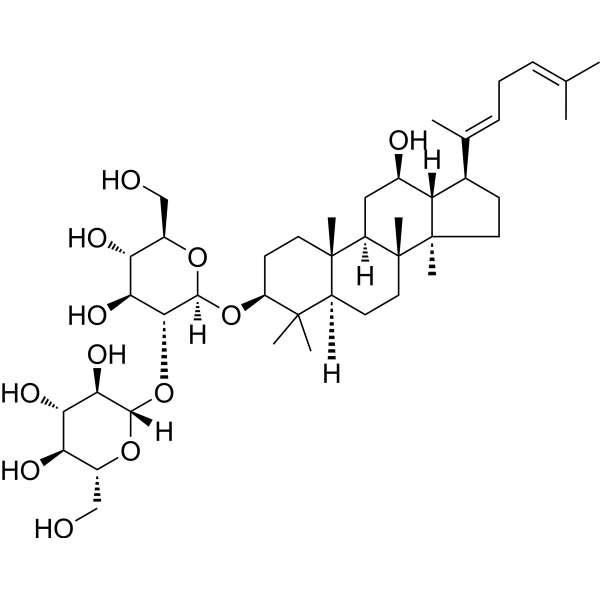
20(22Z)-Ginsenoside Rh4 is a rare ginsenoside with antitumor, anti-inflammation, and anti-diabetic activities.20(22Z)-Ginsenoside Rh4 can be found in Panax ginseng .
|
-
- HY-N0045A
-
|
|
Biochemical Assay Reagents
|
Others
|
|
Ginsenoside Rg1/BSA is an antigen-adjuvant conjugate conjugate of Ginsenoside Rg1 (HY-N0045) and BSA. By conjugating the antigen with a protein adjuvant, the production of antigen-specific antibodies in vaccine models can be enhanced. The conjugate does not affect protein folding or disrupt major epitopes, and can enhance cross-presentation and the production of antigen-specific T cells.
|
-
- HY-N0045C
-
|
|
Biochemical Assay Reagents
|
Others
|
|
Ginsenoside Rg1/KLH is an antigen-adjuvant conjugate conjugate of Ginsenoside Rg1 (HY-N0045) and KLH. By conjugating the antigen with a protein adjuvant, the production of antigen-specific antibodies in vaccine models can be enhanced. The conjugate does not affect protein folding or disrupt major epitopes, and can enhance cross-presentation and the production of antigen-specific T cells.
|
-
- HY-N0045B
-
|
|
Biochemical Assay Reagents
|
Inflammation/Immunology
|
|
Ginsenoside Rg1/OVA is an antigen-adjuvant conjugate conjugate of Ginsenoside Rg1 (HY-N0045) and ovalbumin (OVA). By conjugating the antigen with a protein adjuvant, the production of antigen-specific antibodies in vaccine models can be enhanced. The conjugate does not affect protein folding or disrupt major epitopes, and can enhance cross-presentation and the production of antigen-specific T cells.
|
-
- HY-183211
-
|
|
Biochemical Assay Reagents
|
Others
|
|
Ginsenoside Rg1/OVA is an antigen-adjuvant conjugate conjugate of Ginsenoside Rg1 (HY-N0045) and ovalbumin (OVA). By conjugating the antigen with a protein adjuvant, the production of antigen-specific antibodies in vaccine models can be enhanced. The conjugate does not affect protein folding or disrupt major epitopes, and can enhance cross-presentation and the production of antigen-specific T cells.
|
-
- HY-E71272
-
|
|
Biochemical Assay Reagents
|
Others
|
|
β-Amyrin 28-monooxygenase (EC 1.14.13.201), found in plants, is involved in the biosynthesis of oleanane-type triterpenoids, such as ginsenoside Ro. The enzyme from Medicago trunculata (CYP716A12) can also convert α-amyrin and lupeol to ursolic acid and betulinic acid, respectively.
|
-
- HY-N13240
-
|
|
Others
|
Others
|
|
Ginseng Extract is a ginseng extract, and its components include: Ginsenosides. Ginseng Extract is an excellent animal nutrition feed additive that can reduce the negative effects of heat stress on animal physiology. Studies have shown that Ginseng Extract can prolong the survival time of Caenorhabditis elegans under heat stress, and its mechanism is related to the upregulation of gene expression of specific heat shock proteins and tight junction proteins. .
|
-
- HY-146419
-
|
|
NF-κB
COX
TNF Receptor
|
Inflammation/Immunology
|
|
Anti-inflammatory agent 20 (compound 5a) is a potent inhibitor of NO activity. Anti-inflammatory agent 20 shows anti-inflammatory activity. Anti-inflammatory agent 20 suppresses LPS-induced inflammation via inhibiting the activation of NF-κB and MAPK signaling and thereby reducing IL-6, TNF-α, iNOS, and COX-2 upregulation .
|
-
- HY-N3677
-
|
|
OGT
Akt
mTOR
GSK-3
Reactive Oxygen Species (ROS)
Apoptosis
PARP
MDM-2/p53
|
Inflammation/Immunology
Cancer
|
|
Dammarenediol II is a ginsenoside precursor . Dammarenediol II reduces the activity of O-GlcNAc transferase (OGT) and downregulates the global O-GlcNAcylation level. Dammarenediol II inhibits the phosphorylation of Akt, mTOR and GSK3β. Dammarenediol II inhibits human carboxylesterase activity, VEGF-induced ROS production, stress fiber formation and vascular endothelial cadherin disruption. Dammarenediol II promotes cell apoptosis (apoptosis), increases the levels of cleaved PARP1 and p53, and inhibits retinal microvascular leakage. Dammarenediol II can be used in studies related to liver cancer and diabetic retinopathy .
|
-
- HY-D3376
-
|
6-Carboxy-2',7'-dichlorodihydrofluorescein
|
Fluorescent Dye
Reactive Oxygen Species (ROS)
|
Others
|
|
6-Carboxy-H2DCFDA (6-Carboxy-2',7'-dichlorodihydrofluorescein) is a non-fluorescent, cell-permeable intracellular ROS indicator. 6-Carboxy-H2DCFDA undergoes oxidation to highly fluorescent carboxy-dichlorofluorescein (Ex/Em = 488/520 nm) .
|
-
- HY-181059
-
|
|
Drug Derivative
mTOR
AMPK
|
Metabolic Disease
Inflammation/Immunology
Cancer
|
|
AMPK/mTOR modulator-1, Ginsenoside derivative, is an orally active mTOR inhibitor and AMPK activator. AMPK/mTOR modulator-1 activates AMPK signaling with a Kd of 4.759 μM. AMPK/mTOR modulator-1 promotes M1-like tumor-associated macrophage polarization while suppressing M2-like polarization. AMPK/mTOR modulator-1 can enhance glycolysis. AMPK/mTOR modulator-1 significantly inhibits tumor progression and shows anti-inflammation activity. AMPK/mTOR modulator-1 can be used for the research of colorectal cancer .
|
-
- HY-111152
-
|
|
STAT
|
Cancer
|
|
ML115, a molecular probe of the signal transducer, is a selective STAT3 agonist, with an EC50 of 2 nM. ML115 increases the expression of BCL3, a known STAT3-dependent oncogene. ML115 is inactive against the related STAT1, STAT5 and NF-κB anti-targets. ML115 counteracts the effects of Ginsenoside Rc (HY-N0042) on cell viability and inflammatory responses in LPS (HY-D1056)-stimulated H9c2 and RAW264.7 cells, while altering oxidative stress markers. ML115 can be used for the study of breast and prostate cancers .
|
-
| Cat. No. |
Product Name |
Type |
-
- HY-D3376
-
|
6-Carboxy-2',7'-dichlorodihydrofluorescein
|
Fluorescent Dye
|
|
6-Carboxy-H2DCFDA (6-Carboxy-2',7'-dichlorodihydrofluorescein) is a non-fluorescent, cell-permeable intracellular ROS indicator. 6-Carboxy-H2DCFDA undergoes oxidation to highly fluorescent carboxy-dichlorofluorescein (Ex/Em = 488/520 nm) .
|
| Cat. No. |
Product Name |
Type |
-
- HY-N0045A
-
|
|
Biochemical Assay Reagents
|
|
Ginsenoside Rg1/BSA is an antigen-adjuvant conjugate conjugate of Ginsenoside Rg1 (HY-N0045) and BSA. By conjugating the antigen with a protein adjuvant, the production of antigen-specific antibodies in vaccine models can be enhanced. The conjugate does not affect protein folding or disrupt major epitopes, and can enhance cross-presentation and the production of antigen-specific T cells.
|
-
- HY-N0045C
-
|
|
Biochemical Assay Reagents
|
|
Ginsenoside Rg1/KLH is an antigen-adjuvant conjugate conjugate of Ginsenoside Rg1 (HY-N0045) and KLH. By conjugating the antigen with a protein adjuvant, the production of antigen-specific antibodies in vaccine models can be enhanced. The conjugate does not affect protein folding or disrupt major epitopes, and can enhance cross-presentation and the production of antigen-specific T cells.
|
-
- HY-N0045B
-
|
|
Biochemical Assay Reagents
|
|
Ginsenoside Rg1/OVA is an antigen-adjuvant conjugate conjugate of Ginsenoside Rg1 (HY-N0045) and ovalbumin (OVA). By conjugating the antigen with a protein adjuvant, the production of antigen-specific antibodies in vaccine models can be enhanced. The conjugate does not affect protein folding or disrupt major epitopes, and can enhance cross-presentation and the production of antigen-specific T cells.
|
-
- HY-183211
-
|
|
Biochemical Assay Reagents
|
|
Ginsenoside Rg1/OVA is an antigen-adjuvant conjugate conjugate of Ginsenoside Rg1 (HY-N0045) and ovalbumin (OVA). By conjugating the antigen with a protein adjuvant, the production of antigen-specific antibodies in vaccine models can be enhanced. The conjugate does not affect protein folding or disrupt major epitopes, and can enhance cross-presentation and the production of antigen-specific T cells.
|
| Cat. No. |
Product Name |
Category |
Target |
Chemical Structure |
-
- HY-N0045
-
-
-
- HY-N0039
-
-
-
- HY-N0603
-
-
-
- HY-N0044
-
-
-
- HY-N0040
-
-
-
- HY-N0605
-
-
-
- HY-N0904
-
-
-
- HY-N1376
-
-
-
- HY-N0042
-
-
-
- HY-N0908
-
-
-
- HY-N2515
-
-
-
- HY-N0043
-
-
-
- HY-N0835
-
-
-
- HY-125848
-
|
|
Panax ginseng C. A. Meyer
Triterpenes
Structural Classification
Classification of Application Fields
Terpenoids
Plants
Endogenous metabolite
Disease Research Fields
Araliaceae
Source Classification
Cancer
|
Apoptosis
AMPK
PPAR
p38 MAPK
PI3K
Akt
GSK-3
Reactive Oxygen Species (ROS)
SOD
Caspase
|
|
Ginsenoside F2 is an orally active bioactive compound that participates in the regulation of metabolism and inflammation. Ginsenoside F2 promotes the phosphorylation of AMPK and ACC, binds to PPARγ, inhibits the phosphorylation of MAPK, activates the PI3K/AKT/GSK-3β pathway, reduces GLRX expression, and regulates lipid metabolism. Ginsenoside F2 reduces ROS production and MDA levels, restores SOD activity in cells, and alleviates oxidative stress. Ginsenoside F2 induces cell apoptosis (Apoptosis) and increases the number of cleaved caspase-3-positive cells. Ginsenoside F2 reduces body weight gain, adipose tissue weight and serum lipid levels in obese mice, and activates the hepatic AMPK signaling pathway and the expression of antioxidant enzymes. Ginsenoside F2 alleviates atopic dermatitis in mice by inhibiting inflammation and reshaping the gut microbiota . Ginsenoside F2 is applicable to research related to insulin resistance, obesity, atopic dermatitis, liver cancer, glioblastoma and glioma .
|
-
-
- HY-N0041
-
-
-
- HY-N0604
-
-
-
- HY-N0607
-
-
-
- HY-N0601
-
-
-
- HY-N0602
-
-
-
- HY-N0598
-
-
-
- HY-N0541
-
-
-
- HY-N1401
-
-
-
- HY-N0905
-
-
-
- HY-N0906
-
-
-
- HY-N0600
-
-
-
- HY-N0167
-
-
-
- HY-N2040
-
-
-
- HY-N3677
-
-
-
- HY-N0606
-
-
-
- HY-N0907
-
-
-
- HY-N1400
-
-
-
- HY-N2506
-
-
-
- HY-N0046
-
-
-
- HY-N0909
-
-
-
- HY-N6580
-
-
-
- HY-N0798
-
-
-
- HY-N2503
-
-
-
- HY-N2039
-
-
-
- HY-108277
-
-
-
- HY-N10336
-
-
-
- HY-N0039R
-
-
-
- HY-N4259
-
-
-
- HY-W130610R
-
-
-
- HY-N0904R
-
-
-
- HY-N2516
-
-
-
- HY-N11226
-
-
-
- HY-N0604R
-
-
-
- HY-N9389
-
-
-
- HY-18569AR
-
-
-
- HY-N4262
-
-
- HY-N0040R
-
-
- HY-N0908R
-
-
- HY-N0603R
-
-
- HY-N4260
-
-
- HY-N2504
-
-
- HY-N0045R
-
-
- HY-N8901
-
-
- HY-N12015
-
-
- HY-N7678
-
-
- HY-W087952R
-
-
- HY-N4075R
-
-
- HY-N12365
-
-
- HY-N0044R
-
-
- HY-N12516
-
-
- HY-N0606R
-
-
- HY-N0598R
-
-
- HY-125848R
-
-
- HY-N0601R
-
-
- HY-N0605R
-
-
- HY-N0042R
-
-
- HY-N2515R
-
|
|
Panax ginseng C. A. Meyer
Triterpenes
Structural Classification
Terpenoids
Plants
Araliaceae
Source Classification
|
Reference Standards
NF-κB
PI3K
JAK
Apoptosis
|
|
Ginsenoside Rk1 (Standard) is the analytical standard of Ginsenoside Rk1. This product is intended for research and analytical applications. Ginsenoside Rk1 is a unique component created by processing the ginseng plant (mainly Sung Ginseng, SG) at high temperatures .
Ginsenoside Rk1 has anti-inflammatory effect, suppresses the activation of Jak2/Stat3 signaling pathway and NF-κB .
Ginsenoside Rk1 has anti-tumor effect, antiplatelet aggregation activities, anti-insulin resistance, nephroprotective effect, antimicrobial effect, cognitive function enhancement, lipid accumulation reduction and prevents osteoporosis .
Ginsenoside Rk1 induces cell apoptosis by triggering intracellular reactive oxygen species (ROS) generation and blocking PI3K/Akt pathway .
|
-
- HY-N1400R
-
-
- HY-N0041R
-
-
- HY-125570
-
-
- HY-N0043R
-
-
- HY-N1401R
-
|
|
Panax ginseng C. A. Meyer
Triterpenes
Structural Classification
Human Gut Microbiota Metabolites
Terpenoids
Plants
Endogenous metabolite
Araliaceae
Source Classification
|
Reference Standards
MMP
Apoptosis
HSV
|
|
20(R)-Ginsenoside Rh2 (Standard) is the analytical standard of 20(R)-Ginsenoside Rh2. This product is intended for research and analytical applications. 20(R)-Ginsenoside Rh2 is an orally active protopanaxadiol-type saponin with multiple biological activities. 20(R)-Ginsenoside Rh2 exerts a significant inhibitory effect on non-small cell lung cancer and liver cancer by inducing cell cycle arrest and promoting apoptosis. 20(R)-Ginsenoside Rh2 exerts anti-γ-herpesvirus effects by inhibiting viral DNA replication. 20(R)-Ginsenoside Rh2 inhibits inflammatory mediators by reducing the levels of NO, PGE2, and ROS; it can delay skin photoaging by reducing ROS and inhibiting MMP-9/2 activity. 20(R)-Ginsenoside Rh2 accelerates the recovery after muscle injury by activating the Akt1/PKB signaling pathway. 20(R)-Ginsenoside Rh2 can inhibit osteoclast formation and exert an anti-osteoporosis effect.
|
-
- HY-N2039R
-
-
- HY-N8030
-
-
- HY-N0602R
-
-
- HY-N0607R
-
-
- HY-N18026
-
-
- HY-N2330R
-
-
- HY-N18029
-
-
- HY-N15147
-
|
|
Panax ginseng C. A. Meyer
Natural Products
Plants
Araliaceae
Source Classification
|
DNA/RNA Synthesis
|
|
Panax saponin C is a ginsenoside found in Ginseng with biological activities including regulatory effects on immunomodulation, protection functions in the central nervous and cardiovascular systems, anti-diabetic, anti-aging, anti-carcinogenic, anti-fatigue, anti-pyretic, anti-stress, boosting physical vitality, and promotion of DNA, RNA, and protein synthesis activities .
|
-
- HY-N18215
-
-
- HY-N19123
-
-
- HY-N7954
-
-
- HY-N0541R
-
-
- HY-125825A
-
-
- HY-N0798R
-
-
- HY-N0909R
-
-
- HY-N0835R
-
-
- HY-N13240
-
|
|
Classification of Application Fields
Anti-aging
Plants
Disease Research Fields
Araliaceae
Source Classification
|
Others
|
|
Ginseng Extract is a ginseng extract, and its components include: Ginsenosides. Ginseng Extract is an excellent animal nutrition feed additive that can reduce the negative effects of heat stress on animal physiology. Studies have shown that Ginseng Extract can prolong the survival time of Caenorhabditis elegans under heat stress, and its mechanism is related to the upregulation of gene expression of specific heat shock proteins and tight junction proteins. .
|
-
- HY-N18028
-
-
Your information is safe with us. * Required Fields.
Inquiry Information
- Product Name:
- Cat. No.:
- Quantity:
- MCE Japan Authorized Agent:

