Search Result
Results for "
Iodide
" in MedChemExpress (MCE) Product Catalog:
39
Biochemical Assay Reagents
27
Isotope-Labeled Compounds
| Cat. No. |
Product Name |
Target |
Research Areas |
Chemical Structure |
-
- HY-D0815
-
|
|
Fluorescent Dye
DNA/RNA Synthesis
|
Others
|
|
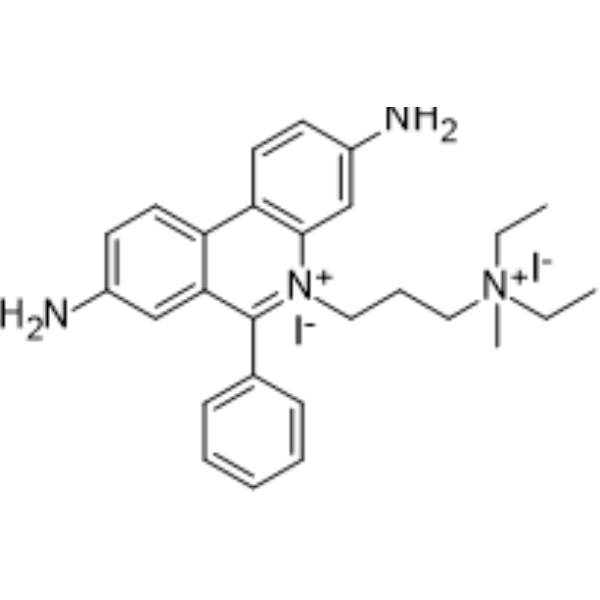
Propidium Iodide (PI) is a nuclear staining agent that stains DNA. Propidium Iodide is an analogue of ethidine bromide that emits red fluorescence upon embedding in double-stranded DNA. Propidium Iodide cannot pass through living cell membranes, but it can pass through damaged cell membranes to stain the nucleus. Propidium Iodide has a fluorescence wavelength of 493/617 nm and a wavelength of 536/635 nm after Mosaic with DNA. Propidium Iodide is commonly used in the detection of apoptosis (apoptosis) or necrosis (necrosis), and is often used in flow cytometry analysis.
|
-
-
- HY-W008719
-
|
|
Mitochondrial Metabolism
|
Neurological Disease
|
|
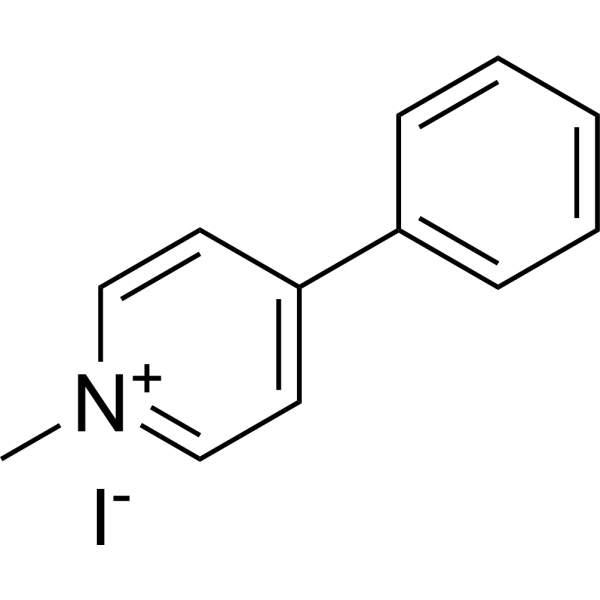
MPP+ iodide, a toxic metabolite of the neurotoxin MPTP, causes symptom of Parkinson's disease in animal models by selectively destroying dopaminergic neurons in substantia nigra. MPP+ iodide is taken up by the dopamine transporter into dopaminergic neurons where it exerts its neurotoxic action on mitochondria by affecting complex I of the respiratory chain. MPP+ iodide is also a high affinity substrate for the serotonin transporter (SERT) .
|
-
-
- HY-D0904
-
|
S-Acetylthiocholine Iodide; ATCh Iodide
|
Biochemical Assay Reagents
|
Others
|
|
Acetylthiocholine iodide can be used as a substrate for certain enzymes, such as cholinesterase, etc., and can be used to determine the activity level of these enzymes. In addition, the compound is used in some medical research, for example in the fields of neuroscience and organ physiology.
|
-
-
- HY-B1770
-
|
|
Environmental Pollutants
Biochemical Assay Reagents
|
Cardiovascular Disease
Endocrinology
|
|
Sodium Iodide is a compound composed of sodium ions and iodine ions. Sodium Iodide scavenges hydrogen peroxide. Sodium Iodide maintains the level of thyroid hormone T3 through its iodine component. Sodium Iodide protects tissues from oxidative damage and regulates thyroid homeostasis. Sodium Iodide relieves acute myocardial infarction .
|
-
-
- HY-D0084
-
|
DiOC6(3) Iodide
|
Fluorescent Dye
|
Others
|
|
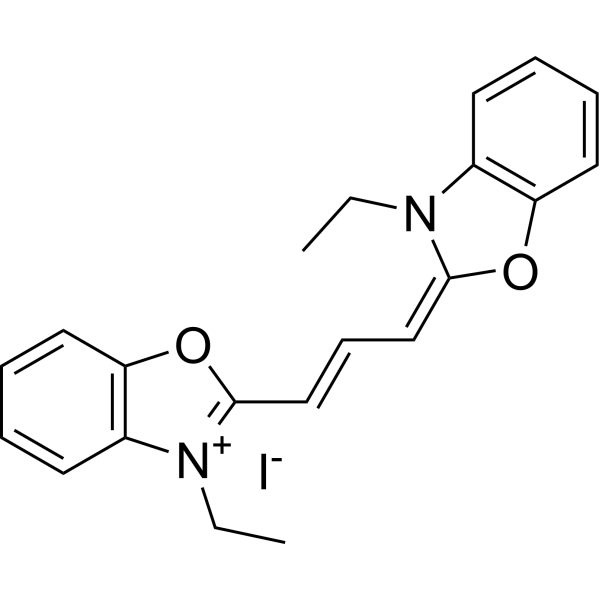
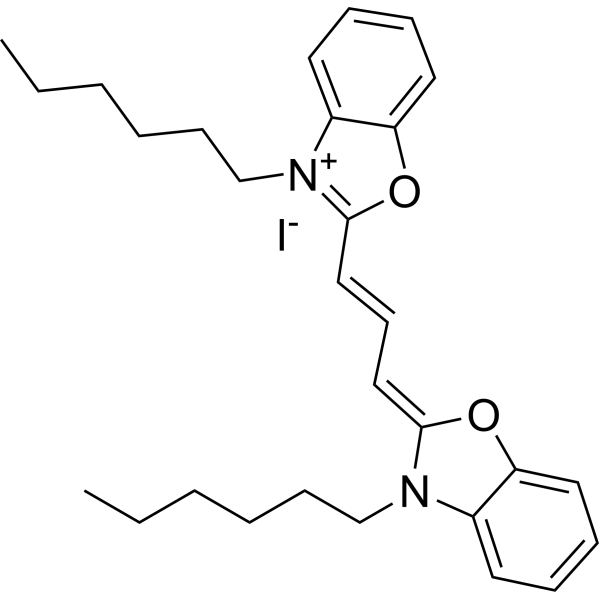
3,3'-Dihexyloxacarbocyanine iodide is a carbocyanine dye which can be used to monitor changes in mitochondrial membrane potential.
|
-
-
- HY-101372A
-
|
|
mAChR
|
Neurological Disease
|
|
Oxotremorine M iodide is a potent and non-selective muscarinic acetylcholine receptor (mAChR) agonist. Oxotremorine M iodide potentiates NMDA receptors by muscarinic receptor dependent and independent mechanisms .
|
-
-
- HY-Y0961
-
-
-
- HY-N0334A
-
-
-
- HY-107740
-
|
1,1'-Diethyl-2,2'-cyanine Iodide; Decynium 22; Diethylcyanine Iodide; Eastman 7851
|
Monoamine Transporter
Serotonin Transporter
|
Neurological Disease
|
|
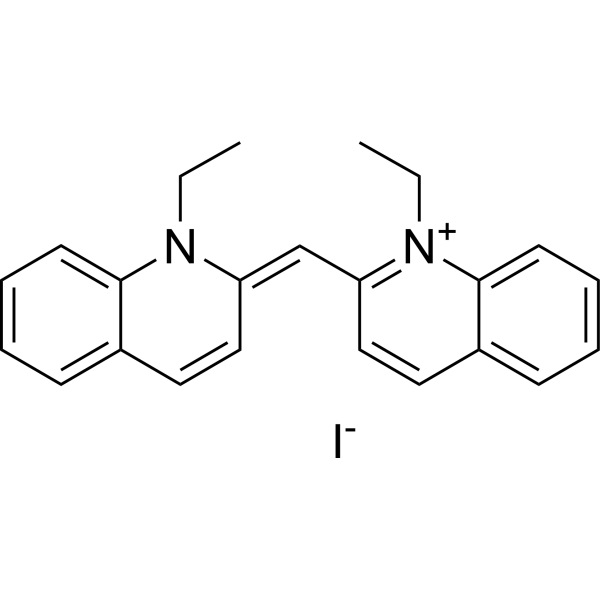
Pseudoisocyanine iodide (1,1'-Diethyl-2,2'-cyanine iodide) is an inhibitor of organic cation transporters (OCT1, OCT2, OCT3) and plasma membrane monoamine transporter (PMAT). Pseudoisocyanine iodide has antidepressant activity .
|
-
-
- HY-B1636
-
|
|
Parasite
|
Infection
|
|
Dithiazanine iodide is a broad-spectrum anthelmintic that induces irreversible relaxation and death of Trichuris trichiura. Dithiazanine iodide is used in research related to trichuriasis, strongyloidiasis, ascariasis, enterobiasis and hookworm infections .
|
-
-
- HY-DY1006
-
|
|
Fluorescent Dye
DNA/RNA Synthesis
|
Others
|
Propidium Iodide (PI) (solution) is a nuclear staining agent that stains DNA. Propidium Iodide is an analogue of ethidine bromide that emits red fluorescence upon embedding in double-stranded DNA. Propidium Iodide cannot pass through living cell membranes, but it can pass through damaged cell membranes to stain the nucleus. Propidium Iodide has a fluorescence wavelength of 493/617 nm and a wavelength of 536/635 nm after Mosaic with DNA. Propidium Iodide is commonly used in the detection of apoptosis (apoptosis) or necrosis (necrosis) , and is often used in flow cytometry analysis. Solvent and Concentration: Sterile water: 1 mg/mL The 1 mL volume is defined as the base specification. All larger sizes correspond to incremental volumes of this base.
|
-
-
- HY-Y0791
-
|
Tetra-n-butylammonium Iodide; TBAI
|
Biochemical Assay Reagents
|
Others
|
|
Tetra-n-butylammonium iodide is a biochemical reagent that can be used as a biological material or organic compound for life science related research.
|
-
-
- HY-101086
-
|
ACh Iodide
|
Endogenous Metabolite
mAChR
|
Neurological Disease
Endocrinology
|
|
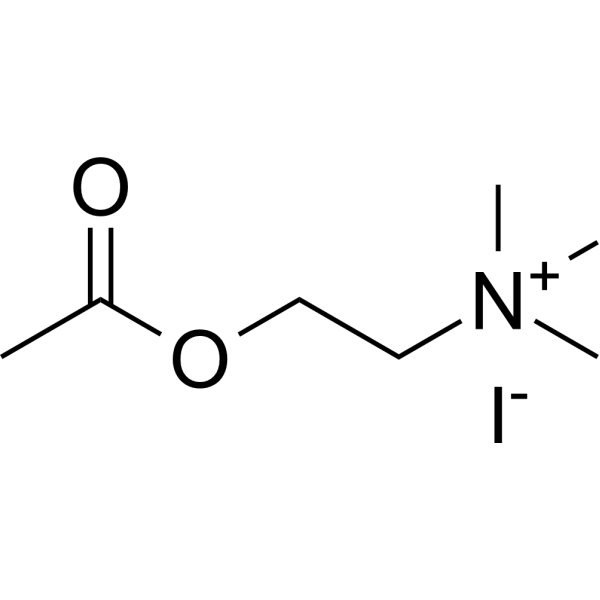
Acetylcholine iodide is a muscarinic receptor modulator. Acetylcholine iodide specifically binds to muscarinic receptors, inhibits sodium absorption, and induces chloride secretion. Acetylcholine iodide changes intestinal ion transport, enhances intestinal secretory function, induces or maintains mammary gland development and lactation. Acetylcholine iodide can be used for intestinal ion transport regulation and mammary gland physiological function research .
|
-
-
- HY-B1738A
-
|
|
Cholinesterase (ChE)
|
Neurological Disease
|
|
Pralidoxime iodide is a potent reactivator of acetylcholinesterase (AChE). Pralidoxime iodide reactivates nerve agent-inhibited AChE via direct nucleophilic attack by the oxime moiety on the phosphorus center of the bound nerve agent. Pralidoxime iodide is an antidote for organophosphate poisoning .
|
-
-
- HY-126222A
-
|
|
Apoptosis
Mitochondrial Metabolism
|
Cancer
|
|
MitoTam iodide, hydriodide is a Tamoxifen derivative , an electron transport chain (ETC) inhibitor, spreduces mitochondrial membrane potential in senescent cells and affects mitochondrial morphology .
MitoTam iodide, hydriodide is an effective anticancer agent, suppresses respiratory complexes (CI-respiration) and disrupts respiratory supercomplexes (SCs) formation in breast cancer cells . MitoTam iodide, hydriodide causes apoptosis .
|
-
-
- HY-15595A
-
|
360 A Iodide
|
G-quadruplex
Telomerase
|
Cancer
|
|
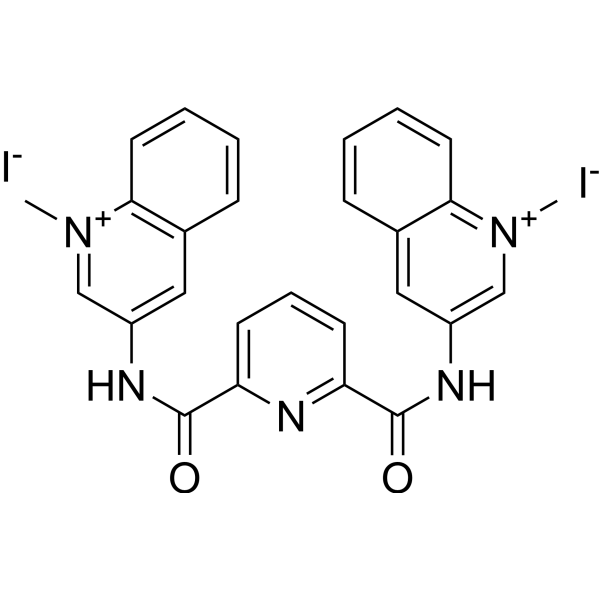
360A iodide is a selective stabilizer of G-quadruplex, and also inhibits telomerase activity with an IC50 of 300 nM for telomerase in TRAP-G4 assay.
|
-
-
- HY-14614D
-
|
S-Adenosyl methionine Iodide; Ademetionine Iodide; AdoMet Iodide
|
Endogenous Metabolite
Apoptosis
|
Neurological Disease
Inflammation/Immunology
Cancer
|
|
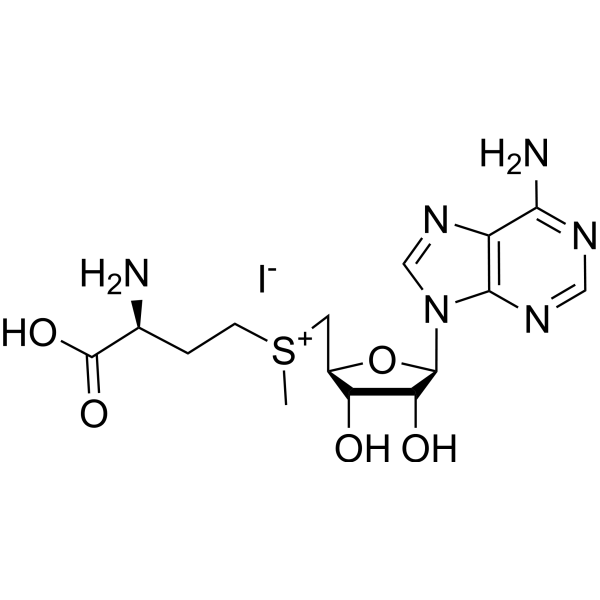
S-Adenosyl-L-methionine (S-Adenosyl methionine) iodide is an orally active methyl group donor. S-Adenosyl-L-methionine iodide is a dietary supplement with potent antidepressant effects. S-Adenosyl-L-methionine iodide also has anti‑proliferative, pro‑apoptotic and anti‑metastatic roles in cancers. S-Adenosyl-L-methionine iodide has the potential for, cancer, liver disease and osteoarthritis research .
|
-
-
- HY-107654
-
|
(+)-Muscarine Iodide
|
mAChR
|
Neurological Disease
|
|
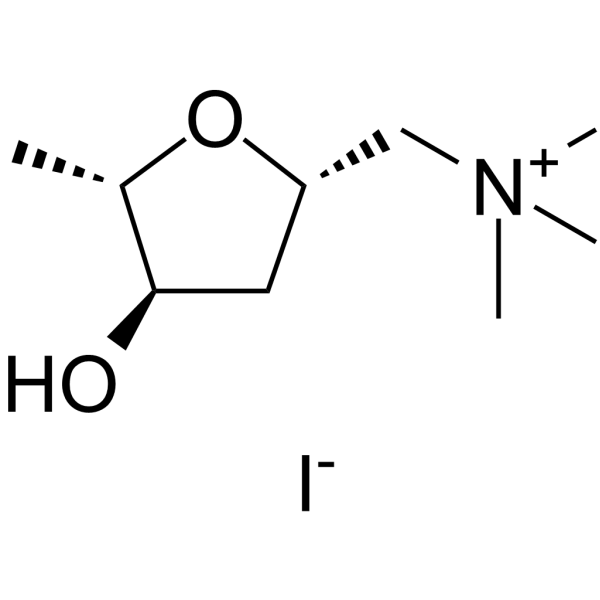
Muscarine ((+)-Muscarine) iodide is a toxin that can stimulate the parasympathetic nervous system. Muscarine iodide is a prototype muscarinic acetylcholine receptor agonist .
|
-
-
- HY-143950S
-
-
-
- HY-D0905
-
|
|
Biochemical Assay Reagents
|
Others
|
|
S-n-Butyrylthiocholine iodide is a substrate of BChE. S-n-Butyrylthiocholine iodide commonly used for in vitro enzymatic experiments .
|
-
-
- HY-117070
-
|
|
Fluorescent Dye
|
Others
|
|
TO-PRO-3 iodide is a cell-impermeant nucleic acid stain. TO-PRO-3 iodide is useful as a nuclear counterstain and dead cell indicator (Ex/Em = 642/661 nm).
|
-
-
- HY-144147S
-
-
-
- HY-W019930
-
-
-
- HY-W250307
-
|
|
Reactive Oxygen Species (ROS)
|
Others
|
|
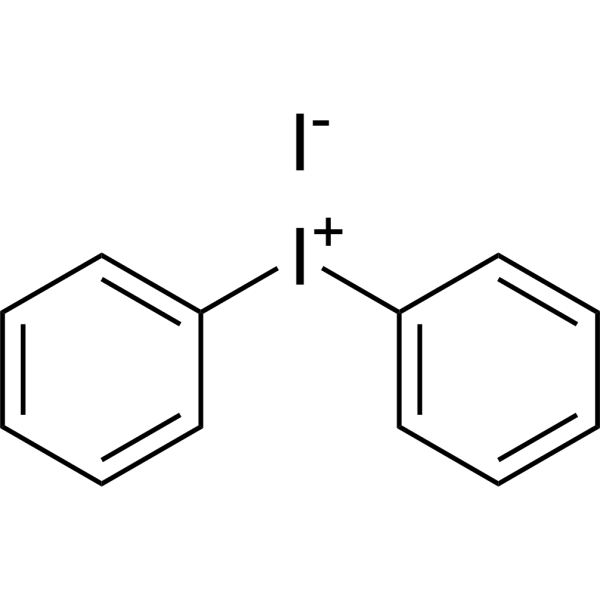
Diphenyliodonium iodide is an inhibitor of reactive oxygen species (ROS). Diphenyliodonium iodide can inhibit the accumulation of bisdemethoxycurcumin in fresh-cut yam by inhibiting the phenylpropanoid pathway and the biosynthesis of bisdemethoxycurcumin, thereby preventing the yellowing of fresh-cut yam. Diphenyliodonium iodide can be used in medicine and fruit preservation .
|
-
-
- HY-B1667
-
|
|
mAChR
|
Metabolic Disease
|
|
Isopropamide iodide is a long-acting quaternary anticholinergic agent. Isopropamide iodide is used in peptic ulcer and other gastrointestinal disorders marked by hyperacidity and hypermotility .
|
-
-
- HY-B1796
-
|
|
Fungal
|
Infection
|
|
Thymol iodide is an iodine derivative of thymol, serving as a mild preservative and fungicide. Thymol iodide is commonly used as an iodine source in the intensive culture of rotifers. Thymol iodide effectively enables Brachionus "Cayman" rotifers to reach iodine levels similar to those of copepods, and maintains a high iodine content during storage. After 28 days of intrapleural injection of Thymol iodide, it does not enhance the efficacy of inducing pleurodesis in rabbits, nor does it improve the efficacy of talc slurry pleurodesis .
|
-
-
- HY-W111907
-
|
|
Fluorescent Dye
|
Others
|
|
3,3-Diethylthiacarbocyanine iodide is a cyanine dye. 3,3-Diethylthiacarbocyanine iodide can be used in photochemical methods .
|
-
-
- HY-D1865
-
|
|
Fluorescent Dye
|
Others
|
|
Cy3 dimethyl iodide is a dye derivative of Cyanine 3 (Cy3) (HY-D0822) with a dimethyl group in the iodide salt form. The iodide salt form increases the water solubility of the compound, making it suitable for use in aqueous solutions. Cy3 is a near-infrared fluorescent dye commonly used in biolabeling and cell imaging. Cy3 dimethyl iodide binds to biomolecules such as proteins and antibodies to track their location and dynamic changes in biological samples.
|
-
-
- HY-W039760
-
|
|
Biochemical Assay Reagents
|
Others
|
|
2-Hydroxy-N,N,N-trimethylethan-1-aminium iodide, also known as choline iodide, is a quaternary ammonium salt commonly used in organic synthesis and biochemical research. It is a water-soluble compound derived from choline, an essential nutrient found in many foods. Choline iodide has been used as a source of choline groups in various chemical reactions and in microbiology as a selective agent for isolating bacteria. In addition, its potential role in cognitive impairment and liver disease has also been studied.
|
-
-
- HY-W014861
-
|
Tetramethyl-ammoniuIodide
|
Biochemical Assay Reagents
|
Others
|
|
Tetramethylammonium iodide (Tetramethyl-ammoniuiodide) is a capillary active agent and weakly capillary active quasi-simple salt. Tetramethylammonium iodide decreases aqueous solution surface tension with increasing concentration and exhibits surface accumulation of constituent ions at liquid-vapor interfaces .
|
-
-
- HY-105552
-
|
|
Biochemical Assay Reagents
|
Others
|
|
Prolonium (iodide) is membrane impermeant. Prolonium (iodide) can easily penetrate dead or damaged cells. Prolonium (iodide) is a probe that can be used for fluorescence microscopy and flow cytometry .
|
-
-
- HY-W008719S
-
|
|
Mitochondrial Metabolism
|
Neurological Disease
|
|
MPP+-d3 (iodide) is deuterium labeled MPP+ (iodide). MPP+ iodide, a toxic metabolite of the neurotoxin MPTP, causes symptom of Parkinson's disease in animal models by selectively destroying dopaminergic neurons in substantia nigra. MPP+ iodide is taken up by the dopamine transporter into dopaminergic neurons where it exerts its neurotoxic action on mitochondria by affecting complex I of the respiratory chain. MPP+ iodide is also a high affinity substrate for the serotonin transporter (SERT) .
|
-
-
- HY-W013231
-
|
Benzyltriethylammonium Iodide
|
Biochemical Assay Reagents
|
Others
|
|
N-Benzyl-N,N-diethylethanaminium iodide is a quaternary ammonium salt consisting of a positively charged N-benzyl-N,N-diethylethylamine cation and a negatively charged iodide anion. This compound is commonly used as a phase transfer catalyst in organic chemical reactions, facilitating the transfer of reactants between immiscible phases. It can also be used as a reagent for the synthesis of various organic compounds, and as a surfactant or emulsifier in industrial and personal care products.
|
-
-
- HY-W127668
-
|
|
Biochemical Assay Reagents
|
Others
|
|
(2-hydroxyethyl)triethylammonium iodide is a biochemical reagent that can be used as a biological material or organic compound for life science related research.
|
-
-
- HY-W127659
-
|
Tetrapentylammonium Iodide
|
Biochemical Assay Reagents
|
Others
|
|
Tetraamylammonium Iodide is a biochemical reagent that can be used as a biological material or organic compound for life science related research.
|
-
-
- HY-W127665
-
|
Phenyltriethylammonium Iodide
|
Biochemical Assay Reagents
|
Others
|
|
Triethylphenylammonium Iodide is a biochemical reagent that can be used as a biological material or organic compound for life science related research.
|
-
-
- HY-129684
-
|
|
Toll-like Receptor (TLR)
|
Infection
Inflammation/Immunology
|
|
IAXO-101 iodide is a TLR4/CD14 blocker. IAXO-101 iodide can inhibit the innate immune pathway of CD14. IAXO-101 iodide is capable of improving the recording performance of intracortical microelectrodes in mice. IAXO-101 iodide can also partially alleviate fetal growth restriction, placental vascular damage, and reduce the level of the inflammatory factor TNF-α in pregnant mice infected with malaria. IAXO-101 iodide can be used in the research of gestational malaria and inflammatory diseases .
|
-
-
- HY-W130177
-
|
|
Biochemical Assay Reagents
|
Cancer
|
|
Iodocholine iodide is a non-toxic, metabolizable "green" catalyst that can catalyze the free radical polymerization of functional polymers. Iodocholine iodide is also the non-radioactive iodide of Carbon-11 choline. C-11 Choline can be used in PET imaging and non-informative bone scintigraphy, CT or MRI to monitor various types of cancer .
|
-
-
- HY-D1485
-
|
|
Bacterial
|
Others
|
|
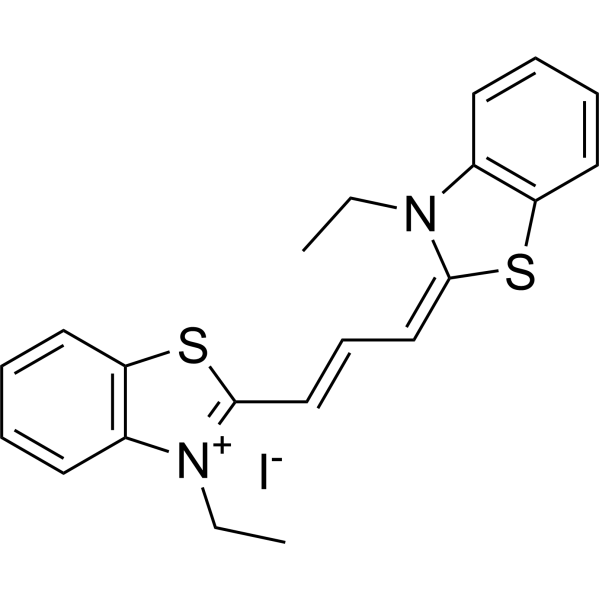
3,3'-Diethylthiacyanine iodide is a cyanine fluorescent dye. 3,3'-Diethylthiacyanine iodide manifestes a pronounced affinity for bacterial cells .
|
-
-
- HY-114227
-
|
|
DNA Stain
|
Inflammation/Immunology
|
|
Hexidium iodide, a fluorescent nucleic binding acid stain (excitation/emission ~ 518/600 nm), permeants to mammalian cells and selectively stains almost all gram-positive bacteria. Hexidium iodide can bind to the DNA of all bacteria after permeabilization by EDTA .
|
-
-
- HY-122524AR
-
|
|
Reference Standards
Nucleoside Antimetabolite/Analog
Endogenous Metabolite
DNA/RNA Synthesis
|
Others
|
|
7-Methylguanosine iodide (Standard) is the analytical standard of 7-Methylguanosine iodide (HY-122524AS). This product is intended for research and analytical applications. 7-Methylguanosine iodide is an iodide of 7-Methylguanosine (HY-122524). 7-Methylguanosine is a modified nucleoside widely present in various RNAs and a key metabolite of the 5'-cap structure of eukaryotic mRNA. 7-Methylguanosine plays important roles in stabilizing RNA structures, regulating translation, and other aspects.
|
-
-
- HY-W009236
-
|
|
Biochemical Assay Reagents
|
Others
|
|
Butyrylcholine Iodide is a biochemical reagent that can be used as a biological material or organic compound for life science related research.
|
-
-
- HY-W127661
-
|
|
Biochemical Assay Reagents
|
Others
|
|
Tetraheptylammonium Iodide is a biochemical reagent that can be used as a biological material or organic compound for life science related research.
|
-
-
- HY-W127666
-
|
|
Biochemical Assay Reagents
|
Others
|
|
Benzoylcholine Iodide is a biochemical reagent that can be used as a biological material or organic compound for life science related research.
|
-
-
- HY-W127669
-
|
|
Biochemical Assay Reagents
|
Others
|
|
Benzoylthiocholine Iodide is a biochemical reagent that can be used as a biological material or organic compound for life science related research.
|
-
-
- HY-W009418
-
-
-
- HY-122524A
-
|
|
Nucleoside Antimetabolite/Analog
Endogenous Metabolite
DNA/RNA Synthesis
|
Others
|
|
7-Methylguanosine iodide is an iodide of 7-Methylguanosine (HY-122524). 7-Methylguanosine is a modified nucleoside widely present in various RNAs and a key metabolite of the 5'-cap structure of eukaryotic mRNA. 7-Methylguanosine plays important roles in stabilizing RNA structures, regulating translation, and other aspects .
|
-
-
- HY-16183
-
|
Echothiophate Iodide
|
Cholinesterase (ChE)
|
Neurological Disease
|
|
Echothiopate iodide is a potent hBChE (human butyrylcholinesterase) inhibitor. Echothiopate iodide is a long-acting anticholinesterase agent. Echothiopate iodide can be used for glaucoma research .
|
-
-
- HY-126222B
-
|
MitoTax Iodide, hydrIodide
|
Mitochondrial Metabolism
Apoptosis
|
Cancer
|
|
(E/Z)-MitoTam (iodide, hydriodide) (MitoTam (iodide, hydriodide)) is the E/Z mixture of MitoTam iodide, hydriodide. MitoTam iodide, hydriodide is a Tamoxifen derivative , an electron transport chain (ETC) inhibitor, spreduces mitochondrial membrane potential in senescent cells and affects mitochondrial morphology . MitoTam iodide, hydriodide is an effective anticancer agent, suppresses respiratory complexes (CI-respiration) and disrupts respiratory supercomplexes (SCs) formation in breast cancer cells . MitoTam iodide, hydriodide causes apoptosis .
|
-
-
- HY-W216621
-
|
|
Fluorescent Dye
|
Others
|
|
Pinacyanol iodide is a fluorescent cyanine dye. Pinacyanol iodide exhibits ultrafast excited state isomerization .
|
-
- HY-A0258A
-
|
Metocurine Iodide; Dimethylchondrocurarine Iodide
|
nAChR
|
Neurological Disease
|
|
Metubine (Metocurine iodide) is a non-depolarizing muscle relaxant. Metubine has neuromuscular blocking activities .
|
-
- HY-131554
-
|
|
Bacterial
Antibiotic
|
Infection
|
|
Tibezonium iodide, an oropharyngeal disinfectant, has antibacterial activity for the prevention of mouth infections .
|
-
- HY-W101257
-
|
Ethyltrimethylammonium Iodide
|
Biochemical Assay Reagents
|
Others
|
|
N,N,N-Trimethylethanaminium iodide is a biochemical reagent that can be used as a biological material or organic compound for life science related research.
|
-
- HY-W009423
-
|
N,N,N-Trimethylbenzenaminium Iodide
|
Biochemical Assay Reagents
|
Others
|
|
N,N,N-trimethylbenzenaminium iodide is a biochemical reagent that can be used as a biological material or organic compound for life science related research.
|
-
- HY-W127660
-
|
|
Biochemical Assay Reagents
|
Others
|
|
Tetrahexylammonium iodide is a biochemical reagent that can be used as a biological material or organic compound for life science related research.
|
-
- HY-151665
-
|
|
ADC Linker
|
Others
|
|
Alkyne-PEG2-iodide is a click chemistry reagent with terminal alkyne and alkyl iodide groups.
|
-
- HY-101086R
-
-
- HY-107654S
-
|
(+)-Muscarine-d9 Iodide
|
Isotope-Labeled Compounds
mAChR
|
Neurological Disease
|
|
Muscarine-d9 (iodide) is the deuterium labeled Muscarine iodide. Muscarine ((+)-Muscarine) iodide is a toxin that can stimulate the parasympathetic nervous system. Muscarine iodide is a prototype muscarinic acetylcholine receptor agonist .
|
-
- HY-103095A
-
|
AAI101 Iodide
|
Bacterial
Antibiotic
|
Others
|
|
Enmetazobactam (iodide) (AAI101 (iodide)) is an extended-spectrum β-lactamase inhibitor, against many resistant Gram-negative pathogens .
|
-
- HY-Y0503S
-
-
- HY-24350
-
-
- HY-A0083C
-
|
Acetyl-β-methylcholine Iodide
|
mAChR
|
Cardiovascular Disease
|
|
Methacholine iodide is a potent muscarinic-3 (M3) agonist. Methacholine iodide acts directly on acetylcholine receptors on smooth muscle causing bronchoconstriction and airway narrowing. Methacholine iodide shows a high sensitivity to identify bronchial hyperresponsiveness (BHR). Methacholine iodide can be used to measure airway hyperresponsiveness (AHR) as a diagnostic aid in the assessment of individuals with asthma-like symptoms and normal resting expiratory flow rates .
|
-
- HY-B1667R
-
|
|
mAChR
Reference Standards
|
Metabolic Disease
|
|
Isopropamide (iodide) (Standard) is the analytical standard of Isopropamide (iodide). This product is intended for research and analytical applications. Isopropamide iodide is a long-acting quaternary anticholinergic agent. Isopropamide iodide is used in peptic ulcer and other gastrointestinal disorders marked by hyperacidity and hypermotility .
|
-
- HY-137040A
-
|
|
mAChR
|
Neurological Disease
|
|
Tiemonium iodide is a mAChR antagonist with antispasmodic properties. Tiemonium iodide can be used in nervous system research .
|
-
- HY-126175
-
|
|
Endogenous Metabolite
|
Neurological Disease
|
|
Neostigmine iodide is a reversible acetylcholinesterase inhibitor with muscle tone-enhancing activity. Neostigmine iodide is primarily used to improve muscle function in patients with myasthenia gravis. Neostigmine iodide is also used in routine anesthesia to reverse the effects of nondepolarizing muscle relaxants such as rocuronium .
|
-
- HY-W740050
-
-
- HY-W739836
-
-
- HY-129948S
-
-
- HY-142328S
-
-
- HY-W127662
-
|
Dimethyldistearylammonium Iodide
|
Biochemical Assay Reagents
|
Others
|
|
Dimethyldioctadecylammonium Iodide is a biochemical reagent that can be used as a biological material or organic compound for life science related research.
|
-
- HY-129846
-
|
|
Biochemical Assay Reagents
|
Others
|
|
IBTP iodide is a lipophilic cation and can be accumulated by mitochondria and yields stable thioether adducts in a thiol-specific
reaction. IBTP iodide can be used for specific labeling of mitochondrial protein thiols .
|
-
- HY-W127670
-
|
|
Biochemical Assay Reagents
|
Others
|
|
Decamethonium (iodide) is an organic compound containing ammonium and iodide ions. It is commonly used as a neuromuscular blocking agent in anesthesia to induce muscle relaxation during surgery. Decamethonium Iodide acts by binding to nicotinic acetylcholine receptors (nAChRs) in the neuromuscular junction, causing depolarization block and subsequent skeletal muscle paralysis. In addition, it can also serve as a reference standard for pharmacological studies of nAChRs.
|
-
- HY-109006
-
|
|
mAChR
|
Neurological Disease
|
|
Ilmetropium iodide is an anticholinergic agent. Ilmetropium iodide selectively blocks M-cholinergic receptors of bronchial muscle, reduces or prevents bronchoconstrictor response associated with both cholinergic stimulation, as well as the impact of the factors that provoke bronchospasm. Strength and selectivity of ilmetropium iodide action substantially exceeds Atropine sulfate (HY-B1205A) and Ipratropium bromide (HY-B0241) .
|
-
- HY-121146
-
-
- HY-W009418S1
-
|
3-Carbamoyl-1-methylpyridinium Iodide-d4 Iodide
|
Isotope-Labeled Compounds
|
Others
|
|
1-Methylnicotinamide-d4 iodide is deuterated labeled 1-Methylnicotinamide.
|
-
- HY-119005A
-
-
- HY-143977S
-
-
- HY-W127667
-
|
2-Methylcholine Iodide
|
Biochemical Assay Reagents
|
Others
|
|
β-Methylcholine Iodide is a biochemical reagent that can be used as a biological material or organic compound for life science related research.
|
-
- HY-W075836
-
|
|
Biochemical Assay Reagents
|
Others
|
|
Ferrocenylmethyltrimethylammonium (iodide) is an organometallic salt consisting of a ferrocenyl group attached to a quaternary ammonium cation via a methylene bridge. Ferrocenylmethyltrimethylammonium (iodide) has been used as a catalyst and reagent in various organic reactions, including oxidation, reduction, and CH bond activation. In addition, it is also used as a precursor for the synthesis of other organometallic compounds and as a potential material for electrochemical applications.
|
-
- HY-172330
-
|
|
Liposome
|
Inflammation/Immunology
|
|
Q1-SM-102 iodide is a quaternary ammonium lipid derivative of SM-102 (HY-13454). Q1-SM-102 iodide can be used to prepare lipid nanoparticles (LNPs) for the delivery of mRNA in vivo. Q1-SM-102 iodide is a carriers for targeting delivery of mRNA to immune organs .
|
-
- HY-176030
-
|
|
|
Others
|
|
Hodgkinsine trimethyl (iodide) is the trimethyl iodide of Hodgkinsine (HY-N12180A) .
|
-
- HY-B1778C
-
|
Suxamethonium Iodide
|
nAChR
mAChR
|
Neurological Disease
|
|
Succinylcholine iodide is a depolarizing neuromuscular blocker with rapid onset and short duration of action. Succinylcholine iodide also acts as an agonist of the Acetylcholine receptor. Succinylcholine iodide is used for emergency airway management .
|
-
- HY-W865912
-
-
- HY-B1738AR
-
|
|
Cholinesterase (ChE)
Reference Standards
|
Neurological Disease
|
|
Pralidoxime (iodide) (Standard) is the analytical standard of Pralidoxime (iodide). This product is intended for research and analytical applications. Pralidoxime iodide is a potent reactivator of acetylcholinesterase (AChE). Pralidoxime iodide reactivates nerve agent-inhibited AChE via direct nucleophilic attack by the oxime moiety on the phosphorus center of the bound nerve agent. Pralidoxime iodide is an antidote for organophosphate poisoning .
|
-
- HY-20778S
-
-
- HY-166417S
-
|
|
Isotope-Labeled Compounds
mAChR
|
Others
|
|
Tiotropium-d3 iodide is the deuterium labeled Tiotropium iodide. Tiotropium-d3 iodide is a muscarinic acetylcholine receptor (mAChR) antagonist that blocks the binding of the acetylcholine ligand. Tiotropium-d3 iodide serves as a stable isotope tracer for quantitative analysis .
|
-
- HY-W124381
-
|
1-Ethylquinaldinium Iodide
|
MOFs
|
Others
|
|
1-Ethyl-2-methylquinolin-1-ium iodide (1-Ethylquinaldinium Iodide) is a metal-organic framework (MOF).
|
-
- HY-101372AR
-
|
|
mAChR
Reference Standards
|
Neurological Disease
|
|
Oxotremorine M (iodide) (Standard) is the analytical standard of Oxotremorine M (iodide) (HY-101372A). This product is intended for research and analytical applications. Oxotremorine M iodide is a potent and non-selective muscarinic acetylcholine receptor (mAChR) agonist. Oxotremorine M iodide potentiates NMDA receptors by muscarinic receptor dependent and independent mechanisms .
|
-
- HY-107740R
-
|
1,1'-Diethyl-2,2'-cyanine Iodide (Standard); Decynium 22 (Standard); Diethylcyanine Iodide (Standard); Eastman 7851 (Standard)
|
Reference Standards
Monoamine Transporter
Serotonin Transporter
|
Neurological Disease
|
|
Pseudoisocyanine iodide (Standard) is the analytical standard of Pseudoisocyanine (iodide) (HY-107740). This product is intended for research and analytical applications. Pseudoisocyanine iodide (1,1'-Diethyl-2,2'-cyanine iodide) is an inhibitor of organic cation transporters (OCT1, OCT2, OCT3) and plasma membrane monoamine transporter (PMAT). Pseudoisocyanine iodide has antidepressant activity .
|
-
- HY-Y0791S
-
|
Tetra-n-butylammonium-d36 Iodide; TBAI-d36
|
Isotope-Labeled Compounds
Biochemical Assay Reagents
|
Others
|
|
Tetrabutylammonium-d36 iodide (Tetra-n-butylammonium-d36 iodide) is the deuterium labeled Tetrabutylammonium iodide (HY-Y0791). Tetrabutylammonium iodide is a quaternary ammonium salt commonly used as a phase transfer catalyst, surfactant, and stabilizer in various chemical reactions, especially in organic synthesis. Tetrabutylammonium iodide has unique chemical properties that facilitate the transfer of ions or molecules from one phase to another, making it an important ingredient in a variety of industrial processes.
|
-
- HY-172013
-
|
|
Others
|
Others
|
|
N-Methylcanadium iodide is an alkaloid compound.
|
-
- HY-W704306
-
-
- HY-115314
-
|
LG 30435
|
Histamine Receptor
|
Inflammation/Immunology
|
|
Mequitamium iodide (LG 30435) is an antihistamine drug with antiallergic and bronchodilatory activity. Mequitamium iodide can effectively antagonize airway contraction and inflammatory responses induced by histamine and antigens. Mequitamium iodide has nanomolar affinity for the H1 and smooth muscle receptors of histamine and mequitin. Mequitamium iodide, when administered in aerosol form, significantly inhibits histamine- and antigen-induced increases in airway pressure in allergic mice. Mequitamium iodide reduces antigen-induced eosinophil accumulation in the airways. Mequitamium iodide also exhibits inhibitory effects on PAF-induced platelet aggregation and bronchoconstriction, and can be used in the study of allergic diseases such as rhinitis and asthma .
|
-
- HY-168360
-
-
- HY-122524AS1
-
|
|
Isotope-Labeled Compounds
Nucleoside Antimetabolite/Analog
Endogenous Metabolite
DNA/RNA Synthesis
|
Others
|
|
7-Methylguanosine- 13C iodide is the 13C-labeled 7-Methylguanosine iodide (HY-122524A). 7-Methylguanosine iodide is an iodide of 7-Methylguanosine (HY-122524). 7-Methylguanosine is a modified nucleoside widely present in various RNAs and a key metabolite of the 5'-cap structure of eukaryotic mRNA. 7-Methylguanosine plays important roles in stabilizing RNA structures, regulating translation, and other aspects.
|
-
- HY-W124382
-
|
3-Ethyl-2-methylbenzothiazolium Iodide
|
MOFs
|
Others
|
|
3-Ethyl-2-methylbenzo[d]thiazol-3-ium iodide (3-Ethyl-2-methylbenzothiazolium iodide) is a metal-organic framework (MOF).
|
-
- HY-42404
-
|
|
Drug Intermediate
|
Others
|
|
1-Adamantylcarbinyl iodide is a drug intermediate for synthesis of various active compounds.
|
-
- HY-166891S
-
-
- HY-W654209
-
|
|
Isotope-Labeled Compounds
|
Others
|
|
Glycopyrrolate iodide-d3
(mixture of diastereomers) is deuterium labeled 3-(2-Cyclopentyl-2-hydroxy-2-phenylacetoxy)-1,1-dimethylpyrrolidin-1-ium iodide .
|
-
- HY-D2997
-
|
|
Fluorescent Dye
|
Cancer
|
|
1,2-Dimethylpyridinium iodide-Bodipy (Probe 1) is an H2S fluorescent probe. Self-assembled 1,2-Dimethylpyridinium iodide-Bodipy exhibits highly efficient responsiveness to H2S. The assembled form of 1,2-Dimethylpyridinium iodide-Bodipy emits near-infrared fluorescence at 718 nm upon H2S activation .
|
-
- HY-D0150A
-
|
|
Fluorescent Dye
|
Others
|
|
(Z)-Thiazole Orange iodide is an asymmetric cyanine dye whose fluorescence highly depends on the local environment.(Z)-Thiazole Orange iodide is essentially dark in solution; however, its fluorescence increases a thousandfold when (Z)-Thiazole Orange iodide is introduced into double-stranded DNA and RNA (dsDNA or dsRNA). The maximum absorption of Thiazole Orange in complex with DNA is 509 nm, and the maximum emission is 532 nm. Thiazole Orange solution is widely used for determining the percentage of reticulocytes in human peripheral blood with microscopy and flow cytometry.
|
-
- HY-N3182A
-
-
- HY-122524AS
-
|
|
Isotope-Labeled Compounds
Nucleoside Antimetabolite/Analog
Endogenous Metabolite
DNA/RNA Synthesis
|
Others
|
|
7-Methylguanosine- 13C,d3 iodide is the 13C- and deuterium labeled 7-Methylguanosine iodide (HY-122524A). 7-Methylguanosine iodide is an iodide of 7-Methylguanosine (HY-122524). 7-Methylguanosine is a modified nucleoside widely present in various RNAs and a key metabolite of the 5'-cap structure of eukaryotic mRNA. 7-Methylguanosine plays important roles in stabilizing RNA structures, regulating translation, and other aspects.
|
-
- HY-W076166C
-
-
- HY-W769362
-
-
- HY-155416
-
|
|
SARS-CoV
|
Infection
|
|
M56-S2 iodide is a SARS-CoV-2 M pro inhibitor (IC50=4.0 μM). M56-S2 iodide showed good oral bioavailability and low toxicity in ADMET prediction. M56-S2 iodide has good drug potential and can be used in antiviral (such as SARS-CoV-2) research .
|
-
- HY-D1483
-
|
|
Fluorescent Dye
|
Others
|
|
3,3-Dibutylthiacarbocyanine iodide is a fluorescent dye with an excitation of 559 nm and an emission 604 nm .
|
-
- HY-111935
-
|
|
Microtubule/Tubulin
|
Neurological Disease
|
|
3,3'-Diethyl-9-methylthiacarbocyanine iodide is a cyanine dye, also a tau aggregation inhibitor, with an IC50 value of 0.28 μM for tau. 3,3'-Diethyl-9-methylthiacarbocyanine iodide can cause misfunction of the microtubule cytoskeleton. 3,3'-Diethyl-9-methylthiacarbocyanine iodide can be used for researching Alzheimer’s disease .
|
-
- HY-165162
-
-
- HY-Y0283
-
-
- HY-W112128
-
|
N,N,N-Trimethyl(4-pyridinyl)methanaminium Iodide
|
MOFs
|
Others
|
|
N,N,N-Trimethyl-1-(pyridin-4-yl)methanaminium iodide (N,N,N-Trimethyl(4-pyridinyl)methanaminium iodide) is a metal-organic framework (MOF).
|
-
- HY-W111468S
-
-
- HY-D1484
-
|
1,1'-Diethyl-2,4'-cyanine Iodide
|
Fluorescent Dye
|
Others
|
|
Ethyl red (1,1'-Diethyl-2,4'-cyanine) iodide is an azo dye and acid–base indicator .
|
-
- HY-W009418S
-
-
- HY-131127
-
|
AMQI
|
Cholinesterase (ChE)
|
Others
|
|
7-Acetoxy-1-methylquinolinium iodide (AMQI) is a fluorogenic substrate for cholinesterase (Ex = 320 nm, Em = 410 nm). Hydrolysis of 7-acetoxy-1-methylquinolinium iodide is used at the fluorometric flow system for the detection and identification of inhibitors. .
|
-
- HY-135414B
-
|
|
Fluorescent Dye
|
Others
|
|
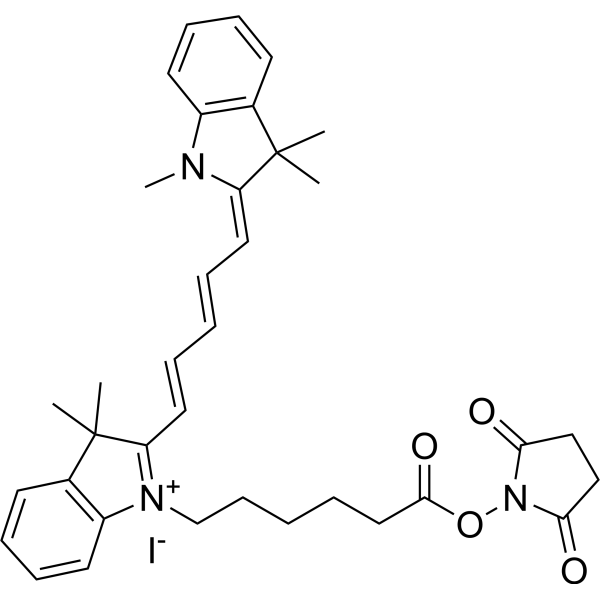
Cyanine5 NHS ester iodide is a red emitting fluorescent dye for labeling of amino-groups in peptides, proteins, and oligonucleotides .
|
-
- HY-175295A
-
|
|
Bacterial
Reactive Oxygen Species (ROS)
|
Infection
|
|
Anti-MRSA agent 33 iodide is an anti-Methicillin (HY-121544)-resistant Staphylococcus aureus (MRSA) agent, with MIC values of 2-4 μg/mL. Anti-MRSA agent 33 iodide demonstrates effective biofilm eradication and minimal cytotoxicity toward mammalian cells. Anti-MRSA agent 33 iodide specifically binds to phosphatidylglycerol (PG) on bacterial membranes, leading to membrane disruption, excessive production of ROS, and metabolic collapse, ultimately resulting in bacterial cell death. Anti-MRSA agent 33 iodide reduces bacterial load in a murine skin infection model .
|
-
- HY-W127663
-
|
|
Biochemical Assay Reagents
|
Others
|
|
3-(Trifluoromethyl)phenyltrimethylammonium Iodide is a biochemical reagent that can be used as a biological material or organic compound for life science related research.
|
-
- HY-W075782
-
|
|
MOFs
|
Others
|
|
Bis(N,N'-dimethylpiperazine)tetra[copper(I)iodide] is a metal-organic framework (MOF).
|
-
- HY-D1624
-
|
|
Fluorescent Dye
|
Others
|
|
3,3′-Diheptylthiacarbocyanine iodide is a cyanine dye for measuring membrane potential. (λex=562 nm,λem=575 nm) .
|
-
- HY-W040258
-
-
- HY-176066A
-
|
|
c-Myc
Apoptosis
|
Cancer
|
|
c-Myc inhibitor 16 iodide (Compound W11) is a selective c-Myc G-quadruplex (c-Myc G4) inhibitor. c-Myc inhibitor 16 iodide inhibits the transcription and translation of the c-Myc gene, disrupts the tumor cell cycle, arrests cell growth in the G0/G1 phase and activates the mitochondrial apoptosis pathway to induce early apoptosis of cancer cells. c-Myc inhibitor 16 iodide is promising for research of breast cancer .
|
-
- HY-100152
-
|
SX 810
|
mAChR
|
Inflammation/Immunology
|
|
Beperidium iodide shows a competitive antagonistic effect against acetylcholine receptor with a pA2 of 7.93.
|
-
- HY-159051
-
|
|
Biochemical Assay Reagents
|
Others
|
|
Dragendorff reagent is used for detecting alkaloids and other nitrogen-containing compounds. Dragendorff reagent is a solution of potassium bismuth iodide composing of Basic bismuth nitrate (Bi(NO3)3), Tartaric acid (HY-N2436), and Potassium iodide (KI). When contact with alkaloids, Dragendorff reagent produces an orange or orange red precipitate .
|
-
- HY-D1180
-
|
3,3′-Diethylthiatricarbocyanine Iodide
|
Fluorescent Dye
|
Others
|
|
DTTCI (3,3′-Diethylthiatricarbocyanine iodide) is an infrared photographic sensitizing dye. DTTCI is a highly sensitive chiroptical reporter of DNA helicity and sequence .
|
-
- HY-101361
-
|
Methyllidocaine Iodide
|
Drug Derivative
|
Neurological Disease
|
|
Lidocaine methiodide (Methyllidocaine iodide) is a potent antiarrythmic agent, and is a derivative of Lidocaine (HY-B0185). Lidocaine methiodide can be used for the research of ventricular arrhythmias produced by coronary occlusion .
|
-
- HY-W101252
-
|
3H-Indolium, 1-ethyl-2,3,3-trimethyl-, Iodide
|
MOFs
|
Others
|
|
1-Ethyl-2,3,3-trimethyl-3H-indol-1-ium iodide (3H-Indolium, 1-ethyl-2,3,3-trimethyl-, iodide) is a metal-organic framework (MOF).
|
-
- HY-174403
-
|
|
Bcl-2 Family
c-Myc
Apoptosis
Caspase
|
Cancer
|
|
c-MYC/BCL2 ligand 1 iodide is a dual-targeting c-MYC/Bcl-2 G4 ligand with Kd values of 0.90 μM (c-MYC G4) and 0.56 μM (Bcl-2 G4). c-MYC/BCL2 ligand 1 iodide inhibits c-MYC and Bcl-2 gene transcription by binding to G4-forming sequences and downregulates their protein expression. c-MYC/BCL2 ligand 1 iodide inhibits suppresses migration, induces caspase-dependent apoptosis, and triggers cell cycle G1 arrest in MCF-7 cells. c-MYC/BCL2 ligand 1 iodide significantly suppresses tumor growth in a 4T1 syngeneic model with no observable toxicity. c-MYC/BCL2 ligand 1 iodide can be used for the research of breast cancer.
|
-
- HY-W009190
-
|
1,1-Dimethyl-4-phenylpiperazin-1-ium Iodide
|
Biochemical Assay Reagents
|
Others
|
|
1,1-Dimethyl-4-phenylpiperazin-1-ium iodide is a biochemical reagent that can be used as a biological material or organic compound for life science related research.
|
-
- HY-W009202
-
|
TAPI
|
Biochemical Assay Reagents
|
Others
|
|
Tetrapropylammonium iodide is an organic compound commonly used as ionic liquids and catalysts. It can be used as a solvent in some chemical reactions, and can also be used as a catalyst to promote some organic synthesis reactions. In addition, the compound is also widely used in batteries, solar cells and pigments.
|
-
- HY-100906
-
|
|
nAChR
|
Neurological Disease
|
|
1,1-Dimethyl-4-acetylpiperazinium iodide is an agonist for nicotinic acetylcholine receptor (nAChR) that open ion channels and causes cell membrane depolarization .
|
-
- HY-D1075
-
|
HIDC
|
Fluorescent Dye
|
Others
|
|
1,1',3,3,3',3'-Hexamethylindodicarbocyanine iodide is a carbocyanine dye that stains mitochondria of live cells.
|
-
- HY-136156
-
|
|
E3 Ligase Ligand-Linker Conjugates
|
Cancer
|
|
Pomalidomide-PEG6-butyl iodide is a synthesized E3 ligase ligand-linker conjugate that incorporates the Pomalidomide based cereblon ligand and 6-unit PEG linker used in PROTAC technology .
|
-
- HY-128903
-
|
|
Drug-Linker Conjugates for ADC
|
Cancer
|
|
MC-Val-Cit-PAB-carfilzomib iodide is a agent-linker conjugate for ADC with potent antitumor activity by using carfilzomib (an irreversible proteasome inhibitor), linked via the ADC linker MC-Val-Cit-PAB.
|
-
- HY-P11455
-
|
|
Liposome
|
Others
|
|
Lipopeptide CPE4 is a PEG-modified peptide E4 [(EIAALEK) 4]. Lipopeptide CPE4 is capable of coiled-coil formation when attached to liposomes. Lipopeptide CPE4 triggers membrane fusion between liposomes and living cells with concomitant efficient cytosolic delivery of a variety of compounds such as fluorescent dyes Propidium Iodide (PI) (HY-D0815) and TO-PRO-3 iodide (HY-117070), and Doxorubicin (DOX) (HY-15142A). Lipopeptide CPE4 can be used for drug delivery research .
|
-
- HY-W101253
-
|
|
Biochemical Assay Reagents
|
Others
|
|
Tetraethylammonium (iodide) is a quaternary ammonium compound belonging to the class of alkylammonium salts. This compound is commonly used as a phase-transfer catalyst in organic synthesis because it facilitates the transfer of reactants between immiscible phases. It can also be used as an electrolyte in electrochemical devices and as a surfactant in detergent formulations. Its unique chemical properties make it an important ingredient in a variety of industrial applications, including pharmaceuticals, agrochemicals, and materials science.
|
-
- HY-P11455A
-
|
|
Liposome
|
Others
|
|
Lipopeptide CPE4 TFA is a PEG-modified peptide E4 [(EIAALEK) 4]. Lipopeptide CPE4 TFA is capable of coiled-coil formation when attached to liposomes. Lipopeptide CPE4 TFA triggers membrane fusion between liposomes and living cells with concomitant efficient cytosolic delivery of a variety of compounds such as fluorescent dyes Propidium Iodide (PI) (HY-D0815) and TO-PRO-3 iodide (HY-117070), and Doxorubicin (DOX) (HY-15142A). Lipopeptide CPE4 TFA can be used for drug delivery research .
|
-
- HY-W099929
-
|
|
Biochemical Assay Reagents
|
Others
|
|
N-Ethyl-N,N-dipropylpropan-1-aminium iodide is a quaternary ammonium compound belonging to the class of alkylammonium salts. N-Ethyl-N,N-dipropylpropan-1-aminium (iodide) is commonly used as a phase transfer catalyst in organic synthesis to transfer reactants between immiscible phases. It can also be used as a surfactant, antimicrobial or corrosion inhibitor. Its unique chemical properties make it an essential reagent in many different industrial applications, including pharmaceuticals, agrochemicals, and materials science.
|
-
- HY-W112129
-
|
|
MOFs
|
Others
|
|
N,N,N-Trimethyl-1-(pyridin-3-yl)methanaminium iodide is a metal-organic framework (MOF).
|
-
- HY-W112130
-
|
|
MOFs
|
Others
|
|
N,N,N-Trimethyl-1-(pyridin-2-yl)methanaminium iodide is a metal-organic framework (MOF).
|
-
- HY-P11456
-
|
|
Liposome
|
Others
|
|
Lipopeptide CPK4 is a Cholesterol (HY-N0322)-modified peptide K4 [(KIAALKE) 3]. Lipopeptide CPK4 is capable of coiled-coil formation when attached to liposomes. Lipopeptide CPK4 triggers membrane fusion between liposomes and living cells with concomitant efficient cytosolic delivery of a variety of compounds such as fluorescent dyes Propidium Iodide (PI) (HY-D0815) and TO-PRO-3 iodide (HY-117070), and Doxorubicin (DOX) (HY-15142A). Lipopeptide CPK4 can be used for drug delivery research .
|
-
- HY-P11456A
-
|
|
Liposome
|
Others
|
|
Lipopeptide CPK4 TFA is a Cholesterol (HY-N0322)-modified peptide K4 [(KIAALKE) 3]. Lipopeptide CPK4 TFA is capable of coiled-coil formation when attached to liposomes. Lipopeptide CPK4 TFA triggers membrane fusion between liposomes and living cells with concomitant efficient cytosolic delivery of a variety of compounds such as fluorescent dyes Propidium Iodide (PI) (HY-D0815) and TO-PRO-3 iodide (HY-117070), and Doxorubicin (DOX) (HY-15142A). Lipopeptide CPK4 TFA can be used for drug delivery research .
|
-
- HY-D1073
-
|
3,3'-Diheptyloxacarbocyanine Iodide
|
Fluorescent Dye
|
Cardiovascular Disease
|
|
DiOC7(3) (3,3'-Diheptyloxacarbocyanine iodide) is a green membrane potential probe (Ex=450-490 nm, Em=510-520 nm). DiOC7(3) can be used to quantify the vascular densities .
|
-
- HY-D1074
-
|
3,3'-Dipropyloxacarbocyanine Iodide
|
Fluorescent Dye
|
Others
|
|
DiOC3(3) (3,3'-Dipropyloxacarbocyanine iodide) is a green fluorescent lipophilic dye with cell membrane permeability. DiOC3(3) can be used to stain cell membranes and other lipid-soluble biological structures .
|
-
- HY-137052
-
|
N-Methyllycorine Iodide
|
Drug Derivative
|
Cancer
|
|
Lycorine methiodide (N-Methyllycorine iodide) is a derivative of Lycorine (HY-N0288). Lycorine methiodide exhibits no significant in vitro antitumor activity against A549, OE21, Hs683, U373, SKMEL, and B16F10 cell lines, with all IC50 values greater than 10 μM .
|
-
- HY-W705503
-
-
- HY-W456564
-
|
|
MOFs
|
Others
|
|
4-(Anthracen-9-yl)-2-fluoro-1-methylpyridin-1-ium iodide is a metal-organic framework (MOF).
|
-
- HY-172329
-
|
|
Liposome
|
Others
|
|
Q1-ALC-0315 iodide is a cationic quaternary ammonium lipid derivative of the ionizable cationic lipid ALC-0315 (HY-138170). Q1-ALC-0315-based LNPs can be used for lung-targeted mRNA delivery, which demonstrates high-performing firefly luciferase protein expression in the lungs .
|
-
- HY-D0058
-
|
|
Fluorescent Dye
|
Others
|
|
3,3'-Dipropylthiacarbocyanine (iodide) is a multifunctional dye. Dyes are important tools in biological experiments. They can help researchers observe and analyze cell structures, track biomolecules, evaluate cell functions, distinguish cell types, detect biomolecules, study tissue pathology and monitor microorganisms. Their applications range from basic scientific research to clinical A wide range of diagnostics. Dyes are also widely used in traditional fields such as textile dyeing, as well as in emerging fields such as functional textile processing, food pigments and dye-sensitized solar cells.
|
-
- HY-W591768
-
|
|
Fluorescent Dye
|
Others
|
|
(E)-4-(4-(Dimethylamino)styryl)-1-methylpyridin-1-ium (iodide) (Py-NMe2) is a styryl-based dye for fluorescence and CD-based sensing of various ds-DNA/RNA sequence. ( maxλAbs = 450 nm, maxλEm = 615 nm) .
|
-
- HY-W771025
-
|
Tetramethylene Iodide (stabilized with Copper chip)-13C4
|
Isotope-Labeled Compounds
|
Others
|
|
1,4-Diiodobutane- 13C4 (Tetramethylene Iodide (stabilized with Copper chip)- 13C4) is the 13C-labeled 1,4-Diiodobutane (HY-W004871).
|
-
- HY-107063
-
|
10-Undecen-1-yl-thiopseudourea Iodide
|
Histamine Receptor
|
Cancer
|
|
AHR-1911 (10-Undecen-1-yl-Thiopseudourea Iodide;Isothiuronium) is a thiourea-based anti-inflammatory and anti-tumor agent that has an improving effect on burned skin. AHR-1911 produces histamine-like effects when injected intradermally and may reduce arterial pressure in anesthetized dogs. AHR-1911 inhibits tumor growth and reduces microsomal and C-polysome protein synthesis .
|
-
- HY-W112497
-
|
|
MOFs
|
Others
|
|
4-(1H-Benzo[d][1,2,3]triazol-1-yl)-1-methylpyridin-1-ium iodide is a metal-organic framework (MOF).
|
-
- HY-N6791
-
|
|
PKA
PKC
Bacterial
Apoptosis
Antibiotic
|
Infection
Inflammation/Immunology
|
|
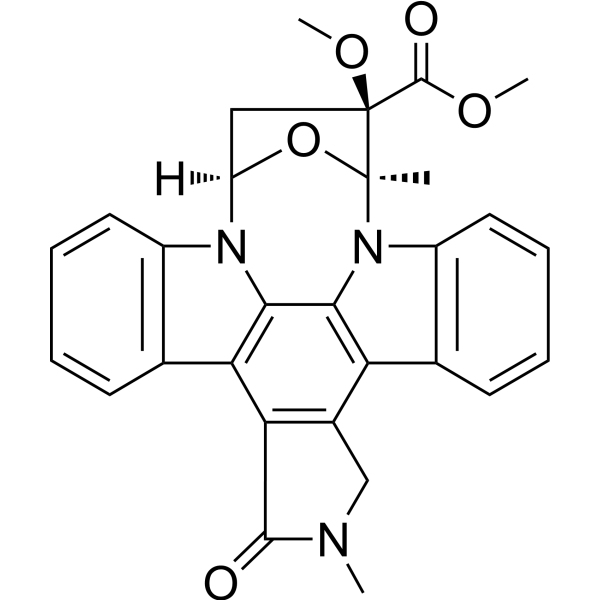
KT5823, a selective the cGMP-dependent protein kinase (PKG) inhibitor with an Ki value of 0.23 μM, it also inhibits PKA and PKC with Ki values of 10 μM and 4 μM, respectively. KT5823 is a Staurosporine-related protein kinase inhibitor, increases thyroid-stimulating hormone-induced (Na +/I - symporter) NIS expression, and iodide uptake in thyroid cells. KT5823 arrests cells after the G0/G1 boundary and causes increases in the levels of apoptotic DNA fragmentation .
|
-
- HY-W075780
-
|
Copper, bis(1,4-diazabicyclo[2.2.2]octane-κN1)tetra-μ3-iodotetra
|
MOFs
|
Others
|
|
Bis(1,4-diazabicyclo[2.2.2]octane)tetra(copper(I)iodide) (Copper, bis(1,4-diazabicyclo[2.2.2]octane-κN1)tetra-μ3-iodotetra) is a metal-organic framework (MOF).
|
-
- HY-W099640
-
|
Tetra-n-octylammonium Iodide
|
Biochemical Assay Reagents
|
Others
|
|
Tetraoctylammonium iodideIt is an organic compound and belongs to the category of quaternary ammonium salts. It is often used as a phase transfer catalyst, meaning it facilitates a reaction between two immiscible phases, such as an aqueous phase and an organic phase. Tetraoctylammonium iodideIt has a variety of applications in organic synthesis, especially in reactions involving nucleophilic substitution, oxidation, and reduction. Additionally, it is used as a surfactant and emulsifier in industrial and laboratory settings.
|
-
- HY-101010
-
|
|
Others
|
Neurological Disease
|
|
Methylfurmethide is an acetylcholine receptor. Methylfurmethide blocks the uptake of atropine. Methylfurmethide can be used to study the properties of acetylcholine receptors in intestinal smooth muscle .
|
-
- HY-14837
-
|
Enisamium Iodide
|
Influenza Virus
SARS-CoV
|
Infection
|
|
Amizon is an orally effective antiviral and anti-inflammatory agent. Amizon inhibits influenza virus replication and restricts viral RNA synthesis. Amizon reduces the mRNA expression of COX-1, COX-2, NF-κB, TGF1β, IL-1 and IL-6, and stimulates the secretion and mRNA expression of IL-10. Amizon inhibits the oxidative activity of macrophages and possesses antioxidant and free radical-scavenging activities. Amizon is applicable to research related to influenza and acute respiratory viral infections .
|
-
- HY-D2908
-
|
|
Fluorescent Dye
|
Others
|
SYTO9 is a green fluorescent nucleic acid dye (Ex = 485 nm, Em = 498 nm (DNA)/501 nm (RNA)). SYTO9 can penetrate the intact cell membrane of viable bacteria. When the cell membrane is damaged (cell death), its rate of entry into cells increases, and it competes with propidium iodide (PI) (HY-D0815), another membrane-impermeable dye, for nucleic acid binding sites. SYTO9 is widely used in fluorescence microscopy, flow cytometry, and fluorometric assays in microbiology for bacterial counting, viability assessment, and cell imaging .
|
-
- HY-107672
-
|
Stilonium Iodide
|
nAChR
|
Neurological Disease
|
|
MG624 is a potent and selective neuronal α7 nAChR antagonist with a Ki of 106 nM .
|
-
- HY-159116
-
-
- HY-W004126
-
|
2-Pyridyl Iodide
|
Biochemical Assay Reagents
|
Others
|
|
2-Iodopyridine is a biochemical reagent that can be used as a biological material or organic compound for life science related research.
|
-
- HY-133639
-
|
|
Biochemical Assay Reagents
|
Others
|
|
Bromochloroiodomethane is a nitrogenous disinfection by-product when iodide-containing water is disinfected using chloramination process.
|
-
- HY-D1072
-
|
3,3′-Dipentyloxacarbocyanine Iodide
|
Fluorescent Dye
|
Others
|
|
DiOC5(3) is the membrane potential (MP)-modifying fluorochrome. DiOC5(3) is an anti-LSC compound available for diagnostic imaging. DiOC5(3) has the advantage of being a single fluorescent chemical .
|
-
- HY-W340440
-
|
|
Fluorescent Dye
|
Others
|
|
Salicylfluorone is a fluorogenic reagent (λex = 495 nm, λem = 520 nm). Salicylfluorone can be used for fluorescencequenching determination of trace iodide ion .
|
-
- HY-B0342
-
|
Methylglucamine; Meglumin; Methylglucamin
|
Biochemical Assay Reagents
|
Cancer
|
|
Meglumine (Methylglucamine) is an orally active amino sugar derived from sorbitol. Meglumine has anti-inflammatory and antitumor activity. Meglumine is often used as an excipient in active molecules and with iodinated compounds in contrast agents such as meglumine and meglumine iodide .
|
-
- HY-W019927
-
|
Ammonium ferric sulfate dodecahydrate, 99%
|
Biochemical Assay Reagents
|
Others
|
|
Ammonium iron(III) sulfate dodecahydrate, 99% is an analytical reagent-grade iron(III) salt and source material for iron(III) reagent or standard solutions in volumetric analysis .
|
-
- HY-34619
-
|
|
Biochemical Assay Reagents
|
Others
|
|
[Hydroxy(tosyloxy)iodo]benzene is a versatile reagent for the mild oxidation of aryl iodides at the iodine atom by ligand transfer. [Hydroxy(tosyloxy)iodo]benzene is an effective reagent for the one-step conversion of ketones to the corresponding α-tosyloxy ketones. [Hydroxy(tosyloxy)iodo]benzene is also a Bronsted acid and is expected to catalyze the enolization of ketones .
|
-
- HY-B0342R
-
|
Methylglucamine (Standard); Meglumin (Standard); Methylglucamin (Standard)
|
Biochemical Assay Reagents
Reference Standards
|
Cancer
|
|
Meglumine (Standard) is the analytical standard of Meglumine. This product is intended for research and analytical applications. Meglumine (Methylglucamine) is an orally active amino sugar derived from sorbitol. Meglumine has anti-inflammatory and antitumor activity. Meglumine is often used as an excipient in active molecules and with iodinated compounds in contrast agents such as meglumine and meglumine iodide .
|
-
- HY-B0342GL
-
|
Methylglucamine (GMP Like); Meglumin (GMP Like); Methylglucamin (GMP Like)
|
Biochemical Assay Reagents
|
Cancer
|
|
Meglumine (GMP Like) (Methylglucamine (GMP Like)) is the GMP Like class Meglumine (HY-B0342) that can be used as pharmaceutical excipients. Meglumine (Methylglucamine) is an orally active amino sugar derived from sorbitol. Meglumine has anti-inflammatory and antitumor activity. Meglumine is often used as an excipient in active molecules and with iodinated compounds in contrast agents such as meglumine and meglumine iodide .
|
-
- HY-W140555
-
|
|
Biochemical Assay Reagents
Bacterial
|
Infection
|
|
5,7-Dimethoxyphthalide, a dimethoxy derivative of phthalide, can undergo nucleophilic substitution reactions with functionalized long-chain alkyl iodides. 5,7-Dimethoxyphthalide acts as a synthetic building block to prepare anti-Helicobacter pylori products including CJ molecule and sporotricale methyl ether. 5,7-Dimethoxyphthalide can be utilized for relevant researches on Helicobacter pylori infection and structure-activity relationship (SAR) .
|
-
- HY-D0041
-
|
Calcein acetoxymethyl ester
|
Fluorescent Dye
|
Cancer
|
|
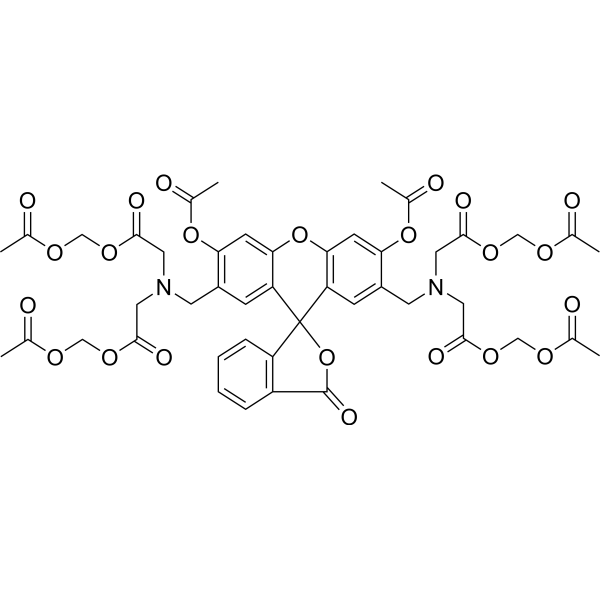
Calcein AM, has cell membrane permeability and can easily enter the cell. Calcein AM has no fluorescence and is hydrolyzed by endogenous esterase in the cell to produce polar molecule Calcein (Calcein), which has strong negative charge and cannot permeate the cell membrane. Calcein can emit strong green fluorescence, so it is often used with Propidium Iodide for cell viability/virulence detection, excitation/emission wavelength: 494/515 nm .
|
-
- HY-DY1036
-
|
|
Fluorescent Dye
|
Cancer
|
Calcein AM (solution) , has cell membrane permeability and can easily enter the cell. Calcein AM has no fluorescence and is hydrolyzed by endogenous esterase in the cell to produce polar molecule Calcein (Calcein) , which has strong negative charge and cannot permeate the cell membrane. Calcein can emit strong green fluorescence, so it is often used with Propidium Iodide for cell viability/virulence detection, excitation/emission wavelength: 494/515 nm . Solvent and concentration: DMSO: 2 mM
|
-
- HY-148502
-
|
|
mAChR
|
Neurological Disease
|
|
VU6019650 is a potent and selective orthosteric antagonist of M5 mAChR (IC50=36 nM), can be used for opioid use disorder (OUD) relief. VU6019650 can cross blood brain barrier, potentially modulates the mesolimbic dopaminergic reward circuitry. VU6019650 blocks Oxotremorine M iodide (HY-101372A) induced increases of neuronal firing rates of midbrain dopamine neurons in the ventral tegmental area (VTA) .
|
-
- HY-Y1772S
-
|
p-Iodotoluene-d7; p-Methyliodobenzene-d7; p-Tolyl Iodide-d7
|
Isotope-Labeled Compounds
|
Others
|
|
1-Iodo-4-methylbenzene-d7 is the deuterium labeled 1-Iodo-4-methylbenzene .
|
-
- HY-D0918
-
|
|
Fluorescent Dye
|
Others
|
|
YO-PRO-1 is a non-cell-membrane-penetrating green fluorescent dye. YO-PRO-1 cannot penetrate normal cell membranes but can penetrate the membranes of apoptotic and necrotic cells. YO-PRO-1 has a high affinity for DNA. When it is not bound to DNA, it emits almost no fluorescence, and when it binds to DNA, it can emit green fluorescence (Ex/Em: 488/530±30 nM). YO-PRO-1 is often used together with Propidium Iodide (HY-D0815) to analyze and identify apoptotic and necrotic cells .
|
-
- HY-107903
-
|
Thyroglobulin from bovine
|
Biochemical Assay Reagents
|
Cancer
|
|
Thyroglobulin is a 660 kDa, dimeric glycoprotein produced by the follicular cells of the thyroid and used entirely within the thyroid gland. Thyroglobulin acts as a substrate for the synthesis of the thyroid hormones thyroxine (T4) and triiodothyronine (T3), as well as the storage of the inactive forms of thyroid hormone and iodine within the follicular lumen of a thyroid follicle. Thyroglobulin activates Akt kinase activity in FRTL-5 thyroid cell .
|
-
- HY-W016414
-
|
|
Environmental Pollutants
Endogenous Metabolite
|
Cardiovascular Disease
|
|
Triethyl phosphate is a versatile phosphate ester compound. Triethyl phosphate induces rapid and short-acting anesthesia, and exhibits hypotensive, smooth muscle relaxant, and cardiac inhibitory effects. Triethyl phosphate also modulates cholinergic toxicity; its anesthetic effect shows sex- and age-dependency in rodents, and it interacts with SKF 525-A (HY-B1311) to alter the duration of anesthesia .
|
-
| Cat. No. |
Product Name |
Type |
-
- HY-D0815
-
|
|
Fluorescent Dye
|
|
Propidium Iodide (PI) is a nuclear staining agent that stains DNA. Propidium Iodide is an analogue of ethidine bromide that emits red fluorescence upon embedding in double-stranded DNA. Propidium Iodide cannot pass through living cell membranes, but it can pass through damaged cell membranes to stain the nucleus. Propidium Iodide has a fluorescence wavelength of 493/617 nm and a wavelength of 536/635 nm after Mosaic with DNA. Propidium Iodide is commonly used in the detection of apoptosis (apoptosis) or necrosis (necrosis), and is often used in flow cytometry analysis.
|
-
- HY-D0041
-
|
Calcein acetoxymethyl ester
|
Fluorescent Dye
|
|
Calcein AM, has cell membrane permeability and can easily enter the cell. Calcein AM has no fluorescence and is hydrolyzed by endogenous esterase in the cell to produce polar molecule Calcein (Calcein), which has strong negative charge and cannot permeate the cell membrane. Calcein can emit strong green fluorescence, so it is often used with Propidium Iodide for cell viability/virulence detection, excitation/emission wavelength: 494/515 nm .
|
-
- HY-D2908
-
|
|
Fluorescent Dye
|
SYTO9 is a green fluorescent nucleic acid dye (Ex = 485 nm, Em = 498 nm (DNA)/501 nm (RNA)). SYTO9 can penetrate the intact cell membrane of viable bacteria. When the cell membrane is damaged (cell death), its rate of entry into cells increases, and it competes with propidium iodide (PI) (HY-D0815), another membrane-impermeable dye, for nucleic acid binding sites. SYTO9 is widely used in fluorescence microscopy, flow cytometry, and fluorometric assays in microbiology for bacterial counting, viability assessment, and cell imaging .
|
-
- HY-D0084
-
|
DiOC6(3) Iodide
|
Fluorescent Dye
|
|
3,3'-Dihexyloxacarbocyanine iodide is a carbocyanine dye which can be used to monitor changes in mitochondrial membrane potential.
|
-
- HY-DY1036
-
|
|
Fluorescent Dye
|
Calcein AM (solution) , has cell membrane permeability and can easily enter the cell. Calcein AM has no fluorescence and is hydrolyzed by endogenous esterase in the cell to produce polar molecule Calcein (Calcein) , which has strong negative charge and cannot permeate the cell membrane. Calcein can emit strong green fluorescence, so it is often used with Propidium Iodide for cell viability/virulence detection, excitation/emission wavelength: 494/515 nm . Solvent and concentration: DMSO: 2 mM
|
-
- HY-B1636
-
|
|
Fluorescent Dye
|
|
Dithiazanine iodide is a broad-spectrum anthelmintic that induces irreversible relaxation and death of Trichuris trichiura. Dithiazanine iodide is used in research related to trichuriasis, strongyloidiasis, ascariasis, enterobiasis and hookworm infections .
|
-
- HY-DY1006
-
|
|
Fluorescent Dye
|
Propidium Iodide (PI) (solution) is a nuclear staining agent that stains DNA. Propidium Iodide is an analogue of ethidine bromide that emits red fluorescence upon embedding in double-stranded DNA. Propidium Iodide cannot pass through living cell membranes, but it can pass through damaged cell membranes to stain the nucleus. Propidium Iodide has a fluorescence wavelength of 493/617 nm and a wavelength of 536/635 nm after Mosaic with DNA. Propidium Iodide is commonly used in the detection of apoptosis (apoptosis) or necrosis (necrosis) , and is often used in flow cytometry analysis. Solvent and Concentration: Sterile water: 1 mg/mL The 1 mL volume is defined as the base specification. All larger sizes correspond to incremental volumes of this base.
|
-
- HY-117070
-
|
|
Fluorescent Dye
|
|
TO-PRO-3 iodide is a cell-impermeant nucleic acid stain. TO-PRO-3 iodide is useful as a nuclear counterstain and dead cell indicator (Ex/Em = 642/661 nm).
|
-
- HY-D0918
-
|
|
Fluorescent Dye
|
|
YO-PRO-1 is a non-cell-membrane-penetrating green fluorescent dye. YO-PRO-1 cannot penetrate normal cell membranes but can penetrate the membranes of apoptotic and necrotic cells. YO-PRO-1 has a high affinity for DNA. When it is not bound to DNA, it emits almost no fluorescence, and when it binds to DNA, it can emit green fluorescence (Ex/Em: 488/530±30 nM). YO-PRO-1 is often used together with Propidium Iodide (HY-D0815) to analyze and identify apoptotic and necrotic cells .
|
-
- HY-D1865
-
|
|
Fluorescent Dye
|
|
Cy3 dimethyl iodide is a dye derivative of Cyanine 3 (Cy3) (HY-D0822) with a dimethyl group in the iodide salt form. The iodide salt form increases the water solubility of the compound, making it suitable for use in aqueous solutions. Cy3 is a near-infrared fluorescent dye commonly used in biolabeling and cell imaging. Cy3 dimethyl iodide binds to biomolecules such as proteins and antibodies to track their location and dynamic changes in biological samples.
|
-
- HY-D1075
-
|
HIDC
|
Fluorescent Dye
|
|
1,1',3,3,3',3'-Hexamethylindodicarbocyanine iodide is a carbocyanine dye that stains mitochondria of live cells.
|
-
- HY-135414B
-
|
|
Fluorescent Dye
|
|
Cyanine5 NHS ester iodide is a red emitting fluorescent dye for labeling of amino-groups in peptides, proteins, and oligonucleotides .
|
-
- HY-D1072
-
|
3,3′-Dipentyloxacarbocyanine Iodide
|
Fluorescent Dye
|
|
DiOC5(3) is the membrane potential (MP)-modifying fluorochrome. DiOC5(3) is an anti-LSC compound available for diagnostic imaging. DiOC5(3) has the advantage of being a single fluorescent chemical .
|
-
- HY-D1485
-
|
|
Fluorescent Dye
|
|
3,3'-Diethylthiacyanine iodide is a cyanine fluorescent dye. 3,3'-Diethylthiacyanine iodide manifestes a pronounced affinity for bacterial cells .
|
-
- HY-D1180
-
|
3,3′-Diethylthiatricarbocyanine Iodide
|
Fluorescent Dye
|
|
DTTCI (3,3′-Diethylthiatricarbocyanine iodide) is an infrared photographic sensitizing dye. DTTCI is a highly sensitive chiroptical reporter of DNA helicity and sequence .
|
-
- HY-D1073
-
|
3,3'-Diheptyloxacarbocyanine Iodide
|
Fluorescent Dye
|
|
DiOC7(3) (3,3'-Diheptyloxacarbocyanine iodide) is a green membrane potential probe (Ex=450-490 nm, Em=510-520 nm). DiOC7(3) can be used to quantify the vascular densities .
|
-
- HY-W216621
-
|
|
Fluorescent Dye
|
|
Pinacyanol iodide is a fluorescent cyanine dye. Pinacyanol iodide exhibits ultrafast excited state isomerization .
|
-
- HY-D1074
-
|
3,3'-Dipropyloxacarbocyanine Iodide
|
Fluorescent Dye
|
|
DiOC3(3) (3,3'-Dipropyloxacarbocyanine iodide) is a green fluorescent lipophilic dye with cell membrane permeability. DiOC3(3) can be used to stain cell membranes and other lipid-soluble biological structures .
|
-
- HY-D0150A
-
|
|
Fluorescent Dye
|
|
(Z)-Thiazole Orange iodide is an asymmetric cyanine dye whose fluorescence highly depends on the local environment.(Z)-Thiazole Orange iodide is essentially dark in solution; however, its fluorescence increases a thousandfold when (Z)-Thiazole Orange iodide is introduced into double-stranded DNA and RNA (dsDNA or dsRNA). The maximum absorption of Thiazole Orange in complex with DNA is 509 nm, and the maximum emission is 532 nm. Thiazole Orange solution is widely used for determining the percentage of reticulocytes in human peripheral blood with microscopy and flow cytometry.
|
-
- HY-D1483
-
|
|
Fluorescent Dye
|
|
3,3-Dibutylthiacarbocyanine iodide is a fluorescent dye with an excitation of 559 nm and an emission 604 nm .
|
-
- HY-D1484
-
|
1,1'-Diethyl-2,4'-cyanine Iodide
|
Fluorescent Dye
|
|
Ethyl red (1,1'-Diethyl-2,4'-cyanine) iodide is an azo dye and acid–base indicator .
|
-
- HY-D1624
-
|
|
Fluorescent Dye
|
|
3,3′-Diheptylthiacarbocyanine iodide is a cyanine dye for measuring membrane potential. (λex=562 nm,λem=575 nm) .
|
-
- HY-D0058
-
|
|
Fluorescent Dye
|
|
3,3'-Dipropylthiacarbocyanine (iodide) is a multifunctional dye. Dyes are important tools in biological experiments. They can help researchers observe and analyze cell structures, track biomolecules, evaluate cell functions, distinguish cell types, detect biomolecules, study tissue pathology and monitor microorganisms. Their applications range from basic scientific research to clinical A wide range of diagnostics. Dyes are also widely used in traditional fields such as textile dyeing, as well as in emerging fields such as functional textile processing, food pigments and dye-sensitized solar cells.
|
-
- HY-B0342GL
-
|
Methylglucamine (GMP Like); Meglumin (GMP Like); Methylglucamin (GMP Like)
|
Fluorescent Dye
|
|
Meglumine (GMP Like) (Methylglucamine (GMP Like)) is the GMP Like class Meglumine (HY-B0342) that can be used as pharmaceutical excipients. Meglumine (Methylglucamine) is an orally active amino sugar derived from sorbitol. Meglumine has anti-inflammatory and antitumor activity. Meglumine is often used as an excipient in active molecules and with iodinated compounds in contrast agents such as meglumine and meglumine iodide .
|
-
- HY-D2997
-
|
|
Fluorescent Dye
|
|
1,2-Dimethylpyridinium iodide-Bodipy (Probe 1) is an H2S fluorescent probe. Self-assembled 1,2-Dimethylpyridinium iodide-Bodipy exhibits highly efficient responsiveness to H2S. The assembled form of 1,2-Dimethylpyridinium iodide-Bodipy emits near-infrared fluorescence at 718 nm upon H2S activation .
|
| Cat. No. |
Product Name |
Type |
-
- HY-107903
-
|
Thyroglobulin from bovine
|
Biochemical Assay Reagents
|
|
Thyroglobulin is a 660 kDa, dimeric glycoprotein produced by the follicular cells of the thyroid and used entirely within the thyroid gland. Thyroglobulin acts as a substrate for the synthesis of the thyroid hormones thyroxine (T4) and triiodothyronine (T3), as well as the storage of the inactive forms of thyroid hormone and iodine within the follicular lumen of a thyroid follicle. Thyroglobulin activates Akt kinase activity in FRTL-5 thyroid cell .
|
-
- HY-D0904
-
|
S-Acetylthiocholine Iodide; ATCh Iodide
|
Biochemical Assay Reagents
|
|
Acetylthiocholine iodide can be used as a substrate for certain enzymes, such as cholinesterase, etc., and can be used to determine the activity level of these enzymes. In addition, the compound is used in some medical research, for example in the fields of neuroscience and organ physiology.
|
-
- HY-B1770
-
|
|
Biochemical Assay Reagents
|
|
Sodium Iodide is a compound composed of sodium ions and iodine ions. Sodium Iodide scavenges hydrogen peroxide. Sodium Iodide maintains the level of thyroid hormone T3 through its iodine component. Sodium Iodide protects tissues from oxidative damage and regulates thyroid homeostasis. Sodium Iodide relieves acute myocardial infarction .
|
-
- HY-Y0283
-
|
|
Biochemical Assay Reagents
|
|
Potassium iodide is a biochemical reagent that can be used as a biological material or organic compound for life science related research.
|
-
- HY-Y0961
-
|
Copper(I) Iodide
|
Biochemical Assay Reagents
|
|
Cuprous iodide (Copper(I) iodide) is a biochemical reagent that can be used as a biological material or organic compound for life science related research.
|
-
- HY-Y0791
-
|
Tetra-n-butylammonium Iodide; TBAI
|
Biochemical Assay Reagents
|
|
Tetra-n-butylammonium iodide is a biochemical reagent that can be used as a biological material or organic compound for life science related research.
|
-
- HY-W019927
-
|
Ammonium ferric sulfate dodecahydrate, 99%
|
Biochemical Assay Reagents
|
|
Ammonium iron(III) sulfate dodecahydrate, 99% is an analytical reagent-grade iron(III) salt and source material for iron(III) reagent or standard solutions in volumetric analysis .
|
-
- HY-D0905
-
|
|
Biochemical Assay Reagents
|
|
S-n-Butyrylthiocholine iodide is a substrate of BChE. S-n-Butyrylthiocholine iodide commonly used for in vitro enzymatic experiments .
|
-
- HY-W019930
-
|
|
Biochemical Assay Reagents
|
|
Silver iodide is a kind of biological materials or organic compounds that are widely used in life science research .
|
-
- HY-159051
-
|
|
Biochemical Assay Reagents
|
|
Dragendorff reagent is used for detecting alkaloids and other nitrogen-containing compounds. Dragendorff reagent is a solution of potassium bismuth iodide composing of Basic bismuth nitrate (Bi(NO3)3), Tartaric acid (HY-N2436), and Potassium iodide (KI). When contact with alkaloids, Dragendorff reagent produces an orange or orange red precipitate .
|
-
- HY-W009190
-
|
1,1-Dimethyl-4-phenylpiperazin-1-ium Iodide
|
Biochemical Assay Reagents
|
|
1,1-Dimethyl-4-phenylpiperazin-1-ium iodide is a biochemical reagent that can be used as a biological material or organic compound for life science related research.
|
-
- HY-W250307
-
|
|
Biochemical Assay Reagents
|
|
Diphenyliodonium iodide is an inhibitor of reactive oxygen species (ROS). Diphenyliodonium iodide can inhibit the accumulation of bisdemethoxycurcumin in fresh-cut yam by inhibiting the phenylpropanoid pathway and the biosynthesis of bisdemethoxycurcumin, thereby preventing the yellowing of fresh-cut yam. Diphenyliodonium iodide can be used in medicine and fruit preservation .
|
-
- HY-W039760
-
|
|
Biochemical Assay Reagents
|
|
2-Hydroxy-N,N,N-trimethylethan-1-aminium iodide, also known as choline iodide, is a quaternary ammonium salt commonly used in organic synthesis and biochemical research. It is a water-soluble compound derived from choline, an essential nutrient found in many foods. Choline iodide has been used as a source of choline groups in various chemical reactions and in microbiology as a selective agent for isolating bacteria. In addition, its potential role in cognitive impairment and liver disease has also been studied.
|
-
- HY-W014861
-
|
Tetramethyl-ammoniuIodide
|
Biochemical Assay Reagents
|
|
Tetramethylammonium iodide (Tetramethyl-ammoniuiodide) is a capillary active agent and weakly capillary active quasi-simple salt. Tetramethylammonium iodide decreases aqueous solution surface tension with increasing concentration and exhibits surface accumulation of constituent ions at liquid-vapor interfaces .
|
-
- HY-W013231
-
|
Benzyltriethylammonium Iodide
|
Biochemical Assay Reagents
|
|
N-Benzyl-N,N-diethylethanaminium iodide is a quaternary ammonium salt consisting of a positively charged N-benzyl-N,N-diethylethylamine cation and a negatively charged iodide anion. This compound is commonly used as a phase transfer catalyst in organic chemical reactions, facilitating the transfer of reactants between immiscible phases. It can also be used as a reagent for the synthesis of various organic compounds, and as a surfactant or emulsifier in industrial and personal care products.
|
-
- HY-W127668
-
|
|
Biochemical Assay Reagents
|
|
(2-hydroxyethyl)triethylammonium iodide is a biochemical reagent that can be used as a biological material or organic compound for life science related research.
|
-
- HY-W101253
-
|
|
Biochemical Assay Reagents
|
|
Tetraethylammonium (iodide) is a quaternary ammonium compound belonging to the class of alkylammonium salts. This compound is commonly used as a phase-transfer catalyst in organic synthesis because it facilitates the transfer of reactants between immiscible phases. It can also be used as an electrolyte in electrochemical devices and as a surfactant in detergent formulations. Its unique chemical properties make it an important ingredient in a variety of industrial applications, including pharmaceuticals, agrochemicals, and materials science.
|
-
- HY-W004126
-
|
2-Pyridyl Iodide
|
Biochemical Assay Reagents
|
|
2-Iodopyridine is a biochemical reagent that can be used as a biological material or organic compound for life science related research.
|
-
- HY-W127659
-
|
Tetrapentylammonium Iodide
|
Biochemical Assay Reagents
|
|
Tetraamylammonium Iodide is a biochemical reagent that can be used as a biological material or organic compound for life science related research.
|
-
- HY-W127665
-
|
Phenyltriethylammonium Iodide
|
Biochemical Assay Reagents
|
|
Triethylphenylammonium Iodide is a biochemical reagent that can be used as a biological material or organic compound for life science related research.
|
-
- HY-W130177
-
|
|
Biochemical Assay Reagents
|
|
Iodocholine iodide is a non-toxic, metabolizable "green" catalyst that can catalyze the free radical polymerization of functional polymers. Iodocholine iodide is also the non-radioactive iodide of Carbon-11 choline. C-11 Choline can be used in PET imaging and non-informative bone scintigraphy, CT or MRI to monitor various types of cancer .
|
-
- HY-W009236
-
|
|
Biochemical Assay Reagents
|
|
Butyrylcholine Iodide is a biochemical reagent that can be used as a biological material or organic compound for life science related research.
|
-
- HY-W127661
-
|
|
Biochemical Assay Reagents
|
|
Tetraheptylammonium Iodide is a biochemical reagent that can be used as a biological material or organic compound for life science related research.
|
-
- HY-W127666
-
|
|
Biochemical Assay Reagents
|
|
Benzoylcholine Iodide is a biochemical reagent that can be used as a biological material or organic compound for life science related research.
|
-
- HY-W127669
-
|
|
Biochemical Assay Reagents
|
|
Benzoylthiocholine Iodide is a biochemical reagent that can be used as a biological material or organic compound for life science related research.
|
-
- HY-W127663
-
|
|
Biochemical Assay Reagents
|
|
3-(Trifluoromethyl)phenyltrimethylammonium Iodide is a biochemical reagent that can be used as a biological material or organic compound for life science related research.
|
-
- HY-W099640
-
|
Tetra-n-octylammonium Iodide
|
Biochemical Assay Reagents
|
|
Tetraoctylammonium iodideIt is an organic compound and belongs to the category of quaternary ammonium salts. It is often used as a phase transfer catalyst, meaning it facilitates a reaction between two immiscible phases, such as an aqueous phase and an organic phase. Tetraoctylammonium iodideIt has a variety of applications in organic synthesis, especially in reactions involving nucleophilic substitution, oxidation, and reduction. Additionally, it is used as a surfactant and emulsifier in industrial and laboratory settings.
|
-
- HY-W101257
-
|
Ethyltrimethylammonium Iodide
|
Biochemical Assay Reagents
|
|
N,N,N-Trimethylethanaminium iodide is a biochemical reagent that can be used as a biological material or organic compound for life science related research.
|
-
- HY-W009423
-
|
N,N,N-Trimethylbenzenaminium Iodide
|
Biochemical Assay Reagents
|
|
N,N,N-trimethylbenzenaminium iodide is a biochemical reagent that can be used as a biological material or organic compound for life science related research.
|
-
- HY-W127660
-
|
|
Biochemical Assay Reagents
|
|
Tetrahexylammonium iodide is a biochemical reagent that can be used as a biological material or organic compound for life science related research.
|
-
- HY-W076166C
-
-
- HY-W009202
-
|
TAPI
|
Biochemical Assay Reagents
|
|
Tetrapropylammonium iodide is an organic compound commonly used as ionic liquids and catalysts. It can be used as a solvent in some chemical reactions, and can also be used as a catalyst to promote some organic synthesis reactions. In addition, the compound is also widely used in batteries, solar cells and pigments.
|
-
- HY-34619
-
|
|
Biochemical Assay Reagents
|
|
[Hydroxy(tosyloxy)iodo]benzene is a versatile reagent for the mild oxidation of aryl iodides at the iodine atom by ligand transfer. [Hydroxy(tosyloxy)iodo]benzene is an effective reagent for the one-step conversion of ketones to the corresponding α-tosyloxy ketones. [Hydroxy(tosyloxy)iodo]benzene is also a Bronsted acid and is expected to catalyze the enolization of ketones .
|
-
- HY-W127662
-
|
Dimethyldistearylammonium Iodide
|
Biochemical Assay Reagents
|
|
Dimethyldioctadecylammonium Iodide is a biochemical reagent that can be used as a biological material or organic compound for life science related research.
|
-
- HY-W127670
-
|
|
Biochemical Assay Reagents
|
|
Decamethonium (iodide) is an organic compound containing ammonium and iodide ions. It is commonly used as a neuromuscular blocking agent in anesthesia to induce muscle relaxation during surgery. Decamethonium Iodide acts by binding to nicotinic acetylcholine receptors (nAChRs) in the neuromuscular junction, causing depolarization block and subsequent skeletal muscle paralysis. In addition, it can also serve as a reference standard for pharmacological studies of nAChRs.
|
-
- HY-W127667
-
|
2-Methylcholine Iodide
|
Biochemical Assay Reagents
|
|
β-Methylcholine Iodide is a biochemical reagent that can be used as a biological material or organic compound for life science related research.
|
-
- HY-W075836
-
|
|
Biochemical Assay Reagents
|
|
Ferrocenylmethyltrimethylammonium (iodide) is an organometallic salt consisting of a ferrocenyl group attached to a quaternary ammonium cation via a methylene bridge. Ferrocenylmethyltrimethylammonium (iodide) has been used as a catalyst and reagent in various organic reactions, including oxidation, reduction, and CH bond activation. In addition, it is also used as a precursor for the synthesis of other organometallic compounds and as a potential material for electrochemical applications.
|
-
- HY-W099929
-
|
|
Biochemical Assay Reagents
|
|
N-Ethyl-N,N-dipropylpropan-1-aminium iodide is a quaternary ammonium compound belonging to the class of alkylammonium salts. N-Ethyl-N,N-dipropylpropan-1-aminium (iodide) is commonly used as a phase transfer catalyst in organic synthesis to transfer reactants between immiscible phases. It can also be used as a surfactant, antimicrobial or corrosion inhibitor. Its unique chemical properties make it an essential reagent in many different industrial applications, including pharmaceuticals, agrochemicals, and materials science.
|
-
- HY-B0342GL
-
|
Methylglucamine (GMP Like); Meglumin (GMP Like); Methylglucamin (GMP Like)
|
Biochemical Assay Reagents
|
|
Meglumine (GMP Like) (Methylglucamine (GMP Like)) is the GMP Like class Meglumine (HY-B0342) that can be used as pharmaceutical excipients. Meglumine (Methylglucamine) is an orally active amino sugar derived from sorbitol. Meglumine has anti-inflammatory and antitumor activity. Meglumine is often used as an excipient in active molecules and with iodinated compounds in contrast agents such as meglumine and meglumine iodide .
|
| Cat. No. |
Product Name |
Target |
Research Area |
-
- HY-14614D
-
|
S-Adenosyl methionine Iodide; Ademetionine Iodide; AdoMet Iodide
|
Endogenous Metabolite
Apoptosis
|
Neurological Disease
Inflammation/Immunology
Cancer
|
|
S-Adenosyl-L-methionine (S-Adenosyl methionine) iodide is an orally active methyl group donor. S-Adenosyl-L-methionine iodide is a dietary supplement with potent antidepressant effects. S-Adenosyl-L-methionine iodide also has anti‑proliferative, pro‑apoptotic and anti‑metastatic roles in cancers. S-Adenosyl-L-methionine iodide has the potential for, cancer, liver disease and osteoarthritis research .
|
-
- HY-P11455A
-
|
|
Liposome
|
Others
|
|
Lipopeptide CPE4 TFA is a PEG-modified peptide E4 [(EIAALEK) 4]. Lipopeptide CPE4 TFA is capable of coiled-coil formation when attached to liposomes. Lipopeptide CPE4 TFA triggers membrane fusion between liposomes and living cells with concomitant efficient cytosolic delivery of a variety of compounds such as fluorescent dyes Propidium Iodide (PI) (HY-D0815) and TO-PRO-3 iodide (HY-117070), and Doxorubicin (DOX) (HY-15142A). Lipopeptide CPE4 TFA can be used for drug delivery research .
|
-
- HY-P11456A
-
|
|
Liposome
|
Others
|
|
Lipopeptide CPK4 TFA is a Cholesterol (HY-N0322)-modified peptide K4 [(KIAALKE) 3]. Lipopeptide CPK4 TFA is capable of coiled-coil formation when attached to liposomes. Lipopeptide CPK4 TFA triggers membrane fusion between liposomes and living cells with concomitant efficient cytosolic delivery of a variety of compounds such as fluorescent dyes Propidium Iodide (PI) (HY-D0815) and TO-PRO-3 iodide (HY-117070), and Doxorubicin (DOX) (HY-15142A). Lipopeptide CPK4 TFA can be used for drug delivery research .
|
-
- HY-P11455
-
|
|
Liposome
|
Others
|
|
Lipopeptide CPE4 is a PEG-modified peptide E4 [(EIAALEK) 4]. Lipopeptide CPE4 is capable of coiled-coil formation when attached to liposomes. Lipopeptide CPE4 triggers membrane fusion between liposomes and living cells with concomitant efficient cytosolic delivery of a variety of compounds such as fluorescent dyes Propidium Iodide (PI) (HY-D0815) and TO-PRO-3 iodide (HY-117070), and Doxorubicin (DOX) (HY-15142A). Lipopeptide CPE4 can be used for drug delivery research .
|
-
- HY-P11456
-
|
|
Liposome
|
Others
|
|
Lipopeptide CPK4 is a Cholesterol (HY-N0322)-modified peptide K4 [(KIAALKE) 3]. Lipopeptide CPK4 is capable of coiled-coil formation when attached to liposomes. Lipopeptide CPK4 triggers membrane fusion between liposomes and living cells with concomitant efficient cytosolic delivery of a variety of compounds such as fluorescent dyes Propidium Iodide (PI) (HY-D0815) and TO-PRO-3 iodide (HY-117070), and Doxorubicin (DOX) (HY-15142A). Lipopeptide CPK4 can be used for drug delivery research .
|
-
- HY-K1092
-
|
|
|
MCE YO-PRO-1/PI Apoptosis and Necrosis Detection Kit is a dual-fluorescence method based on the green fluorescent dye YO-PRO-1 (YP1) and the red fluorescent dye Propidium Iodide (PI) for detecting cell apoptosis and necrosis.
|
| Cat. No. |
Product Name |
Category |
Target |
Chemical Structure |
| Cat. No. |
Compare |
Product Name |
Species |
Source |
Image |
Compare Products
|
| Products |
|
| Cat. No. |
|
| Species |
|
| Source |
|
| Tag |
|
| Accession |
|
| Gene ID |
|
| Molecular Weight |
|
| Purity |
|
| Endotoxin Level |
|
| Biological Activity |
|
| Appearance |
|
| Formulation |
|
| Storage & Stability |
|
| Shipping |
|
| Free Sample |
Yes
No
|
| Size |
* This product has been "discontinued".
Optimized version of product available:
|
| Cat. No. |
Product Name |
Chemical Structure |
-
- HY-143950S
-
|
|
|
DOTAP-d9 (iodide) is the deuterium labeled DOTAP iodide .
|
-
-
- HY-144147S
-
|
|
|
N-Methyl Quinidine-d3 (iodide) is the deuterium labeled N-Methyl Quinidine iodide .
|
-
-
- HY-W009418S
-
|
|
|
1-Methylnicotinamide- 13C,d3 (iodide) is the 13C- and deuterium labeled 3-Carbamoyl-1-methylpyridin-1-ium iodide .
|
-
-
- HY-W008719S
-
|
|
|
MPP+-d3 (iodide) is deuterium labeled MPP+ (iodide). MPP+ iodide, a toxic metabolite of the neurotoxin MPTP, causes symptom of Parkinson's disease in animal models by selectively destroying dopaminergic neurons in substantia nigra. MPP+ iodide is taken up by the dopamine transporter into dopaminergic neurons where it exerts its neurotoxic action on mitochondria by affecting complex I of the respiratory chain. MPP+ iodide is also a high affinity substrate for the serotonin transporter (SERT) .
|
-
-
- HY-107654S
-
|
|
|
Muscarine-d9 (iodide) is the deuterium labeled Muscarine iodide. Muscarine ((+)-Muscarine) iodide is a toxin that can stimulate the parasympathetic nervous system. Muscarine iodide is a prototype muscarinic acetylcholine receptor agonist .
|
-
-
- HY-Y0503S
-
|
|
|
Methyltriphenylphosphonium iodide-d3 is the deuterium labeled Methyltriphenylphosphonium iodide .
|
-
-
- HY-24350
-
|
|
|
Trimethylsulfoxonium-d9 Iodide is the deuterium labeled Trimethylsulfoxonium Iodide[1].
|
-
-
- HY-W740050
-
|
|
|
Ipratropium-d3 Iodide is the deuterium labeled Ipratropium Iodide.
|
-
-
- HY-W739836
-
|
|
|
Methscopolamine-d3 Iodide is the deuterium labeled Methscopolamine Iodide.
|
-
-
- HY-129948S
-
|
|
|
Ipratropium-d3 (iodide) is the deuterium labeled Ipratropium iodide .
|
-
-
- HY-142328S
-
|
|
|
Propantheline-d3 (iodide) is the deuterium labeled Propantheline iodide .
|
-
-
- HY-W009418S1
-
|
|
|
1-Methylnicotinamide-d4 iodide is deuterated labeled 1-Methylnicotinamide.
|
-
-
- HY-143977S
-
|
|
|
Loxapine impurity 3-d8 (iodide) is the deuterium labeled Loxapine impurity 3 iodide .
|
-
-
- HY-W769362
-
|
|
|
N-Methyl Ticlopidine- 13C,d3 Iodide is the deuterium labeled and 13C-labeled N-Methyl Ticlopidine Iodide.
|
-
-
- HY-W705503
-
|
|
|
3-Carbamoyl-1-methylpyridin-1-ium-d3 (iodide) is deuterium-labeled 3-Carbamoyl-1-methylpyridin-1-ium .
|
-
-
- HY-W771025
-
|
|
|
1,4-Diiodobutane- 13C4 (Tetramethylene Iodide (stabilized with Copper chip)- 13C4) is the 13C-labeled 1,4-Diiodobutane (HY-W004871).
|
-
-
- HY-W865912
-
|
|
|
Methylmagnesium iodide-d3 is the deuterium labeled Methylmagnesium iodide.
|
-
-
- HY-20778S
-
|
|
|
Trimethylsulfonium-d9 (iodide) is deuterium labeled Trimethylsulfonium iodide.
|
-
-
- HY-166417S
-
|
|
|
Tiotropium-d3 iodide is the deuterium labeled Tiotropium iodide. Tiotropium-d3 iodide is a muscarinic acetylcholine receptor (mAChR) antagonist that blocks the binding of the acetylcholine ligand. Tiotropium-d3 iodide serves as a stable isotope tracer for quantitative analysis .
|
-
-
- HY-Y0791S
-
|
|
|
Tetrabutylammonium-d36 iodide (Tetra-n-butylammonium-d36 iodide) is the deuterium labeled Tetrabutylammonium iodide (HY-Y0791). Tetrabutylammonium iodide is a quaternary ammonium salt commonly used as a phase transfer catalyst, surfactant, and stabilizer in various chemical reactions, especially in organic synthesis. Tetrabutylammonium iodide has unique chemical properties that facilitate the transfer of ions or molecules from one phase to another, making it an important ingredient in a variety of industrial processes.
|
-
-
- HY-W704306
-
|
|
|
N-Methyl mepivacaine-d6 iodide is the deuterium labeled N-Methyl mepivacaine iodide.
|
-
-
- HY-122524AS1
-
|
|
|
7-Methylguanosine- 13C iodide is the 13C-labeled 7-Methylguanosine iodide (HY-122524A). 7-Methylguanosine iodide is an iodide of 7-Methylguanosine (HY-122524). 7-Methylguanosine is a modified nucleoside widely present in various RNAs and a key metabolite of the 5'-cap structure of eukaryotic mRNA. 7-Methylguanosine plays important roles in stabilizing RNA structures, regulating translation, and other aspects.
|
-
-
- HY-166891S
-
|
|
|
Tiotropium EP Impurity G-d3(Iodide) is deuterium labeled Tiotropium EP Impurity G .
|
-
-
- HY-W654209
-
|
|
|
Glycopyrrolate iodide-d3
(mixture of diastereomers) is deuterium labeled 3-(2-Cyclopentyl-2-hydroxy-2-phenylacetoxy)-1,1-dimethylpyrrolidin-1-ium iodide .
|
-
-
- HY-122524AS
-
|
|
|
7-Methylguanosine- 13C,d3 iodide is the 13C- and deuterium labeled 7-Methylguanosine iodide (HY-122524A). 7-Methylguanosine iodide is an iodide of 7-Methylguanosine (HY-122524). 7-Methylguanosine is a modified nucleoside widely present in various RNAs and a key metabolite of the 5'-cap structure of eukaryotic mRNA. 7-Methylguanosine plays important roles in stabilizing RNA structures, regulating translation, and other aspects.
|
-
-
- HY-W111468S
-
|
|
|
1-Iodohexadecane-d4 (Hexadecyl Iodide-d4) is the deuterium labeled 1-Iodohexadecane.
|
-
-
- HY-Y1772S
-
|
|
|
1-Iodo-4-methylbenzene-d7 is the deuterium labeled 1-Iodo-4-methylbenzene .
|
-
| Cat. No. |
Product Name |
|
Classification |
-
- HY-151665
-
|
|
|
Alkynes
|
|
Alkyne-PEG2-iodide is a click chemistry reagent with terminal alkyne and alkyl iodide groups.
|
| Cat. No. |
Product Name |
|
Classification |
-
- HY-172329
-
|
|
|
Cationic Lipids
|
|
Q1-ALC-0315 iodide is a cationic quaternary ammonium lipid derivative of the ionizable cationic lipid ALC-0315 (HY-138170). Q1-ALC-0315-based LNPs can be used for lung-targeted mRNA delivery, which demonstrates high-performing firefly luciferase protein expression in the lungs .
|
| Cat. No. |
Product Name |
Target |
Research Areas |
Chemical Structure |
-
- HY-B0342GL
-
|
Methylglucamine (GMP Like); Meglumin (GMP Like); Methylglucamin (GMP Like)
|
Biochemical Assay Reagents
|
Cancer
|
|
Meglumine (GMP Like) (Methylglucamine (GMP Like)) is the GMP Like class Meglumine (HY-B0342) that can be used as pharmaceutical excipients. Meglumine (Methylglucamine) is an orally active amino sugar derived from sorbitol. Meglumine has anti-inflammatory and antitumor activity. Meglumine is often used as an excipient in active molecules and with iodinated compounds in contrast agents such as meglumine and meglumine iodide .
|
-
Your information is safe with us. * Required Fields.
Inquiry Information
- Product Name:
- Cat. No.:
- Quantity:
- MCE Japan Authorized Agent: