
1. Search Result
Search Result
Results for "

Maillard

" in MedChemExpress (MCE) Product Catalog:

27

Inhibitors & Agonists

2

Biochemical Assay Reagents

16

Natural
Products

1

Recombinant Proteins

3

Isotope-Labeled Compounds

Cat. No. Product Name Target Research Areas Chemical Structure
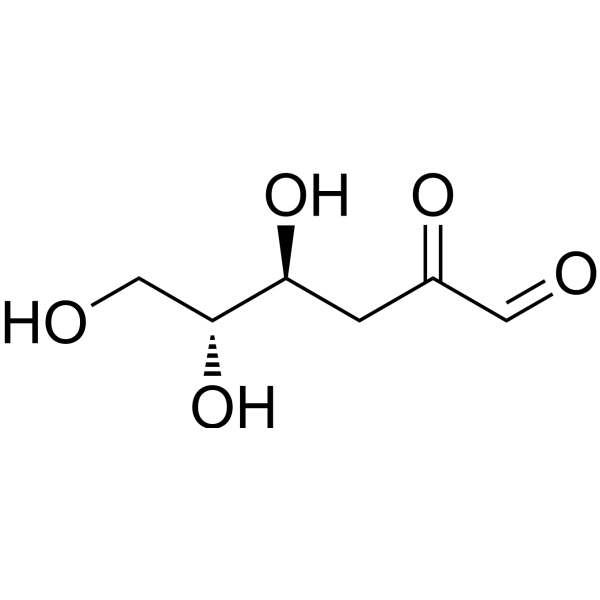
  • HY-N7426

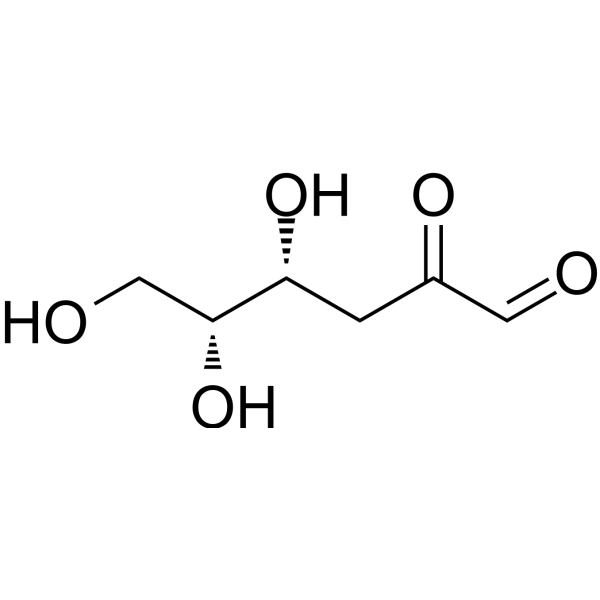
    3-Deoxy-D-glucosone

    GLP Receptor Metabolic Disease
    3-Deoxyglucosone (3-Deoxy-D-glucosone) is a reactive intermediate of the Maillard reaction and the polyol pathway. 3-Deoxyglucosone rapidly reacts with protein amino groups to form advanced glycation end products (AGEs), such as imidazolone, it is the most specific AGE for 3-DG. 3-Deoxyglucosone synergizes with low glucose to potentiate GLP-1 secretion and is considered as a biomarker for diabetes .
    3-Deoxyglucosone
  • HY-129380
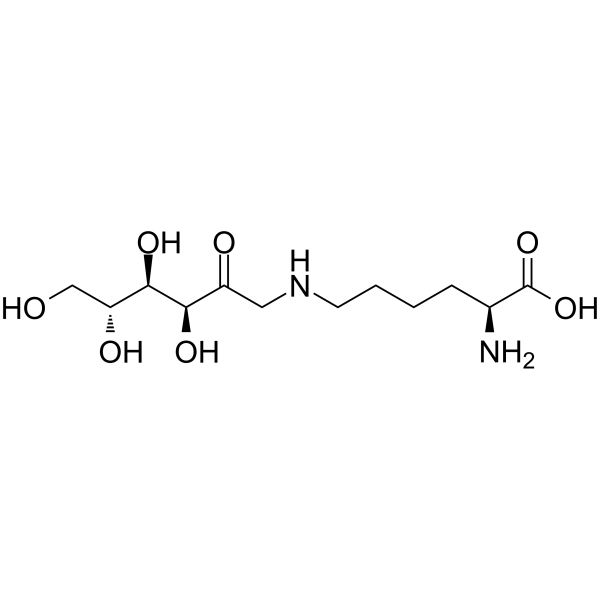
    Fructosyl-lysine
    1 Publications Verification

    Fructoselysine

    Endogenous Metabolite Metabolic Disease
    Fructosyl-lysine (Fructoselysine) is an amadori glycation product from the reaction of glucose and lysine by the Maillard reaction. Fructosyl-lysine is the precursor to glucosepane, a lysine–arginine protein cross-link that can be an indicator in diabetes?detection .
    Fructosyl-lysine
  • HY-139078
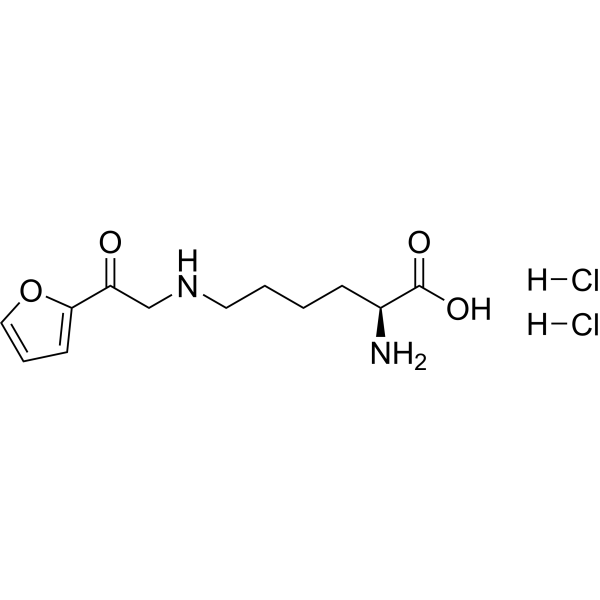
    Furosine dihydrochloride
    1 Publications Verification

    Amino Acid Derivatives Metabolic Disease
    Furosine dihydrochloride, an amino acid derivative, is an important chemical marker of early-stage Maillard reactions. Furosine dihydrochloride is closely related to a variety of diseases such as diabetes .
    Furosine dihydrochloride
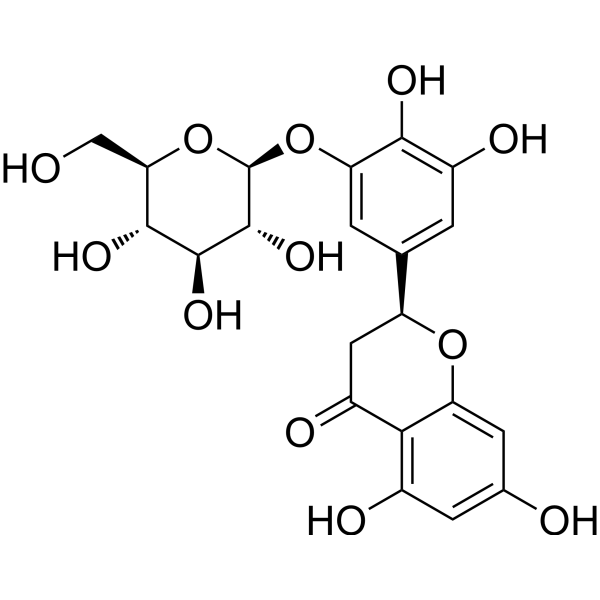
  • HY-N1470

    Glycosidase Metabolic Disease
    Plantagoside is a flavanone glucoside found in Plantago asiatica seeds, acting as a specific non-competitive α-mannosidase inhibitor with IC50 values of 5 μM and a Ki of 2.7 μM (jack bean). Plantagoside suppresses antibody response and Concanavalin A (HY-P2149)-induced lymphocyte proliferation in mouse spleen cells. Plantagoside inhibits the Maillard reaction, advanced glycation end product formation, and glycation-dependent protein-protein cross-link formation. Plantagoside can be used for the research of diabetes .
    Plantagoside
  • HY-112624E

    Dextran 0.8; Dextran D0.8; Dextran T0.8(MW 640-960)

    Biochemical Assay Reagents Others
    Dextran T0.8 (Dextran 0.8; Dextran T0.8(MW 640-960)) is a food additive with a porous network structure that exhibits strong hydration capacity and low browning activity. Dextran T0.8 (MW 800) can improve the coagulation of dairy products and is used as a prebiotic in baked goods. Dextran T0.8 (MW 800) is non-toxic to HeLa cells at a concentration of ~500 μg/mL and has a low relative browning rate in the Maillard reaction. The Dextran series of compounds are also natural polysaccharide drug carriers that can be connected to drugs through covalent bonding methods such as ester bonds, amide bonds or click chemistry, or self-assembled to form carriers such as nanoparticles and hydrogels. Dextran is biodegradable and biocompatible, and can achieve targeted delivery and controlled release of drugs. Dextran derivatives can prolong the half-life of drugs, increase local concentrations, and reduce the activity of immune clearance .
    Dextran T0.8 (MW 800)
  • HY-129380A
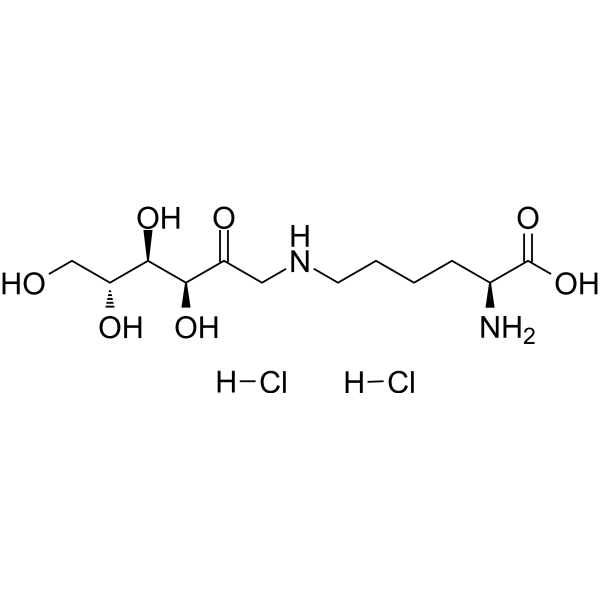
    Fructosyl-lysine dihydrochloride
    1 Publications Verification

    Fructoselysine dihydrochloride

    Endogenous Metabolite Metabolic Disease
    Fructosyl-lysine (Fructoselysine) dihydrochloride is an amadori glycation product from the reaction of glucose and lysine by the Maillard reaction. Fructosyl-lysine dihydrochloride is the precursor to glucosepane, a lysine–arginine protein cross-link that can be an indicator in diabetes detection .
    Fructosyl-lysine dihydrochloride
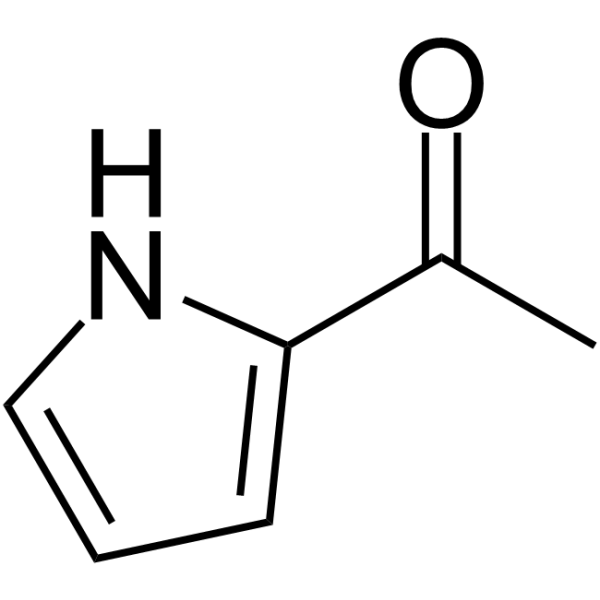
  • HY-W012956

    Drug Intermediate Others
    2-Acetylpyrrole is an organic compound containing a pyrrole ring. 2-Acetylpyrrole is one of the products of the Maillard browning reaction and can serve as a major flavor component in many foods. As an intermediate, 2-acetylpyrrole can also be used in the synthesis of other active compounds, such as the flavor compound 2-acetyl-1-pyrroline .
    2-Acetylpyrrole
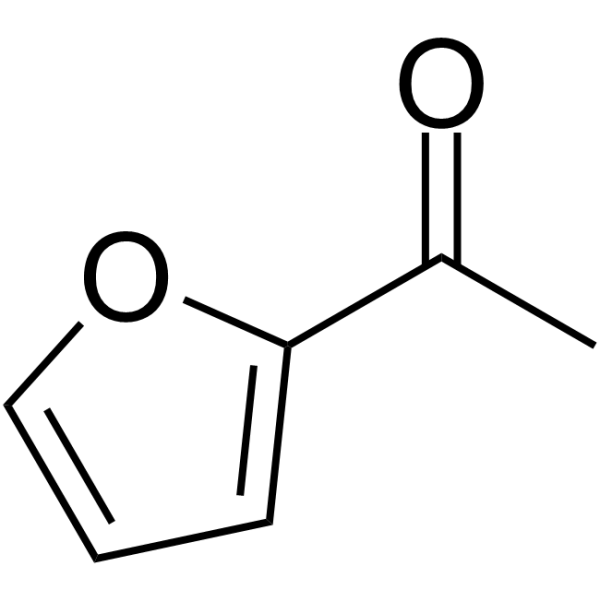
  • HY-W015912

    2-Furyl methyl ketone

    Drug Intermediate Infection
    2-Acetylfuran (2-Furyl methyl ketone), an important flavour compound or intermediate in foods, is isolated from essential oils, sweet corn products, fruits and flowers. 2-Acetylfuran also can be formed from glucose and glycine by Maillard reaction. 2-Acetylfuran can be used to synthesis Cefuroxime. 2-acetylfuran can be used in the synthesis of reagents with antiamoebic activity .
    2-Acetylfuran
  • HY-W001189

    Bacterial Infection
    1,3-Dithiane is a protected formaldehyde anion equivalent and a sulfur-containing Maillard reaction product. 1,3-Dithiane is found in cooked beef extracts. 1,3-Dithiane is a potent mutagenic agent against S. typhimurium TA98 and TA100. 1,3-Dithiane can be used as a useful marker synthon .
    1,3-Dithiane
  • HY-W067358

    Environmental Pollutants Biochemical Assay Reagents Others
    2-Methylpyrazine is a flavoring agent and also a green solvent used in the preparation of non-solvent induced phase separation membranes .
    2-Methylpyrazine
  • HY-118813

    Endogenous Metabolite Others
    3-Deoxy-galactosone is a 1,2-dicarbonyl compound originating from the degradation of galactose. 3-Deoxy-galactosone is formed in food during Maillard and caramelization reactions .
    3-Deoxy-galactosone
  • HY-145731

    Fru-Leu

    Endogenous Metabolite Others
    Fructose-leucine (Fru-Leu) is an Amadori compound that can be found in tobacco and is a precursor of aroma formed during the early stages of the Maillard reaction .
    Fructose-leucine
  • HY-126209

    Biochemical Assay Reagents Others
    Isomaltol is a furan compound. Isomaltol can be produced by the Maillard reaction .
    Isomaltol
  • HY-N6692S

    Endogenous Metabolite Isotope-Labeled Compounds Inflammation/Immunology
    Diacetoxyscirpenol- 13C19 is 13C labeled Diacetoxyscirpenol (HY-N6692). Diacetoxyscirpenol (DAS) is a trichothecene mycotoxin, a secondary metabolite product of fungi. Diacetoxyscirpenol (DAS) consumption induces haematological disorders (neutropenia, aplastic anemia) in human and animals .
    Diacetoxyscirpenol-13C19
  • HY-113033A

    Biochemical Assay Reagents Neurological Disease Metabolic Disease
    Pentosidine TFA is an advanced glycation end product (AGE) and cross-linked substance with fluorescent properties. Pentosidine TFA is present in various human tissues and can serve as a biomarker for diabetes, aging, uremia, protein accumulation damage, and non-enzymatic modification of long-lived proteins in the Maillard reaction. It aids in gaining a deeper understanding of the overall role of the Maillard reaction in aging and disease .
    Pentosidine TFA
  • HY-W585933

    Fru-Ala

    Others Others
    Fructose-alanine, an amadori compound, is an aroma precursor that formed in the initial phase of the Maillard reaction (MR). Fructose-alanine can be isolated from tobacco, miso and white wine. Fructose-alanine significantly induces oxidative browning and correlates with Maillard product (furfuryl alcohol) with a roasted and sweet aroma. Fructose-alanine can be used for food industry and tobacco processing research .
    Fructose-alanine
  • HY-W585933S

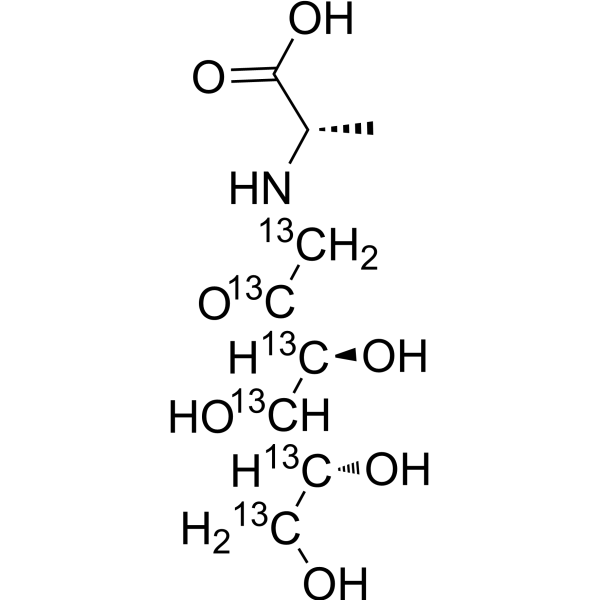
    Fru-Ala-13C6

    Isotope-Labeled Compounds Others
    Fructose-alanine- 13C6 is 13C labeled Fructose-alanine. Fructose-alanine, an amadori compound, is an aroma precursor that formed in the initial phase of the Maillard reaction (MR). Fructose-alanine can be isolated from tobacco, miso and white wine. Fructose-alanine significantly induces oxidative browning and correlates with Maillard product (furfuryl alcohol) with a roasted and sweet aroma. Fructose-alanine can be used for food industry and tobacco processing research .
    Fructose-alanine-13C6
  • HY-W001189S

    Isotope-Labeled Compounds Bacterial Infection
    1,3-Dithiane-d2 is the deuterium labeled 1,3-Dithiane (HY-W001189). 1,3-Dithiane is a protected formaldehyde anion equivalent and a sulfur-containing Maillard reaction product. 1,3-Dithiane is found in cooked beef extracts. 1,3-Dithiane is a potent mutagenic agent against S. typhimurium TA98 and TA100. 1,3-Dithiane can be used as a useful marker synthon .
    1,3-Dithiane-d2
  • HY-W001189R

    Reference Standards Bacterial Infection
    1,3-Dithiane (Standard) is an analytical standard of 1,3-Dithiane (HY-W001189). This product is intended for research and analytical applications. 1,3-Dithiane is a protected formaldehyde anion equivalent and a sulfur-containing Maillard reaction product. 1,3-Dithiane is found in cooked beef extracts. 1,3-Dithiane is a potent mutagenic agent against S. typhimurium TA98 and TA100. 1,3-Dithiane can be used as a useful marker synthon .
    1,3-Dithiane (Standard)
  • HY-W015912R

    2-Furyl methyl ketone (Standard)

    Reference Standards Others Others
    2-Acetylfuran (Standard) is the analytical standard of 2-Acetylfuran. This product is intended for research and analytical applications. 2-Acetylfuran (2-Furyl methyl ketone), an important flavour compound or intermediate in foods, is isolated from essential oils, sweet corn products, fruits and flowers. 2-Acetylfuran also can be formed from glucose and glycine by Maillard reaction. 2-Acetylfuran can be used to synthesis Cefuroxime .
    2-Acetylfuran (Standard)
  • HY-W585887

    Trp-Fru

    Biochemical Assay Reagents Others
    Fructose-L-tryptophan (Trp-Fru), an early Maillard reaction product formed from tryptophan and glucose .
    Fructose-L-tryptophan
  • HY-171456

    Drug Derivative Metabolic Disease
    PD-224378 is the lactam form of glycosylamine (β-anomer) formed by the Maillard reaction between pregabalin and lactose .
    PD-224378
  • HY-129380AR

    Fructoselysine dihydrochloride (Standard)

    Endogenous Metabolite Reference Standards Metabolic Disease
    Fructosyl-lysine (dihydrochloride) (Standard) is the analytical standard of Fructosyl-lysine (dihydrochloride). This product is intended for research and analytical applications. Fructosyl-lysine (Fructoselysine) dihydrochloride is an amadori glycation product from the reaction of glucose and lysine by the Maillard reaction. Fructosyl-lysine dihydrochloride is the precursor to glucosepane, a lysine-arginine protein cross-link that can be an indicator in diabetes detection .
    Fructosyl-lysine dihydrochloride (Standard)
  • HY-W012956R

    Drug Intermediate Reference Standards Others
    2-Acetylpyrrole (Standard) is the analytical standard of 2-Acetylpyrrole (HY-W012956). This product is intended for research and analytical applications. 2-Acetylpyrrole is an organic compound containing a pyrrole ring. 2-Acetylpyrrole is one of the products of the Maillard browning reaction and can serve as a major flavor component in many foods. As an intermediate, 2-acetylpyrrole can also be used in the synthesis of other active compounds, such as the flavor compound 2-acetyl-1-pyrroline .
    2-Acetylpyrrole (Standard)
  • HY-W585888

    Reactive Oxygen Species (ROS) Others
    Fructose-isoleucine, an amadori compound, is an aroma precursor that formed in the initial phase of the Maillard reaction (MR). Fructose-isoleucine can be isolated from tobacco. Fructose-isoleucine can be isolated from tobacco, miso and white wine. Fructose-isoleucine significantly induces oxidative browning and correlates Maillard product (such as Maltol, furaneol and 5-methyl furfural) with a roasted and sweet aroma. Fructose-isoleucine can be used for food industry and tobacco processing research .
    Fructose-isoleucine
  • HY-N18965

    Biochemical Assay Reagents Others
    Formyline (Compound 8) is a Maillard reaction product (glycated compound). Formyline is an advanced glycation end product formed by the reaction of lysine with 3-deoxypentosone, pentose, disaccharide degradation products or glucuronic acid. Formyline is commonly found in heat-processed foods such as milk, baked goods and beer, and can serve as a characteristic marker for food processing .
    Formyline
  • HY-N1470R

    Reference Standards Glycosidase Metabolic Disease
    Plantagoside (Standard) is the analytical standard of Plantagoside (HY-N1470). This product is intended for research and analytical applications. Plantagoside is a flavanone glucoside found in Plantago asiatica seeds, acting as a specific non-competitive α-mannosidase inhibitor with IC50 values of 5 μM and a Ki of 2.7 μM (jack bean). Plantagoside suppresses antibody response and Concanavalin A (HY-P2149)-induced lymphocyte proliferation in mouse spleen cells. Plantagoside inhibits the Maillard reaction, advanced glycation end product formation, and glycation-dependent protein-protein cross-link formation. Plantagoside can be used for the research of diabetes .
    Plantagoside (Standard)

Inquiry Online

Your information is safe with us. * Required Fields.

Salutation


Country or Region *

Applicant Name *


Organization Name *

Department *


Email Address *


Product Name *

Cat. No.


Requested quantity *

Phone Number *


Remarks

Inquiry Online

Inquiry Information

Product Name:
Cat. No.:
Quantity:
MCE Japan Authorized Agent:

