1. Search Result
Search Result
Results for "

Mcl1-IN-1

" in MedChemExpress (MCE) Product Catalog:

29

Inhibitors & Agonists

2

Natural
Products

Cat. No. Product Name Target Research Areas Chemical Structure
  • HY-112218
    MIK665
    15+ Cited Publications

    S-64315

    Bcl-2 Family Cancer
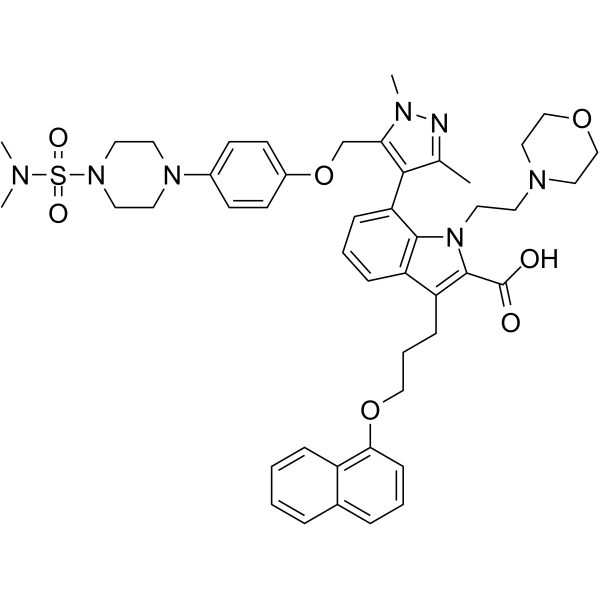
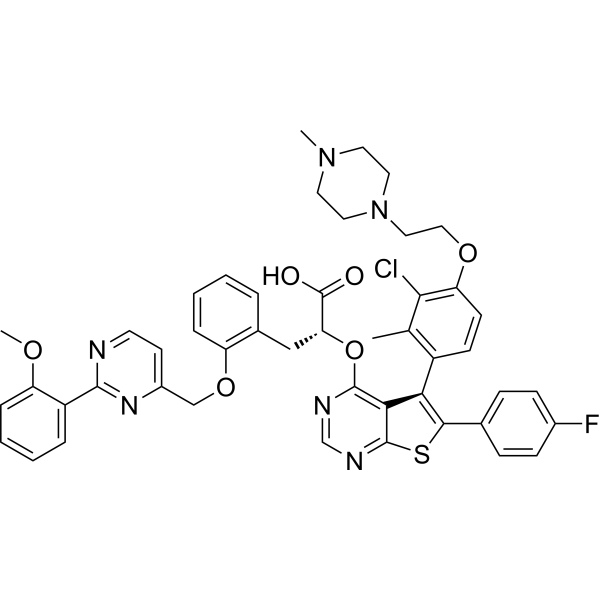
    MIK665 (S-64315), derived from S63845, is a myeloid cell leukemia sequence 1 (MCL1) inhibitor . MIK665 has an IC50 of 1.81 nM for MCL1 .
    MIK665
  • HY-15191
    Sabutoclax
    1 Publications Verification

    BI-97C1

    Bcl-2 Family Cancer
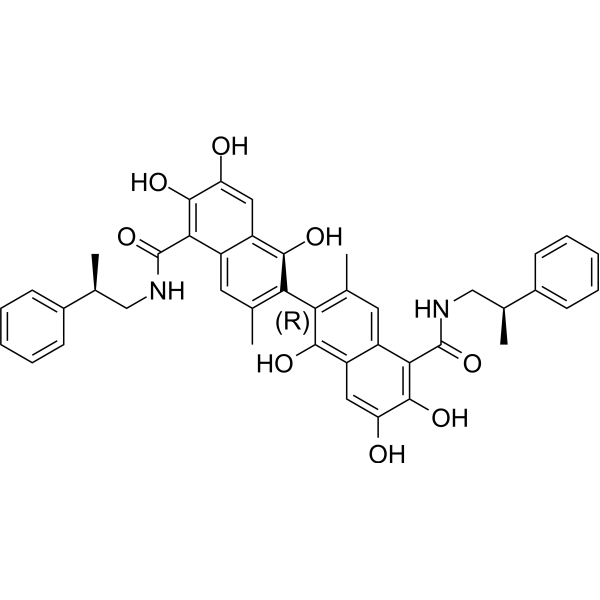
    Sabutoclax is a potent and effective Bcl-2 Family (Bcl-2, Bcl-XL, Mcl-1, Bfl-1) inhibitor with IC50s of 0.32 μM, 0.31 μM, 0.20 μM, and 0.62 μM, respectively. Sabutoclax increases Bax, Bim, PUMA and survivin expression .
    Sabutoclax
  • HY-12468
    A-1210477
    Maximum Cited Publications
    19 Publications Verification

    Bcl-2 Family Apoptosis Cancer
    A-1210477 is a potent and selective inhibitor of MCL-1 with a Ki of 0.45 nM . A-1210477 specifically binds MCL-1 and promotes apoptosis of cancer cells in an MCL-1-dependent manner .
    A-1210477
  • HY-125877
    PROTAC Mcl1 degrader-1
    1 Publications Verification

    PROTACs Bcl-2 Family Cancer
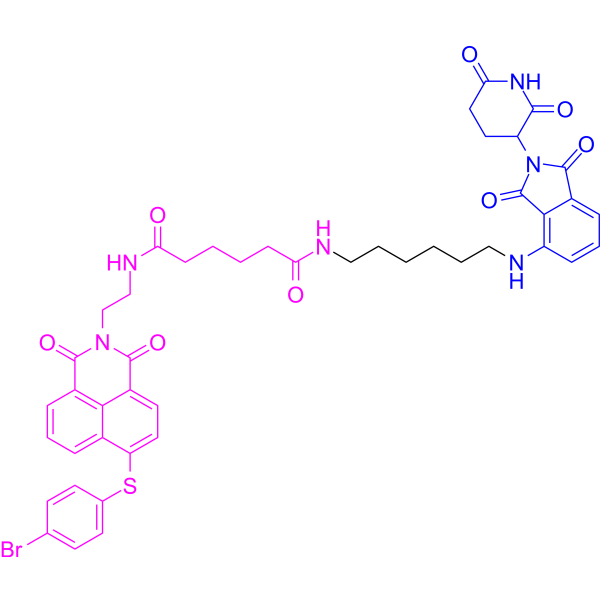
    PROTAC Mcl1 degrader-1 (compound C3), a proteolysis targeting chimera (PROTAC) based on Cereblon ligand, is a potently and selectively Mcl-1 (Bcl-2 family member) inhibitor with an IC50 of 0.78 μM. PROTAC Mcl1 degrader-1 inhibits Bcl-2 with an IC50 of 0.54 μM .
    PROTAC Mcl1 degrader-1
  • HY-16669

    Bcl-2 Family Cancer
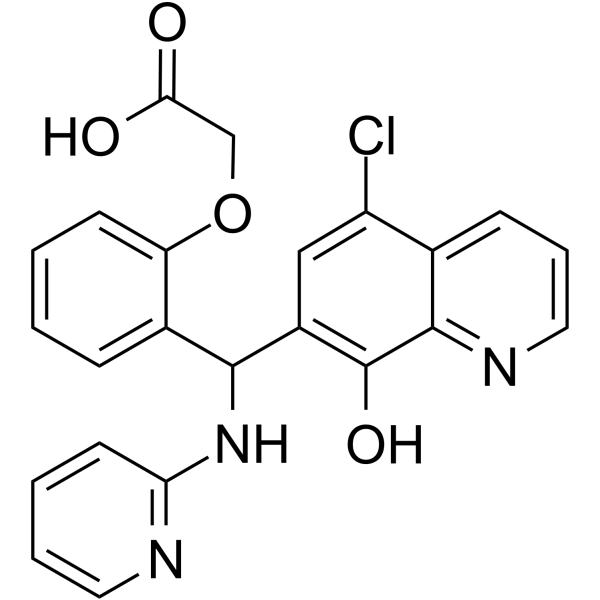
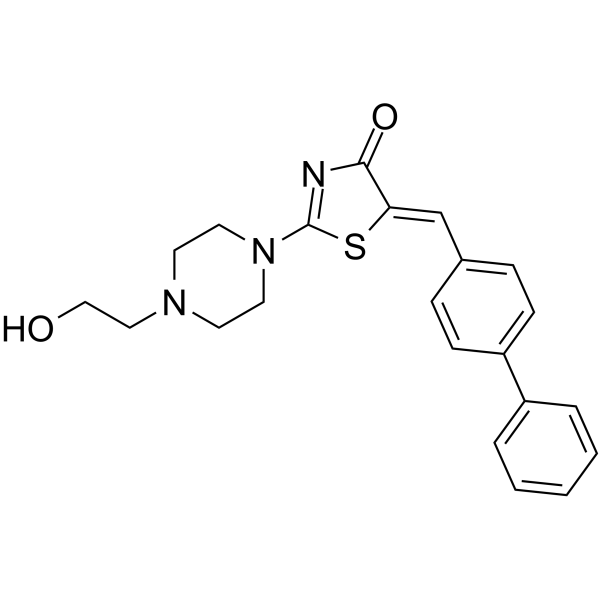
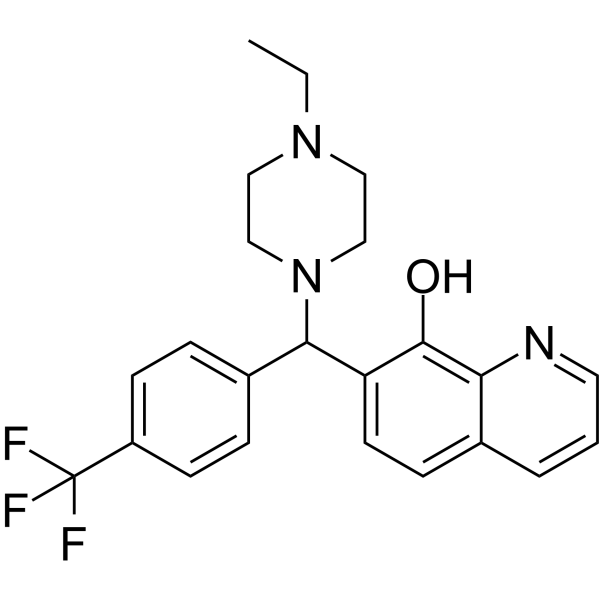
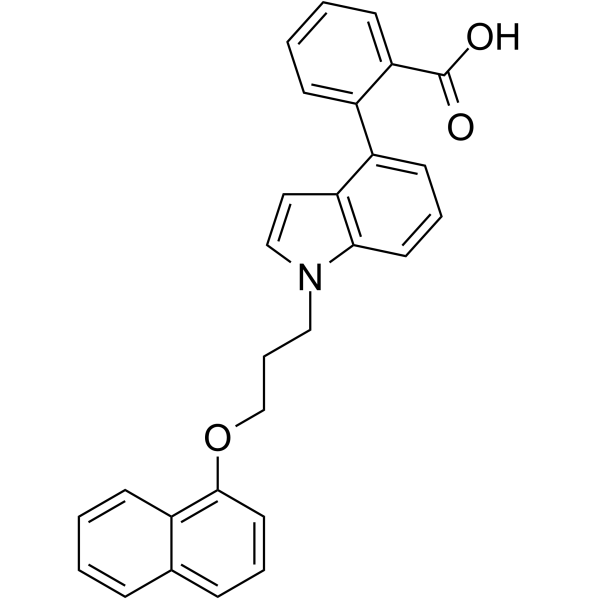
    Mcl1-IN-1 is an inhibitor of myeloid cell factor 1 (Mcl-1) (IC50=2.4 µM).
    Mcl1-IN-1
  • HY-162858

    Bcl-2 Family Caspase Apoptosis Cancer
    BRD-810 is a potent and selective MCL1 inhibitor with a Kd of 0.3 nM. BRD-810 can specifically block the BH3 binding groove of MCL1, while having little effect on other anti-apoptotic proteins (such as Bcl-2, Bcl-xL). BRD-810 effectively destroys the MCL1-BAK complex (IC50 = 1.2 nM) in cancer cells, rapidly activates Caspase and induces cell apoptosis. BRD-810 can be used in the research of various cancers such as hematological tumors and solid tumors .
    BRD-810
  • HY-122627

    Bcl-2 Family Apoptosis Cancer
    CLZ-8 (Compound 8) is an orally active Mcl-1-PUMA interface inhibitor, with a Ki of 0.3 μM. CLZ-8 exhibits dual activity on reduce PUMA-dependent apoptosis while deactivating Mcl-1-mediated anti-apoptosis in cancer cells .
    CLZ-8
  • HY-138697

    VOB560

    Bcl-2 Family Apoptosis Cancer
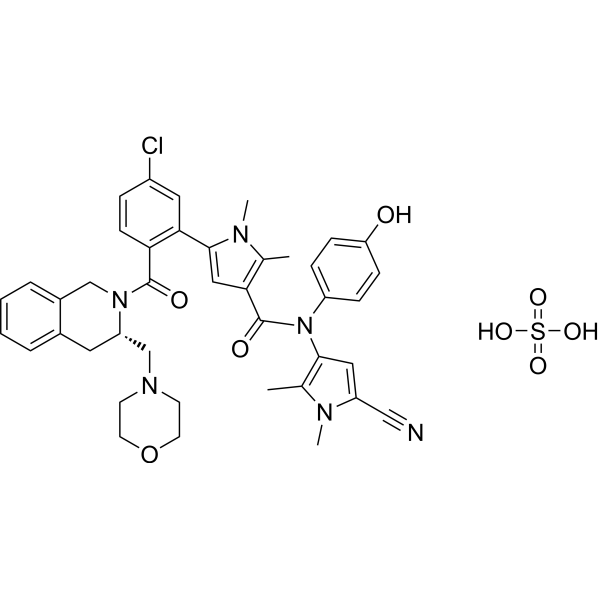
    S65487 (VOB560), a potent and selective BCL-2 inhibitor, is a proagent of S55746. S65487 is also active on BCL-2 mutations, such as G101V and D103Y. S65487 has poor affinity with MCL-1, BFL-1 and BCL-XL. S65487 induces apoptosis and has anticaner activities .
    S65487
  • HY-101778

    EU-5346

    Bcl-2 Family Cancer
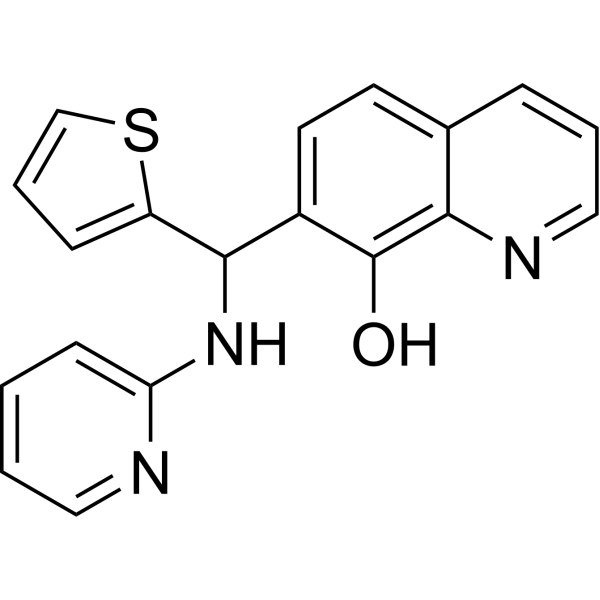
    ML311 is a potent and selective inhibitor of the Mcl-1/Bim interaction.
    ML311
  • HY-N8146

    STAT Bcl-2 Family Ser/Thr Kinase Survivin c-Myc Apoptosis Necroptosis CDK Infection Cancer
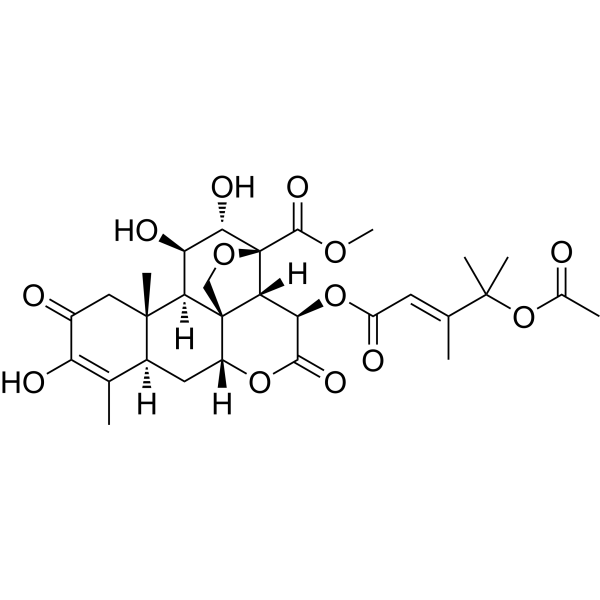
    Bruceantinol is a quassinoid that can be isolated from Brucea javanica, inhibits pepper mottle virus (PepMoV) in pepper. Bruceantinol is a STAT3 inhibitor demonstrating potent antitumor activity in in vitro and in vivo human colorectal cancer (CRC) models. Bruceantinol has potent anti-leukemic activity. Bruceantinol strongly inhibits STAT3 DNA-binding ability (IC50 = 2.4 pM), blocks the constitutive and IL-6-induced STAT3 activation, and suppresses transcription of MCL-1, PTTG1, survivin and c-Myc. Bruceantinol binds with CDK2/4/6 to facilitate protein degradation through proteasome pathway. Bruceantinol can dose- and time-dependently reduces the cell growth, impede cell proliferation, disrupts the cell cycle, and induces necrosis in MCF-7 cells and apoptosis in MDA-MB-231 cells .
    Bruceantinol
  • HY-138697A

    VOB560 sulfate

    Bcl-2 Family Apoptosis Cancer
    S65487 (VOB560) sulfate, a potent and selective Bcl-2 inhibitor, is a proagent of S55746. S65487 sulfate is also active on BCL-2 mutations, such as G101V and D103Y. S65487 sulfate has poor affinity with MCL-1, BFL-1 and BCL-XL. S65487 sulfate induces apoptosis and has anticaner activities .
    S65487 sulfate
  • HY-158783

    Ceramidase Bcl-2 Family LPL Receptor Apoptosis Neurological Disease
    SACLAC, a Ceramide analog, is a potent and covalent acid ceramidase (ASAH1; AC) inhibitor with a Ki of 97.1 nM. SACLAC effectively blocks AC activity and induces a decrease in sphingosine 1-phosphate (S1P) and total ceramide levels. SACLAC reduces the levels of splicing factor SF3B1 and alternative Mcl-1 mRNA splicing, increases pro-apoptotic Mcl-1S levels to induce apoptosis in acute myeloid leukemia (AML) cells. SACLAC reduces the leukemic burden in human AML xenograft mouse models .
    SACLAC
  • HY-163681

    Bcl-2 Family Cancer
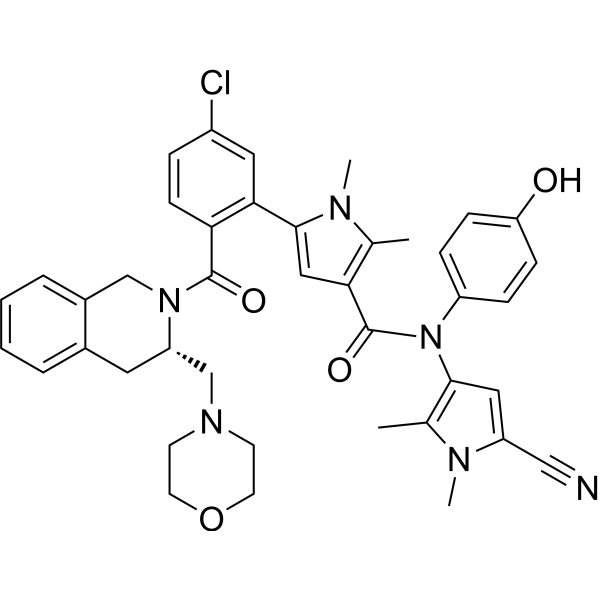
    Zamzetoclax (compound 1) is a potential Mcl-1 inhibitor .
    Zamzetoclax
  • HY-167881

    Bcl-2 Family Cancer
    MLS-0053105, a chloromaleimide, is a selective BFL-1 inhibitor with an IC50 of 0.4 µM for Bfl-1/F-Bid. MLS-0053105 shows over 10 times less potent inhibition of Bcl-W, Bcl-2, and Bcl-XL and no activity against Bcl-B and Mcl-1 .
    MLS-0053105
  • HY-164460

    Pim Cancer
    AZD1897 is a PIM1, PIM2, and PIM3 inhibitor with IC50 values of less than 3 nM for these three PIM kinases. AZD1897 exhibits anticancer activity and synergistically inhibits the activity of acute myeloid leukemia (AML) cells in combination with Capivasertib (HY-15431). This synergistic inhibitory effect is achieved through the inhibition of the mTOR and MCL1 pathways .
    AZD1897
  • HY-12826

    Beta-lactamase Bcl-2 Family Bacterial Cancer
    IMB-XH1 is an inhibitor of myeloid cell factor 1 (Mcl-1) . IMB-XH1 is a non-competitive Delhi metallo-β-lactamase (NDM-1) inhibitor. The IC50s of IMB-XH1 against metallo-β-lactamases NDM-1, IMP-4, ImiS and L1 are 0.4637 μM, 3.980 μM, 0.2287 μM and 1.158 μM, respectively .
    IMB-XH1
  • HY-144430

    Bcl-2 Family Cancer
    Bcl-2/Mcl-1-IN-1 (compound 3) is a Bcl-2/Mcl-1 inhibitor, with Kis of 1.19 μM and 4.53 μM for Mcl-1 and Bcl-2, respectively. Bcl-2/Mcl-1-IN-1 can be used for the research of cancer .
    Bcl-2/Mcl-1-IN-1
  • HY-N17676

    Bcl-2 Family Cancer
    3-Tridecylphenol is a cardanol. 3-Tridecylphenol can be isolated from K. hookeriana. 3-Tridecylphenol shows Ki values of >23 μM and >33 μM in BclxL/Bak and Mcl-1/Bid displacement assays, respectively. 3-Tridecylphenol can be used in cancer research .
    3-Tridecylphenol
  • HY-124846

    Bcl-2 Family Cancer
    MI-223 is a Mcl-1 regulator (Kd = 160 nM). MI-223 binds to the BH1 domain, blocking Mcl-1-stimulated homologous recombination DNA repair, thus sensitizing cancer cells to DNA replication agents. MI-223 can be used in research on cancers such as lung cancer .
    MI-223
  • HY-138697B

    VOB560 hydrochloride

    Bcl-2 Family Apoptosis Cancer
    S65487 (VOB560) hydrochloride, a potent and selective Bcl-2 inhibitor, is a proagent of S55746. S65487 hydrochloride is also active on BCL-2 mutations, such as G101V and D103Y. S65487 hydrochloride has poor affinity with MCL-1, BFL-1 and BCL-XL. S65487 hydrochloride induces apoptosis and has anticaner activities .
    S65487 hydrochloride
  • HY-155012

    Bcl-2 Family Cancer
    Mcl-1 inhibitor 16 (Compound 9) is a mitochondrial targeting Platinum-based inhibitor of Mcl-1. Mcl-1 inhibitor 1 induces Bax/Bak-dependent apoptosis in cancer cells. Mcl-1 inhibitor 16 can be used alone or together with ABT-199 (HY-15531) and shows anti-tumor activity .
    Mcl-1 inhibitor 16
  • HY-130261

    Bcl-2 Family Cancer
    Mcl-1 antagonist 1 is a Mcl-1 protein antagonist extracted from patent WO2019173181, compound 200 .
    Mcl-1 antagonist 1
  • HY-164452

    Bcl-2 Family Apoptosis Caspase Cancer
    A-1155905 is a MCL-1 inhibitor (IC50=33.5 nM; Ki=0.58 nM) with anticancer activity. A-1155905 selectively binds to MCL-1 with sufficient affinity to disrupt the MCL-1-bim complex in living cells. A-1155905-induced death of MCL-1-dependent cell lines is caspase-dependent and occurs via apoptosis .
    A-1155905
  • HY-170763B

    Bcl-2 Family Apoptosis Cancer
    (-)-Mcl-1 inhibitor 22 (compound 38) is an Mcl-1 inhibitor that works by blocking the interaction between Mcl-1 and pro-apoptotic proteins, reducing the anti-apoptotic activity of Mcl-1. (-)-Mcl-1 inhibitor 22 can be used in cancer research .
    (-)-Mcl-1 inhibitor 22
  • HY-116220

    Others Others
    Mcl1-IN-14 (compound 5) is a reversible covalent inhibitor of Mcl-1 with the activity of inhibiting Mcl-1. Mcl1-IN-14 covalently targets the non-catalytic lysine side chain of Mcl-1 and has higher potency than non-covalent counterparts, which can be used to develop Mcl-1 inhibitory compounds and study related biological phenomena.
    Mcl1-IN-14
  • HY-15867

    (+)-MeayamycIN B

    SF3B1 Bcl-2 Family Apoptosis Cancer
    Meayamycin B ((+)-Meayamycin B) is a potent SF3B1 inhibitor. Meayamycin B upregulates the proapoptotic Mcl-1S and downregulates Mcl-1L at the pre-mRNA splicing level. Meayamycin B does not regulate the alternative splicing of Bcl-x. Meayamycin B and ABT-737 (HY-50907) synergistically causes Apoptosis. Meayamycin B exhibits anticancer activity against non-small cell lung cancer .
    Meayamycin B
  • HY-101778R

    EU-5346 (Standard)

    Reference Standards Bcl-2 Family Cancer
    ML311 (Standard) (EU-5346 (Standard)) is the analytical standard of ML311 (HY-101778). This product is intended for research and analytical applications. ML311 is a potent and selective inhibitor of the Mcl-1/Bim interaction.
    ML311 (Standard)
  • HY-183601

    Bcl-2 Family Apoptosis Cancer
    Mcl-1-IN-22 is a selective Mcl-1 inhibitor with a Ki of 0.015 μM. Mcl-1-IN-22 binds selectively to Mcl-1, disrupts the Mcl-1/Bak complex to release free Bak, triggering intrinsic apoptosis. Mcl-1-IN-22 can be used for the research of ovarian cancer .
    Mcl-1-IN-22
  • HY-181587

    PDGFR Carbonic Anhydrase STAT Akt ERK Apoptosis Caspase Cancer
    PDGFRA/CAIX/XII-IN-1 is an inhibitor of PDGFRA, CA IX and CA XII, with an IC50 of 20 nM against PDGFRA, a Ki of 93.3 nM against CA IX, and a Ki of 80.0 nM against CA XII. PDGFRA/CAIX/XII-IN-1 binds to the ATP-binding pocket of PDGFRA and blocks the downstream STAT3, AKT and ERK1/2 signaling pathways. PDGFRA/CAIX/XII-IN-1 induces G0/G1 cell cycle arrest and endogenous apoptosis (Apoptosis), including cleavage of PARP-1, caspase-9 and caspase-3, activation of caspase 3/7, and down-regulation of Mcl-1. PDGFRA/CAIX/XII-IN-1 exhibits antiproliferative activity in eosinophilic leukemia cells. PDGFRA/CAIX/XII-IN-1 can be used for the research of leukemia .
    PDGFRA/CAIX/XII-IN-1

Inquiry Online

Your information is safe with us. * Required Fields.

Salutation


Country or Region *

Applicant Name *


Organization Name *

Department *


Email Address *


Product Name *

Cat. No.


Requested quantity *

Phone Number *


Remarks

Inquiry Online

Inquiry Information

Product Name:
Cat. No.:
Quantity:
MCE Japan Authorized Agent:

