


1. Search Result
Search Result
Results for "

O2

" in MedChemExpress (MCE) Product Catalog:

377

Inhibitors & Agonists

1

Screening Libraries

26

Fluorescent Dye

17

Biochemical Assay Reagents

23

Peptides

1

Inhibitory Antibodies

79

Natural
Products

1

Recombinant Proteins

15

Isotope-Labeled Compounds

1

Antibodies

13

Click Chemistry

76

Oligonucleotides

Cat. No. Product Name Target Research Areas Chemical Structure
  • HY-B1776
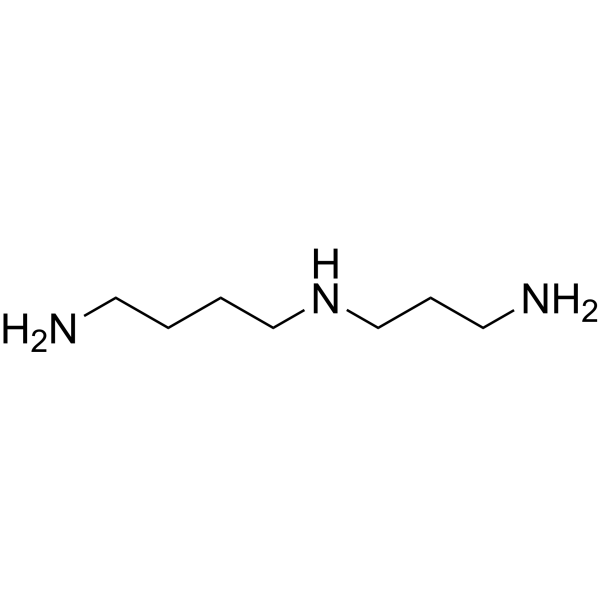
    Spermidine
    Maximum Cited Publications
    19 Publications Verification

    Endogenous Metabolite Metabolic Disease
    Spermidine maintains cell membrane stability, increases antioxidant enzymes activities, improving photosystem II (PSII), and relevant gene expression. Spermidine significantly decreases the H2O2 and O2 .- contents .
    Spermidine
  • HY-15475
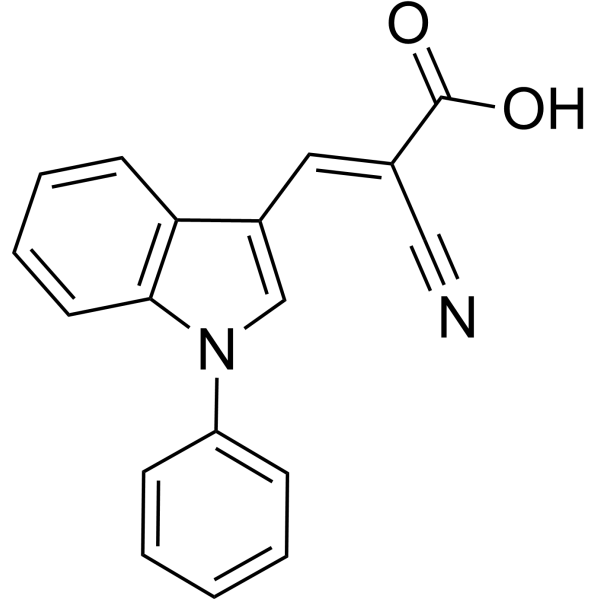
    UK-5099
    Maximum Cited Publications
    53 Publications Verification

    PF-1005023

    Mitochondrial Metabolism Cancer
    UK-5099 (PF-1005023) is a potent inhibitor of the mitochondrial pyruvate carrier (MPC). UK-5099 (PF-1005023) inhibits pyruvate-dependent O2 consumption with an IC50 of 50 nM.
    UK-5099
  • HY-P2902
    Glucose oxidase
    5+ Cited Publications

    Endogenous Metabolite Cancer
    Glucose oxidase is used in the food and beverage industry as a preservative and stabilizer and is commonly derived from the fungus Aspergillus niger. Glucose oxidase can react with intracellular glucose and oxygen (O2) to produce hydrogen peroxide (H2O2) and gluconic acid, which can cut off the nutrition source of cancer cells and consequently inhibit their proliferation [2] .
    Glucose oxidase
  • HY-B1776A
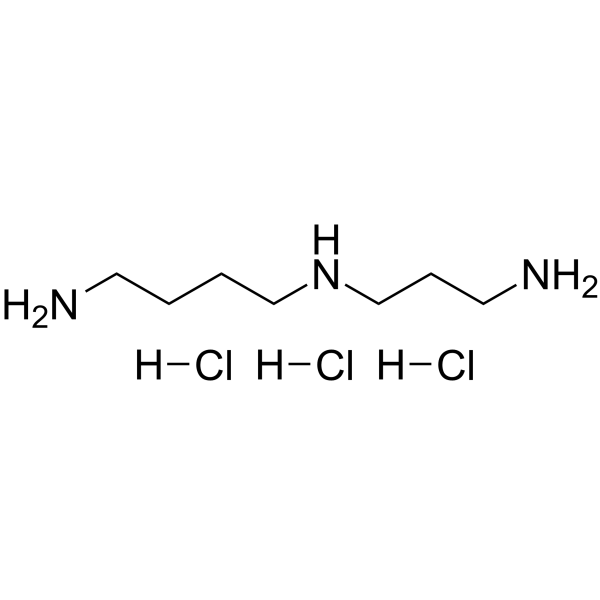
    Spermidine hydrochloride
    Maximum Cited Publications
    19 Publications Verification

    Endogenous Metabolite Metabolic Disease
    Spermidine hydrochloride maintains cell membrane stability, increases antioxidant enzymes activities, improving photosystem II (PSII), and relevant gene expression. Spermidine hydrochloride significantly decreases the H2O2 and O2 .- contents .
    Spermidine hydrochloride
  • HY-10535
    Evofosfamide
    5+ Cited Publications

    TH-302

    Apoptosis Cancer
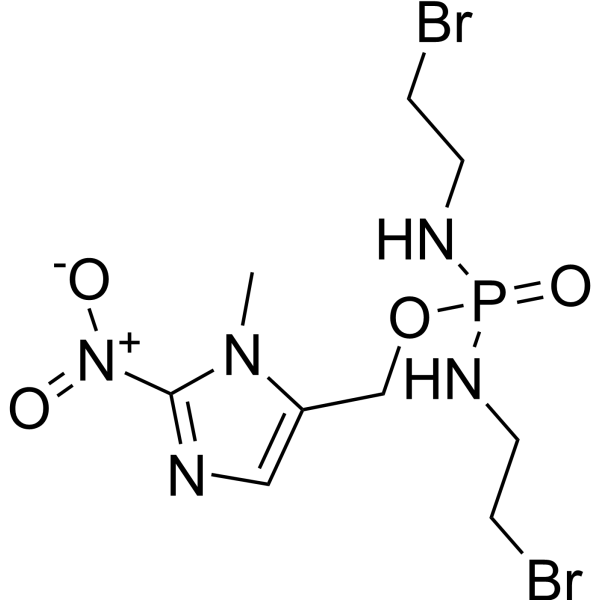
    Evofosfamide (TH-302) is a hypoxia-activated proagent with IC50 of 10 μM and 1000 μM in hypoxia (N2) and normoxia (21% O2), respectively.
    Evofosfamide
  • HY-108298

    PP 5; Perfluorodecahydronaphthalene

    Biochemical Assay Reagents Others
    Perfluorodecalin liquids are largrly used in vitreoretinal surgery. Perfluorodecalin with tamponade lasting more than two days is detrimental to the retina in the case of rabbit. Perfluorodecalin can be used for the research of giant retinal tears [2]. Perfluorodecalin is a non-toxic, non-flammable, thermally stable, non-bio-accumulating O2-carrier and used as artificial blood . Perfluorodecalin enhances bone regeneration and cell viability .
    Perfluorodecalin
  • HY-W051271

    Titanium dioxide

    Environmental Pollutants Reactive Oxygen Species (ROS) Photosensitizer Others
    Titanium(IV) oxide is a photosensitizer and photocatalyst. Titanium(IV) oxide can be used as a pharmaceutical excipient such as a flow aid, coating agent, sunscreen, colorant, etc. Pharmaceutical excipients or pharmaceutical excipients refer to other chemical substances used in the pharmaceutical process other than the drug ingredients. Pharmaceutical excipients generally refer to inactive ingredients in pharmaceutical preparations that can improve the stability, solubility and processability of pharmaceutical preparations. Pharmaceutical excipients also affect the absorption, distribution, metabolism and elimination (ADME) process of co-administered drugs. Titanium(IV) oxide can use light energy to generate electron-hole pairs to degrade pollutants. Photons excite electrons in TiO2 to generate active oxygen species (such as ·OH and ·O2 -), thereby oxidizing and mineralizing pollutants such as organic compounds and heavy metals. TiO2 can be used in the research of environmental remediation fields such as water treatment, air purification and self-cleaning materials [2] .
    Titanium(IV) oxide
  • HY-13619
    Efaproxiral
    1 Publications Verification

    RSR13

    Hemoglobin Infection Cancer
    Efaproxiral (RSR13) is a haemoglobin (Hb) synthetic allosteric modifier. Efaproxiral decreases Hb-oxygen (O2) binding affinity and enhances oxygenation of hypoxic tumours during radiation therapy [2] .
    Efaproxiral
  • HY-109110

    GC-4419; M-40419

    Reactive Oxygen Species (ROS) Inflammation/Immunology Cancer
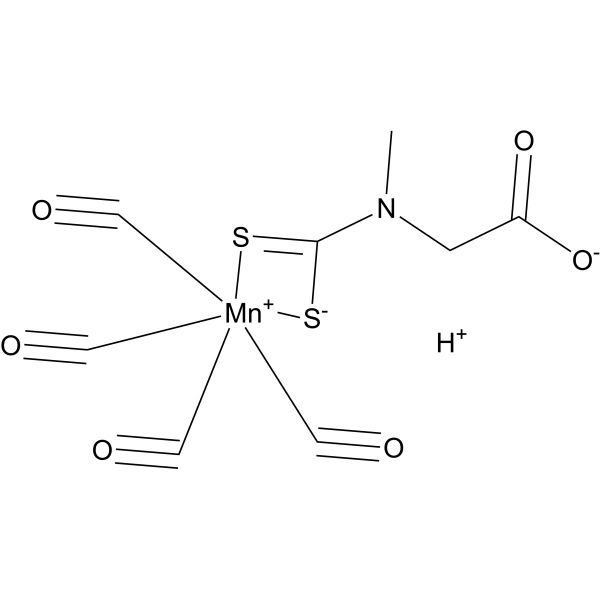
    Avasopasem manganese (GC4419; M-40419) is a potent superoxide dismutase mimetic that rapidly and specifically converts O2 *- to hydrogen peroxide (H2O2), arresting the initiation of this cascade. Avasopasem manganese can be used for the research of severe oral mucositis (SOM) and cancer .
    Avasopasem manganese
  • HY-B1776R

    Reference Standards Endogenous Metabolite Metabolic Disease
    Spermidine (Standard) is the analytical standard of Spermidine. This product is intended for research and analytical applications. Spermidine maintains cell membrane stability, increases antioxidant enzymes activities, improving photosystem II (PSII), and relevant gene expression. Spermidine significantly decreases the H2O2 and O2.- contents .
    Spermidine (Standard)
  • HY-129109

    Fluorescent Dye Inflammation/Immunology Cancer
    NBD-Pen is the first fluorescence probe for lipid radicals with high selectivity and sensitivity (λex: 470 nm, λem: 530 nm). NBD-Pen specifically detects lipid derived radicals over other reactive species present in biological systems, including H2O2, ClO -, O2 -?, and ?OH. NBD-Pen directly detects lipid radicals in living cells by turn-on fluorescence. NBD-Pen decreases inflammation, apoptosis, and oxidative stress markers. NBD-Pen can be studied in various disease models such as hepatic carcinoma .
    NBD-Pen
  • HY-N0501
    11-oxo-mogroside V
    1 Publications Verification

    Reactive Oxygen Species (ROS) Metabolic Disease
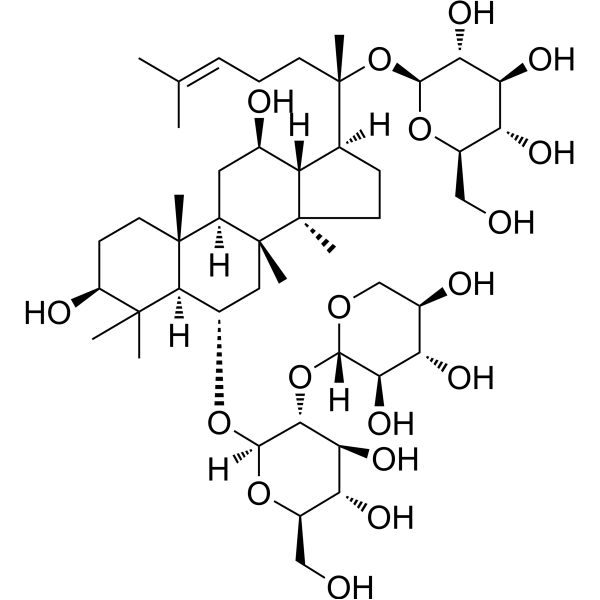
    11-oxo-mogroside V is a natural sweetener that exhibits strong antioxidant activity. It exhibits significant inhibitory effects on reactive oxygen species (O2 -, H2O2 and *OH) with EC50 of 4.79, 16.52, and 146.17 μg/mL, respectively.
    11-oxo-mogroside V
  • HY-B1776AS1
    Spermidine-13C4 hydrochloride
    1 Publications Verification

    Isotope-Labeled Compounds Endogenous Metabolite Metabolic Disease
    Spermidine- 13C4 (hydrochloride) is the 13C-labeled Spermidine trihydrochloride. Spermidine hydrochloride maintains cell membrane stability, increases antioxidant enzymes activities, improving photosystem II (PSII), and relevant gene expression. Spermidine hydrochloride significantly decreases the H2O2 and O2.- contents .
    Spermidine-13C4 hydrochloride
  • HY-E70014

    FAD-GDH; Glucose 1-dehydrogenase

    Endogenous Metabolite Others
    FAD-dependent glucose dehydrogenase (EC 1.1.5.9), or glucose dehydrogenase (FAD)/Pseudomonas glucose dehydrogenase. FAD-dependent glucose dehydrogenase is insensitive to O2 and displays high substrate specificity to glucose and thus is especially attractive enzymes for use in glucose biosensor applications .
    FAD-dependent glucose dehydrogenase
  • HY-137683A

    GDPβS trisodium

    Adenylate Cyclase Cardiovascular Disease
    Guanosine 5'-O-(2-thiodiphosphate) trisodium (GDPβS trisodium) is a non-hydrolyzable derivative of GDP. Guanosine 5'-O-(2-thiodiphosphate) trisodium acts as an inhibitor of adenylyl cyclase (AC) with a Ki value of 600 nM. In the absence of glutamic-pyruvic transaminase (GPT) in cerebral cortex membranes of rodent models, Guanosine 5'-O-(2-thiodiphosphate) trisodium partially activates AC with an EC50 of 400 nM. Guanosine 5'-O-(2-thiodiphosphate) trisodium prevents norepinephrine-induced nitric oxide release in ventricular myocytes [2] .
    Guanosine 5'-O-2-thiodiphosphate trisodium
  • HY-40145

    Drug Intermediate Others
    1-Boc-3-iodoazetidine acts as a bifunctional additive for lithium-oxygen (Li-O2) batteries and can be used to enhance the performance of Li-O2 batteries. 1-Boc-3-iodoazetidine is applied in the synthesis of C3-functionalized azetidines and C2-functionalized azetidines via a lithium/iodine exchange or β-elimination/lithiation reaction sequence [2].
    1-Boc-3-iodoazetidine
  • HY-13619A
    Efaproxiral sodium
    1 Publications Verification

    RSR13 sodium

    Hemoglobin Infection Cancer
    Efaproxiral (RSR13) sodium is a haemoglobin (Hb) synthetic allosteric modifier. Efaproxiral sodium decreases Hb-oxygen (O2) binding affinity and enhances oxygenation of hypoxic tumours during radiation therapy [2] .
    Efaproxiral sodium
  • HY-W012313

    2,2'-Cyclouridine; O2,2'-Cyclouridine

    Drug Intermediate Nucleoside Antimetabolite/Analog Others
    2,2'-Anhydrouridine (2,2'-Cyclouridine) is a nucleoside analog. 2,2'-Anhydrouridine is an important intermediate in the synthesis of other nucleoside-related compounds [2].
    2,2'-Anhydrouridine
  • HY-W048491

    DNA/RNA Synthesis Drug Derivative Others
    2′-O-(2-Methoxyethyl)adenosine is an ATP (HY-B2176) derivative. 2′-O-(2-Methoxyethyl)adenosine can be used for oligonucleotide synthesis .
    2′-O-(2-Methoxyethyl)adenosine
  • HY-W048495

    Nucleoside Antimetabolite/Analog Cancer
    2'-O-(2-Methoxyethyl)-uridine is a synthetic oligonucleotide conversed from uridine. 2'-O-(2-Methoxyethyl)-uridine has the potential for chemotherapeutic agents development .
    2'-O-(2-Methoxyethyl)-uridine
  • HY-115386
    MitoTEMPOL
    3 Publications Verification

    Reactive Oxygen Species (ROS) Cancer
    MitoTEMPOL is a a mitochondria-targeted nitroxide that reduces mitochondrial O2 -to H2O2 .
    MitoTEMPOL
  • HY-B1776S
    Spermidine-d6
    1 Publications Verification

    Endogenous Metabolite Metabolic Disease
    Spermidine-d6 is the deuterium labeled Spermidine . Spermidine maintains cell membrane stability, increases antioxidant enzymes activities, improving photosystem II (PSII), and relevant gene expression. Spermidine significantly decreases the H2O2 and O2.- contents [2].
    Spermidine-d6
  • HY-159854

    Liposome Cancer
    C14-O2 is an ionizable cationic lipid that can be used to synthesize lipid nanoparticles (LNP) for delivering mRNA and other payloads .
    C14-O2
  • HY-P1012

    Neurokinin Receptor Neurological Disease Endocrinology
    [Sar9,Met(O2)11]-Substance P is a tachykinin NK1 receptor selective agonist.
    [Sar9,Met(O2)11]-Substance P
  • HY-152684

    Nucleoside Antimetabolite/Analog Others
    2′-O-2-Propyn-1-ylguanosine is a guanosine analogue. Some guanosine analogs have immunostimulatory activity. In some animal models, they also induce type I interferons, producing antiviral effects. Studies have shown that the functional activity of guanosine analogs is dependent on the activation of Toll-like receptor 7 (TLR7) . 2′-O-2-Propyn-1-ylguanosine is a click chemistry reagent, it contains an Alkyne group and can undergo copper-catalyzed azide-alkyne cycloaddition (CuAAc) with molecules containing Azide groups.
    2′-O-2-Propyn-1-ylguanosine
  • HY-D1156A
    HKSOX-1m (5/6-mixture) hydrobromide
    2 Publications Verification

    Reactive Oxygen Species (ROS) Fluorescent Dye Others
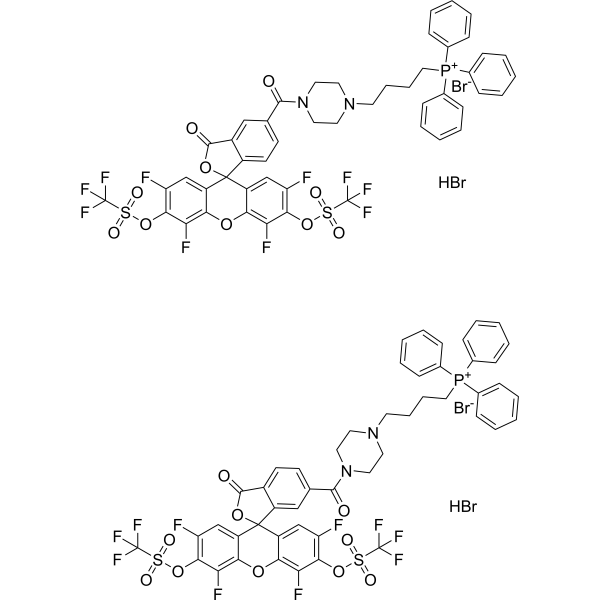
    HKSOX-1m (5/6-mixture) hydrobromide is a O2 fluorescent probe for mitochondria-targeting (Ex/Em=509/534nm; green), exhibiting excellent selectivity and sensitivity toward O2 over a broad range of pH, strong oxidants, and abundant reductants found in cells .
    HKSOX-1m (5/6-mixture) hydrobromide
  • HY-B1776AS

    Isotope-Labeled Compounds Endogenous Metabolite Metabolic Disease
    Spermidine-d8 (hydrochloride)e is the deuterium labeled Spermidine trihydrochloride. Spermidine hydrochloride maintains cell membrane stability, increases antioxidant enzymes activities, improving photosystem II (PSII), and relevant gene expression. Spermidine hydrochloride significantly decreases the H2O2 and O2.- contents .
    Spermidine-d8 hydrochloride
  • HY-W010417

    Reactive Oxygen Species (ROS) Others
    4-Thiouracil is a thionucleobase with cytostatic properties. 4-Thiouracil can be used as biological photoprobes to detect RNA structures and nucleic acid-nucleic acid contacts. 4-Thiouracil can also act as a strong ultraviolet A (UVA) photosensitizer, providing a source of the reactive oxygen species of O2. 4-Thiouracil is promising for research of photocross linking, photodamage, as well as photodynamic therapy .
    4-Thiouracil
  • HY-N2153

    Others Others
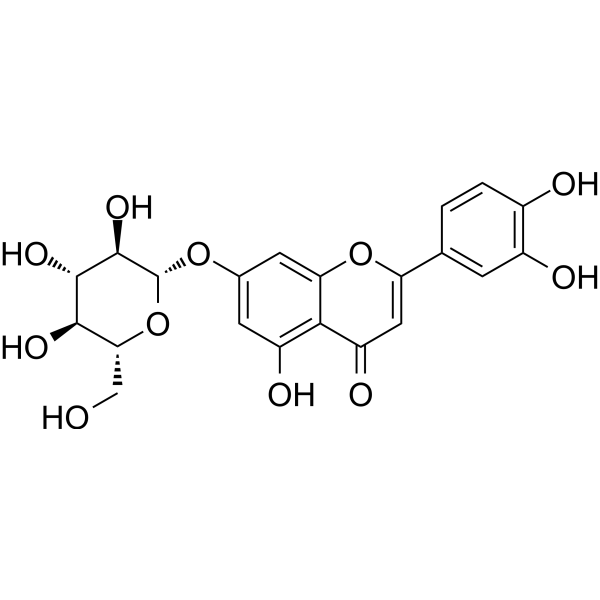
    Apigenin-7-O-(2G-rhamnosyl)gentiobioside is a flavone glycosides from Lonicera gracilipes var. glandulosa .
    Apigenin-7-O-(2G-rhamnosyl)gentiobioside
  • HY-174866

    Histone Acetyltransferase Epigenetic Reader Domain PROTACs Cancer
    BT-O2C is a highly selective p300 PROTAC degrader. BT-O2C can significantly degrade the level of p300 in HAP1 cells. BT-O2C has significant cytotoxicity in CIC:DUX4 sarcoma (CDS) cell lines (IC50 ranges from 152 to 221 nM) and significantly reduces the expression of CDS target genes (ETV1, ETV4, ETV5). BT-O2C can be used for research on cancer. (Pink: p300 Ligand (HY-174868); Blue: CRBN Ligand (HY-W023573); Black: Linker; CRBN Ligand+Linker (HY-174869)) .
    BT-O2C
  • HY-150175

    Fluorescent Dye Inflammation/Immunology
    HKSOX-1 and its derivatives (HKSOX-1r and HKSOX-1m) are novel fluorescent probes designed for highly sensitive and selective detection of the superoxide anion radical (O2 •−) in cellular environments. These probes utilize an aryl trifluoromethanesulfonate group that undergoes O2 •−-mediated cleavage, releasing a free phenol and emitting fluorescence. They demonstrate excellent specificity and sensitivity across various pH ranges, withstand interference from strong oxidants and reductants typical in cellular contexts. HKSOX-1r, optimized for cellular retention, has been effectively employed in diverse assays including confocal imaging, flow cytometry, and zebrafish embryo studies, highlighting its utility in investigating O2 •− roles in inflammation, mitochondrial stress, and other physiological processes .
    HKSOX-1
  • HY-170938

    Cholinesterase (ChE) Monoamine Oxidase Beta-secretase COX LOX-1 Neurological Disease
    AChE-IN-82 (compound 49) is an acetylcholinesterase (AChE) inhibitor. AChE-IN-82 inhibits eeAChE, eqBChE, hMAO-A, hMAO-B, and BACE-1 with IC50s of 0.072, 9.81, 14.52, 0.024, 2.42 μM, respectively. AChE-IN-82 inhibits COX-1, COX-2 and 5-LOX with IC50s of 60.41, 0.187, 0.18 μM, respectively. AChE-IN-82 shows an excellent neuroprotective effect by significantly reducing oxidative stress induced by H2 O2 .
    AChE-IN-82
  • HY-W048496

    Nucleoside Antimetabolite/Analog Cancer
    2'-O-(2-Methoxyethyl)-cytidine is a synthetic oligonucleotide derived from uridine. 2'-O-(2-Methoxyethyl)-cytidine has good hybridization properties and high stability, and can be used in the research of oligonucleotide chemotherapeutic agents .
    2'-O-(2-Methoxyethyl)-cytidine
  • HY-W013794

    N,N′-Bis(salicylidene)ethylenediaminocobalt(II)

    Influenza Virus Infection
    Salcomine (N,N’-Bis(salicylidene)ethylenediaminocobalt II) is a carrier of O2 and oxidation catalysts. Salcomine has anti-influenza virus activity .
    Salcomine
  • HY-116694

    Apoptosis Reactive Oxygen Species (ROS) Reverse Transcriptase Xanthine Oxidase URAT1 Infection Metabolic Disease Inflammation/Immunology Cancer
    Digallic acid is an antioxidant, antimutagenic, antigenotoxic, and anti-hyperuricemic compound. Digallic acid is a reverse transcriptase and XOD, URAT1 (IC50: 5.34 μM) inhibitor. Digallic acid scavenges DPPH· and O2·− radicals. Digallic acid induces apoptosis. Digallic acid can be isolated from the fruits of Pistascia lentiscus [2] .
    Digallic acid
  • HY-D3002

    Fluorescent Dye Metabolic Disease
    ONOO-/O2- tracker probe is a dual-responsive near-infrared fluorescent probe. ONOO-/O2- tracker probe will only emit a strong fluorescence signal when both peroxynitrite (ONOO⁻) and superoxide anion (O₂•⁻), the two key reactive oxygen/nitrogen species, are present simultaneously. ONOO-/O2- tracker probe can be used as a biomarker detection tool for drug-induced liver injury (DILI) .
    ONOO-/O2- tracker probe
  • HY-154285

    Nucleoside Antimetabolite/Analog Cancer
    3’-O-(2-Methoxyethyl) uridine is a uridine analog. Uridine has potential antiepileptic effects, and its analogs can be used to study anticonvulsant and anxiolytic activities, as well as to develop new antihypertensive agents .
    3’-O-(2-Methoxyethyl) uridine
  • HY-152516

    Nucleoside Antimetabolite/Analog Cancer
    2’-O-(2-Methoxyethyl) inosine is a purine nucleoside analog. Purine nucleoside analogs have broad antitumor activity targeting indolent lymphoid malignancies. Anticancer mechanisms in this process rely on inhibition of DNA synthesis, induction of apoptosis, etc .
    2’-O-(2-Methoxyethyl) inosine
  • HY-154434

    Nucleoside Antimetabolite/Analog Cancer
    3’-O-(2-Methoxyethyl)-5-methyluridine is a thymidine analog. Analogs of this series have insertional activity towards replicated DNA. They can be used to label cells and track DNA synthesis .
    3’-O-(2-Methoxyethyl)-5-methyluridine
  • HY-119038

    Endogenous Metabolite Cardiovascular Disease
    ML-7 is a myosin light chain kinase inhibitor with the activity to inhibit superoxide anion (O(2)(-)) release in human neutrophils. ML-7 can affect the activity of neutrophils independently of myosin light chain kinase. ML-7 inhibits the extracellular O(2)(-) release of stimulated cells, but has no effect on the intracellular O(2)(-) production. ML-7 also strongly inhibits the binding of the intracellular compartment of oxide production to the cell membrane, indicating that it plays a key role in stimulated neutrophils. At the same time, ML-7 protects cardiac function from ischemia/reperfusion injury .
    ML-7
  • HY-D1156

    Reactive Oxygen Species (ROS) Fluorescent Dye Others
    HKSOX-1m (5/6-mixture) is a O2 fluorescent probe for mitochondria-targeting (Ex/Em=509/534nm; green), exhibiting excellent selectivity and sensitivity toward O2 over a broad range of pH, strong oxidants, and abundant reductants found in cells .
    HKSOX-1m (5/6-mixture)
  • HY-114809

    Reactive Oxygen Species (ROS) NADPH Oxidase Inflammation/Immunology Cancer
    AL-1 is a potent O2 - generation inhibitor (IC50 = 7.6 μM) through the inhibition of leukocytic NADPH oxidase. AL-1 inhibits 12-O-Tetradecanoylphorbol-13-acetate (TPA)-induced H2O2 production. AL-1 reduces tumor incidence in ICR mouse skin. AL-1 can be used for research on oxidative stress-related diseases including cancer .
    AL-1
  • HY-P3782

    Amyloid-β Others
    (Met(O2)35)-Amyloid β-Protein (1-42) is a peptide .
    (Met(O2)35)-Amyloid β-Protein (1-42)
  • HY-P1012A

    Neurokinin Receptor Neurological Disease Endocrinology
    [Sar9,Met(O2)11]-Substance P TFA is a tachykinin NK1 receptor selective agonist.
    [Sar9,Met(O2)11]-Substance P TFA
  • HY-151650

    ADC Linker Others
    N3-O2Oc-O2Oc-OH is a click chemistry reagent containing an azide . N3-O2Oc-O2Oc-OH is a click chemistry reagent, it contains an Azide group and can undergo copper-catalyzed azide-alkyne cycloaddition reaction (CuAAc) with molecules containing Alkyne groups. It can also undergo strain-promoted alkyne-azide cycloaddition (SPAAC) reactions with molecules containing DBCO or BCN groups.
    N3-O2Oc-O2Oc-OH
  • HY-D1065

    Fluorescent Dye Inflammation/Immunology
    NIR-H2O2 is a cell-permeable near-infrared (NIR) fluorescent turn-on sensor. NIR-H2O2 has both absorption and emission in the NIR region. NIR-H2O2 responds to H2O2 with a large turn-on NIR fluorescence signal upon excitation in the NIR region. NIR-H2O2 is capable of imaging endogenously produced H2O2 in living cells and mice .
    NIR-H2O2
  • HY-N7161

    Others Others
    3-O-(2'E,4'E-Decadienoyl)-ingenol is a natural diterpenoid that shows cytotoxicity against human normal cell lines L-O2 and GES-1, with IC50s of 8.22 μM and 6.67 μM, respectively .
    3-O-(2'E,4'E-Decadienoyl)-ingenol
  • HY-D3000

    Fluorescent Dye Metabolic Disease
    NIR-RED ROS-H2O2 Probe is a near-infrared fluorescent probe used for detecting hydrogen peroxide (H₂O₂) and featuring dual-modal fluorescence/photoacoustic imaging capabilities. NIR-RED ROS-H2O2 Probe successfully detects the upregulated fluorescence signal of H₂O₂ in HepG2 cells and a mouse liver injury model. NIR-RED ROS-H2O2 Probe can be used as a biomarker detection tool for drug-induced liver injury (DILI) .
    NIR-RED ROS-H2O2 Probe
  • HY-128930

    ADC Linker Cancer
    6-O-2-Propyn-1-yl-D-galactose is a nonclaevable glycolinker for the functionalization of cytotoxic agents and applications in antibody-agent conjugation. 6-O-2-Propyn-1-yl-D-galactose is a click chemistry reagent, it contains an Alkyne group and can undergo copper-catalyzed azide-alkyne cycloaddition (CuAAc) with molecules containing Azide groups.
    6-O-2-Propyn-1-yl-D-galactose
  • HY-117457

    DNA/RNA Synthesis Cancer
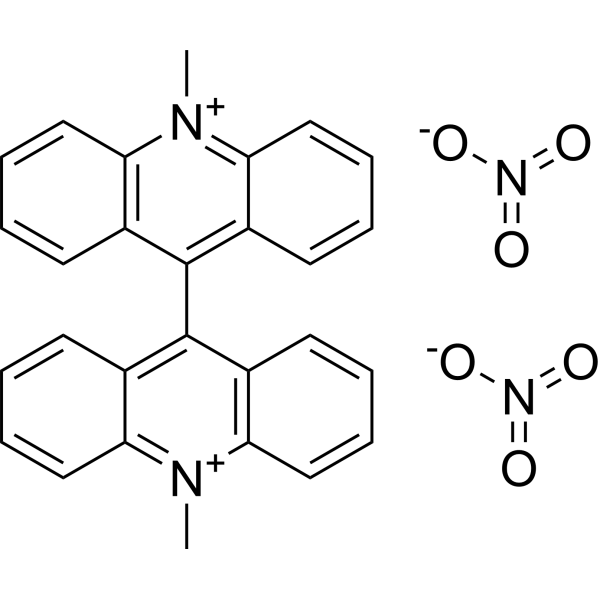
    BPIC is a DNA intercalator agent and also an anti-cancer agent. BPIC scavenge ∙OH, ∙O2(-), and NO free radicals .
    BPIC

Inquiry Online

Your information is safe with us. * Required Fields.

Salutation


Country or Region *

Applicant Name *


Organization Name *

Department *


Email Address *


Product Name *

Cat. No.


Requested quantity *

Phone Number *


Remarks

Inquiry Online

Inquiry Information

Product Name:
Cat. No.:
Quantity:
MCE Japan Authorized Agent:

