
186 Results for "

Plasticizer

" in MedChemExpress (MCE) Product Catalog:
Products (186)

186 Results for "Plasticizer" in MCE Product Catalog:

13
13 Publications Verification
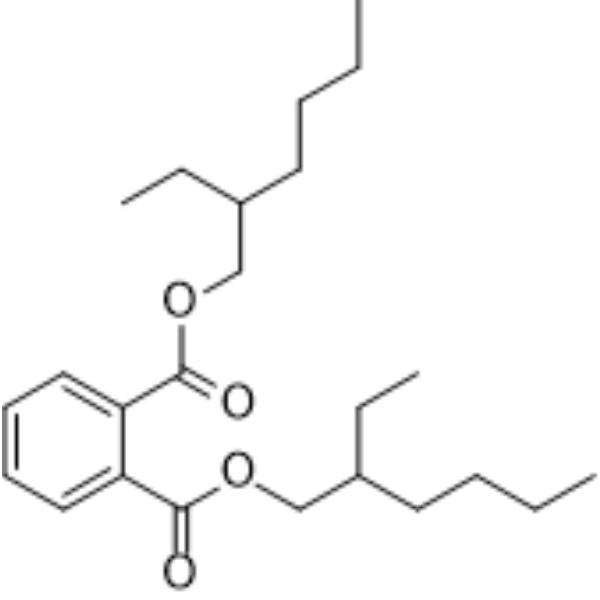
Cat. No.: HY-B1945
CAS No.: 117-81-7
Synonyms: Bis(2-ethylhexyl) phthalate; Ergoplast FDO; ESBO-D 82
DEHP (Bis(2-ethylhexyl) phthalate) is a widely used plasticizer, which has orally active. DEHP can produce a wide spectrum of toxic effects on organisms including neurotoxicity, liver toxicity, immunotoxicity, and reproductive toxicity .
loading...
    loading...
11
11 Cited Publications
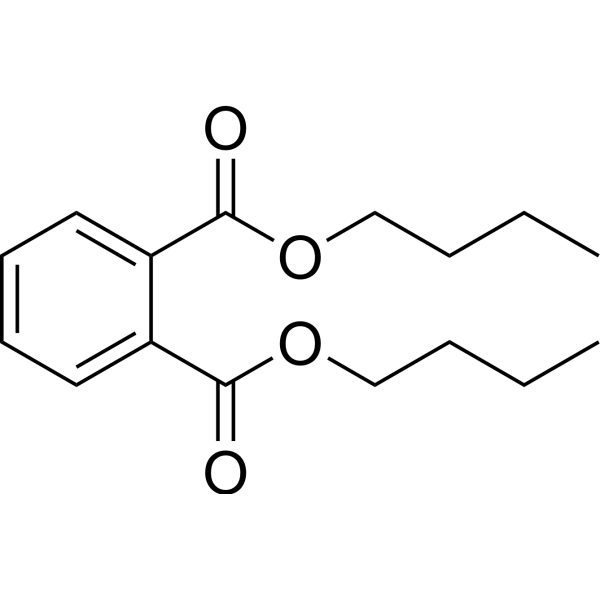
Cat. No.: HY-Y0304
CAS No.: 84-74-2
Dibutyl phthalate is a commonly used plasticizer commonly found in some food packaging materials, personal care products, and the coating of oral medications . May cause toxicity and adverse neurobehavioral effects .
loading...
    loading...
6
6 Cited Publications
Cat. No.: HY-107859
CAS No.: 115-96-8
Purity:  95.12%
Synonyms: TCEP
Tris(2-chloroethyl) phosphate (TCEP) is a widely used organic phosphorus flame retardant, mainly used as a plasticizer. Tris(2-chloroethyl) phosphate has orally active hepatotoxicity, inducing an increase in reactive oxygen species (ROS) and calcium ions (Ca²⁺) influx, a decrease in mitochondrial membrane potential (△Ψm), and causing DNA damage and cell apoptosis. Tris(2-chloroethyl) phosphate directly binds to FXR, inducing obesity and the formation of fatty liver in mice. Chloroethyl) phosphate activates the TLR4/NF-κB pathway, triggering liver inflammation .
loading...
    loading...
5
5 Cited Publications
Cat. No.: HY-Y0842
CAS No.: 75-12-7
Synonyms: Methanamide; Formimidic acid
Formamide is an effective DNA denaturant that significantly reduces the stability of DNA in buffer solutions. Formamide can also be used as a decalcifying agent for rat cardiac cells. Additionally, formamide is widely used as a solvent or chemical raw material for ion compounds, resins, and plasticizers.
loading...
    loading...
5
5 Cited Publications
Cat. No.: HY-Y0842B
CAS No.: 75-12-7
Synonyms: Methanamide (deionized); Formimidic acid (deionized)
Formamide deionized (Methanamide deionizde) is an effective DNA denaturant that significantly reduces the stability of DNA in buffer solutions. Formamide deionized can also be used as a decalcifying agent for rat cardiac cells. Additionally, Formamide deionized is widely used as a solvent or chemical raw material for ion compounds, resins, and plasticizers .
loading...
    loading...
2
2 Cited Publications
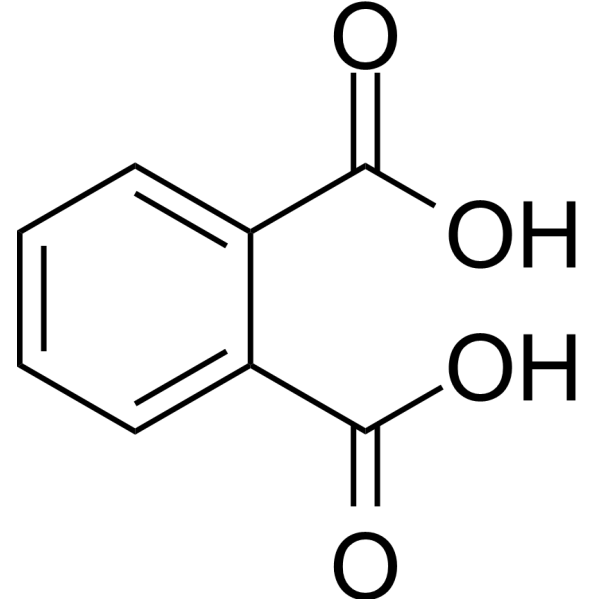
Cat. No.: HY-I0508
CAS No.: 88-99-3
Phthalic acid is the final common metabolite of phthalic acid esters (PAEs). Phthalic acid can be used for the synthesis of synthetic agents, such as isophthalic acid (IPA), and terephthalic acid (TPA). Phthalic acid has applications in the preparation of phthalate ester plasticizers. Phthalic acid exhibits mutagenic effect and causes genetic damage in mammalian germ cells .
loading...
    loading...
2
2 Cited Publications
Cat. No.: HY-Y0284
CAS No.: 84-66-2
Diethyl phthalate is an orally active plasticizer and detergent base. Diethyl phthalate increases the activities of ACP, ALP, SDH, and ALT in liver, muscle, or both tissues. Diethyl phthalate induces dose-dependent mortality and sluggish behavior in freshwater fish. Diethyl phthalate may induce male reproductive toxicity. Diethyl phthalate is added to plastic polymers to help maintain their flexibility .
loading...
    loading...
2
2 Cited Publications
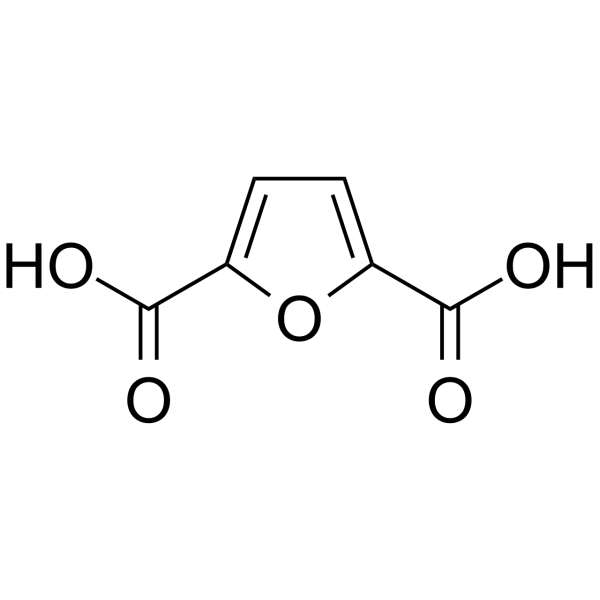
Cat. No.: HY-W002105
CAS No.: 3238-40-2
2,5-Furandicarboxylic acid is an endogenous metabolite that can be detected in human urine. 2,5-Furandicarboxylic acid serves as an environmentally friendly substitute for terephthalic acid in the production of polyesters. 2,5-Furandicarboxylic acid can be used as the raw material for various chemical intermediates to synthesize polymers, polyurethanes, thermosetting resins, and plasticizers .
loading...
    loading...
2
2 Cited Publications
Cat. No.: HY-W013755
CAS No.: 117-84-0
Synonyms: DNOP; Di-n-octyl phthalate; Phthalic acid dioctyl ester
Dioctyl phthalate (DNOP) is a plasticizer. Dioctyl phthalate increases the activities of alanine aminotransferase (ALT) and alkaline phosphatase (ALP) in the liver, as well as the levels of creatinine and urea in the kidney. Exposure to Dioctyl phthalate disrupts the homeostasis of the intestinal microbial community, increases the abundance of pathogenic bacteria, and reduces the abundance of beneficial bacteria such as Lactobacillus. Dioctyl phthalate induces significant and dose-dependent inflammatory responses in the liver, spleen and kidney of mice .
loading...
    loading...
1
1 Cited Publications
Cat. No.: HY-W010981
CAS No.: 77-90-7
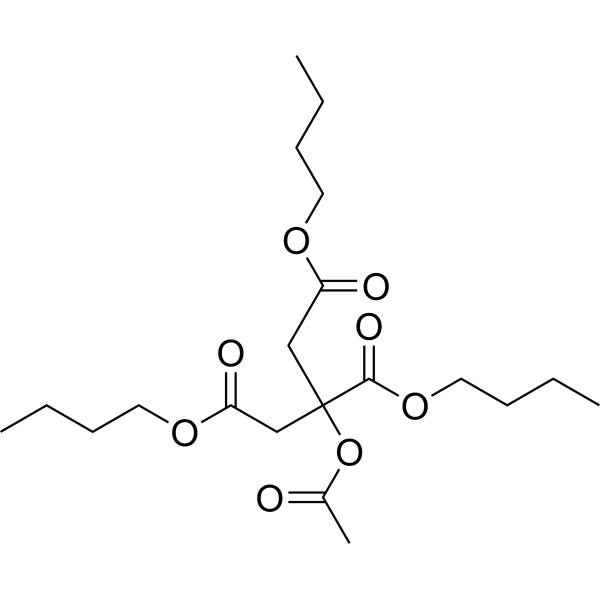
Synonyms: Tributyl O-acetylcitrate; ATBC
Acetyl tributyl citrate (Tributyl O-acetylcitrate) is a pharmaceutical excipient and biodegradable hydrophobic plasticizer. Acetyl tributyl citrate can be used in cosmetics, food packaging, and as a flavoring substance for food .
loading...
    loading...
1
1 Cited Publications
Cat. No.: HY-B1945R
CAS No.: 117-81-7
Synonyms: Bis(2-ethylhexyl) phthalate (Standard); Ergoplast FDO (Standard); ESBO-D 82 (Standard)
DEHP (Standard) is the analytical standard of DEHP. This product is intended for research and analytical applications. DEHP (Bis(2-ethylhexyl) phthalate) is a widely used plasticizer, which has orally active. DEHP can produce a wide spectrum of toxic effects on organisms including neurotoxicity, liver toxicity, immunotoxicity, and reproductive toxicity .
loading...
    loading...
1
1 Cited Publications
Cat. No.: HY-Y1117R
CAS No.: 108-78-1
Melamine (Standard) is the analytical standard of Melamine. This product is intended for research and analytical applications. Melamine is a metabolite of cyromazine. Melamine is a intermediate for the synthesis of melamine resin and plastic materials .
loading...
    loading...
1
1 Cited Publications
Cat. No.: HY-113004
CAS No.: 10237-77-1
Purity:  ≥98.0%
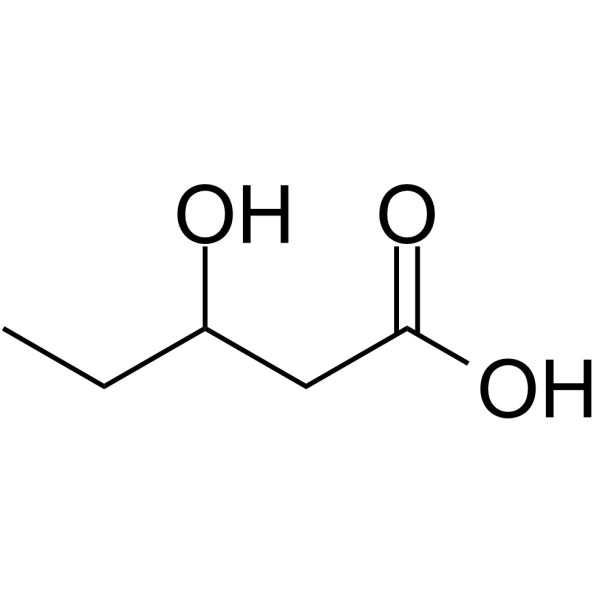
3-Hydroxyvaleric acid is a five-carbon ketone body byproduct that can undergo an anaplerotic reaction to replenish the intermediates of the tricarboxylic acid cycle. 3-Hydroxyvaleric acid is one of the important monomers for the synthesis of polyhydroxyalkanoates (PHA). PHA is a type of biodegradable plastic that is widely used in environmentally friendly packaging, disposable products, and medical materials .
loading...
    loading...
1
1 Cited Publications
Cat. No.: HY-Y0304S
CAS No.: 93952-11-5
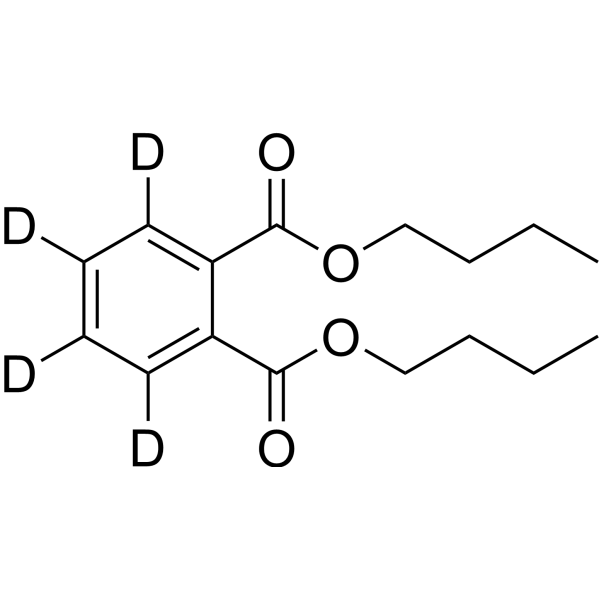
Dibutyl phthalate-3,4,5,6-d4 is the deuterium labeled Dibutyl phthalate. Dibutyl phthalate is a commonly used plasticizer commonly found in some food packaging materials, personal care products, and the coating of oral medications . May cause toxicity and adverse neurobehavioral effects .
loading...
    loading...
1
1 Cited Publications
Cat. No.: HY-N7106
CAS No.: 131-11-3
Synonyms: DMP
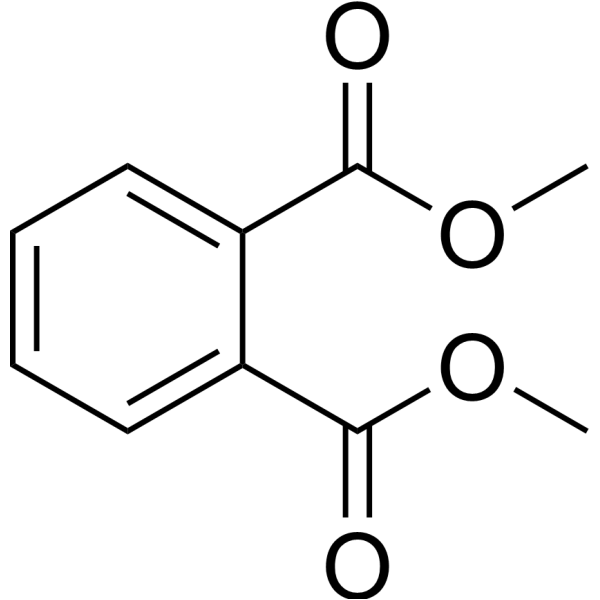
Dimethyl phthalate (DMP) can be used as a plasticizer to impart flexibility to rigid polyvinyl chloride (PVC) resin. Additionally, Dimethyl phthalate is an oral active endocrine disruptor that can cause ovarian dysfunction in mice. Dimethyl phthalate can also induce oxidative stress and apoptosis in cells, thereby affecting blood and red blood cell function in rats .
loading...
    loading...
1
1 Cited Publications
Cat. No.: HY-W020215
CAS No.: 99-14-9
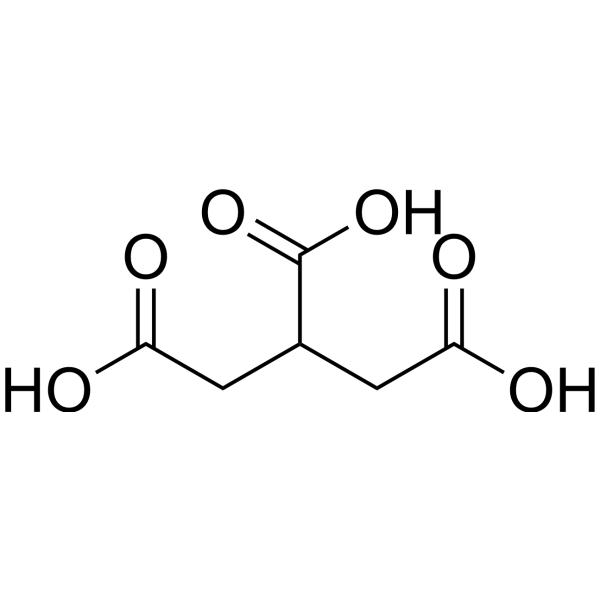
Tricarballylic acid is an orally active compound that can be produced by rumen microorganisms and has the activity of chelating magnesium. Tricarballylic acid is also a competitive inhibitor of aconitate hydratase, with a Ki value of 0.52 mM. Tricarballylic acid can inhibit the oxidation of acetate in the citric acid cycle and can be used in the research of ruminant tissue metabolism and grass tetany syndrome. In addition, Tricarballylic acid can be used to synthesize specific complexes and produce plasticizers .
loading...
    loading...
Cat. No.: HY-W010653
CAS No.: 6683-19-8
Synonyms: lrganox 1010; AT1010
Antioxidant 1010 (lrganox 1010; AT1010) is a hindered phenolic antioxidant. Antioxidant 1010 does not inhibit intercellular gap-junctional communication. Antioxidant 1010 exhibits antioxidant efficacy in plastic, rubber and synthetic fiber .
loading...
    loading...
Cat. No.: HY-W011602
CAS No.: 77-93-0
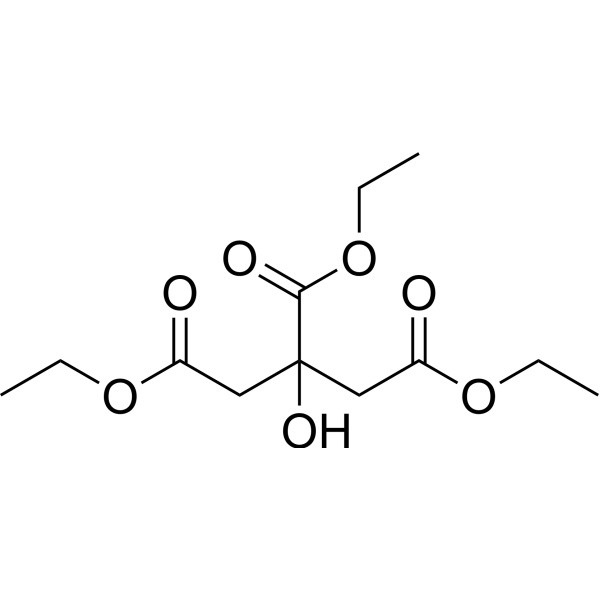
Triethyl citrate is an orally active citrate compound. Triethyl citrate induces acute toxic effects, including weakness, depression, ataxia, hyperexcitability, restlessness, dripping urine, and irregular, labored breathing. Triethyl citrate can be used in research on plasticizers for food packaging materials .
loading...
    loading...
Cat. No.: HY-139446
CAS No.: 28961-43-5
Synonyms: ETPTA (MW 428); TMPETA (MW 428)
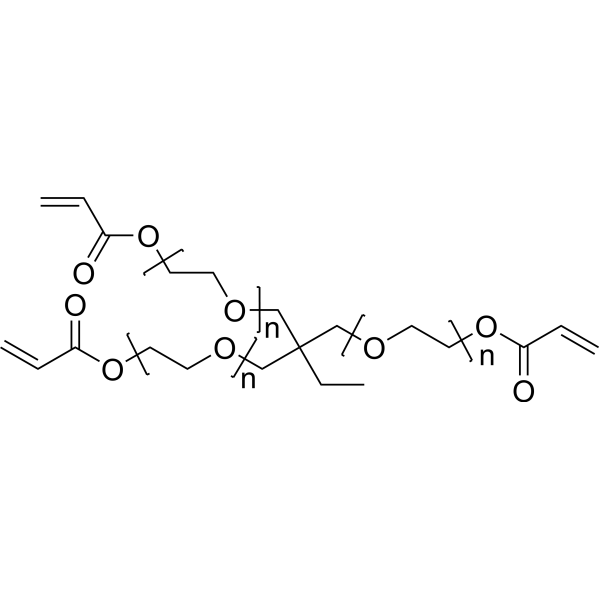
Trimethylolpropane ethoxylate triacrylate (ETPTA) (ETPTA (MW 428); TMPETA (MW 428)) is a plasticizer that can be used synthesize nanocomposites .
loading...
    loading...
Cat. No.: HY-W093282
CAS No.: 8013-07-8
Synonyms: Soybean oil epoxide
Epoxidized soya bean oil (ESBO) is a vegetable oil-derived organic compound used as a plasticizer and stabilizer in various applications. It is produced by epoxidation of soybean oil, which introduces epoxy groups into the fatty acid chains of the oil. ESBO is a viscous, pale yellow liquid that is soluble in many organic solvents, such as chloroform and ethanol, but insoluble in water. It is commonly used as a plasticizer in polyvinyl chloride (PVC) products, including toys, food packaging materials and medical devices. In addition to its plasticizing properties, ESBO acts as an antioxidant and UV stabilizer, helping to prevent degradation and discoloration of PVC products over time. ESBOs have been investigated for their potential use in biodegradable plastics and as bio-based alternatives to traditional petroleum-derived plasticizers.
loading...
    loading...

