830 Results for "

RAW

" in MedChemExpress (MCE) Product Catalog:
Products (830)

830 Results for "RAW" in MCE Product Catalog:

159
159 Publications Verification
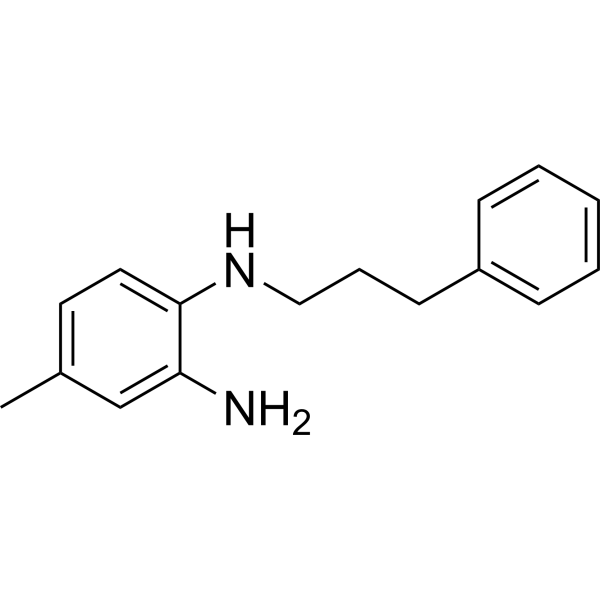
Cat. No.: HY-13982
CAS No.: 749886-87-1
Purity:  99.30%
Target:  

NF-κB

JSH-23 is an NF-κB inhibitor which inhibits NF-κB transcriptional activity with an IC50 of 7.1 μM in lipopolysaccharide (LPS)-stimulated macrophages RAW 264.7. JSH-23 inhibits nuclear translocation of NF-κB p65 without affecting IκBα degradation .
loading...
    loading...
23
23 Cited Publications
Cat. No.: HY-N0171A
CAS No.: 83-46-5
Synonyms: β-Sitosterol (purity>98%); 22,23-Dihydrostigmasterol (purity>98%)
Beta-Sitosterol (purity>98%) is orally active. Beta-Sitosterol exhibits multiple activities, including anti-inflammatory, anticancer, antioxidant, antimicrobial, antidiabetic, antioxidant enzyme, and analgesic. Beta-Sitosterol inhibits inflammation and impaired adipogenesis in bovine mammary epithelial cells by reducing levels of ROS, TNF-α, IL-1β, and NF-κB p65 and restoring the activity of the HIF-1α/mTOR signaling pathway. Beta-Sitosterol induces apoptosis in cancer cells through ROS-mediated mitochondrial dysregulation and p53 activation. Beta-Sitosterol exerts its anticancer effects in cancer cells by activating caspase-3, caspase-8, and caspase-9, mediating PARP inactivation, MMP loss, altered Bcl-2-Bax ratio, and cytochrome c release. Beta-Sitosterol modulates macrophage polarization and reduces rheumatoid inflammation in mice. Beta-Sitosterol inhibits tumor growth in multiple mouse cancer models. Beta-Sitosterol can be used in the research of arthritis, lung cancer, breast cancer and other cancers, diabetes, etc .
loading...
    loading...
16
16 Cited Publications
Cat. No.: HY-113099
CAS No.: 1821-52-9
Purity:  99.99%
Synonyms: Indole-3-lactic acid
Indolelactic acid (Indole-3-lactic acid) is a tryptophan (Trp) catabolite in Azotobacter vinelandii cultures. Indolelactic acid has anti-inflammation and potential anti-viral activity .
loading...
    loading...
12
12 Cited Publications
Cat. No.: HY-146245C
Purity:  99.51%
Synonyms: CpG 1826 sodium
ODN 1826 sodium is a class B CpG ODN (oligodeoxynucleotide) and TLR9 agonist. ODN 1826 sodium induces NO and iNOS production and enhances Apoptosis. ODN 1826 sodium enhances immune surveillance. ODN 1826 sodium increases aortic atherosclerotic plaque size. ODN 1826 sodium has antitumor activity against lung cancer, glioma and melanoma .
loading...
    loading...
12
12 Cited Publications
Cat. No.: HY-146245
CAS No.: 202668-42-6
Purity:  96.86%
Synonyms: CpG 1826
ODN 1826 is a class B CpG ODN (oligodeoxynucleotide) and TLR9 agonist. ODN 1826 induces NO and iNOS production and enhances Apoptosis. ODN 1826 enhances immune surveillance. ODN 1826 increases aortic atherosclerotic plaque size. ODN 1826 has antitumor activity against lung cancer, glioma and melanoma .
loading...
    loading...
10
10 Cited Publications
Cat. No.: HY-B1640
CAS No.: 58-54-8
Synonyms: Etacrynic acid
Ethacrynic acid has anti-inflammatory and anticancer activity. Ethacrynic acid is an orally active diuretic. Ethacrynic acid is an inhibitor of glutathione S-transferase (GSTs) and Wnt signaling pathways. Ethacrynic acid is a radiosensitizer. Ethacrynic acid can inhibit airway smooth muscle (ASM) contraction in mice. Ethacrynic acid can increase the outflow of aqueous humor from the eye for the study of glaucoma .
loading...
    loading...
9
9 Cited Publications
Cat. No.: HY-N0222
CAS No.: 572-30-5
Avicularin is an orally active flavonoid. Avicularin inhibits NF-κB (p65), COX-2 and PPAR-γ activities. Avicularin has anti-inflammatory, anti-infectious anti-allergic, anti-oxidant, hepatoprotective, and anti-tumor activities .
loading...
    loading...
8
8 Cited Publications
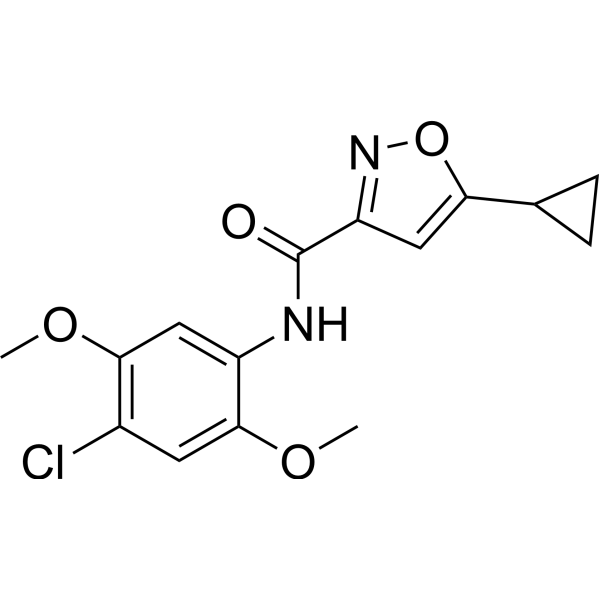
Cat. No.: HY-111152
CAS No.: 912798-42-6
Purity:  99.89%
Target:  

STAT

Research Areas:  

Cancer

ML115, a molecular probe of the signal transducer, is a selective STAT3 agonist, with an EC50 of 2 nM. ML115 increases the expression of BCL3, a known STAT3-dependent oncogene. ML115 is inactive against the related STAT1, STAT5 and NF-κB anti-targets. ML115 counteracts the effects of Ginsenoside Rc (HY-N0042) on cell viability and inflammatory responses in LPS (HY-D1056)-stimulated H9c2 and RAW264.7 cells, while altering oxidative stress markers. ML115 can be used for the study of breast and prostate cancers .
loading...
    loading...
6
6 Cited Publications
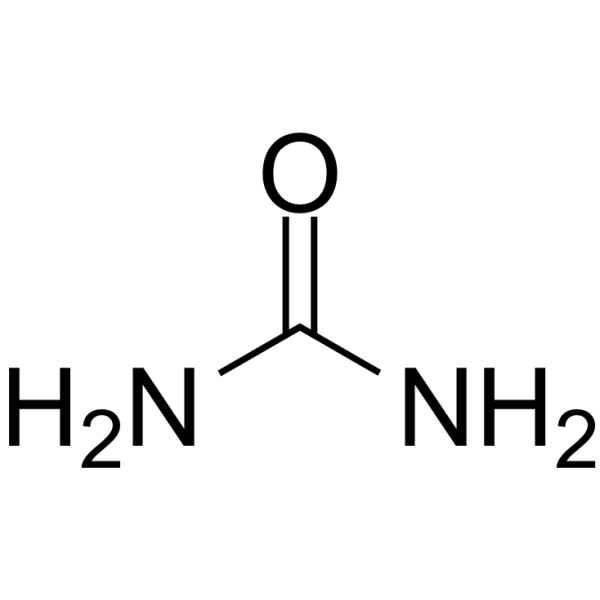
Cat. No.: HY-Y0271
CAS No.: 57-13-6
Synonyms: Carbonyl diamide
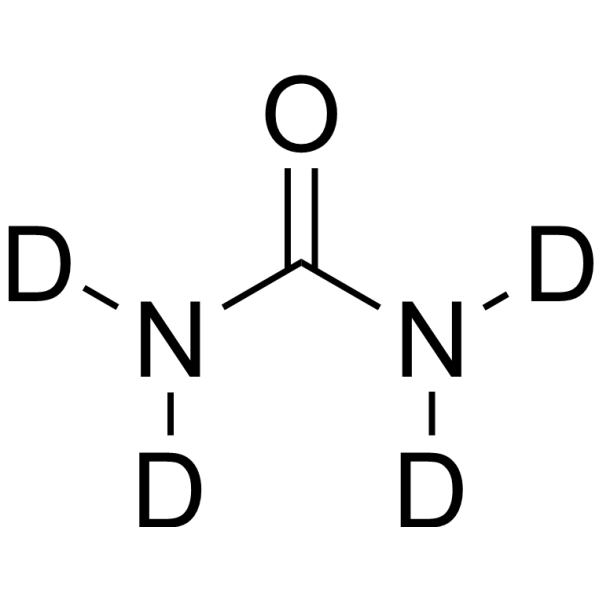
Urea is a powerful protein denaturant via both direct and indirect mechanisms . A potent emollient and keratolytic agent . Used as a diuretic agent. Blood urea nitrogen (BUN) has been utilized to evaluate renal function . Widely used in fertilizers as a source of nitrogen and is an important raw material for the chemical industry.
loading...
    loading...
5
5 Cited Publications
Cat. No.: HY-N0890
CAS No.: 102040-03-9
Synonyms: Tubeimoside-1; Lobatoside-H
Tubeimoside I is an orally active HSPD1 inhibitor. Tubeimoside I inhibits NF-κB, MAPK, as well as regulates eNOS-VEGF. Tubeimoside I induces cytoprotective Autophagy via an Akt-mediated pathway. Tubeimoside I inhibits proinflammatory cytokine (IL-6 and IL-1β) production. Tubeimoside I exhibits anti-inflammatory activities. Tubeimoside I promotes angiogenesis and improves sepsis symptoms. Tubeimoside I is used in the research of inflammatory diseases, various cancers, sepsis and ischemic diseases .
loading...
    loading...
5
5 Cited Publications
Cat. No.: HY-N7176
CAS No.: 22688-78-4
Synonyms: Kaempferol-3-glucuronide; Kaempferol-3-O-glucuronide
Kaempferol 3-O-β-D-glucuronide (Kaempferol-3-glucuronide) is a metabolite of kaempferol that can be taken orally and has anti-inflammatory properties. Kaempferol 3-O-β-D-glucuronide can activate AKT/GSK3β phosphorylation and improve glucose metabolism .
loading...
    loading...
5
5 Cited Publications
Cat. No.: HY-Y0842
CAS No.: 75-12-7
Synonyms: Methanamide; Formimidic acid
Formamide is an effective DNA denaturant that significantly reduces the stability of DNA in buffer solutions. Formamide can also be used as a decalcifying agent for rat cardiac cells. Additionally, formamide is widely used as a solvent or chemical raw material for ion compounds, resins, and plasticizers.
loading...
    loading...
5
5 Cited Publications
Cat. No.: HY-Y0842B
CAS No.: 75-12-7
Synonyms: Methanamide (deionized); Formimidic acid (deionized)
Formamide deionized (Methanamide deionizde) is an effective DNA denaturant that significantly reduces the stability of DNA in buffer solutions. Formamide deionized can also be used as a decalcifying agent for rat cardiac cells. Additionally, Formamide deionized is widely used as a solvent or chemical raw material for ion compounds, resins, and plasticizers .
loading...
    loading...
5
5 Cited Publications
Cat. No.: HY-A0062
CAS No.: 191114-48-4
Synonyms: HMR3647; RU66647
Target:  

Bacterial Antibiotic

Research Areas:  

Infection Inflammation/Immunology

Telithromycin (HMR3647) is a novel ketolide antibiotic that structurally resembles macrolides. Telithromycin belongs to the ketolide family that is characterized by a keto group at position 3 of the macrolide ring and is active against bacteria causing community-acquired pneumonia, acute exacerbation of chronic bronchitis, and acute sinusitis. Telithromycin also has similar immunomodulatory effects as macrolides. Telithromycin can be used for the research of respiratory infections including bronchial asthma .
loading...
    loading...
4
4 Cited Publications
Cat. No.: HY-B0991
CAS No.: 14028-44-5
Synonyms: CL-67772
Amoxapine (CL-67772) is a norepinephrine reuptake blocker and a 5-HT2/5-HT3 antagonist. Amoxapine can be used for the research of depression. Amoxapine has antibacterial activity. Amoxapine can enhance the killing effect of macrophages on mycobacterium by inducing autophagy, while protecting the cells from death .
loading...
    loading...
4
4 Cited Publications
Cat. No.: HY-147369
CAS No.: 1912422-56-0
Purity:  99.97%
Research Areas:  

Others

NFATc1-IN-1 (compound A04) is a potent inhibitor of RANKL-induced osteoclast formation, with an IC50 of 1.57 μM. NFATc1-IN-1 shows anti-osteoclastogenic effects through reducing the RANKL-induced nuclear translocation of NFATc1. NFATc1-IN-1 can be used for osteoclastic diseases research .
loading...
    loading...
3
3 Cited Publications
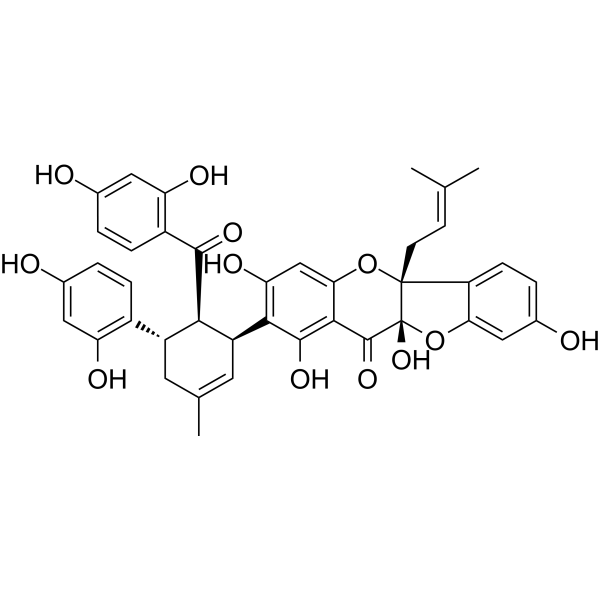
Cat. No.: HY-N0617
CAS No.: 80651-76-9
Sanggenon C, a flavonoid, exerts protective effects against cardiac hypertrophy and fibrosis via suppression of the calcineurin/NFAT2 pathway. Sanggenon C inhibits mitochondrial fission to induce apoptosis by blocking the ERK signaling pathway. Sanggenon C inhibits inducible nitric oxide synthase expression in RAW264.7 cells, and TNF-α-stimulated cell adhesion and VCAM-1 expression, by suppressing NF-κB activity. Sanggenon C possesses antioxidant, anti-inflammatory and antitumor activities .
loading...
    loading...
3
3 Cited Publications
Cat. No.: HY-K1099

MCE Endotoxin Detection Kit (Recombinant Factor C) is suitable for the detection of endotoxins in therapeutic injectable drugs for human use (such as chemical drugs, antibiotics, and biologics), as well as in medical devices including dialysis fluids and implantable devices. It can be applied throughout raw material screening, process development, manufacturing, and commercialization stages.

loading...
    loading...
3
3 Cited Publications
Cat. No.: HY-N6893
CAS No.: 54999-07-4
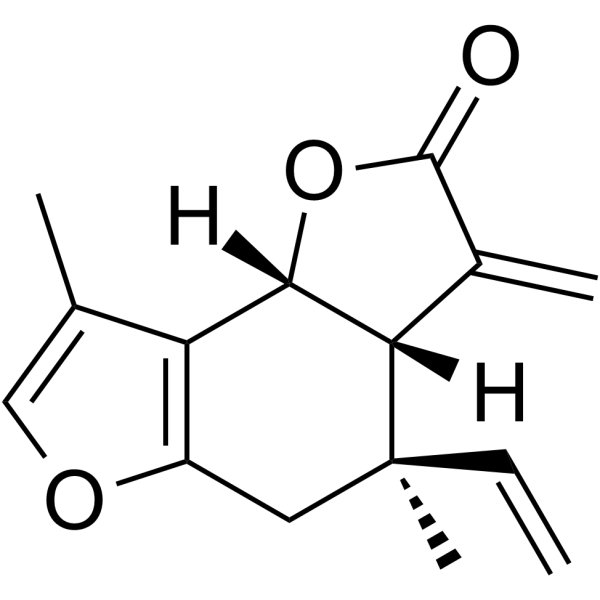
Ergolide is an orally active dual inhibitor targeting NF-κB/p65 and NLRP3. Ergolide blocks the NF-κB signaling pathway and the nuclear translocation of p65, and irreversibly binds to the NACHT domain of NLRP3 to inhibit inflammasome assembly. Ergolide significantly reduces the production of inflammatory mediators (e.g., NO, PGE2) and cytokines, induces cancer cell apoptosis, autophagy and ROS generation. Ergolide also enhances the anti-tumor effect of vincristine. Ergolide alleviates acute lung injury via an NLRP3-dependent mechanism, and effectively improves the survival rate and behavioral function of septic mice and inflammatory zebrafish models. Ergolide is used in the research of metastatic uveal melanoma, neurodegenerative diseases (such as Alzheimer's disease, Parkinson's disease), sepsis and acute lymphoblastic leukemia .
loading...
    loading...
2
2 Cited Publications
Cat. No.: HY-N0569
CAS No.: 18449-41-7
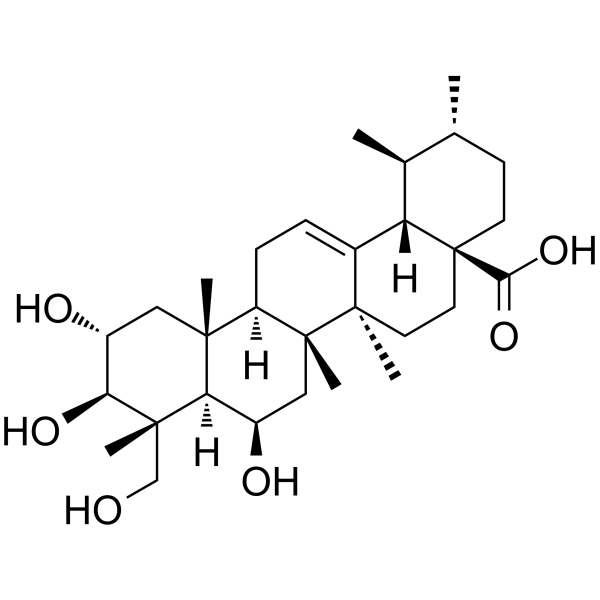
Madecassic acid is isolated from Centella asiatica (Umbelliferae). Madecassic acid has anti-inflammatory properties caused by iNOS, COX-2, TNF-alpha, IL-1beta, and IL-6 inhibition via the downregulation of NF-κB activation in RAW 264.7 macrophage cells .
loading...
    loading...

