1. Search Result
Search Result
Results for "

U251

" in MedChemExpress (MCE) Product Catalog:

79

Inhibitors & Agonists

2

Peptides

1

Inhibitory Antibodies

14

Natural
Products

3

Isotope-Labeled Compounds

Cat. No. Product Name Target Research Areas Chemical Structure
  • HY-N6722
    Swainsonine
    1 Publications Verification

    Tridolgosir

    Apoptosis Antibiotic Infection Cancer
    Swainsonine (Tridolgosir) is an natural indolizidine alkaloid, a potent and reversible α-mannosidase inhibitor. Swainsonine induces apoptosis and cell cycle arrest at G2/M phase. Swainsonine shows anti-tumor activity .
    Swainsonine
  • HY-14543
    Sertindole
    3 Publications Verification

    Lu 23-174

    5-HT Receptor Dopamine Receptor Adrenergic Receptor Autophagy Neurological Disease Cancer
    Sertindole (Lu 23-174) is an orally active 5-HT2A, 5-HT2C, dopamine D2, and αl-adrenergic receptors antagonist. Sertindole shows antipsychotic activity and anti-proliferative activity to multiple cancer cells .
    Sertindole
  • HY-13768
    Topotecan
    Maximum Cited Publications
    38 Publications Verification

    SKF 104864A; NSC 609669

    Topoisomerase Autophagy Apoptosis Cancer
    Topotecan (SKF 104864A; NSC 609669) is an orally active and potent Topoisomerase I inhibitor. Topotecan induces cell cycle arrest in G0/G1 and S phases and promotes apoptosis. Topotecan shows anticancer activity .
    Topotecan
  • HY-19939S
    VX-984
    4 Publications Verification

    M9831

    DNA-PK Cancer
    VX-984 is an orally active, potent, selective and BBB-penetrated DNA-PK inhibitor. VX-984 efficiently inhibits NHEJ (non-homologous end joining) and increases DSBs (DNA double-strand breaks). VX-984 can be used for glioblastomas (GBM) and non-small cell lung cancer (NSCLC) research. VX-984 is a de novo deuterium .
    VX-984
  • HY-107643

    CBLC4H10

    P-glycoprotein Cancer
    Reversan (CBLC4H10) inhibits drug efflux mediated by P-glycoprotein (Pgp) and multidrug resistance protein 1 (MRP1), and exhibits oral activity. Reversan shows activity against glioblastoma multiforme and neuroblastoma models .
    Reversan
  • HY-N2392
    Kukoamine A
    1 Publications Verification

    Parasite Lipoxygenase Opioid Receptor Apoptosis Autophagy Reactive Oxygen Species (ROS) Interleukin Related TNF Receptor PGE synthase COX Infection Neurological Disease Metabolic Disease Inflammation/Immunology Cancer
    Kukoamine A, a spermine alkaloid, is an orally active and brain-penetrant component found in the root barks of Lycium chinense (L. chinense) Miller. Kukoamine A inhibits purified Crithidia fasciculata trypanothione reductase and soybean lipoxygenase, activates μ-opioid receptor. Kukoamine A can inhibt cancer cell proliferation, migration and invasion, cause G0/G1 phase cell cycle arrest and induce apoptosis. Kukoamine A exerts neuroprotective effect and can induce autophagy . Kukoamine A inhibits LPS (HY-D1056)-induced NO, ROS, PGE2, TNF-α, IL-1β, IL-6 production and COX-2 activity. Kukoamine A reverses palmitic acid-induced insulin resistance, lipid accumulation, and oxidative stress via downregulation of Srebp-1c. Kukoamine A can be used for the research of cancer, infection, inflammation, metabolic and neurological disease, such as glioblastoma and Parkinson's disease .
    Kukoamine A
  • HY-144828
    RIP1/RIP3/MLKL activator 1
    5+ Cited Publications

    RIP kinase Mixed Lineage Kinase Necroptosis Cancer
    RIP1/RIP3/MLKL activator 1 (Compound 6i) is a potent anti-glioma agent. RIP1/RIP3/MLKL activator 1 induces necroptosis through RIP1/RIP3/MLKL pathway. RIP1/RIP3/MLKL activator 1 exerts acceptable BBB permeability .
    RIP1/RIP3/MLKL activator 1
  • HY-163385

    DNA Methyltransferase Cancer
    ALKBH1-IN-1 (Compound 13h) is a selective ALKBH1 inhibitor, with an IC50 of 0.026 μM and 1.39 μM in the fluorescence polarization and enzyme activity assay, respectively. ALKBH1-IN-1 can modulate the level of DNA 6mA modifications. ALKBH1-IN-1 can be used to study the functions of ALKBH1 and DNA 6mA .
    ALKBH1-IN-1
  • HY-12833
    AMZ30
    1 Publications Verification

    Phosphatase Akt ERK Others
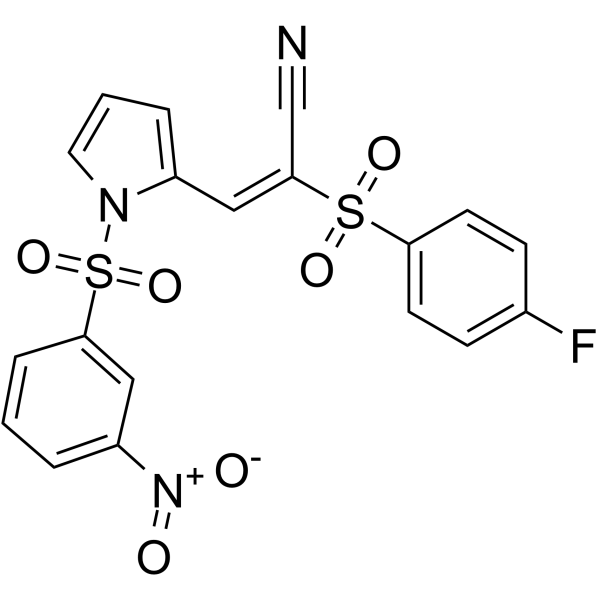
    AMZ30 is selective protein phosphatase methylesterase-1(PME-1) inhibitor with IC50s of 600 nM and 3.5 µM in human cell lysates and in HEK 293T cells, respectively. AMZ30 shows >100-fold selectivity relative to other serine hydrolases. AMZ30 reduces the demethylated form of PP2A in living cells. AMZ30 attenuates muscle cell differentiation. AMZ30 increases the resistance of U87MG and U251MG glioblastoma cells to t-BHP-induced oxidative stress. AMZ30can be used for the study of glioblastoma .
    AMZ30
  • HY-162002

    ATM/ATR Cancer
    WSD0628 is a brain penetrant and potent ATM inhibitor with profound radiosensitizing effect .
    WSD0628
  • HY-B0380A

    Opioid Receptor Toll-like Receptor (TLR) Calcium Channel Potassium Channel IRAK ERK JNK NF-κB Akt Apoptosis Neurological Disease Metabolic Disease Inflammation/Immunology Cancer
    Trimebutine maleate is a multi-target inhibitor and opioid receptor agonist with antimuscarinic activity. Trimebutine maleate inhibits L-type Ca 2+ channels and large-conductance calcium-activated potassium channels (BKCa channels), thereby inhibiting extracellular calcium influx and potassium ion efflux. Trimebutine maleate also targets Toll-like receptors, inhibits Toll-like receptor 2/4/7/8/9 signals, and inhibits LPS-induced IRAK1 activation, as well as ERK1/2, JNK and NF-κB activation, thereby exerting anti-inflammatory effects. Trimebutine maleate also induces tumor cell apoptosis by inhibiting the AKT/ERK pathway. Trimebutine maleate also inhibits excessive contraction of smooth muscle and can be used in the study of gastrointestinal disorders such as irritable bowel syndrome (IBS) .
    Trimebutine maleate
  • HY-P11287A

    Interleukin Related Radionuclide-Drug Conjugates (RDCs) Cancer
    DOTA-Pep-1L TFA is a polypeptide formed by the conjugation of DOTA and Pep-1L. DOTA-Pep-1L TFA specifically binds to IL13RA2 and can be used for the synthesis of targeted polypeptides. DOTA-Pep-1L TFA yields the isotopically labeled product [ 225Ac]DOTA-Pep-1L, which exerts α-radiation killing effects on orthotopic glioma cells and extends the median survival time of mice bearing orthotopic glioma models after stereotactic injection. DOTA-Pep-1L TFA can be used for PET imaging, tumor targeting and glioma research .
    DOTA-Pep-1L TFA
  • HY-123927

    VEGFR Ephrin Receptor Inflammation/Immunology Cancer
    UniPR1331 is an orally active 3β-hydroxy-Δ5-choline acid derivative that inhibits Eph-ephrin interactions. UniPR1331 blocks the interaction of VEGFR2 with its natural ligand vascular endothelial growth factor and inhibits subsequent autophosphorylation, signaling, and pro-angiogenic activation of endothelial cells. UniPR1331 exhibits anti-angiogenesis, anti-cancer and anti-inflammation effects. UniPR1331 can be used for the researches of cancer and inflammation, such as glioma and colitis .
    UniPR1331
  • HY-132302

    Akt PKA PKC ROCK Ribosomal S6 Kinase (RSK) SGK Cancer
    Hu7691 is an orally active, selective Akt inhibitor with IC50s of 4.0 nM, 97.5 nM, 28 nM for Akt1, Akt2 and Akt3, respectively. Hu7691 inhibits tumor growth and enables decrease of cutaneous toxicity in mice .
    Hu7691
  • HY-131943

    Methylenetetrahydrofolate Dehydrogenase (MTHFD) Neurological Disease Cancer
    DS44960156 is a selective MTHFD2 inhibitor with moderate to low blood-brain barrier penetration (IC50=1.6 μM, Ki=1.23 μM). DS44960156 specifically binds to the active site of MTHFD2, disrupts redox homeostasis and blocks serine-mediated one-carbon metabolism, thereby increasing the NAD +/NADH ratio and ROS levels. DS44960156 not only effectively inhibits the proliferation of glioma cells, but also enhances the sensitivity of cells to glutamine starvation-induced death. DS44960156 binds to plasma proteins, shows no mutagenicity, carcinogenicity or acute oral toxicity, and serves as a research agent for glioblastoma multiforme and other cancers .
    DS44960156
  • HY-N1983
    Caudatin
    1 Publications Verification

    Apoptosis Autophagy Reactive Oxygen Species (ROS) Mitochondrial Metabolism PARP Caspase Bcl-2 Family VEGFR FAK WDR5 p38 MAPK JNK PPAR Neurological Disease Inflammation/Immunology Cancer
    Caudatin is an orally active and brain-penetrant C-21 steroidal found in Cynanchum bungei decne with a variety of biological activities. Caudatin can inhibit cell proliferation, migration, invasion, cause cell phase arrest, induce apoptosis, autophagy, ROS prodution and loss of mitochondrial membrane potential. Caudatin activates PARP, caspase-3, -7, -9, upregulates pro-apoptotic Bad and Bax and downregulates anti-apoptotic Bcl-2 and Bcl-XL. Caudatin suppresses VEGF, FAK phosphorylation, upregulates p21, p27, DR5 protein expression, activates the p38 MAPK, JNK and PPARα/TFEB-mediated autophagy-lysosomal signaling pathways. Caudatin can be used for the research of cancer, inflammation and neurological disease, such as glioma and Alzheimer's disease .
    Caudatin
  • HY-147637

    Ephrin Receptor Cancer
    EphA2 agonist 1 (Compound 7bg) is a potent EphA2 receptor agonist. EphA2 agonist 1 shows great potency and selectivity toward EphA2 overexpressed glioblastoma cells and stimulates EphA2 phosphorylation .
    EphA2 agonist 1
  • HY-175207

    Glycosidase Cancer
    CHI3L1-IN-3 is a CHI3L1 inhibitor. CHI3L1-IN-3 binds to CHI3L1 with Kds of 13.76 μM and 13.5 μM in MST and SPR assays, respectively. CHI3L1-IN-3 demonstrates extended plasma half-lives and microsomal stability, along with reduced intrinsic clearance. CHI3L1-IN-3 induces dose-dependent cytotoxicity, reduces spheroid mass and inhibits migration in a 3D multicellular glioblastoma (GBM) spheroid model. CHI3L1-IN-3 can be used for the study of GBM .
    CHI3L1-IN-3
  • HY-146320
    ANO1-IN-1
    2 Publications Verification

    Chloride Channel Cancer
    ANO1-IN-1 (Compound 9c) is a selective ANO1 channel blocker with an IC50 of 2.56 μM and 15.43 μM against ANO1 and ANO2, respectively. ANO1-IN-1 suppresses strongly proliferation of glioblastoma cells .
    ANO1-IN-1
  • HY-120115

    Olaparib-bodipy FL

    PARP Fluorescent Dye Cancer
    PARPi-FL (Olaparib-bodipy FL) is a small-molecule fluorescent inhibitor of PARP1 that can specifically bind to PARP1. PARPi-FL can be used as a fluorescent imaging agent for tumor detection, diagnosis, and surgical guidance .
    PARPi-FL
  • HY-170935

    SRPK PARP Caspase Apoptosis Autophagy Cancer
    SRSF1-IN-1 is a SRSF1 inhibitor. SRSF1-IN-1 inhibits SRSF1 expression, thereby modulating the splicing of Bcl-x pre-mRNA. SRSF1-IN-1 inhibits the proliferation of various cancer cells. SRSF1-IN-1 induces apoptosis in gastric cancer cells, reduces Bcl-xl expression, and upregulates cleaved PARP and caspase 3. SRSF1-IN-1 induces autophagy and promotes cell death. SRSF1-IN-1 exhibits anti-tumor activity in a mouse gastric cancer xenograft model. SRSF1-IN-1 can be used for the research of various cancers including liver cancer, gastric cancer, breast cancer, colon cancer, glioma, and melanoma .
    SRSF1-IN-1
  • HY-110147B

    Furin Infection
    SSM3 tetraTFA hydrate is a potent synthetic furin inhibitor with an EC50 and a Ki of 54 nM and 12 nM, respectively. SSM3 tetraTFA hydrate is able to block furin-dependent cell surface processing of anthrax protective antigen-83 in vitro .
    SSM3 tetraTFA hydrate
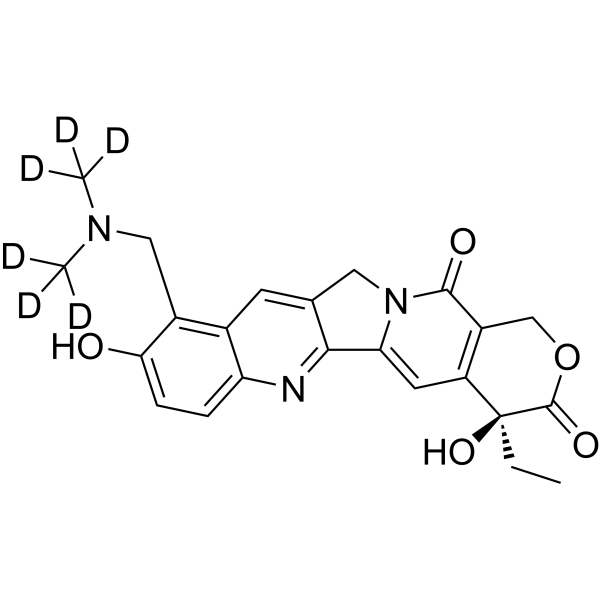
  • HY-13768S1

    Isotope-Labeled Compounds Topoisomerase Autophagy Cancer
    Topotecan-d6 is the deuterium labeled Topotecan. Topotecan (SKF 104864A; NSC 609669) is a Topoisomerase I inhibitor. The IC50 values of Topotecan at 24 h are 2.73±0.25 μM of U251 cells, 2.95±0.23 μM of U87 cells, 5.46±0.41 μM of GSCs-U251 and 5.95 μM of GSCs-U87 .
    Topotecan-d6
  • HY-N10871

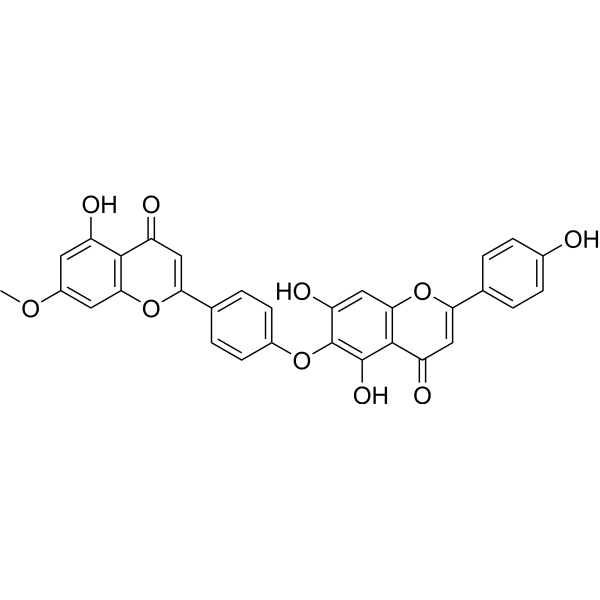
    SARS-CoV Cancer
    Neocryptomerin, a biflavonoid, shows inhibitory activity against U251, MCF-7, HeLa cell. Neocryptomerin has favorable binding affinities in the active pocket of SARS-CoV-2. Neocryptomerin is the leading compound of rational compounds against COVID-19 .
    Neocryptomerin
  • HY-163835

    Ephrin Receptor Cancer
    UniPR1454 targets EphA2 receptor, inhibits the EphA2-ephrin A1 interaction with an IC50 of 2.6 μM. UniPR1454 inhibits the proliferation of glioblastoma cell U251 .
    UniPR1454
  • HY-170405

    PROTACs mTOR Cancer
    YB-3-17 is a bifunctional molecule, that inhibits mTOR (IC50=0.22 nM) or degrades G1 to S phase transition 1 gene (GSPT1, DC50=5 nM) in a PROTAC mechanism. YB-3-17 exhibits antiproliferative activity in multi glioblastoma cell lines with IC50 of nanomolare levels. YB-3-17 exhibits antitumor efficacy in mouse models . (Pink: ligand for target protein (HY-170407); Black: linker (HY-A0102); Blue: ligand for E3 ligase Cereblon (HY-14658))
    YB-3–17
  • HY-160649

    Drug-Linker Conjugates for ADC Topoisomerase Cancer
    MC-Gly-Gly-Phe-Gly-GABA-Exatecan is an agent linker conjugate for ADC, with an inhibitor for Topoisomerase Exatecan (HY-13631) with IC50 of 22 μM. MC-Gly-Gly-Phe-Gly-GABA-Exatecan targets various antibodies, exhibits cytotoxic and antitumor efficacy in vitro and in vivo .
    MC-Gly-Gly-Phe-Gly-GABA-Exatecan
  • HY-151883

    Apoptosis MDM-2/p53 Cancer
    APE1-IN-2 (compound AP1) is a Pt(IV) proagent, targeting a critical BER protein, apurinic/apyrimidinic endonuclease 1 (APE1). APE1-IN-2 shows anticancer activity. APE1-IN-2 induces intracellular accumulation of platinum and activates DNA damage response and apoptosis signals .
    APE1-IN-2
  • HY-113916

    AT13387 lactate

    HSP Cancer
    Onalespib lactate is a potent and cross the blood-brain barrier heat-shock-protein-90 (Hsp90) inhibitor with an Kd value of 0.71 nM. Onalespib lactate inhibits the proliferation, survival and migration. Onalespib lactate decreases the expression of EGFR, p-EGFR, AKT, P-AKT, ERK1/2, P-ERK1/2, S6, P-S6 protein. Onalespib lactate shows antitumor activity. Onalespib lactate has the potential for the research of non-small cell lung cancer (NSCLC) .
    Onalespib lactate
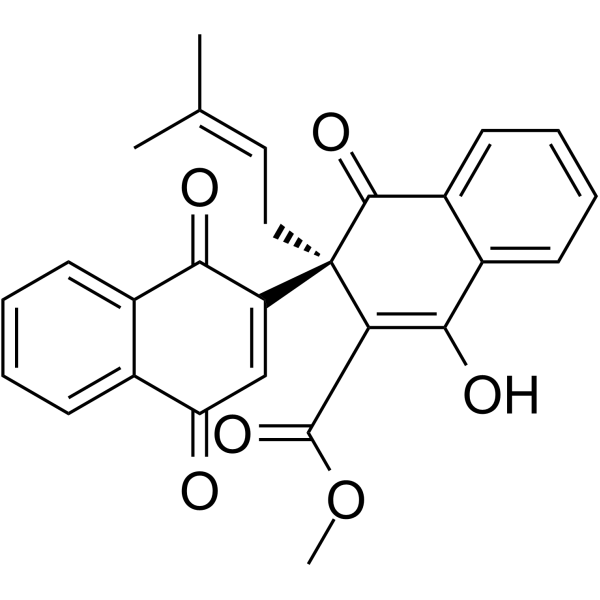
  • HY-N7980

    NF-κB Cancer
    Rubipodanone A, a naphthohydroquinone dimer, shows cytotoxicity against A549, BEL-7402, HeLa, HepG2, SGC-7901 and U251 cells. Rubipodanone A also shows obvious activating effect at 20 and 40 μM for NF-κB .
    Rubipodanone A
  • HY-175530

    OLIG2 Cancer
    OLIG2-IN-1 is a potent and selective oligodendrocyte transcription factor 2 (OLIG2) inhibitor. OLIG2-IN-1 directly and dose-dependently downregulates nuclear OLIG2 levels with an IC50 value of 0.88 μM. OLIG2-IN-1 exhibits strong anti-proliferative activity in U87 and U251 cells with IC50 values of 7.02 μM and 6.43 μM, respectively. OLIG2-IN-1 can be used for the research of cancer, such as glioblastoma multiforme .
    OLIG2-IN-1
  • HY-168883

    Apoptosis Pyruvate Kinase Cancer
    PKM2 modulator 2 (compound C599) is a potent PKM2 inhibitor. PKM2 modulator 2 shows antiproliferative activity. PKM2 modulator 2 induces apoptosis. PKM2 modulator 2 has the potential for the research of glioblastoma .
    PKM2 modulator 2
  • HY-129932

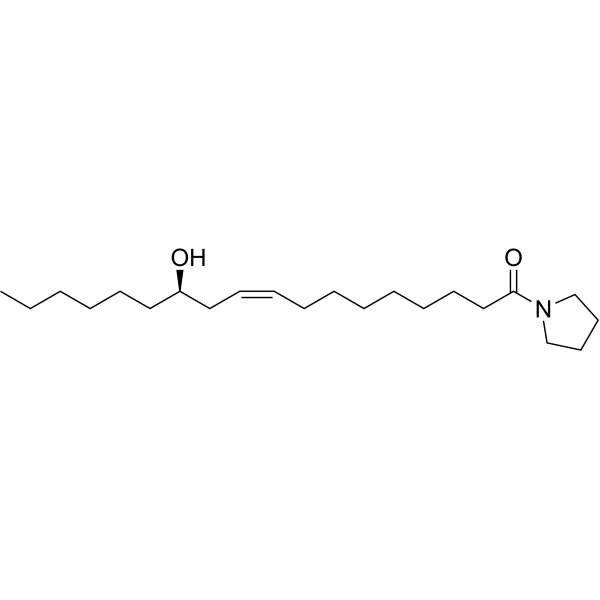
    Drug Derivative Cancer
    Pyrrolidine ricinoleamide ((R)-5d) is a fatty acid amide that exhibits effective antiproliferative activity against a series of cancer cells, including human glioma U251 cells. Pyrrolidine ricinoleamide can be used in cancer research .
    Pyrrolidine ricinoleamide
  • HY-P11326

    Cathepsin Fluorescent Dye Neurological Disease Cancer
    Ac-FR-AFC TFA is a fluorometric substrate for cathepsin L. Ac-FR-AFC TFA can be used for the research of glioblastoma .
    Ac-FR-AFC TFA
  • HY-P991419

    VEGFR Cancer
    MSB-0254 is a human monoclonal antibody (mAb) targeting VEGFR2/KDR/CD309. MSB-0254 inhibits the invasion, migration, and vascular mimetic (VM) formation of U251 and primary glioma cells. MSB-0254 inhibits the growth of U251 and GL261 cell transplanted tumors. MSB-0254 reduces the expression of CD34, VEGFR2, Ki67, MMP2, MMP9, and CD34/PAS. MSB-0254 can be used in advanced solid tumors research .
    MSB-0254
  • HY-124242

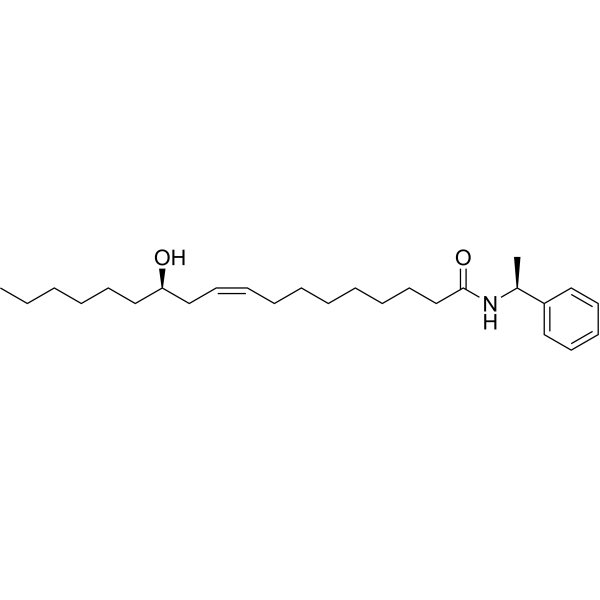
    Drug Derivative Cancer
    (S)-α-Methylbenzyl ricinoleamide (compound (R,S)-3d) is a fatty acid amide. (S)-α-Methylbenzyl ricinoleamide shows antiproliferative activity, inhibits the growth of human ovarian cancer cells NCI-ADR/RES and glioma cells U251 with GI50s of 1.9 μg/mL and 3.6 μg/mL, respectively .
    (S)-α-Methylbenzyl ricinoleamide
  • HY-170893

    Carbonic Anhydrase Cancer
    CAIX/CAXII-IN-4 (Compound 7h) is the inhibitor for carbonic anhydrase (CA) that binds CA IX, CA XII and CA II with Ki of 1.324 μM, 0.435 μM and 3.035 μM. CAIX/CAXII-IN-4 exhibits board-spectrum antitumor efficacy, inhibits the proliferation of CNS cancer U251 with GI50 of 0.361 μM .
    CAIX/CAXII-IN-4
  • HY-147409

    CDK Cancer
    Ulecaciclib is an orally activitive inhibitor of cyclin-dependent kinase (CDK), with Ki values of 0.62 μM (CDK2/Cyclin A), 0.2 nM (CDK4/Cyclin D1), 3 nM (CDK6/Cyclin D3), and 0.63 μM (CDK7/Cyclin H), respectively. Ulecaciclib can cross blood brain barrier and has good pharmacokinetic characteristics .
    Ulecaciclib
  • HY-13768S

    SKF 104864A-d5; NSC 609669-d5

    Isotope-Labeled Compounds Topoisomerase Autophagy Cancer
    Topotecan-d5 is the deuterium labeled Topotecan. Topotecan (SKF 104864A; NSC 609669) is a Topoisomerase I inhibitor. The IC50 values of Topotecan at 24 h are 2.73±0.25 μM of U251 cells, 2.95±0.23 μM of U87 cells, 5.46±0.41 μM of GSCs-U251 and 5.95±0.24 μM of GSCs-U87 .
    Topotecan-d5
  • HY-155532

    Apoptosis Cancer
    10m/ZS44 is a blood-brain barrier-permeable Glioblastoma (GBM) inhibitor. 10m/ZS44 significantly inhibits GBM tumor growth in a mouse xenograft model. 10m/ZS44 also activates the SIRT1/p53-mediated apoptosis pathway, thereby inhibiting the proliferation of U251 cells .
    10m/ZS44
  • HY-N15582

    Apoptosis Inflammation/Immunology Cancer
    Perezone is a sesquiterpenoid benzoquinone found in the roots of Acourtia species. Perezone inhibits the activity of leukemia cell line K-562 and human glioma cell line U-251 (IC50: 6.83 μM). Perezone increases the expression of caspase 3, 8, and 9 genes associated with apoptosis. Perezone has antioxidant and anti-inflammatory activities .
    Perezone
  • HY-173431

    Dopamine Receptor Reactive Oxygen Species (ROS) Cancer
    Dopamine D4 receptor ligand 3 (Compound 16) is a dopamine D4 receptor (D4R) antagonist (pKi: 8.86). Dopamine D4 receptor ligand 3 has pIC50 values of 5.78, 5.55, and 6.17 for Go, Gi, and βArr2 sensors in HEK-293T cells, respectively. Dopamine D4 receptor ligand 3 inhibits the viability of three human glioma cell lines, U87 MG, T98G, and U251 MG. Dopamine D4 receptor ligand 3 induces ROS production and mitochondrial dysfunction in glioma cells .
    Dopamine D4 receptor ligand 3
  • HY-168899

    FAK Apoptosis Cancer
    FAK-IN-24 (Compound 9f) is a FAK inhibitor (IC50: 0.815 nM). FAK-IN-24 induces DNA damage and apoptosis. FAK-IN-24 has anti-glioblastoma activity. FAK-IN-24 inhibits proliferation of glioblastoma cell lines U87-MG (IC50 = 15 nM) and U251 (IC50 = 20 nM). FAK-IN-24 inhibits tumor growth in U87-MG xenograft model .
    FAK-IN-24
  • HY-169476

    Drug Derivative Cancer
    Pyrrolidine linoleamide is a derivative of linoleic acid amide with anticancer activity. Pyrrolidine linoleamide exhibits antiproliferative activity against a range of cancer cell lines, with IC50 values of 12.0, 27.5, 7.7, 21.9, 36.6, 32.6, and 33.9 μg/mL against U251, MCF-7, NCI-ADR/RES, 786-0, NCI-H460, PC-3, and OVCAR-3 cell lines, respectively .
    Pyrrolidine linoleamide
  • HY-146141

    Ephrin Receptor Cancer
    EphA2 agonist 2 (Lead compound) is a selective EphA2 agonist with antitumor activities. EphA2 agonist 2 can cross the BBB .
    EphA2 agonist 2
  • HY-B0380AR

    Reference Standards Opioid Receptor Apoptosis Potassium Channel NF-κB Akt IRAK JNK Toll-like Receptor (TLR) ERK Calcium Channel Neurological Disease Metabolic Disease Inflammation/Immunology Cancer
    Trimebutine maleate (Standard) is the analytical standard of Trimebutine maleate (HY-B0380A). This product is intended for research and analytical applications. Trimebutine maleate is a multi-target inhibitor and opioid receptor agonist with antimuscarinic activity. Trimebutine maleate inhibits L-type Ca 2+ channels and large-conductance calcium-activated potassium channels (BKCa channels), thereby inhibiting extracellular calcium influx and potassium ion efflux. Trimebutine maleate also targets Toll-like receptors, inhibits Toll-like receptor 2/4/7/8/9 signals, and inhibits LPS-induced IRAK1 activation, as well as ERK1/2, JNK and NF-κB activation, thereby exerting anti-inflammatory effects. Trimebutine maleate also induces tumor cell apoptosis by inhibiting the AKT/ERK pathway. Trimebutine maleate also inhibits excessive contraction of smooth muscle and can be used in the study of gastrointestinal disorders such as irritable bowel syndrome (IBS) .
    Trimebutine maleate (Standard)
  • HY-12768B

    BLZ945 dihydrochloride

    c-Fms Neurological Disease Cancer
    Sotuletinib (BLZ945) dihydrochloride is a potent, selective, orally active and brain-penetrant CSF-1R (c-Fms) inhibitor with an IC50 of 1 nM, showing more than 1,000-fold selectivity against its closest receptor tyrosine kinase homologs. Sotuletinib dihydrochloride can be used for microglia depletion, and for tumor and CNS-related disease research .
    Sotuletinib dihydrochloride
  • HY-148174

    DGK Cancer
    JNJ-3790339, a Ritanserin (HY-10791) analog, is a potent and selective diacylglycerol kinase (DGKα) inhibitor with an IC50 of 9.6 μM. JNJ-3790339 has induction of toxicity in malignant cells, and improves ability to upregulate T cell activation .
    JNJ-3790339
  • HY-132302A

    Akt PKA PKC ROCK Ribosomal S6 Kinase (RSK) SGK Cancer
    Hu7691 free base is an orally active, selective Akt inhibitor with IC50s of 4.0 nM, 97.5 nM, 28 nM for Akt1, Akt2 and Akt3, respectively. Hu7691 free base inhibits tumor growth and enables decrease of cutaneous toxicity in mice .
    Hu7691 free base
  • HY-160121

    Patrinoside aglycone

    Apoptosis NO Synthase TNF Receptor Interleukin Related PGE synthase COX Inflammation/Immunology Cancer
    Patrinoside aglucone (Compound 8) is an iridoid glucoside that can be isolated from the Valeriana tuberosa. Patrinoside aglucone has potent anticancer activity with G2/M phase tumor cell cycle arrest and apoptosis induction. Patrinoside aglucone also significantly inhibits the proliferation of cancer stem cells (such as MDA-MB-231 and U-251MG cells). Patrinoside aglucone has great anti-inflammatory activity by inhibiting NO release (IC50: 43.44 μM) and significantly reduces the level of TNF-α, IL-1β, IL-6, PGE2 and COX-2 .
    Patrinoside aglucone

Inquiry Online

Your information is safe with us. * Required Fields.

Salutation


Country or Region *

Applicant Name *


Organization Name *

Department *


Email Address *


Product Name *

Cat. No.


Requested quantity *

Phone Number *


Remarks

Inquiry Online

Inquiry Information

Product Name:
Cat. No.:
Quantity:
MCE Japan Authorized Agent:

