Search Result
Results for "
amine reactive
" in MedChemExpress (MCE) Product Catalog:
71
Biochemical Assay Reagents
6
Isotope-Labeled Compounds
| Cat. No. |
Product Name |
Target |
Research Areas |
Chemical Structure |
-
- HY-W019543
-
|
|
Biochemical Assay Reagents
|
Cancer
|
|
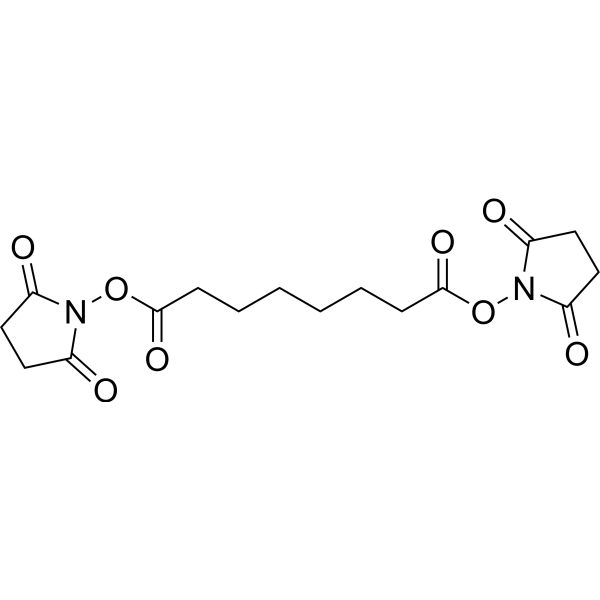
Disuccinimidyl suberate Crosslinker is an amine-reactive bifunctional protein crosslinker. Disuccinimidyl suberate Crosslinker enables stable protein-protein, peptide, and biomolecule conjugation.
|
-
-
- HY-114697
-
-
-
- HY-124329
-
|
|
Biochemical Assay Reagents
|
Cancer
|
|
BS3 Crosslinker is an amine-reactive homobifunctional protein crosslinker. BS3 Crosslinker enables stable protein-protein, peptide, and biomolecule conjugation.
|
-
-
- HY-42360
-
SMCC
1 Publications Verification
|
ADC Linker
|
Cancer
|
|
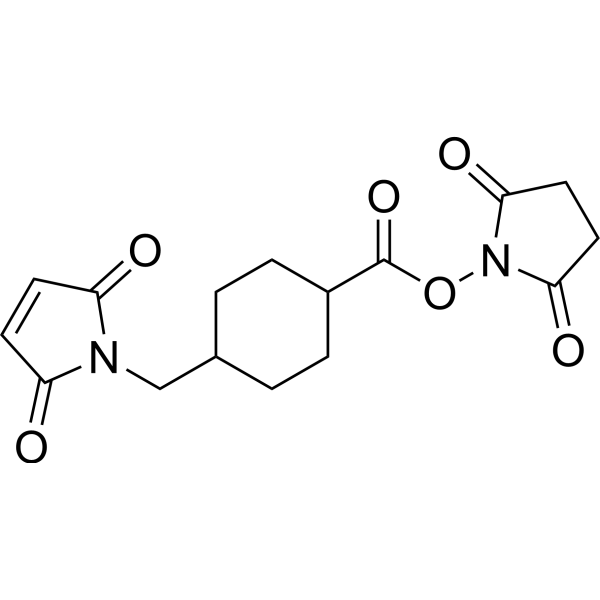
SMCC is a protein crosslinker. SMCC contains an amine-reactive N-hydroxysuccinimide ester and a sulfhydryl-reactive maleimide group that can be used in the conjugation of proteins. SMCC-conjugated antigen coupled spleen cells to induce antigen-specific immune responses .
|
-
-
- HY-118759
-
-
-
- HY-124329A
-
|
|
Biochemical Assay Reagents
|
Cancer
|
|
BS3 Crosslinker disodium is an amine-reactive homobifunctional protein crosslinker. BS3 Crosslinker disodium enables stable protein-protein, peptide, and biomolecule conjugation.
|
-
-
- HY-D0799
-
|
|
Fluorescent Dye
|
Others
|
|
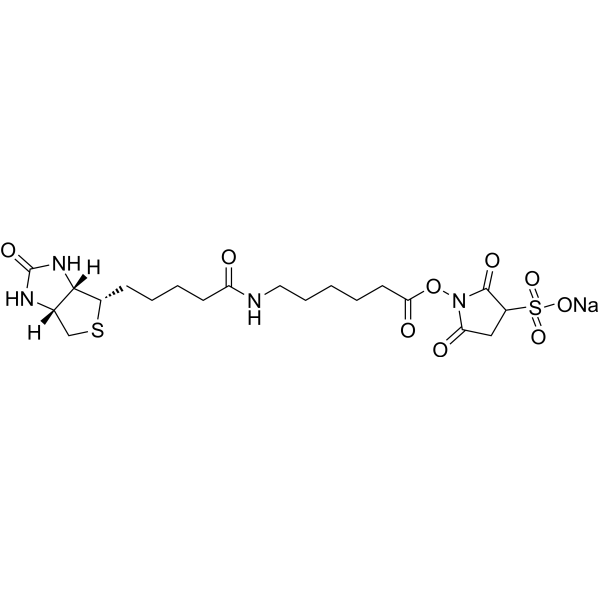
Sulfo-NHS-LC-Biotin sodium is an amine-reactive ester derivative of biotin and cannot pass the intact blood-retinal barrier. It can be used to assess vascular permeability of the brain and retinal vasculature.
|
-
-
- HY-D1041
-
|
ICG-OSu
|
Fluorescent Dye
|
Cancer
|
|
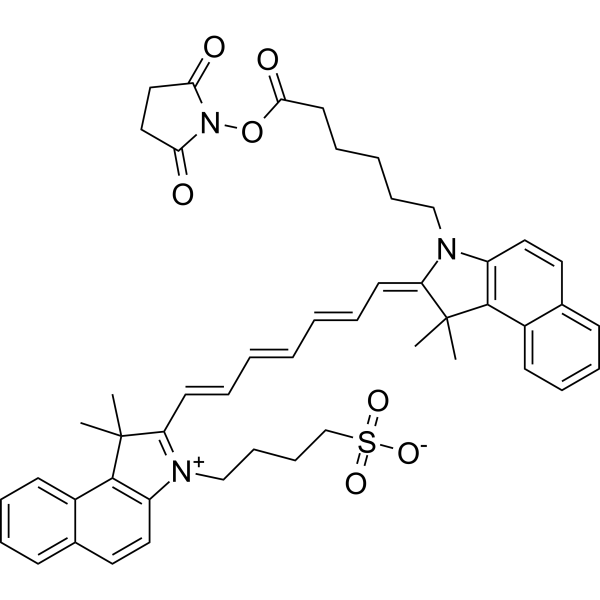
ICG NHS ester (ICG-OSu) is a near-infrared fluorescent agent ICG derivative. ICG NHS ester is amine-reactive and has been widely used to design in vivo imaging probes .
|
-
-
- HY-126349
-
|
|
ADC Linker
|
Others
|
|
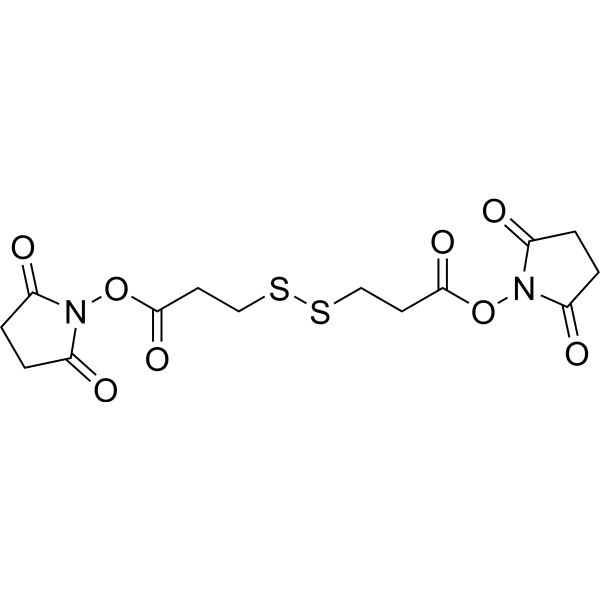
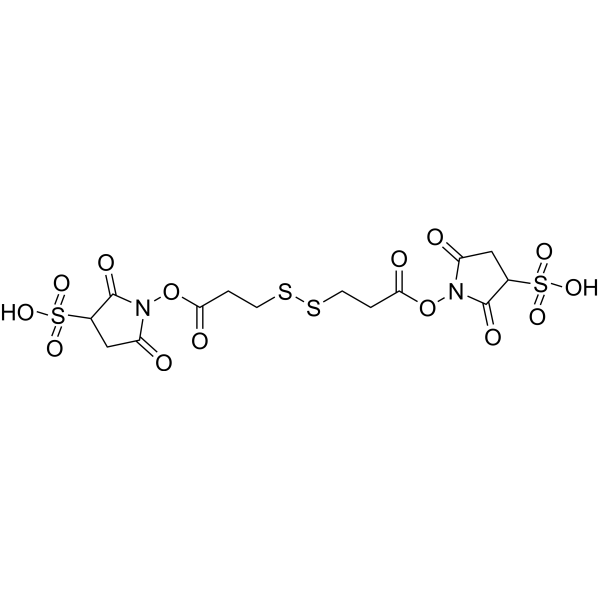
DTSSP Crosslinker is a crosslinker reactive with primary amines. DTSSP Crosslinker is a cleavable ADC linker used in the synthesis of antibody-drug conjugates (ADCs) .
|
-
-
- HY-D0048
-
|
5-TAMRA-NHS ester; 5-Carboxytetramethylrhodamine succinimidyl ester
|
Fluorescent Dye
|
Others
|
|
5-TAMRA-SE is an amine-reactive fluorescent agent, and its conjugate produces bright, pH-insensitive orange-red fluorescence with good photostability (Ex/Em = 565/580 nm).
|
-
-
- HY-W879045
-
|
Endo-BCN-PEG5-NH2
|
Biochemical Assay Reagents
|
Others
|
|
Endo-BCN-PEG5-amine (Endo-BCN-PEG5-NH2) is a click chemistry crosslinker reagent. The BCN groupis very reactive with azide-tagged molecules. The amino group is reactive with carboxylic acids, activated NHS esters, carbonyls (ketone, aldehyde) etc .
|
-
-
- HY-D1046
-
|
Dabcyl, SE
|
Fluorescent Dye
|
Others
|
|
Dabcyl acid, SE is the amine-reactive form of Dabcyl acid (DABCYL) (HY-D1045), and is widely used in the preparation of fluorescent probes containing DABCYL .
|
-
-
- HY-W590569
-
|
|
Biochemical Assay Reagents
|
Others
|
|
Azido-PEG12-amine is a water soluble PEG compound. The azide group enables Click Chemistry. The amine group is reactive with carboxylic acids, activated NHS esters, carbonyls (ketone, aldehyde), etc. The hydrophilic PEG arm increases solubility in aqueous media.
|
-
-
- HY-W441013
-
|
|
Liposome
|
Others
|
|
DSPE-PEG1000-NHS is a PEG-modified phospholipid derivative that can be used to prepare liposomes. DSPE-PEG1000-NHS is commonly employed as a linker molecule for the surface modification of liposomes to confer targeting capabilities. DSPE-PEG1000-NHS can be used in the study of drug delivery .
|
-
-
- HY-141175
-
|
|
Biochemical Assay Reagents
|
Others
|
|
TCO-PNB ester is an amine-reactive building block used for modification of amine-containing molecule. TCO-PNB ester contains a TCO group that can undergo an inverse electron demand Diels-Alder reaction (iEDDA) with molecules containing a Tetrazine group .
|
-
-
- HY-D2746
-
|
|
Fluorescent Dye
|
Others
|
|
Cy5.5 bis-NHS ester is a reactive cyanine dye containing NHS ester which can be used to label amine groups in peptides, proteins, and oligonucleotides.
|
-
-
- HY-W012971
-
|
|
Biochemical Assay Reagents
|
Others
|
|
5-Amino-1-pentanol is a linker containing a hydroxyl group and amine group. The hydroxyl group enables further derivatization or replacement with other reactive functional groups. The amine group is reactive with carboxylic acids, activated NHS esters, carbonyls (ketone, aldehyde) etc.
|
-
-
- HY-147117
-
-
-
- HY-D1050
-
|
6-(2,4-Dinitrophenyl)aminohexanoic acid, succinimidyl ester
|
Fluorescent Dye
|
Metabolic Disease
|
|
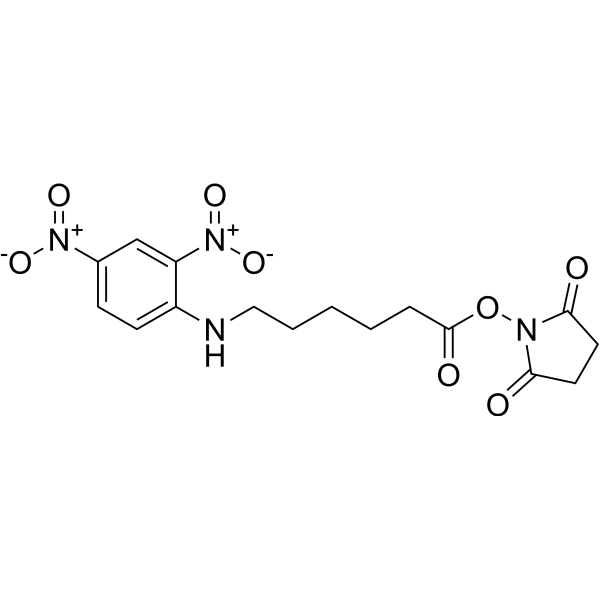
DNP-X, SE (6-(2,4-Dinitrophenyl)aminohexanoic acid, succinimidyl ester), the DNP-X acid modified by succinimidyl ester, is an amine-reactive building block for developing a probe, which can be recognized by anti-DNP antibodies. DNP-X, SE (6-(2,4-Dinitrophenyl)aminohexanoic acid, succinimidyl ester) is also an excellent amine-reactive FRET quencher paired with Trp or Tyr.
|
-
-
- HY-W190915
-
|
|
Biochemical Assay Reagents
|
Others
|
|
4,7,10,13,16–Pentaoxanonadecane-1,19-diamine is a PEG based linker with two terminal amine groups. The amine group is reactive with carboxylic acids, activated NHS esters, carbonyls (ketone, aldehyde) etc.
|
-
-
- HY-W1048843A
-
|
4-Arm PEG5000-amine
|
Biochemical Assay Reagents
|
Others
|
|
4-Arm PEG5000-NH2 (4-Arm PEG5000-amine) is a multi-arm PEG derivative with amine groups at each end of four arms attached to a pentaerythritol core. The reactive primary amine or NH2 groups can react rapidly with activated carboxylic acids such as NHS esters to form stable amide bonds .
|
-
-
- HY-W1048525
-
|
8-Arm PEG5000-amine
|
Biochemical Assay Reagents
|
Others
|
|
8-Arm PEG5000-NH2 (8-Arm PEG5000-Amine) is a multi-arm PEG derivative with amino groups at each end of the eight arms. The reactive primary amine or NH2 groups can react rapidly with activated carboxylic acids such as NHS esters to form stable amide bonds .
|
-
-
- HY-D1372
-
|
|
Fluorescent Dye
|
Others
|
|
Cyanine3 amine hydrochloride, an analog of Cyanine3 amine, is a potent green fluorescent dye. Cyanine3 amine hydrochloride has the primary amine group and is covalently coupled with reactive groups such as NHS esters, carboxy groups (after carbodiimide activation), and epoxides. (λex=555 nm, λem=570 nm) .
|
-
-
- HY-W800839
-
|
|
Biochemical Assay Reagents
|
Others
|
|
TCO-PEG4-TFP Ester is an amine-reactive labeling reagent used to modify proteins, antibodies, and other amine-containing biopolymers. A 2,3,5,6-tetrafluorophenol (TFP) is a reactive ester that displays much better stability toward hydrolysis in aqueous media resulting in more efficiency and better reproducible labeling of biopolymers. TFP ester of carboxylic acids react with primary amines at the same rate as NHS ester forming covalent amide bond that is identical to one formed by the reaction between primary amines and NHS esters or sulfo-NHS esters.
|
-
-
- HY-D0135
-
|
|
Fluorescent Dye
|
Others
|
|
12-(7-Nitrobenzofurazan-4-ylamino)dodecanoic acid is an amine-reactive fluorescent dye .
|
-
-
- HY-D1372A
-
|
|
Fluorescent Dye
|
Others
|
|
Cyanine3 amine (TFA), an analog of Cyanine3 amine, is a potent green fluorescent dye. Cyanine3 amine (TFA) has the primary amine group and is covalently coupled with reactive groups such as NHS esters, carboxy groups (after carbodiimide activation), and epoxides. (λex=555 nm, λem=570 nm) .
|
-
-
- HY-W1048843B
-
|
4-Arm PEG10000-amine
|
Biochemical Assay Reagents
|
Others
|
|
4-Arm PEG10000-NH2 (4-Arm PEG10000-amine) is a multi-arm PEG derivative with amine groups at each end of four arms attached to a pentaerythritol core. The reactive primary amine or NH2 groups can react rapidly with activated carboxylic acids such as NHS esters to form stable amide bonds .
|
-
-
- HY-W998707
-
|
|
Fluorescent Dye
|
Others
|
|
TAMRA amine, 5-isomer hydrochloride is a rhodamine dye with excitation/emission maximum 553/575 nm. The amine group is reactive with carboxylic acids, activated NHS esters, carbonyls (ketone, aldehyde) etc.
|
-
-
- HY-D1089
-
|
|
Fluorescent Dye
|
Others
|
|
6-JOE, SE is an amine-reactive fluorescent probe and is suitable for postsynthetic labeling of amino-modified oligonucleotides .
|
-
-
- HY-W1048519A
-
|
4-Arm PEG10000-amine HCL salt
|
Biochemical Assay Reagents
|
Others
|
|
4-Arm PEG10000-NH2 (4-Arm PEG100000-amine) hydrochloride is a multi-arm PEG derivative with amine groups at each end of four arms attached to a pentaerythritol core. The reactive primary amine or NH2 groups can react rapidly with activated carboxylic acids such as NHS esters to form stable amide bonds .
|
-
-
- HY-D0799A
-
|
|
Fluorescent Dye
|
Others
|
|
Sulfo-NHS-LC-Biotin is an amine-reactive ester derivative of biotin and cannot pass the intact blood-retinal barrier. It can be used to assess vascular permeability of the brain and retinal vasculature.
|
-
-
- HY-W190918
-
|
|
Biochemical Assay Reagents
|
Others
|
|
endo-BCN-PEG4-amine is a click chemistry crosslinker reagent. The BCN groupis very reactive with azide-tagged molecules. The amino group is reactive with carboxylic acids, activated NHS esters, carbonyls (ketone, aldehyde) etc.
|
-
-
- HY-W879025
-
|
Endo-BCN-PEG8-NH2
|
Biochemical Assay Reagents
|
Others
|
|
Endo-BCN-PEG8-amine (Endo-BCN-PEG8-NH2) is a click chemistry crosslinker reagent. The BCN groupis very reactive with azide-tagged molecules. The amino group is reactive with carboxylic acids, activated NHS esters, carbonyls (ketone, aldehyde) etc .
|
-
-
- HY-D1607
-
|
|
Fluorescent Dye
|
Others
|
|
BODIPY FL SSE is a potent fluorescent dye. BODIPY FL SSE is used to label the primary amines (R-NH2) of proteins, amine-modified oligonucleotides, and other amine-containing molecules. BODIPY FL SSE can reactive with primary amines on biomolecules to emit green fluorescence. (λex=502 nm, λem=511 nm) .
|
-
-
- HY-D1611
-
|
|
Fluorescent Dye
|
Others
|
|
BODIPY FL-C5 NHS Ester is a green-fluorescent dye that is reactive with primary amines on biomolecules such as peptides, proteins, modified nucleotides and biopolymers .
|
-
-
- HY-130547A
-
|
|
DNA Alkylator/Crosslinker
|
Cancer
|
|
BS2G Crosslinker is an amine-reactive homobifunctional protein crosslinker. BS2G Crosslinker enables stable protein-protein, peptide, and biomolecule conjugation.
|
-
-
- HY-W1048547J
-
|
HOOC-PEG40000-amine
|
PROTAC Linkers
|
Others
|
|
HOOC-PEG40000-NH2 (HOOC-PEG40000-Amine) is a heterobifunctional PEG crosslinker that can be used to attach functional PEG to biomolecules, particles, and other surface materials. The carboxyl group reacts with the amine group to form a stable amide bond. It can also react with the hydroxyl group to form an unstable ester bond. On the other hand, the amine group can be used to react with many amine-reactive groups, such as succinimidyl NHS esters, aldehydes, etc .
|
-
-
- HY-W101722
-
|
|
PROTAC Linkers
|
Cancer
|
|
tert-Butyl (9-aminononyl)carbamate is an alkane chain with terminal amine and Boc-protected amino groups. The compound can be used as a PROTAC linker in the synthesis of PROTACs and other conjugation applications. Amine group is reactive with carboxylic acids, activated NHS esters, carbonyls (ketone, aldehyde) etc. The Boc group can be deprotected under mild acidic conditions to form the free amine.
|
-
-
- HY-130547
-
|
|
DNA Alkylator/Crosslinker
|
Cancer
|
|
BS2G Crosslinker disodium is an amine-reactive homobifunctional protein crosslinker. BS2G Crosslinker disodium enables stable protein-protein, peptide, and biomolecule conjugation.
|
-
-
- HY-D1469
-
|
R6G-SE
|
Fluorescent Dye
|
Others
|
|
5-Carboxyrhodamine 6G succinimidyl ester (R6G-SE) is an amine reactive fluorescent dye .
|
-
-
- HY-D1112
-
|
|
Fluorescent Dye
|
Others
|
|
TFAX 546,SE triethylammonium, an amine reactive yellow fluorescent dye, can forms bright and photostable conjugates with proteins and antibodies .
|
-
-
- HY-156384
-
-
-
- HY-D1049
-
|
6-((2,4-Dinitrophenyl)amino)hexanoic acid
|
Fluorescent Dye
|
Metabolic Disease
|
|
DNP-X acid (6-((2,4-Dinitrophenyl)amino)hexanoic acid), an amine-reactive building block for developing a probe, can be recognized by anti-DNP antibodies. DNP-X acid is also an excellent amine-reactive FRET quencher paired with Trp or Tyr.
|
-
-
- HY-W020546
-
|
|
Biochemical Assay Reagents
|
Others
|
|
DBCO-amine TFA is a simple building block containing a DBCO moiety and an amine group. Amine is very reactive with NHS ester. DBCO is commonly used for copper-free Click Chemistry reactions.
|
-
-
- HY-W749072
-
|
|
Fluorescent Dye
|
Others
|
|
BP Fluor 568 NHS ester is an amine-reactive, orange fluorescent dye routinely used to label proteins or antibodies through the primary amines (Lys), amine-modified oligonucleotides, and other amine-containing biomolecules (Ex/Em: 578 nm/602 nm) .
|
-
-
- HY-131097
-
|
|
Fluorescent Dye
|
Others
|
|
Malachite green isothiocyanate is an amine-reactive probe that reacts with amines to give the corresponding thiourea. Malachite green isothiocyanate is a reagent that has been used for the measurement of concentration of protein .
|
-
-
- HY-W879044
-
|
Endo-BCN-PEG15-NH2
|
Biochemical Assay Reagents
|
Others
|
|
Endo-BCN-PEG15-amine (Endo-BCN-PEG15-NH2) is a click chemistry crosslinker reagent. The BCN groupis very reactive with azide-tagged molecules. The amino group is reactive with carboxylic acids, activated NHS esters, carbonyls (ketone, aldehyde) etc .
|
-
-
- HY-W093254A
-
-
-
- HY-W093254B
-
-
-
- HY-132270
-
|
|
Fluorescent Dye
|
Others
|
|
FAM amine, 5-isomer is a fluorescein linker that undergoes enzymatic transamination. The addition of the amine group makes the compound more reactive with carboxylic acids, activated NHS ester and other carbonyl groups.
|
-
- HY-D1774
-
-
- HY-169754
-
|
|
Fluorescent Dye
|
Others
|
|
BP Fluor 350 NHS ester is an amine reactive, water soluble, blue emitting dye used to specifically and efficiently modify primary amines at pH 7-9 to form stable covalent amide bonds .
|
-
- HY-140895B
-
|
Biotin-PEG10000-NH2
|
Biochemical Assay Reagents
|
Others
|
|
Biotin-PEG10000-Amine (Biotin-PEG10000-NH2) is a biotin PEG polymer containing a free amine group (-NH2). The amine group is reactive with an activated NHS ester via formation of an amide bond. Biotin-labeled compounds can then be linked to avidin or streptavidin for further purification or detection .
|
-
- HY-140895C
-
|
Biotin-PEG20000-NH2
|
Biochemical Assay Reagents
|
Others
|
|
Biotin-PEG20000-Amine (Biotin-PEG20000-NH2) is a biotin PEG polymer containing a free amine group (-NH2). The amine group is reactive with an activated NHS ester via formation of an amide bond. Biotin-labeled compounds can then be linked to avidin or streptavidin for further purification or detection .
|
-
- HY-140895D
-
|
Biotin-PEG40000-NH2
|
Biochemical Assay Reagents
|
Others
|
|
Biotin-PEG40000-Amine (Biotin-PEG40000-NH2) is a biotin PEG polymer containing a free amine group (-NH2). The amine group is reactive with an activated NHS ester via formation of an amide bond. Biotin-labeled compounds can then be linked to avidin or streptavidin for further purification or detection .
|
-
- HY-D2290
-
|
|
Fluorescent Dye
|
Others
|
|
Demethoxy-BODIPY TMR NHS ester is an amine-reactive fluorescent probe, and can be used for the labeling of proteins, peptides, and other molecules .
|
-
- HY-W800654
-
|
|
Biochemical Assay Reagents
|
Others
|
|
Mal-PEG5-amine is a PEG linker containing a maleimide group and an amine group. The hydrophilic PEG spacer increases solubility in aqueous media. The amine group is reactive with carboxylic acids, activated NHS esters, carbonyls (ketone, aldehyde) etc. The maleimide group will react with a thiol group to form a covalent bond, enabling the connection of biomolecule with a thiol.
|
-
- HY-W800649
-
|
|
Biochemical Assay Reagents
|
Others
|
|
Aminooxy-PEG2-amine hydrochloride (compound L3) is an aqueous soluble crosslinker. The aminooxy group can be used in bioconjugation. It reacts with an aldehyde to form an oxime bond, if a reductant is used, it will form a hydroxylamine linkage. The amino group is reactive with carboxylic acids, activated NHS esters, carbonyls (ketone, aldehyde) etc. Aminooxy compounds are very reactive and sensitive; they cannot be stored for long term .
|
-
- HY-141618
-
|
|
Fluorescent Dye
|
Others
|
|
5(6)-Carboxyrhodamine 110 is an amine-reactive fluorescent probe for labeling DNA, cells and proteins (Ex/Em = 498/530 nm) .
|
-
- HY-W1048519B
-
|
4-Arm PEG20000-amine HCL salt
|
Biochemical Assay Reagents
|
Others
|
|
4-Arm PEG20000-NH2 (4-Arm PEG20000-amine) hydrochloride is a multi-arm PEG derivative with amine groups at each end of four arms attached to a pentaerythritol core. The reactive primary amine or NH2 groups can react rapidly with activated carboxylic acids such as NHS esters to form stable amide bonds .
|
-
- HY-W1048519
-
|
4-Arm PEG5000-amine HCL salt
|
Biochemical Assay Reagents
|
Others
|
|
4-Arm PEG5000-NH2 (4-Arm PEG5000-amine) hydrochloride is a multi-arm PEG derivative with amine groups at each end of four arms attached to a pentaerythritol core. The reactive primary amine or NH2 groups can react rapidly with activated carboxylic acids such as NHS esters to form stable amide bonds .
|
-
- HY-W1048525B
-
|
8-Arm PEG40000-amine
|
Biochemical Assay Reagents
|
Others
|
|
8-Arm PEG40000-NH2 (8-Arm PEG40000-Amine) is a multi-arm PEG derivative with amino groups at each end of the eight arms. The reactive primary amine or NH2 groups can react rapidly with activated carboxylic acids such as NHS esters to form stable amide bonds .
|
-
- HY-W1048526
-
|
8-Arm PEG5000-amine HCL salt
|
Biochemical Assay Reagents
|
Others
|
|
8-Arm PEG5000-NH2 (8-Arm PEG5000-amine) HCL is a multi-arm PEG derivative with amino groups at each end of the eight arms. The reactive primary amine or NH2 groups can react rapidly with activated carboxylic acids such as NHS esters to form stable amide bonds .
|
-
- HY-W1048526A
-
|
8-Arm PEG20000-amine HCL salt
|
Biochemical Assay Reagents
|
Others
|
|
8-Arm PEG20000-NH2 (8-Arm PEG20000-amine) HCL is a multi-arm PEG derivative with amino groups at each end of the eight arms. The reactive primary amine or NH2 groups can react rapidly with activated carboxylic acids such as NHS esters to form stable amide bonds .
|
-
- HY-W1048567E
-
|
|
Biochemical Assay Reagents
|
Others
|
|
mPEG40000-SCM is a high quality amine-reactive PEG product with a stable non-degradable functional group between the PEG polymer chain and the NHS ester .
|
-
- HY-W1048567A
-
|
|
Biochemical Assay Reagents
|
Others
|
|
mPEG2000-SCM is a high quality amine-reactive PEG product with a stable non-degradable functional group between the PEG polymer chain and the NHS ester .
|
-
- HY-W1048567H
-
|
|
Biochemical Assay Reagents
|
Others
|
|
mPEG3400-SCM is a high quality amine-reactive PEG product with a stable non-degradable functional group between the PEG polymer chain and the NHS ester .
|
-
- HY-W441005
-
|
|
Liposome
|
Cancer
|
|
Amino-Gly-Gly-DSPE (hydrochloride) is a specially modified phospholipid that has been used to synthesize liposomes. The terminal amine is reactive with an NHS ester compound or carboxylic acid molecule in the presence of activator, such as HATU or EDC.
|
-
- HY-W800650
-
|
|
Biochemical Assay Reagents
|
Others
|
|
Aminooxy-PEG1-amine is a chemical reagent containing an aminooxy group and a primary amine. The aminooxy group is reactive with an aldehyde to form an oxime bond. If a reductant is used, it will form a hydroxylamine linkage. The amino group is reactive withactivated NHS esters, or carboxylic acid in the presence of coupling reagent EDC. Aminooxy compounds are very reactive and sensitive; they cannot be stored for long term.
|
-
- HY-186069
-
|
|
Biochemical Assay Reagents
|
Others
|
|
NHS-Phosphine is an amine-reactive compound that can be used to derivatize primary amines of proteins or amine-coated polymer surfaces for ligation to azide-tagged molecules .
|
-
- HY-W800711
-
|
|
Biochemical Assay Reagents
|
Others
|
|
SPDP-Gly-Pro-NHS ester is a linker with SPDP and NHS ester moieties. The SPDP is an amine and thiol reactive crosslinker. It is also membrane permeable, allowing it to participate in intracellular crosslinking reactions. The NHS ester is amine reactive and forms stable amide bonds.
|
-
- HY-155885
-
|
mPEG40000-NH2
|
Biochemical Assay Reagents
|
Others
|
|
mPEG40000-amine (mPEG40000-NH2) is a monofunctional polyPEG with a terminal amine. The coupling between NHS ester and amine produces a stable amide bond. The amine moieties is also reactive with carboxyl in the presence of activating agent .
|
-
- HY-D3263
-
|
|
Fluorescent Dye
|
Others
|
|
IR 650 NHS ester is a far-red-fluorescent probe with NHS ester. NHS ester is the most popular amine-reactive group for labeling with the primary amines of proteins (Lys), amine-modified oligonucleotides, and other amine-containing molecules. (Ex=651nm, Em=668 nm)
|
-
- HY-W591379
-
|
|
Biochemical Assay Reagents
|
Others
|
|
Amino-PEG19-amine is a PEG linker containing two amine functional groups. The hydrophilic PEG spacer increases solubility in aqueous media. The amino groups are reactive with carboxylic acids, activated NHS esters, carbonyls (ketone, aldehyde), etc.
|
-
- HY-W154175
-
|
|
Biochemical Assay Reagents
|
Others
|
|
Boc-DODA is a linker containing a Boc-protected amino group and a terminal amine. The Boc group can be deprotected under mild acidic conditions to form the free amine. The terminal amine is reactive with carboxylic acids, activated NHS esters, carbonyls (ketone, aldehyde) etc.
|
-
- HY-140895A
-
|
Biotin-PEG5000-NH2
|
Biochemical Assay Reagents
|
Others
|
|
Biotin-PEG5000-Amine (Biotin-PEG5000-NH2) is a biotin PEG polymer containing a free amine group (-NH2). The amine group is reactive with an activated NHS ester via formation of an amide bond. Biotin-labeled compounds can then be linked to avidin or streptavidin for further purification or detection .
|
-
- HY-W479025
-
|
|
Biochemical Assay Reagents
|
Others
|
|
Fmoc-DODA hydrochloride is a linker with an Fmoc-protected amine and a terminal amine group. The Fmoc group can be deprotected under basic condition to obtain the free amine which can be used for further conjugations. The amino group is reactive with carboxylic acids, activated NHS esters, carbonyls (ketone, aldehyde) etc.
|
-
- HY-W190922
-
|
|
Biochemical Assay Reagents
|
Others
|
|
Mal-PEG4-amine is a PEG linker containing a maleimide group and an amine group. The hydrophilic PEG spacer increases solubility in aqueous media. The amine group is reactive with carboxylic acids, activated NHS esters, carbonyls (ketone, aldehyde) etc. The maleimide group will react with a thiol group to form a covalent bond, enabling the connection of biomolecule with a thiol.
|
-
- HY-W998644
-
|
|
Fluorescent Dye
|
Others
|
|
PB LC acid is a blue-fluorescent dye that is reactive with primary amines on biomolecules such as peptides, proteins, modified nucleotides and biopolymers (Ex/Em = 410/455 nm) .
|
-
- HY-W092344
-
|
|
Biochemical Assay Reagents
|
Others
|
|
1,5-Bis-Boc-1,5,9-triazanonane is a linker containing two Boc-protected amino groups and a terminal amine. The Boc groups can be deprotected under mild acidic conditions to form the free amines. The terminal amine is reactive with carboxylic acids, activated NHS esters, carbonyls (ketone, aldehyde) etc.
|
-
- HY-W1048843C
-
|
4-Arm PEG20000-amine
|
Biochemical Assay Reagents
|
Others
|
|
4-Arm PEG20000-NH2 (4-Arm PEG20000-amine) is a multi-arm PEG derivative with amine groups at each end of four arms attached to a pentaerythritol core. The reactive primary amine or NH2 groups can react rapidly with activated carboxylic acids such as NHS esters to form stable amide bonds .
|
-
- HY-W1048519C
-
|
4-Arm PEG40000-amine HCL salt
|
Biochemical Assay Reagents
|
Others
|
|
4-Arm PEG40000-NH2 (4-Arm PEG40000-amine) hydrochloride is a multi-arm PEG derivative with amine groups at each end of four arms attached to a pentaerythritol core. The reactive primary amine or NH2 groups can react rapidly with activated carboxylic acids such as NHS esters to form stable amide bonds .
|
-
- HY-W1048843D
-
|
4-Arm PEG40000-amine
|
Biochemical Assay Reagents
|
Others
|
|
4-Arm PEG40000-NH2 (4-Arm PEG40000-amine) is a multi-arm PEG derivative with amine groups at each end of four arms attached to a pentaerythritol core. The reactive primary amine or NH2 groups can react rapidly with activated carboxylic acids such as NHS esters to form stable amide bonds .
|
-
- HY-W1048547A
-
|
HOOC-PEG2000-amine
|
Biochemical Assay Reagents
|
Others
|
|
HOOC-PEG2000-NH2 (HOOC-PEG2000-Amine) is a heterobifunctional PEG crosslinker that can be used to attach functional PEG to biomolecules, particles, and other surface materials. The carboxyl group reacts with the amine group to form a stable amide bond. It can also react with the hydroxyl group to form an unstable ester bond. On the other hand, the amine group can be used to react with many amine-reactive groups, such as succinimidyl NHS esters, aldehydes, etc .
|
-
- HY-W1048547H
-
|
HOOC-PEG1000-amine
|
Biochemical Assay Reagents
|
Others
|
|
HOOC-PEG1000-NH2 (HOOC-PEG1000-Amine) is a heterobifunctional PEG crosslinker that can be used to attach functional PEG to biomolecules, particles, and other surface materials. The carboxyl group reacts with the amine group to form a stable amide bond. It can also react with the hydroxyl group to form an unstable ester bond. On the other hand, the amine group can be used to react with many amine-reactive groups, such as succinimidyl NHS esters, aldehydes, etc .
|
-
- HY-W1048547E
-
|
HOOC-PEG20000-amine
|
Biochemical Assay Reagents
|
Others
|
|
HOOC-PEG20000-NH2 (HOOC-PEG20000-Amine) is a heterobifunctional PEG crosslinker that can be used to attach functional PEG to biomolecules, particles, and other surface materials. The carboxyl group reacts with the amine group to form a stable amide bond. It can also react with the hydroxyl group to form an unstable ester bond. On the other hand, the amine group can be used to react with many amine-reactive groups, such as succinimidyl NHS esters, aldehydes, etc .
|
-
- HY-W1048547I
-
|
HOOC-PEG3400-amine
|
Biochemical Assay Reagents
|
Others
|
|
HOOC-PEG3400-NH2 (HOOC-PEG3400-Amine) is a heterobifunctional PEG crosslinker that can be used to attach functional PEG to biomolecules, particles, and other surface materials. The carboxyl group reacts with the amine group to form a stable amide bond. It can also react with the hydroxyl group to form an unstable ester bond. On the other hand, the amine group can be used to react with many amine-reactive groups, such as succinimidyl NHS esters, aldehydes, etc .
|
-
- HY-W1048547C
-
|
HOOC-PEG5000-amine
|
Biochemical Assay Reagents
|
Others
|
|
HOOC-PEG5000-NH2 (HOOC-PEG5000-Amine) is a heterobifunctional PEG crosslinker that can be used to attach functional PEG to biomolecules, particles, and other surface materials. The carboxyl group reacts with the amine group to form a stable amide bond. It can also react with the hydroxyl group to form an unstable ester bond. On the other hand, the amine group can be used to react with many amine-reactive groups, such as succinimidyl NHS esters, aldehydes, etc .
|
-
- HY-W1048547D
-
|
HOOC-PEG10000-amine
|
Biochemical Assay Reagents
|
Others
|
|
HOOC-PEG10000-NH2 (HOOC-PEG10000-Amine) is a heterobifunctional PEG crosslinker that can be used to attach functional PEG to biomolecules, particles, and other surface materials. The carboxyl group reacts with the amine group to form a stable amide bond. It can also react with the hydroxyl group to form an unstable ester bond. On the other hand, the amine group can be used to react with many amine-reactive groups, such as succinimidyl NHS esters, aldehydes, etc .
|
-
- HY-W800714
-
|
|
Biochemical Assay Reagents
|
Others
|
|
SPDP-Gly-Gly-methoxy is a linker with SPDP and methyl ester moiety. The SPDP is an amine and thiol reactive crosslinker. It is also membrane permeable, allowing it to participate in intracellular crosslinking reactions.
|
-
- HY-W1048526C
-
|
8-Arm PEG10000-amine HCL salt
|
Biochemical Assay Reagents
|
Others
|
|
8-Arm PEG10000-NH2 (8-Arm PEG10000-amine) HCL is a multi-arm PEG derivative with amino groups at each end of the eight arms. The reactive primary amine or NH2 groups can react rapidly with activated carboxylic acids such as NHS esters to form stable amide bonds .
|
-
- HY-W1048525C
-
|
8-Arm PEG10000-amine
|
Biochemical Assay Reagents
|
Others
|
|
8-Arm PEG10000-NH2 (8-Arm PEG10000-Amine) is a multi-arm PEG derivative with amino groups at each end of the eight arms. The reactive primary amine or NH2 groups can react rapidly with activated carboxylic acids such as NHS esters to form stable amide bonds .
|
-
- HY-W1048526B
-
|
8-Arm PEG40000-amine HCL salt
|
Biochemical Assay Reagents
|
Others
|
|
8-Arm PEG40000-NH2 (8-Arm PEG40000-amine) HCL is a multi-arm PEG derivative with amino groups at each end of the eight arms. The reactive primary amine or NH2 groups can react rapidly with activated carboxylic acids such as NHS esters to form stable amide bonds .
|
-
- HY-W1048525A
-
|
8-Arm PEG20000-amine
|
Biochemical Assay Reagents
|
Others
|
|
8-Arm PEG20000-NH2 (8-Arm PEG20000-Amine) is a multi-arm PEG derivative with amino groups at each end of the eight arms. The reactive primary amine or NH2 groups can react rapidly with activated carboxylic acids such as NHS esters to form stable amide bonds .
|
-
- HY-W1048567
-
|
|
Biochemical Assay Reagents
|
Others
|
|
mPEG1000-SCM is a high quality amine-reactive PEG product with a stable non-degradable functional group between the PEG polymer chain and the NHS ester .
|
-
- HY-W1048567B
-
|
|
Biochemical Assay Reagents
|
Others
|
|
mPEG5000-SCM is a high quality amine-reactive PEG product with a stable non-degradable functional group between the PEG polymer chain and the NHS ester .
|
-
- HY-W1048567D
-
|
|
Biochemical Assay Reagents
|
Others
|
|
mPEG20000-SCM is a high quality amine-reactive PEG product with a stable non-degradable functional group between the PEG polymer chain and the NHS ester .
|
-
- HY-W1048567C
-
|
|
Biochemical Assay Reagents
|
Others
|
|
mPEG10000-SCM is a high quality amine-reactive PEG product with a stable non-degradable functional group between the PEG polymer chain and the NHS ester .
|
-
- HY-W800713
-
|
|
Biochemical Assay Reagents
|
Others
|
|
SPDP-Gly-Pro-acid is a linker with SPDP and carboxylic acid moieties. The SPDP is an amine and thiol reactive crosslinker. It is also membrane permeable, allowing it to participate in intracellular crosslinking reactions. The terminal carboxylic acid can react with primary amine groups in the presence of activators (e.g. EDC, or HATU) to form a stable amide bond.
|
-
- HY-W590588
-
|
|
Biochemical Assay Reagents
|
Others
|
|
Diethyl acetal-PEG4-amine is a PEG reagent containing an amino (NH2) group and a terminal diethyl acetal protecting group, which can be deprotected to form the free aldehyde. NH2 group is reactive with carboxylic acids, activated NHS esters, carbonyls (ketone, aldehyde), etc.
|
-
- HY-W591965
-
|
|
Biochemical Assay Reagents
|
Others
|
|
t-Boc-Aminooxy-pentane-amine is a linker containing an aminooxy group and a primary amine. The aminooxy group can be used in bioconjugation. It reacts with an aldehyde to form an oxime bond. If a reductant is used, it will form a hydroxylamine linkage. The amino group is reactive with carboxylic acids, activated NHS esters, carbonyls (ketone, aldehyde) etc.
|
-
- HY-W451405
-
|
|
Biochemical Assay Reagents
|
Others
|
|
2,5-Dioxopyrrolidin-1-yl hept-6-ynoate is an amine reactive four carbon reagent that can be used for derivatizing peptides, antibodies, amine coated surfaces etc. The alkyne group reacts with azide-bearing compounds or biomolecules in copper catalyzed Click Chemistry reactions.
|
-
- HY-D1021
-
|
Aminoallyl-dUTP sodium salt
|
DNA/RNA Synthesis
|
Others
|
|
AA-dUTP (Aminoallyl-dUTP) sodium salt is a reverse transcriptase and DNA polymerase I substrate with probe precursor activity. AA-dUTP sodium salt undergoes enzymatic incorporation into DNA during cDNA synthesis and nick translation. AA-dUTP sodium salt generates amine-modified DNA, which can be used for labeling with amine-reactive fluorescent dyes .
|
-
- HY-D3049
-
|
|
Fluorescent Dye
|
Others
|
|
5(6)-carbonylated rhodamine 110 NHS ester is a reactive ester fluorescent reagent based on 5(6)-carbonylated rhodamine 110. NHS ester is a highly reactive ester capable of covalently coupling with primary amine groups in molecules such as proteins, peptides, amino sugars, and nucleic acids to form stable amide bonds (Ex/Em = 502/527 nm).
|
-
- HY-W131541
-
|
|
PROTAC Linkers
|
Cancer
|
|
tert-Butyl (11-aminoundecyl)carbamate is an alkane chain with terminal amine and Boc-protected amino groups. tert-Butyl (11-aminoundecyl)carbamate can be used as a PROTAC linker in the synthesis of PROTACs and other conjugation applications. Amine group is reactive with carboxylic acids, activated NHS esters, carbonyls (ketone, aldehyde) etc. The Boc group can be deprotected under mild acidic conditions to form the free amine.
|
-
- HY-W800726
-
|
|
Biochemical Assay Reagents
|
Others
|
|
BB1-NHS ester is amine reactive at pH 7-9 to form a stable, irreversible amide bond. It was used in a unique chemselective "unclickable' bioconjugation strategy to site specifically modify proteins.
|
-
- HY-111496
-
|
|
Biochemical Assay Reagents
|
Others
|
|
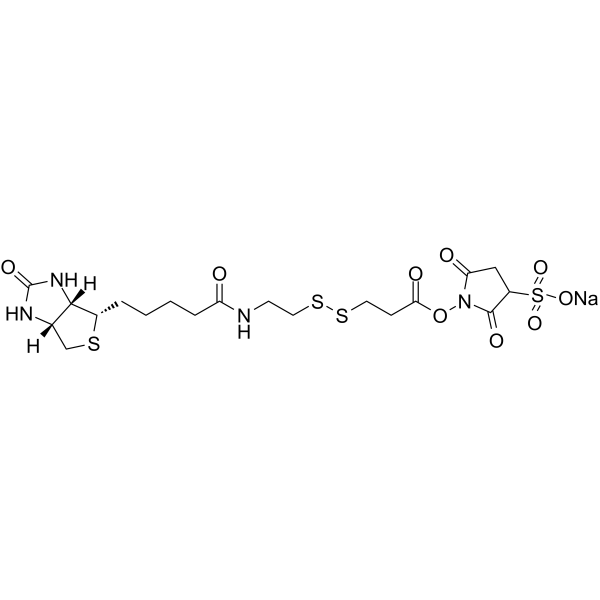
Sulfo-NHS-SS-biotin sodium is a long-chain cleavable and cell-impermeant amine-reactive biotinylation reagent. Sulfo-NHS-SS-biotin sodium can be used for the labeling and purifying of cell-surface protein .
|
-
- HY-D3050
-
|
|
Fluorescent Dye
|
Others
|
|
5(6)-carbonylated rhodamine 110 X NHS ester is a reactive ester fluorescent reagent based on 5(6)-carbonylated rhodamine 110 X. NHS ester is a highly reactive ester capable of covalently coupling with primary amine groups in molecules such as proteins, peptides, amino sugars, and nucleic acids to form stable amide bonds (Ex/Em = 496/522 nm).
|
-
- HY-D3053
-
|
|
Fluorescent Dye
|
Others
|
|
5(6)-Rhodamine 6G NHS ester is a reactive ester fluorescent reagent based on Rhodamine 6G (HY-D0309). NHS ester is a highly reactive ester capable of covalently coupling with primary amine groups in molecules such as proteins, peptides, amino sugars, and nucleic acids to form stable amide bonds (Ex/Em = 526/547 nm).
|
-
- HY-W190950
-
|
|
Biochemical Assay Reagents
|
Others
|
|
AZD-PEG5-PFP is a PEG linker containing an AZD group and a PFP ester group, an activated ester that reacts with primary amines to form amide bonds. PFP ester has been found to be more stable than other amine reactive groups because it is less likely to undergo hydrolysis. The hydrophilic PEG spacer increases solubility in aqueous media.
|
-
- HY-W800610
-
|
|
Biochemical Assay Reagents
|
Others
|
|
AZD-PEG13-PFP is a PEG linker containing an AZD group and a PFP ester group, an activated ester that reacts with primary amines to form amide bonds. PFP ester has been found to be more stable than other amine reactive groups because it is less likely to undergo hydrolysis. The hydrophilic PEG spacer increases solubility in aqueous media.
|
-
- HY-172516
-
|
|
Biochemical Assay Reagents
|
Others
|
|
1-Palmitoyl-2-(propargylacetyl)-sn-glycero-3-phosphocholine is a phosphocholine containing an azide-reactive propargyl on one of its tails and a positively charged quaternary amine head.
|
-
- HY-W395122
-
|
|
Biochemical Assay Reagents
|
Others
|
|
Mal-PEG1-PNP-carbonate is a amine-reactive compound. PNP is a good leaving group. The maleimide group will react with a thiol group to form a covalent bond, enabling the connection of biomolecule with a thiol.
|
-
- HY-W144703
-
|
9-Aminoheptadecane
|
Biochemical Assay Reagents
|
Others
|
|
Heptadecan-9-amine (9-Aminoheptadecane) is PEG linker containing a maleimide and TFP ester end group. Maleimide groups are reactive with thiols between pH 6.5 and 7.5. The TFP ester can react with primary amine groups and is also less susceptible to undergo hydrolysis compared to NHS ester. The hydrophilic PEG chains increase the water solubility of a compound in aqueous media. Longer PEG chains have improved water solubility relative to shorter PEG chains.
|
-
- HY-W348348
-
|
|
Biochemical Assay Reagents
|
Others
|
|
CbzNH-PEG3-CH2CH2NH2 is a PEG linker containing an amine group and a benzyl (Cbz) protecting group. The hydrophilic PEG spacer increases the water solubility of a compound in aqueous media. Amine group is reactive with carboxylic acids, activated NHS esters, carbonyls (ketone, aldehyde), etc. The benzyl protecting group can be removed via hydrogenolysis to form a free amine.
|
-
- HY-42773
-
|
1-Boc-1,8-diaminooctane
|
PROTAC Linkers
|
Cancer
|
|
tert-Butyl (8-aminooctyl)carbamate (1-Boc-1,8-diaminooctane) can be used as a PROTAC linker in the synthesis of PROTACs. tert-butyl (8-aminooctyl)carbamate is an alkane chain with terminal amine and Boc-protected amino groups. Amine group is reactive with carboxylic acids, activated NHS esters, carbonyls (ketone, aldehyde) etc. The Boc group can be deprotected under mild acidic conditions to form the free amine.
|
-
- HY-D2367
-
|
N-Hydroxysuccinimidyl rhodamine B ester
|
Fluorescent Dye
|
Others
|
|
Rhodamine B NHS ester (N-Hydroxysuccinimidyl rhodamine B ester) is an amine-reactive fluorescent probe (λex/λem: 564/589 nm, respectively). Rhodamine B NHS ester could react with Glycine (HY-Y0966) .
|
-
- HY-W592008
-
|
|
Biochemical Assay Reagents
|
Others
|
|
C18-PEG5-Acid is a hybrid linker featuring a hydrophobic C18 chain and hydrophilic PEG5 spacer with a carboxylic acid. The carboxylic acid is reactive with amines to form a stable amide bond.
|
-
- HY-D2736
-
|
|
Fluorescent Dye
|
Others
|
|
BP Light 800 NHS ester is an amine reactive hydrophilic fluorochrome . It can be conjugated to antibody with higher D/P ratio and widely used applications including western blotting, microscopy, flow cytometry, and cell based assays.
|
-
- HY-W160298
-
|
|
Biochemical Assay Reagents
|
Others
|
|
N-Cbz-7-Aminoheptanoic acid is a six carbon linker containing an carboxylic acid (CO2H) group and a benzyl (Cbz) protecting group. The terminal carboxylic acid is reactive with primary amine groups in the presence of activators (e.g. EDC, or HATU) forming a stable amide bond. The benzyl protecting group can be removed via hydrogenolysis to form a free amine.
|
-
- HY-23629
-
|
|
PROTAC Linkers
|
Cancer
|
|
16-Aminohexadecanoic acid is an alkane chain with terminal carboxlic acid and amine groups. 16-Aminohexadecanoic acid can be used as a PROTAC linker in the synthesis of PROTACs. The amino group (NH2) is reactive with carboxylic acids, activated NHS esters, carbonyls (ketone, aldehyde) etc. The terminal carboxylic acid can react with primary amine groups of activated NHS ester to form a stable amide bond.
|
-
- HY-W401143
-
|
|
PROTAC Linkers
|
Cancer
|
|
15-Aminopentadecanoic Acid can be used as a PROTAC linker in the synthesis of PROTACs. 15-Aminopentadecanoic Acid is an alkane chain with terminal carboxlic acid and amine groups. The amino group (NH2) is reactive with carboxylic acids, activated NHS esters, carbonyls (ketone, aldehyde) etc. The terminal carboxylic acid can react with primary amine groups of activated NHS ester to form a stable amide bond.
|
-
- HY-D0049
-
|
6-TAMRA-NHS ester; 6-Carboxytetramethylrhodamine N-succinimidyl ester
|
DNA Stain
|
Others
|
|
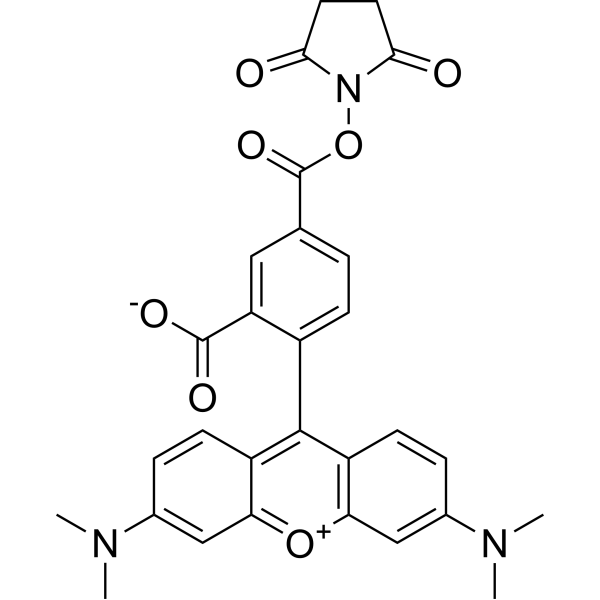
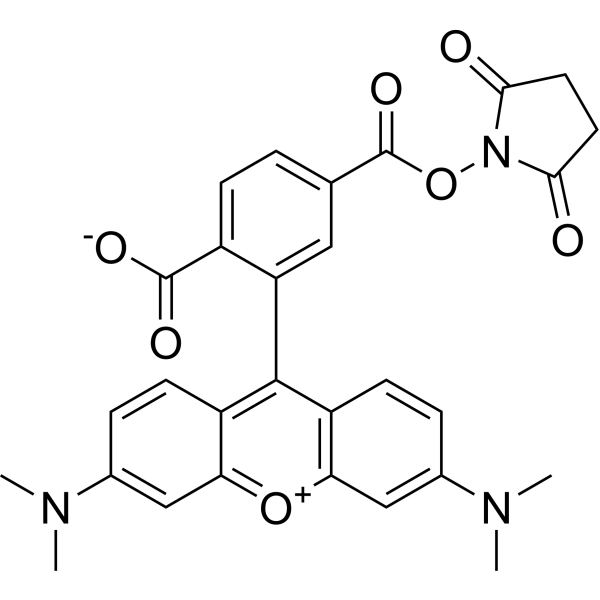
6-TAMRA-SE (6-TAMRA-NHS ester) is a fluorescent dye carrying the amine reactive group. 6-TAMRA-SE is one of the traditional fluorophores used for automated DNA sequencing .
|
-
- HY-W074953
-
|
|
Biochemical Assay Reagents
|
Others
|
|
tert-Butyl Hydrogen Tetradecanedioate is a short linker featuring a carboxylic acid and a tert-butyl ester. Carboxylic acids can be reacted with alcohols or amines, while the tert-butyl ester can be selectively deprotected to allow for reactivity as a carboxylic acid to form esters or amides.
|
-
- HY-DY1072
-
|
ICG-OSu (solution)
|
Fluorescent Dye
|
Cancer
|
ICG NHS ester (ICG-OSu) (solution) is a near-infrared fluorescent agent ICG derivative. ICG NHS ester is amine-reactive and has been widely used to design in vivo imaging probes . Solvent and concentration: DMSO: 10 mM
|
-
- HY-118759S
-
|
|
Isotope-Labeled Compounds
Biochemical Assay Reagents
|
Others
|
|
DSP Crosslinker-d8 is the deuterium labeled DSP Crosslinker (HY-118759). DSP Crosslinker is an amine-reactive and cleavable protein crosslinker. DSP Crosslinker enables stable protein-protein, peptide, and biomolecule conjugation.
|
-
- HY-W800656
-
|
|
Biochemical Assay Reagents
|
Others
|
|
Fmoc-PEG4-hydroxy is a PEG linker containing an Fmoc-protected amine and a hydroxyl group. The hydrophilic PEG spacer increases solubility in aqueous media. The Fmoc group can be deprotected under basic condition to obtain the free amine which can be used for further conjugations. The hydroxyl group enables further derivatization or replacement with other reactive functional groups.
|
-
- HY-W105727
-
|
|
PROTAC Linkers
|
Cancer
|
|
9-Aminononanoic acid can be used as a PROTAC linker and other conjugation in the synthesis of PROTACs. 9-Aminononanoic acid is an alkane chain with terminal carboxlic acid and amine groups. The amino group (NH2) is reactive with carboxylic acids, activated NHS esters, carbonyls (ketone, aldehyde) etc. The terminal carboxylic acid can react with primary amine groups of activated NHS ester to form a stable amide bond.
|
-
- HY-W440927
-
|
|
Liposome
|
Others
|
|
Stearic acid-PEG2000-NHS is an amphiphatic PEG polymer which forms micelles in an aqueous solution for drug-loaded nanoparticles. The NHS ester is reactive with amine to form a stable amide bond. Reagent grade, for research purpose.
|
-
- HY-140339
-
|
|
Biochemical Assay Reagents
|
Others
Cancer
|
|
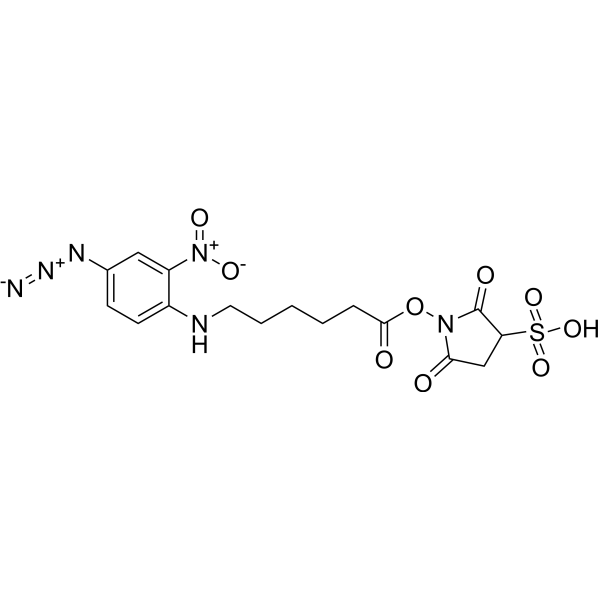
ANB-NOS is a heterobifunctional crosslinker with lipophilic, uncharged properties suitable for intracellular conjugation. ANB-NOS contains an amine-reactive Nhydroxysuccinimide (NHS) ester and a photoactivatable nitrophenyl azide. ANB-NOS can be used for the research of fibrosarcoma and mammary adenocarcinoma .
|
-
- HY-117080
-
|
|
Biochemical Assay Reagents
|
Others
|
|
Sulfo-EGS is a homobifunctional, amine-reactive chemical crosslinker. Sulfo-EGS is used to study protein-protein or protein-peptide interactions, which can determine the spatial proximity of amino acid residues in a protein complex, without relying on standards .
|
-
- HY-W105744
-
|
|
PROTAC Linkers
|
Cancer
|
|
10-Aminodecanoic acid is an alkane chain with terminal carboxlic acid and amine groups. 10-Aminodecanoic acid can be used as a PROTAC linker in the synthesis of PROTACs and other conjugation applications. The amino group (NH2) is reactive with carboxylic acids, activated NHS esters, carbonyls (ketone, aldehyde) etc. The terminal carboxylic acid can react with primary amine groups of activated NHS ester to form a stable amide bond.
|
-
- HY-W586329
-
|
|
Ligands for E3 Ligase
|
Others
|
|
Thalidomide-4-carbaldehyde is a Thalidomide analogue with an aldehyde. Thalidomide recruiits E3 ligase for the ubiquitinylation and subsequent proteolysis of target proteins. The aldehyde is highly reactive towards amine nucleophiles through reductive amination among other reactions.
|
-
- HY-W451211
-
|
|
Ligands for E3 Ligase
|
Cancer
|
|
Thalidomide-5-carbaldehyde is a Thalidomide analogue with an aldehyde. Thalidomide recruiits E3 ligase for the ubiquitinylation and subsequent proteolysis of target proteins. The aldehyde is highly reactive towards amine nucleophiles through reductive amination among other reactions.
|
-
- HY-136772
-
|
|
E3 Ligase Ligand-Linker Conjugates
|
Others
|
|
Pomalidomide-PEG1-NH2 hydrochloride is a crosslinker-E3 ligase ligand conjugate, consisting of an E3 ligase ligand pomalidomide and a PEGylated crosslinker with terminal amine for reactivity with a carboxyl group on the target ligand .
|
-
- HY-W591479
-
|
|
ADC Linker
|
Cancer
|
|
MC-Val-Ala-NHS ester is a cleavable ADC linker with a malimide group and an NHS ester group. The Val-Ala linkers can be cleaved by Cathepsin B. Maleimide group is reactive toward thiol groups. MC is reactive with thiol moieties. The NHS ester is able to react specifically and efficiently with amines (e.g. the side chain of lysine residues or aminosilane-coated surfaces) at neutral or slightly basic condition to form a covalent bond.
|
-
- HY-W800653
-
|
|
Biochemical Assay Reagents
|
Others
|
|
N-(Azido-PEG3)-NH-PEG3-t-butyl ester is a click chemistry reagent with a terminal azide group and secondary amine NH group. NH group is reactive with NHS ester, The terminal carboxylic acid can react with primary amine groups in the presence of activators (e.g. EDC, or HATU) to form a stable amide bond. The azide group can participate in Click Chemistry.
|
-
- HY-124329AS
-
|
|
Isotope-Labeled Compounds
Biochemical Assay Reagents
|
Others
|
|
BS3 Crosslinker-d4 disodium is the deuterium labeled BS3 Crosslinker. BS3 Crosslinker disodium is an amine-reactive homobifunctional protein crosslinker. BS3 Crosslinker disodium enables stable protein-protein, peptide, and biomolecule conjugation.
|
-
- HY-W598191
-
|
|
Biochemical Assay Reagents
|
Others
|
|
tert-Butyl (3-azidopropyl)carbamate is a reagent containing an azide group and Boc-protected amino group. It is reactive with alkyne, BCN, DBCO via Click Chemistry. The Boc group can be deprotected under mild acidic conditions to form the free amine.
|
-
- HY-100216
-
SPDP
5 Publications Verification
SPDP Crosslinker; Py-ds-Prp-OSu
|
ADC Linker
|
Cancer
|
|
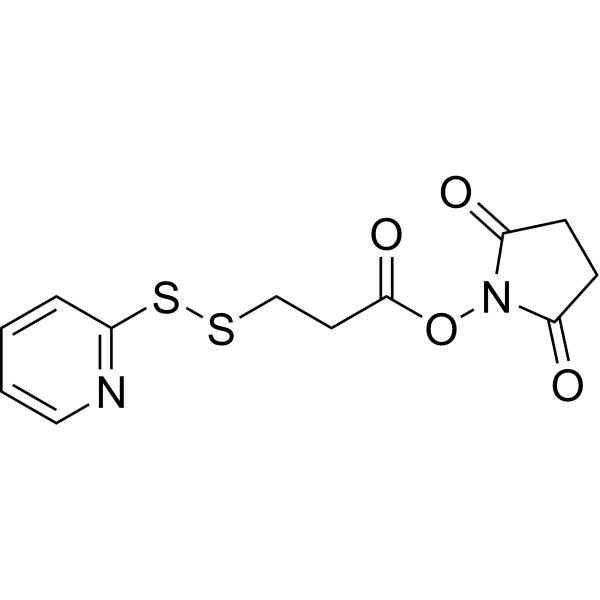
SPDP (SPDP Crosslinker) is a short-chain crosslinker for amine-to-sulfhydryl conjugation via NHS-ester and pyridyldithiol reactive groups that form cleavable (reducible) disulfide bonds with cysteine sulfhydryls. It is a glutathione cleavable ADC linker used for the antibody-drug conjugates (ADCs) .
|
-
- HY-W039458
-
|
|
Biochemical Assay Reagents
|
Others
|
|
10-(tert-Butoxy)-10-oxodecanoic acid is a short linker featuring a carboxylic acid and a tert-butyl ester. Carboxylic acids can be linked with alcohols or amines, while the tert-butyl ester can be selectively deprotected to allow for reactivity as a carboxylic acid to form esters or amides.
|
-
- HY-W800668
-
|
|
PROTAC Linkers
|
Cancer
|
|
(S, R, S)-AHPC-PEG4-NHS ester is a PROTAC linker that incorporatess an E3 ligase ligand with a PEG4 spacer to empower PROTAC medicine chemistry. It is is reactive with amine molecule. PEG4 arm increases the molecule's solubility.
|
-
- HY-W705390
-
|
|
Biochemical Assay Reagents
|
Others
|
|
Disuccinimidyl suberate Crosslinker-d4 is the deuterium labeled Disuccinimidyl suberate Crosslinker (HY-W019543). Disuccinimidyl suberate Crosslinker is an amine-reactive bifunctional protein crosslinker. Disuccinimidyl suberate Crosslinker enables stable protein-protein, peptide, and biomolecule conjugation.
|
-
- HY-114697S
-
|
Disuccinimidyl glutarate-d4
|
Isotope-Labeled Compounds
Biochemical Assay Reagents
|
Others
|
|
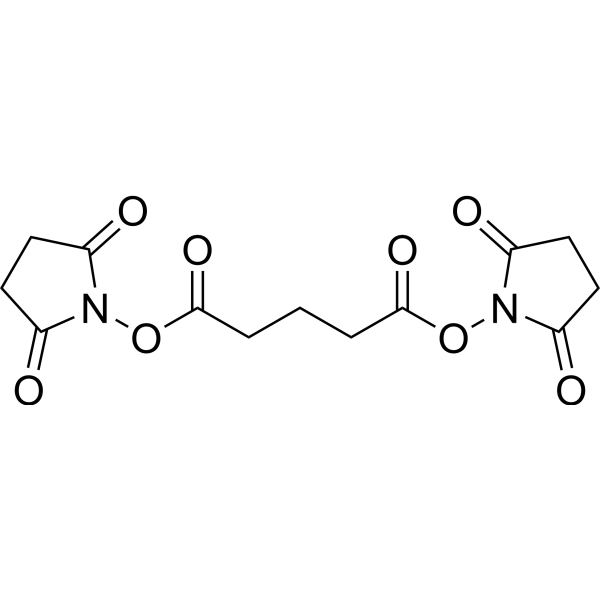
DSG Crosslinker-d4 (Disuccinimidyl glutarate-d4) is the deuterium labeled DSG Crosslinker (HY-114697). DSG Crosslinker is an amine-reactive and noncleavable protein crosslinker. DSG Crosslinker enables stable protein-protein, peptide, and biomolecule conjugation.
|
-
- HY-W800669
-
|
|
PROTAC Linkers
|
Cancer
|
|
(S, R, S)-AHPC-PEG2-NHS ester is a synthetic PROTAC linker that incorporatess an E3 ligase ligand with a PEG linker to empower PROTAC medicine chemistry. NHS ester is reactive with amine moiety. The hydrophilic PEG spacer increases its aqueous solubility.
|
-
- HY-W190936
-
|
|
E3 Ligase Ligand-Linker Conjugates
|
Cancer
|
|
Thalidomide-O-PEG5-Tosyl is a molecule that incorporatess the Thalidomide based cereblon ligand and 4-unit PEG linker used in PROTAC technology. Thalidomide-O-PEG5-tosyl is reactive with nucleophiles such as amine, hydroxy containing molecules.
|
-
- HY-D1085
-
|
|
Fluorescent Dye
|
Others
|
|
AMCA-X-SE is a coumarin derivative that generates fixed blue fluorescence and an NHS-activated ester that forms stable amide bonds with primary amine groups. It is used as a reactive dye for labeling amino groups of peptides, proteins, and oligonucleotides. Maximum excitation/emission wavelength: 354/442 nm .
|
-
- HY-W451460
-
|
|
Biochemical Assay Reagents
|
Others
|
|
2,5-Dioxopyrrolidin-1-yl 2-(prop-2-yn-1-yloxy)acetate is a Click Chemistry reagent with a propargyl group and an NHS ester group. The propargyl group can react with biomolecules containing azide group via copper catalyzed Click Chemistry reaction. The NHS ester is an amine reactive group which can be used for derivatizing peptides, antibodies, amine coated surfaces, etc.
|
-
- HY-W190720
-
|
|
Biochemical Assay Reagents
|
Others
|
|
Fmoc-NH-PEG4-HZ-BOC is a PEG reagent containing an Fmoc-protected amine and a Boc-protected hydrazide. The Fmoc group can be deprotected under basic condition to obtain the free amine which can be used for further conjugations. The hydrophilic PEG spacer increases solubility in aqueous media. The Boc can be deprotected under mild acidic conditions to form a reactive hydrazide, which can then be coupled with various carbonyl groups.
|
-
- HY-W1048843AG
-
|
4-Arm PEG5000-amine
|
Biochemical Assay Reagents
|
Others
|
|
4-Arm PEG5000-NH2 (GMP) (4-Arm PEG5000-amine (GMP)) is 4-Arm PEG-NH2 (HY-W1048843A) produced by using GMP guidelines. GMP small molecules works appropriately as an auxiliary reagent for cell therapy manufacture. 4-Arm PEG5000-NH2 is a multi-arm PEG derivative with amine groups at each end of four arms attached to a pentaerythritol core. The reactive primary amine or NH2 groups can react rapidly with activated carboxylic acids such as NHS esters to form stable amide bonds .
|
-
- HY-D2738
-
|
|
Fluorescent Dye
|
Others
|
|
BP Fluor 532 NHS ester is an amine reactive, yellow-emitting dye routinely used to label proteins or antibodies through primary amines (Lys), amine-modified oligonucleotides, and other amine-containing biomolecules. The labeling occurs most efficiently at pH 7-9 and forms a stable, covalent amide bond.
BP Fluor 532 is a bright yellow-fluorescent dye with pH insensitive emission from pH 4 to pH 10. The excitation of BP Fluor 532 is ideally suited for the frequency-doubled Nd:YAG laser line. BP Fluor 532 can be conjugated to a variety of antibodies, peptides, proteins, tracers, and amplification substrates, and is often used for the generation of stable signals in imaging and flow cytometry.
|
-
- HY-D2768
-
|
|
Fluorescent Dye
|
Others
|
|
BP Fluor 430 NHS Ester is a water-soluble, green-fluorescent dye that is often used in multi-color applications, including flow cytometry and super-resolution microscopy using STORM. Its excitation is ideally suited for the 407 nm spectral line of the krypton laser or the 408 nm violet laser diode. BP Fluor 405 conjugates are pH-insensitive from pH 4 to pH 10.
The NHS ester (or succinimidyl ester) is the most popular amine reactive group for labeling the primary amines of proteins (Lys), amine-modified oligonucleotides, and other amine-containing molecules. Proteins can be labeled with BP Fluor 430 NHS Ester at high molar ratios without significant self-quenching, leading to brighter conjugates and more sensitive detection.
|
-
- HY-W190942
-
|
|
PROTAC Linkers
|
Cancer
|
|
(S, R, S)-AHPC-PEG8-acid is a synthetic PROTAC linker that incorporatess an E3 ligase ligand with a PEG8 linker to empower PROTAC drug R&D. PEG8 increases the compound's aqueous solubility. Acid group is reactive with amine containing molecule.
|
-
- HY-D1389
-
|
Sulfo-Cyanine5.5 NHS ester tripotassium
|
Fluorescent Dye
|
Others
|
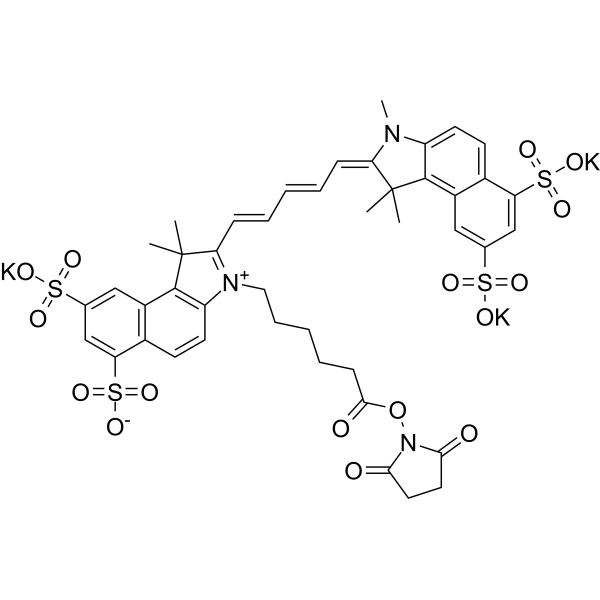
Sulfo-CY-5.5 NHS ester (Sulfo-Cyanine5.5 NHS ester) tripotassium is an amine-reactive ester of sulfonated far-red Cyanine5.5 fluorophore, which can be used to label antibodies, proteins, etc., as well as for in vivo NIR imaging .
|
-
- HY-D3346
-
|
|
Fluorescent Dye
|
Others
|
|
Dusquench1 NHS ester is an amino-reactive fluorescent quencher (it does not emit light and has no emission wavelength, Ex = 480-580 nM), specially designed for labeling proteins, oligonucleotides and other biopolymers containing primary amines. It is a core reagent in the fields of qPCR probes, FRET detection and molecular beacons.
|
-
- HY-42360G
-
|
|
ADC Linker
|
Inflammation/Immunology
Cancer
|
|
SMCC (GMP) is the GMP level of SMCC (HY-42360). GMP guidelines are used to produce SMCC (HY-42360) (GMP). GMP small molecules works appropriately as an auxiliary reagent for cell research manufacture. SMCC (GMP) is a protein crosslinker. SMCC (GMP) contains an amine-reactive N-hydroxysuccinimide ester and a sulfhydryl-reactive maleimide group that can be used in the conjugation of proteins. SMCC-conjugated antigen coupled spleen cells to induce antigen-specific immune responses.
|
-
- HY-B1018A
-
|
|
Monoamine Oxidase
GABA Receptor
Histone Demethylase
|
Cardiovascular Disease
Neurological Disease
Metabolic Disease
Inflammation/Immunology
Cancer
|
|
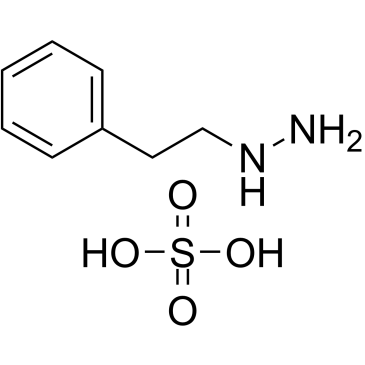
Phenelzine sulfate, an antidepressant agent, is an irreversible and orally active monoamine oxidase (MAO-A and MAO-B) inhibitor. Phenelzine sulfate inhibits GABA transaminase and primary amine oxidase (PrAO), and sequester reactive aldehydes. Phenelzine sulfate also inhibits LSD1 (Ki: 5.6 μM) and suppresses oxidative stress and lipogenesis. Phenelzine sulfate elevates neurotransmitters (serotonin, norepinephrine, dopamine). Phenelzine sulfate is studied in neurological, metabolic and cancer diseases for depression and anxiety disorders, stroke, spinal cord injury, traumatic brain injury, multiple sclerosis, Parkinson’s disease, Alzheimer’s disease, inflammatory pain, obesity and prostate cancer .
|
-
- HY-W800719
-
|
|
Biochemical Assay Reagents
|
Others
|
|
N-Boc-N'-(PEG1-t-butyl ester)-L-Lysine-amido-Mal is the amino acid, lysine, with a maleimide at its C-terminus, a Boc-protecting group on its α-amine, and an amido-PEG1-t-butyl ester on its ε-amine. Maleimide is a thiol-reactive covalent group used to conjugate cysteine residues, while the Boc and the t-butyl ester can be later deprotected to perform further reactions.
|
-
- HY-W190905
-
|
|
Biochemical Assay Reagents
|
Others
|
|
N4, N9-di-Boc-spermine is a spermine linker containing two a Boc-protected amino groups and two amine groups. The Boc groups can be deprotected under mild acidic conditions to form the free amine. The amino groups are reactive with carboxylic acids, activated NHS esters, carbonyls (ketone, aldehyde) etc. Spermidine is a polyamine that modulates various cellular activities like cellular development and differentiation, stability of DNA, and apoptosis.
|
-
- HY-W403327
-
|
|
Biochemical Assay Reagents
|
Others
|
|
CbzNH-PEG4-CH2COOH is a PEG linker containing an carboxylic acid (CO2H) group and a benzyl (Cbz) protecting group. The hydrophilic PEG spacer increases the water solubility of a compound in aqueous media. The terminal carboxylic acid is reactive with primary amine groups in the presence of activators (e.g. HATU) forming a stable amide bond. The benzyl protecting group can be removed via hydrogenolysis to form a free amine.
|
-
- HY-173569
-
|
|
Biochemical Assay Reagents
|
Others
|
|
DBCO-propargyl-PEG5-TFP ester is an amine-reactive labeling reagent. DBCO-propargyl-PEG5-TFP ester contains a DBCO group, which can undergo a strain-promoted alkyne-azide cycloaddition (SPAAC) reaction with molecules containing an azide group [1] .
|
-
- HY-D0115
-
|
|
DNA Stain
|
Others
|
|
7-Hydroxycoumarin-3-carboxylic acid N-succinimidyl ester is the amine-reactive succinimidyl ester of 7-Hydroxycoumarin-3-carboxylic acid. 7-Hydroxycoumarin-3-carboxylic acid N-succinimidyl ester is a blue fluorescent dye for labeling proteins and nucleic acids .
|
-
- HY-W800652
-
|
|
PROTAC Linkers
|
Cancer
|
|
(S, R, S)-AHPC-PEG4-tosyl is a PROTAC linker that incorporatess an E3 ligase ligand with a PEG4 linker to empower PROTAC drug research & discovery. PEG4 spacer increases the compound's hydrophility. Tosyl group is reactive with amine or other nucleophiles.
|
-
- HY-D2771
-
|
|
Fluorescent Dye
|
Others
|
|
BP Fluor 405 NHS Ester is a water-soluble, blue-fluorescent dye that is often used in multi-color applications, including flow cytometry and super-resolution microscopy using STORM. Its excitation is ideally suited for the 407 nm spectral line of the krypton laser or the 408 nm violet laser diode. BP Fluor 405 conjugates are pH-insensitive from pH 4 to pH 10.
The NHS ester (or succinimidyl ester) is the most popular amine reactive group for labeling with the primary amines of proteins (Lys), amine-modified oligonucleotides, and other amine-containing molecules. Proteins can be labeled with BP Fluor 405 NHS Ester at high molar ratios without significant self-quenching, leading to brighter conjugates and more sensitive detection. BP Fluor 405 conjugates can also be used for the detection of abundance targets.
|
-
- HY-W1048843AGL
-
|
4-Arm PEG5000-amine (GMP Like)
|
Biochemical Assay Reagents
|
Others
|
|
4-Arm PEG5000-NH2 (GMP Like) (4-Arm PEG5000-amine (GMP Like)) is 4-Arm PEG-NH2 (HY-W1048843A) produced by using GMP like guidelines. GMP like small molecules works appropriately as an auxiliary reagent for cell therapy manufacture. 4-Arm PEG5000-NH2 is a multi-arm PEG derivative with amine groups at each end of four arms attached to a pentaerythritol core. The reactive primary amine or NH2 groups can react rapidly with activated carboxylic acids such as NHS esters to form stable amide bonds .
|
-
- HY-D1352
-
|
|
Fluorescent Dye
|
Others
|
|
Sulfo-Cyanine7 NHS ester potassium is an amine-reactive succinimide ester. Sulfo-Cyanine7 NHS ester reagent allows to prepare sulfo-Cyanine7-labeled biomolecules, such as proteins, with ease. Dye labeled molecules can be subsequently used for various research and agent design related experiments.
|
-
- HY-W039729
-
|
|
Biochemical Assay Reagents
|
Others
|
|
5-(Boc-amino)-1-pentanol is a linker containing a hydroxyl group and Boc-protected amino group. The hydroxyl group enables further derivatization or replacement with other reactive functional groups. The Boc group can be deprotected under mild acidic conditions to form the free amine.
|
-
- HY-W591390
-
|
|
Biochemical Assay Reagents
|
Others
|
|
6-Azidohexanoic Acid STP Ester is an amine-reactive, water-soluble labeling reagent with an azide group and a terminal 4-Sulfo-2,3,5,6-tetrafluorophenyl (STP) group. 6-Azidohexanoic Acid STP Ester is used to modify proteins, antibodies, and other amine-containing biopolymers in aqueous media. The azide group can react with alkyne, BCN, DBCO via Click Chemistry to yield a stable triazole linkage. STP esters can react with primary amines, forming covalent amide bonds, and typically display much better stability toward hydrolysis in aqueous media, resulting in more efficiency and better reproducible labeling of biopolymers.
|
-
- HY-130547S
-
|
|
Isotope-Labeled Compounds
DNA Alkylator/Crosslinker
|
Others
|
|
BS2G Crosslinker-d4 disodium is the deuterium labeled BS2G Crosslinker disodium (HY-130547). BS2G Crosslinker is an amine-reactive homobifunctional protein crosslinker. BS2G Crosslinker enables stable protein-protein, peptide, and biomolecule conjugation.
|
-
- HY-W800622
-
|
|
ADC Linker
|
Cancer
|
|
Fmoc-PEG4-Val-Cit-PAB-OH is an enzyme-cleavable ADC linker featuring a Boc-protected amine, a hydrophilic PEG spacer, and a Val-Cit-PAB dipeptide. The benzylic alcohol on the PAB can be used to attach with reactive groups such as PNP for conjugation with drug payloads. The Fmoc protecting group may be removed with piperidine to reveal a primary amine which may be used in coupling reactions to form amides. The Val-Cit-PAB is cleaved by cellular proteases for efficient release of payloads to the cell.
|
-
- HY-W800625
-
|
|
ADC Linker
|
Cancer
|
|
Boc-PEG4-Val-Cit-PAB-OH is an enzyme-cleavable ADC linker featuring a Boc-protected amine, a hydrophilic PEG spacer, and a Val-Cit-PAB dipeptide. The benzylic alcohol on the PAB can be used to attach with reactive groups such as PNP for conjugation with drug payloads. The Boc protecting group may be removed with acid to reveal a primary amine which may be used in coupling reactions to form amides. The Val-Cit-PAB is cleaved by cellular proteases for efficient release of payloads to the cell.
|
-
- HY-W800621
-
|
|
ADC Linker
|
Cancer
|
|
Fmoc-PEG2-Val-Cit-PAB-OH is an enzyme-cleavable ADC linker featuring a Boc-protected amine, a hydrophilic PEG spacer, and a Val-Cit-PAB dipeptide. The benzylic alcohol on the PAB can be used to attach with reactive groups such as PNP for conjugation with drug payloads. The Fmoc protecting group may be removed with piperidine to reveal a primary amine for use in coupling reactions to form amides. The Val-Cit-PAB is cleaved by cellular proteases for efficient release of payloads to the cell.
|
-
- HY-W800623
-
|
|
ADC Linker
|
Cancer
|
|
Fmoc-PEG6-Val-Cit-PAB-OH is an enzyme-cleavable ADC linker featuring a Boc-protected amine, a hydrophilic PEG spacer, and a Val-Cit-PAB dipeptide. The benzylic alcohol on the PAB can be used to attach with reactive groups such as PNP for conjugation with drug payloads. The Fmoc protecting group may be removed with piperidine to reveal a primary amine which may be used in coupling reactions to form amides. The Val-Cit-PAB is cleaved by cellular proteases for efficient release of payloads to the cell.
|
-
- HY-W800624
-
|
|
ADC Linker
|
Cancer
|
|
Boc-PEG2-Val-Cit-PAB-OH is an enzyme-cleavable ADC linker featuring a Boc-protected amine, a hydrophilic PEG spacer, and a Val-Cit-PAB dipeptide. The benzylic alcohol on the PAB can be used to attach with reactive groups such as PNP for conjugation with drug payloads. The Boc protecting group may be removed with acid to reveal a primary amine which may be used in coupling reactions to form amides. The Val-Cit-PAB is cleaved by cellular proteases for efficient release of payloads to the cell.
|
-
- HY-130736
-
|
JF549, SE; JF549, NHS
|
Fluorescent Dye
|
Others
|
|
Janelia Fluor® 549, SE (JF549, SE) is a cell-permeable fluorescent dye with an NHS ester (succinimidyl ester (SE)) reactive group. NHS esters react with primary amines and are commonly used to conjugate dyes to proteins, antibodies, amine-modified oligonucleotides, and other molecules. Janelia Fluor® 549, SE also acts as a ligand for self-labeling tags such as HaloTag and SNAP-tag, and can be used in live-cell imaging studies (Ex/Em = 549 nm/571 nm) .\n
|
-
- HY-D0026
-
|
7-Amino-4-methyl-3-coumarinacetic acid N-succinimidyl ester
|
Fluorescent Dye
|
Others
|
|
AMCA,SE (7-Amino-4-methyl-3-coumarinacetic acid N-succinimidyl ester) is a bright blue fluorescent dye. AMCA,SE reacts with amino groups and is excited by ultraviolet light. AMCA,SE can be used for amine reactive labeling (Ex/Em = 354/440 nm) .
|
-
- HY-D1352A
-
|
|
Fluorescent Dye
|
Others
|
|
Sulfo-Cyanine7 NHS ester (TEA) is an amine-reactive succinimide ester. Sulfo-Cyanine7 NHS ester (TEA) reagent allows to prepare sulfo-Cyanine7-labeled biomolecules, such as proteins, with ease. Dye labeled molecules can be subsequently used for various research and agent design related experiments.
|
-
- HY-W440991
-
|
DOPE-PEG2000-NH2
|
Liposome
|
Cancer
|
|
DOPE-PEG-Amine (MW 2000) is a polydisperse PEG covalently attached to a phospholipid. The polymer is an amphiphilic molecule with hydrophobic fatty acid chains and hydrophilic PEG head which enables lipid bilayer or micelle formation in water. The phospholipid PEG can be used to prepare liposome or nanoparticles for targeted drug delivery and is reactive with alkyne to form a triazole ring.
|
-
- HY-164076
-
|
|
Biochemical Assay Reagents
|
Others
|
|
mPEG-Epoxide is an activated polyethylene glycol (mPEG) derivative, which is achieved by converting the hydroxyl groups of mPEG into reactive epoxy groups. mPEG-Epoxide is a mild PEGylation reagent that reacts with amino groups in peptides and proteins to form stable secondary amine bonds. mPEG-Epoxide can be used in protein engineering and biomaterials research .
|
-
- HY-15940
-
|
5(6)-FAM; 5-(and-6)-Carboxyfluorescein mixed isomers
|
Fluorescent Dye
|
Cancer
|
|
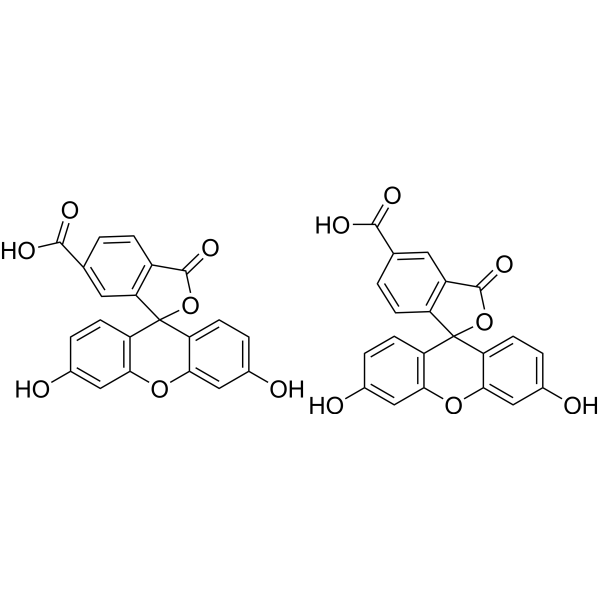
5(6)-Carboxyfluorescein (5(6)-FAM) is an amine-reactive pH-sensitive green fluorescent probe. 5(6)-Carboxyfluorescein (5(6)-FAM) can be used to label proteins, peptides and nucleotides. 5(6)-Carboxyfluorescein can be used for the detection of tumour areas in vivo .
|
-
- HY-W440884
-
|
|
Biochemical Assay Reagents
|
Others
|
|
DSPE-PEG3400-Ald is a self-assemble polyPEG which spontaneously forms lipid bilayer in water. The polymer can be used to prepare nanoparticles or liposomse as a targeted drug carrier, such as mRNA vaccine. The aldehyde is reactive with aminooxy to form a stable oxime linkage or with amine at pH < 7 to form a reversible imine bond.
|
-
- HY-D2761
-
|
|
Fluorescent Dye
|
Others
|
|
DY-680-NHS ester is an amine reactive hydrophilic fluorochrome. It can be conjugated to an antibody with higher D/P ratio without causing fluorescence quenching and conjugate precipitation, and it is widely used in applications including western blotting, microscopy, flow cytometry, and cell-based assays. The spectrum has an excitation of 690nm and emission at 709nm.
|
-
- HY-D2757
-
|
|
Fluorescent Dye
|
Others
|
|
5(6)-Carboxyrhodamine 110 NHS Ester is the nonsulfonated analog of the BP Fluor 488 dye. The amine-reactive 5(6)-Carboxyrhodamine 110 NHS ester can be used to create bright and photostable green-fluorescent bioconjugates with excitation/emission maxima ~502/527 nm.
The conjugates of this dye often used for Fluorescence Correlation Spectroscopy (FCS).
|
-
- HY-D1635
-
|
Biotin-XX-SSE
|
Fluorescent Dye
Exosomes
|
Infection
|
|
Sulfo-NHS-LC-LC-Biotin (Biotin-XX-SSE), a biotin reagent, is used to label the proteins exposed to the external leaflet of intact exosomes and contains a larger spacer arm between the biotin and amine reactive linker. The size of this linker helps to overcome steric hindrance and increases labeling efficiency at the crowded exosome surface .
|
-
- HY-15941
-
|
Fluorescein 5(6)-isothiocyanate; Fluorescein isothiocyanate 5- and 6- isomers
|
Fluorescent Dye
|
Others
|
|
5(6)-FITC (Fluorescein 5(6)-isothiocyanate) is an amine-reactive derivative of a fluorescent dye, characterized by high absorbance and excellent fluorescence quantum yield. The isothiocyanate group of FITC can react with various functional groups on proteins, including amines, thiols, imidazoles, tyrosines and carbonyls, enabling the labeling of proteins such as antibodies and lectins. 5(6)-FITC has a wide range of applications, including flow cytometry, immunofluorescence, protease assays and conjugation. The maximum excitation/emission wavelengths are 492/518 nm .
|
-
- HY-42213
-
|
|
Biochemical Assay Reagents
|
Others
|
|
N1,N4-Bis-Boc-spermidine is a linker containing an amino group with two Boc-protected amino groups. The amino group is reactive with carboxylic acids, activated NHS esters, carbonyls (ketone, aldehyde) etc. The Boc group can be deprotected under mild acidic conditions to form the free amine.
|
-
- HY-42222
-
|
|
Biochemical Assay Reagents
|
Others
|
|
N1,N5-Bis-Boc-spermidine is a linker containing an amino group with two Boc-protected amino groups. The amino group is reactive with carboxylic acids, activated NHS esters, carbonyls (ketone, aldehyde) etc. The Boc group can be deprotected under mild acidic conditions to form the free amine.
|
-
- HY-N16025
-
|
|
Liposome
Biochemical Assay Reagents
|
Others
|
|
DOPE-PEG(2000) Amine ammonium is a polydisperse PEG covalently attached to a phospholipid. The polymer is an amphiphilic molecule with hydrophobic fatty acid chains and hydrophilic PEG head which enables lipid bilayer or micelle formation in water. The phospholipid PEG can be used to prepare liposome or nanoparticles for targeted agent delivery and is reactive with alkyne to form a triazole ring .
|
-
- HY-140015A
-
|
|
PROTAC Linkers
|
Cancer
|
|
(S)-TCO-PEG3-acid is a click chemistry PEG linker with a terminal carboxylic acid(COOH) group. The terminal carboxylic acid is reactive with primary amine groups to form a stable amide bond. (S)-TCO-PEG3-acid is a PEG-based PROTAC linker can be used in the synthesis of PROTACs.
|
-
- HY-W190933
-
|
|
Biochemical Assay Reagents
|
Others
|
|
Bis-PEG6-TFP ester is a PEG linker with two terminal TFP ester moieties. TFP esters are amine reactive and are also more stable than NHS esters against hydrolysis. The PEG chain increases the water solubility properties of compounds in aqueous media. The water solubility properties of PEG chains are enhanced as the PEG chain grows.
|
-
- HY-100216R
-
|
SPDP Crosslinker (Standard); Py-ds-Prp-OSu (Standard)
|
ADC Linker
Reference Standards
|
Cancer
|
|
SPDP (Standard) is the analytical standard of SPDP (HY-100216). This product is intended for research and analytical applications. SPDP (SPDP Crosslinker) is a short-chain crosslinker for amine-to-sulfhydryl conjugation via NHS-ester and pyridyldithiol reactive groups that form cleavable (reducible) disulfide bonds with cysteine sulfhydryls. It is a glutathione cleavable ADC linker used for the antibody-drug conjugates (ADCs) .
|
-
- HY-WAA0302
-
|
|
Biochemical Assay Reagents
|
Others
|
|
1,4-Bis-Boc-1,4,7-triazaheptane is a PEG derivative containing an amino group with two Boc-protected amino groups. The amino group is reactive with carboxylic acids, activated NHS esters, carbonyls (ketone, aldehyde) etc. The Boc group can be deprotected under mild acidic conditions to form the free amine.
|
-
- HY-W325356
-
|
|
Fluorescent Dye
|
Cancer
|
|
Tert-butyl 3,5-dinitrobenzoate is an intermediate or reactant in organic synthesis and can also play a role in drug synthesis, dye preparation and other chemical fields.The nitro functional group of Tert-butyl 3,5-dinitrobenzoate has certain reactivity in organic chemistry and can participate in various reactions, such as electrophilic substitution, aromatic amine reaction, etc .
|
-
- HY-W800750
-
|
|
Biochemical Assay Reagents
|
Others
|
|
TCO-PEG2-acid is a click chemistry linker containing a TCO (trans-cycloctene) and a terminal carboxylic acid. The terminal carboxylic acid can react with primary amine groups in the presence of activators such as EDC. TCO reagent is highly reactive with tetrazine in an inverse electron demand Diels Alder (IEDDA) reaction followed by a retro-DA reaction. The hydrophilic PEG spacer increases solubility in aqueous media.
|
-
- HY-W1049075E
-
|
|
Biochemical Assay Reagents
|
Others
|
|
mPEG-pALD (MW 2000) is an important unilaterally active PEG derivative whose reactive groups can react with amines, peptides and the N-termini of proteins to form imines containing C=N double bonds, which can be further reduced. Polyethylene glycol aldehyde or ketone derivatives can be used for reversible PEGylation by reacting with hydrazine or hydrazine to form hydrolyzed acylhydrazone bonds .
|
-
- HY-W1049075H
-
|
|
Biochemical Assay Reagents
|
Others
|
|
mPEG-pALD (MW 3400) is an important unilaterally active PEG derivative whose reactive groups can react with amines, peptides and the N-termini of proteins to form imines containing C=N double bonds, which can be further reduced. Polyethylene glycol aldehyde or ketone derivatives can be used for reversible PEGylation by reacting with hydrazine or hydrazine to form hydrolyzed acylhydrazone bonds .
|
-
- HY-W441011
-
|
|
Liposome
|
Neurological Disease
Inflammation/Immunology
Cancer
|
|
DSPE-NHS is a bioconjugation phospholipid molecule with two hydrophobic lipid tails. DSPE-NHS is a self-assembling reagent which forms lipid bilayer in aqueous solution. The NHS-ester is reactive with N-terminal of protein/peptide or other amine molecule to form a stable amide linkage. DSPE-NHS labels antibodies. DSPE-NHS can be used to prepare liposomes as agent nanocarrier .
|
-
- HY-W1048549J
-
|
HOOC-PEG40000-Thiol
|
Biochemical Assay Reagents
|
Others
|
|
HOOC-PEG40000-SH (HOOC-PEG40000-Thiol) is a reactive thiol PEG derivative with a terminal carboxyl group. The carboxyl group can react with amine or hydroxyl groups to form a stable amide bond or an unstable ester bond. The reaction of the carboxyl group allows the amine or hydroxyl group to be converted into a free thiol with a linear PEG linkage. The generated thiol group can be used to modify the surface of gold nanoparticles or participate in other PEGylation reactions. The PEG linkage between the thiol and carboxyl groups has good water solubility, flexible linker distance and higher stability .
|
-
- HY-W1048549H
-
|
HOOC-PEG1000-Thiol
|
Biochemical Assay Reagents
|
Others
|
|
HOOC-PEG1000-SH (HOOC-PEG1000-Thiol) is a reactive thiol PEG derivative with a terminal carboxyl group. The carboxyl group can react with amine or hydroxyl groups to form a stable amide bond or an unstable ester bond. The reaction of the carboxyl group allows the amine or hydroxyl group to be converted into a free thiol with a linear PEG linkage. The generated thiol group can be used to modify the surface of gold nanoparticles or participate in other PEGylation reactions. The PEG linkage between the thiol and carboxyl groups has good water solubility, flexible linker distance and higher stability .
|
-
- HY-W1048549A
-
|
HOOC-PEG2000-Thiol
|
Biochemical Assay Reagents
|
Others
|
|
HOOC-PEG2000-SH (HOOC-PEG2000-Thiol) is a reactive thiol PEG derivative with a terminal carboxyl group. The carboxyl group can react with amine or hydroxyl groups to form a stable amide bond or an unstable ester bond. The PEG linkage between the thiol and carboxyl groups has good water solubility, flexible linker distance and higher stability .
|
-
- HY-W1048549B
-
|
HOOC-PEG3400-Thiol
|
Biochemical Assay Reagents
|
Others
|
|
HOOC-PEG3400-SH (HOOC-PEG3400-Thiol) is a reactive thiol PEG derivative with a terminal carboxyl group. The carboxyl group can react with amine or hydroxyl groups to form a stable amide bond or an unstable ester bond. The PEG linkage between the thiol and carboxyl groups has good water solubility, flexible linker distance and higher stability .
|
-
- HY-W1048549C
-
|
HOOC-PEG5000-Thiol
|
Biochemical Assay Reagents
|
Others
|
|
HOOC-PEG5000-SH (HOOC-PEG5000-Thiol) is a reactive thiol PEG derivative with a terminal carboxyl group. The carboxyl group can react with amine or hydroxyl groups to form a stable amide bond or an unstable ester bond. The PEG linkage between the thiol and carboxyl groups has good water solubility, flexible linker distance and higher stability .
|
-
- HY-W1049075A
-
|
|
Biochemical Assay Reagents
|
Others
|
|
mPEG5000-pALD is an important unilaterally active PEG derivative whose reactive groups can react with amines, peptides and the N-termini of proteins to form imines containing C=N double bonds, which can be further reduced. Polyethylene glycol aldehyde or ketone derivatives can be used for reversible PEGylation by reacting with hydrazine or hydrazine to form hydrolyzed acylhydrazone bonds .
|
-
- HY-W1049075C
-
|
|
Biochemical Assay Reagents
|
Others
|
|
mPEG20000-pALD is an important unilaterally active PEG derivative whose reactive groups can react with amines, peptides and the N-termini of proteins to form imines containing C=N double bonds, which can be further reduced. Polyethylene glycol aldehyde or ketone derivatives can be used for reversible PEGylation by reacting with hydrazine or hydrazine to form hydrolyzed acylhydrazone bonds .
|
-
- HY-W1049075B
-
|
|
Biochemical Assay Reagents
|
Others
|
|
mPEG10000-Pald is an important unilaterally active PEG derivative whose reactive groups can react with amines, peptides and the N-termini of proteins to form imines containing C=N double bonds, which can be further reduced. Polyethylene glycol aldehyde or ketone derivatives can be used for reversible PEGylation by reacting with hydrazine or hydrazine to form hydrolyzed acylhydrazone bonds .
|
-
- HY-W440883
-
|
|
Liposome
|
Others
|
|
DSPE-PEG2000-Ald is a phospholipid polyPEG which can self-assemble to form lipid bilayer in aqueous solution. The polymer can be used to prepare liposome as a drug delivery vehicle for administration of drugs or nutrients, such as mRNA vaccines. The aldehyde is reactive with aminooxy to form a stable oxime linkage or with amine at pH < 7 to form a reversible imine bond. Reagent grade, for research use only.
|
-
- HY-W1048549E
-
|
HOOC-PEG20000-Thiol
|
Biochemical Assay Reagents
|
Others
|
|
HOOC-PEG20000-SH (HOOC-PEG20000-Thiol) is a reactive thiol PEG derivative with a terminal carboxyl group. The carboxyl group can react with amine or hydroxyl groups to form a stable amide bond or an unstable ester bond. The PEG linkage between the thiol and carboxyl groups has good water solubility, flexible linker distance and higher stability .
|
-
- HY-141147
-
|
|
Drug-Linker Conjugates for ADC
|
Cancer
|
|
7-O-(Amino-PEG4)-paclitaxel is a PEG-class Drug-linker conjugates for ADC, containing a paclitaxel moiety and a amino group. The amine group is reactive with carboxylic acids, activated NHS esters, carbonyls (ketone, aldehyde) etc. 7-O-(Amino-PEG4)-paclitaxel can be used in the synthesis of Antibody-Drug Conjugates (ADCs) .
|
-
- HY-W1048549D
-
|
HOOC-PEG10000-Thiol
|
Biochemical Assay Reagents
|
Others
|
|
HOOC-PEG10000-SH (HOOC-PEG10000-Thiol) is a reactive thiol PEG derivative with a terminal carboxyl group. The carboxyl group can react with amine or hydroxyl groups to form a stable amide bond or an unstable ester bond. The PEG linkage between the thiol and carboxyl groups has good water solubility, flexible linker distance and higher stability .
|
-
- HY-W1049075D
-
|
|
Biochemical Assay Reagents
|
Others
|
|
mPEG40000-pALD is an important unilaterally active PEG derivative whose reactive groups can react with amines, peptides and the N-termini of proteins to form imines containing C=N double bonds, which can be further reduced. Polyethylene glycol aldehyde or ketone derivatives can be used for reversible PEGylation by reacting with hydrazine or hydrazine to form hydrolyzed acylhydrazone bonds .
|
-
- HY-W1049075
-
|
|
Biochemical Assay Reagents
|
Others
|
|
mPEG1000-pALD is an important unilaterally active PEG derivative whose reactive groups can react with amines, peptides and the N-termini of proteins to form imines containing C=N double bonds, which can be further reduced. Polyethylene glycol aldehyde or ketone derivatives can be used for reversible PEGylation by reacting with hydrazine or hydrazine to form hydrolyzed acylhydrazone bonds .
|
-
- HY-W800618
-
|
|
ADC Linker
|
Others
|
|
NH2-PEG3-Val-Cit-PAB-OH is a cleavable ADC linker featuring a primary amine, a hydrophilic PEG spacer, a Val-Cit dipeptide, and a PAB group. The benzylic alcohol on the PAB can be used to attach with reactive groups such as PNP for conjugation with drug payloads. The primary amine is free to perform a wide variety of reactions such as coupling with carboxylic acids, reductive aminations with ketones or aldehydes, or other more specialized uses such as in SNAr reactions or heterocyclic chemistry. The Val-Cit dipeptide is cleaved by cellular proteases within the cell to allow for efficient payload delivery via an elimination mechanism within the PAB structure.
|
-
- HY-W800617
-
|
|
ADC Linker
|
Cancer
|
|
NH2-PEG1-Val-Cit-PAB-OH is a cleavable ADC linker intermediate featuring a primary amine, a hydrophilic PEG spacer, a Val-Cit dipeptide, and a PAB group. The benzylic alcohol on the PAB can be used to attach with reactive groups such as PNP for conjugation with drug payloads. The primary amine is free to perform a wide variety of reactions such as coupling with carboxylic acids, reductive aminations with ketones or aldehydes, or other more specialized uses such as in SNAr reactions or heterocyclic chemistry. The Val-Cit dipeptide is cleaved by cellular proteases within the cell to allow for efficient payload delivery via an elimination mechanism within the PAB structure.
|
-
- HY-W800619
-
|
|
ADC Linker
|
Others
|
|
NH2-PEG4-Val-Cit-PAB-OH is a cleavable ADC linker featuring a primary amine, a hydrophilic PEG spacer, a Val-Cit dipeptide, and a PAB group. The benzylic alcohol on the PAB can be used to attach with reactive groups such as PNP for conjugation with drug payloads. The primary amine is free to perform a wide variety of reactions such as coupling with carboxylic acids, reductive aminations with ketones or aldehydes, or other more specialized uses such as in SNAr reactions or heterocyclic chemistry. The Val-Cit dipeptide is cleaved by cellular proteases within the cell to allow for efficient payload delivery via an elimination mechanism within the PAB structure.
|
-
- HY-D2956
-
|
CLIP-GLA-NHS
|
Biochemical Assay Reagents
|
Others
|
|
BC-GLA-NHS (CLIP-GLA-NHS) is a NHS-labeled CLIP tag, which is an amine-reactive crosslinker and can achieve site-specific protein labeling. The NHS ester of BC-GLA-NHS reacts with the primary amine of the target molecule (such as antibodies, quantum dots) in a pH 7.5-8.5 buffer solution to form a stable amide bond. After coupling, the BC molecule undergoes a nucleophilic substitution reaction with the active site (Cys) of the CLIP-tagged fusion protein, releasing benzylcytosine and forming an irreversible thioether bond, achieving covalent labeling. BC-GLA-NHS can be used for click chemistry labeling .
|
-
- HY-W800620
-
|
|
ADC Linker
|
Others
|
|
NH2-PEG6-Val-Cit-PAB-OH is a cleavable ADC linker featuring a primary amine, a hydrophilic PEG spacer, a Val-Cit dipeptide, and a PAB group. The benzylic alcohol on the PAB can be used to attach with reactive groups such as PNP for conjugation with drug payloads. The primary amine is free to perform a wide variety of reactions such as coupling with carboxylic acids, reductive aminations with ketones or aldehydes, or other more specialized uses such as in SNAr reactions or heterocyclic chemistry. The Val-Cit dipeptide is cleaved by cellular proteases within the cell to allow for efficient payload delivery via an elimination mechanism within the PAB structure.
|
-
- HY-W1048555B
-
|
|
Biochemical Assay Reagents
|
Others
|
|
Mal-PEG3400-SCM is a linear hetero-bifunctional PEG product with maleimide and succinimidyl NHS ester groups. Mal-PEG3400-SCM is an important cross-linker with PEG chains. Maleimide reacts with thiols, SH, sulfhydryls or sulfhydryls, and SCM stands for succinimidyl carboxymethyl ester, which reacts with primary amines. Maleimide contains a reactive C=C double bond and is sensitive to light or oxygen .
|
-
- HY-W1048555D
-
|
|
Biochemical Assay Reagents
|
Others
|
|
Mal-PEG10000-SCM is a linear hetero-bifunctional PEG product with maleimide and succinimidyl NHS ester groups. Mal-PEG10000-SCM is an important cross-linker with PEG chains. Maleimide reacts with thiols, SH, sulfhydryls or sulfhydryls, and SCM stands for succinimidyl carboxymethyl ester, which reacts with primary amines. Maleimide contains a reactive C=C double bond and is sensitive to light or oxygen .
|
-
- HY-W1048555H
-
|
|
Biochemical Assay Reagents
|
Others
|
|
Mal-PEG40000-SCM is a linear hetero-bifunctional PEG product with maleimide and succinimidyl NHS ester groups. Mal-PEG40000-SCM is an important cross-linker with PEG chains. Maleimide reacts with thiols, SH, sulfhydryls or sulfhydryls, and SCM stands for succinimidyl carboxymethyl ester, which reacts with primary amines. Maleimide contains a reactive C=C double bond and is sensitive to light or oxygen .
|
-
- HY-W1048555C
-
|
|
Biochemical Assay Reagents
|
Others
|
|
Mal-PEG5000-SCM is a linear hetero-bifunctional PEG product with maleimide and succinimidyl NHS ester groups. Mal-PEG5000-SCM is an important cross-linker with PEG chains. Maleimide reacts with thiols, SH, sulfhydryls or sulfhydryls, and SCM stands for succinimidyl carboxymethyl ester, which reacts with primary amines. Maleimide contains a reactive C=C double bond and is sensitive to light or oxygen .
|
-
- HY-W440885
-
|
|
Biochemical Assay Reagents
|
Others
|
|
DSPE-PEG5000-Ald is a phospholipid PEG polymer which can self-assemble spontaneously in water with their hydrophilic heads oriented toward the water (micelles). The polymer can be used to prepare liposome as a drug nanocarrier for administration of nutrients and therapeutic drugs, such as lipid nanoparticles in mRNA or DNA vaccines. The aldehyde is reactive with aminooxy to form a stable oxime linkage or with amine at pH < 7 to form a reversible imine bond.
|
-
- HY-W1048555E
-
|
|
Biochemical Assay Reagents
|
Others
|
|
Mal-PEG20000-SCM is a linear hetero-bifunctional PEG product with maleimide and succinimidyl NHS ester groups. Mal-PEG20000-SCM is an important cross-linker with PEG chains. Maleimide reacts with thiols, SH, sulfhydryls or sulfhydryls, and SCM stands for succinimidyl carboxymethyl ester, which reacts with primary amines. Maleimide contains a reactive C=C double bond and is sensitive to light or oxygen .
|
-
- HY-W1048555
-
|
|
Biochemical Assay Reagents
|
Others
|
|
Mal-PEG1000-SCM is a linear hetero-bifunctional PEG product with maleimide and succinimidyl NHS ester groups. Mal-PEG1000-SCM is an important cross-linker with PEG chains. Maleimide reacts with thiols, SH, sulfhydryls or sulfhydryls, and SCM stands for succinimidyl carboxymethyl ester, which reacts with primary amines. Maleimide contains a reactive C=C double bond and is sensitive to light or oxygen .
|
-
- HY-D2895E
-
|
Rhodamine B-PEG5000-NH2
|
Fluorescent Dye
|
Others
|
|
RB-PEG5000-NH2 (Rhodamine B-PEG5000-NH2) is a fluorescent dye composed of Rhodamine B (HY-Y0016), PEG and an amino group. The reactive primary amine or NH2 groups can react rapidly with activated carboxylic acids such as NHS esters to form stable amide bonds (Ex/Em=546/610 nm) .
|
-
- HY-D2895A
-
|
Rhodamine B-PEG600-NH2
|
Fluorescent Dye
|
Others
|
|
RB-PEG600-NH2 (Rhodamine B-PEG600-NH2) is a fluorescent dye composed of Rhodamine B (HY-Y0016), PEG and an amino group. The reactive primary amine or NH2 groups can react rapidly with activated carboxylic acids such as NHS esters to form stable amide bonds (Ex/Em=546/610 nm) .
|
-
- HY-141148
-
|
|
Drug-Linker Conjugates for ADC
|
Cancer
|
|
7-O-(Cbz-N-amido-PEG4)-paclitaxel is a PEG-class Drug-linker conjugates for ADC, containing a paclitaxel moiety and a amino group. The amine group is reactive with carboxylic acids, activated NHS esters, carbonyls (ketone, aldehyde) etc. 7-O-(Cbz-N-amido-PEG4)-paclitaxel can be used in the synthesis of Antibody-Drug Conjugates (ADCs) .
|
-
- HY-D2895C
-
|
Rhodamine B-PEG2000-NH2
|
Fluorescent Dye
|
Others
|
|
RB-PEG2000-NH2 (Rhodamine B-PEG2000-NH2) is a fluorescent dye composed of Rhodamine B (HY-Y0016), PEG and an amino group. The reactive primary amine or NH2 groups can react rapidly with activated carboxylic acids such as NHS esters to form stable amide bonds (Ex/Em=546/610 nm) .
|
-
- HY-D2895H
-
|
Rhodamine B-PEG10000-NH2
|
Fluorescent Dye
|
Others
|
|
RB-PEG10000-NH2 (Rhodamine B-PEG10000-NH2) is a fluorescent dye composed of Rhodamine B (HY-Y0016), PEG and an amino group. The reactive primary amine or NH2 groups can react rapidly with activated carboxylic acids such as NHS esters to form stable amide bonds (Ex/Em=546/610 nm) .
|
-
- HY-D2895D
-
|
Rhodamine B-PEG3400-NH2
|
Fluorescent Dye
|
Others
|
|
RB-PEG3400-NH2 (Rhodamine B-PEG3400-NH2) is a fluorescent dye composed of Rhodamine B (HY-Y0016), PEG and an amino group. The reactive primary amine or NH2 groups can react rapidly with activated carboxylic acids such as NHS esters to form stable amide bonds (Ex/Em=546/610 nm) .
|
-
- HY-D2895B
-
|
Rhodamine B-PEG1000-NH2
|
Fluorescent Dye
|
Others
|
|
RB-PEG1000-NH2 (Rhodamine B-PEG1000-NH2) is a fluorescent dye composed of Rhodamine B (HY-Y0016), PEG and an amino group. The reactive primary amine or NH2 groups can react rapidly with activated carboxylic acids such as NHS esters to form stable amide bonds (Ex/Em=546/610 nm) .
|
-
- HY-D2895
-
|
Rhodamine B-PEG400-NH2
|
Fluorescent Dye
|
Others
|
|
RB-PEG400-NH2 (Rhodamine B-PEG400-NH2) is a fluorescent dye composed of Rhodamine B (HY-Y0016), PEG and an amino group. The reactive primary amine or NH2 groups can react rapidly with activated carboxylic acids such as NHS esters to form stable amide bonds (Ex/Em=546/610 nm) .
|
-
- HY-141161A
-
|
|
PROTAC Linkers
|
Cancer
|
|
(S)-TCO-PEG8-acid is a click chemistry PEG linker with a terminal carboxylic acid(COOH) group. The terminal carboxylic acid is reactive with primary amine groups to form a stable amide bond. (S)-TCO-PEG8-acid is a PEG-based PROTAC linker can be used in the synthesis of PROTACs. (S)-TCO-PEG8-acid is longer than (S)-TCO-PEG3-acid .
|
-
- HY-D3036
-
|
|
Fluorescent Dye
|
Others
|
|
5-(6)-Carboxy SNAFL-1 SE is an amine-reactive succinimidyl ester pH indicator. 5-(6)-Carboxy SNAFL-1 SE can be readily conjugated to peptides, antibodies and other amino-containing molecules such as amino-modified oligos. 5-(6)-Carboxy SNAFL-1 SE can be used for measurement of pH changes between 7-8 (Ex/Em = 490/513 nm) .
|
-
- HY-110210
-
|
BODIPY FL,SE
|
Fluorescent Dye
|
Others
|
|
BODIPY FL NHS ester (BODIPY FL, SE) is a cell membranes-penatrable amine-reactive fluorescent probe. The maximum excitation/emission wavelength of the BODIPY-FL NHS ester are 502/511 nm, respectively. BODIPY-FL NHS ester has high stability and is insensitive to the polarity, pH and type of solvent, and can maintain stable fluorescence properties under different environmental conditions. BODIPY-FL NHS ester can be used for the synthesis of protease substrates, live cell imaging, protein labeling and immunoassay .
|
-
- HY-130695
-
|
|
ADC Linker
|
Cancer
|
|
N-(Amino-PEG5)-N-bis(PEG4-acid) is a PEG derivative containing an amino group with two terminal carboxylic acids. The amino group is reactive with carboxylic acids, activated NHS esters. The terminal carboxylic acids can react with primary amine groups in the presence of activators to form a stable amide bond. N-(Amino-PEG5)-N-bis(PEG4-acid) can be useful in the development of antibody drug conjugates (ADCs) .
|
-
- HY-137383
-
|
|
Biochemical Assay Reagents
Reactive Oxygen Species (ROS)
|
Others
|
|
Sulfo-SANPAH is a primary amine-nitrobenzene azide cross-linker. Sulfo-SANPAH improves the functionalization process of PDMS surfaces, is covalently bound to the PAAm gel surface. Sulfo-SANPAH is widely used to crosslink ECM proteins to various substrates, including acrylic-based hydrogels, such as polyacrylamide hydrogels. Sulfo-SANPAH facilitates covalent binding through its negatively charged sulfonate group on its N-hydroxysuccinimide ester ring and a photoactivated phenyl azide group that is highly reactive with nucleophiles and free radicals .
|
-
- HY-W800667
-
|
|
Biochemical Assay Reagents
|
Others
|
|
Hydroxy-PEG4-acid sodium is a PEG linker containing a hydroxyl group with a terminal carboxylic acid (as sodium salt form). The free acid form is not stable due to the reaction of OH with PEG-COOH group to form polymer. The sodium salt form is stable for storage and shipping. The terminal carboxylic acid can react with primary amine groups in the presence of activators (e.g. EDC, or HATU) to form a stable amide bond. The hydrophilic PEG spacer increases solubility in aqueous media. The hydroxyl group enables further derivatization or replacement with other reactive functional groups.
|
-
- HY-16731
-
|
EVT 302; RG1577; RO4602522
|
Monoamine Oxidase
Reactive Oxygen Species (ROS)
|
Neurological Disease
|
|
Sembragiline (EVT 302) is a potent, selective and reversible monoamine oxidase B (MAO-B) inhibitor. Sembragiline reduces the metabolism of dopamine and other amine neurotransmitters by inhibiting the activity of the MAO-B enzyme, thereby potentially increasing the concentration of these neurotransmitters in the brain. Inhibition of the MAO-B enzyme also reduces the formation of toxic reactive oxygen species (ROS) that play a role in the pathological process of AD. Sembragiline has good oral activity and blood-brain barrier permeability. Sembragiline can be used in studies of AD, especially in patients with AD who show increased MAO-B activity .
|
-
- HY-172728
-
|
|
Fluorescent Dye
|
Others
|
|
Difluorocarboxyfluorescein NHS Ester, 6-isomer is an amine-reactive fluorinated analog of fluorescein that overcomes some of the key limitations of fluorescein, including greater photostability and a lower pKa (pKa ~ 4.7 versus 6.4 for fluorescein), making its fluorescence essentially pH insensitive in the physiological pH range. Although the mixed isomers of Difluorocarboxyfluorescein NHS Ester, is a preferred, routinely used fluorescent dye for labeling proteins, peptides and nucleotides, purification of peptide and nucleotides labeled with 5(6) isomers might be troublesome due to significant signal broadening in HPLC purification. Peptides and nucleotides labeled with a single isomer usually give better resolution in HPLC purification that is often required in the conjugation processes.
|
-
- HY-W250129
-
|
|
Biochemical Assay Reagents
|
Others
|
|
2,3,4,5-Tetrafluorobenzoyl chloride is a fluorinated organic compound that belongs to the class of benzoyl chlorides. It is a colorless liquid with a pungent smell and is mainly used as an intermediate in the synthesis of various pharmaceutical and pesticide compounds. 2,3,4,5-Tetrafluorobenzoyl chloride is an acylating agent that can react with a variety of nucleophiles, including amines, alcohols, and thiols, to form amides, esters, or thioesters, respectively. Its unique fluorine-containing structure can impart desired properties to target molecules, such as increased lipophilicity or increased stability against metabolic degradation. However, due to its high reactivity and potential health hazards, proper safety measures and handling procedures must be followed when using this compound.
|
-
- HY-130086
-
|
|
ADC Linker
|
Cancer
|
|
Bis-PEG4-NHS ester is a crosslinking reagent and amine-reactive modulator .Bis-PEG4-NHS ester reacts with primary amine groups on liposome surfaces via amide bond formation to covalently attach dibenzylcyclooctyne groups, with a hydrophilic PEG4 spacer reducing steric hindrance for subsequent click chemistry .Bis-PEG4-NHS ester enables site-specific antibody coupling to liposome surfaces via copper-free strain-promoted alkyne-azide cycloaddition click chemistry without disrupting liposome structure in minimal organic solvent volumes .Bis-PEG4-NHS ester undergoes hydrolysis during annealing to form -COOH groups that interact with PbI and FAI to enhance perovskite structural integrity, passivate defects, and modulate nucleation kinetics to regulate crystal growth .Bis-PEG4-NHS ester enhances device efficiency and long-term stability when used as an antisolvent additive for p-i-n perovskite solar cells .
|
-
- HY-B1018AS
-
|
|
Isotope-Labeled Compounds
Monoamine Oxidase
GABA Receptor
Histone Demethylase
|
Cardiovascular Disease
Neurological Disease
Metabolic Disease
Inflammation/Immunology
Cancer
|
|
Phenelzine-d5 sulfate is the deuterium labeled Phenelzine sulfate (HY-B1018A). Phenelzine sulfate, an antidepressant agent, is an irreversible and orally active monoamine oxidase (MAO-A and MAO-B) inhibitor. Phenelzine sulfate inhibits GABA transaminase and primary amine oxidase (PrAO), and sequester reactive aldehydes. Phenelzine sulfate also inhibits LSD1 (Ki: 5.6 μM) and suppresses oxidative stress and lipogenesis. Phenelzine sulfate elevates neurotransmitters (serotonin, norepinephrine, dopamine). Phenelzine sulfate is studied in neurological, metabolic and cancer diseases for depression and anxiety disorders, stroke, spinal cord injury, traumatic brain injury, multiple sclerosis, Parkinson’s disease, Alzheimer’s disease, inflammatory pain, obesity and prostate cancer .
|
-
- HY-D2773
-
|
|
Fluorescent Dye
|
Others
|
|
5-Carboxyrhodamine 110 NHS Ester is the nonsulfonated analog of the BP Fluor 488 dye. The amine-reactive 5(6)-Carboxyrhodamine 110 NHS Ester can be used to create bright and photostable green-fluorescent bioconjugates with excitation/emission maxima ~502/527 nm. For many applications, the dye is preferred over 5-(6)-carboxyfluorescein NHS ester or FITC because of its exceptional photostability and fluorescence insensitivity to pH (4-9).
Although the mixed isomers of Carboxyrhodamine 110 NHS Ester preferred, routinely used fluorescent dye for labeling proteins, peptides and nucleotides, purification of peptide and nucleotides labeled with 5(6) isomers might be troublesome due to significant signal broadening in HPLC purification. Peptides and nucleotides labeled with a single isomer usually give better resolution in HPLC purification that is often required in the conjugation processes.
|
-
| Cat. No. |
Product Name |
Type |
-
- HY-111496
-
|
|
Fluorescent Dye
|
|
Sulfo-NHS-SS-biotin sodium is a long-chain cleavable and cell-impermeant amine-reactive biotinylation reagent. Sulfo-NHS-SS-biotin sodium can be used for the labeling and purifying of cell-surface protein .
|
-
- HY-D1041
-
|
ICG-OSu
|
Fluorescent Dye
|
|
ICG NHS ester (ICG-OSu) is a near-infrared fluorescent agent ICG derivative. ICG NHS ester is amine-reactive and has been widely used to design in vivo imaging probes .
|
-
- HY-110210
-
|
BODIPY FL,SE
|
Fluorescent Dye
|
|
BODIPY FL NHS ester (BODIPY FL, SE) is a cell membranes-penatrable amine-reactive fluorescent probe. The maximum excitation/emission wavelength of the BODIPY-FL NHS ester are 502/511 nm, respectively. BODIPY-FL NHS ester has high stability and is insensitive to the polarity, pH and type of solvent, and can maintain stable fluorescence properties under different environmental conditions. BODIPY-FL NHS ester can be used for the synthesis of protease substrates, live cell imaging, protein labeling and immunoassay .
|
-
- HY-D0048
-
|
5-TAMRA-NHS ester; 5-Carboxytetramethylrhodamine succinimidyl ester
|
Fluorescent Dye
|
|
5-TAMRA-SE is an amine-reactive fluorescent agent, and its conjugate produces bright, pH-insensitive orange-red fluorescence with good photostability (Ex/Em = 565/580 nm).
|
-
- HY-D1389
-
|
Sulfo-Cyanine5.5 NHS ester tripotassium
|
Fluorescent Dye
|
Sulfo-CY-5.5 NHS ester (Sulfo-Cyanine5.5 NHS ester) tripotassium is an amine-reactive ester of sulfonated far-red Cyanine5.5 fluorophore, which can be used to label antibodies, proteins, etc., as well as for in vivo NIR imaging .
|
-
- HY-D0049
-
|
6-TAMRA-NHS ester; 6-Carboxytetramethylrhodamine N-succinimidyl ester
|
Fluorescent Dye
|
|
6-TAMRA-SE (6-TAMRA-NHS ester) is a fluorescent dye carrying the amine reactive group. 6-TAMRA-SE is one of the traditional fluorophores used for automated DNA sequencing .
|
-
- HY-15941
-
|
Fluorescein 5(6)-isothiocyanate; Fluorescein isothiocyanate 5- and 6- isomers
|
Fluorescent Dye
|
|
5(6)-FITC (Fluorescein 5(6)-isothiocyanate) is an amine-reactive derivative of a fluorescent dye, characterized by high absorbance and excellent fluorescence quantum yield. The isothiocyanate group of FITC can react with various functional groups on proteins, including amines, thiols, imidazoles, tyrosines and carbonyls, enabling the labeling of proteins such as antibodies and lectins. 5(6)-FITC has a wide range of applications, including flow cytometry, immunofluorescence, protease assays and conjugation. The maximum excitation/emission wavelengths are 492/518 nm .
|
-
- HY-15940
-
|
5(6)-FAM; 5-(and-6)-Carboxyfluorescein mixed isomers
|
Fluorescent Dye
|
|
5(6)-Carboxyfluorescein (5(6)-FAM) is an amine-reactive pH-sensitive green fluorescent probe. 5(6)-Carboxyfluorescein (5(6)-FAM) can be used to label proteins, peptides and nucleotides. 5(6)-Carboxyfluorescein can be used for the detection of tumour areas in vivo .
|
-
- HY-D2367
-
|
N-Hydroxysuccinimidyl rhodamine B ester
|
Fluorescent Dye
|
|
Rhodamine B NHS ester (N-Hydroxysuccinimidyl rhodamine B ester) is an amine-reactive fluorescent probe (λex/λem: 564/589 nm, respectively). Rhodamine B NHS ester could react with Glycine (HY-Y0966) .
|
-
- HY-D1046
-
|
Dabcyl, SE
|
Fluorescent Dye
|
|
Dabcyl acid, SE is the amine-reactive form of Dabcyl acid (DABCYL) (HY-D1045), and is widely used in the preparation of fluorescent probes containing DABCYL .
|
-
- HY-D0026
-
|
7-Amino-4-methyl-3-coumarinacetic acid N-succinimidyl ester
|
Fluorescent Dye
|
|
AMCA,SE (7-Amino-4-methyl-3-coumarinacetic acid N-succinimidyl ester) is a bright blue fluorescent dye. AMCA,SE reacts with amino groups and is excited by ultraviolet light. AMCA,SE can be used for amine reactive labeling (Ex/Em = 354/440 nm) .
|
-
- HY-D2746
-
|
|
Fluorescent Dye
|
|
Cy5.5 bis-NHS ester is a reactive cyanine dye containing NHS ester which can be used to label amine groups in peptides, proteins, and oligonucleotides.
|
-
- HY-D1085
-
|
|
Fluorescent Dye
|
|
AMCA-X-SE is a coumarin derivative that generates fixed blue fluorescence and an NHS-activated ester that forms stable amide bonds with primary amine groups. It is used as a reactive dye for labeling amino groups of peptides, proteins, and oligonucleotides. Maximum excitation/emission wavelength: 354/442 nm .
|
-
- HY-D1050
-
|
6-(2,4-Dinitrophenyl)aminohexanoic acid, succinimidyl ester
|
Fluorescent Dye
|
|
DNP-X, SE (6-(2,4-Dinitrophenyl)aminohexanoic acid, succinimidyl ester), the DNP-X acid modified by succinimidyl ester, is an amine-reactive building block for developing a probe, which can be recognized by anti-DNP antibodies. DNP-X, SE (6-(2,4-Dinitrophenyl)aminohexanoic acid, succinimidyl ester) is also an excellent amine-reactive FRET quencher paired with Trp or Tyr.
|
-
- HY-DY1072
-
|
ICG-OSu (solution)
|
Fluorescent Dye
|
ICG NHS ester (ICG-OSu) (solution) is a near-infrared fluorescent agent ICG derivative. ICG NHS ester is amine-reactive and has been widely used to design in vivo imaging probes . Solvent and concentration: DMSO: 10 mM
|
-
- HY-130736
-
|
JF549, SE; JF549, NHS
|
Fluorescent Dye
|
|
Janelia Fluor® 549, SE (JF549, SE) is a cell-permeable fluorescent dye with an NHS ester (succinimidyl ester (SE)) reactive group. NHS esters react with primary amines and are commonly used to conjugate dyes to proteins, antibodies, amine-modified oligonucleotides, and other molecules. Janelia Fluor® 549, SE also acts as a ligand for self-labeling tags such as HaloTag and SNAP-tag, and can be used in live-cell imaging studies (Ex/Em = 549 nm/571 nm) .\n
|
-
- HY-D1372
-
|
|
Fluorescent Dye
|
|
Cyanine3 amine hydrochloride, an analog of Cyanine3 amine, is a potent green fluorescent dye. Cyanine3 amine hydrochloride has the primary amine group and is covalently coupled with reactive groups such as NHS esters, carboxy groups (after carbodiimide activation), and epoxides. (λex=555 nm, λem=570 nm) .
|
-
- HY-D0135
-
|
|
Fluorescent Dye
|
|
12-(7-Nitrobenzofurazan-4-ylamino)dodecanoic acid is an amine-reactive fluorescent dye .
|
-
- HY-D1372A
-
|
|
Fluorescent Dye
|
|
Cyanine3 amine (TFA), an analog of Cyanine3 amine, is a potent green fluorescent dye. Cyanine3 amine (TFA) has the primary amine group and is covalently coupled with reactive groups such as NHS esters, carboxy groups (after carbodiimide activation), and epoxides. (λex=555 nm, λem=570 nm) .
|
-
- HY-W998707
-
|
|
Fluorescent Dye
|
|
TAMRA amine, 5-isomer hydrochloride is a rhodamine dye with excitation/emission maximum 553/575 nm. The amine group is reactive with carboxylic acids, activated NHS esters, carbonyls (ketone, aldehyde) etc.
|
-
- HY-D1089
-
|
|
Fluorescent Dye
|
|
6-JOE, SE is an amine-reactive fluorescent probe and is suitable for postsynthetic labeling of amino-modified oligonucleotides .
|
-
- HY-D0799A
-
|
|
Fluorescent Dye
|
|
Sulfo-NHS-LC-Biotin is an amine-reactive ester derivative of biotin and cannot pass the intact blood-retinal barrier. It can be used to assess vascular permeability of the brain and retinal vasculature.
|
-
- HY-D2771
-
|
|
Fluorescent Dye
|
|
BP Fluor 405 NHS Ester is a water-soluble, blue-fluorescent dye that is often used in multi-color applications, including flow cytometry and super-resolution microscopy using STORM. Its excitation is ideally suited for the 407 nm spectral line of the krypton laser or the 408 nm violet laser diode. BP Fluor 405 conjugates are pH-insensitive from pH 4 to pH 10.
The NHS ester (or succinimidyl ester) is the most popular amine reactive group for labeling with the primary amines of proteins (Lys), amine-modified oligonucleotides, and other amine-containing molecules. Proteins can be labeled with BP Fluor 405 NHS Ester at high molar ratios without significant self-quenching, leading to brighter conjugates and more sensitive detection. BP Fluor 405 conjugates can also be used for the detection of abundance targets.
|
-
- HY-D1352A
-
|
|
Fluorescent Dye
|
|
Sulfo-Cyanine7 NHS ester (TEA) is an amine-reactive succinimide ester. Sulfo-Cyanine7 NHS ester (TEA) reagent allows to prepare sulfo-Cyanine7-labeled biomolecules, such as proteins, with ease. Dye labeled molecules can be subsequently used for various research and agent design related experiments.
|
-
- HY-D2956
-
|
CLIP-GLA-NHS
|
Fluorescent Dye
|
|
BC-GLA-NHS (CLIP-GLA-NHS) is a NHS-labeled CLIP tag, which is an amine-reactive crosslinker and can achieve site-specific protein labeling. The NHS ester of BC-GLA-NHS reacts with the primary amine of the target molecule (such as antibodies, quantum dots) in a pH 7.5-8.5 buffer solution to form a stable amide bond. After coupling, the BC molecule undergoes a nucleophilic substitution reaction with the active site (Cys) of the CLIP-tagged fusion protein, releasing benzylcytosine and forming an irreversible thioether bond, achieving covalent labeling. BC-GLA-NHS can be used for click chemistry labeling .
|
-
- HY-D1607
-
|
|
Fluorescent Dye
|
|
BODIPY FL SSE is a potent fluorescent dye. BODIPY FL SSE is used to label the primary amines (R-NH2) of proteins, amine-modified oligonucleotides, and other amine-containing molecules. BODIPY FL SSE can reactive with primary amines on biomolecules to emit green fluorescence. (λex=502 nm, λem=511 nm) .
|
-
- HY-D1611
-
|
|
Fluorescent Dye
|
|
BODIPY FL-C5 NHS Ester is a green-fluorescent dye that is reactive with primary amines on biomolecules such as peptides, proteins, modified nucleotides and biopolymers .
|
-
- HY-D0115
-
|
|
Fluorescent Dye
|
|
7-Hydroxycoumarin-3-carboxylic acid N-succinimidyl ester is the amine-reactive succinimidyl ester of 7-Hydroxycoumarin-3-carboxylic acid. 7-Hydroxycoumarin-3-carboxylic acid N-succinimidyl ester is a blue fluorescent dye for labeling proteins and nucleic acids .
|
-
- HY-W1048843AGL
-
|
4-Arm PEG5000-amine (GMP Like)
|
Fluorescent Dye
|
|
4-Arm PEG5000-NH2 (GMP Like) (4-Arm PEG5000-amine (GMP Like)) is 4-Arm PEG-NH2 (HY-W1048843A) produced by using GMP like guidelines. GMP like small molecules works appropriately as an auxiliary reagent for cell therapy manufacture. 4-Arm PEG5000-NH2 is a multi-arm PEG derivative with amine groups at each end of four arms attached to a pentaerythritol core. The reactive primary amine or NH2 groups can react rapidly with activated carboxylic acids such as NHS esters to form stable amide bonds .
|
-
- HY-D1469
-
|
R6G-SE
|
Fluorescent Dye
|
|
5-Carboxyrhodamine 6G succinimidyl ester (R6G-SE) is an amine reactive fluorescent dye .
|
-
- HY-D1112
-
|
|
Fluorescent Dye
|
|
TFAX 546,SE triethylammonium, an amine reactive yellow fluorescent dye, can forms bright and photostable conjugates with proteins and antibodies .
|
-
- HY-D1049
-
|
6-((2,4-Dinitrophenyl)amino)hexanoic acid
|
Fluorescent Dye
|
|
DNP-X acid (6-((2,4-Dinitrophenyl)amino)hexanoic acid), an amine-reactive building block for developing a probe, can be recognized by anti-DNP antibodies. DNP-X acid is also an excellent amine-reactive FRET quencher paired with Trp or Tyr.
|
-
- HY-132270
-
|
|
Fluorescent Dye
|
|
FAM amine, 5-isomer is a fluorescein linker that undergoes enzymatic transamination. The addition of the amine group makes the compound more reactive with carboxylic acids, activated NHS ester and other carbonyl groups.
|
-
- HY-D1774
-
|
|
Fluorescent Dye
|
|
5-ROX-SE is the amine-reactive form of 5-carboxy-X-rhodamine single isomer.
|
-
- HY-D2290
-
|
|
Fluorescent Dye
|
|
Demethoxy-BODIPY TMR NHS ester is an amine-reactive fluorescent probe, and can be used for the labeling of proteins, peptides, and other molecules .
|
-
- HY-D2736
-
|
|
Fluorescent Dye
|
|
BP Light 800 NHS ester is an amine reactive hydrophilic fluorochrome . It can be conjugated to antibody with higher D/P ratio and widely used applications including western blotting, microscopy, flow cytometry, and cell based assays.
|
-
- HY-D2738
-
|
|
Fluorescent Dye
|
|
BP Fluor 532 NHS ester is an amine reactive, yellow-emitting dye routinely used to label proteins or antibodies through primary amines (Lys), amine-modified oligonucleotides, and other amine-containing biomolecules. The labeling occurs most efficiently at pH 7-9 and forms a stable, covalent amide bond.
BP Fluor 532 is a bright yellow-fluorescent dye with pH insensitive emission from pH 4 to pH 10. The excitation of BP Fluor 532 is ideally suited for the frequency-doubled Nd:YAG laser line. BP Fluor 532 can be conjugated to a variety of antibodies, peptides, proteins, tracers, and amplification substrates, and is often used for the generation of stable signals in imaging and flow cytometry.
|
-
- HY-D2768
-
|
|
Fluorescent Dye
|
|
BP Fluor 430 NHS Ester is a water-soluble, green-fluorescent dye that is often used in multi-color applications, including flow cytometry and super-resolution microscopy using STORM. Its excitation is ideally suited for the 407 nm spectral line of the krypton laser or the 408 nm violet laser diode. BP Fluor 405 conjugates are pH-insensitive from pH 4 to pH 10.
The NHS ester (or succinimidyl ester) is the most popular amine reactive group for labeling the primary amines of proteins (Lys), amine-modified oligonucleotides, and other amine-containing molecules. Proteins can be labeled with BP Fluor 430 NHS Ester at high molar ratios without significant self-quenching, leading to brighter conjugates and more sensitive detection.
|
-
- HY-D1352
-
|
|
Fluorescent Dye
|
|
Sulfo-Cyanine7 NHS ester potassium is an amine-reactive succinimide ester. Sulfo-Cyanine7 NHS ester reagent allows to prepare sulfo-Cyanine7-labeled biomolecules, such as proteins, with ease. Dye labeled molecules can be subsequently used for various research and agent design related experiments.
|
-
- HY-D2761
-
|
|
Fluorescent Dye
|
|
DY-680-NHS ester is an amine reactive hydrophilic fluorochrome. It can be conjugated to an antibody with higher D/P ratio without causing fluorescence quenching and conjugate precipitation, and it is widely used in applications including western blotting, microscopy, flow cytometry, and cell-based assays. The spectrum has an excitation of 690nm and emission at 709nm.
|
-
- HY-D2757
-
|
|
Fluorescent Dye
|
|
5(6)-Carboxyrhodamine 110 NHS Ester is the nonsulfonated analog of the BP Fluor 488 dye. The amine-reactive 5(6)-Carboxyrhodamine 110 NHS ester can be used to create bright and photostable green-fluorescent bioconjugates with excitation/emission maxima ~502/527 nm.
The conjugates of this dye often used for Fluorescence Correlation Spectroscopy (FCS).
|
-
- HY-D2895A
-
|
Rhodamine B-PEG600-NH2
|
Fluorescent Dye
|
|
RB-PEG600-NH2 (Rhodamine B-PEG600-NH2) is a fluorescent dye composed of Rhodamine B (HY-Y0016), PEG and an amino group. The reactive primary amine or NH2 groups can react rapidly with activated carboxylic acids such as NHS esters to form stable amide bonds (Ex/Em=546/610 nm) .
|
-
- HY-D2895H
-
|
Rhodamine B-PEG10000-NH2
|
Fluorescent Dye
|
|
RB-PEG10000-NH2 (Rhodamine B-PEG10000-NH2) is a fluorescent dye composed of Rhodamine B (HY-Y0016), PEG and an amino group. The reactive primary amine or NH2 groups can react rapidly with activated carboxylic acids such as NHS esters to form stable amide bonds (Ex/Em=546/610 nm) .
|
-
- HY-D2895D
-
|
Rhodamine B-PEG3400-NH2
|
Fluorescent Dye
|
|
RB-PEG3400-NH2 (Rhodamine B-PEG3400-NH2) is a fluorescent dye composed of Rhodamine B (HY-Y0016), PEG and an amino group. The reactive primary amine or NH2 groups can react rapidly with activated carboxylic acids such as NHS esters to form stable amide bonds (Ex/Em=546/610 nm) .
|
-
- HY-D2895B
-
|
Rhodamine B-PEG1000-NH2
|
Fluorescent Dye
|
|
RB-PEG1000-NH2 (Rhodamine B-PEG1000-NH2) is a fluorescent dye composed of Rhodamine B (HY-Y0016), PEG and an amino group. The reactive primary amine or NH2 groups can react rapidly with activated carboxylic acids such as NHS esters to form stable amide bonds (Ex/Em=546/610 nm) .
|
-
- HY-D2895
-
|
Rhodamine B-PEG400-NH2
|
Fluorescent Dye
|
|
RB-PEG400-NH2 (Rhodamine B-PEG400-NH2) is a fluorescent dye composed of Rhodamine B (HY-Y0016), PEG and an amino group. The reactive primary amine or NH2 groups can react rapidly with activated carboxylic acids such as NHS esters to form stable amide bonds (Ex/Em=546/610 nm) .
|
-
- HY-D2773
-
|
|
Fluorescent Dye
|
|
5-Carboxyrhodamine 110 NHS Ester is the nonsulfonated analog of the BP Fluor 488 dye. The amine-reactive 5(6)-Carboxyrhodamine 110 NHS Ester can be used to create bright and photostable green-fluorescent bioconjugates with excitation/emission maxima ~502/527 nm. For many applications, the dye is preferred over 5-(6)-carboxyfluorescein NHS ester or FITC because of its exceptional photostability and fluorescence insensitivity to pH (4-9).
Although the mixed isomers of Carboxyrhodamine 110 NHS Ester preferred, routinely used fluorescent dye for labeling proteins, peptides and nucleotides, purification of peptide and nucleotides labeled with 5(6) isomers might be troublesome due to significant signal broadening in HPLC purification. Peptides and nucleotides labeled with a single isomer usually give better resolution in HPLC purification that is often required in the conjugation processes.
|
-
- HY-D3263
-
|
|
Fluorescent Dye
|
|
IR 650 NHS ester is a far-red-fluorescent probe with NHS ester. NHS ester is the most popular amine-reactive group for labeling with the primary amines of proteins (Lys), amine-modified oligonucleotides, and other amine-containing molecules. (Ex=651nm, Em=668 nm)
|
-
- HY-W998644
-
|
|
Fluorescent Dye
|
|
PB LC acid is a blue-fluorescent dye that is reactive with primary amines on biomolecules such as peptides, proteins, modified nucleotides and biopolymers (Ex/Em = 410/455 nm) .
|
-
- HY-D3049
-
|
|
Fluorescent Dye
|
|
5(6)-carbonylated rhodamine 110 NHS ester is a reactive ester fluorescent reagent based on 5(6)-carbonylated rhodamine 110. NHS ester is a highly reactive ester capable of covalently coupling with primary amine groups in molecules such as proteins, peptides, amino sugars, and nucleic acids to form stable amide bonds (Ex/Em = 502/527 nm).
|
- HY-D3050
-
|
|
Fluorescent Dye
|
|
5(6)-carbonylated rhodamine 110 X NHS ester is a reactive ester fluorescent reagent based on 5(6)-carbonylated rhodamine 110 X. NHS ester is a highly reactive ester capable of covalently coupling with primary amine groups in molecules such as proteins, peptides, amino sugars, and nucleic acids to form stable amide bonds (Ex/Em = 496/522 nm).
|
- HY-D3053
-
|
|
Fluorescent Dye
|
|
5(6)-Rhodamine 6G NHS ester is a reactive ester fluorescent reagent based on Rhodamine 6G (HY-D0309). NHS ester is a highly reactive ester capable of covalently coupling with primary amine groups in molecules such as proteins, peptides, amino sugars, and nucleic acids to form stable amide bonds (Ex/Em = 526/547 nm).
|
- HY-W1048843AG
-
|
4-Arm PEG5000-amine
|
Fluorescent Dye
|
|
4-Arm PEG5000-NH2 (GMP) (4-Arm PEG5000-amine (GMP)) is 4-Arm PEG-NH2 (HY-W1048843A) produced by using GMP guidelines. GMP small molecules works appropriately as an auxiliary reagent for cell therapy manufacture. 4-Arm PEG5000-NH2 is a multi-arm PEG derivative with amine groups at each end of four arms attached to a pentaerythritol core. The reactive primary amine or NH2 groups can react rapidly with activated carboxylic acids such as NHS esters to form stable amide bonds .
|
- HY-D3346
-
|
|
Fluorescent Dye
|
|
Dusquench1 NHS ester is an amino-reactive fluorescent quencher (it does not emit light and has no emission wavelength, Ex = 480-580 nM), specially designed for labeling proteins, oligonucleotides and other biopolymers containing primary amines. It is a core reagent in the fields of qPCR probes, FRET detection and molecular beacons.
|
- HY-42360G
-
|
|
Fluorescent Dye
|
|
SMCC (GMP) is the GMP level of SMCC (HY-42360). GMP guidelines are used to produce SMCC (HY-42360) (GMP). GMP small molecules works appropriately as an auxiliary reagent for cell research manufacture. SMCC (GMP) is a protein crosslinker. SMCC (GMP) contains an amine-reactive N-hydroxysuccinimide ester and a sulfhydryl-reactive maleimide group that can be used in the conjugation of proteins. SMCC-conjugated antigen coupled spleen cells to induce antigen-specific immune responses.
|
- HY-D2895E
-
|
Rhodamine B-PEG5000-NH2
|
Fluorescent Dye
|
|
RB-PEG5000-NH2 (Rhodamine B-PEG5000-NH2) is a fluorescent dye composed of Rhodamine B (HY-Y0016), PEG and an amino group. The reactive primary amine or NH2 groups can react rapidly with activated carboxylic acids such as NHS esters to form stable amide bonds (Ex/Em=546/610 nm) .
|
- HY-D2895C
-
|
Rhodamine B-PEG2000-NH2
|
Fluorescent Dye
|
|
RB-PEG2000-NH2 (Rhodamine B-PEG2000-NH2) is a fluorescent dye composed of Rhodamine B (HY-Y0016), PEG and an amino group. The reactive primary amine or NH2 groups can react rapidly with activated carboxylic acids such as NHS esters to form stable amide bonds (Ex/Em=546/610 nm) .
|
- HY-D3036
-
|
|
Fluorescent Dye
|
|
5-(6)-Carboxy SNAFL-1 SE is an amine-reactive succinimidyl ester pH indicator. 5-(6)-Carboxy SNAFL-1 SE can be readily conjugated to peptides, antibodies and other amino-containing molecules such as amino-modified oligos. 5-(6)-Carboxy SNAFL-1 SE can be used for measurement of pH changes between 7-8 (Ex/Em = 490/513 nm) .
|
| Cat. No. |
Product Name |
Type |
-
- HY-W441011
-
|
|
Biochemical Assay Reagents
|
|
DSPE-NHS is a bioconjugation phospholipid molecule with two hydrophobic lipid tails. DSPE-NHS is a self-assembling reagent which forms lipid bilayer in aqueous solution. The NHS-ester is reactive with N-terminal of protein/peptide or other amine molecule to form a stable amide linkage. DSPE-NHS labels antibodies. DSPE-NHS can be used to prepare liposomes as agent nanocarrier .
|
-
- HY-W879045
-
|
Endo-BCN-PEG5-NH2
|
Biochemical Assay Reagents
|
|
Endo-BCN-PEG5-amine (Endo-BCN-PEG5-NH2) is a click chemistry crosslinker reagent. The BCN groupis very reactive with azide-tagged molecules. The amino group is reactive with carboxylic acids, activated NHS esters, carbonyls (ketone, aldehyde) etc .
|
-
- HY-W441013
-
|
|
Biochemical Assay Reagents
|
|
DSPE-PEG1000-NHS is a PEG-modified phospholipid derivative that can be used to prepare liposomes. DSPE-PEG1000-NHS is commonly employed as a linker molecule for the surface modification of liposomes to confer targeting capabilities. DSPE-PEG1000-NHS can be used in the study of drug delivery .
|
-
- HY-W1048843A
-
|
4-Arm PEG5000-amine
|
Biochemical Assay Reagents
|
|
4-Arm PEG5000-NH2 (4-Arm PEG5000-amine) is a multi-arm PEG derivative with amine groups at each end of four arms attached to a pentaerythritol core. The reactive primary amine or NH2 groups can react rapidly with activated carboxylic acids such as NHS esters to form stable amide bonds .
|
-
- HY-W1048525
-
|
8-Arm PEG5000-amine
|
Biochemical Assay Reagents
|
|
8-Arm PEG5000-NH2 (8-Arm PEG5000-Amine) is a multi-arm PEG derivative with amino groups at each end of the eight arms. The reactive primary amine or NH2 groups can react rapidly with activated carboxylic acids such as NHS esters to form stable amide bonds .
|
-
- HY-D1021
-
|
Aminoallyl-dUTP sodium salt
|
Biochemical Assay Reagents
|
|
AA-dUTP (Aminoallyl-dUTP) sodium salt is a reverse transcriptase and DNA polymerase I substrate with probe precursor activity. AA-dUTP sodium salt undergoes enzymatic incorporation into DNA during cDNA synthesis and nick translation. AA-dUTP sodium salt generates amine-modified DNA, which can be used for labeling with amine-reactive fluorescent dyes .
|
-
- HY-W1048549A
-
|
HOOC-PEG2000-Thiol
|
Biochemical Assay Reagents
|
|
HOOC-PEG2000-SH (HOOC-PEG2000-Thiol) is a reactive thiol PEG derivative with a terminal carboxyl group. The carboxyl group can react with amine or hydroxyl groups to form a stable amide bond or an unstable ester bond. The PEG linkage between the thiol and carboxyl groups has good water solubility, flexible linker distance and higher stability .
|
-
- HY-W1048843B
-
|
4-Arm PEG10000-amine
|
Biochemical Assay Reagents
|
|
4-Arm PEG10000-NH2 (4-Arm PEG10000-amine) is a multi-arm PEG derivative with amine groups at each end of four arms attached to a pentaerythritol core. The reactive primary amine or NH2 groups can react rapidly with activated carboxylic acids such as NHS esters to form stable amide bonds .
|
-
- HY-W1048519A
-
|
4-Arm PEG10000-amine HCL salt
|
Biochemical Assay Reagents
|
|
4-Arm PEG10000-NH2 (4-Arm PEG100000-amine) hydrochloride is a multi-arm PEG derivative with amine groups at each end of four arms attached to a pentaerythritol core. The reactive primary amine or NH2 groups can react rapidly with activated carboxylic acids such as NHS esters to form stable amide bonds .
|
-
- HY-W879025
-
|
Endo-BCN-PEG8-NH2
|
Biochemical Assay Reagents
|
|
Endo-BCN-PEG8-amine (Endo-BCN-PEG8-NH2) is a click chemistry crosslinker reagent. The BCN groupis very reactive with azide-tagged molecules. The amino group is reactive with carboxylic acids, activated NHS esters, carbonyls (ketone, aldehyde) etc .
|
-
- HY-W1048547J
-
|
HOOC-PEG40000-amine
|
Biochemical Assay Reagents
|
|
HOOC-PEG40000-NH2 (HOOC-PEG40000-Amine) is a heterobifunctional PEG crosslinker that can be used to attach functional PEG to biomolecules, particles, and other surface materials. The carboxyl group reacts with the amine group to form a stable amide bond. It can also react with the hydroxyl group to form an unstable ester bond. On the other hand, the amine group can be used to react with many amine-reactive groups, such as succinimidyl NHS esters, aldehydes, etc .
|
-
- HY-W1048843AGL
-
|
4-Arm PEG5000-amine (GMP Like)
|
Biochemical Assay Reagents
|
|
4-Arm PEG5000-NH2 (GMP Like) (4-Arm PEG5000-amine (GMP Like)) is 4-Arm PEG-NH2 (HY-W1048843A) produced by using GMP like guidelines. GMP like small molecules works appropriately as an auxiliary reagent for cell therapy manufacture. 4-Arm PEG5000-NH2 is a multi-arm PEG derivative with amine groups at each end of four arms attached to a pentaerythritol core. The reactive primary amine or NH2 groups can react rapidly with activated carboxylic acids such as NHS esters to form stable amide bonds .
|
-
- HY-W1048549C
-
|
HOOC-PEG5000-Thiol
|
Biochemical Assay Reagents
|
|
HOOC-PEG5000-SH (HOOC-PEG5000-Thiol) is a reactive thiol PEG derivative with a terminal carboxyl group. The carboxyl group can react with amine or hydroxyl groups to form a stable amide bond or an unstable ester bond. The PEG linkage between the thiol and carboxyl groups has good water solubility, flexible linker distance and higher stability .
|
-
- HY-W1048555B
-
|
|
Biochemical Assay Reagents
|
|
Mal-PEG3400-SCM is a linear hetero-bifunctional PEG product with maleimide and succinimidyl NHS ester groups. Mal-PEG3400-SCM is an important cross-linker with PEG chains. Maleimide reacts with thiols, SH, sulfhydryls or sulfhydryls, and SCM stands for succinimidyl carboxymethyl ester, which reacts with primary amines. Maleimide contains a reactive C=C double bond and is sensitive to light or oxygen .
|
-
- HY-W250129
-
|
|
Biochemical Assay Reagents
|
|
2,3,4,5-Tetrafluorobenzoyl chloride is a fluorinated organic compound that belongs to the class of benzoyl chlorides. It is a colorless liquid with a pungent smell and is mainly used as an intermediate in the synthesis of various pharmaceutical and pesticide compounds. 2,3,4,5-Tetrafluorobenzoyl chloride is an acylating agent that can react with a variety of nucleophiles, including amines, alcohols, and thiols, to form amides, esters, or thioesters, respectively. Its unique fluorine-containing structure can impart desired properties to target molecules, such as increased lipophilicity or increased stability against metabolic degradation. However, due to its high reactivity and potential health hazards, proper safety measures and handling procedures must be followed when using this compound.
|
-
- HY-131097
-
|
|
Biochemical Assay Reagents
|
|
Malachite green isothiocyanate is an amine-reactive probe that reacts with amines to give the corresponding thiourea. Malachite green isothiocyanate is a reagent that has been used for the measurement of concentration of protein .
|
-
- HY-W879044
-
|
Endo-BCN-PEG15-NH2
|
Biochemical Assay Reagents
|
|
Endo-BCN-PEG15-amine (Endo-BCN-PEG15-NH2) is a click chemistry crosslinker reagent. The BCN groupis very reactive with azide-tagged molecules. The amino group is reactive with carboxylic acids, activated NHS esters, carbonyls (ketone, aldehyde) etc .
|
-
- HY-W093254A
-
-
- HY-W093254B
-
-
- HY-140895B
-
|
Biotin-PEG10000-NH2
|
Biochemical Assay Reagents
|
|
Biotin-PEG10000-Amine (Biotin-PEG10000-NH2) is a biotin PEG polymer containing a free amine group (-NH2). The amine group is reactive with an activated NHS ester via formation of an amide bond. Biotin-labeled compounds can then be linked to avidin or streptavidin for further purification or detection .
|
-
- HY-140895C
-
|
Biotin-PEG20000-NH2
|
Biochemical Assay Reagents
|
|
Biotin-PEG20000-Amine (Biotin-PEG20000-NH2) is a biotin PEG polymer containing a free amine group (-NH2). The amine group is reactive with an activated NHS ester via formation of an amide bond. Biotin-labeled compounds can then be linked to avidin or streptavidin for further purification or detection .
|
-
- HY-140895D
-
|
Biotin-PEG40000-NH2
|
Biochemical Assay Reagents
|
|
Biotin-PEG40000-Amine (Biotin-PEG40000-NH2) is a biotin PEG polymer containing a free amine group (-NH2). The amine group is reactive with an activated NHS ester via formation of an amide bond. Biotin-labeled compounds can then be linked to avidin or streptavidin for further purification or detection .
|
-
- HY-141618
-
|
|
Biochemical Assay Reagents
|
|
5(6)-Carboxyrhodamine 110 is an amine-reactive fluorescent probe for labeling DNA, cells and proteins (Ex/Em = 498/530 nm) .
|
-
- HY-W1048519B
-
|
4-Arm PEG20000-amine HCL salt
|
Biochemical Assay Reagents
|
|
4-Arm PEG20000-NH2 (4-Arm PEG20000-amine) hydrochloride is a multi-arm PEG derivative with amine groups at each end of four arms attached to a pentaerythritol core. The reactive primary amine or NH2 groups can react rapidly with activated carboxylic acids such as NHS esters to form stable amide bonds .
|
-
- HY-W1048519
-
|
4-Arm PEG5000-amine HCL salt
|
Biochemical Assay Reagents
|
|
4-Arm PEG5000-NH2 (4-Arm PEG5000-amine) hydrochloride is a multi-arm PEG derivative with amine groups at each end of four arms attached to a pentaerythritol core. The reactive primary amine or NH2 groups can react rapidly with activated carboxylic acids such as NHS esters to form stable amide bonds .
|
-
- HY-W1048525B
-
|
8-Arm PEG40000-amine
|
Biochemical Assay Reagents
|
|
8-Arm PEG40000-NH2 (8-Arm PEG40000-Amine) is a multi-arm PEG derivative with amino groups at each end of the eight arms. The reactive primary amine or NH2 groups can react rapidly with activated carboxylic acids such as NHS esters to form stable amide bonds .
|
-
- HY-W1048526
-
|
8-Arm PEG5000-amine HCL salt
|
Biochemical Assay Reagents
|
|
8-Arm PEG5000-NH2 (8-Arm PEG5000-amine) HCL is a multi-arm PEG derivative with amino groups at each end of the eight arms. The reactive primary amine or NH2 groups can react rapidly with activated carboxylic acids such as NHS esters to form stable amide bonds .
|
-
- HY-W1048526A
-
|
8-Arm PEG20000-amine HCL salt
|
Biochemical Assay Reagents
|
|
8-Arm PEG20000-NH2 (8-Arm PEG20000-amine) HCL is a multi-arm PEG derivative with amino groups at each end of the eight arms. The reactive primary amine or NH2 groups can react rapidly with activated carboxylic acids such as NHS esters to form stable amide bonds .
|
-
- HY-W1048567E
-
|
|
Biochemical Assay Reagents
|
|
mPEG40000-SCM is a high quality amine-reactive PEG product with a stable non-degradable functional group between the PEG polymer chain and the NHS ester .
|
-
- HY-W1048567A
-
|
|
Biochemical Assay Reagents
|
|
mPEG2000-SCM is a high quality amine-reactive PEG product with a stable non-degradable functional group between the PEG polymer chain and the NHS ester .
|
-
- HY-W1048567H
-
|
|
Biochemical Assay Reagents
|
|
mPEG3400-SCM is a high quality amine-reactive PEG product with a stable non-degradable functional group between the PEG polymer chain and the NHS ester .
|
-
- HY-W440884
-
|
|
Biochemical Assay Reagents
|
|
DSPE-PEG3400-Ald is a self-assemble polyPEG which spontaneously forms lipid bilayer in water. The polymer can be used to prepare nanoparticles or liposomse as a targeted drug carrier, such as mRNA vaccine. The aldehyde is reactive with aminooxy to form a stable oxime linkage or with amine at pH < 7 to form a reversible imine bond.
|
-
- HY-W1049075E
-
|
|
Biochemical Assay Reagents
|
|
mPEG-pALD (MW 2000) is an important unilaterally active PEG derivative whose reactive groups can react with amines, peptides and the N-termini of proteins to form imines containing C=N double bonds, which can be further reduced. Polyethylene glycol aldehyde or ketone derivatives can be used for reversible PEGylation by reacting with hydrazine or hydrazine to form hydrolyzed acylhydrazone bonds .
|
-
- HY-W1049075B
-
|
|
Biochemical Assay Reagents
|
|
mPEG10000-Pald is an important unilaterally active PEG derivative whose reactive groups can react with amines, peptides and the N-termini of proteins to form imines containing C=N double bonds, which can be further reduced. Polyethylene glycol aldehyde or ketone derivatives can be used for reversible PEGylation by reacting with hydrazine or hydrazine to form hydrolyzed acylhydrazone bonds .
|
-
- HY-W1048549E
-
|
HOOC-PEG20000-Thiol
|
Biochemical Assay Reagents
|
|
HOOC-PEG20000-SH (HOOC-PEG20000-Thiol) is a reactive thiol PEG derivative with a terminal carboxyl group. The carboxyl group can react with amine or hydroxyl groups to form a stable amide bond or an unstable ester bond. The PEG linkage between the thiol and carboxyl groups has good water solubility, flexible linker distance and higher stability .
|
-
- HY-W1049075D
-
|
|
Biochemical Assay Reagents
|
|
mPEG40000-pALD is an important unilaterally active PEG derivative whose reactive groups can react with amines, peptides and the N-termini of proteins to form imines containing C=N double bonds, which can be further reduced. Polyethylene glycol aldehyde or ketone derivatives can be used for reversible PEGylation by reacting with hydrazine or hydrazine to form hydrolyzed acylhydrazone bonds .
|
-
- HY-W1048555D
-
|
|
Biochemical Assay Reagents
|
|
Mal-PEG10000-SCM is a linear hetero-bifunctional PEG product with maleimide and succinimidyl NHS ester groups. Mal-PEG10000-SCM is an important cross-linker with PEG chains. Maleimide reacts with thiols, SH, sulfhydryls or sulfhydryls, and SCM stands for succinimidyl carboxymethyl ester, which reacts with primary amines. Maleimide contains a reactive C=C double bond and is sensitive to light or oxygen .
|
-
- HY-W440885
-
|
|
Biochemical Assay Reagents
|
|
DSPE-PEG5000-Ald is a phospholipid PEG polymer which can self-assemble spontaneously in water with their hydrophilic heads oriented toward the water (micelles). The polymer can be used to prepare liposome as a drug nanocarrier for administration of nutrients and therapeutic drugs, such as lipid nanoparticles in mRNA or DNA vaccines. The aldehyde is reactive with aminooxy to form a stable oxime linkage or with amine at pH < 7 to form a reversible imine bond.
|
-
- HY-W1048555
-
|
|
Biochemical Assay Reagents
|
|
Mal-PEG1000-SCM is a linear hetero-bifunctional PEG product with maleimide and succinimidyl NHS ester groups. Mal-PEG1000-SCM is an important cross-linker with PEG chains. Maleimide reacts with thiols, SH, sulfhydryls or sulfhydryls, and SCM stands for succinimidyl carboxymethyl ester, which reacts with primary amines. Maleimide contains a reactive C=C double bond and is sensitive to light or oxygen .
|
-
- HY-155885
-
|
mPEG40000-NH2
|
Biochemical Assay Reagents
|
|
mPEG40000-amine (mPEG40000-NH2) is a monofunctional polyPEG with a terminal amine. The coupling between NHS ester and amine produces a stable amide bond. The amine moieties is also reactive with carboxyl in the presence of activating agent .
|
-
- HY-140895A
-
|
Biotin-PEG5000-NH2
|
Biochemical Assay Reagents
|
|
Biotin-PEG5000-Amine (Biotin-PEG5000-NH2) is a biotin PEG polymer containing a free amine group (-NH2). The amine group is reactive with an activated NHS ester via formation of an amide bond. Biotin-labeled compounds can then be linked to avidin or streptavidin for further purification or detection .
|
-
- HY-W1048843C
-
|
4-Arm PEG20000-amine
|
Biochemical Assay Reagents
|
|
4-Arm PEG20000-NH2 (4-Arm PEG20000-amine) is a multi-arm PEG derivative with amine groups at each end of four arms attached to a pentaerythritol core. The reactive primary amine or NH2 groups can react rapidly with activated carboxylic acids such as NHS esters to form stable amide bonds .
|
-
- HY-W1048519C
-
|
4-Arm PEG40000-amine HCL salt
|
Biochemical Assay Reagents
|
|
4-Arm PEG40000-NH2 (4-Arm PEG40000-amine) hydrochloride is a multi-arm PEG derivative with amine groups at each end of four arms attached to a pentaerythritol core. The reactive primary amine or NH2 groups can react rapidly with activated carboxylic acids such as NHS esters to form stable amide bonds .
|
-
- HY-W1048843D
-
|
4-Arm PEG40000-amine
|
Biochemical Assay Reagents
|
|
4-Arm PEG40000-NH2 (4-Arm PEG40000-amine) is a multi-arm PEG derivative with amine groups at each end of four arms attached to a pentaerythritol core. The reactive primary amine or NH2 groups can react rapidly with activated carboxylic acids such as NHS esters to form stable amide bonds .
|
-
- HY-W1048547A
-
|
HOOC-PEG2000-amine
|
Biochemical Assay Reagents
|
|
HOOC-PEG2000-NH2 (HOOC-PEG2000-Amine) is a heterobifunctional PEG crosslinker that can be used to attach functional PEG to biomolecules, particles, and other surface materials. The carboxyl group reacts with the amine group to form a stable amide bond. It can also react with the hydroxyl group to form an unstable ester bond. On the other hand, the amine group can be used to react with many amine-reactive groups, such as succinimidyl NHS esters, aldehydes, etc .
|
-
- HY-W1048547H
-
|
HOOC-PEG1000-amine
|
Biochemical Assay Reagents
|
|
HOOC-PEG1000-NH2 (HOOC-PEG1000-Amine) is a heterobifunctional PEG crosslinker that can be used to attach functional PEG to biomolecules, particles, and other surface materials. The carboxyl group reacts with the amine group to form a stable amide bond. It can also react with the hydroxyl group to form an unstable ester bond. On the other hand, the amine group can be used to react with many amine-reactive groups, such as succinimidyl NHS esters, aldehydes, etc .
|
-
- HY-W1048547E
-
|
HOOC-PEG20000-amine
|
Biochemical Assay Reagents
|
|
HOOC-PEG20000-NH2 (HOOC-PEG20000-Amine) is a heterobifunctional PEG crosslinker that can be used to attach functional PEG to biomolecules, particles, and other surface materials. The carboxyl group reacts with the amine group to form a stable amide bond. It can also react with the hydroxyl group to form an unstable ester bond. On the other hand, the amine group can be used to react with many amine-reactive groups, such as succinimidyl NHS esters, aldehydes, etc .
|
-
- HY-W1048547I
-
|
HOOC-PEG3400-amine
|
Biochemical Assay Reagents
|
|
HOOC-PEG3400-NH2 (HOOC-PEG3400-Amine) is a heterobifunctional PEG crosslinker that can be used to attach functional PEG to biomolecules, particles, and other surface materials. The carboxyl group reacts with the amine group to form a stable amide bond. It can also react with the hydroxyl group to form an unstable ester bond. On the other hand, the amine group can be used to react with many amine-reactive groups, such as succinimidyl NHS esters, aldehydes, etc .
|
-
- HY-W1048547C
-
|
HOOC-PEG5000-amine
|
Biochemical Assay Reagents
|
|
HOOC-PEG5000-NH2 (HOOC-PEG5000-Amine) is a heterobifunctional PEG crosslinker that can be used to attach functional PEG to biomolecules, particles, and other surface materials. The carboxyl group reacts with the amine group to form a stable amide bond. It can also react with the hydroxyl group to form an unstable ester bond. On the other hand, the amine group can be used to react with many amine-reactive groups, such as succinimidyl NHS esters, aldehydes, etc .
|
-
- HY-W1048547D
-
|
HOOC-PEG10000-amine
|
Biochemical Assay Reagents
|
|
HOOC-PEG10000-NH2 (HOOC-PEG10000-Amine) is a heterobifunctional PEG crosslinker that can be used to attach functional PEG to biomolecules, particles, and other surface materials. The carboxyl group reacts with the amine group to form a stable amide bond. It can also react with the hydroxyl group to form an unstable ester bond. On the other hand, the amine group can be used to react with many amine-reactive groups, such as succinimidyl NHS esters, aldehydes, etc .
|
- HY-W1048526C
-
|
8-Arm PEG10000-amine HCL salt
|
Biochemical Assay Reagents
|
|
8-Arm PEG10000-NH2 (8-Arm PEG10000-amine) HCL is a multi-arm PEG derivative with amino groups at each end of the eight arms. The reactive primary amine or NH2 groups can react rapidly with activated carboxylic acids such as NHS esters to form stable amide bonds .
|
- HY-W1048525C
-
|
8-Arm PEG10000-amine
|
Biochemical Assay Reagents
|
|
8-Arm PEG10000-NH2 (8-Arm PEG10000-Amine) is a multi-arm PEG derivative with amino groups at each end of the eight arms. The reactive primary amine or NH2 groups can react rapidly with activated carboxylic acids such as NHS esters to form stable amide bonds .
|
- HY-W1048526B
-
|
8-Arm PEG40000-amine HCL salt
|
Biochemical Assay Reagents
|
|
8-Arm PEG40000-NH2 (8-Arm PEG40000-amine) HCL is a multi-arm PEG derivative with amino groups at each end of the eight arms. The reactive primary amine or NH2 groups can react rapidly with activated carboxylic acids such as NHS esters to form stable amide bonds .
|
- HY-W1048525A
-
|
8-Arm PEG20000-amine
|
Biochemical Assay Reagents
|
|
8-Arm PEG20000-NH2 (8-Arm PEG20000-Amine) is a multi-arm PEG derivative with amino groups at each end of the eight arms. The reactive primary amine or NH2 groups can react rapidly with activated carboxylic acids such as NHS esters to form stable amide bonds .
|
- HY-W1048567
-
|
|
Biochemical Assay Reagents
|
|
mPEG1000-SCM is a high quality amine-reactive PEG product with a stable non-degradable functional group between the PEG polymer chain and the NHS ester .
|
- HY-W1048567B
-
|
|
Biochemical Assay Reagents
|
|
mPEG5000-SCM is a high quality amine-reactive PEG product with a stable non-degradable functional group between the PEG polymer chain and the NHS ester .
|
- HY-W1048567D
-
|
|
Biochemical Assay Reagents
|
|
mPEG20000-SCM is a high quality amine-reactive PEG product with a stable non-degradable functional group between the PEG polymer chain and the NHS ester .
|
- HY-W1048567C
-
|
|
Biochemical Assay Reagents
|
|
mPEG10000-SCM is a high quality amine-reactive PEG product with a stable non-degradable functional group between the PEG polymer chain and the NHS ester .
|
- HY-W1048843AG
-
|
4-Arm PEG5000-amine
|
Biochemical Assay Reagents
|
|
4-Arm PEG5000-NH2 (GMP) (4-Arm PEG5000-amine (GMP)) is 4-Arm PEG-NH2 (HY-W1048843A) produced by using GMP guidelines. GMP small molecules works appropriately as an auxiliary reagent for cell therapy manufacture. 4-Arm PEG5000-NH2 is a multi-arm PEG derivative with amine groups at each end of four arms attached to a pentaerythritol core. The reactive primary amine or NH2 groups can react rapidly with activated carboxylic acids such as NHS esters to form stable amide bonds .
|
- HY-42360G
-
|
|
Biochemical Assay Reagents
|
|
SMCC (GMP) is the GMP level of SMCC (HY-42360). GMP guidelines are used to produce SMCC (HY-42360) (GMP). GMP small molecules works appropriately as an auxiliary reagent for cell research manufacture. SMCC (GMP) is a protein crosslinker. SMCC (GMP) contains an amine-reactive N-hydroxysuccinimide ester and a sulfhydryl-reactive maleimide group that can be used in the conjugation of proteins. SMCC-conjugated antigen coupled spleen cells to induce antigen-specific immune responses.
|
- HY-W1049075H
-
|
|
Biochemical Assay Reagents
|
|
mPEG-pALD (MW 3400) is an important unilaterally active PEG derivative whose reactive groups can react with amines, peptides and the N-termini of proteins to form imines containing C=N double bonds, which can be further reduced. Polyethylene glycol aldehyde or ketone derivatives can be used for reversible PEGylation by reacting with hydrazine or hydrazine to form hydrolyzed acylhydrazone bonds .
|
- HY-W1048549H
-
|
HOOC-PEG1000-Thiol
|
Biochemical Assay Reagents
|
|
HOOC-PEG1000-SH (HOOC-PEG1000-Thiol) is a reactive thiol PEG derivative with a terminal carboxyl group. The carboxyl group can react with amine or hydroxyl groups to form a stable amide bond or an unstable ester bond. The reaction of the carboxyl group allows the amine or hydroxyl group to be converted into a free thiol with a linear PEG linkage. The generated thiol group can be used to modify the surface of gold nanoparticles or participate in other PEGylation reactions. The PEG linkage between the thiol and carboxyl groups has good water solubility, flexible linker distance and higher stability .
|
- HY-W1048549J
-
|
HOOC-PEG40000-Thiol
|
Biochemical Assay Reagents
|
|
HOOC-PEG40000-SH (HOOC-PEG40000-Thiol) is a reactive thiol PEG derivative with a terminal carboxyl group. The carboxyl group can react with amine or hydroxyl groups to form a stable amide bond or an unstable ester bond. The reaction of the carboxyl group allows the amine or hydroxyl group to be converted into a free thiol with a linear PEG linkage. The generated thiol group can be used to modify the surface of gold nanoparticles or participate in other PEGylation reactions. The PEG linkage between the thiol and carboxyl groups has good water solubility, flexible linker distance and higher stability .
|
- HY-W1049075C
-
|
|
Biochemical Assay Reagents
|
|
mPEG20000-pALD is an important unilaterally active PEG derivative whose reactive groups can react with amines, peptides and the N-termini of proteins to form imines containing C=N double bonds, which can be further reduced. Polyethylene glycol aldehyde or ketone derivatives can be used for reversible PEGylation by reacting with hydrazine or hydrazine to form hydrolyzed acylhydrazone bonds .
|
- HY-W1048549B
-
|
HOOC-PEG3400-Thiol
|
Biochemical Assay Reagents
|
|
HOOC-PEG3400-SH (HOOC-PEG3400-Thiol) is a reactive thiol PEG derivative with a terminal carboxyl group. The carboxyl group can react with amine or hydroxyl groups to form a stable amide bond or an unstable ester bond. The PEG linkage between the thiol and carboxyl groups has good water solubility, flexible linker distance and higher stability .
|
- HY-W1049075A
-
|
|
Biochemical Assay Reagents
|
|
mPEG5000-pALD is an important unilaterally active PEG derivative whose reactive groups can react with amines, peptides and the N-termini of proteins to form imines containing C=N double bonds, which can be further reduced. Polyethylene glycol aldehyde or ketone derivatives can be used for reversible PEGylation by reacting with hydrazine or hydrazine to form hydrolyzed acylhydrazone bonds .
|
- HY-W1048549D
-
|
HOOC-PEG10000-Thiol
|
Biochemical Assay Reagents
|
|
HOOC-PEG10000-SH (HOOC-PEG10000-Thiol) is a reactive thiol PEG derivative with a terminal carboxyl group. The carboxyl group can react with amine or hydroxyl groups to form a stable amide bond or an unstable ester bond. The PEG linkage between the thiol and carboxyl groups has good water solubility, flexible linker distance and higher stability .
|
- HY-W1049075
-
|
|
Biochemical Assay Reagents
|
|
mPEG1000-pALD is an important unilaterally active PEG derivative whose reactive groups can react with amines, peptides and the N-termini of proteins to form imines containing C=N double bonds, which can be further reduced. Polyethylene glycol aldehyde or ketone derivatives can be used for reversible PEGylation by reacting with hydrazine or hydrazine to form hydrolyzed acylhydrazone bonds .
|
- HY-W1048555H
-
|
|
Biochemical Assay Reagents
|
|
Mal-PEG40000-SCM is a linear hetero-bifunctional PEG product with maleimide and succinimidyl NHS ester groups. Mal-PEG40000-SCM is an important cross-linker with PEG chains. Maleimide reacts with thiols, SH, sulfhydryls or sulfhydryls, and SCM stands for succinimidyl carboxymethyl ester, which reacts with primary amines. Maleimide contains a reactive C=C double bond and is sensitive to light or oxygen .
|
- HY-W1048555C
-
|
|
Biochemical Assay Reagents
|
|
Mal-PEG5000-SCM is a linear hetero-bifunctional PEG product with maleimide and succinimidyl NHS ester groups. Mal-PEG5000-SCM is an important cross-linker with PEG chains. Maleimide reacts with thiols, SH, sulfhydryls or sulfhydryls, and SCM stands for succinimidyl carboxymethyl ester, which reacts with primary amines. Maleimide contains a reactive C=C double bond and is sensitive to light or oxygen .
|
- HY-W1048555E
-
|
|
Biochemical Assay Reagents
|
|
Mal-PEG20000-SCM is a linear hetero-bifunctional PEG product with maleimide and succinimidyl NHS ester groups. Mal-PEG20000-SCM is an important cross-linker with PEG chains. Maleimide reacts with thiols, SH, sulfhydryls or sulfhydryls, and SCM stands for succinimidyl carboxymethyl ester, which reacts with primary amines. Maleimide contains a reactive C=C double bond and is sensitive to light or oxygen .
|
| Cat. No. |
Product Name |
Target |
Research Area |
-
- HY-P10940
-
|
|
Peptides
|
Inflammation/Immunology
|
|
Ac-RFAAKAA-COOH is a cysteine-containing polypeptide with a reactive lysine residue, and serves as a substrate for covalent modification and chemical reactivity assays. Ac-RFAAKAA-COOH forms stable covalent adducts with isothiocyanates, resulting in peptide depletion over time. Ac-RFAAKAA-COOH acts as a model peptide in direct peptide reactivity assays, where its chemical reactivity is evaluated via fluorescamine-based free amine assays. Ac-RFAAKAA-COOH can be used in studies related to allergic contact dermatitis and skin sensitization .
|
| Cat. No. |
Product Name |
Category |
Target |
Chemical Structure |
-
- HY-N16025
-
|
|
Structural Classification
Lipid
|
Liposome
Biochemical Assay Reagents
|
|
DOPE-PEG(2000) Amine ammonium is a polydisperse PEG covalently attached to a phospholipid. The polymer is an amphiphilic molecule with hydrophobic fatty acid chains and hydrophilic PEG head which enables lipid bilayer or micelle formation in water. The phospholipid PEG can be used to prepare liposome or nanoparticles for targeted agent delivery and is reactive with alkyne to form a triazole ring .
|
-
| Cat. No. |
Product Name |
Chemical Structure |
-
- HY-B1018AS
-
|
|
|
Phenelzine-d5 sulfate is the deuterium labeled Phenelzine sulfate (HY-B1018A). Phenelzine sulfate, an antidepressant agent, is an irreversible and orally active monoamine oxidase (MAO-A and MAO-B) inhibitor. Phenelzine sulfate inhibits GABA transaminase and primary amine oxidase (PrAO), and sequester reactive aldehydes. Phenelzine sulfate also inhibits LSD1 (Ki: 5.6 μM) and suppresses oxidative stress and lipogenesis. Phenelzine sulfate elevates neurotransmitters (serotonin, norepinephrine, dopamine). Phenelzine sulfate is studied in neurological, metabolic and cancer diseases for depression and anxiety disorders, stroke, spinal cord injury, traumatic brain injury, multiple sclerosis, Parkinson’s disease, Alzheimer’s disease, inflammatory pain, obesity and prostate cancer .
|
-
-
- HY-118759S
-
|
|
|
DSP Crosslinker-d8 is the deuterium labeled DSP Crosslinker (HY-118759). DSP Crosslinker is an amine-reactive and cleavable protein crosslinker. DSP Crosslinker enables stable protein-protein, peptide, and biomolecule conjugation.
|
-
-
- HY-W705390
-
|
|
|
Disuccinimidyl suberate Crosslinker-d4 is the deuterium labeled Disuccinimidyl suberate Crosslinker (HY-W019543). Disuccinimidyl suberate Crosslinker is an amine-reactive bifunctional protein crosslinker. Disuccinimidyl suberate Crosslinker enables stable protein-protein, peptide, and biomolecule conjugation.
|
-
-
- HY-114697S
-
|
|
|
DSG Crosslinker-d4 (Disuccinimidyl glutarate-d4) is the deuterium labeled DSG Crosslinker (HY-114697). DSG Crosslinker is an amine-reactive and noncleavable protein crosslinker. DSG Crosslinker enables stable protein-protein, peptide, and biomolecule conjugation.
|
-
-
- HY-124329AS
-
|
|
|
BS3 Crosslinker-d4 disodium is the deuterium labeled BS3 Crosslinker. BS3 Crosslinker disodium is an amine-reactive homobifunctional protein crosslinker. BS3 Crosslinker disodium enables stable protein-protein, peptide, and biomolecule conjugation.
|
-
-
- HY-130547S
-
|
|
|
BS2G Crosslinker-d4 disodium is the deuterium labeled BS2G Crosslinker disodium (HY-130547). BS2G Crosslinker is an amine-reactive homobifunctional protein crosslinker. BS2G Crosslinker enables stable protein-protein, peptide, and biomolecule conjugation.
|
-
| Cat. No. |
Product Name |
|
Classification |
-
- HY-W879045
-
|
Endo-BCN-PEG5-NH2
|
|
BCN
|
|
Endo-BCN-PEG5-amine (Endo-BCN-PEG5-NH2) is a click chemistry crosslinker reagent. The BCN groupis very reactive with azide-tagged molecules. The amino group is reactive with carboxylic acids, activated NHS esters, carbonyls (ketone, aldehyde) etc .
|
-
- HY-W590569
-
|
|
|
Azide
|
|
Azido-PEG12-amine is a water soluble PEG compound. The azide group enables Click Chemistry. The amine group is reactive with carboxylic acids, activated NHS esters, carbonyls (ketone, aldehyde), etc. The hydrophilic PEG arm increases solubility in aqueous media.
|
-
- HY-141175
-
|
|
|
PROTAC Synthesis
TCO
|
|
TCO-PNB ester is an amine-reactive building block used for modification of amine-containing molecule. TCO-PNB ester contains a TCO group that can undergo an inverse electron demand Diels-Alder reaction (iEDDA) with molecules containing a Tetrazine group .
|
-
- HY-D2746
-
|
|
|
Azide
|
|
Cy5.5 bis-NHS ester is a reactive cyanine dye containing NHS ester which can be used to label amine groups in peptides, proteins, and oligonucleotides.
|
-
- HY-140339
-
|
|
|
PROTAC Synthesis
Azide
|
|
ANB-NOS is a heterobifunctional crosslinker with lipophilic, uncharged properties suitable for intracellular conjugation. ANB-NOS contains an amine-reactive Nhydroxysuccinimide (NHS) ester and a photoactivatable nitrophenyl azide. ANB-NOS can be used for the research of fibrosarcoma and mammary adenocarcinoma .
|
-
- HY-172516
-
|
|
|
Alkynes
|
|
1-Palmitoyl-2-(propargylacetyl)-sn-glycero-3-phosphocholine is a phosphocholine containing an azide-reactive propargyl on one of its tails and a positively charged quaternary amine head.
|
-
- HY-173569
-
|
|
|
DBCO
Alkynes
|
|
DBCO-propargyl-PEG5-TFP ester is an amine-reactive labeling reagent. DBCO-propargyl-PEG5-TFP ester contains a DBCO group, which can undergo a strain-promoted alkyne-azide cycloaddition (SPAAC) reaction with molecules containing an azide group [1] .
|
-
- HY-W020546
-
|
|
|
DBCO
|
|
DBCO-amine TFA is a simple building block containing a DBCO moiety and an amine group. Amine is very reactive with NHS ester. DBCO is commonly used for copper-free Click Chemistry reactions.
|
-
- HY-W591390
-
|
|
|
Azide
|
|
6-Azidohexanoic Acid STP Ester is an amine-reactive, water-soluble labeling reagent with an azide group and a terminal 4-Sulfo-2,3,5,6-tetrafluorophenyl (STP) group. 6-Azidohexanoic Acid STP Ester is used to modify proteins, antibodies, and other amine-containing biopolymers in aqueous media. The azide group can react with alkyne, BCN, DBCO via Click Chemistry to yield a stable triazole linkage. STP esters can react with primary amines, forming covalent amide bonds, and typically display much better stability toward hydrolysis in aqueous media, resulting in more efficiency and better reproducible labeling of biopolymers.
|
-
- HY-W800653
-
|
|
|
Azide
|
|
N-(Azido-PEG3)-NH-PEG3-t-butyl ester is a click chemistry reagent with a terminal azide group and secondary amine NH group. NH group is reactive with NHS ester, The terminal carboxylic acid can react with primary amine groups in the presence of activators (e.g. EDC, or HATU) to form a stable amide bond. The azide group can participate in Click Chemistry.
|
| Cat. No. |
Product Name |
|
Classification |
-
- HY-W441011
-
|
|
|
Phospholipids
|
|
DSPE-NHS is a bioconjugation phospholipid molecule with two hydrophobic lipid tails. DSPE-NHS is a self-assembling reagent which forms lipid bilayer in aqueous solution. The NHS-ester is reactive with N-terminal of protein/peptide or other amine molecule to form a stable amide linkage. DSPE-NHS labels antibodies. DSPE-NHS can be used to prepare liposomes as agent nanocarrier .
|
-
- HY-W441013
-
|
|
|
Pegylated Lipids
|
|
DSPE-PEG1000-NHS is a PEG-modified phospholipid derivative that can be used to prepare liposomes. DSPE-PEG1000-NHS is commonly employed as a linker molecule for the surface modification of liposomes to confer targeting capabilities. DSPE-PEG1000-NHS can be used in the study of drug delivery .
|
-
- HY-172516
-
|
|
|
Phospholipids
|
|
1-Palmitoyl-2-(propargylacetyl)-sn-glycero-3-phosphocholine is a phosphocholine containing an azide-reactive propargyl on one of its tails and a positively charged quaternary amine head.
|
-
- HY-W440927
-
|
|
|
Pegylated Lipids
|
|
Stearic acid-PEG2000-NHS is an amphiphatic PEG polymer which forms micelles in an aqueous solution for drug-loaded nanoparticles. The NHS ester is reactive with amine to form a stable amide bond. Reagent grade, for research purpose.
|
-
- HY-W441005
-
|
|
|
Phospholipids
|
|
Amino-Gly-Gly-DSPE (hydrochloride) is a specially modified phospholipid that has been used to synthesize liposomes. The terminal amine is reactive with an NHS ester compound or carboxylic acid molecule in the presence of activator, such as HATU or EDC.
|
-
- HY-W440991
-
|
DOPE-PEG2000-NH2
|
|
Pegylated Lipids
|
|
DOPE-PEG-Amine (MW 2000) is a polydisperse PEG covalently attached to a phospholipid. The polymer is an amphiphilic molecule with hydrophobic fatty acid chains and hydrophilic PEG head which enables lipid bilayer or micelle formation in water. The phospholipid PEG can be used to prepare liposome or nanoparticles for targeted drug delivery and is reactive with alkyne to form a triazole ring.
|
-
- HY-W440883
-
|
|
|
Pegylated Lipids
|
|
DSPE-PEG2000-Ald is a phospholipid polyPEG which can self-assemble to form lipid bilayer in aqueous solution. The polymer can be used to prepare liposome as a drug delivery vehicle for administration of drugs or nutrients, such as mRNA vaccines. The aldehyde is reactive with aminooxy to form a stable oxime linkage or with amine at pH < 7 to form a reversible imine bond. Reagent grade, for research use only.
|
-
- HY-W440885
-
|
|
|
Pegylated Lipids
|
|
DSPE-PEG5000-Ald is a phospholipid PEG polymer which can self-assemble spontaneously in water with their hydrophilic heads oriented toward the water (micelles). The polymer can be used to prepare liposome as a drug nanocarrier for administration of nutrients and therapeutic drugs, such as lipid nanoparticles in mRNA or DNA vaccines. The aldehyde is reactive with aminooxy to form a stable oxime linkage or with amine at pH < 7 to form a reversible imine bond.
|
| Cat. No. |
Product Name |
Target |
Research Areas |
Chemical Structure |
-
- HY-W1048843AG
-
|
4-Arm PEG5000-amine
|
Biochemical Assay Reagents
|
Others
|
|
4-Arm PEG5000-NH2 (GMP) (4-Arm PEG5000-amine (GMP)) is 4-Arm PEG-NH2 (HY-W1048843A) produced by using GMP guidelines. GMP small molecules works appropriately as an auxiliary reagent for cell therapy manufacture. 4-Arm PEG5000-NH2 is a multi-arm PEG derivative with amine groups at each end of four arms attached to a pentaerythritol core. The reactive primary amine or NH2 groups can react rapidly with activated carboxylic acids such as NHS esters to form stable amide bonds .
|
-
-
- HY-42360G
-
|
|
ADC Linker
|
Inflammation/Immunology
Cancer
|
|
SMCC (GMP) is the GMP level of SMCC (HY-42360). GMP guidelines are used to produce SMCC (HY-42360) (GMP). GMP small molecules works appropriately as an auxiliary reagent for cell research manufacture. SMCC (GMP) is a protein crosslinker. SMCC (GMP) contains an amine-reactive N-hydroxysuccinimide ester and a sulfhydryl-reactive maleimide group that can be used in the conjugation of proteins. SMCC-conjugated antigen coupled spleen cells to induce antigen-specific immune responses.
|
-
-
- HY-W1048843AGL
-
|
4-Arm PEG5000-amine (GMP Like)
|
Biochemical Assay Reagents
|
Others
|
|
4-Arm PEG5000-NH2 (GMP Like) (4-Arm PEG5000-amine (GMP Like)) is 4-Arm PEG-NH2 (HY-W1048843A) produced by using GMP like guidelines. GMP like small molecules works appropriately as an auxiliary reagent for cell therapy manufacture. 4-Arm PEG5000-NH2 is a multi-arm PEG derivative with amine groups at each end of four arms attached to a pentaerythritol core. The reactive primary amine or NH2 groups can react rapidly with activated carboxylic acids such as NHS esters to form stable amide bonds .
|
-
Your information is safe with us. * Required Fields.
Inquiry Information
- Product Name:
- Cat. No.:
- Quantity:
- MCE Japan Authorized Agent:

