
1. Search Result
Search Result
Results for "

association

" in MedChemExpress (MCE) Product Catalog:

77

Inhibitors & Agonists

2

Screening Libraries

1

Fluorescent Dye

1

Biochemical Assay Reagents

15

Peptides

4

Natural
Products

2

Recombinant Proteins

3

Isotope-Labeled Compounds

1

Antibodies

1

Oligonucleotides

Cat. No. Product Name Target Research Areas Chemical Structure
  • HY-NP008

    Lipocalin Family Inflammation/Immunology
    β-Lactoglobulin, a major whey protein, is a small globular protein from the lipocalin family. β-Lactoglobulin is an important source of the essential and branched-chain amino acids (leucine, isoleucine, and valine). β-Lactoglobulin shows antioxidant properties, because it contains two disulfide bonds and one free thiol group. β-Lactoglobulin is a ligand transport agent. β-Lactoglobulin is one of the major allergens in milk and can be utilized in the research for developing safe hypoallergenic dairy products .
    β-Lactoglobulin
  • HY-147214
    GNE-7883
    5 Publications Verification

    YAP Cancer
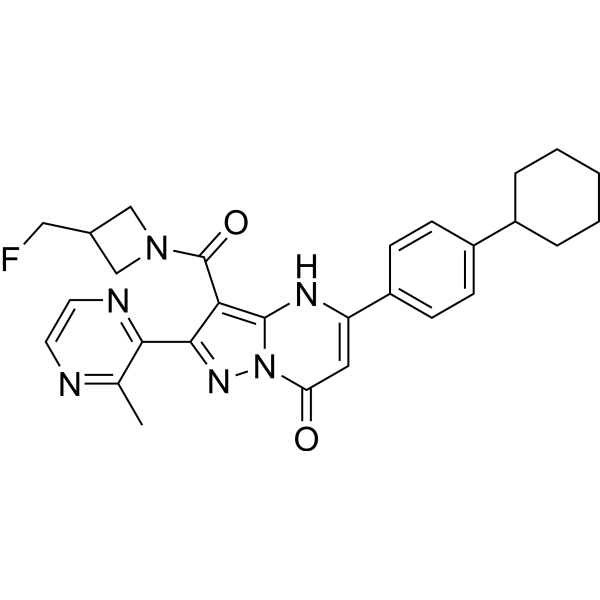
    GNE-7883 is a pan-TEAD inhibitor that blocks the association of YAP/TAZ with TEAD. GNE-7883 effectively reduces chromatin accessibility at TEAD motifs, inhibits cell proliferation in multiple cell line models, and achieves strong anti-tumor efficacy in vivo. In addition, GNE-7883 effectively overcomes intrinsic and acquired resistance to KRAS (Kirsten rat sarcoma viral oncogene homolog) G12C inhibitors in multiple preclinical models by inhibiting YAP/TAZ activation .
    GNE-7883
  • HY-122022
    JR-AB2-011
    Maximum Cited Publications
    20 Publications Verification

    mTOR Cancer
    JR-AB2-011 is a selective mTORC2 inhibitor with an IC50 value of 0.36 μM. JR-AB2-011 inhibits mTORC2 activity by blocking Rictor-mTOR association (Ki: 0.19 μM) .JR-AB2-011 decreases the phosphorylation level of Akt, decreases MMP2 activity, thereby reducing the ability of tumor cells to migrate and invade. JR-AB2-011 also induces non-apoptotic cell death .
    JR-AB2-011
  • HY-100237
    SZL P1-41
    10+ Cited Publications

    E1/E2/E3 Enzyme Apoptosis Cancer
    SZL P1-41 is a specific Skp2 inhibitor, binds to the F-box domain of Skp2 to prevent Skp1 association and Skp2 SCF complex formation. SZL P1-41, like Skp2 deficiency, augments p27-mediated apoptosis/senescence, while it impairs Akt-driven glycolysis. Anti-tumor activities .
    SZL P1-41
  • HY-107916
    Thyrotropin
    1 Publications Verification

    TSH; Pretiron

    TSH Receptor PKC Apoptosis Metabolic Disease Inflammation/Immunology Endocrinology Cancer
    Thyrotropin (TSH, Pretiron) is a thyroid-stimulating hormone produced by thyrotrope cells in the anterior pituitary gland. Thyrotropin regulates the endocrine function of the thyroid. Thyrotropin induces transcriptional regulation of TH-gatekeeper genes in tanycytes through the Tshr/Gαq/PKC pathway. Thyrotropin prevents Apoptosis. Thyrotropin has an association of low levels with increased bone remodeling, reduced bone mass and a high fracture risk in mice. Thyrotropin is promising for research of skeletal remodeling, hyperthyroidism .
    Thyrotropin
  • HY-122816
    HLY78
    10+ Cited Publications

    Wnt β-catenin Apoptosis Cardiovascular Disease Neurological Disease Cancer
    HLY78, a Lycorine (HY-N0288) derivative, is a potent activator of the Wnt/β-catenin signaling pathway. HLY78 targets the DIX domain of Axin and promotes the Axin-LRP6 (lipoprotein receptor-related protein 6) association, thus promoting LRP6 phosphorylation and Wnt signal transduction. HLY78 can be used for subarachnoid hemorrhage (SAH) research .
    HLY78
  • HY-N10264

    (+)-Avrainvillamide; CJ-17,665

    Antibiotic Infection Cancer
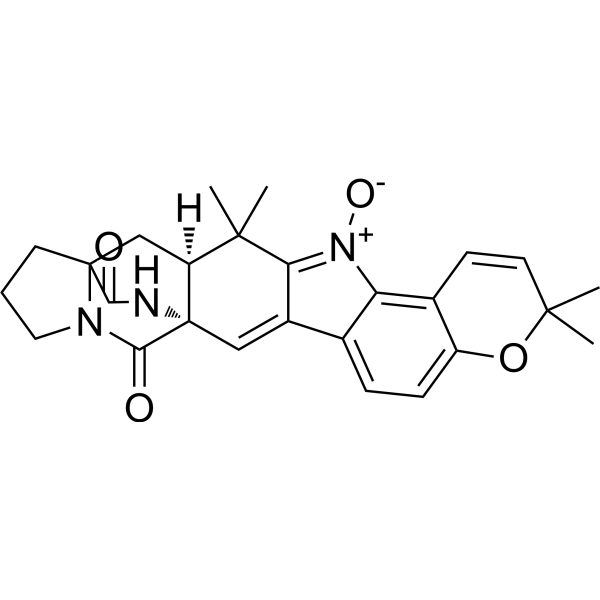
    Avrainvillamide ((+)-Avrainvillamide) is a naturally occurring alkaloid with antiproliferative effects, binds to the nuclear chaperone nucleophosmin, a proposed oncogenic protein that is overexpressed in many different human tumors. Avrainvillamide affects cell biology both by directly binding NPM1 and Crm1 as well as by inhibiting the association of these proteins with certain native cellular partners. Avrainvillamide, an antibiotic, inhibits growth of multi-agent resistant Staphylococcus aureus, Streptococcus pyogenes, and Enterococcus faecalis, with MICs of 12.5, 12.5 and 25 μg/ml, respectively .
    Avrainvillamide
  • HY-136453
    CR-1-31-B
    10+ Cited Publications

    Eukaryotic Initiation Factor (eIF) Apoptosis Cancer
    CR-1-31-B is a synthetic rocaglate and a potent eIF4A inhibitor. CR-1-31-B exhibits powerful inhibitory effects over eIF4A by perturbing the interaction between eIF4A and RNA, sequentially impeding initiation during protein synthesis. CR-1-31-B perturbs association of Plasmodium falciparum eIF4A (PfeIF4A) with RNA. CR-1-31-B induces apoptosis of neuroblastoma and gallbladder cancer cells .
    CR-1-31-B
  • HY-B1898

    PKA Metabolic Disease
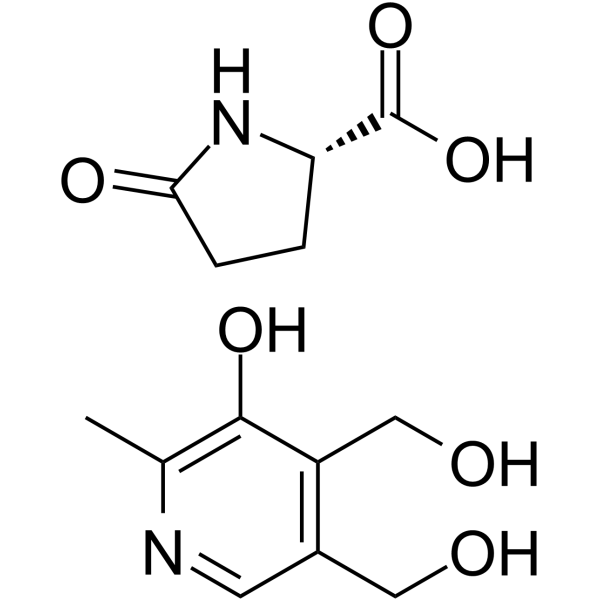
    Metadoxine blocks adipocyte differentiation in association with inhibition of the protein kinase A-cAMP response element binding protein (PKA-CREB) pathway.
    Metadoxine
  • HY-122671

    Anion Exchangers Neurological Disease
    OB-1 is a stomatin-like protein-3 (STOML3) oligomerization blocker. OB-1 is an effective inhibitor of the self-association of Stomatin, STOML1 and STOML2, but not podocin .
    OB-1
  • HY-147135
    MYF-03-69
    1 Publications Verification

    TEAD-IN-3

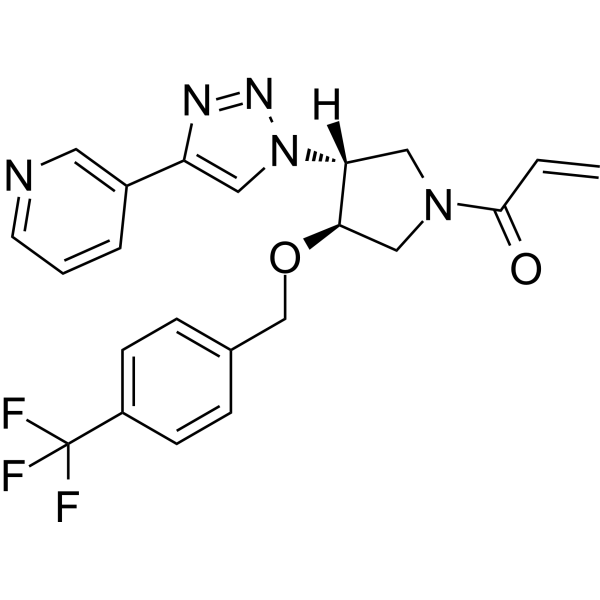
    YAP Apoptosis Cancer
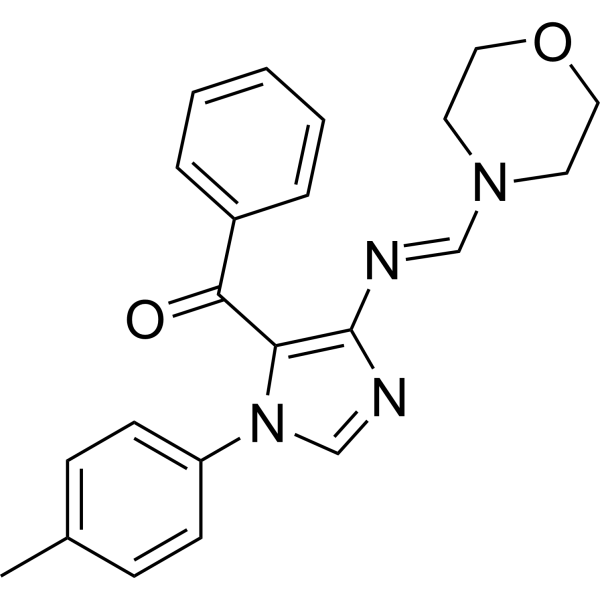
    MYF-03-69 (TEAD-IN-3) is a covalent and irreversible TEAD inhibitor with IC50s of 385, 143, 558 and 173 nM for TEAD1, TEAD2, TEAD3 and TEAD4. MYF-03-69 disrupts YAP-TEAD association, suppresses TEAD transcriptional activity (IC50 = 56 nM) and up-regulates apoptosis gene BMF. MYF-03-69 selectively inhibits mesothelioma cancer cells with defective Hippo signaling. MYF-03-69 can be used for the study of malignant pleural mesothelioma (MPM) .
    MYF-03-69
  • HY-119171

    KMO Neurological Disease Inflammation/Immunology
    GSK 366 is a type II kynurenine-3-monooxygenase (KMO) inhibitor with IC50 values of 2.3 nM and 0.7 nM for human KMO and P. fluorescens-KMO (Pf-KMO). GSK 366 binds to KMO’s substrate site, prevents productive NADPH association, substrate binding, and FAD hydroperoxy species formation. GSK 366 does not stimulate hydrogen peroxide (H2O2) production and reduces H2O2 levels. GSK 366 can be used for the researches of inflammation and neurological disease, such as acute pancreatitis multiple organ dysfunction syndrome and Alzheimer’s disease .
    GSK 366
  • HY-136265
    BC-LI-0186
    1 Publications Verification

    Aminoacyl-tRNA Synthetase Cancer
    BC-LI-0186 is a potent and selective inhibitor of Leucyl-tRNA synthetase (LRS; LeuRS) and Ras-related GTP-binding protein D (RagD) interaction (IC50=46.11 nM). BC-LI-0186 competitively binds to the RagD interacting site of LRS (Kd=42.1 nM) and has on effects on LRS-Vps34, LRS-EPRS, RagB-RagD association, mTORC1 complex formation or the activities of 12 kinases. BC-LI-0186 can effectively suppress the activity of cancer-associated?MTOR?mutants and the growth of rapamycin-resistant cancer cells.?BC-LI-0186 is a promising agent for lung cancer research .
    BC-LI-0186
  • HY-141539
    SETDB1-TTD-IN-1
    5 Publications Verification

    Histone Methyltransferase Akt Cancer
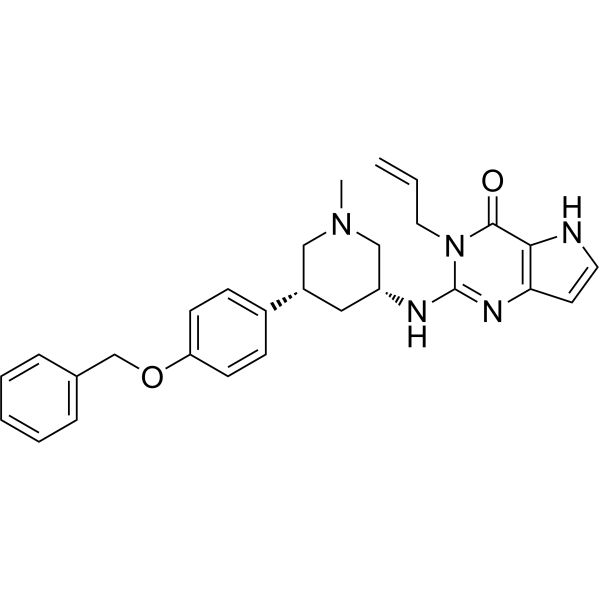
    SETDB1-TTD-IN-1 is a SETDB1 methyltransferase activator and SETDB1-TTD competitive inhibitor (Kd of 88 nM), and selectivity for SETDB1-TTD over other tudor and bromodomain proteins. SETDB1-TTD-IN-1 stimulates methyltransferase activity via increased catalytic activity, promotes Akt1 Lys64 methylation, Akt1 Thr308 phosphorylation and activation. SETDB1-TTD-IN-1 prevents SETDB1-TTD-histone H3 peptide association, induces global gene expression changes, exhibits cellular target engagement, and acts as a tool compound for SETDB1-TTD function exploration. SETDB1-TTD-IN-1 can be used for the research of breast cancer .
    SETDB1-TTD-IN-1
  • HY-124718

    M36

    PKC Cancer
    p32 inhibitor M36 (M36) is a p32 mitochondrial protein inhibitor, which binds directly to p32 and inhibits p32 association with LyP-1 .
    p32 Inhibitor M36
  • HY-W104477

    Others Metabolic Disease
    3-Fluoro-L-tyrosine is a tyrosine analogue, inhibits transamination by tyrosine aminotransferase (TAT). And 3-FluoroL-tyrosine has been shown to be biologically incorporated into proteins in place of tyrosine. 3-Fluoro-L-tyrosine pretends to be the substrate of rat liver tyrosine aminotransferase, markedly disturbs the Tyr-TAT association .
    3-Fluoro-L-tyrosine
  • HY-P2259
    TAT-GluA2 3Y
    2 Publications Verification

    iGluR HIV Integrase Adenosine Receptor Cardiovascular Disease Neurological Disease
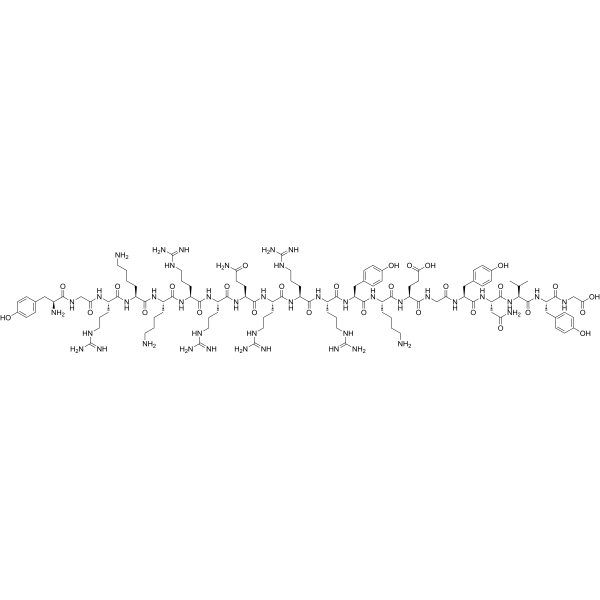
    TAT-GluA2 3Y is a blood-brain barrier-permeable AMPA receptor inhibitory peptide that crosses cell membranes via the HIV-1 TAT protein domain. TAT-GluA2 3Y blocks the endocytosis of AMPA receptors, including the internalization of GluA1/GluA2 subunits, by disrupting interactions with the AP2, Brag2 and Syt3-GluA2 complexes, while also inhibiting long-term depression. TAT-GluA2 3Y blocks hypoxia-mediated AMPAR internalization, alleviates A1R-induced persistent synaptic inhibition, and reduces cerebral ischemic volume, neurological deficits and spatial memory deficits. TAT-GluA2 3Y blocks the effect of NLRP3 deficiency on fear generalization, inhibits amphetamine-induced behavioral/neurochemical sensitization, weakens the unconditioned stimulus-conditioned stimulus association of morphine, and promotes the extinction of morphine CPP. TAT-GluA2 3Y can be used in studies related to fear generalization, ischemic stroke, hypoxia, drug addiction and opioid addiction .
    TAT-GluA2 3Y
  • HY-153833
    PDS-0330
    1 Publications Verification

    KVA-E-23A

    Gap Junction Protein Cancer
    PDS-0330 is a specific and potent Claudin-1 inhibitor. PDS-0330 interferes with claudin-1/Src association and inhibits colorectal cancer (CRC) progression and metastasis .
    PDS-0330
  • HY-115539

    Wnt β-catenin Histone Acetyltransferase Cancer
    Windorphen is a Wnt/β-catenin signal inhibitor that specifically targets the function of the c-terminal transactivation domain of β-catenin-1 but not β-catenin-2. Windorphen selectively targets p300, disrupting the association of the mammalian β-catenin with p300 but not CBP .
    Windorphen
  • HY-111520

    DNA/RNA Synthesis Neurological Disease
    NVS-SM2 is a potent, orally active and brain-penetrant SMN2 splicing enhancer with an EC50 of 2 nM for SMN. NVS-SM2 enhances U1-pre-mRNA association. NVS-SM2 promotes exon 7 inclusion and restores normal survival motor neuron (SMN) protein expression. NVS-SM2 can be used for spinal muscular atrophy (SMA) research .
    NVS-SM2
  • HY-111952

    CID 16016685

    Endogenous Metabolite Others
    SR-4995 (CID 16016685) is a highly effective and selective ligand for α-β-hydrolase domain-containing 5 (ABHD5), facilitating the activation of adipose triglyceride lipase (ATGL) by displacing ABHD5 from its inhibitory regulators, perilipin-1 (PLIN1) and PLIN5. It directly interacts with ABHD5, inhibiting its association with PLIN1, and promotes lipolysis in adipocytes and muscle tissues while circumventing PKA-dependent signaling pathways.
    SR-4995
  • HY-P2265A

    SOS1 Ras Cancer
    SAH-SOS1A TFA is a peptide-based SOS1/KRAS protein interaction inhibitor. SAH-SOS1A TFA binds to wild-type and mutant KRAS (G12D, G12V, G12C, G12S, and Q61H) with nanomolar affinity (EC50=106-175 nM). SAH-SOS1A TFA directly and independently blocks nucleotide association. SAH-SOS1A TFA impairs KRAS-driven cancer cell viability and exerts its effects by on-mechanism blockade of the ERK-MAPK phosphosignaling cascade downstream of KRAS .
    SAH-SOS1A TFA
  • HY-153736

    DNA/RNA Synthesis Cancer
    NSC 194308, a U2AF2-RNA complexes enhancer, increases association of the U2AF1-U2AF2-SF1-splice site RNA complex by binding a site between the U2AF2 RNA recognition motifs (RRM1 and RRM2). NSC 194308 inhibits pre-mRNA splicing by stalling spliceosome assembly at the point where U2AF helps recruit U2 snRNP to the branchpoint. NSC 194308 enhances the binding of pre-mRNA to U2AF2, selectively triggering cell death in leukemia cell lines containing spliceosome mutations .
    NSC 194308
  • HY-121523

    Keap1-Nrf2 Metabolic Disease
    MIND4-17 is a potent NRF2 activator that covalently modifies a C151 residue of Keap1. MIND4-17 disrupts Keap1-Nrf2 association, leading to Nrf2 protein stabilization and nuclear translocation. MIND4‐17 exerts potent antioxidant activity .
    MIND4-17
  • HY-112821
    IBS008738
    3 Publications Verification

    YAP Inflammation/Immunology
    IBS008738 is a potent TAZ activator. IBS008738 stabilizes TAZ, increases the unphosphorylated TAZ level, enhances the association of MyoD with the myogenin promoter, upregulates MyoD-dependent gene transcription, and competes with myostatin in C2C12 cells. IBS008738 enhances myogenesis in C2C12 cells and facilitates muscle repair in a muscle injury model .
    IBS008738
  • HY-162965

    Proteasome Cancer
    Immunoproteasome activator 1 (compound A) is a selective immunoproteasome activator that increases the presentation of individual MHC-I–bound peptides by over 100-fold. Immunoproteasome activator 1 binds to the proteasome structural subunit PSMA1 and promotes the association of the proteasome activator PA28α/β (PSME1/PSME2) with immunoproteasomes .
    Immunoproteasome activator 1
  • HY-157269

    Hapten Inflammation/Immunology
    J10-1 is a hapten small molecule. J10-1 accelerates peptide exchange in MHC class II molecules in an HLA-DM-independent manner, and its effect is not affected by the polymorphism of the P1 pocket of MHC class II molecules. J10-1 enhances the processes of peptide dissociation, peptide binding and peptide association of MHC class II molecules on the surface of B cells. J10-1 can be used for research on immunoregulation .
    J10-1
  • HY-116227

    Epigenetic Reader Domain Inflammation/Immunology
    (2S,3R)-LP99 is a potent and selective BRD7 and BRD9 inhibitor with an KD of 99 nM for BRD9. (2S,3R)-LP99 inhibits the association of BRD7 and BRD9 to acetylated histones in vitro and in cells. (2S,3R)-LP99 demonstrates that BRD7/9 plays a role in regulating pro-inflammatory cytokine secretion .
    (2S,3R)-LP99
  • HY-141539A
    SETDB1-TTD-IN-1 TFA
    5 Publications Verification

    Histone Methyltransferase Cancer
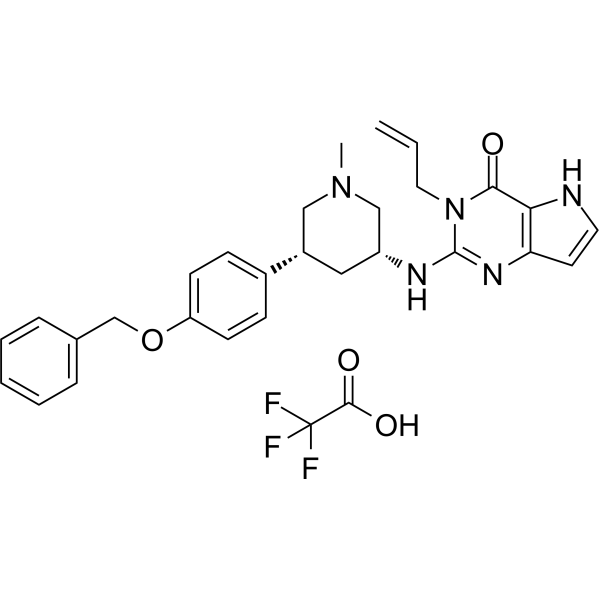
    SETDB1-TTD-IN-1 TFA is a potent, selective and endogenous binder competitive ligand of SET domain bifurcated protein 1 tandem tudor domain (SETDB1-TTD) that binds to TTD, with a Kd of 88 nM. SETDB1-TTD-IN-1 TFA increases SETDB1 methyltransferase activity. SETDB1-TTD-IN-1 TFA can be used for the research of biological functions and disease associations of SETDB1-TTD .
    SETDB1-TTD-IN-1 TFA
  • HY-109045A

    BTA074 hydrochloride; AP 611074 hydrochloride

    E1/E2/E3 Enzyme HPV Infection
    Teslexivir (BTA074) hydrochloride is a potent antiviral agent. Teslexivir hydrochloride is a potent and selective inhibitor of the interaction between two essential viral proteins, E1 and E2, an association that is a necessary step in the DNA replication and thus viral production for Human Papilloma Virus (HPV) 6 and 11. Teslexivir hydrochloride can be used for condyloma research .
    Teslexivir hydrochloride
  • HY-P2525

    MHC Inflammation/Immunology
    GAD65 (206-220) is glutamic acid decarboxylase (GAD) 65-derived peptide, corresponding to residues 180-188. GAD65 is presented to T cells in association with I-Ag7 MHC class II molecules and a major pancreatic antigens targeted by self-reactive T cells in type I diabetes mellitus .
    GAD65 (206-220)
  • HY-160694

    cBu-Cit-PROTAC BRD4 Degrader-5

    PROTAC-Linker Conjugates for PAC Epigenetic Reader Domain Cancer
    cBu-Cit-GAL-02-221 is a PROTAC that degrades BRD4 by association with cBu-Cit. cBu-Cit-GAL-02-221 can effectively inhibit BRD4 in HER2 positive and negative breast cancer cell lines. cBu-Cit-GAL-02-221 has a single bond and can be conjugated to an ADC antibody to form a PAC .
    cBu-Cit-GAL-02-221
  • HY-175678

    PROTACs Epigenetic Reader Domain Cancer
    PROTAC BRD2 BD1 Degrader-1 (compound 21-1) is a potent and selective BRD2 BD1 PROTAC degrader. PROTAC BRD2 BD1 Degrader-1 induces the association of BRD2 BD1 and von Hippel–Lindau-elongin C-elongin B (VCB). (Pink: BRD2-BD1 Ligand (HY-175679); Blue: E3 ligase ligand (HY-125845); Black: Linker (HY-W069332)) .
    PROTAC BRD2 BD1 Degrader-1
  • HY-114652

    2-Amino-α-carboline; AαC

    Endogenous Metabolite Cancer
    AalphaC (AαC) is a potential carcinogen with carcinogenic activity. AalphaC is an important biomarker in tobacco smoke and is associated with tobacco smoke exposure. Urinary concentrations of AalphaC are significantly higher in dedicated smokers than in non-smokers, indicating its importance in monitoring tobacco exposure. AalphaC levels increase significantly with increasing serum nicotine levels, indicating its close relationship with tobacco use. In addition, consuming high-temperature cooked beef significantly increases the amount of AalphaC in urine, while consuming vegetables is associated with a decrease in AalphaC concentrations. Smoking half a pack of cigarettes is associated with a significant increase in the amount of AalphaC, which further confirms the biological activity of AalphaC and its association with dietary habits .
    AalphaC
  • HY-P3429A

    PKC Cardiovascular Disease
    SAMβA TFA is a rationally designed selective antagonist of Mfn1-βIIPKC association and can bind to TAT (HY-P0281). SAMβA TFA is a selective inhibitor of mitofusin 1-βIIPKC association improves heart failure outcome in rats .
    SAMβA TFA
  • HY-P3429

    PKC Cardiovascular Disease
    SAMβA is conjugated to the cell permeable peptide TAT47-57. SAMβA, a rationally designed selective antagonist of Mfn1-βIIPKC association. SAMβA is a selective inhibitor of mitofusin 1-βIIPKC association improves heart failure outcome in rats .
    SAMβA
  • HY-115461

    Insulin Receptor Metabolic Disease
    MID-1 is a disruptor of MG53-IRS-1 (Mitsugumin 53-insulin receptor substrate-1) interaction. MID-1 disrupts molecular association of MG53 with IRS-1 and abolishes MG53-induced IRS-1 ubiquitination and degradation in skeletal muscle, leading to elevated IRS-1 expression level and increased insulin signaling and glucose uptake .
    MID-1
  • HY-119053

    MDM-2/p53 Cancer
    MS7972 is a small molecule that blocks human p53 and CREB binding protein association. MS7972 can almost completely block this BRD interaction at 50 μM .
    MS7972
  • HY-133684

    Bacterial Infection
    N-Tetradecanoyl-L-homoserine lactone is a short-chained N-acyl homoserine lactone (AHL). Diatoms are frequently found in association with Proteobacteria, many members of which employ cell-to-cell communication via AHLs in aquatic habitats .
    N-Tetradecanoyl-L-homoserine lactone
  • HY-P5966

    MOG (40-54)

    MHC Inflammation/Immunology
    Myelin Oligodendrocyte Glycoprotein (40-54), Rat, Mouse (MOG (40-54)) is a CD8-related self-antigenic epitope of the myelin oligodendrocyte glycoprotein (MOG) protein and is presented in association with H-2Db .
    Myelin Oligodendrocyte Glycoprotein (40-54), Rat, Mouse
  • HY-P10670

    ABA Receptor Others
    CLE25 peptide moves from the roots to the leaves and modulates NCED3 expression in leaves in association with the receptor-like kinases BAM1 and BAM3. CLE25 peptide induces stomatal closure by modulating abscisic acid accumulation and thereby enhances resistance to dehydration stress .
    CLE25 Peptide
  • HY-D1515

    Neurodye GH1-84

    Fluorescent Dye Neurological Disease
    FM1-84 (Neurodye GH1-84) is a fluorescent dye. FM1-84 has lipophilic and facilitates association with membranes, resulting in an increase in fluorescence intensity (λex=510 nm, λem=625 nm). FM1-84 can be used for synaptic vesicle recycling in neurons research .
    FM1-84
  • HY-133684R

    Reference Standards Bacterial Infection
    N-Tetradecanoyl-L-homoserine lactone (Standard) is the analytical standard of N-Tetradecanoyl-L-homoserine lactone (HY-133684). This product is intended for research and analytical applications. N-Tetradecanoyl-L-homoserine lactone is a short-chained N-acyl homoserine lactone (AHL). Diatoms are frequently found in association with Proteobacteria, many members of which employ cell-to-cell communication via AHLs in aquatic habitats.
    N-Tetradecanoyl-L-homoserine lactone (Standard)
  • HY-133685S

    C6-HSL-d3

    Isotope-Labeled Compounds Bacterial Infection Metabolic Disease
    N-Hexanoyl-L-Homoserine lactone-d3 (C6-HSL-d3) is deuterium labeled N-Hexanoyl-L-homoserine lactone. N-Hexanoyl-L-homoserine lactone is a short-chained N-acyl homoserine lactone (AHL). Diatoms are frequently found in association with Proteobacteria, many members of which employ cell-to-cell communication via AHLs in aquatic habitats .
    N-Hexanoyl-L-Homoserine lactone-d3
  • HY-P2265

    SOS1 Ras Cancer
    SAH-SOS1A is a peptide-based SOS1/KRAS protein interaction inhibitor. SAH-SOS1A binds to wild-type and mutant KRAS (G12D, G12V, G12C, G12S, and Q61H) with nanomolar affinity (EC50=106-175 nM), directly and independently blocks nucleotide association, impairs KRAS-driven cancer cell viability, and exerts its effects by on-mechanism blockade of the ERK-MAPK phosphosignaling cascade downstream of KRAS .
    SAH-SOS1A
  • HY-P11000

    Biochemical Assay Reagents Others
    INF7TAT is an amphipathic peptide containing the influenza HA2 sequence and the TAT peptide (HY-P0281). INF7TAT can associate with other macromolecules through non-covalent associations. INF7TAT can be used for non-toxic delivery of siRNAs .
    INF7TAT
  • HY-129330

    PKC Others
    Sapintoxin D is a fluorescent phorbol ester that can be used to study the activation of protein kinase C (PKC). Sapintoxin D is a calcium-dependent PKC activator .
    Sapintoxin D
  • HY-105458

    Neprilysin Neurological Disease
    BL-2401 is an orally active enkephalinase inhibitor. BL-2401 exhibit antinociceptive and antidepressant-like activitiesin association with endogenous opioid systems. BL-2401 can be used for the research of neurological disease .
    BL-2401
  • HY-180183

    Epigenetic Reader Domain Cancer
    DLG-41 is a GAS41 YEATS domain inhibitor (IC50: 600 nM in AlphaLISA). DLG-41 potently disrupts the association of GAS41 YEATS with chromatin in cells. DLG-41 strongly enhances levels of CDKN1A. DLG-41 has anticancer activity against NSCLC .
    DLG-41
  • HY-109045

    BTA074; AP 611074

    E1/E2/E3 Enzyme HPV Infection
    Teslexivir (BTA074) is a potent antiviral agent. Teslexivir is a potent and selective inhibitor of the interaction between two essential viral proteins, E1 and E2, an association that is a necessary step in the DNA replication and thus viral production for Human Papilloma Virus (HPV) 6 and 11. Teslexivir can be used for condyloma research .
    Teslexivir

Inquiry Online

Your information is safe with us. * Required Fields.

Salutation


Country or Region *

Applicant Name *


Organization Name *

Department *


Email Address *


Product Name *

Cat. No.


Requested quantity *

Phone Number *


Remarks

Inquiry Online

Inquiry Information

Product Name:
Cat. No.:
Quantity:
MCE Japan Authorized Agent:

