53 Results for "

bioanalysis platform

" in MedChemExpress (MCE) Product Catalog:
Products (53)

53 Results for "bioanalysis platform" in MCE Product Catalog:

11
11 Publications Verification
Cat. No.: HY-N0420
CAS No.: 110-15-6
Synonyms: Wormwood acid
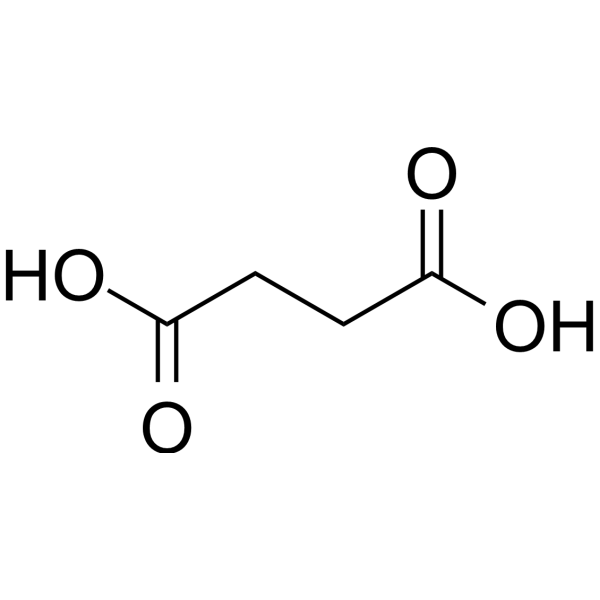
Succinic acid is an anti-anxiety agent with oral activity. Disodium succinate is the salt form of Succinic acid. Succinic acid is an intermediate product of the tricarboxylic acid cycle. Succinic acid is an important platform chemical. Succinic acid can be used as surfactant, additive, ion chelating agent, flavoring agent and other applications in chemical, pharmaceutical and food fields .
loading...
    loading...
11
11 Publications Verification
Cat. No.: HY-W015410
CAS No.: 150-90-3
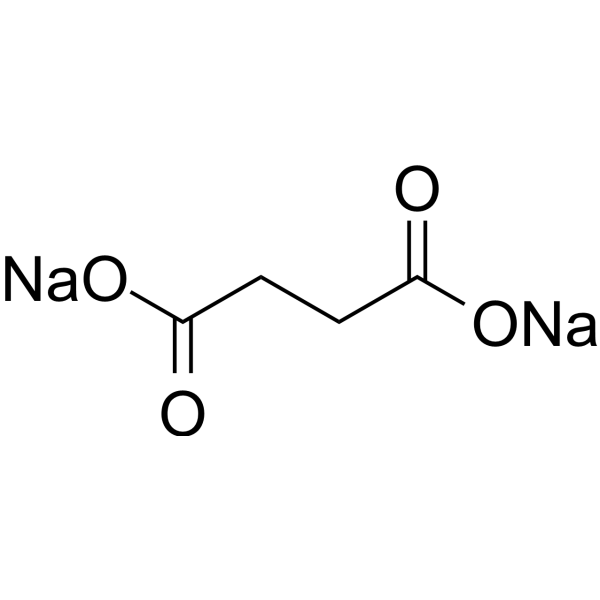
Disodium succinate is an anti-anxiety agent with oral activity. Disodium succinate is the salt form of Succinic acid. Disodium succinate is an intermediate product of the tricarboxylic acid cycle. Disodium succinate is an important platform chemical. Disodium succinate can be used as surfactant, additive, ion chelating agent, flavoring agent and other applications in chemical, pharmaceutical and food fields .
loading...
    loading...
4
4 Cited Publications
Cat. No.: HY-W094516
CAS No.: 6106-21-4
Synonyms: Wormwood acid disodium hexahydrate
Disodium succinate hexahydrate (Wormwood acid disodium hexahydrate) is an anti-anxiety agent with oral activity. Disodium succinate hexahydrate is an intermediate product of the tricarboxylic acid cycle. Disodium succinate hexahydrate is an important platform chemical. Disodium succinate hexahydrate can be used as surfactant, additive, ion chelating agent, flavoring agent and other applications in chemical, pharmaceutical and food fields .
loading...
    loading...
2
2 Cited Publications
Cat. No.: HY-D0175
CAS No.: 919-30-2
Synonyms: γ-Aminopropyltriethoxysilane; APTES
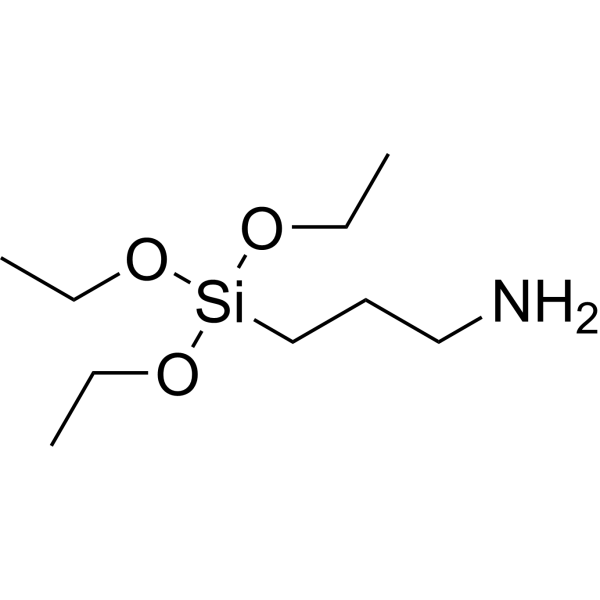
3-Aminopropyltriethoxysilane (APTES) acts as a strong glue to immobilize biomolecules such as antibodies and enzymes to silicon and silicon derivatives such as silicon nitride (Si3N4 )) on. 3-Aminopropyltriethoxysilane also acts as a spacer, providing biomolecules with more spatial freedom during immobilization for higher specific activity. 3-Aminopropyltriethoxysilane can form a more stable, sensitive, and highly biocompatible bioanalytical platform by immobilizing biomolecules onto some solid materials, electrode materials, nanomaterials, and nanocomposites .
loading...
    loading...
Cat. No.: HY-160695
CAS No.: 2924858-25-1
Research Areas:  

Cancer

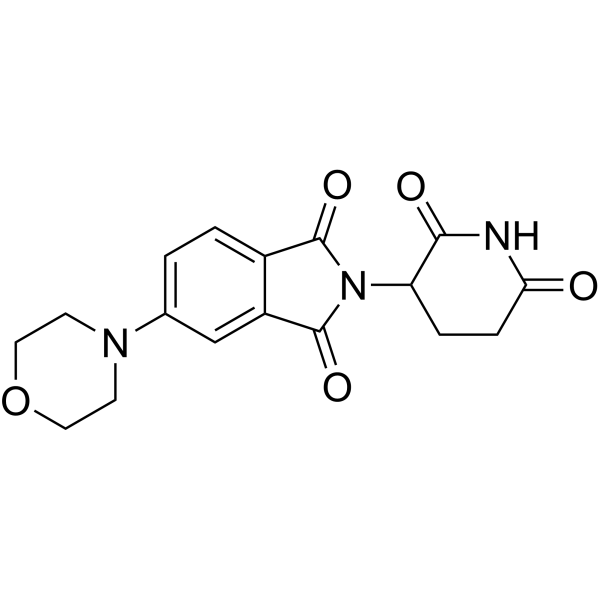
PT-179 is an orthogonal Thalidomide (HY-14658) derivative that targets cereblon without causing off-target degradation effects. PT-179 is able to specifically bind CRBN, form a ternary complex with a target protein fused to a zinc finger (ZF) degron, and mediate the degradation of the tagged protein. For example, PT-179 binds to the ubiquitin ligase substrate receptor cereblon by forming a complex with SD40 and efficiently degrades proteins N- or C-terminally fused to SD40 or SD36 (DC50 for eGFP: 4.5 nM and 14.3 nM). PT-179 can be used to develop compact protein degradation tagging platforms .
loading...
    loading...
Cat. No.: HY-P10033
CAS No.: 245080-24-4
Target:  

Ser/Thr Protease

Research Areas:  

Others

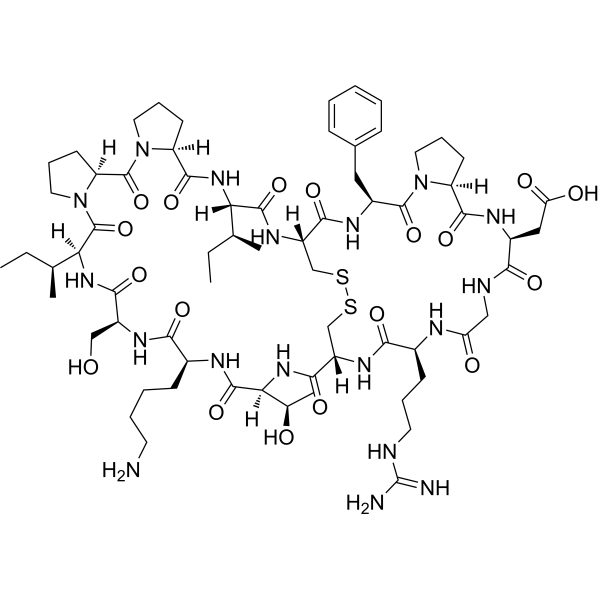
SFTI-1 is a cyclic peptide trypsin inhibitor consisting of 14 amino acid residues. SFTI-1 belongs to the Bowman-Birk class of inhibitors. Characterized by its small size, high stability, and potent activity, SFTI-1 can be used for research on peptide drug design platforms .
loading...
    loading...
Cat. No.: HY-32004
CAS No.: 500-05-0
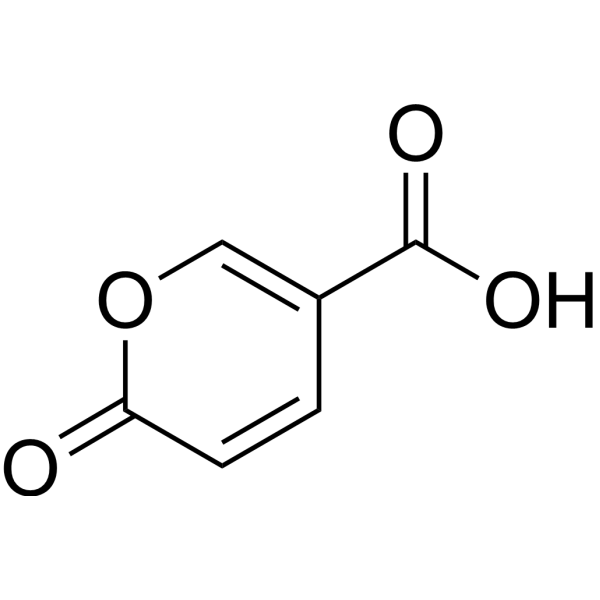
Coumalic acid is an inhibitor of human carbonic anhydrase (hCA) (KI = 0.073 μM for hCA IX; KI = 0.083 μM for hCA XII). Coumalic acid is a valuable platform compound which can be prepared from malic acid. Coumalic acid can be used in the flavorings, fragrances and cosmetics industries, as polymer components, and pharmaceutical scaffolds. Coumalic acid displays antibronchial and antimalarial activity .
loading...
    loading...
Cat. No.: HY-W591476
CAS No.: 134874-49-0
Synonyms: mPEG1000-SH
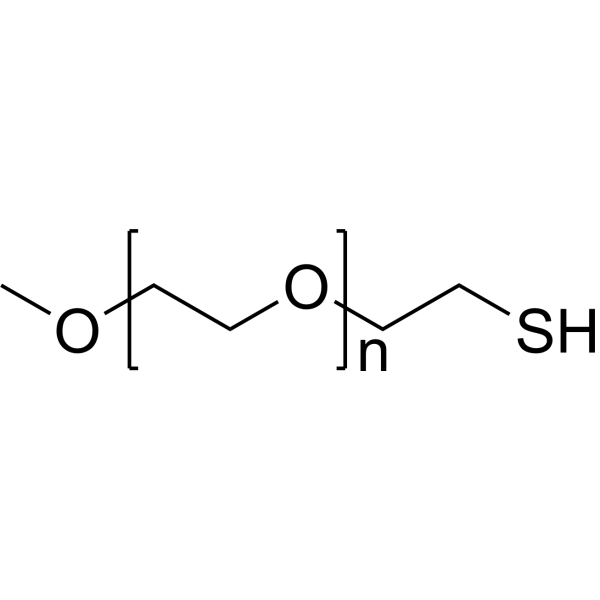
m-PEG1000-thiol (mPEG1000-SH) is a surface modifier that can modify DNA thiolation and is used in the synthesis of gold nanorods (AuNR). m-PEG1000-thiol can load thiolated DNA onto AuNR, form a covalent bond with the surface of gold nanoparticles through the thiol group, and stabilize the nanoparticles by the steric hindrance effect of the polyethylene glycol chain, preventing aggregation and enhancing its biocompatibility. m-PEG1000-thiol can also provide a platform for the subsequent coupling of biomolecules (such as DNA, antibodies) by replacing surfactants (such as CTAB) on the surface of nanoparticles, thereby exerting its activity in promoting the functionalization of nanomaterials [2].
loading...
    loading...
Cat. No.: HY-W014410
CAS No.: 526-99-8
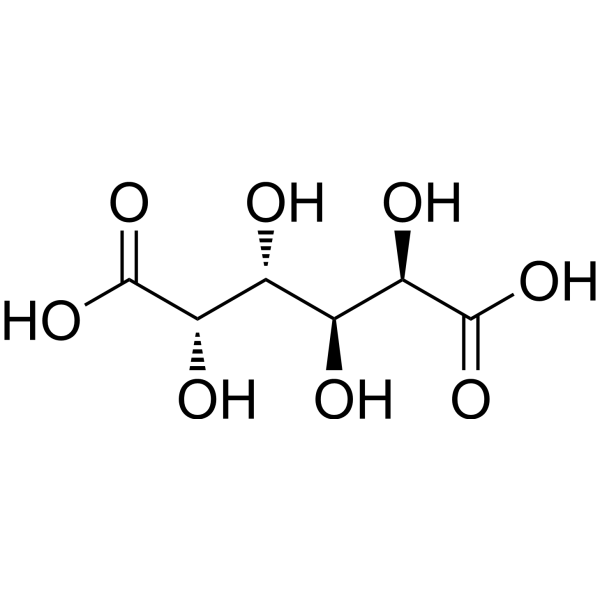
Mucic acid is an aldonic acid that can be prepared from pectin. Mucic acid increases the expression level of Runx2, promotes osteoblast differentiation, and upregulates osteogenic differentiation marker genes. Mucic acid can be used to prepare platform compounds, polymers, polymer materials and metal-organic frameworks. Mucic acid is applicable to the research of bone-related defects .
loading...
    loading...
Cat. No.: HY-177069
CAS No.: 1857340-77-2
Target:  

Liposome

Research Areas:  

Others

4A3-SC7 is a polymer of 4A3 amine and is an ionizable lipid component. 4A3-SC7 can be used to prepare lipid nanoparticles (LNPs) to construct a selective organ targeting (SORT) LNP platform .
loading...
    loading...
Cat. No.: HY-W777012
CAS No.: 177332-37-5
Acridinium C2 NHS ester is a chemiluminescent label that is active for the development of protein and nucleic acid probes. Acridinium C2 NHS ester can be used in bioanalysis and diagnostics to provide highly sensitive detection solutions. Acridinium C2 NHS ester is widely used in medical research, especially in the monitoring and analysis of biomolecules.
loading...
    loading...
Cat. No.: HY-N0420R
CAS No.: 110-15-6
Synonyms: Wormwood acid (Standard)
Succinic acid (Standard) is the analytical standard of Succinic acid. This product is intended for research and analytical applications. Succinic acid is an anti-anxiety agent with oral activity. Disodium succinate is the salt form of Succinic acid. Succinic acid is an intermediate product of the tricarboxylic acid cycle. Succinic acid is an important platform chemical. Succinic acid can be used as surfactant, additive, ion chelating agent, flavoring agent and other applications in chemical, pharmaceutical and food fields .
loading...
    loading...
Cat. No.: HY-D125859F
Synonyms: HRP-Biotin
Peroxidase, Horseradish, Biotin labeled (HRP-Biotin) can be used to encapsulate DNA nanoflowers for creating stabilized streamlined ELISA platforms resistant to harsh environment .
loading...
    loading...
Cat. No.: HY-P991342
Synonyms: PCA062 antibody

Target:  

Cadherin

Research Areas:  

Cancer

CQY684 (PCA062 antibody) is a monoclonal antibody targeting CDH3/P-cadherin, which locks P-cadherin in an X-dimer conformation and enhances the stability of this adhesion structure. CQY684 induces P-cadherin phosphorylation and promotes its dissociation from the cytoplasmic region of P-cadherin. As an endocytosis inducer and lysosome-targeting agent, CQY684 facilitates the internalization of the P-cadherin-CQY684 complex and improves the turnover efficiency of P-cadherin. CQY684 serves as a platform for the delivery of intracellular anticancer compounds, which is achieved through the targeted lysosomal transport of the antibody-P-cadherin complex. CQY684 is applicable to the research of breast cancer, esophageal cancer, and head and neck cancer .
loading...
    loading...
Cat. No.: HY-160052
Target:  

Interleukin Related

Research Areas:  

Inflammation/Immunology Cancer

IL-6 aptamer sodium is an aptamer that specifically binds to IL-6, and can serve as a biological recognition receptor for high-sensitivity detection. IL-6 aptamer sodium enables label-free specific detection through changes in electrical signals of carbon nanotube microarrays or alterations in capacitive impedance on the surface of gold sensors. IL-6 aptamer sodium still maintains high selectivity even below the gray zone threshold for cancer diagnosis, and shows no significant non-specific binding to bovine serum albumin. IL-6 aptamer sodium can form an ordered self-assembled monolayer with 6-mercapto-1-hexanol on gold surfaces, making it suitable for reagent-free capacitive impedance biosensing platforms. IL-6 aptamer sodium is widely used in research related to fields such as cancer, inflammatory diseases, myeloma, liver cancer and glioma .
loading...
    loading...
Cat. No.: HY-174485
Target:  

mRNA

Research Areas:  

Inflammation/Immunology

OVA mRNA (N1-Me-Pseudo UTP) is an mRNA encoding chicken ovalbumin. The substitution with N1-Me-Pseudo UTP (m1Ψ) improves protein expression and reduces innate immune response. OVA mRNA binds to the STING-activating polymer PD18 and is encapsulated in optimized lipid nanoparticles to construct an mRNA vaccine platform (PD18 LNP). This platform not only enhances the lymphatic delivery efficiency and protein expression of mRNA, but also potently adjuvates immune responses via activating the STING pathway .
loading...
    loading...
Cat. No.: HY-W409806
CAS No.: 2126-93-4
Target:  

Liposome

Research Areas:  

Inflammation/Immunology

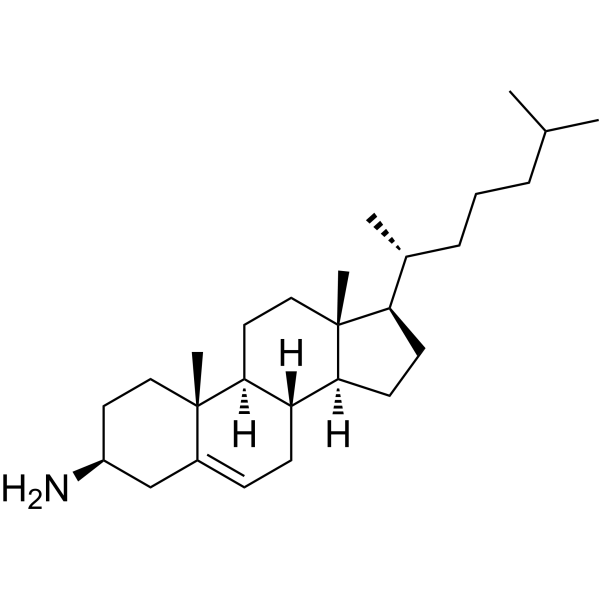
Cholesterylamine is a cationic lipid and cholesterol analog. Cholesterylamine mimics the membrane transport properties of cholesterol, cycles between the plasma membrane and early/recycling endosomes in mammalian cells, and serves as a platform for constructing synthetic cell surface receptors. Cholesterylamine can be used to prepare PLGA particles with surface charges for antigen binding. Cholesterylamine is applicable for drug delivery. Cholesterylamine is used in research on autoimmune diseases and allergies .
loading...
    loading...
Cat. No.: HY-P11262
Target:  

GLP Receptor

Research Areas:  

Metabolic Disease

GUB021794 is a potent and highly selective glucagon-like peptide-1 receptor (GLP-1R) agonist developed using the streaMLine platform with an EC50 value of 18 pM. GUB021794 has a very weak activity against SCTR, with an EC50 value of 190 nM. GUB021794 can significantly reduce the body weight, food intake, and total fat mass of mice in a diet-induced obesity (DIO) model. GUB021794 can be used for research on obesity/diabetes .
loading...
    loading...
Cat. No.: HY-156242
CAS No.: 1906915-49-8
Research Areas:  

Cancer

BQZ-485 is a GDI2 inhibitor and a paraptosis inducer with antitumor activity. BQZ-485 binds to the Rab-binding platform domain of GDI2, disrupts the interaction between GDI2 and Rab1A, and impairs the membrane recycling of Rab1A. BQZ-485 blocks vesicle trafficking from the endoplasmic reticulum to the Golgi apparatus, and induces endoplasmic reticulum expansion, endoplasmic reticulum fusion, endoplasmic reticulum stress, unfolded protein response and cytoplasmic vacuolization. BQZ-485 is applicable to pancreatic cancer-related research .
loading...
    loading...
Cat. No.: HY-169385
CAS No.: 2925060-81-5
Research Areas:  

Cancer

ATC-324 is an bivalent AR (Androgen Receptor) degrader based on the protein degradation technology platform AUTOphagy-TArgeting Chimera (AUTOTAC). ATC-324 induces the formation of AR/p62 complex, leading to autophagy-lysosomal degradation of AR. ATC-324 can reduce nuclear AR levels and downregulate target gene expression of AR and AR-v7, and also has a degradation effect on common AR mutants in PCa . ATC-324 is composed of target-binding ligand (TBL) Enzalutamide (HY-70002) and p62/SQSTM1 autophagy-targeting ligand (ATL) YT 6-2 analog-1 (HY-169386), connected by Boc-NH-PEG4-CH2CH2NH2 (HY-W008352). Among them, the active control of the target protein ligand is Enzalutamide carboxylic acid (HY-70002B), and the conjugate composed of the autophagy-targeting ligand and the linker is YT 6-2-PEG3-C2-NH2 (HY-169387).
loading...
    loading...

