52 Results for "

depression model

" in MedChemExpress (MCE) Product Catalog:
Products (52)

52 Results for "depression model" in MCE Product Catalog:

388
388 Publications Verification
Cat. No.: HY-14648
CAS No.: 50-02-2
Purity:  99.86%
Synonyms: Hexadecadrol; Prednisolone F
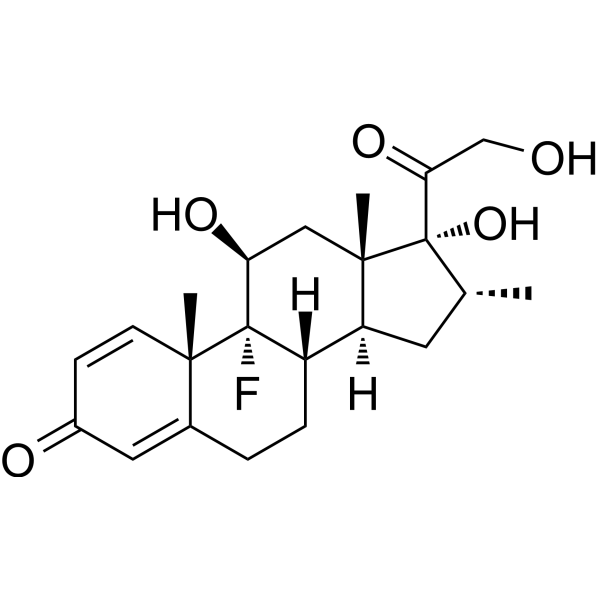
Dexamethasone (Hexadecadrol) is a glucocorticoid receptor agonist, apoptosis inducer, and common disease inducer in experimental animals, constructing models of muscle atrophy, hypertension, and depression. Dexamethasone can inhibit the production of inflammatory miRNA-155 exosomes in macrophages and significantly reduce the expression of inflammatory factors in neutrophils and monocytes. Dexamethasone also has potential for use in COVID-19 research .
loading...
    loading...
388
388 Publications Verification
Cat. No.: HY-14648C
CAS No.: 50-02-2
Purity:  ≥98.0%
Synonyms: Dexamethasone cyclodextrin complex
Dexamethasone (Hexadecadrol) Water Soluble is a water-soluble form of Dexamethasone (HY-14648). Dexamethasone is a glucocorticoid receptor agonist, apoptosis inducer, and a common disease inducer in experimental animals. It can be used to construct models of muscle atrophy, hypertension, and depression. Dexamethasone can inhibit the production of inflammatory miRNA-155 exosomes in macrophages and significantly reduce the expression of inflammatory factors in neutrophils and monocytes. Dexamethasone also has the potential to be used in COVID-19 research .(Sale size is the weight of dexamethasone)
loading...
    loading...
3
3 Cited Publications
Cat. No.: HY-116330A
CAS No.: 238074-03-8
Purity:  99.52%
Synonyms: Hyperforin DCHA
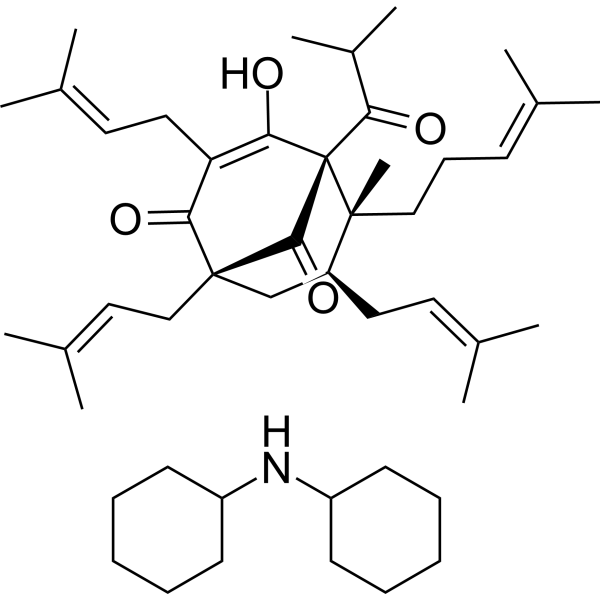
Hyperforin dicyclohexylammonium salt (Hyperforin DCHA) is a transient receptor canonical 6 (TRPC6) channels activator. Hyperforin dicyclohexylammonium salt modulates Ca 2+ levels by activating Ca 2+-conducting non-selective canonical TRPC6 channels. Hyperforin dicyclohexylammonium salt also shows diverse pharmacological activities including anti-depression, anti-tumor, anti-dementia, anti-diabetes. Hyperforin dicyclohexylammonium salt modulates γδ T cells to secret IL-17α, improves Imiquimod (HY-B0180)-induced psoriasis-like mice model .
loading...
    loading...
2
2 Cited Publications
Cat. No.: HY-107541
CAS No.: 317321-41-8
Purity:  99.68%
Target:  

GPR55

Research Areas:  

Neurological Disease

O-1602 is an agonist of GPR55 (G protein-coupled receptor 55). O-1602 reduces the number and activation of hippocampal microglia induced by METH (methamphetamine). O-1602 decreases the expression levels of NLRP3 inflammasome proteins, including NLRP3, ASC and Caspase-1 .
loading...
    loading...
1
1 Cited Publications
Cat. No.: HY-107740
CAS No.: 977-96-8
Purity:  99.85%
Synonyms: 1,1'-Diethyl-2,2'-cyanine iodide; Decynium 22; Diethylcyanine iodide; Eastman 7851
Pseudoisocyanine iodide (1,1'-Diethyl-2,2'-cyanine iodide) is an inhibitor of organic cation transporters (OCT1, OCT2, OCT3) and plasma membrane monoamine transporter (PMAT). Pseudoisocyanine iodide has antidepressant activity .
loading...
    loading...
1
1 Cited Publications
Cat. No.: HY-113468A
CAS No.: 300-48-1
Purity:  99.16%
Synonyms: 3-Methoxy-L-tyrosine; 3-O-Methyl-L-DOPA
3-O-Methyldopa (3-Methoxy-L-tyrosine) is a metabolite of L-DOPA (HY-N0304) that can cross the blood-brain barrier (BBB). 3-O-Methyldopa inhibits the astrocyte-mediated protective effect of L-DOPA (HY-N0304) on dopaminergic neurons. In addition, 3-O-Methyldopa has certain antidepressant and neuroprotective activities. 3-O-Methyldopa can be used in the research of nervous system diseases such as depression and Parkinson's disease .
loading...
    loading...
1
1 Cited Publications
Cat. No.: HY-107624
CAS No.: 510733-97-8
Purity:  99.84%
Target:  

MCHR1 (GPR24)

Research Areas:  

Neurological Disease

ATC0175 is a potent, selective and orally active melanin-concentrating hormone 1 recepter antagonist with IC50s of 13.5, >10000 nM for MCH1R, MCH2R, respectively. ATC0175 shows antidepressant effects and anxiolytic effects in animal models. ATC0175 has the potential for the research of depression and/or anxiety disorders .
loading...
    loading...
Cat. No.: HY-14895
CAS No.: 173352-21-1
Purity:  99.96%
Synonyms: CM346
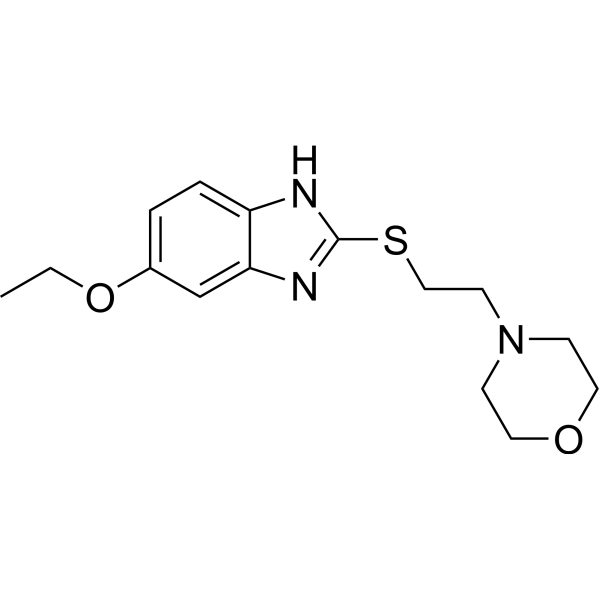
Fabomotizole (CM346) is an insecticide with anxiolytic, antianxiety, and neuroprotective activities and a substrate of p-glycoprotein. Fabomotizole inhibits the ST-segment depression induced by isoproterenol in a rat model of acute subendocardial ischemia. Fabomotizole also inhibits Giardia lamblia and has the potential to inhibit giardiasis. Fabomotizole also targets Sigma1R, NRH:quinone reductase 2 (NQO2), and MAO-A to exert anxiolytic effects .
loading...
    loading...
Cat. No.: HY-W009123
CAS No.: 112-84-5
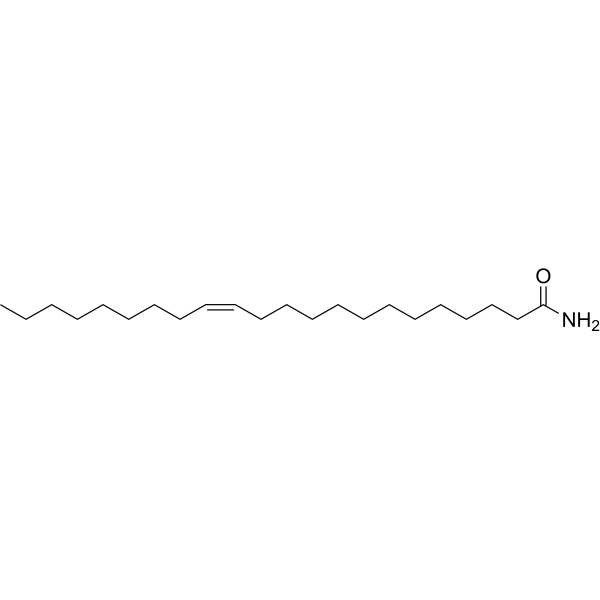
Synonyms: cis-13-Docosenamide
Erucamide is an orally active, blood-brain barrier-permeable TMEM19 ligand and T3SS inhibitor. Erucamide exerts retinal neuroprotective effects in mouse models of retinal degeneration. Erucamide attenuates depression- and anxiety-like behaviors in mice.\n\nErucamide binds to the conserved hydrophobic pocket in HrcC, disrupts its outer membrane localization, and blocks T3SS-mediated effector protein secretion in Gram-negative pathogenic bacteria. Erucamide enhances the antimicrobial immunity of plants against pathogenic bacteria. Erucamide can be used in research related to retinitis pigmentosa, anxiety and depression, bacterial wilt, and bacterial blight .
loading...
    loading...
Cat. No.: HY-17612
CAS No.: 1092977-61-1
Synonyms: NW-3509
Target:  

Sodium Channel

Research Areas:  

Neurological Disease

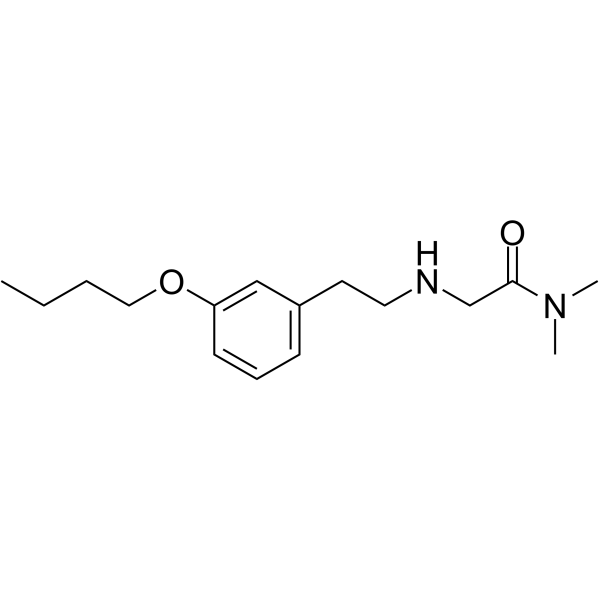
Evenamide (NW-3509) is an orally available voltage-gated sodium channel (VGSC) blocker (Ki=0.4 µM) for the research of schizophrenia. Evenamide shows efficacy in a broad spectrum of rodent models of psychosis, mania, depression, and aggressiveness .
loading...
    loading...
Cat. No.: HY-116330
CAS No.: 11079-53-1
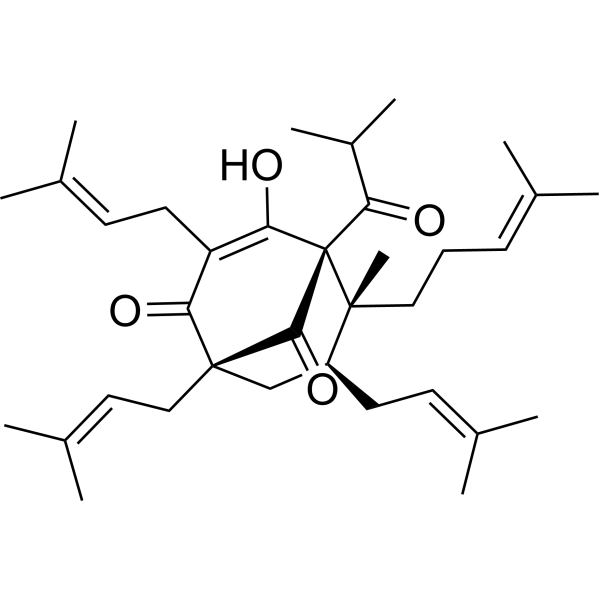
Hyperforin is a transient receptor canonical 6 (TRPC6) channels activator. Hyperforin modulates Ca 2+ levels by activating Ca 2+-conducting non-selective canonical TRPC6 channels and triggers adipose tissue thermogenesis via the Dlat-AMPK signaling axis to suppress obesity. Hyperforin also shows diverse pharmacological activities including anti-depression, anti-tumor, anti-dementia, anti-diabetes. Hyperforin modulates γδ T cells to secret IL-17α, improves Imiquimod (HY-B0180)-induced psoriasis-like mice model .
loading...
    loading...
Cat. No.: HY-W753791
CAS No.: 2111-75-3
(±)-Perillaldehyde has an antidepressant effect by modulating the olfactory nervous system in a mouse model of stress-induced depression. (±)-Perillaldehyde also has anti-inflammatory activity, inducing JNK activation in RAW264.7 cells and inhibiting the expression of TNF-α, with an IC50 of 171.7 μM .
loading...
    loading...
Cat. No.: HY-117820
CAS No.: 1642187-96-9
Purity:  98.43%
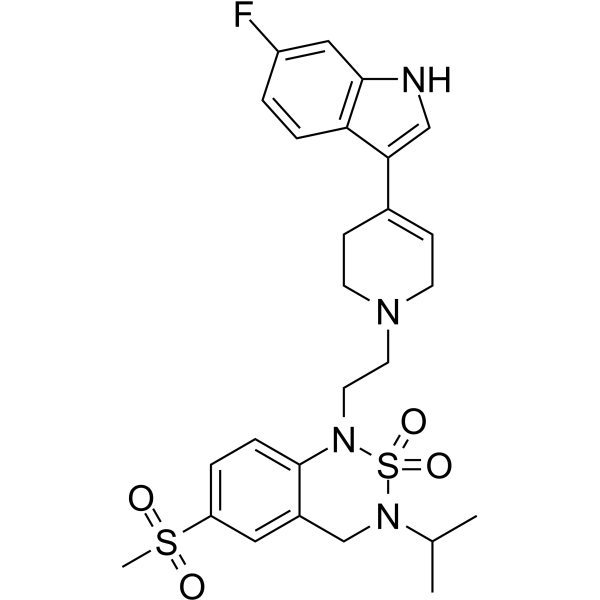
TASP0390325 is a high affinity and orally active arginine vasopressin receptor 1B (V1B receptor) antagonist with antidepressant and anxiolytic activities .
loading...
    loading...
Cat. No.: HY-119468
CAS No.: 32359-34-5
Purity:  99.34%
Target:  

Dopamine Transporter

Research Areas:  

Neurological Disease

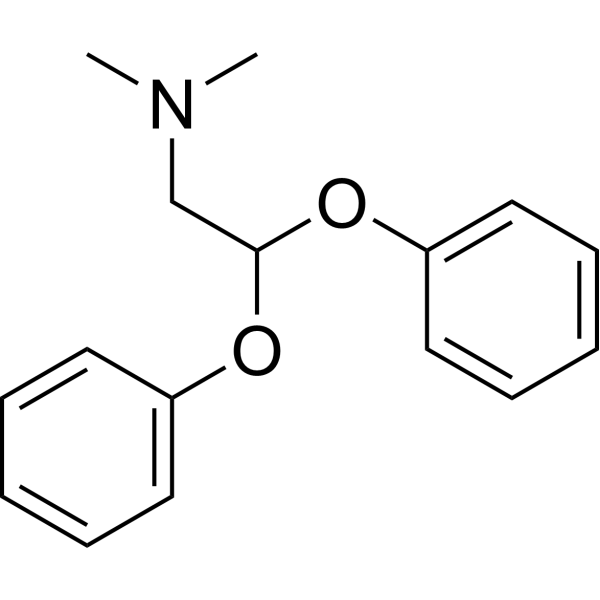
Medifoxamine is an orally active monoamine reuptake inhibitor and antidepressant. Medifoxamine preferentially inhibits presynaptic dopamine reuptake. Medifoxamine acts as an intraocular pressure-lowering agent to reduce intraocular pressure, and also functions as a miotic agent to decrease pupil diameter. Medifoxamine exhibits characteristic properties of antidepressant compounds, including preventing hypothermia induced by Reserpine (HY-N0480) or Apomorphine (HY-12723), potentiating the toxic effects of Yohimbine (HY-N0127) in mice, and reducing immobility behavior in mice and rats in the "behavioral despair" model. Medifoxamine has no anticholinergic activity. Medifoxamine can be used in research related to depression .
loading...
    loading...
Cat. No.: HY-113468AR
CAS No.: 300-48-1
Synonyms: 3-Methoxy-L-tyrosine (Standard); 3-O-Methyl-L-DOPA (Standard)
3-O-Methyldopa (Standard) is the analytical standard of 3-O-Methyldopa. This product is intended for research and analytical applications. 3-O-Methyldopa (3-Methoxy-L-tyrosine) is a metabolite of L-DOPA which is formed by catechol-O-methyltransferase (COMT). 3-O-Methyldopa competitively inhibits the pharmacodynamics of l-DOPA and dopamine .
loading...
    loading...
Cat. No.: HY-N9551
CAS No.: 14917-41-0
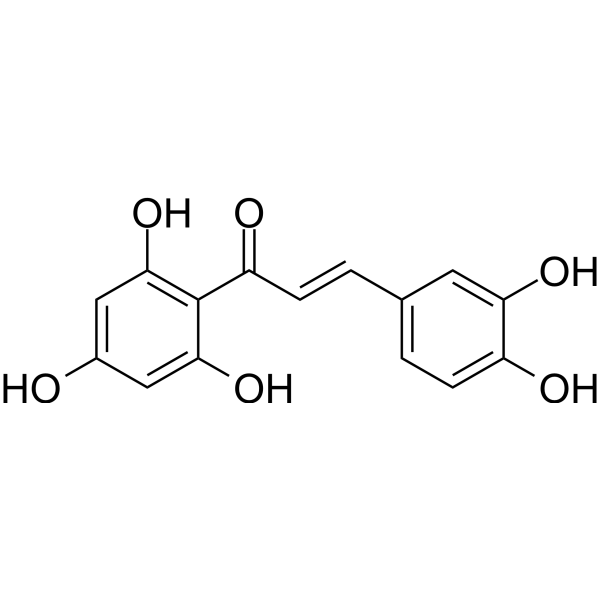
Eriodictyol chalcone is an antioxidant that inhibits multiple key enzymes including 5-LOX (IC50=0.043 μM), aromatase/CYP19A1 (IC50=2.8 μM), PTPase 1B (IC50=1.26 μM), and COX (IC50=34 μM). Eriodictyol chalcone exhibits excellent free radical scavenging activity. Eriodictyol chalcone not only inhibits the growth of plasmodia and enhances the efficacy of Artemisinin (HY-B0094), but also reduces depression-like behaviors in animal models. Eriodictyol chalcone serves as a biosynthetic precursor for Aureusidin (HY-N9834). Eriodictyol chalcone is a potential dietary supplement and herbicide, and it can be applied to research on malaria, depression, breast cancer and other related diseases .
loading...
    loading...
Cat. No.: HY-141439
CAS No.: 936475-62-6
TBE 31 is an orally active Keap1/Nrf2 pathway activator and NQO1 inducer with a Dm value of 1.1 nM for NQO1. TBE 31 binds to cysteine residues of Keap1, inhibits ubiquitination and degradation of Nrf2, thereby activating the expression of ARE-dependent genes. TBE 31 induces cytoprotective enzymes including NQO1 and GST isoforms, promotes Nrf2 accumulation, and upregulates Nrf2-regulated genes related to antioxidation and lipid metabolism. TBE 31 inhibits pro-inflammatory responses, formation of AFB1-DNA adducts, endoplasmic reticulum stress, cell apoptosis (apoptosis), hepatic fibrosis, oxidative stress, and the expression of ChREBP. TBE 31 reduces the number of tumors in a mouse model of ultraviolet-induced skin carcinogenesis. TBE 31 enhances nerve growth factor-induced neurite outgrowth. TBE 31 attenuates LPS-induced serum TNF-α levels and immobility time in mice. TBE 31 can be used in research related to liver cancer, skin cancer, inflammation-related depression, and non-alcoholic steatohepatitis .
loading...
    loading...
Cat. No.: HY-116266
CAS No.: 160845-95-4
Target:  

5-HT Receptor

Research Areas:  

Others

RS 67333 is a 5-HT4R agonist with stress-preventive activity. RS 67333 attenuates stress-induced body weight changes and prevents depression- and anxiety-like behaviors in two mouse strains tested in different stress models.
loading...
    loading...
Cat. No.: HY-P10405A
Target:  

Dopamine Receptor

Research Areas:  

Neurological Disease

TAT-D1 peptide acetate is a dopamine D1-D2 receptor heterodimer inhibitor. TAT-D1 peptide acetate disrupts the function of dopamine D1-D2 receptor heteromers, enhances subchronic amphetamine-induced locomotor activity, and exacerbates the expression of amphetamine-induced locomotor sensitization. TAT-D1 peptide acetate produces rapid anxiolytic and antidepressant-like effects in rat models of depression and anxiety, and inhibits c-fos expression in the nucleus accumbens of rats. TAT-D1 peptide acetate can be used in the research of psychostimulant addiction, depression and anxiety disorders .
loading...
    loading...
Cat. No.: HY-106969A
CAS No.: 170142-29-7
ZD 9379 sodium is a competitive glycine/NMDA receptor antagonist, with an IC50 value of 75 nM (glutamate site). ZD 9379 sodium selectively antagonizes the glycine binding site (GlyB site) on the NMDA receptor, inhibiting the binding of glycine to the NMDA receptor and alleviating excitotoxicity. ZD 9379 sodium reduces the frequency of cortical spreading depression (SDs), alleviates energy depletion in the ischemic penumbra, and delays the expansion of infarction. ZD 9379 sodium reduces the infarct volume and improves neurological function in mouse models. ZD 9379 sodium can be used in studies of acute ischemic stroke, etc .
loading...
    loading...

